Log in
EN
FR

Alesis Electronic instrument

Series

46 products found

Categories
Series
Filter
Sort by
Alesis
Evaluation
  • Reviewed or not
  • Editor’s award
  • Reviewed by Audiofanzine
Availability
  • Available or not
  • Sold new or used
  • Sold new
  • Sold used
Must-have products
  • All products
  • Flagship products
  • Best rated products
  • Hot products
  • Popular products
Price
  • Freeware
€
Clear
Sort by
  • Popularity
  • User ratings
  • Price - low to high
  • Price - high to low
  • Used price, increasing
  • Used price, decreasing
  • Name (from A to Z)
  • Name (from Z to A)
  • Added on
Choose a series
Sort results
  • Popularity
  • User ratings
  • Price - low to high
  • Price - high to low
  • Used price, increasing
  • Used price, decreasing
  • Name (from A to Z)
  • Name (from Z to A)
  • Added on
Filter results 46 results found
Brands
Evaluation
Availability
Must-have products
Price
  • Freeware
Show results

The best Alesis Electronic instrument reviews

The reviews Audiofanzine members found the most helpful.
  • « Imperfect masterpiece »

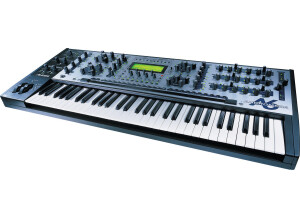
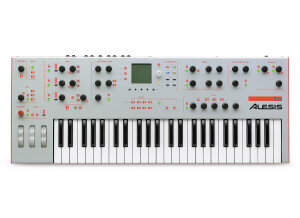
    TONS of features! In terms of actual synthesis, the number of sound-mangling features is enormous and very satisfying. Just about anything can modulate just about anything else. Sub oscillators are great. There are a couple of features that I miss, though: no random arpeggiation, and no "smoothed-random" LFO. (Access calls it "sample-and-glide.") You might be able to replicate that using an LFO to modulate another LFO, or using a tracking generator on the S&H. More destinations for the sequencer would be great, too. There is a SERIOUS problem, though...at least on the one I bought new in November 2008: the mod wheel doesn't stay where I put it when the synth is on an angled stand. My synth is on the second tier of a stand, angled toward me so that I can get to the controls easily from a sitting position. When I push the mod wheel forward any less than about 75%, it falls back to starting position as soon as I let go. That doesn't work for me at all. Built-in effects are fine--you might want to use better effects if you're a professional in a recording studio, home-studio and gigging musicians can get a lot of the built-in effects. Expansion via ancient and expensive PCMCIA cards. Be careful, though! You have to get just the right card or it won't work, and details are not forthcoming on the Alesis site or in the manual. UTILIZATION The Andromeda has loads of knobs so its a joy to program. However, this synth is very complex and is not as obvious as some other analogue polysynths. I have been playing synths for 10 years and the Andromeda makes me feel a bit amature. But the huge number of knobs makes up for its complexity and means you can create complex sounds with ease. I must point out, every time you turn a knob a menu pops up on the display screen. So there is more to the Andromeda than the 72 knobs and 144 buttons point out! This synth is analogue heaven. SOUNDS Sound is somewhere inbetween from virtual synths and analogue synths. Not 100% analogue feel, still better than VA. There are useable sounds, but most of them are better on real synths. For some productions it might work, but some VA are so good (Like Virus) that there is no sense to have problematic analogue synth like this one. Sound is not its strongest point (like tweakability and control), but not bad to completelly forget it. Kind of compromise. Effects are not very good to my ears, part of sound is lost in digital conversion what is huge pitty. OVERALL OPINION Beautiful synth that sounds fantastic. (I'm so glad it doesn't try to tap into people's nostalgia with wood or faux-wood end cheeks!) I just couldn't deal with the malfunctions, so I returned it. It's a pity. I got a DSI Prophet 08 instead--less powerful, but also sounds great and comes with a better reputation for reliability and customer support. Pity.

  • FP User's review

    This synth is MSRP 800$ so we'll keep that in mind as I talk about the Alesis ION. Alesis kept this unit so cheap by putting all of their effort into the sound, so let me talk first about where ALESIS did not put any effort into. 1. The keyboard, its not as bad as everyone says but its not great either. 2. Polyphony at 8 voices its no Virus but keep in mind the MS2000 only has 4 and the JP8080 is only a little better with 10. 3. Effects.... well what do you want? 4. Arpeggiators....ok here is my biggest gripe, these arps stink, they are non user programmible and totally over-programmed and largely unusable, this may be fixed in a later OS but well have to wait and see. Price paid: $700 USD UTILIZATION The layout, really f-ing sweet here. You have four parts or patches to a program and you can map them across the keybpard as you like. Essentially the ION is a hardware version of Emagics ES2 3 oscillators, two filters, FM, noise , external input, two lfos and a S&H and a modulation matrix with a tracking generator, furthermore there are drive effects and standard effects. It has a great big display, and when you move knob the display jumps to that parameter (bravo bravo)also the knobs themselves have no settings, they turn 360degrees, I cant emphasize enough how awesome this is for live work and recording, when you switch patches and turn down a level or filter you dont get that stupid "jump" that happens on ALL other units. Also when you change the waveform of the oscillators the display shows the actual waveform, which i must insist you try if you can. In fact because of its ergonomics and usability I would really recommend this synth over the JP8080 or MS2000 as a starter synth for anyone interested in sound synthesis SOUNDS Sound........phat.....f-in phat ass phat phatty phatness. I dont know about the patches. Considering i can make up a mind bending growling bassline or a silky smooth pad or a rhythmic sample & hold tempo based LFO trance stack in a matter of minutes with the ION i just havent bothered to sort through all the preprogrammed nonsense. But HOW does it sound, well it sounds very very analog-like thanks to the Alesis effort put into the DSP processors, there's even an oscillator drift setting that emulates the inconcistencies only found in analog VCOs. Anyway its largely a smooth punchy sound reminiscent of 70s synthesizers, however Im convinced you can get almost any sound you want out of this mo fo OVERALL OPINION Solidly built, i like the metal casing, the knobs feel great so do the mod wheels, only thing is that the keys arent as good as on my Roland A37, and they dont have aftertouch, but i think thats to be expected in this price range. I used to use Logic Audio's es2 very extensively before I went the hardware route, I loved this synth because of its versatility and abilty to do ANYTHING i wanted. The ION has all the functionality of the ES2 but in a hardware interface, and it sounds................ well you will have to hear for yourself.......its thick and sticky, but also smooth and silky, its sexy and punchy (ouch), but can also be gritty if you want it to be.........wow ive just turned myself on talking about this synth so much i need to go synch my LFOs and detune my saw waves.....excuse me. Originally posted on FutureProducers.com Posted by: Unknown (January 0-, 2003)

  • « Alesis Data Disk - All your synths now belong to us »

    So basically if you want convenience, GIG travel usefulness and simplification of your MIDI libary, buy one of these. they average about $50 on ebay. Someone said "you cannot use 1.44MB disks" That is NOT true. It supports both SD and HD 3.5" floppies. (only formats in 720k regardless however) So you are technically "wasting" a 1.44MB floppy however it can be used. You're just going to be only utilizing 720KB of it's capacity. Also keep in mind you won't need to worry about it since MIDI information is plaintext and takes up very little space. I'd say the only CON of this unit is that the powersupply is external. BOO.

  • « room for improvment »

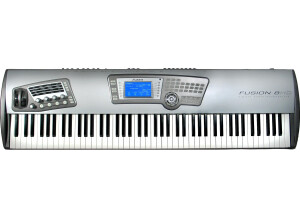
    Alesis fusion is a good keyboard, and I have used it several times. But there is a lot of room for improvement with it which is one of the reasons I actually didn’t purchase it myself (though I did think about it). One of the main reasons that I knew it wasn’t for me was with the sequencer, after coming from some of the yamaha and korg line of keyboard workstations, the Alesis Fusion sequencer just fell short to me. UTILIZATION Understanding the Fusion is pretty simple all of the functions are easy to find and they arent hard to understand either. With a little patience and some extra time you can figure this board out without any instructions in no time. I havent seen a manual for it and I was good using it in about a hour or so. SOUNDS When it came to the sounds and banks, some of the are really good. And some were not so good. But that is normal for keyboards, they will have some great sounds and then some that are not so good. Some of the strings actually surprised me though, I didn’t expect them to be so full and rich. Even some of the brass was ok, but the bass patches I wasn’t a fan of. I felt they could have put more energy into really getting some good bass patches. It just seems like they over looked that part. OVERALL OPINION Its not a bad keyboard workstation overall, just the sequencing wouldn’t work for me in the long run. In the studio that I was in it was ok to use just for then. But I would take a yamaha or korg anyday over the Alesis Fusion 8HD. But the good thing about it is that the price isn’t as bad as the other high end models. So that’s always a plus for us musicians that cant afford expensive gear.

  • « Alesis Micron »

    The Alesis Micron is based on the larger Alesis Ion. It's a full 3-octave keyboard housed in a red and white/silver case. I'm a bass player, but I bought the Micron to control with Roland PK-R bass pedals rather than spend $2000 for the new Moog Taurus pedals. I also use it for string pads in live situations and as a MIDI controller for home recording. Bought from Musiciansfriend.com in April 2009 for $399. The Micron far more sounds than I will ever use, including bass, lead, strings, brass and a variety of pads and effects. There are three envelope generators and two LFOs with multiple wave shapes and sample and hold. The Micron offers a programmable step sequencer, an arpeggiator, a rhythm sequencer for drum kits. Effects include a 40 band vocoder. Stereo inputs let you process external audio through its effects, filters and vocoder. Stereo output is excellent for recording and live performance. I like the variety of presets on the Micron and that you can edit them fairly easily. I also like the favorites feature that allows you to save often-used sounds in a single location. I also like that it has full-size keys rather than the tiny ones on the comparable Korg synths. Pushbuttons or rather than rotary controls would have been nice for recalling presets, but since I'm not a dedicated keyboard player, it's really no problem. The Micron is solidly built and, with reasonable care, there's really no need to buy a hardshell road case. A padded bag is sufficient. For the money, the Alesis Micron delivers fully polyphony and a lot of sounds, including classic Minimoog for leads as well as a great variety of string pads. Comparing it to other synthesizer in t5hi price range ($400) I think the Micron is the clear winner. This review was originally published on http://www.musicgearreview.com

  • « Alesis Q.S 6.1 »

    I bought this unit online throughout Musicianfriend.com, at an incredible price of $599 for this powerful tool. As I live overseas, buying online was one of the only options, but at the same time I was able to make a good choice comparing the specs and reviews of Similar products. Alesis Q.S 6.1 has one of the best price/satisfaction relations you can get. Excellent piano sounds, expandable, 64 voice and an original 16MB collection, pitch and mod wheel, four edit control sliders, MIDI sequencing will fit just as great recording as for live performance. Alesis q.s 6.1 has fulfilled my expectations completely, of course there are more powerful synths with more sound construction elements but they are at least 3 or 4 times the price. the QS 6.1 is a strong quality unit It is more than you can expect for this amazing price. Satisfaction guaranteed! This review was originally published on http://www.musicgearreview.com

  • « classic from alesis »

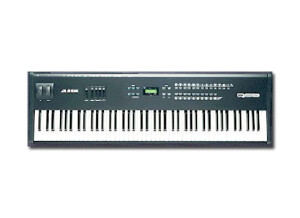
    The Alesis QS8 is a very good instrument keyboard. It comes with a large library of sounds and instruments for you to use in your own compositions , along with 16 megabytes of on board ROM. This keyboard is also expandable incase you decide you need more. It has 600 plus programs and takes PCMCIA sound cards. It also has a pitch wheel and a modulation wheel, which is pretty much standard on all boards but this pitch wheel has a nice feel to it and gives you a lot more control. Its not stiff, its very free moving and easy to get the exact pitch conversion you want. UTILIZATION Its very easy to understand, and if you want to us it with the computer it comes with a cd rom in both mac and windows because it includes a copy of Cubase Lite (not the regular cubase version though , but close). The keyboard can also be used a midi controller with a little configuration in your DAW. You don’t have to use Cubase Lite with it, you could use whatever you prefer and just use it as a generic controller. SOUNDS Sounds a very good, I was actually surprised by the sounds that come on a board that was made years ago. The sounds are very up to date. Nice warm synths, not too thin like most keyboards that where created back in the 90’s. Alesis was ahead of its time when creating this board. OVERALL OPINION Overall, you really cant ask for much more. Not really to sure if you can still get this board in your local store you may have to buy it online because its an old model. But don’t let the word “old” fool you. Its well worth the money spent and its not that expensive brand new so I know its very affordable now. Alesis has always made quality products and this was no exception.

  • yoTrakkz's review

    The Alesis Qs7 is a decent board with some expansion slots and has 76 keys. There are also a few assignable sliders that you can use for what you want within your program. There is no sequencer on this board which makes a lot of people upset, but that’s why you sequence on another piece of gear like your daw. You wouldn’t want to sequence on a screen that’s as small as they are on most synths. UTILIZATION Easy to use, if you don’t understand just pick up the manual it’s very plain and dry. You will have no trouble understanding the manual or the board after you get used to it. SOUNDS Sounds are great, great brass synths and nice full pads. Most all of the sounds will need to be eq’d though. Most of them wont sit right in your mix unless you take the time to really get some effects on them or to eq out all of the excess noise that’s un needed on the low or on the high end. This is when a good daw comes in hand. Because then you can see just what frequencies the instruments are playing on. OVERALL OPINION Overall it’s a pretty good sounding board, nothing spectacular here, and the board its self isn’t built to last. So I hope you don’t plan on taking this board a bunch of different places and carrying it all over the place a lot. I am not too sure if the Alesis Qs7 can handle all of the wear and tear of the road. It feels pretty cheap, and if you drop it , it won’t every be the same again. Which kind of upsets me in a synth that’s not really on the cheap end of synths. But it’s a good solid board none the less. Its worth the investment but there is nothing spectacular about this board so for that reason i give it a 6 out of 10.

  • phraseland's review

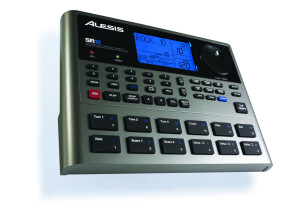
    Ok - this is a classic. For some reason it is still around and once you actually put your hands on it you will know why this drum machine has been so popular - and still is. I bouht mine about ten years ago and up to this day I still use on times to quickly setup a basic drum groove for songwriting and practicing. You can connect it to a PA or mixing board via the stereo outputs and it can receive and send MIDI information. The Pads are velocity sensitive and the volume is being adjusted with the big knob on the right. UTILIZATION For a drum machine this unit is very easy and straight forward to program. People being used to having big screens and software drum machines might find it a bit cumbersome but really for it being a small portable unit things couldn't be any easier. If you have any questions I found the manual to be very helpful and always task oriented. You can choose which sounds you want on the 12 trigger pads (there is a selection of more than 300 sounds) or you can just choose a preset drum set. You can either create patterns or then tie them together to a song. For each pattern there are two versions, two fills, intros and endings. SOUNDS Still after all these years (I believe the unit was introduced now almost 20 years ago) the sounds are pretty good. Of course these days you have higher sampling rates and different velocity layers... ...but it just shows that it's not necessarily about bits and kHz or tons of layers. These sounds were captured and then processed very well and have a lot of punch while being very naturalistic. The Alesis reverb is what it is - so don't expect studio quality...on the other hand you can still find the DM5 Module in many studio racks (which has basically the same sounds)... I think they did a good job back then and it speaks for itself when a unit like the SR-16 is still in demand today. OVERALL OPINION As I said I have been using this drum machine for over ten years now and it has never let me down. I dropped a flower pot on it and spilled several cups of coffee over it. Although the volume knob has taken its toll it still works fine and if it ever breaks I will definately buy a new one (they just put out an updated version...so it would probably be that). If you check on ebay or the audiofanzine forums you will see that they quite cheap and you do get a very good instrument for your money.