Log in
EN
FR

Roland Digital Synths

49 products found

Sort results
  • Popularity
  • User ratings
  • Price - low to high
  • Price - high to low
  • Used price, increasing
  • Used price, decreasing
  • Name (from A to Z)
  • Name (from Z to A)
  • Added on

The best Roland Digital Synths reviews

The reviews Audiofanzine members found the most helpful.
  • « Portable with great sounds »

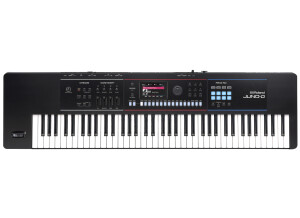
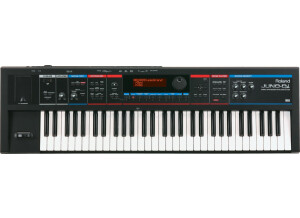
    The Roland Juno-Di is a synthesizer keyboard that is easy to work with and understand. It is very user friendly and comes loaded with over a thousand high quality presets or sounds that you can use right away without having to add a bunch of effects or EQ to them. The Juno-Di does not have a sound on it that I didn’t like. UTILIZATION The Roland Juno-Di is a portable keyboard as well, it looks bigger than it actually is and it is pretty light. So if you want to use it for live shows, you can easily put it in a bag or a keyboard case and take it with you. SOUNDS Some of my favorite sounds on the Juno-Di are the guitars, grand and electric pianos, strings, and brass. Some of the percussion on the Juno-Di is pretty good, but I prefer to use my own percussion kits and drums. You can also use the Juno-Di without plugging it into the wall. It does run off a battery, and they battery life will give you a few hours of straight continuous use without having to charge or plug it in the wall. OVERALL OPINION The Juno-Di does come with a manual but I didn’t not need to look at it at all because everything is easy to understand just by looking at the front of the keyboard. You can even connect your iPod or MP3 player to the Juno-Di via the external input. You can also plug in a microphone to use with the Juno-Di, you can then run your voice through the built in vocoder on the Juno-Di and do some really cool stuff to your voice for live performances or even studio and recording use. The Juno-Di is not only affordable, but it feels and sounds great. This is the most portable Juno keyboard that I have used.

  • « Better than other Juno's »

    The Roland Juno Gi is very affordable as well as powerful. I have used the Juno Gi with Reason and with Cubase as well as with Logic from time to time. The Gi has a new 8 track recorder that will allow you to sync it right up with your DAW to do your track outs in a timely and easy fashion. All 61 keys are velocity driven, and there are 79 different effects that can be added right on the board which is not bad for a keyboard that cost under 100 dollars. It excepts all of the standard file formats including MP3, WAV, and AIFF and it has over 120 different presets for arps. The Roland Juno Gi is different than the other Juno line of boards from Roland. It is more up to date and has more sounds of “today’s” music rather than some of the other Juno boards that have some older sounds. The Juno Gi has a very good pitch been lever than gives you a clean pitch bend like most of the Roland boards do. It is easy to maneuver and move around to bend your pitches. UTILIZATION Editing your sounds are not as easy as they are on some other Roland boards but that is primarily because the screen isn’t as user friendly. The Juno Gi is more designed to use the on board knobs and sliders to change your sounds rather than on a screen. The manual that comes with the Juno Gi is kind of confusing and a little bit too long. They could have summed up some of the functions in less words to not make it so lengthy. Setting the Juno Gi up couldn’t be easier though! SOUNDS Some of the sounds are very realistic and some are not. By far, the sounds on the Gi are better than the other Juno boards to me though, but they all need a little work. Unfortunately some of the sounds and presets from the other Juno’s aren’t including in the Gi which I was not to happy with. Some sounds are included but not my favorite ones which makes me have to keep both boards. OVERALL OPINION The Roland Juno Gi is very affordable and easy to use, if you are looking into the Roland Juno set of keyboards then you should go with the Gi first. It is far ahead of the other models and has an easier ability to sync with your DAW or software. For the price it is a must have.

  • « Roland RS-5 »

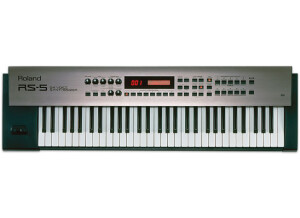
    I bought this synth from Sound Control in Glasgow, Scotland in October 2003. I paid £399 for it, with £100 off, since the product was discontinued by Roland and has been superseded by the Roland RS-50. I had been looking for a synth suitable for gigging and that could ease me into composing my own music at home, and the RS-5 seemed to fit the bill. What drew me to the RS-5 was its its range of functions and sound quality. It has a superb range of sounds at a very competitive price. I found that there was a large gap in price of keyboards that i shopped around for, there was very little in the budget range i was aiming for. With the RS-5 I found the perfect instrument. It has 640 internal tones, 128 can be preset by the user to suit their performance so a very good range of sounds can be achieved. Your most frequently used tones can be stored within the favourite tone bank. In addition it has a decent selection of on-board effects such as the arpeggiator function, chorus and reverb. The only criticism of the unit i would have is the design of the knob controls. Since they project out from the unit, I can imagine that over months of continual use these could work loose if any bumps or knocks to the keyboard occur. This would be deleterious to accuracy of playing and would ruin the whole look of the synth. The RS-5 does not have integrated speakers, so I use headphones whilst practising and connect to a power amp in the recording studio. This should be also accounted for when considering your synth budget. Construction and design quality of the unit is almost impeccable. The brushed aluminium finish is easy to wipe clean and surprisingly durable. The design is simple yet functional, not too many buttons and knobs and has a search facility to access tones quickly. The bottom line is this: if you're looking for a budget synth which looks as good as it sounds look no futher than the RS-5 - it is a great buy. This review was originally published on http://www.musicgearreview.com

  • FP User's review

    Pretty good features--BUT they only hold 2 expansion cards! That's a negative! Price paid $900.00 UTILIZATION Pretty easy to use but can be complicated for a beginner-def. not a newbie synth. Built ford tough! Never had any problems. SOUNDS Nice sounds! No complaints! OVERALL OPINION Had mine for 7 years---it did the job until I got the JV 2080 rack for only $400.00 on ebay--it holds 9 expansion cards Originally posted on FutureProducers.com Posted by: bhardman ( 6-, 2005)

  • FP User's review

    A 16 track midi sequencer is usually adequate for most situations. However the XP is best when used as a soundsource...or even a scratch pad that is sync'ed up to a more capable sequencer...whether that be one of many capable DAW/software program combo out today (Fruity Loops, Reason, Pro-Tools)or a hardware sequencer/sampler (MPC series, MV, even the slept on MC-909) One helpful feature is the RPS function, which allows you to trigger a created phrase on the fly at the touch of a key. With no sampler...this function is essential to creating "hybrid" sounding track...in other words a track that sounds sample...and has many of the "chopped" feature of one ...but is actually a 100% original $1,300.00 (back in the day) UTILIZATION Its a miracle I still have my eyes after 8 years of peeing a the tiny orange rectangular screen. To access many of other more complex features of the XP such as patch(sound)editing, track edit..etc involves many searches through various screens. The manual is your best friend....however it is a Roland manual......be advised it is a tank....can go above ground, underground, on the road...wherever. users who have either been longtime users like myself or others who are picking up one from somewhere else need to keep a careful eye on the ancient floppy disk drive for perfornamce however. SOUNDS The XP-50 has many good stock sounds right out the box for professional/aspiring composers, media scorers, and techno/ambiant/rave sound designers.. ah yes well that's nice. BUT, what about the aspiring beatmaker..or the grizzled pro?? If you be patient with the somehat unforgiving learning curve...you can craft out stunning compositions without having to reach to any other piece of gear(and thanks to current situation..I know that as well as anybody, these days. EFX processors, diffrent sets of filters and amplifiers allow you to customize your own sound. OVERALL OPINION I started from the instrumental side of music first then graduated to beatmaking. So I have yet to purchase those celebrated pieces of gear your 'favorite' producer has..(MPC, ASR-10,Motif....or my favorite..Fantom X7)this is my brainchild. Even when it is replaced...it will be kept for sentiment for a long time Originally posted on FutureProducers.com Posted by: cloudism ( 7-, 2005)

  • « A Great Controller Keyboard/Synth »

    Some very realistic Piano sounds with the default Patches. Can also create some great Sound FX. Wide selection of accessory PCM Cards to add new sounds PROS: Excellent PCM samples. Nothing beats the SN-U110-12 Saxophone & Trombone PCM Card. http://llamamusic.com/u20/u-20.html CONS: Cryptic interface and the WORST Owner's Manual I have EVER read. Poor aftertouch response I have been using the same U-20 in my studio since 1990. I also took it on the road for about 125 live gigs over a five year period and it held up without the need for any repairs other than replacing the internal battery. I kept it housed in a padded carry case when transporting and I keep it covered while in the studio to prevent dust accumulation, one of the U-20's worst enemies. The C1 and C2 sliders provide a useful way to quickly step through menu selections, send Control Changes internally and also send Control Changes to external MIDI devices. I was lucky to purchase one of the later production models which has the v3.03 ROM IC. It improves MIDI and keyboard lag-time response, a problem noticed with the older v2.00 ROM's. The U-20's technology is almost 25 years old and obviously can't compete with the whizbang features on the synths of today, but it's still a workhorse and will always have a spot in my studio I recently acquired a second U-20 on eBay for $50. It was sold as "broken". The fix was to replace the battery and reload the Factory Patches. Gotta love eBay :^)

  • « JV90 build and sound »

    Build Keyboard has good feel and is quiet. The body is lightweight and slim. Knobs and switches are safely indented in the face. Screen is bright clear and simple. Sounds Piano The piano has always been robust and cutting. Organ I've never used for organ Strings Pads are lush Analog synth Does pads or solo with portamento and effects, and 4 parts per note. Brass Brass is superb and capable of analog sounds Drums Gives enough kit choices from natural to special effects Polyphony Polyphony is definitely the issue. Nothing new there. Layering with another keyboard is recommended. Editing Editing is super easy and able to leave menu parts you edit the most on screen Overall Review Love it. Sounds can be put in my 2 JV880's giving me 84 notes of polyphony without the need for expansion boards. 76 keys and lightweight.

  • « The Fun Factor »

    You can get the Roland Lucina AX-09 in White or in Black with both units being exactly the same except the color. This handled synthesizer is very portable and compact. Though it only has 37 notes, you can still reach all of your octaves easily. You can run this by a battery or with an AC adapter that comes with it. The battery life last a good amount of time. You will not get a a lot of sounds with the Lucina but you will get some really good once. There are also some small effects like the reverb. You can store all of your favorite sounds and presets together in your “favorites” section bank. There is an built in audio player on the AX-09, you load put audio into it via USB as long as the audio is in MP3 or WAV format. Pick a song and let it play, then you can play along with it. It will be like having a whole band behind you. UTILIZATION Understanding how to use the AX-09 and all of its basic functions is very easy. It will take you less than 25 minutes and you will understand how to use this keyboard synth fully. It comes at a great price, though the keys are not the best made keys. They feel very cheap and plastic like but for 350 USD you just cannot beat what you get with this AX-09. It is a great value for your money and you will have a great unit that will bring you lots of fun. SOUNDS The built in sounds and presets are ok, nothing to making you want to run out and buy it right way though. OVERALL OPINION I think the fun factor of this unit is what the selling point is, there really is not using if for your personal music. It is more of an entertainment piece and a way to have fun and jam out with your friends and family. But you can connect it to your computer via USB and use it as a MIDI controller if you want to.

  • « o my.. »

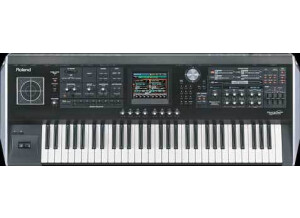
    The roland Jupiter 80 is a very expensive digital synth, I do not own this, a local producer has one of these and I get the chance from time to time to go to his production lab and mess with his equipment and I have even wrote songs there. After using the Roland Jupiter 80 I really don’t see why they had to make it so expensive, it is a great keyboard without a doubt, and its probably one of the best ones that I have seen from Roland ever, but the price just makes it impossible for the average person to obtain one of these. Also, all the times I have went to guitar center I have never even seen this board on display. The only way I heard about it is because the local producer has it here in town. UTILIZATION Its not the easiest keyboard to get used to, everything with it is complex and indepth. I am not sure if I would want to go through all of those options and menu’s if I had the board here at my house. SOUNDS The best part about the roland Jupiter 80 is the sounds, thre are so many different sounds that come on it and so many of them are so good . I cant believe how good some of the rhods sound and the basses and the strings are perfect to me. I havent heard strings on any other keyboard sound as good as the did on the Jupiter 80. The strings alone made me want to sell some of my gear so I could afford to get the Jupiter 80. All of the sounds are really thick and full,. OVERALL OPINION Another Great thing about the Jupiter 80 is the size of the screen is a good size and it’s a color screen. Not all one screen color like the a lot of other boards. It has different colors for different options and it’s a touch screen. I didn’t even know it was a touch screen untill it was pointed out to me. This is a great board and I think any musician would love to have this, but can we really afford it? If you can it’s a no brainer buy it now.

  • « Roland XP-10 »

    It's Black and fairly sturdy. I've played Guitar for since 1966 and have always tinkered with the Keys. I've been playing keys pretty steady for about 6 years. I also use a Yamaha P70, Yamaha DX-21 and a Korg Poly 800. I'm using a Kawai MX 8r stereo Mixer, a Marshall Valvestate 80/80 stereo power amp and Marshall AVT bottom with heavier speakers Converted to stereo. I bought it from my other Guitarist so I could back up our Sax Player with B3isms. We are a Beach. Boogie and Blues Band. I Paid $200 and it included a SKB case. My other Guitarist doesn't play, but bought it cheap at a garage sale. I've down loaded all of my manuals and it is above my pay grade so it works for me. and it sounds great for Steel drums, Hammond, electric piano, and most synth sounds. <a href="https://www.reverbnation.com/catfishstew">https://www.reverbnation.com/catfishstew</a> For what I need it's easy to use and a great beginner tool for those interested in using a good board for recording or playing. I'm 59 and won't be writing programs so for me, that is not an issue. The 'readout screen' is adequate. The Guy Playing it. He'll get better but he has a long way to go. Fairly study. I try to baby my equipment, but I do play out and take all of my crap with me. If It broke down or I lost it, I would consider another, but I'm not totally reliant on it. Rolands are cool, Any one that I found, I'm sure I'd like! I Like the Unit. I'd buy it again or upgrade. I'm giving it a '4', only because it is the bottom of the 'XP' Line. It is what it is! This review was originally published on http://www.musicgearreview.com

  • « Juno D is great »

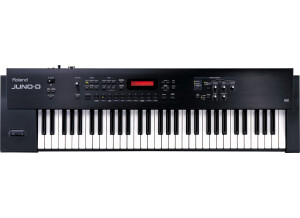
    The Roland Juno D is a good board, I wasn’t sure about this one after spending 3 hours on it at the guitar center down the road. One thing that I can stand with it is the interface and sequencing just didn’t do it for me. But there where certain sounds that I really liked and the on board controls to minipulate those sounds made it really easy for me to get the sound I was really looking for . UTILIZATION Very easy to operate, its almost to easy. You may only need the manual just to understand a few small things. But sequencing on it was difficult for me because I am use to a more user friendly screen and menus. There really just wasn’t much to the interface of this board. Maybe it was just too easy for me and that’s why I didn’t like it because I am use to sequencing on other workstations that have a much more complex screen and menus. SOUNDS The sounds a pretty good, especially when you add a few small effects you will really like the sounds you can get when you play around a little bit. The brass on here is what surprised me the most, I didn’t expect to hear such a big band style of brass. Its just sounds full and rich when those horns are being played. I can honestly say the brass on here was some of my favorite presented brass out of almost any board on the market. The brass was ready to fit right in to my songs with out any equine or anything. It was almost made just for me. OVERALL OPINION Overall, This board is really easy. If you want something easy then this is what you need. Its not much to look at and doesn’t look all fancy. that’s because its not fancy. Its good though and has all the connections you need to get it right to you DAW. Its very realistic and ready to go right into your mixes. You will love the Roland Juno D.

  • songboy's review

    What type of keyboard (synth, piano...)? How many octaves? This is a synth board. It does have piano patches but they in no way sound like real piano's. What controlers (pitch, modulation, sustain...)? It has a single axis pitch controller. Comes in handy for synth leads and horns, but thats about it What connection types are there (Audio, MIDI, pedals...)? The connections are Midi in/out, "Hold" which is the same as sustain and it also has a card slot for Library Roms How many sounds, effects? What styles? Can they be edited? There are qute a few sounds on here, I believe somewhere around 60 or more. I also have two expansion cards so all together, I get around 200 i think. through a Mac/PC utility program? There is some software out there that says it can do this, but I haven't tried it yet. I believe Soundquest Midiquest has compatibility. What's the polyphony?... I believe its only around 20 even though I have heard claims that it has 32 UTILIZATION Is the sound or effects editing easy? Unfortunately, the buttons on my D5 are very hard to push and don't always work, so right off the bat, editing sucks. Beyond that though, I still have to say its quite difficult. I am so use to computer based synths that I forgot how to quickly run over a hardware board and be efficient. I am sure practice will help me improve, but I do plan on getting the midi software, seems to be the way to go. Is the manual clear and sufficient?... NO, every manual that I have ever had from Roland usually bites the big one. The one that I got with this looks handwritten as is a lot of technical info that I will have to decipher. Is the general configuration/setup simple? well, its pretty easy to turn on and select patches, so yes I guess. SOUNDS Are they realistic? NO, not even close. But thats not why I got it anyway. I like the thin, harsh sounds that this baby can scream out. I run it through a host of effects including some MoogerFooger pedals and I get some great lead,pads and piano patches. What do you think about the effects? The effects are nothing to go crazy for, the chase is a limited delay, the arpeggiator is Ok, and the other two aren't even worth talking about. Is the expressiveness acceptable? (touch sensitivity, aftertouch)? In comparison to todays standards, the expressiveness is really weak. The range of touch sensitivity is very small and I don't think this unit has aftertouch, even though some say it does. What sounds do you like or hate? I love the pads and leads, the piano's are ok, the basses are pretty sweet, some of the horns are ok, and the organs are pretty sweet too. I pretty much love all the patches but keep in mind that I want them to sound "bad" so I am fairly biased. Are the A/D and D/A convertors transparent? Not really sure how to answer this one. This thing clean sounds like it came right out of a cheezy 80's/90's pop band, but effected and gritted up, it sounds right out of Bjork, Beck or Portishead. I love it. OVERALL OPINION What thing do you like most/least about it? I love the "awful" sounds. It is great for people writing electronica or just scary/dark rock stuff. What I don't like is the buttons need to be mashed in order to function, but that might just be mine. Did you try many other models before getting this one? Yes, I have lots of synths, but one that is closer that I had is a Casio CZ5000. The Casio did not have touch sensitivity so it had to go in the end. That feature alone makes the D5 a way better synth. What is your opinion about the value for the price? I paid $100 for the board and two expansion cards and I am very very happy. Knowing what you know now, would you make the same choice?... Yes, instantly, I love this thing. Precision and quality of the sound? Again, not very realistic at all, but thats not the point in having an old digital synth these days, right?