Log in
EN
FR

Groove Tubes

34 products found

Categories
Filter
Sort by
Evaluation
  • Reviewed or not
  • Editor’s award
  • Reviewed by Audiofanzine
Availability
  • Available or not
  • Sold new or used
  • Sold new
  • Sold used
Must-have products
  • All products
  • Flagship products
  • Best rated products
  • Hot products
  • Popular products
Price
  • Freeware
€
Clear
Sort by
  • Popularity
  • User ratings
  • Price - low to high
  • Price - high to low
  • Used price, increasing
  • Used price, decreasing
  • Name (from A to Z)
  • Name (from Z to A)
  • Added on
Sort results
  • Popularity
  • User ratings
  • Price - low to high
  • Price - high to low
  • Used price, increasing
  • Used price, decreasing
  • Name (from A to Z)
  • Name (from Z to A)
  • Added on
Filter results 34 results found
Evaluation
Availability
Must-have products
Price
  • Freeware
Show results

The best Groove Tubes reviews

The reviews Audiofanzine members found the most helpful.
  • « Russian Made alternative to Fender Tone »

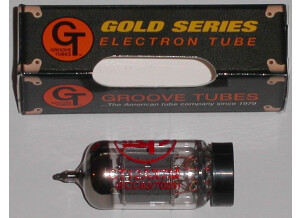
    This is a Russian made version of the Fender Groove Tube. The categorization for this item is wrong, it's a tube, not an amplifier. Fender's groove tubes are a varied bunch, in that their different tubes will work better in different amps. This particular tube tends to come in their smaller amps, ones that are typically used for practicing by oneself or with small ensembles. They tend not be the same as the ones that are in the larger amps, and thus, you probably wouldn't want to put these in an amp that has such a loud dynamic range and power, if you did it would probably be a waste because you wouldn't get the sound that you expect and you might blow them out. While I tend to love Fender amps, I don't know if these tubes are necessarily the best. Granted, the tone on the smaller, practice Fender amps doesn't really come close to the sound of a Twin or a Deluxe Reverb, but I think that they are generally ok. I just don't know if these particular tubes are the best bet, I have seen other brands make similar tubes, and have read that they are better. I would like to see these amps get something a little bit more aggressive and bright with their sound. If they could come just a bit closer to the Twin, I'd be more keen on purchasing a Fender amp for practicing. I haven't had the time to try out a bunch of different tubes in my practice amps though, and I know from (bad) experience that these don't really work well in anything but a practice amp. If you need to replace these, maybe look into getting something else, there's a possibility that something with a sweeter tone might show up.

  • moosers's review

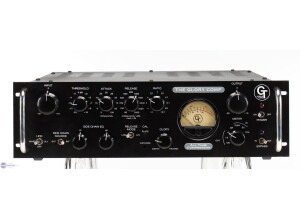
    Groove Tubes Vipre is a single channel tube based microphone preamp. The unit will take up three rack spaces in a traditional rack mount, and I'm not sure about the exact connections that it has because the one that I have used was already racked up in the studio, but it is safe to say that it has standard XLR connections in the back and I know that it does have a 1/4 inch input in the front. UTILIZATION The make up of the Groove Tubes Vipre isn't too hard to follow, although the pre does have a good amount of parameters to work with and to get used to. The unit has two separate gain knobs - one for shifting in increments of 1 db and one for 5 db. It then has knobs for choosing which type of input you'd like to use and one for the impedance, as well as knobs for rise time and the VU meter. Vipre also has switches for polarity, hi-pass, phantom power, mute, and standby. That's pretty much everything that there is to the pre, and overall it only took me a few minutes to get acquainted with the pre. SOUND QUALITY While I'm usually not a huge fan of the pres that Groove Tubes has to offer, tube based gear is their specialty and I was definitely pleasantly surprised with the Vipre. I wouldn't say that it is the most transparent pre that I've used as it definitely does color the sound a bit, but I wouldn't say that this is a bad thing because it simply has its own type of sound. I like having so much control over the tone as it gives me a ton of options and makes it possible to use this pre with a variety of different applications. For any application where you would want a fat and warm sound, the Vipre will definitely get the job done... OVERALL OPINION While the Groove Tubes Vipre will definitely cost a decent amount of change, it is definitely a good sounding tube pre. I do think that it is a bit pricey, but for professionals looking for a nice sounding tube pre, it is still worth checking out. While we have a variety of tube preamps to choose from these days, if you're in the market for one I would recommend checking out the Vipre in addition to those made by other manufacturers like Universal Audio and Summit...

  • FP User's review

    This has everything except the multi-pattern. It even has a great shock mount. I didn't like that it doesn't come with a hard case. Price paid: $400 OVERALL OPINION This mic sounds really warm and harmonic. Also very airy. Great for a soulfull female vocals or thick male vocals. Very, very good on acoustic guitar. I love this mic but I have heard better. Very easy to use like other studio mics. Very durable except the shockmount wire is about to break and I have done nothing for it to do so. I baby this thing cause I know how fragile they can be. I love this mic for my first real professional mic. It has many uses and that's what I needed. Originally posted on FutureProducers.com Posted by: Morning_Star ( 2-, 2006)

  • Audiofanzine FR's review

    (Originally written by macintoys/translated from Audiofanzine FR) Tube DI box from Groove Tube 1/4" jack input and send connectors plus XLR module It can't be mounted on a rack. UTILIZATION Ultra-easy to use, it has only 3 controls: power, ground, volume SOUND QUALITY It colors the low frequency range a bit but that's what I expected from it OVERALL OPINION I've owned it for one year. Pros: Simple; Cons: I had to refurbish the transformer because I bought it on the web. I tested lots of tube and solid-state DI boxes but I was looking for one that would fit the unique sound of my bassist's bass guitar. I was lucky to find it on the web for only a quarter of its street price so I'm really happy. Yes for that price but also if it were more expensive.

  • « Warm »

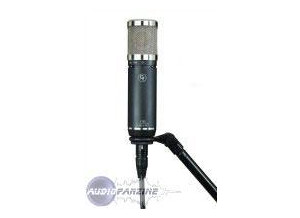
    the Groove Tubes MD1 has a classic/ vintage look and sound too it. This is the style of mic that you will have to know that you like and want before you spend the money on it because it is not for everyone. The frequency response is 20Hz to 20kHz and it has a cardioids polar pattern. One thing I can say about this microphone is that it looks amazing. It has a solid brass style finish with a 1.1 diameter gold diaphragm. It also allows for extended cable usage of up past 200 feet. OVERALL OPINION The MD1 comes in a microphone case that is a hard case to protect the microphone from any damage and it also comes with a shock mount and it came with the PSM1 tube when I purchased it. This microphone cost around 600 dollars to buy now which is still a steal considering how great it is. I highly recommend using this microphone for a whole number of audio sources. It gave me a clear, color free recording with a warm mid to low frequency response. The mid to low frequencies is something that I was very happy with when using the MD1 because a lot of similar microphones have had the tendency to “over warm” those frequencies, the MD1 kept everything very natural sounding. I have been using this microphone for a long time, and I have no complaints with it. I suggest buying a used one so that you can save some money but when buying a used one you will want to make sure that the person really took good care of it because the MD1 is very delicate and one drop could make it a paper weight very easily. Also use with a good low noise cable even when running a longer cable; this can get expensive when purchasing a good cable especially if you want to get a longer one.

  • « Groove Tubes 12AX7R »

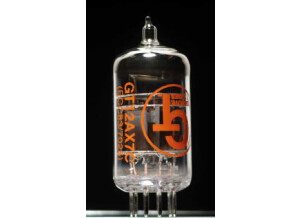
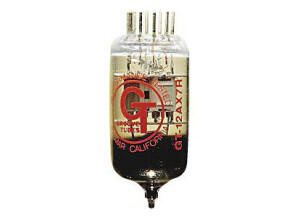
    The 12AX7R is Groove Tubes' take on the classic Russian sounding tubes. The Russian tubes are known for having higher quality control standards and a darker lower gain tone. Groove Tubes has some issues a few years ago, but I feel they are back on top as far as mass produced tubes go. The preamp tubes in a my bass amp went bad and I had to get something new. My local shop had a Bugera tube, an Electro Harmonix tube (what was previously in the amp) and the Groove Tubes 12AX7R. I bought the Electro Harmonix tube as well as the Groove Tubes 12AX7R to compare. To my ears the Groove Tubes had less noise and I was able to get a louder and cleaner sound out of the amp, where the Electro Harmonix tube distorted quicker. I believe I paid $15 for each of the Groove Tubes Sounds great and I have been gigging heavily with the tubes in my bass amp for close to 2 years. I also like that they are readily available at most guitar shops. I can't think of any room or need for improvement. I like that there is a reasonably priced, decent sounding tube around. So far so good. Two years of hard work on these tubes. Moving, weather changes and they keep in truckin' My favorite tube out there for reliability and getting a loud and clean tone. This review was originally published on http://www.musicgearreview.com

  • « came up short »

    I used the Groove Tubes Soul o 45 a couple of days ago and actually last night I returned it. Now please read this review knowing that I am not bashing this amp, I am just giving my honest opinion . UTILIZATION This amp comes with many built in presets which can be very helpful I’m guessing to a beginner. Personally myself I like to manually do these changes, or use a pedal. With this amp you can manually change a preset, but you have to start with a preset and then modify that, not just start from scratch (turning everything down minus the volume). This is the biggest and only flaw I saw when using this. I see how it can be helpful to those that do not want to make their own, or they do not know how to make a preset but for anyone who has played guitar for more then a couple years, this will get annoying real fast. SOUNDS I learned this the hard way at a band practice and trying to get my amp semi ok to play. As far as the volume and other effect (I only used it like 2 days) it’s not bad. The sound is pretty loud and can keep up with a drum set no problem. The built in tuner is a pretty cool feature, not needed, but cool. OVERALL OPINION All in all if you are interested in just picking up a guitar and you don’t know much about effects or don’t have an effects pedal but want the sound, get this. If you are like me and want an amp that you’re in full control of, don’t pick this up. For your information I returned this and picked up the 100w Fender Frontman 212R, great choice. It is the same price but I like it a whole lot more! Check that one out first

  • moosers's review

    The Groove Tubes MD1B-FET is a class A FET (field effect transistor) microphone that is a large diaphragm condenser microphone. It is a reissue of the Groove Tubes MD1. It has a frequency response ranging from 20 Hz to 18 kHz and will pick up sound in a traditional cardioid polar pick up pattern. Groove Tubes isn't necessarily known for making microphones, but rather for their line of tubes. I've only used the MD1B-FET in the recording studio, and wouldn't recommend using it anywhere else as FET based mics are meant for use in the studio only. OVERALL OPINION Overall, the Groove Tubes MD1B-FET definitely has a unique look and design. I'm really most concerned with the way it sounds, which is also somewhat unique for a modern microphone. Since it is designed after a vintage microphone, it definitely does contain more than average warmth from a modern made microphone. I've only used the microphone on two sessions with the same singer for recording vocals in a home studio that was not my own. Even though I haven't used the original MD 1, in general it seems as if modern reissues of classic microphones don't always sound the same. I'm not saying that this is the case here, but in my experience this seems to be the case, although of course there are exceptions. One reason for this could be that I feel more companies today are cost conscious with their gear since they want to appeal to home studio owners on a budget as well as professionals. That does seem to be the case with the MD1B-FET, as the price was very reasonable when it was being made. Since it is discontinued I'm sure that you can find them for even cheaper now as well. For a microphone from an unlikely source and at this price, the Groove Tubes MD1B-FET is a very good sounding microphone that would be a great fit for any home studio owner looking to add a FET based mic to their collection for some diversity.

  • moosers's review

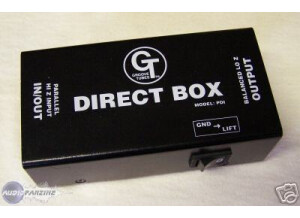
    The Groove Tubes PDI (Passive Direct Box) is an affordable DI box that can be used in any way that you'd like. I've used the box in a professional recording studio, mostly to record keyboards, but it can definitely be used for live shows as well. The box doesn't require any power or anything since it is a passive box, and has 1/4" connections for both input and output, as well as a balanced XLR output. It isn't rack mountable in any way. UTILIZATION Using the Groove Tubes PDI Passive Direct Box is incredibly easy. If you've at all familiar with DI boxes and have used any other model in any way, you won't have a problem adjusting to using this one. It isn't like you need to do anything once you've made your connections, as it simply has a ground switch and nothing else in terms of parameters. I don't believe that manual is at all necessary for this DI box. SOUND QUALITY While perhaps not my favorite sounding direct input box out there on the market, the Groove Tubes PDI Passive Direct Box still does have a pretty good sound and will get the job done more times than not. It won't color your sound or anything like that, as it pretty much will throw back at you what you send it as far as I can tell. I've used the PDI for recording a few different types of keyboards, including a direct out from a Fender Rhodes as well as a modern digital keyboard. Although I can't say I have further experience using the PDI for other applications, but I would think that it would translate to anything you'd want to use it for, as it isn't like you have parameters to set that could change it one way or the other. Basically what you've got is what it is and there isn't any room for changing it... OVERALL OPINION For an inexpensive direct input box, the Groove Tubes PDI Passive Direct Box is a great way to go. While not as versatile in terms of parameters or as clean sounding as some of the upper end DI boxes out there, for boxes in this price range you're getting a very good sounding piece of gear. While I'd probably recommend these mostly for home studio owners or those on a budget, this is definitley suitable in a professional environment as well...

  • moosers's review

    The Groove Tubes Fat Finger is a unique guitar piece that aims to add sustain to your electric guitar. It attaches to the head stock of your guitar and is supposed to allow your guitar to sustain a bit longer, and I do believe that it does this. Let me start of by saying however, that I don't believe this is necessary for anyone's guitar, but at times can be a cool gadget to have around. It was easy to attach to head of the guitar and I didn't find that it feel off easily or anything like that as it stayed in place pretty well. I can't say the Fat Finger will give you infinite sustain or anything close to it, it will loosen your strings a tiny bit and will make it a bit easier to sustain your strings. However, if I'm looking for real sustain I will usually use a compressor, as this doesn't have the capability for sustain like that. It isn't the type of thing that I would use on every song, only on some here and there where I feel I might want a bit more sustain. The Groove Tubes Fat Finger is cool with effects like reverb and delay, but like I said earlier, it definitley isn't a necessary piece of equipment. The good news is that it is a very low priced piece of equipment, which is the main reason that I tried it out to see if it could help at times even a little bit. This is definitely an intersteing concept, as I don't think that I had seen anything like it before I got this one. If you're intrigued by this at all, I'd recommend just checking it out and seeing if it is something that you might want to use.

  • moosers's review

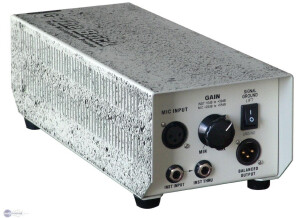
    ocumentProperties Normal.dotm 0 0 1 57 329 None 2 1 404 12.0 ocumentProperties 0 false rawingGridHorizontalSpacing18 ptrawingGridHorizontalSpacing rawingGridVerticalSpacing18 pt 0 0 false false false Groove Tubes 'The Brick' is a tube based microphone preamplifer and direct input box. It is truly a brick in both look and in weight! It isn't a rackable piece of gear as it is literally in the form of a brick that is best placed on a desk. The unit has an XLR input and an XLR output as well as a 1/4 inch input and output. The only parameters that it has is a gain knob and a ground switch... UTILIZATION Using The Brick isn't hard at all and if you have any knowledge of how to use a mic pre, this won't present any problems for you at all. All you need to know is how to plug everything through and how to set your level, and that's all that there is to it. It is as simple as it gets for a mic pre and direct input box combination and I don't foresee this being a problem for too many users. For this reason I don't believe that a manual is necessary. SOUND QUALITY The sound quality of the Groove Tubes Brick is quite good overall. While there isn't anything too special or unique about the sound, what it will give you is a very solid sound both in terms of the mic pre and the direct input section. It is useful for any type of situation and I can't say that it is best at recording one thing, but the DI is perfect for recording bass guitar. The Brick definitely won't color your sound in any way as the sound that you will get from it is clean and accurate. OVERALL OPINION Overall, Groove Tubes 'The Brick' provides studio owners with a cheap option for a mic pre/DI box without sacrificing quality. While it isn't in a traditional form, this unit will definitely add a lot to any studio looking to expand their mic pre collection. The price is perhaps the best aspect of this unit as it is cost friendly and accessible for home studio owners. All in all, The Brick is definitely worth looking into for anyone in the market for a mic pre/DI box combination...

  • JackLudden's review

    This is a large diaphragm condenser mic. It's best suited for recording applications. It's a cardioid pattern and requires phantom power. The mic also has a switchable high pass filter, and a switchable pad for really loud source material. OVERALL OPINION I have been using this mic for about 3 years. This mic is basically sort of an average one. I have found that it is very hit or miss when recording different things. I have had some success with recording acoustic guitars and floor toms with this mic. I have found however that it tends not to be as detailed as I like for something particular like lead vocals. It imparts a certain quality a lot of the time that I don't like. The highs tend to seem somewhat brittle, and the overall sound is somehow hollow. One bonus however is that it seems to be durable - I accidentally dropped it from the top of a boom once - and it had no damage. Nice to know with something fragile like condenser mics. But like I said, it is hit or miss - there are some occasions that I will try this out and beats more expensive mics. When used in conjunction with a second, small diaphragm condenser mic, I found that you can get some nice acoustic guitar sounds using this mic. Floor toms sound nice and bassy at times with this mic, but since its a condenser you still get plenty of the attack. It is however rather cheap, so for the ~300 price range it's not bad. I'd probably suggest a mic in the Shure KSM line for this price range for a large diaphragm condenser though. I am sort of on the line when I think about if I would get this mic again. Most of the time it disappoints just a bit, but sometimes it's just the thing.