Log in
EN
FR

Line 6 Guitar Amp Simulation Pedals

9 products found

Filter
Sort by
Evaluation
  • Reviewed or not
  • Editor’s award
  • Reviewed by Audiofanzine
Availability
  • Available or not
  • Sold new or used
  • Sold new
  • Sold used
Must-have products
  • All products
  • Flagship products
  • Best rated products
  • Hot products
  • Popular products
Price
  • Freeware
€
Clear
Sort by
  • Popularity
  • User ratings
  • Price - low to high
  • Price - high to low
  • Used price, increasing
  • Used price, decreasing
  • Name (from A to Z)
  • Name (from Z to A)
  • Added on
Sort results
  • Popularity
  • User ratings
  • Price - low to high
  • Price - high to low
  • Used price, increasing
  • Used price, decreasing
  • Name (from A to Z)
  • Name (from Z to A)
  • Added on

The best Line 6 Guitar Amp Simulation Pedals reviews

The reviews Audiofanzine members found the most helpful.
  • « Line 6 AM4 Amp Modeler »

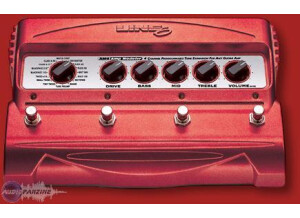
    Purchased at a local music store for $149.00. There are a lot of great amp tones out there and I wanted to have them for myself without having a bunch of amps. I had heard and read that Line 6 was one of the best at digital amp modeling and $149.00 seemed like a small price to pay. Small enough to use as a desk top but solid enough to stomp on. 16 amp models: 5 vintage Fenders, 2 vibtage Voxs, 3 Marshalls and 6 various others are a great selection of both vintage and modern, clean and crunch tones. I have to admit I have never heard many of the original amps that are modeled but I think the sound is fantastic. Especially in the Fender and Vox amps. 4 programmable stomp switches. Highly adjustable tone, volume and drive knobs. My Favorites are the Fender 64 Delux Reverb, 65 Twin Reverb and the 67 Vox AC-30 Top Boost. The manual even gives tips on tone adjustment for each amp and what artist you may have heard using them. Plan on picking up the optional ($50.00) expression pedal also. Front end distortion on 2 of the high gain amps. Noise gate works well on front end but takes away alot of volume and sustain. Some sound with the noise gate on is pretty unstable. Other than that its fabulous! Solid steel with heavy switches and a good rubber mat underneath. Wont scratch your desk as a desk top and wont slide around on the floor. Switches are far enough apart to not hit two by accident. face plate is well marked and easy to read. $149.00 for all that tone is a true bargin. I play through a Fender Princeton 65 DSP amp and I thought it sounded pretty good until I plugged in the AM4. I think it really is like having a room full of amps in one. This review was originally published on http://www.musicgearreview.com

  • « Excellent tones, extremely useful live »

    The Line 6 POD XT Live is a multi-effects board that models amplifiers, stompboxes, and effects. It has a 1/4" inputs and 1/4" left (mono) and right outputs. There is also a 1/8" input for CD or MP3's player at line level with adjustable gain for that channel. There are also MIDI connections which can be used with a sequencer to change patches. There is also a connection for the Variax guitars, whose one tone patches can be saved into each patch bank for easy switching. There are large buttons to switch on and off the amp, stompbox, and effects for each patch. There are also two buttons to switch between patch banks, each of which have four buttons to change between the patches of each bank. The patch information is visibly displayed on a screen on the floorboard. Each patch can be named. The amp, stompbox, and effects models can be updated by purchasing patches from the Line 6 online store. UTILIZATION Editing the patches is very easy. The manual is extremely helpful and offers further insight into how the POD XT Live operates. The preset sounds are pretty each, and each of them are around 80% of the way there but will probably require some tweaking to meet your individual needs. Many, many factors can be edited on each patch, including the type of microphone that is being emulated as well as its placement in front of the synthesized speaker. The amp models are EXTREMELY close to the originals in most cases. SOUND QUALITY The models being amplified are EXTREMELY close to the originals in most cases. Many like the sound of the POD right out of its outputs and simply record that. I only use my POD XT Live for practice and shows, and prefer to play straight through my Mesa Boogie Single Rectifier for recording. If I needed some kind of specialty patch or live effects in a studio recording environment, I would probably implement the XT as it is definitely usable. I have used it in the studio to record scratch guitar tracks. OVERALL OPINION At this point, I couldn't do it live without one of these wonderful Line 6 products. My only gripe is that when switching patches, if using a delay the delay is cut prematurely, with no option to continue the rest of the delay when switching patches. The original POD and POD 2.0 did not work in this way, so if there was a 2 second delay set on one patch, it would continue with the rest of the delay when another patch was punched up, making for a seamless transition. That being said, I don't have any other problems with the XT Live, and that one thing is only a minor annoyance. The consistency that the XT Live is able to provide me from show to show is tremendous and prevents me from fiddling with my amplifier too much before each performance.

  • « Great all around tone/effects machine »

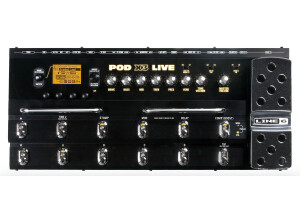
    What are the effects, or types of effects available? You name it, the X3 Live has it. From reverbs to chorus to flange and even tremelos, the Pod X3 live is a shmorgasboard of effects. What technology is used? (analog, digital, tube...) This board is all digital but don't let that deter you from at least trying it out. The sounds are pretty good for what they're modelled after. Can they be edited? through a Mac/PC editor utility program? Editing can be done through your PC with the free Line 6 monkey software as well as Gear Box. It takes a little time to get used to using it this way if you've never done any kind of editing on the PC before but once you get a handle on things, it's a piece of cake (assuming you are comfortable on a computer in the first place!) What connection types are there? (Audio/MIDI) Here is what you get: -1/4-inch Instrument Input (w/ Normal/Pad switch) -XLR Microphone Input (w/ Trim Adjust) -USB 2.0 for computer recording -S/PDIF Stereo Digital Audio output -Stereo 1/4-inch Line outputs (with Amp/Line Pad switch) -Stereo XLR Balanced Line outputs -1/4-inch stereo effect loop -Variax Digital Connector -1/4-inch Expression Pedal input -Midi In & Out/Thru -1/4-inch stereo headphones out -Pedal 2 input for optional second Expression Pedal Controller -1/8-inch Stereo (CD/MP3) Jam Along input Is it rackable? Being that it's a floorboard, no it is not rackable. UTILIZATION Is the sound or effects editing easy? I find the editing to be super simple but I've had a lot of experience with Line 6 products and know my way around them. For new customers, it may take a couple of weeks to get used to. Is the manual clear and sufficient?... I've always found the Line 6 manuals to be lacking. I generally get my answers at the Line 6 forums or other guitar related board forums online like Rig Talk. Is the general configuration/setup simple? Yes, the setup and configuration is laid out for you nicely until you want to get into deeper sound editing. That's when it may get a little tricky if you're not familiar with the menus. SOUND QUALITY With what instruments do you use them? I've only used a strat and a Line 6 Variax guitar with this. The Variax was basically built to be used with the pod series and can provide a wide array of usable tones. I'd recommend that setup for guitarists in cover bands that need a different sound for every song. Which are your favorites and/or the ones you hate? The cleans are generally good...some some nice and fat while others were a little thin. The mid gain tones were just ok...nothing beats a tube amp in that regard. The high gain tones, if dialed in right, can be good. There's always going to be that artificial sound that sits on top of the tone that is caused by a digital device. If you can live with that, then you should be happy. Is the sound of your instruments or your microphones faithfully reproduced? Is the pre-amp transparent or does it color the sound? I've tried other guitars with this board but each guitar pretty much sounded the same through it. You can hear subtle differences but the audience is not going to pick up on it or care. The Variax can sound like a ton of different guitars. Whether or not you think they sound authentic is up to your ears. OVERALL OPINION What thing do you like most/least about it? The best part of Line 6 gear is the way it makes your gigs and recordings so much easier. Want a simple live setup? Bring the X3 Live, your guitar and some cables to a gig, connect to the PA, get sound in your monitor or in-ears and you're good to go. No lugging around a bunch of gear. For recording, just plug in, get your sound and go. Did you try many other models before getting this one? I've used the other XT Live in the past. The X3 sounds about 75% better and has many more options. What is your opinion about the value for the price? The product is priced correctly in my opinion. You get an awful lot for the $300 or so you can buy these for. As I said earlier, this is a great solution for a top 40 cover band guitarist. Knowing what you know now, would you make the same choice?... I would probably upgrade to the newer Line 6 Pod HD500 series if I was looking to buy again as it's had a major overhaul. If that wasn't available, I would buy this again if I needed it. Precision and quality of the sound? Sound quality is as good as your ears can judge. Don't let others tell you otherwise. If you like it, then use it. It provides a good reproduction of some pretty famous amps and effects.

  • « A significant advance in realism and quality for Line 6 modeling »

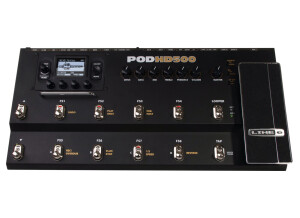
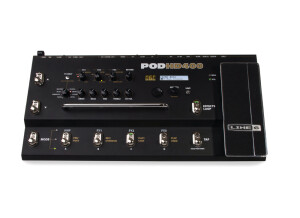
    The Line 6 POD HD500 is the flagship model of the new HD series; the latest incarnation of the company's popular Pod modeling units. The following specs for the HD500 are taken directly from the Line 6 website: 16 HD Amp Models 100+ Effect Models Up to 8 Simultaneous Effects 512 Preset Locations 48-second Looper 1/4" Guitar Input 1/4" Aux Input XLR Input + Microphone Preamp Variax Digital Input (VDI) MP3/CD Input Unbalanced 1/4" Outputs Balanced XLR Outputs 1/4" Stereo Headphone Output S/PDIF Output 1/4" Stereo FX Send/Return 5-Pin MIDI Input + Output/Thru Expression Pedal Aux Expression Pedal Jack Chromatic Tuner Tap Tempo Assignable MIDI Footswitch Controls USB L6 LINK™ Software Editor/Librarian Metal Chassis, Pedal and Footswitches This unit is a floorboard with foot switches and knobs, as well as a rocker pedal that works as a combination volume/expression/wah pedal. The HD500 is not a rack mount unit. UTILIZATION By flipping through the stock presets I was able to find some great usable tones, as well as some over the top noisy creations that were more fun and experimental than functional in a live setup. Getting deep into the programming aspect of this device can be time consuming and a little frustrating if you don't like tweaking and just want immediate satisfaction. But compared to other multi effects units and modelers, this one is laid out very logically and has a streamlined design that is easy to get the hang of, even for a novice tweaker. There are so many features, connections, and routing capabilities in this unit that only a good look through the downloadable manual will give you all the information you need about this product. A stripped down "quick-start" guide is shipped with the unit and only scratches the surface of what this thing can do. SOUND QUALITY NOTE: I tested the HD500 through several tube amps, into the front end of a Dual Rectifier, through just the power amp section of the Dual Rectifier, and into a P.A. system and monitors. I had the best results with the tube power amps, and that is what I'm basing my review on, as that is how I use the unit in a live environment. I have owned or used almost every version of the Pod since they debuted, as well as many of their modeling amplifiers and effects. I can say with confidence that the modeling has been improved greatly in the HD series. Finally, digital is starting to catch up with analog! The amp models really sound and feel similar to the real thing. Probably the biggest difference is the feel and subtle overtones and responses that can be coaxed from the unit. For example, rolling back the guitar's volume cleaned up the plexi model until it had just the slightest bit of dirt, but the tone stayed chimey and didn't become "jittery" like the simulations from the previous pod models would. There was no jumpy digital artifact sound, just a convincing amp like sound. The Marshall and Park (made by Marshall) amps are my favorite and are very true to the real amps modeled. The trademark Marshall high cut and wiry, complex distortion is there and it feels and sounds great to play! I was able to nail Slash's "Sweet Child" tone, or at least 95% there, Angus' back in black, and I got a great early Pearl Jam tone. The "Treadplate" model, which is based on Mesa Boogie's Dual Rectifier, is very faithful to the real deal, and I can switch between the two to A/B them and tweak the Line 6 until they're almost identical. It feels big and crushing, just like the Boogie. The Fender models are gorgeous and very convincing. Beautiful clean tones can be had and I bet if someone took a blind listening test, they'd have a tough time telling the Fender Deluxe Reverb apart from the simulation! The Divided By Thirteen and Dr. Z models get an amazing semi-clean grit sound that's amazingly touch sensitive and fun to play! The Engl Fireball 100 model is extremely tight and has your modern metal needs covered. I was really pleased with how well this model blended when setting up a two-amp patch/sound. I actually am considering buying an Engl now after playing this simulation! The Vox models sound like only a Vox can, enough said! Amazing for recording semi-dirty rhythms and for layering. Using the Bogner Uberschall model, I was able to create a sound almost identical to Jerry Cantrell's huge sound on "A Looking In View" from Alice In Chains' latest release. Big and chunky like the rectifier model, but with a sweeter midrange and an even bigger sound. The effects in the HD500 are ported directly from the M13 and M9 units. The M series was a very popular "pedalboard in a box" type of floorboard that gave you instant access to many of the most famous effects ever, and many of Line 6's own effects from their original four Stompbox Modeler units. I haven't even used all of the effects yet, but I can say that all of them sound better than my old Pod Pro rack units. The effects were always a bit lacking in realism in the Pod units, but the HD effects are very nice. Some simulations of certain analog stomp box effects like the script phaser don't quite nail the real thing, but that is to be expected. The chorus sounds could also be a bit more deep and lush. The verbs and delays are great, and there are many to choose from. All effects can be tweaked endlessly to perfectly suit your tone preference. OVERALL OPINION The warmth and realism in this unit is a huge advance for Line 6, and takes modeling one step closer to blurring the line between tube and digital simulation. I still prefer a tube amp, but considering the amount of connections, great effects, and ease of setup for live and studio use, this unit is a definite must-have if you're down with digital!