Log in
EN
FR

Line 6 Guitars

203 products found

Categories
Series
Filter
Sort by
Line 6
Evaluation
  • Reviewed or not
  • Editor’s award
  • Reviewed by Audiofanzine
Availability
  • Available or not
  • Sold new or used
  • Sold new
  • Sold used
Must-have products
  • All products
  • Flagship products
  • Best rated products
  • Hot products
  • Popular products
Price
  • Freeware
  • Low-cost (< $450)
  • Mid-range ($450 - $1,000)
  • Premium (> $1,000)
€
Clear
Sort by
  • Popularity
  • User ratings
  • Price - low to high
  • Price - high to low
  • Used price, increasing
  • Used price, decreasing
  • Name (from A to Z)
  • Name (from Z to A)
  • Added on
Sort results
  • Popularity
  • User ratings
  • Price - low to high
  • Price - high to low
  • Used price, increasing
  • Used price, decreasing
  • Name (from A to Z)
  • Name (from Z to A)
  • Added on
Filter results 203 results found
Brands
Evaluation
Availability
Must-have products
Price
  • Freeware
  • Low-cost (< $450)
  • Mid-range ($450 - $1,000)
  • Premium (> $1,000)
Show results

The best Line 6 Guitars reviews

The reviews Audiofanzine members found the most helpful.
  • nickname009's review

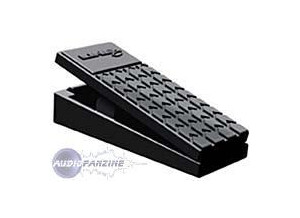
    I currently have two of these to maximize the use of my m9. It’s a pretty good looking pedal and isn’t too costly either. It also comes with a little patch cord to connect with, which is nice, except it’s a very very cheap cord with plastic casing and one of them broke on impact while still in its original box. Weird. But I have plenty of patch cables hanging around so it’s okay, sort of. As for the pedal, I like the size it’s not as big as the boss one as far as I know and it’s quite smooth when using it. Can’t really complain about that. But you can kind of tell it’s cheaply made, the input jack ring is plastic, and I know that’s going to break or crack some day, it’s bound to. There’s also an output label on the side but it’s plugged with a plastic piece. As if this used to be another type of pedal (volume pedal maybe?) and they just simply plugged up the input part and started selling this as an expression pedal. So it’s definitely somewhat of a cheap-ish pedal. However, in terms of use, I haven’t had any problems with it so far. I am just seriously hoping that in the long run this will last. Though I haven’t heard of anybody actually having any problems with these expression pedals so far. I’m just crossing my fingers hoping that I don’t have too much bad luck with these pedals. I’m glad I got two, I did originally intend to use both at the same time but since I only really use one foot at a time 2 is not really necessary, and the 2nd one is now a spare in case the first breaks down somehow. Overally it’s a cheap expression pedal. There are better ones out there and I’d recommend those if you have the extra cash to spend. These are nothing but decent.

  • « Awesome Pedal with a Ton of Tricks »

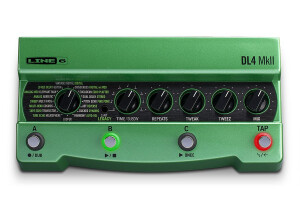
    The DL-4 by Line 6 is actually a modeler of several different famous delays of the past, along with a few modern ideas thrown in. The pedal features models of 16 different vintage delays and on top of that they throw in a 14 second looper feature (which can be twice as long if used in half time mode). The pedal has three footswitches for three presets which can have values changed in real-time via an outboard expression pedal, and there is a fourth footswitch for using the tap tempo to change the delay speed. The pedal can be used in “True Bypass” mode for tone purist or it can be used in my favorite setting, “Trails” mode, which allows the delays to fade naturally when the pedal is turned off. Stereo ins and outs are provided for a full stereo sound when using multiple amps. This particular model is a floor based unit, however Line 6 did come out with a rackmounted version. The DL-4 supposedly runs for about 30 hours on four C batteries but is best powered by the Line 6 power adapter or a third party power source. UTILIZATION Hooking up the pedal is fairly simple. For a simple guitar rig most people hook this up at the end of their pedal chain after gain pedals or in the effects loop of their amplifier. There are stereo inputs and outputs so if you’re using it in mono with one guitar and amp be sure to plug into the mono input and output. Editing the sounds can be a little tricky on the DL-4 without the use of the manual, however Line 6 includes two stickers for the pedal to help you along. The pedal has your basic delay knobs, but also includes a Tweek and a Tweez knob that change different parameters depending on what delay you are modeling. If you are on one delay model these two knobs may change the amount of modulation and rate of modulation, while on another delay model these knobs may change the amount of bass and treble in the delay. It’s nice that the pedal is tweakable, but this can get confusing if you don’t use the pedal often, so keep those stickers. In looper mode the pedal works just like you’d expect, no surprises there. Overall, the pedal is pretty well laid out and easy to use. Basically you just tweak the knobs until you find a sound you like, hold down on a preset button for a few seconds until the LED blinks and you’ve stored your sound to that footswitch. Basic usage is simple, but to get into all of what this pedal can do it is best to read the manual, and I’m a guy who rarely does so. The manual is clear and easy to understand, there are just a lot of features packed in this green machine. SOUND QUALITY If you need the tones of a Tube Echoplex, a Space Echo, and a Deluxe Memory Man but don’t feel like shelling out the big bucks for all these different pedals, this modeler is a good compromise. Does it sound exactly like each one of these pedals? No, but it’s in the ballpark. This pedal does basically everything you’d ever need in a delay, and that’s why it’s so widely used. The looper is great for practicing or performing and it is easy to get clean starts and stops on your loops. The delays can be set to short and subtle or long and super lush and anywhere in between. The “Swell” setting is sort of like a Boss Slow Gear and sounds similar to using a bow from a cello on the strings, fading in the sound and rounding off the initial attack of the notes. I love it. Another one I really like is the “Sweep” delay which puts a phaser type modulation on the delays. The “Reverse” delay when set high can get you those wild Jimi Hendrix sounds that a few years ago you could only acheive in the studio, now these are available for live use. I usually set up a slap back style echo for rhythm guitar on one preset, a longer delay with a few more repeats for solos, and a lush delay with modulation for a third preset. You can make this pedal as subtle or extreme as needed, and the tone is great without killing your signal. I do notice a slight signal drop when it’s used in the loop of certain amps though. OVERALL OPINION Overall this is a super versatile delay that will do just about anything you can dream up. I love having different delays at the push of button, and with tap tempo I can line them up perfectly with the tempo of the song so the delays line up. While many people use the looper live, (if I were to use one this would be the one due to it’s simple layout) I only use it for practicing leads over chords. The footswitches on these units are known to fail with time, but there are many people out there to replace them with sturdier switches that can take abuse. I’ve done this mod myself and it’s quite simple. It has a ton of features for the price, but I’ve moved on to two separate delays because the pedal has a significant volume drop when I use it in the loop of my Marshall. I probably wouldn’t buy it again myself, but not because the pedal is poorly designed or built, but because it has too many features that I never use and takes up too much space on my pedal board.

  • « Nice little amp for the money »

    What do you do when you build amp modeling units with effects and appear to have no idea how tube distortion sounds...you go get one of the best tube amp boutique builders in the world, Reinhold Bogner. Bogner design the good parts of this amp while Line 6 focused on the digitalization of the unit. It was a good move to combine the creative platforms of both companies. This is the same tone as the other amps in this series but just in a low wattage head version. Line 6 DT25 Modeling Guitar Amplifier Head Features: * Advanced HD modeling technology * Reinhold Bogner's most flexible tube design * 1 x 12AX7 preamp tubes * 2 x EL84 power amp tubes * Simple and straightforward 2-channel design * Each channel has Drive, Bass, Mid, Treble, Presence, Reverb, and Channel Volume controls * Master volume control * Reconfigurable analog components (Class A/Class AB; Pentode/Triode) * Complete, 1-touch analog reconfiguration (via Channel select switch) * Low-power mode * L6 LINK in/thru connection for POD HD integration * Serial effect loop with level control * Footswitch jack for channel switching * XLR direct out with cabinet simulation and ground lift switch * 4-, 8-, and 16-ohm speaker outs UTILIZATION Details Type Hybrid Number of Channels 2 Power 25W Class A/Class AB Effects Reverb EQ Bass, Mid, Treble Tone Controls Amp Modeling Yes Number of Models 4 Number of Tubes 3 Preamp Tubes 1 x 12AX7 Power Tubes 2 x EL84 Inputs 1 x TS Outputs 5 x TS Speaker Footswitch I/O Effects Loop SOUNDS This amp is called a hybrid which uses tubes while in addition to digitalized operation. I have seen this amp in a live performance from Stryper and it was convincingly very good. I know that it sounded good and why a Line 6 distortion typically doesn't sound good I went home after the show to see what Line 6 was up to. All the while feeling like this had a very similar characteristic tone similar to Bogner amps. Sure enough I jumped on the Line 6 website to discover the tag team due for this design. They were using GMW guitars which were similar to Ibaneze and Flying V's....at least the builds they had. Each setup sounded killer. OVERALL OPINION I little bit pricey but two companies now have to get paid so to get one new you will have to cough up about $899. This will steer novices and beginners out of the equation and bump the market up to the more experienced players. It might have a hard time selling at that market since most people who would pay for a $1300 amp would not buy a Line 6, bu they would buy a Bogner so we'll see how it pans out. If I got one of these new I'd keep it but I wouldn't spend the kind of money they are asking for this amp. I would save up a few hundred more dollars and get a Shiva or old Ubershall.

  • « Wacky guitar fun! »

    16 Digital Effects 20 Factory Presets 4 User Programmable Channels Controls - Effect Selector, Freq, Q, Speed, Mode, Mix Additional Controls - EX-1 Expression Pedal (optional) Mono/ Stereo - Stereo in/ Stereo out Durable Metal Chassis Color - Purple Dimensions - Length: 10-inches/25.4 cm; Width/Depth: 6-inches/15.24 cm; Height: 2.375-inches; Weight: 3.1 lbs Available Models: • Tron Down • Tron Up • Seeker • Obi-Wah • Voice Box • V-Tron • Throbber • Spin Cycle • Comet Trails • Slow Filter • Octisynth • Synth-O-Matic • Attack Synth • Synth String • Growler • Q Filter UTILIZATION The pedal, like the other 4-stomp series pedals from Line 6, is incredibly easy to dial in good (crazy) sounds, while being simple to save patches and recall stored settings. The manual is clear, concise, and with a good dose of humor! The housing seems to be incredibly durable, although the switches...not so much. I haven't had problems with them, but I've read numerous reports of people that have. The knobs provide a good, positive full throw from full on to full off. SOUND QUALITY I'm rating this a 10 for what it is. Anyone that wants crazy old-school synth sounds or filter sweeps from the guitar should look heavily into this box. It does all the crazy bleeps, bloops, swoops, sweeps, warbles, and just general thick Moog and Oberheim-style synthesizer sounds. I feel that the sounds have really inspired me to come up with some neat, creative parts that I would not have thought of otherwise, and they provide solid hours and hours of enjoyment. OVERALL OPINION I'm giving this a 9 overall. It's a solid entry from Line 6 into the wacky world of analog synth sounds for guitar. Other pedals have done it, but I'm not so sure any other pedal that does this sort of thing has done it with so much variability, versatility, and general patch sound recall as this pedal has. The brilliant purple coating is a fun touch. One thing - the pedal is much larger than a standard pedal, and heavier, so it adds bulk to a pedalboard setup. This is something to consider, definitely, but the overall vibe of the pedal is pure joy. Highly recommended.

  • « It's a staple unit. »

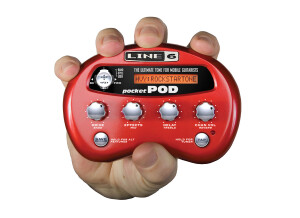
    Features Amp Models based on*: '64 Fender ® Deluxe Reverb ® '59 Fender ® Bassman ® '68 Marshall ® Plexi 100 watt Marshall ® JTM-45 meets Budda Twinmaster '60 Tweed Fender ® Champ ® Budda Twinmaster head '65 Blackface Fender ® Twin Reverb ® '60 Vox ® AC 15 '60 Vox ® AC 30 non-Top Boost '85 Mesa/Boogie ® Mark IIc+ Clean Channel '85 Mesa/Boogie ® Mark IIc+ Drive Channel Dumble ® Overdrive Special Clean Channel '95 Mesa/Boogie ® Dual Rectifier ® Head '89 Soldano SLO Super Lead Overdrive Dumble ® Overdrive Special Drive Channel 1987 Roland ® JC-120 Jazz Chorus Line 6 ® Insane Cabinet Models based on*: 1960 Fender ® Tweed Champ ® 1952 Fender ® Tweed Deluxe Reverb ® 1960 Vox ® AC-15 1964 Fender ® Deluxe Reverb ® 1965 Fender ® Blackface Twin Reverb ® 1967 Vox ® AC-30 1995 Matchless Chieftain 1959 Fender ® Bassman ® 1996 Marshall ® with Vintage 30s 1978 Marshall ® with stock 70s 1968 Marshall ® Basketweave with Greenbacks Line 6 ® 4x12 Line 6 ® 1x12 Line 6 ® 2x12 Line 6 ® 4x10 POD 2.0 Effects Compressor Delay/Compressor Tremolo Delay/Tremolo Chorus 1 Delay/Chorus 1 Chorus 2 Delay/Chorus 2 Flanger 1 Delay/Flanger1 Flanger 2 Delay/Flanger2 Rotary Speaker Delay/Swell Delay Reverb UTILIZATION I think nearly everyone has owned or played with one of these. If you haven't, you've certainly HEARD one - listen to anything produced in the last 11+ years, and there is usually something from this unit on there, from a simple overdub to a smattering of all guitar and bass sounds of a full album. I've actually done both approaches - I've made a couple of full-length albums that used only tones from this box, no miked sounds, and have gotten lots of positive feedback regarding those sounds. I tend to mic up guitar amps more nowadays, but this baby back in the day made great tones acheivable on the cheap and easy. It's a ubiquitous box that makes life simpler for a recording engineer. SOUND QUALITY The sounds are good. I'm rating it a 7 because the technology for amp modelling has improved vastly since these came out. But I know I could still jam out on a recording with one of these units and be satisfied with the results. The Treadplate sound is one of the best metal rhythm sounds around, and the delays are really cool on here as well. It's fun to use as a practice headphone amp! No matter what one thinks of amp models, I don't think anyone could plug into this and not find some kind of usable tone. OVERALL OPINION It's a collection of good, usable amp and effects tones, for not much money. And it is a lifesaver on a recording session - especially if a "signature tone" type amp goes down, this box can be plugged in to save the day. With some EQ and compression, the tones can be nearly indistinguishable from the originals in many cases. If one still turns one's nose up at the thought of using the little red bean pod for a record, it still makes a great headphone amp. And it's fun to mess around for reamping, like with crushed drums or distorted vocals!

  • « Great solution for a messy pedal board »

    The M9 contains over 100 effects, a 28-second looper, and a dedicated tap tempo button. The effects are 6 categories: delays, modulation, distortion, compression and eqs, filters, and reverbs. mono and stereo in/out. Midi in/out. And 2 expression pedal jacks. I don't believe there is an external editing program, but with how easy the M9 is to use I don't see the need. The M9 is made out of metal and seems really rugged. The buttons are plastic and worried me at first, but after months of using it they've held up and show no sign of wear. UTILIZATION I cannot imagine a better implementation than what Line 6 has done with the M9/M13. Whenever you choose an effect to edit you just turn some knobs to tweak the sound and the M9 automatically saves your settings. Its as close to an actual stomp box setup as you can get with a modeler. Its beautiful. There are 24 scenes, and each scene stores 6 effect presets. You can run up to 3 effects at once. its very easy to switch between scenes. The manual is very straight forward and easy to understand. And on top of clear instructions it has an overview of all the effects in the unit. SOUND QUALITY I've mostly used the M9 with guitar, but I've also used it on vocals. It sounds awesome for the most part, especially for delays and verbs. The most disappointing part of the M9 is the distortions, hands down. For the most part they're buzzy and unusable. But everything else is gorgeous. The most surprising part of the M9 for me was how transparent it is when bypasses. In true-bypass you cannot tell the difference. OVERALL OPINION Overall, the Line M9 is a very solid piece of gear. The effects sound gorgeous and its very easy to use. Great for stage and studio. I think its a great value for the price. To get stomp boxes to cover all the bases the M9 does would take thousands of dollars. I've owned the M9 twice, the only reason I sold the first one is because I needed the cash. Its the most convenient and best sounding solution for my effects needs, and if I have to sell this one for some reason I will buy another down the line.

  • « If You Have Older Line 6 Gear, GRAB One Of These While You Can Get Them For $50 »

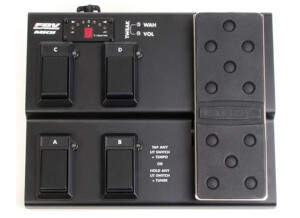
    This is about all the controller you should ever need for any piece of Line 6 gear that uses the older operating system. Built like the proverbial tank, this board will allow you to access features of Line 6 gear that you might not be able to access at all, otherwise. Line 6 is currently blowing these out, direct, for a paltry $50 (street price was $299, in their hey-day.) Shipping to me only added another $5- at those prices, and given the utility and build quality of this thing, it is almost a no-brainer- if you can use it with your L6 gear, just GET one. Be advised- it will only work with some gear- Line 6's website says "This floorboard is only compatible with Flextone® I and II, POD®, POD® Pro, Bass POD®, Bass POD® Pro, original POD® 2.0 (jack labeled "Pedal"), Spider® I (112, 210, 212), Ax2®, Axsys®." I bought it to use with the Line 6 Spider 212 amp I recently acquired. Frankly, it makes playing the amp much easier and enjoyable. First impressions: My God, this thing is HUGE! About 2 full feet long, by about 6 inches wide and 4 inches tall. It fairly dwarfts my old standby Digitech RP-7. Well-built, too- all metal cabinet, solid, no-nonsense push-button foot switches, and well-mounted expression pedals (volume and wah)- this think looks BEEFY. I have my doubts the R52 cable will live nearly as long as the board, but it's a standard cable connection- you can get a replacement at any computer store. The cable that ships with it is LOOONNNNGGGG- around 20 feet- for home use, I rustled up a 8-foot cable, which works just fine. Mostly-black, matt finish means it will not attract too much attention, if you use it on stage. Switches and pedals are solid and give you some tactile/audible feedback, although I'd prefer a "click!" that I could feel through my shoe. You do get a visual cue that a button has been pressed, and that works- but you gotta be looking at the board. Volume and wah pedals work like you'd expect, with the wah having an on/off switch at the toe-down position, said switch requiring a little extra push to flip it. The tuner- only accessable via the Floor Board, when using a Spider I or II amp- is very usable- not too jumpy, like the one on my RP-7 is. I do wish it had a green LED that lit up when the string is in tune. Accessing the tuner by holding the tap tempo button down mutes the guitar a little, but IMO not nearly enough- I like to tune silently- or nearly so- when on stage. The lack of full muting on tune does give you a defeat feature, should you want to have no effects whatsoever. The other buttons give you full access to your amp's, Pod's, or other device's features, and are well-laid out. Manual was fairly well written, and the board is easy to use. GET ONE while you can.

  • « Cheapest POD HD model »

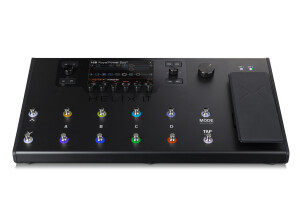
    The HD300 is the lowest model in the Pod HD line. Even though it is the lowest model in the line it still has the exact same models that the higher end models have. The only differents is the user interface. This lack of user interface makes it a bit harder to use than the HD500. With the 300 and 400 you pretty much need to connect it to your computer and use the patch editor to make any decent patches. It comes with all of Line 6's HD amp models which there are now 22 of. When you first get the unit there are 16 models. This is a lot less than the 80 or so amps the Pod X3 came with but these amps are modeled in much more detail than those. If you are wondering if you should get this instead of the X3 just think quality vs quantity. The X3 can sound just as good but it will require much more tweaking and skill in your patch making. UTILIZATION Utilization is the weakest part of the 300 for me. For something this complex they really do not have that many controls. There is an unlabled 3 way mode switch which switches from amp mode to looper mode to patch mode. You will have to learn what each color indicates. These modes change the fuction of the buttons on the bottom face of the amp. There are dedicated amp eq controls and dedicated effects controls. There is a large expression pedal that can be switched from a wah to a volume pedal. There are plenty of outputs on the back, anything you would need for working in the studio. There is no on or off switch like on the XT you just plug it in which is kind of unnerving. SOUND QUALITY With only a fraction of the models of the outgoing POD units the detail in the modeling of these units is much better. It is easy to get a good raw amp sound from this unit. Me being a mostly heavy music player the low number of high gain amps is kind of disappointing but the models it has are good. The amp has all the classic amps modeled in it. The models I find myself using the most are the JCM 800, Bogner Uberschall, Mesa Dual Rectifier and ENGL Fireball. It has several old Fender blues amps. I just wish it had a Roland Jazz Chorus or something with a really pure clean sound. The amp models sound good but you pretty much have to use the computer based patch editor to make up the patches. The user interface on the unit is too cluttered and the tiny LED screen doesnt help as much. The big screens on the X3 and the HD500 are much better for creating more detailed patches on the unit. OVERALL OPINION If you are looking for a cheap way to have a good sound this is a good unit. It can be used lived with a PA or power amp and it is also great for just home studio stuff. Your first few days with it will be the toughest as you learn what all the functions do and make all your favorite sounding patches. With the 400 and 300 you pretty much have to use the computer based editor to make the patches because the screen on the unit is too small and awkward to use. If you just want the HD amp models and can edit everything on the computer there is really no point in getting the more expensive models because the amp models are exactly the same throughout the line.

  • « Not that great »

    This amp is not a keeper amp at all. This thing is a basic sounding solid state amp modeler that doesn't sound anything like the amp modelers it claims to emulate. The tone is extremely thin and metallic sounding. You get 12 amp models and none of them really are capable of sounding like the tube amps that are very famous and enough so that Line 6 would attempt to model. Not that it is Line 6's fault but the idea of amp modelers is really a humorous joke. The idea that they can emulate digitally a tube amp without tubes is just an enormously huge mistake. Nothing can emulate a real tube sound and feel. UTILIZATION FEATURES: * 12 amp models that deliver a complete range from Clean to Insane * 7 Smart Control effects (up to 3 simultaneous) including Tape Echo, standard Delay, Sweep Echo (all w/Tap Tempo), Chorus/Flanger, Phaser, Tremolo and Reverb * 4 User-programmable channels * Built-in front panel Tuner * Enough power to kill pesky Chupacabras and Evil Payasos SOUNDS I guess the most authentic sound are the effects. The effects do sound convincingly enough to go ahead make this purchase only for the practice aspect of it. If you are looking for a practice amp that is an all encompassing everything unit then this isn't a bad unit. You would never go on stage with this thing though. This is not a gigging amp. The sound man will laugh you right off the stage and may even ask you to take this amp off the stage and mic up one of the house amps. This is why I am a bit confused of the reason for 150 watts of power when you will never need to turn this thing up this loud. Well, this amp is not a bad practice amp and with a good guitar it will get you jamming comfortably at home. OVERALL OPINION I don't believe that these amps are even offered anymore. I think these have been discontinued to another more modern model. If you find one on the classifieds I can't imagine it being more than $200. I would recommend this amp to only someone who needs a simple practice amp doesn't want to spend too much money. They are pretty reliable and that is a plus.

  • « Decent compressor for the money. »

    The Line 6 Constrictor is one of the very rugged and extremely durable ToneCore series pedals. It's got a solid build and seems relatively indestructible. Standard input and output with a 9V adapter for powering. It has a very nice LED that is green when the pedal is engaged and turns red when there is a lack of power and it is unplugged. It has a Level knob that controls the overall level making this a good pedal if you want to use it as a boost. It has a sustain knob which controls the amount of sustain and compression you want. From lightly compressed to chicken pickin' squash. It has a gate knob that cuts down some noise but can further compress your signal making there be a bit of tone loss. Not so much so that I don't like this pedal though. Lastly there is a switch that changes the "compression dynamics", ranging from compact to squeeze to mellow. There are different levels of compression, I thought this was a cool switch, helps dial in exactly what you want. UTILIZATION It's pretty easy to set up. The manual is clear on how to get certain sounds. You can get some nice variations of compression out of this pedal and it really surprised me. I use it to get a little boost and liven up my clean tone. It works wonders for that. I play a lot of ambient stuff and like a lot of clean leads so this works extremely well for that. Very happy with the pedal in that aspect. SOUND QUALITY I use the pedal for my electric guitar only, but I'm sure it could handle other stringed instruments really well. It has a wide range of compression so it's fairly versatile in that sense. Obviously if you crank the sustain knob and gate knobs you'll be at a loss of tone. But that's what squashy compression does. This thing nails that and also much subtler "tone sweetening" compression. The only problem I have found sonically is that the pedal is very noisy when used in a daisy chain. I have it plugged in by it's own 9V adapter and it solved that problem for the most part. I couldn't be happier for the price of this pedal. OVERALL OPINION The pedal is built like a tank. It is very reasonably priced and it sounds pretty dang good. I've tried a few other compressors and this is definitely one of my favourites. It may not be the best, but it surely does what I need it to do. For the price you can find these pedals used, you would be hard pressed to find something better. I'd definitely recommend them to someone fairly new to compression.

  • iamqman's review

    This is the most basic version of the spider series from Line 6. This thing is an inexpensive amp modeling amp that is fit for practice and silent playing. You can play this amp silently in your home or office with the use of some headphones and your guitar. This is a basic amp that only has four amp models and the basic effects such as chorsu, phaser, delay, tremelo, flanger, and reverb. Those are pretty much all you need of for something like this. You don't need and overload of options since the basic premise of this thing is to keep it small, compact, and easy. Line 6 Micro Spider Features: * Four amp models including Clean, Crunch, Metal, and Insane * One acoustic amp model * Six Smart Control FX including Chorus/Flanger, Phaser, Tremolo, Sweep Echo (with tap tempo), Tape Echo (with tap tempo), and Reverb * Pod 2.0-style direct output * 1/4" microphone input with dedicated mic trim knob * Mini stereo MP3/CD input * 1/4" instrument input * 1/4" headphone output * Integrated chromatic tuner with note-name display * Powered by six C batteries * AC adapter included * 6-watt, 6.5" speaker * 9.5" W x 10" H x 7" D * 7 lbs UTILIZATION Details Type Solid State Number of Channels 1 Power 6W Speakers 1 x 6.5" Speaker Effects Reverb EQ Bass, Mid, Treble Amp Modeling Number of Models 5 Amp Models Preamp Tubes No Tubes Power Tubes No Tubes Inputs 1 x Instrument, 1 x MP3 (1/8"), 1 x Mic (1/4") Outputs 1 x Direct Out/Headphone (1/4") Footswitch I/O No Effects Loop Height 10" Width 9.5" Depth 7" Weight 7 lbs. Notes Battery or AC Powered (6 x C Batteries) SOUNDS The tone of this amp isn't anything special. It doesn't in any way sound like a real tube amp. This thing is thin and metallic sounding at its best. It doesn't really matter what guitar that you use with it since the tone is not good what so ever. I would recommend a Gibson Les Paul or another guitar with a humbucker pickup installed. Since the tone is irritating the end the only real way you can get through a jamming session with this thing is to cover up as much of the tone with effects as you can. OVERALL OPINION At new these amps come in at around $130, which isn't bad for the amount of options you get from this little box. You get all that you need to get a decent run through of your guitar. Hopefully you get a good guitar to play this amp with because otherwise you'll get a trash can worth of terrible guitar sounds. I would only recommend his to anyone who needs a cheap practice amp. You pretty much get what you pay for with this amp. Not going to be an exceptional tone but enough for the price and the purpose of the unit itself.

  • « Still has that standard Line 6 tone »

    Line 6 has joined with Bogner in order to help boost their image as an amp company. They basically started from scratch, ditched the HD147 and started creating these hybrid tube amps. This amp features a 6L6 power tube section, two 12AX7 tubes, 12 different amp voicing modes, 7 different effects, built-in tuner, a bunch of programmable channels, the ability to go direct to FOH, and you can even plug in your POD to this thing. UTILIZATION They didn't do too bad of a job with this. Everything is laid out like a fairly normal tube amp, but you can also save certain presets and recall them for a later date. The head shell and head cab seem to be built fairly tough, but I can't attest as to how well they work on tour. I never played one, and if one breaks, I'm not sure how to go about fixing it due to there being tons of surface mounted components. I never read the manual to this thing, and I probably should have. There's a lot of small things going on in here that I didn't realize until afterwards. Thankfully, Line 6 has some nice manuals, so understanding everything shouldn't be a huge deal. SOUNDS The sounds were decent, and I think a lot of that is thanks to Bogner more so than Line 6. The cleans are probably the best part of this amp, but I'm not one to brag about solid state cleans simply because good solid state cleans have been done for years. What really matters is when you start adding gain, and it's not too bad. You can get some nice overdriven Marshall-esque tones and even some Recto tones in here. The effects are alright, but they're nothing I'd consider too amazing. OVERALL OPINION If you're looking for an all-in-one head that does it all, this isn't a bad choice. However, I still miss the all analog tube path that so many other tube heads offer. The sound isn't bad, but there are definitely better amps out there. Then again, considering how cheap this is, it's pretty versatile...