Log in
EN
FR

Line 6 Guitar Effects

54 products found

Categories
Series
Filter
Sort by
Line 6
Evaluation
  • Reviewed or not
  • Editor’s award
  • Reviewed by Audiofanzine
Availability
  • Available or not
  • Sold new or used
  • Sold new
  • Sold used
Must-have products
  • All products
  • Flagship products
  • Best rated products
  • Hot products
  • Popular products
Price
  • Freeware
  • Low-cost (< $350)
  • Mid-range ($350 - $800)
  • Premium (> $800)
€
Clear
Sort by
  • Popularity
  • User ratings
  • Price - low to high
  • Price - high to low
  • Used price, increasing
  • Used price, decreasing
  • Name (from A to Z)
  • Name (from Z to A)
  • Added on
Sort results
  • Popularity
  • User ratings
  • Price - low to high
  • Price - high to low
  • Used price, increasing
  • Used price, decreasing
  • Name (from A to Z)
  • Name (from Z to A)
  • Added on
Filter results 54 results found
Brands
Evaluation
Availability
Must-have products
Price
  • Freeware
  • Low-cost (< $350)
  • Mid-range ($350 - $800)
  • Premium (> $800)
Show results

The best Line 6 Guitar Effects reviews

The reviews Audiofanzine members found the most helpful.
  • « When it works it's great »

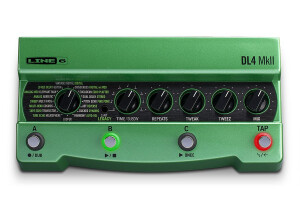
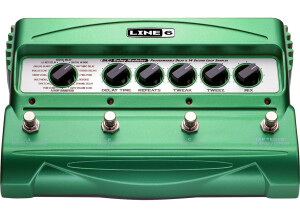
    This is a 24 bit digital delay made to emulate some of the classic delay sounds from pristine to grungy lofi. It has 16 models including Tube Echo, Tape Echo, Analog Echo, and Lo Res Delay for the warmer ambient sounds and digital, sweep echo, rythmic echo, ping pong, and more for the pristine and wild sounds. It also has a looper which for me is the best part about this pedal. Stereo 1/4" inputs and outputs along with an input for an expression pedal and power input. 6 parameter knobs, 4 stomp switches for three presets plus tap tempo, and can store three presets for instant recall. UTILIZATION The dl4 sets up like most other effect pedals out there and is also easy to get a good sound out of. The controls are pretty self explanatory with the exception of the "tweak" and "tweez" knobs. These knobs do different things depending on which delay model you are using. The manual explains their functions well and with time you will probably have them memorized. This is however one of the few delay pedals I have where I occasionally refer back to the manual when things get a little foggy SOUND QUALITY I mainly used this peal in a guitar set-up and 90% of the time it was in looper mode. The majority of the available sounds are great but the looper is where this pedal really shines. I have owned a headrush and still own a timefactor and DD20 but the looper on the dl4 blows them out with ease. The start and play switches are very quick and make it very easy to get a seemless loop that locks in with a good drummer. There is a switch that can slow the loop in half, reverse it, or you can even record in 1/2 time then hit the switch to double the speed of the loop. Another great feature is the one shot which you will find on tons of songs by "Minus the bear". It is meant to let you have the loop only play once through without having to press stop but it also lets you rapidly restart the loop at the beginning which can make some great glitching sounds. I also really like the analog emulation for it's smooth ambience, the lofi for gritty sounds, and the sweep is a great special effect. The digital delay models are pretty much what you would expect just clean repeats nothing special. The bypass is great in true bypass but it does color your signal a bit in relay mode. Unfortunately I much prefer having delays that trail after bypass and this is only possible in relay mode. OVERALL OPINION Now the bad part. This pedal is notoriously unreliable. It's seemingly constant failure is actually how I acquired it. I repair pedals as A side job and I fixed this one in particular so many times that the owner gave up on it and let me keep it. They are very picky about power and sometimes just shut down and will not power up unless you know how to reset the eprom chip. It is not a difficult fix but it dumps all your stored presets and it's not exactly something you want to be doing in the middle of a set. The switches can also fail at times leaving you stuck with either no delay or no control over the looper. It's really a shame because the pedal has some great sounds and it seems like these problems could easily be remedied by Line 6. The issues with the pedal are what keep it at home and on looper mode so I don't waste time writing presets that I will eventually lose. If the quality of this pedal was stepped up I would actually buy one to use live.

  • « Nice gadget... »

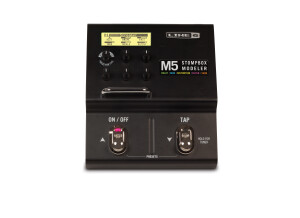
    Multi effects that lets you store 6 pedals, you can use 3 at once per scene. Has 6programmable scenes. Also has a 28 second looper. AC powered only. Stereo in and outputs, midi in and out ports, and 2 expression pedal jacks for use with wah and/or whammy effects. UTILIZATION Great little digital pedal to toss in the gig bag, comes in handy when you can’t bring your pedal board and don’t know what the rental back line will be. What you get is basically all theeffects from the Line 6 DL4 Delay Modeler, DM4 Distortion Modeler, FM4 Filter Modeler, MM4 Modulation Modeler, Verbzilla, Echo Pro boxes. I like how tweaking any setting the pedal will already write it into memory with no need to hit any store buttons. The Looper has its own set of buttons, Record, Record/Overdub, Play/Stop, Play Once, Undo/Redo, Half Speed and Reverse (The looper can be used simultaneously with the three FX Units.). And as with all Line 6 stuff the manuals are pretty comprehensive. SOUND QUALITY There are a few stand-outs for me, in Noise Gate is a must use when running loads of gain, for overdrives I’m partial to the Tube Screamer and Butler overdrive models, the Tri Stereo chorus is lovely although far from the sound of th real deal. The inteligent harmonicer is great on clean stuff for Les Paul/Mary Ford fun and games. The delay is where it’s at for me. I have used the DL4 for years and the only thing I messed was the dry though of the rachmount version, well here you can get a modulated delay or tube echo, or tape echo with the dry through, comes in so handy. OVERALL OPINION I’ve been using the M9s bigger brother the M13 since it came out, and I really prefer the M13 fo the simple reason that you can run 4 effects at once, with 8 more at the ready. But when space is of consideration the M9 will do nicely.

  • Audiofanzine FR's review

    Originally written by Mr Larsen on Audiofanzine FR. Digital distortion pedal with three selectable voicings. Effective EQ (parametric mid) and integrated noise gate (also very effective) UTILIZATION No problems. Or almost (see below)... SOUND QUALITY The sound of this stomp box changed radically after buying a new amp. Explanation: - I first had a Roland Cube 30 solid-state amp and the result was very good: guitar (peavey wofgang US) directly into the Uber Metal, and stomp box into the amp (clean channel). The result sounds very nice (I use the metal mode since I usually play classic hard rock) with a long sustain. Only the low-end is a bit too light. The tone is rather cold (it also due to the Cube) but easily usable. - I then bought a Valveking 112 tube amp: the result is disastrous!! Very shrilling sound, almost no low frequencies, etc. I tried to connect it into the FX loop of the amp: the sound was a bit better with more lows but less gain and less sustain... Surprisingly, the lead channel of the 112 gives better results. So, I don't use the Uper Metal!! OVERALL OPINION Try this stomp box with your amp because you could get bad surprises. I was very satisfied with my Roland Cube, but the pedal is useless with the Valveking. I bought a Vox Satchurator later and had no problems. I connect it to the clean channel and I get a good distortion sound. I don't know if you would experience the same problem with other tube amps: just try it out with your own amp before buying it.

  • moosers's review

    The Line 6 JM4 is a loop and delay foot pedal that is designed for use with any electronic instrument, and also has the capability to be used with a microphone. Since the pedal has an XLR input for a microphone you can use it for singing and do some pretty awesome overall. In addition to the XLR input, it also has a variety of 1/4 inch connections for inputs and outputs. It is a digital pedal that isn't rackable because it is a foot pedal. UTILIZATION Using the Line 6 JM4 for its basic features isn't too hard at all, but diving deeper will take some time simply because there is so much that you can do with this pedal. For starters, you have the parameters to control your tone including knobs for amp modeling, drive, bass, mid, treble, as well as effects like chorus, flanger, phaser, and tremolo and different types of delays like tape echo and sweep echo, which are two of my favorite modes found on the Line 6 DL4 delay pedal. In addition to these tone parameters, you then have all of the controls for recording and looping your sounds, which are in digital form and can take some time to understand everything that it going on, but is fairly simply to do basic recording and looping. The manual is helpful and is definitely worth having around if you are trying to learn everything about this pedal. SOUND QUALITY The sound quality of the Line 6 JM4 is pretty good overall. While it does sound good in terms of the recording and the playback as it won't color the tone too much other than how you set the parameters, the effects sounds like they are digitally processed, which of course they are. They aren't all that realistic, so I tend not to use them that much because I have other pedals that I can use if I want other effects, so I really only use this pedal for looping, recording, and storing. OVERALL OPINION If you are someone who loves to loop things and play around by playing over things you have prerecorded, this pedal is for you. The price is reasonable as it is about the same price of the other pedals in this line. While you get a taste of the looper on the DL4, this pedal has infinitely more capabilities in terms of the time that you can record and the amount of information that you can store. I love having the capability to record all of my ideas and play off of them within a single pedal as I find it great for coming up with ideas. While there are a bunch of similar types of pedals out there, the Line 6 JM4 is put together well and I would definitely recommend checking it out along with some of the other loopers out there on the market like the ones made by Digitech and Boss.

  • moosers's review

    The Line 6 Space Chorus is a chorus guitar effect pedal that has two 1/4 inch inputs and outputs and is powered by the power supply designed for it. It is not a rackable effect as it is a stomp box. UTILIZATION The configuration of the Line 6 Space Chorus is really easy to figure out, as it only has a small amount of parameters, although there is enough to allow the user to get a good amount of varying sounds. You've got knobs for speed, color, and depth, as well as a switch to choose between chorus, tri, and vibrato modes and there is also an LED meter for tap tempo. Everything is laid out smartly and conveniently, making it a very easy to use pedal. I don't have the manual for the Line 6 Space Chorus, but it is pretty easy to use and you don't really need it if you don't already have one. SOUND QUALITY The sound quality on the Line 6 Space Chorus is very clean and overall sounds pretty great. The three different modes make this a versatile pedal that is capable of getting a bunch of different tones, but I probably use the standard chorus mode the most. I usually use this pedal with either a Fender Strat or a Gibson SG along with a 1976 Fender Twin Reverb amp, and I've found that I can get some pretty awesome sounds within this set up. You can really get just about any chorus or vibrato sound that you are after with this pedal, all with a super clean sound quality. OVERALL OPINION I've been using the Line 6 Space Chorus for about a year and it is definitely a good sounding chorus pedal that is useful for a number of different application. While I've only used this pedal for recording, it is perfectly suitable for live shows as well. Line 6 has won over my trust by making cheap products that still maintain a professional sound quality, and the Line 6 Space Chorus fits right in with this description. The cheap price makes it an option for players of all levels, without compromising sound quality. Overall, the Line 6 Space Chorus a great sounding chorus pedal at an even better price.

  • moosers's review

    The Line 6 Verbzilla is a digital reverb pedal. It has 1/4 inch inputs and outputs and is not rackable as it is a stomp box. It has ten different types of reverbs and four parameters to control them. It has a wide variety of reverb sounds and easy to use overall. UTILIZATION The setup of this pedal is extremely easy, as is getting a good sound out of it. It has five knobs total - one for to choose the type of reverb, one for tone, one for time, one for decay, and one of mix. These controls are basic and manipulating it is quite easy. Some of the types of reverbs include hall, chamber, gate, spring, and plate. I don't have a manual for this pedal, but have never had a use to look into getting one. SOUND QUALITY The sound quality of the effects on this pedal are top notch. I have only used this with guitar - usually a Schecter Ultra III and a '76 Fender Twin Reverb. With this set up I am able to get some great reverbs from this pedal. Being that it has ten different types of reverbs, the pedal has the capability of getting a number of different types of reverb sounds. My favorite reverbs on this pedal are the plate and the chamber effects. This is a high quality pedal with a number of very usable reverb sounds. OVERALL OPINION I've been using the Line 6 Verbzilla for two years. I have found it to be an above average reverb pedal because of the overall sound quality and its ability to get a vast number of different types of reverbs. I would compare this pedal to a Boss RV-5, as both have a similar price and overall capabilities. It is hard for me to choose between both pedals, as I think both are great options. The Verbzilla has great tone quality and it won't break the bank. It has a sleek design and its versatility makes it a great all purpose reverb pedal.

  • moosers's review

    The Line 6 FM is a stomp box that has a variety of filter effects on it including wah-wah and synth type sounds. I believe it is a digital pedal and it has 1/4 inch inputs and outputs and also has an input for an expression pedal, which comes in handy for using the wah effects. It is not rackable as it is a stomp box. UTILIZATION The configuration of the FM4 is pretty easy to get used to - there are 16 different effects and 5 parameters that do different things for each of the different effects. It also has four foot switches where you can preset your own sounds. The manual is very useful as it explains what each of the parameters does for each of the different effects. It also has information about how to concoct some really cool tones and is overall really useful. SOUND QUALITY The sound quality of the FM4 varies from effect to effect. The main reason that some of the effects aren't all that great is because of the tracking. It doesn't pick up the guitar as well as I would have like and will make some strange noises on some of the effects. Some of the better effects are the octi-synth, the seeker, and attack synth. While a bunch of the other ones are pretty good to, for the type of music I play most of them are not realistic enough for my taste. OVERALL OPINION I've been using the Line 6 FM4 for about three or four years. I was intrigued by it for the longest time and finally decided to pick one up. While there are a number of pretty good effects on this, for the type of music I play, which is mostly acoustic folk and rock, they are not realistic. However, I can definitley see why a lot of people like this pedal for its interesting sounds and versatile nature. It isn't overpriced for the amount of effects you are getting and is built like an ox. While I'm glad to have it around for that special occasion if I need it, it probably isn't useful enough for me to keep around much longer.

  • « High Quality Sounds & Options »

    There are so many features behind the Pod Express that I will not cover how to access, save presets, etc., since the manual and instructional videos are available. However, I will begin with the sound quality, since that is paramount. The seven amp and seven cab models are of high-quality, since they come from Line 6’s Helix family. They sound raw, meaty and natural. To my ears, they are superior to similar Fractal Audio models, and perhaps not as organic or full sounding as some other tech that boasts amps and cabs in a pedal format (I’m also referring to far more expensive products). Having said that, it is difficult to make such comparisons, since they are different flavors of a similar beast. I will say that I prefer recording with the Pod Express over some of my other gear, and would not hesitate to gig with it – it sounds darn good! https://rumble.com/v4msiii-line-6-pod-express-guitar.html The seven amp models range from very clean, to slightly dirty and into high-gain territory. The names include Clean, Special, Chime, Dynamic, Crunch, Heavy, and Lead. Something for everyone. These amps are modeled after industry standards, from Fender, Matchless, Friedman, Peavey, and some Line 6 exclusives that stand very well on their own. You can adjust the bass, midrange, and treble, as one would expect, but you also can adjust the amp’s gain and presence. Fortunately, unlike some other multi-effects/amps units, these tones are pretty much ready from the start, with only a touch of tweaking to best match pickups and the cab selection. Now, you can bypass the amp if you wish, and use the Pod Express for the effects, but you also can do two things with the cabs. First, you can bypass the cabs, to use your own external IR or if going into a cabinet, but also match up any of the cabs with any of the amps, thus providing a wide tonal palette. The speaker types include Fender, Bogner, Marshall, MESA/Boogie, ENGL and Matchless. These are quality IRs and I suspect you will not require external cabs, unless there is a particular tone/sound response you’re after. There are several effects on board, with four each in the categories of dirt, modulation, delay and reverb. The drives include Boost (Klon Centaur), Overdrive (Ibanez TS808), Distortion (BOSS DS-1), and Fuzz (Ram’s Head Big Muff Pi). The latter two are pretty intense, and work best with a clean amp. Modulation includes Chorus (Arion SCH-Z), Flanger (MXR 117), Phaser (MXR Phase 90), and Tremolo (Fender Optical circuit). Delays include Analog (BOSS DM-2), Digital (Line 6 original), Tape (Maestro Echoplex EP-2), and Ping-Pong (Line 6 original). The reverbs include Spring, Hall, Plate, and Space, all Line 6 originals. I have no issues with the quality of these effects, and they are easy to dial into: Select what effect you want in each category, then use the color-coordinated main control to adjust the mix (e.g., Delay is green, which means seeing a green LED range finder). You cannot alter effect parameters, but you can the mix, which sounds perfectly fine to my ears; I’m uncertain how much I would fiddle with parameters, even if available – I want to plug ‘n play more so than tweak. Pod Express provides room for 21 presets (3 banks of 7), accessible by pressing both the On & Tap Tempo switches simultaneously, then scrolling up/down using those two footswitches. Line 6 included seven presets in the first bank and in each category (Clean, Special, etc.), which you can over-write. The Tap Tempo switch also doubles as a Tuner (one longer press), with an LED wheel for easy viewing on any stage. There’s a lot going on with the Pod Express, but it also has a Headphone Jack (with the pedal and headphone jack’s volume control next to the input), stereo out, the ability to connect an expression pedal (to act as a volume pedal), and/or two assignable footswitches. It can be used as a computer interface (via USB, which also is used for firmware updates), for DI recording and re-amping, and you can assign global settings. Next is the price for what you get. At $179 USD, the Pod Express is worth it just for the effects. However, some people are comparing this pedal to a few multi-effects units at around the same cost, and suggesting the other tech offers more (more bells and whistles, amps, cabs, etc.). There are a number of considerations with the Pod Express. First, the sound quality is very, very good, whereas most budget modelers do require quality cab IRs to sound decent. Second, the Pod Express is fantastic for those who dislike spending hours dialing in, scrolling through touch screens, etc. This is a no-brainer type pedal that fits in the palm of your hand and takes 5-10 minutes to navigate and become accustomed to. In other words, a practical fly-rig, perfect for home practice and recording, travel, and certainly ideal for those not wanting to lug large, expensive gear to a practice or gig where damage or theft may occur. And the fact that the Pod Express operates on three AA batteries (or 9v 500mA power) is a bonus. I played around with the Pod Express for a few hours, then did a composition, the demo video, knob turning, etc., over the course two days, and the batteries are still holding. How long batteries last will depend on the quality of the battery, with no further details provided. Would I compare the high-gain models on the Pod Express to my Purple Nightmare Preamp by Driftwood Amps? Likely not in isolation, but the latter is about $700 USD (without any effects, cabs, etc.), and if playing live I suspect most people wouldn’t even know the difference. The Clean amp is pretty decent (great pedal platform), whereas the Special, the Line 6 Litigator, sparkles and shines exceptionally well. A few reviewers were concerned about the chassis being made of plastic. Bear in mind that this is not cheap plastic… there is some heft to this pedal, although the housing weighs less than aluminum and likely costs less to produce, which keeps pricing down for the consumer. Regardless, you would have to be very abusive to crack or damage it. I may sound biased, and certainly we all are when it comes to gear we like, but the Pod Express is fantastic for the price, can hold its own with more expensive competitors, and has brought affordable, flexible gear to beginners and experienced alike. I would have flipped when I was younger and if this were available, and as an older dude who still plays mediocre guitar, the Pod Express is not leaving my home studio, unless it comes traveling.

  • « Line 6 ModPro »

    It's the rackmountable version of Line 6's MM4 Mod filter stompbox. It's still the same bright blue, just flat and with four screw holes in the front. These were made primarily for studio use, generally made for guitars, and didn't sell very well when they came out for around $300 a piece. If you're interested in the history, they started when U2's The Edge wanted something to put his presets together instead of having upwards of 15 DM4 stompboxes on stage. So Line 6 built the Echo Pro and the Filter and Mod Pro. I've been playing bass through it for about 7 years now and using it as a do-everything rack-effect. I wanted phaser/flanger/vibe/chorus/ring mod/etc. etc. for my bass, and I wanted it to be all in one good box. I found this sitting around Pianos 'n' Stuff for about $120 and in perfect condition, so I decided I had to have it, especially since it sounded killer on my bass. It's really rare to find these anymore anywhere. You generally have to check ebay or various forums to get one, but you can find them for $100 - $150. <a href="https://www.nstuffmusic.com">https://www.nstuffmusic.com</a> 99 presets. Any kind of filter effect that exists on the market. Great high quality digital modeling (Line 6 doesn't do analog). The pre and post gain knobs are a major help, especially since this is meant as an 'effect loop' box. You can also control it all with a MIDI board/expression pedal, which is awesome. Using it as a bass effect box, it's not the best for maintaining every ounce of low end, but it DOES help your sound come forward. When I turn it on people in the audience KNOW that I did something, and I think that's just as important. If I'm gonna use effects, they aren't gonna be subtle...I want people to know what I'm doing on bass, whether it's in rock, jazz, or metal or whatever I'm doing. You don't play Cliff Burton's solo before Pulling Teeth with just a hint of distortion...you crank it! It's pretty nice-lookin in a rack. And there are plenty of blinky lights to make the audience go 'oooh! I bet that thing is awesome and/or expensive' As for the construction, you know what to do. Take care of it, and don't drop it. Otherwise, you're golden. It's not the best for retaining low end, but the sheer amount of effect processing power and the ability to really get your effects out there and bring your bass forward are simply awesome. Not to mention the fact that it's MIDI/expression controllable. <img src="https://line6.com/getdata?table=productModel_cutsheet&field=image_zip&id=46&name=modpro.jpg" /> Put it in your effect loop, not just in your chain. This review was originally published on http://www.musicgearreview.com

  • « Line 6 Otto Filter »

    Guitarist-Over 30 years, Rock & Blues Purchased it for about $99 This has become one of my favorite pedals. I used to think "Auto-Wah" pedals were for a cheesy old funk/disco kind of sound but, this is an extraordinary pedal for rock and blues lead. Don't judge this unit on a three minute demo. there are many cool variations once you get the hang of it. You can get alot of Hendrix/Clapton wah sounds. You can get an inspiring almost talking guitar effect. Play guitar direct into it and try not to use an FX loop. very quiet. You can swap any Line 6 Tone Core module into it's (mono) dock quickly. The switch occasionally pops a little. Built like a tank and has some weight to it. There are numerous useful, modern sounds in this unit. I've been pleased with it. A little experimentation will pay off. This review was originally published on http://www.musicgearreview.com

  • « Line 6 DM4 Distortion Modeler »

    I bought it for $200 used at Guitar Center, but was in perfect condition. I bought it because I had read good reviews on it, and needed some new sounds for my playing. I like how there are 4 available presets, and 16 different distortion settings. It's easy to preset, and the sound and quality of this unit is amazing. I play everything from punk, to rockabilly, and this has all the sounds I need to play them. The gold-yellow color. This is a top quality stomp box, it's built extremely well. It's gotten kicked and hit with the vacuum, but it takes a licking and sounds like new. The sound is impeccable, and it's sturdy and loud enough to last through your gigs. Alright, this is the best distortion pedal I've ever played and I have played a lot. This is top quality manufacturing and great sound for an even better price. With sounds modeling effects such as Tube Driver, Rat, Tube Screamer, Big Muff, Fuzz Face, etc., you can't go wrong. This review was originally published on http://www.musicgearreview.com

  • « Quanity...and lots of it »

    • Over 100 stompbox effects, 4 simultaneous in any order and any combination • Dedicated knobs to control each of the parameters of each effect • Create up to 48 pedal board scenes for instant recall. (It's like having 48 fully tricked-out pedal boards available at any time) • Universal tap tempo to sync all your time-based effects • 28-second looper with dedicated footswitch controls for Undo/Redo, Record/Overdub, Play/Stop, Half Speed, Reverse, Play Once, and Pre/Post • Built-in chromatic tuner with dedicated footswitch • Heavy-duty all-metal chassis and footswitches • Included AC power adapter • Dimensions: 15"W x 3"H x 11.5"D - 10lbs. • MIDI in/out • 1/4" mono or stereo inputs • 1/4" mono or stereo outputs • 1/4" stereo assignable effects send/return • Two expression pedal jacks • True bypass UTILIZATION I was actually one of the first people to buy one of these. The value is pretty obvious. Back in the day you would have to drop a pretty penny on a fed L6 boxes to get all these tones. I have used mine in about every setup you can imagine. I've done the general pedal board driving the front of an amp setup, which seems to be the most common. I would say this is likely the best way to use the thing. Sounds most natural that way. I have used it mounted in a rack and controlled by an external midi controller. It works great this way, although the sound quality seems to be a little off in a racked environment. The m13 in my opinion is really at home in more organic traditional setups. I have used it as a midi controller in a really simple context where I was just doing PC changes. The unit from a technological perspective is surprisingly advanced for a L6 product. But I think this unit's strong point is still the bang for buck aspect. SOUND QUALITY I will come right out and say that none of these effects will win any best in class awards. If you want supreme sound quality, go buy some $400 analog pedals. That said, for sheer quantity of effects, this unit has the battle won. I will admit there are a handful of effects that are arguably a waste of space. But for clever minds, I think nearly every effect in here can be used in some capacity. Some sound better than others. There are enough great sounding effects to get what you pay for. The overdrives are okay. Delays and reverbs are great. The wack effects are all over the place. OVERALL OPINION I have some advice for people considering buying this. If it specifically fits your needs, or you just need a whole lot of effects, then go ahead and pull the trigger. But if all you need is a delay, some overdrives, and maybe some reverb, go spend your money on a few single pedals and call it a day. You only get your money out of this unit if you use at least half of what it offers. You don't have to use everything in it like I have. But this is really a quantity over quality device. And it's a good one.