Log in
EN
FR

DigiTech Guitar Effects

131 products found

Categories
Series
Filter
Sort by
DigiTech
Evaluation
  • Reviewed or not
  • Editor’s award
  • Reviewed by Audiofanzine
Availability
  • Available or not
  • Sold new or used
  • Sold new
  • Sold used
Must-have products
  • All products
  • Flagship products
  • Best rated products
  • Hot products
  • Popular products
Price
  • Freeware
€
Clear
Sort by
  • Popularity
  • User ratings
  • Price - low to high
  • Price - high to low
  • Used price, increasing
  • Used price, decreasing
  • Name (from A to Z)
  • Name (from Z to A)
  • Added on
Sort results
  • Popularity
  • User ratings
  • Price - low to high
  • Price - high to low
  • Used price, increasing
  • Used price, decreasing
  • Name (from A to Z)
  • Name (from Z to A)
  • Added on
Filter results 131 results found
Brands
Evaluation
Availability
Must-have products
Price
  • Freeware
Show results

The best DigiTech Guitar Effects reviews

The reviews Audiofanzine members found the most helpful.
  • moosers's review

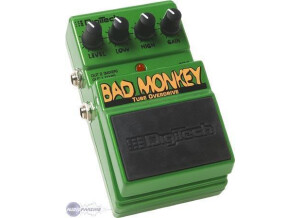
    The DigiTech Screaming Blues is a basic overdrive and distortion pedal that claims to be good for blues music, but is fine for any type if you indeed like what it has to offer. I wouldn’t say that it is necessarily best for blues… The pedal has a ¼ inch input and two ¼ inch outputs and can be powered by either a 9 volt power supply or battery. It isn’t a rack mountable piece of gear as it is a stomp box. UTILIZATION The configuration of the DigiTech Screaming Blues is really easy to understand as the pedal has the basic set up of four parameters. The pedal has knobs for level, low, high, and gain, which is pretty much the exact parameters that you would expect for an overdrive pedal. I can’t imagine that anyone would have problems understanding everything about this pedal because it is just that easy to use. Even if you don’t have experience with other distortion and overdrive pedals, this pedal is so straight forward that you shouldn’t have a hard time with it and don’t need a manual. SOUND QUALITY The sound quality of the DigiTech Screaming Blues is sub par at best in my opinion. While I haven’t used this pedal all that often, I tried it out a few times and was never impressed with it. While it sounds fine for messing around in your basement if you are looking for a cheap overdrive and distortion pedal, as far as recording goes I would stay away from this pedal and wouldn’t even recommend it for live shows. To me it sounds tinny and lacks a certain full sound that I look for in a distortion pedal. I tried the DigiTech Screaming Blues with a Fender Strat and a ’65 Fender Deluxe Reverb amp, so the sounds that I heard were pretty accurate. OVERALL OPINION While I haven’t used the DigiTech Screaming Blues all that much, I have used it enough to know that I don’t want to have any part of it. Like I said, it will work fine if you are just looking to play around and add a little distortion to your sound for your own kicks because it is cheap enough for that, but if you are serious about getting good tones for recoding or live shows, this isn’t the place to get it.

  • « DigiTech RP350 »

    The DigiTech RP350, powered by the new AudioDNA2 super chip, delivers incredible tone and a mountain of processing power, including Lexicon Reverbs and stomp boxes based on the TS808, Big Muff Pi, Rat and DOD 250. This resource is a review summary of an RP350 video found on YouTube by northlander30. Available at American Musical Supply for $129.95. If you're looking for a ton of presets and amp/cab simulations, this just might be the all in one solution for you. Cool chorus is fantastic. 70 factory presets that can't be changed, but 70 user presets that are modifiable. With every preset, you have amp A and B so you can change through the 30 different amps and 20 different cab models (approximate.) Included pedal on the board helps to shape tones, introduce wah, and other cool effects. Occasional strange artifacts in some of the presets, but ability to tweak with software can help round out strange sound anomalies. For $129, this unit seems pretty well built. Whether it can stand the test of road abuse can only be analyzed if you've been able to use one for an extended period of time. A decent number of presets and functionality for folks who don't mind multi-effects processors. If you're into boutique quality sound, you may want to avoid this unit, but if you like the buffet approach, the RP350 may be for you. <object width="480" height="385"><param name="movie" value="https://www.youtube.com/v/EqgRlsxqd_4?fs=1&amp;hl=en_US&amp;rel=0"></param><param name="allowFullScreen" value="true"></param><param name="allowscriptaccess" value="always"></param><embed src="https://www.youtube.com/v/EqgRlsxqd_4?fs=1&amp;hl=en_US&amp;rel=0" type="application/x-shockwave-flash" allowscriptaccess="always" allowfullscreen="true" width="480" height="385"></embed></object> This review was originally published on http://www.musicgearreview.com

  • « DigiTech Whammy »

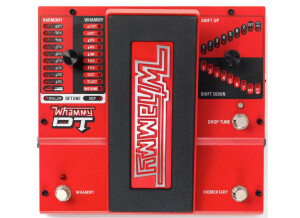
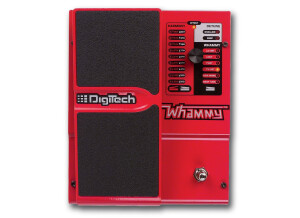
    It's BRIGHT RED and somewhat heavy, with the standard expression pedal, on/off switch, and selector knob to choose between settings on the pedal. I've used it for about two and a half years now in various jazz, fusion, and rock groups. I've been playing bass for around 6 years now, and playing piano for close to 20. I only use this for bass, even though it's meant for guitar. I just left a band after our tour ended, and am working on a new electronica project called Shutterdown, based out of Pittsburgh. I paid $200, which is a little too much for the unit, back in April of 2008. I really wish I had thought twice about getting one used or waiting for a sale. I bought it because I wanted the extra tricks that came with it in my pedalboard. I don't remember where I bought it, but it was somewhere between Wheeling and Morgantown, WV. I like the massive array of selections, from a 2 octave sweep in either direction to harmonies, a dive bomb, a drop tune, or just plain detuning. Very cool stuff. I also especially appreciate the fact that it features a wet and a dry output so that I can keep a bassline rolling while adding the whammy effect for fun. It really is a pretty awesome sound. There's also a MIDI input for controlling the patch setting, which is incredibly helpful, because the knob is not good for controlling during a live show. No way to control patch changes live without bending down to turn the knob or trusting your foot (not easy). No battery compartment; this thing only runs on wall wart power and nothing else, and the cord is rather short, so make sure you have either a powered pedalboard or a surge protector/extension cord if you go to use it live. Tones can be a bit clanky on bass, like getting pick noise. I definitely recommend blending wet and dry sounds at all times. Shy of throwing it in a 2 1/2 ton wood splitter, I dare you to break it. Everything's perfectly sturdy. Some very good things, and it has some fantastic bass uses, but the lack of battery compartment or an easy way to switch patches (seriously, just a little tap control would be fine) brings it down to a 4 instead of a 5. That is, along with the fact that you need to blend it to hold the low end when you turn this thing on with a bass. This review was originally published on http://www.musicgearreview.com

  • « Digitech Hot Head Distortion Pedal »

    I have been an active musician for 26 years. I have played in bands, done studio gigs and worked as a solo artist. Currently, I am the lead guitarist in the band Sinister Mercy. I originally bought this pedal just out of simple curiosity. I listened to the audio samples on the Musician's Friend web site and decided to buy it. I think that I paid $39.99. While similar to the Boss DS-1 distortion unit, the Digitech has a warmer overall tone. The range of distortion available with the Hot Head is actually pretty wide. You can get a nicely spiky, overdriven/saturated tone...and you can crank it up until you get a pretty HOT distortion sound. The versatility of tones that this unit gives you works for classic rock through 80s era metal. It also produces an excellent fusion tone. For the money, this simply can't be beat. Actually, there is nothing that I dislike about the Hot Head. I've seen a couple of reviews on this site where the people hated the tones of this pedal. I don't know how they got such bad sounds because I can't get a bad sound out of this distortion unit. I can use it with tube amps, solid state amps, combos or stacks and it sounds really great. GREAT. It's that simple. It's more "heavy duty" than Boss...and the Boss pedals are very well made. I own some custom made distortion pedals, as well as higher end tube distortions from Radial Tonebone and Damage Control. While they do produce a little better tone for certain applications, the Digitech Hot Head Distortion is living proof that a great pedal doesn't have to cost a fortune. While Digitech may be considered to make a product "for the masses", they are successful for a reason; good, innovative product at an extremely competitive price. This review was originally published on http://www.musicgearreview.com

  • « DigiTech Main Squeeze Compressor/Sustainer »

    Primarily a singer, I've been playing guitar for about 10 years, been in a band (drummer!), and have continued to record and play with other musicians on a non-professional basis. My styles range from folk to hard rock, with heavy power-pop leanings -- Big Star, not Green Day. I bought this used from a musician in Burbank, CA for $30. I was looking for ways to enrich my 12-string electric sounds and this unit did the job, adding sustain, fluidity and intensity to the sound. This pedal doesn't interact with other effects well. It added a substantial amount of noise to my tone so that when I wasn't playing, the hum was deafening, and not just with single-coil pickups. It's difficult to find the sweet spots on the settings to make this pedal work with my Line 6 Pod 2.0 or other effects I wanted to use, such as an Ibanez Tone-Lok Delay and a Durham SexDrive. Pretty good, solid metal. The one I bought was used so it had chipped paint, not the manufacturer's fault. However, this is yet another pedal with a super-hard-to-access battery compartment. At least you don't need a screwdrive on this one, but the metal buttons to release the hatch are so far recessed on the sides that you'd have to have long nails or a key to poke them in. Why do effects manufacturers so often overlook or undervalue this aspect of the design? I like having this pedal on standby -- I was able to get the best slide tone I've ever found by adding it to my recording chain. I have a hard time controlling its noise, though, so I think this pedal could use some improvement. This review was originally published on http://www.musicgearreview.com

  • « DigiTech RP50 Modeling Guitar Processor »

    I've been playing the guitar casually for about 15 years. During that time, I've been in a few bands in various capacities (lead guitar, rhythm guitar, singer, bassist or combinations thereof). During this time, I have never had much in the way of money to steer towards satisfying a guitarist's inherent gearlust and usually relied on others to provide the heavy duty equipment, such as power amps, mics, etc. Ultimately, my true interest lies more in songwriting and recording, inspired by the King of All Guitar Effects (U2's The Edge) and U2's frequent producer, Brian Eno, who in addition to his own early work with Roxy Music and later solo abstract, super-processed, ambience-heavy compositions, has also worked with David Bowie, the Talking Heads, Jane Siberry and a number of other of my favorite artists. I have always had that passion to create (you either have it or you don't, and those who have it know how playing, composing, recording, and mixing is addictive as any drug!), but it always seemed like there was something that was a greater priority (though these things never brought the sheer joy of making original music). Thus, I have always been diverted from spending the time, energy and money necessary to seriously pursue this goal. However, when facing a series of back surgeries last year, I reevaluated my priorities in life and realized that if I don't start "now", there may never be a "now". So I unpacked my Fender Strat, a small Crate practice amp, some effects pedals and started playing again. I invested some money in Sony's ACID Music Studio software for composing and recording (both affordable, easy to use, and capable of producing a decent quality composition - at least, for purely personal enjoyment.) As I threw myself into recording and mixing, I realized that my meager stock of equipment was limiting the range of tones I needed to produce the type of music I want to make. I needed something that both suited my tight budget (a wife and 3 kids don't leave much for purchasing ripe gear!) and was compatible with my virtual studio setup while providing as many sonic options as possible. Thus, my purchase of the DigiTech RP50 Modeling Guitar Processor. I had briefly experimented with the Line 6 Pod which I managed to purchase relatively cheaply in a local music store's clearance sale (the unit was scuffed up a bit, but otherwise fine). I loved the flexibility it provided. Unfortunately, I ran into compatibility problems between it and my recording setup which could not be easily or cheaply resolved. I began looking for alternatives that would allow a direct input into the Line In of my computer's sound card. A local music store (Rutland's) had a variety of guitar processors in stock, but most were out of my price range. However, at $69.95, the RP50 caught my eye. It possessed a fair number of effects plus a number of amp models, a built-in tuner and drum machine. The RP50 has a lot of features that allow the user to create a massive range of sounds. It has 80 separate presets (though only 40 of them are programmable; the other 40 are static factory presets). Some people will always want more, of course, but this should cover most, if not all, a guitarist's basic needs. With this unit, I have the ability to create combinations of sounds that range from simple amplified, unprocessed tones to ultra-fuzzy, crunchy, or stratospheric ambience. When I record, I tend to use a LOT of guitar overlays and ethereal backing tracks to create as deep a nd subtle a feel as possible. This unit is an excellent starting point to achieving those desired sounds (though to truly complete the equation, I also use a lot of plug-ins and digital editing on the computer). For the sake of completeness, the effects available in this unit are: volume level, pick-up/wah effects (it can simulate humbuckers or single coils as well as automating three seperate wah effects), a compressor, 12 separate amp modelers with 9 separate settings (except the acoustic modeler which has a single setting), a noise gate with two separate modes, a basic 3 channel EQ, a host of modulating-type effects (chorus, flanger, phaser, tremelo, bender, Leslie, harmonizer, pitch shifter, detuner, and a few others), three different delays (digital, analog, and pong), and a slew of different reverb effects. The box has two pedals which allow you to cycle through the presets quickly just by holding the pedal down. Programming a preset is extremely easy (though this is due in large part to the very basic nature of the individual effects). Simply put, for my purposes, I have found the RP50 to be an excellent source of creativity and production. In answering the question "What don't I like about this unit", let me first qualify this answer by saying that I love this unit, despite it lacking a number of different parameters for its effects that a more expensive unit would possess. There are definitely some obvious limitations, so - to use a painting analogy - it is rather like painting with broad strokes rather than, oh, say, the precision of impressionism. In a similar vein, as far as I can tell, there isn't a signal "chain" as such. It looks like all the effects are applied concurrently rather than consecutively. There are times, for example, when I would like to have my flanged signal echoed, or conversely, I'd like to have my echoes flanged. There isn't any obvious way in the unit itself to priorities or order these signals. Regarding the physical construction, the unit is plastic and, while I think it would probably be okay to use on stage, I don't know that I'd feel comfortable without some kind of backup (especially given the style of guitar that I play which tends to rely heavily on effects and processing to achieve a unique sound - what can I say? I'm a very much a product of the Edge/Robert Fripp/Jonny Greenwood/etc. school of guitar work). For my purposes doing pure recording while sitting at a desk, this isn't a problem, but the ability to stomp on a pedal in the heat of a performance without it breaking is worth a few extra bucks, to be sure. First, this is not a physically large unit - if I had to guess, I'd say it's about 6"x5". As mentioned above, the RP50 is plastic, though it looks pretty sturdy. My kids have gotten ahold of it on occasion and it is no worse for the wear. It has two pedals for cycling through the presets and a small, red LED to display information. It also has 6 buttons on its face: two for cycling up/down the various effects, another two for cycling up/down the settings on those effects, another button to store those settings to a preset number, and another button to toggle the built in drum machine (the other buttons cycle through drum tracks and tempos). There's a tuner built into this unit, too, but I haven't actually used it, preferring my old Fender AG6 automatic tuner out of sheer force of habit. The RP50 is powered either by 6 AA batteries, but it also comes with a power adapter, which is what I use. There is a single input and output jack in the back, as well as the socket for the power adapter and a port for a DigiTech expression pedal. Like the tuner, I haven't used this particular function so I cannot speak with any authority about it except to say that it is there. Unless I'm mistaken, there is a similar unit from DigiTech - the RP70 - that has an expression pedal built into the device itself, which can really help add to a dynamic performance, I'm sure. For the sake of completeness, the effects available in this unit are: volume level, pick-up/wah effects (it can simulate humbuckers or single coils as well as automating three seperate wah effects), a compressor, 12 separate amp modelers with 9 separate settings (except the acoustic modeler which has a single setting), a noise gate with two separate modes, a basic 3 channel EQ, a host of modulating-type effects (chorus, flanger, phaser, tremelo, bender, Leslie, harmonizer, pitch shifter, detuner, and a few others), three different delays (digital, analog, and pong), and a slew of different reverb effects. The box has two pedals which allow you to cycle through the presets quickly just by holding the pedal down. Programming a preset is extremely easy (though this is due in large part to the very basic nature of the individual effects.) Overall, relative to the price, this is a very decent unit. Bottom line: This is a very good product if you don't have a lot of money to spend on the higher end units but want a fair degree of flexibility and diversity in tone. It has its limitations to be sure, but it has served my purpose for home recording quite well. I wouldn't stake my performance at a gig on it, not because of the sound quality (which is very good), but because it is plastic and might get smooshed by an overly enthusiastic player. If you want something NOW but only have a limited budget, ths is the unit for you. This review was originally published on http://www.musicgearreview.com

  • « DigiTech Crossroads Eric Clapton Signature Pedle »

    When I purchased this unit I was very lucky. I purchased the Guitar Pedle from Guelph music In Guelph On. Canada. I'm a store regular and therefore knew This year it is there 20th aniversary. Due to this they are having weekly draws for forty dollar gift cirtificates for guitar gear. I entered myself into the draw and won their second prize draw. So Rather than paying the $145.99 Canadian that the pedle was going for, Ron Valeriote the store owner took off 40 dollars So I only payed $105.99 Canadian. So I got a real great deal. The reason I got the guitar pedle was because I'm a huge Slowhand fan and decided I wanted this wnderfull palate of sounds in my rig. I tested the Pedle at the store before making my final dicision and was thuroughly impressed. Playing the pedle using a Fender Mexican Strat and a Fender Frontman 15R and the sound I got from this simple setup not only ammased me but it ammasd the other customers and even Ron The store owner. I coulden't belive the sound that was comming out of the amp. this pedle was awsome. making a comarison with the pedle on and off the pedle made a 100 percent improvementon the quality of the tonal values from the amp. The unit has Seven signature tones from Eric Clapton, all of which have two controls which change functions depending on which tone setting it's on, and each setting can change for nearly every song on the albums they represent. This pedle has several difrent effects including the very popular Reverb effect. After bringing the pedle home I plugged it into my Mexican Strat and a Marshall MG15CD. The tone continued to amase me and gave me an all new palate to work with. Another pro to buying this pedle is that it comes with it's own power source. This makes it so that you don't have to buy one seperate from the pedle. On the left hand side of the pedle there is a direct Input for a mixing bord so there is no need for an amp to record using this pedle. Alternatively it will have an output if you plug a 1/4" jack into the mixer with headphones turning the pedle into a portable amp. There were not very many concerns with the pedle. however there were some, one of wich is the pedles use of batteries. The pedle is compatable with a 12 volt battery however dueto it's digital technology it eats through the batteries as if you were trying to power a computer using a watch battery. the battery life is very low which is not good if you do regular gigs, however the supplied power source makes this point nearly irelevent. The only other problem I have found with the pedle is that it's hard to memorise what controle dose what in each setting but that just takes practice and frequent use. The Unit itself is constructed of a metal exterior with a non slip rubber bottom and contact point. The controles are made as not to be moved by your foot if you hit one. The battery is replaced directly underneeth the pedle part of the unit and can be removed and replaced with nothing more than a guitar cable's jack. All In all The unit gives an amasing preformance enhancing tone sevirelyand giving seven signature sounds that no Eric Clapton fan should be without. It can be used as a portable mini amplifier or DI'ed directly to a mixing board. The batteries wear out quickly, but it comes with a power source, so thats not so bad. the non slip bottom makes the pedle easy to use on stage and the batteries can be replaced with extream ease. So whether your looking for some slowhand sound, or just want somthing new this pedle is for you. This review was originally published on http://www.musicgearreview.com

  • « DigiTech RP100 »

    This was a gift given my by my dad for my birthday a little over a year ago. He paid $160 Canadian for it. It was bought at a store in Fort Frances Ontario Canada. The Unit does have a lot of sounds and effects. It's easy to program (although it takes a long time) and generally easy to use. It would be an alright pedal for beginners doing their first recordings. It really is a beginner's tool. But for those people who don't have a lot of money, or nice equipment, it basically does the trick for practice or studio. I would NEVER use this pedal live. I've played a lot of shows since i got it, and i've never taken it to any of them. there is absolutely NO volume synchronization between effects. the distortions are way to loud compared to the soft sounds. If you ever have to switch between soft to distortion in a song, PRAY that you have a nice volume pedal. It's also not very sturdy. 2 of the nobs have broken off, and all of a sudden, the built in tuner started thinking my C tuning was a G# tuning. i have no idea how that happened. So now i need to borrow my bassists tuner for gigs. the construction is simple, medal casing around cheap plastic buttons. The casing feels sturdy, but the buttons feel really easy to break (as they are) and like i said earlier, the sound quality is passable. Bottom line, If you are a beginner, and you do some studio work, and dont have a lot of money, than this is an alright pedal. You will need to spend time reprogramming the settings, and you will end up replacing it eventually, but it's an alright pedal in a pinch. but NEVER use it live unless you have a nice volume pedal that wont change pitch. This review was originally published on http://www.musicgearreview.com

  • « Digitech XMM Metal Master »

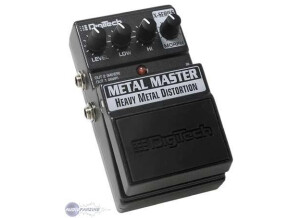
    I got it for xxxmas but my dad paid $125 CAD for it at Long & McQuade. I wanted an awesome biting/rumbly distortion and this pedal delivers in spades. The 5:00 position on the Morph knob is kinda like a "High Tech" metal tone, the 12:00 position is a thin, piercing sound and the 8:00 position is a biting old school tone on steroids (f#ckin awesome for low tunings, you can practically feel the sizzle man!). You can make a low death metalish tone or a sharp shred tone and even a lo-fi tone (by scooping the bass and cranking the mids) and everything in between. With the morph knob all the way to the right and the lows dimed, there is a huge low end feedback/resonance that is almost louder than the guitar signal and with the highs boosted theres some white noise but nothing that cant be fixed by a good noise gate. With the lower morph settings feedback is a serious issue since my pickups in my Ibanez Stagestar need to be potted. At low volumes this is not an issue though. Built out of cast zinc or steel i believe. It has stood up to me pounding on it during gigs and im a relatively big guy (210 lbs. 6'1). It has a non-slip rubber base and foot pad which kinda sucks when ur using it on linoleum floors cause it gets covered in dust and is hard to clean but no gripes there. The knobs feel very solid and shouldnt break anytime soon. I use both the CIT and normal outputs at the same time to run 2 amps (a fender 15G for high end sizzle and a Peavey 140 watt bass combo for crushing low end and it sounds absolutely crushing through this combination. I play thrash, death metal, industrial metal and even some detuned nu-metal riffs and this pedal has a setting for all of them. Worth every fuckin penny that was spent on it and maybe even more. Would be a little better if it had a built in noise gate like the Ibanez 7th Heaven but that pedal costs $300 here in Canada so it will cost me less to get a Rocktron HUSH or Boss NT-2 with this. This review was originally published on http://www.musicgearreview.com

  • « Digitech RP300A Guitar Multi-Effects Pedal »

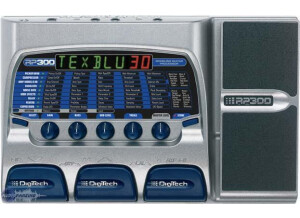
    I got this for Father's Day from Mucisian's Friend via the internet for $200. I needed an effects pedal to complete my sound set up that I wanted to be able to play the songs I am learning/like. This unit is very sturdy and easy to use. It comes with a ton of presets. The built in drum machine is great to play along with and helps me improve my timing. I haven't used the sampling feature yet that allows playback of sampled songs at 1/4 speed but I like the fact that it's there if I can't figure a song out. I also like the built in tuner and it works very well. I honestly haven't found anything I dislike about this effects pedal. It does take a little reading of the manual to figure out how to fully utilize the controls/capabilities of this pedal but once you get over the learning curve you can't stop trying out all the different effects. I was surprized how tough this bad boy is. I'm pretty big (6'5" and 240 lbs) and my size 14 foot has no trouble stomping on this pedal and it takes the abuse. I like this pedal alot. I did tons of research before I bought it so I could bet the best pedal for my money and this baby surpassed my expectation. You can't beat it for quality, affordability and capability. This review was originally published on http://www.musicgearreview.com

  • « Digitech RP100A »

    Purchased from Musician's Friend on sale for $79. I originally ordered an RP100 but got sent the RP100A instead. I am on a budget and wanted something with amp modeling and multiple effects. I wanted something that I could use to play electric guitar through a PA amp since I am also a vocalist and did not want to buy two separate amps. I like that I can plug this into a PA amp and makes it sound like a real guitar amp. I like to play a variety of styles of music and can always find a combination of effects and amp modeling to suite whatever I play. It is also very handy to play through headphones without the amp. You have to spend a lot of time customizing your presets to get the sound you want but I have been very happy with the final result. I have been able to get some nice accoustic, bluesy, jazzy, and mildly distorted rock sounds out of this thing.The best part about this multi-effects unit is its great value for the price. I liked the RP100 over the RP50 because it comes with the power supply ($20 if purchased separately) The factory and artist presets are not usable unless they are customized and saved as a user preset. As seems to be common with other processors, it is difficult to get the same level of sound out of each amp. I think it is a shame that most of the artist presets are from heavy metal musicians, though this processor has much more versatility than this. Seems like bad marketing to me, since a lot of the heavy metal people seem to complain that they can't get good quality heavy distortion out of this thing. I have had this unit for 11 months now and it seems to be holding up well. I have only used batteries in it once and found the battery compartment to be rather cheaply made. The battery compartment cover bulges out when there are batteries installed. I highly recommend using the power supply since the batteries are only good for about 7 hours. A very versatile processor for a great price. Great for the beginning musician or musician on a budget who wants to experiment with different sounds or who want to be able to play a variety of music styles without needing to buy separate effects and several different amps. This review was originally published on http://www.musicgearreview.com

  • « Digitech Death Metal »

    I paid $50 for this pedal at george's music. My amp's stock distortion just wasn't cutting it so i started looking for distortion pedals. I previously bought the Turbo Flange by Digitech and was very satisfied so i decided to get another digitech. I didn't want to pay $80 for the metal master so i looked at their new series. I love the raw sound it gives perfect for any type of metal. I currently use a 10 watt guitar package amp with it. When i go out to stores and try out the world reknown marshall distortion/amps and a guitar that costs double mine i still prefer the death metal pedal over it. Can't wait till i get my marshall 50dfx then itll be even more amazing. Sounds amazing with downtuned strings and is great for rhythm as well as doing solos. Also an incredibly versitile distortion. Has as many if not more different tones then the metal master and costed much less. Amazing deal. Hmmm....Not much really that i don't like...it takes a while to control the feedback. When i first got it i'd have to keep clicking it off to prevent terrible feedback. Once you learn how to control it the feedback can actually be a very good thing. I use the treble setting and the tone at 0 to create the least amount of feedback. My brother dropped a ten pound weight on it...it still works as great as ever...also the digitech stompbox design is very comfortable. One word to completely describe it - Lethal. Most amazing thing i've ever bought. I highly highly recomend this distortion for anyone whos into metal This review was originally published on http://www.musicgearreview.com