Log in
EN
FR

Vox Guitar Effects

57 products found

Categories
Series
Filter
Sort by
Vox
Evaluation
  • Reviewed or not
  • Editor’s award
  • Reviewed by Audiofanzine
Availability
  • Available or not
  • Sold new or used
  • Sold new
  • Sold used
Must-have products
  • All products
  • Flagship products
  • Best rated products
  • Hot products
  • Popular products
Price
  • Freeware
€
Clear
Sort by
  • Popularity
  • User ratings
  • Price - low to high
  • Price - high to low
  • Used price, increasing
  • Used price, decreasing
  • Name (from A to Z)
  • Name (from Z to A)
  • Added on
Sort results
  • Popularity
  • User ratings
  • Price - low to high
  • Price - high to low
  • Used price, increasing
  • Used price, decreasing
  • Name (from A to Z)
  • Name (from Z to A)
  • Added on
Filter results 57 results found
Brands
Evaluation
Availability
Must-have products
Price
  • Freeware
Show results

The best Vox Guitar Effects reviews

The reviews Audiofanzine members found the most helpful.
  • « Great, classic Wah! »

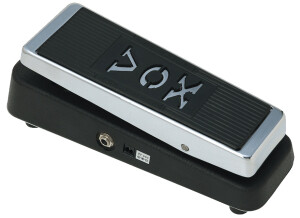
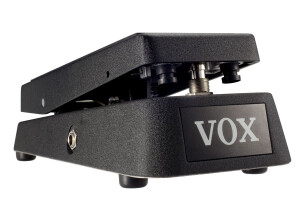
    I recently had the option of trading in my 90s Vox Wah (which I bought new in the late 90s), in order to help purchase a V846. Sure am glad I did! While I enjoyed the 90s wah, I really can't even compare them to this one. It's got everything I'd need in a wah. On the surface, it's pretty basic. It has 1/4" connections (in and out), and simply has the rocker that clicks the effect on or off. It is powered by 9V battery which has to be installed by taking off the back cover. It's an analog pedal, and as such, can't be modified using PC or MIDI. It's not rackable. UTILIZATION There's few pedals that are easier to use than a wah. Simply click the effect on and rock the pedal back and forth to your liking. With a well-oiled, well maintained wah, it should be easy to go from slow, long wah sounds to quick sweeps. The setup of the pedal is really easy. There really shouldn't be any need for a manual. The only downside to this is that there isn't a power supply option, though since this is such an old pedal, you can't really blame the manufacturer. SOUND QUALITY This is one of the best-sounding wahs I've ever used. I really can't complain about anything with it. I like using it with almost all of my pedals. It's got a great response in all of the frequency ranges. I will say that it'll definitely sound better with old-school effects (basically, it'll sound better with an overdrive, played through a tube amp, than it will with death-metal distortion through a solid-state.) While it has a nice sound with single-coil pickups, I really enjoy using it with humbuckers, as they help rein in some of the harsher frequencies. Thus, with an overdrive, you can really rock out without getting too much noise or feedback. I've used it with some tremolo effects with good results too. Basically, this is one of the best wahs you can get, as it doesn't have that annoyingly harsh high end that plagues so many wahs. OVERALL OPINION Finding one of these isn't going to be cheap, but it's totally worth it. You simply won't find many (if any) wahs that are better than this one. Unless you're looking for a much more modern sound, this is pretty much the cream of the crop. I'd highly recommend this to anyone looking for a great wah sound. Most of the later imitations don't compare.

  • mooseherman's review

    This is an interesting effect, and one that is really impractical to use in a live setting. However, for studio use, it can be really cool, and has been in use for some time, at least since the 1960s with British Garage Rock. There is no way to edit this piece of equipment with a Mac or PC, and there are no MIDI connections as it predates both of those technologies. It is an analog, tape-based machine which is interesting and increasingly rare nowadays. The effect is not rackable. The unit features three inputs for guitar or microphone (the microphone must adapt to the 1/4" connection somehow.) There is also an amplifier output, as well as a footswitch input. UTILIZATION Editing this effect isn't too difficult assuming the unit is working correctly. There are knobs for each input controlling effect volume and density. There are switches to control the type of echo that you can achieve, the types are labeled echo, hallo, reverb and repeat. The way that this effect works is that it records the intstrument to an endless tape, and then plays the same tape back at a slower time, resulting in the interesting delayed echo effect. I didn't see a manual so I can't say for sure how informative it is, though I'm sure I would have figured out this machine sooner had I had it in my hands when I needed it. SOUND QUALITY Actually using analog tape for this kind of effect is really unparalleled. I'm not going to insist that it will work perfectly for every echo situation, but I will say that sometimes it is the best option. This is mostly true when looking to emulate the sixties echo that the Dave Clark Five and the Shadows used to use (they are known advocates of this thing). I don't know how to describe it except that it is a spacey, trippy effect that really screams vintage. It sounds great, and there is really not much else that I can say about it. OVERALL OPINION I would say that because this thing is so old, it's probably going to run you a lot of money, even if they reissue it. I'd say that the reissue is probably the best way to go, considering the price, the likelihood of it breaking, and the fact that you can buy it from a trusted retailer (I don't know if Craigslist is the safest bet, since these things are temperamental at best and could easily be faulty). I'd say that you should really only look into this if you are a real vintage purist, I love it but I recognize that there are cheaper and more versatile effects that also sound great.

  • moosers's review

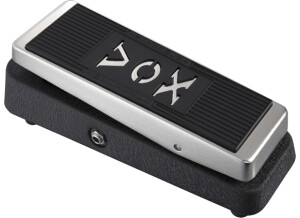
    The Vox V847 Wah Wah has both a reissue and a vintage version, the former of which is the one that I have used. Either way, this is an analog wah wah pedal that has 1/4 inch connections. It can be powered by 9 volt battery and isn't rack mountable. UTILIZATION Using the Vox V847 Wah Wah is just as easy as using any other wah wah pedal. It has simple connections and the effect can be turned on or off by pressing down on the top of the foot pedal as there is a button below that. There isn't much more to this pedal and those who have used any sort of wah wah pedal in the past won't have trouble with this pedal. A manual isn't necessary to use this, although I have never seen the manual. SOUND QUALITY The Vox V847 Wah Wah reissue is one of the better vintage sounding wah wah pedals that I have used. It isn't the cleanest wah, but where it lacks that certain clarity it makes up for in its grittiness and depth. It definitely has a warm and round tone, round being one of the best terms to describe the sound that I can think of. I have used the pedal for recording with a Fender Strat and a '65 Fender Deluxe Reverb and the results are always outstanding. While I can assume that the original V847 is better sounding than the reissue, the reissue sounds pretty great on its own. OVERALL OPINION I've been using the Vox V847 Wah Wah for about two years for recording and it is definitely a great option for getting wah sounds. It has a warmer and rounder sound than that of modern day Crybaby wah pedals and I love having both around for different situations to get different sounds. The price of this pedal isn't all that expensive and is about right for a wah of this caliber. If you are looking for a really warm sounding wah wah pedal, the Vox V847 Wah Wah is a great choice.

  • « Versatile Distortion Pedal for Modest Price »

    A signature collaboration between the legendary Joe Satriani and Vox, The Satchurator is housed in a durable, sparkly crimson metal case.Two modes labeled ON and MORE, along with Drive, Tone, and Volume controls that affect both modes. Circuit is pure solid-state analog, utilizing a familiar classic distortion circuit with a few tweaks according to Joe's specifications. A "pad" switch is also included, which is described by Vox as a way to maximize dynamics of bright guitars or effects placed before the Satchurator. I run my setup fairly dark, so perhaps that's why I noticed no audible effect on the tone when it was engaged. Controls are Creme-colored Chicken head knobs, allowing for precise positioning and a classic look. LED's are reasonably visible, though perhaps not on an outdoor stage during daylight hours. UTILIZATION The setup of this pedal is extremely simple. The Satchurator, like all Distortion or overdrive effects, is best run in front of the amplifier (as opposed to in the effects loop). GAIN controls the level of distortion in the pedal (though let's be clear, gain is usually not equivalent to distortion), TONE controls the amount of treble response, and VOLUME controlling...you guessed it... the volume of the signal at the pedal's output. In this way, it's set up much like a certain classic yellow distortion pedal for which it is reputedly designed after. SOUND QUALITY I tried the Satchurator through the clean channel of an Egnater Renegade 65 head using a Charvel So-Cal Model 1 with stock Dimarzio Evolution/Tone Zone humbuckers. The Satchurator does not appear to color the tone of the guitar and amp when bypassed, and when engaged it dishes up copious amounts of distortion and harmonics without changing the base tone of your setup. The MORE switch enacts an instantaneous boost of distortion, which is most evident when the Gain is set at noon or below. This allows a nice instant-access setup to crunchy rhythm tones and searing lead tones without adjusting the gain. When the GAIN is maxed, however, what I encountered was a slight push over the edge which resulted in too much distortion that compromised clarity and cut. The Satchurator has the ability to be EXTREMELY bright, so judicious use of the TONE control in conjunction with your amp's own treble settings is mandatory. Bright switches are the enemy here. OVERALL OPINION The Satchurator is tremendously versatile. Dialing back the GAIN control elicits some classic plexi-like sounds, while cranking it brings out the Satchurator's true intended nature, reproducing Satch's classic precision high gain tone with a mere hint of fuzz. The pedal exhibits a rather scooped midrange, which may not be favorable for fans of mid-heavy, overdriven Marshall-style crunch. The pedal does, however, a fine job of illuminating cleanly laid, virtuosic single-note and lead passages, lathering on the sustain and harmonics that helped make so many of Joe's compositions memorable. For those who value dynamics, the Satchurator has the uncanny ability to render its effect almost inaudible, even at full-bore, when the guitar volume is rolled back. When I turned down the volume on my Charvel, my tone sounded almost completely bypassed. I was thoroughly impressed. One as-of-yet unmentioned point of versatility with the Satchurator is how altering the difference between the TONE control on the Satchurator and the treble control on your amp's EQ effects the feel of the pedal. Rolling back the treble on my amp slightly and boosting the pedal's TONE control gave the pedal a more top-end aggressive, modern feel, whereas rolling back the Satchurator's TONE control and boosting my amp's Treble control rendered a more classic feel reminiscent of classic 80's Marshall amps. Build quality of the Vox Satchurator is respectable given its price point. I was amused, and slightly bummed, however, to find that upon removing the bottom plate, the footswitches that appeared heavy-duty on the outside gave way to springs that triggered tactile switches on a mounted circuit board. No Carling switches here, folks. But don't let this deter you. If one of the switches ever goes out, or if you desire something more road-worthy, the switches and board are easily replaceable with proper, heavier-duty switches that will accept the flying leads coming off the main circuit board. Overall, the Vox Satchurator is an excellent pedal for the price, offering capability, versatility and portability for those who want inspiring rhythm crunch, coupled with blistering throwback high gain tones all in one low-priced package.

  • « good gain »

    This is a unique gain/distortion pedal, in the fact that it is designed to mimic the sound of a distortion pedal with a low or dying battery. In fact, it is so broad with its sounds that it can be used in a variety of contexts. It is a purely analog distortion pedal, one that uniquely adjusts the voltage and the signal bias to create a unique effect. This pedal is not capable being hooked up to a computer in anyway, nor is it rackable. There is simply the 1/4 inch connection. UTILIZATION There are only three knobs on this guy. One is for gain, which is normal. The other two are different than most pedals, they are named Bias and Volt. The manipulation of these sounds is usually only possible by opening the circuit board of the pedal. The Bias knob changes the signal flow up and down, which affects the sound in a way that is difficult to describe, but is very cool. The volt knob, as you probably can guess, adjusts the voltage which gives the sound a really gritty, really decayed sound. If these are the sounds you're looking for, you'll have no trouble using this guy. SOUND QUALITY The sound quality of this pedal is great, but only for people with a real interest in these very particular sounds. I've managed to get some really grainy, decayed sounds that really rock but are totally murky and thick. A good example of a song that features similar tones would be "Everyone Choose Sides" by The Wrens, for anyone who may be familiar with them. Other sounds on the complete opposite end of the spectrum include a great 60's style light fuzz that can be achieved by increasing the voltage and lowering the bias. This tone is great for adding a little grit to an otherwise clean sound, a little bit dirtier than what can usually be done with a Fender Twin when you crank the pre-amp. Overall, the sounds possible with this pedal are very particular, but can be used effectively in the right context. Also, I've used it nicely with my Strat/Twin setup, but I've seen it used with Les Pauls and it arguably sounds even better, especially with a good tube amp. OVERALL OPINION I like the uniqueness of this pedal, it definitely will help add a rough lo-fi sound to whatever you're playing. For this reason, I would have to recommend it for studio use over playing live. It might not be powerful enough to rock a venue (at least it wasn't enough for me), but it's properties will give your records a raw, gritty feeling that is hard to find in some of the more popular pedals. I have tried many distortion pedals but none really compare to this, except for those that have been doctored for the same effect. I'd recommend it to creative and experimental guitar players who care more about overall texture than purity of tone.

  • moosers's review

    The Vox Big Bad Wah is a wah-wah pedal designed by both Vox and Joe Satriani. The pedal goes beyond being just your basic wah, as there are a number of parameters on here not normally found on wah pedals. The Big Bad Wah has standard 1/4" TRS connections and can be powered by either a nine volt power supply or battery. This isn't rack mountable as it is controlled by your feet. UTILIZATION Although more complicated than your average wah, I still wouldn't say by any stretch that the Vox Big Bad Wah is hard to use. As far as parameters go, the pedal has a knob for drive, a voice selection switch, an inductor button, and a button to choose between two different wah modes. After using the Big Bad Wah for only a few minutes, I was able to get a great idea of what everything did and how to use the pedal as a whole. For this reason, I don't think that you need a manual for this pedal unless you're new with wah-wah pedals. SOUND QUALITY Having two different modes on the Vox Big Bad Wah is probably its best feature, as it makes this one of the most versatile wah pedals out there. You've got the first mode which will give you the original Vox wah sound, and then the second mode is one designed by Satriani which is a different flavor and provides you with a lot of controlling options. You don't have to be a fan of Joe Satriani to like this pedal, as the wah tones available will most likely be appreciated by most guitarists regardless. I like the sound of both of the modes as I find that both will work quite well in different situations...It's just great to have both of them at my feet within one pedal. OVERALL OPINION There aren't too many wah wah pedals out there that have as much versatility as the Vox Big Bad Wah does. However, this will really cost you the price of two separate wah pedals anyway, which is my only complaint about the pedal. Having said this, the pedal is made extremely well and should be one that lasts a while if treated right. I'd encourage anyone who wants a very versatile wah wah pedal to check out the Vox Big Bad Wah.

  • moosers's review

    The Vox King Wah is a pretty basic wah wah pedal designed for electric guitar. It has 1/4 inch connections and is powered by a nine volt battery. If you have ever used any other wah wah pedal before, you won't have any problems at all understanding this pedal. UTILIZATION The Vox King Wah is extremely easy to use, as is the case with most wah wah pedals. There isn't anything different about the make up of this pedal when compared to other wah wah pedals, so that makes using this pedal quite easy and universally acceptable. Simply press down the top of the foot pedal to engage the effect and move it back and forth. Beyond this there is nothing special that you need to know about using this pedal and a manual isn't necessary because of how easy it is to use. SOUND QUALITY The sound quality of the Vox King Wah is as good as any wah wah pedal that I've used before. It has a really warm tone and will do the job and then some in my opinion. Since this is an older pedal, it definitely has a vintage tone and feel which for me is a good thing. When compared to some of the other wah wah pedals that Vox has made over the years, I like this one the best and I also like it as much as any of the wah wah pedals that Dunlop has made over the years. As far as wah wah pedals go, the Vox King Wah really does reign supreme as king. OVERALL OPINION I've been using the Vox King Wah for a number of years and it is my go to pedal for recording when I am looking to use a wah wah pedal. Since they are no longer made, they aren't all that plentiful but can still be found somewhat easily around on the internet and won't cost an insane amount of money. This is a really well built pedal and will last for a while as long as it is treated right. If you are looking for a vintage wah, I would encourage you to look into the Vox King Wah!

  • Rockmonster's review

    Classic wah tones. Pure and simple.. at least the closest available using Fasel inductors.. maybe not the EXACT same tone as the original Clyde, but certainly the closest you can get without running the boutique route at about 100+ bucks more. This is a pure analog device.. pivoting rocker pedal.. True Bypass, shiny chrome.. no modeling,chips or silicone... No editing options.. Put it on the floor. Step on it. Click the button. Wiggle it back and forth. Yay! It's a wah wah. UTILIZATION Um.. no manual necessary... no editing options... see characteristics. My kid can figure this out. (of course.. he already thinks he knows everything... so..... SOUND QUALITY Very sweet. The closest to classic tones available without spending at least $100.00 more. Great midrange manipulation within the lower ranges... it gets a bit screechy in the upper registers. The treble range becomes a bit tinny... almost similar to the high speed pitch shift on a Whammy effect... this can be neat, or annoying. Depending on the application. The best feature of this effect is the fact that it is not a watered down Morley effect.. with virtually no sweep, and tasteless generic flavor ( I cannot speak for the Vai or Tremonti wahs.. just their basic offerings. Never played the signature wahs..) And it is stronger than a Crybaby...(although from my understanding, this is built in the same facility) The recent addition Crybaby Classic also uses a Fasel inductor.. so.. the tones may be similar.. and at only $99.00.. it IS a worthy consideration... unless you need to see chrome on the floor. Whatever does it for you.. I have owned mine for almost 2 years.. and the pots are beginning to get scratchy. Yuck. Used with Les Pauls, Strats,Teles... running thru a Voodoo Lab Preamp, Carvin T100 poweramp, Digitech GSP2101 (for effects) into 2 closed back cabs with Eminence Cannabis Rex speakers. (more on those later This wah provides realistic, classic tones heard on your favorite albums. As with any instrument.. the more you practice with it... improve your technique and level of control, the greater the sonic reward. It's sweep can be construed as a limitation.. in the fact that it gets TOO trebly, but this can be relegated to a control issue... when you become accustomed to the sweep, it is great to have the "gas in the tank". You may not need it.. or use it.. but it's there! OVERALL OPINION Using this for a bit over 2 years. Love the classic wah tones and True Bypass. For years, the only options where tone draining washed out Morley or Crybaby options..To be truthful, the boutique guys like Fulltone, RMC,Budda, etc did everyone a favor. They raised the bar for quality. The wah had become an almost passe' effect.. brought back to life by the likes of Slash and Joe Satriani..(thanks guys!)... hence, the demand for better quality bypass... and a more pronounced effect. I don't like the fact that it is getting scratchy...I will investigate my options and try some contact cleaner. We'll see.. should do the trick! I find the value to be acceptable in the $150.00 price range.. although, being that I am not exactly a "gear snob" I would probably opt for the Crybaby Classic.. which I believe is also True Bypass and equipped with the Fasel inductor as well...At about $50.00 less. Other considerations would be the new Morley George Lynch model wah.. or perhaps the Vai Bad Horsie stuff, although these may not cut it for classic tones.