Log in
EN
FR

MXR Guitar Effects

173 products found

Categories
Series
Filter
Sort by
MXR
Evaluation
  • Reviewed or not
  • Editor’s award
  • Reviewed by Audiofanzine
Availability
  • Available or not
  • Sold new or used
  • Sold new
  • Sold used
Must-have products
  • All products
  • Flagship products
  • Best rated products
  • Hot products
  • Popular products
Price
  • Freeware
  • Low-cost (< $150)
  • Mid-range ($150 - $200)
  • Premium (> $200)
€
Clear
Sort by
  • Popularity
  • User ratings
  • Price - low to high
  • Price - high to low
  • Used price, increasing
  • Used price, decreasing
  • Name (from A to Z)
  • Name (from Z to A)
  • Added on
Sort results
  • Popularity
  • User ratings
  • Price - low to high
  • Price - high to low
  • Used price, increasing
  • Used price, decreasing
  • Name (from A to Z)
  • Name (from Z to A)
  • Added on
Filter results 173 results found
Brands
Evaluation
Availability
Must-have products
Price
  • Freeware
  • Low-cost (< $150)
  • Mid-range ($150 - $200)
  • Premium (> $200)
Show results

The best MXR Guitar Effects reviews

The reviews Audiofanzine members found the most helpful.
  • « Great sounding Phaser »

    The EVH Phase 90 is one of the pedals that Eddie helped design. He was one of the guitarists that helped make this effect really stand out, so it was only natural for MXR to offer Eddie his own signature pedal. The EVH Phase 90 differs from the normal one in that it has the classic EVH stripes, an LED and a special button to select between script and block mode. UTILIZATION The EVH MXR Phase 90 is a great Phaser for those looking for a decently priced Phaser without having it be as thin sounding as the current standard production MXR Phase 90. The pedal is super easy to use to the point where it doesn't need a manual at all. The biggest difference with this, aside from the LED and slight revoicing, is that this has a button to select between the old school script mode and the new school block mode. Most people will be running this in the script mode, so I'm not really sure why they decided to add that feature. SOUND QUALITY The pedal sounds great for those looking for that classic Phase 90 sound. Where was block can sound a bit thin, script mode seems to be the closest sounding to the old school Phase 90 sounds that MXR was so well known for back in the day. The effect is so simple to use and easy to get a great sound out of that it's truly idiot proof. EVH used to run the knob all the way down and use it on his solos, so try that. Personally, I keep the knob somewhere around 10 o'clock for my leads. OVERALL OPINION If you're in the market for a good sounding phaser that won't break the bank, check out one of these. While it doesn't sound quite as good as the custom shop '74 Phase 90, it does still sound good. It's also cheaper and has an adapter plug, unlike the custom shop version. I highly recommend adding one of these to your board.

  • tyfab29's review

    Analog chorus EQ for highs and lows. Controls: Level, Rate and Depth Status LED. Metal box. Made in the USA. Color: Blue. Optional power supply. USE Very easy to use. User's manual? Yes, but what for? Satisfying sound quality. SOUND QUALITY This effect is effective, it does well its job, which is what you expect of it! I use it with a Vox AC15, a Telecaster (Fender Baja) and a hollowbody ES 335 (IBANEZ AS 93). OVERALL OPINION I've been using it for one year and a half. I tested other models, but MXR = Safe bet and a good value for money. The Zack Wylde is nice, but too typical, so the analog convinced me more. The pros: It doesn't take up too much space on my pedalboard, value for money all right.

  • « Wylde Harmonic Haven »

    This is a straight up overdrive pedal: gain, tone, volume. UTILIZATION Setup is simple, guitar>pedal>amp>JAM. No manual needed. SOUND QUALITY My favorite application has been a Les Paul into the pedal into a Marshall style amp. I love Zakk, so I often use settings similar to what i found he uses: just a sliver of gain, tone at 11 oclock, volume at 2 o’clock (I think Zakk may max the volume out) In my earlier years, i didn't quite understand this way of working with pedals. I thought the pedal gain should be aggressive, making you set the amp cleaner. Now I realize many people just use overdrive to add a touch (or zero) gain to an already gained out amp. the result is a significant increase in reactiveness- notes just jump off the fretboard. Harmonics fly...especially the lower string pinched ones. This is crucial if you're going for the Zakk Wylde sound, get a boost, use thicker strings, and get an LP (or copy) and you're in business. Also note: it helps if your hand is relaxed to make the pinches fly: too much effort makes a stiffer hand makes the harmonics choke out. This pedal is a key ingredient to all of the above. I love the edge it brings to the guitar tone. OVERALL OPINION The best thing about this pedal is the edge and aggression. The least is the added noise...I didn't think it was too bad, and it is billed as "true bypass". But after trying a few other pedals out, I realize this pedal does add a bit too much noise and the tone suckage when off is there. Oh well, I love playing Wylde type riffs, and this pedal gives that in spades, so it's an acceptable trade off. I've recently tried a tube screamer and a BB overdrive...to me they are all different shades of accomplishing a similar task. if you want the pedal to deliver the majority of the gain, look elsewhere...but if you need a pedal that delivers an edgier clean boost, this should be tried out. I probably would look towards a BB or Tube screamer for most applications, but if you love Zakk than this pedal is for you. Unfortunately, my toggle has grown to be inconsitant (after years of hard playing) so now it sits in a box and has been replaced by my BB+. Great pedal, just know its shortcomings and strengths as outlined above. Rock on <squeal>!

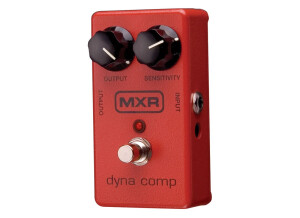
  • « MXR Dyna Comp »

    Paid $75 at a used place I like everything about this pedal. It is tuned and set up for the guitar and enhances all manner of signal you throw at it. Whether you want to bring out the clean tones or sustain the gritty tones, the dyna comp does the job and adds very little noise in the process. It's also very easy to use, unlike many compressors. I like to put the output at 3 o'clock and the sensitivity at 8:00 o'clock. The effect is there but is unobtrusive. I can't think of a bad thing to say. Excellent A must have for any analog pedal maniac. Don't leave home without it. This review was originally published on http://www.musicgearreview.com

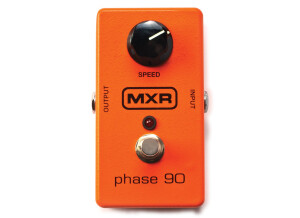
  • « MXR Phase 90 »

    I got it from this place called avenue guitars for $123. It has a rich, warm phasing sound like no other phaser. It is very transparent and it is slightly distorted which makes it even more warm and makes it sound more distinctive and better sounding. It can be used for slight phased passages of chords or solos, to the swooshing sound to warbly crazy sounds. It sounds like poop after distortion, but that is okay because it sounds great before distortion, this isn't a reason to not buy this. It is heavy and very sturdy, very tough. It is a good buy if you are looking for a no frills phaser that sounds awesome. This review was originally published on http://www.musicgearreview.com

  • « MXR Micro Amp »

    I purchased my first MXR Micro Amp used on E-bay for about $60. I loved it but it was an older model without a light to let me know when it is on and without an input to allow me to use a wall wart. I bought another one new and paid $90 at a local music store. I don't know if you can really call this pedal a guitar "effect" because it does not really color my tone in any way. What the Micro Amp does is provide the player with a gain boost. It has one nob that allows you to determine how much of a boost you want. This pedal lets me set my amps volume so that I am where I belong in the mix with the rest of the band and then when i go to play a lead or a subtle finger picking part I can step on the pedal and get that extra juice I need to move out in front slightly. Before i found the MXR Micro-amp i had tried to use an EQ pedal for the same purpose, i found that it was harder to manipulate and actually changed my tone rather than just boosting my signal. Now that I have the newer model I don't know how I ever lived without the on/off light. Made very well and it's such a simple concept that there is very little to go wrong. If you play both rhythm and lead guitar in a project this pedal is great. You won't believe how such a simple function will add to the depth and power of your playing. This review was originally published on http://www.musicgearreview.com

  • « MXR M-177 Flanger »

    Purchased new from ams for 129.00 in 99 Gives great swooping tones with a nice delay type feature. Colors your sound, but in a nice way. LED switch is tempermental, although it does work most of the time. Definitely a noisy unit, but can be overcome when tweaked. A little confusing, but great for getting that early evh sound. Requires a 9 volt adaptor, no battery backup installed. Solid cast iron grey, with thick rubber boots on knobs, instills confidence. Tweak it a bit and you'll get great sounds unavailable with many chorus and phasers Again, nirvana for those trying to get that old evh tone. Downside?, prcey, noisy, and 9 volt current only. This review was originally published on http://www.musicgearreview.com

  • « ok, but just wasnt for me »

    The MXR ZW39 is a stereo chorus pedal designed for use with electric guitar, but can be used with any electronic instrument. It has 1/4 inch connections and can be powered either by a nine volt battery or a nine volt power supply. It is an analog pedal and cannot be rack mounted as it is a stomp box. UTILIZATION The make up of the MXR ZW39 stereo chorus couldn't be any easier to use and follow as it only has three different knobs. The pedal has parameters for delay time, width, and speed, each on a one to ten scale. Even if you don't have any experience with guitar pedals, I don't think you'll have any trouble figuring this out as it only takes a little while of playing around with it to see what everything does. I don't have the manual so I don't know how thorough it is, but it isn't necessary as the pedal is easy enough on its own. SOUND QUALITY The sounds heard from the MXR ZW39 stereo chorus really aren't all that impressive. While it certainly gives you a chorus sound that is capable of being manipulated in a number of different ways, the inherent sound isn't that great. It lacks a certain richness and depth that I look for in a chorus pedal and for this reason isn't suitable for recording and I wouldn't even use it for live shows really. OVERALL OPINION I've first used the MXR ZW39 stereo chorus a few years ago, but I've only used a few times as I try to stay away from it. I don't like the sounds you get from this pedal even though it is really easy to use. There are tons of other chorus pedals out there that I would recommend that are in a similar price range even though they aren't this cheap, like some of the Boss and MXR chorus pedals. I can't say I would recommend this pedal to anyone and I would recommend looking elsewhere for your chorus tones.

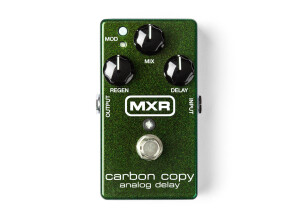
  • « very solid analog delay »

    The MXR M169 is loaded with a wide variety of analog and digital delay models of famous pedals and devices . Also has basic sampling capabilities which I am not all that familiar with. It is a modeling device. You can use the knobs to tweak each delay to your needs but you can only store three of your settings at once. There is a toe tempo tap button. The pedal has stereo/mono inputs and stereo/mono outputs. The unit requires its own proprietary power adapter. The unit is very solidly built but has a very poor reputation for the reliability of its buttons. UTILIZATION The setup of the pedal is kind of ergonomically ideal in some ways but you quickly wish you could store more than 3 user settings because there are lots of cool models. I greatly appreciate that there are user friendly knobs for quick tweaking and not digital menus which are time consuming and nightmarish. The manual is very cool too with neat information about the original devices that the models are based on. SOUND QUALITY The unit is very quiet and designed to be used on the front end between your guitar and amp and not in an effects loop where it apparently doesn't work well. The models are good and the pedal is fun fun fun. However it is important to realize that this is a modeling device and like all modeling devices it sounds cold, sterile, and artificial and will interject that sound into your chain. OVERALL OPINION It is definitely a cool pedal that has been around for a while and needs to be updated with the capability to hold more user settings and needs to have its reliability issues fixed. However I refuse to use this delay as part of my main sound because of the sterile artificial sound that the modeling interjects even for some reason when the guitar is plugged in the unit but the effect is bypassed.

  • « The Atomic Punk! »

    The MXR CSP101SL is a newer reissue of the Phase 90 original script logo version made in the seventies and used by players like Edward Van Halen. The subsequent block logo models made in the later seventies and through to the present day are more "chewy" and present sounding than the script models and thus not as desirable as the older ones. However, they can go for a pretty penny for an original script logo, so eventually MXR came out with this reissue. It's pretty simple... has one control for "speed" (modulation amount) and some newer features such as the LED and AC adapter jack that the originals lacked. However what it lacks in features it makes up for in tones. UTILIZATION Setting up this pedal is pretty simple for sure. It only has the only control knob, so you aren't left scrolling through endless presets or turning knobs. It goes from a very subtle sweep kinda like a modulating treble boost to full out phaser fury, depending on what sort of sound you want. I like to run mine at about 9 oclock for that nice Van Halen esque treble boost for my leads or as a nice sound changer for my clean channel. SOUND QUALITY I use this pedal in my main gig rig with my band as something that really alters up my tones for a bit of added flair. It has a sound that is much closer to the original Script Logo models. The one major flaw is that it isn't true bypass, so it does make a fair bit more noise than I'd care for. That being said, it sounds like a good phaser should and is definitely more subtle than the block logo models I've tried. If these were true bypass, they'd be unbeatable for that classic phase tone. OVERALL OPINION All in all I think the MXR Custom Shop Phase 90 is a great pedal for someone looking for that classic phaser tone in a pedal. It's not as versatile as some other units, but I like it much more than the block logo models and if it was true bypass/less noisy, it'd be near perfect. At about $110 new this pedal is a decent deal for someone looking for the real MXR sound and is definitely worth checking out.

  • « Very versatile »

    The KFK-1 Kerry King signature EQ is a 10 band graphic EQ pedal from MXR. The pedal has 10 sliders that can cut or boost that frequency by 12dB. The bands available are 31.25 hz, 62.5 hz, 125 hz, 250 hz, 500 hz, 1 khz, 2 khz, 4 khz, 8 khz, and 16 khz. The pedal has a gain slider for the input and a volume slider for the outputs. There are two outputs available for use with two amps at once. The pedal can be powered by 9 volt batter or external AC adapter. UTILIZATION This pedal is built extremely well like most MXR pedals. The housing is made of all metal and the bypass switch is very rugged. It has “positive feel” sliders that hold the settings very well, even if bumped, and are illuminated so the settings can be read on a dark stage during a gig. The tattoo graphics could come off cheesy, but actually don’t look bad. SOUND QUALITY There are a lot of options in this pedal. There are more than enough sliders to find the right frequency you need to change to get your tone right where you want it. I feel this pedal is best used to tame the low end of an amp and really tighten it up for use with metal or hard rock, but it can be useful in all musical settings. It is super quiet and doesn’t add any noise to your signal chain, unlike the noisy Boss GE-7. It really lets you shape your sound and make a decent amp sound even better. OVERALL OPINION Overall this is a great EQ pedal if you need this much versatility. I moved back to the MXR 6 band equalizer and gave up a few options, but saved room on my pedal board. The 10 band is nice, but it rather large and bulky. I just use an EQ pedal for a drastic filtered tone, but for reeling in the tone of an amp or for using two amps I’d probably stick with the more versatile 10 band. This pedal and the six band MXR is built for touring, so I don’t worry about reliability. The lighted sliders are great at gigs and the switch feels really solid with a nice click when you engage the pedal. Overall I think MXR has the best EQ pedals out there right now, and I would more than urge you to pick up the MXR over the Boss version.

  • moosers's review

    The MXR M107 Phase 100 is a phaser pedal that is designed for use with electric guitar. It was kind of supposed to be the next step up to the MXR Phase 90 with more options, although I'll say right off the bat that I don't think it's best sound is as good as the best sound on the Phase 90, although the 90 is of course simpler. The Phase 100 has 1/4" connections for input and output and can be powered with a 9 volt power supply. It's not rackable since it's a foot pedal. UTILIZATION The configuration of the MXR M107 Phase 100 isn't too difficult to understand. The first parameter is for intensity and the second is speed. Intensity has four waveforms to choose from while the speed has two. That's pretty much all you need to know, which is more than the Phase 90, where all you need to know is speed. If you want to know what each waveform for intensity is exactly, it probably has that information in a manual but I haven't seen it so I'm not sure. SOUND QUALITY While I do like the overall sound of the MXR M107 Phase 100 and do think it's more versatile than the Phase 90, I still can't say that I like it better overall as a phaser pedal. It seems only logical to compare this to the Phase 90, but setting this aside for a minute, the Phase 100 is a very solid sounding phaser that is capable of getting a wide array of different sounds. It's got 10 stages and makes for a cool collection of sounds between the different waveforms. OVERALL OPINION The MXR M107 Phase 100 is still being made today, although there is a vintage version with the script writing as well. I've only used this more modern version of the pedal and think it's pretty awesome to have around. I still wouldn't recommend going alone without the Phase 90, but having the Phase 100 and Phase 90 pretty much covers all the bases when it comes to phasing effects. Check out both of em first to be sure which one you want if you can only get one, but these are pretty much the way to go for phasers.