Log in
EN
FR

MXR Guitars

183 products found

Categories
Series
Filter
Sort by
MXR
Evaluation
  • Reviewed or not
  • Editor’s award
  • Reviewed by Audiofanzine
Availability
  • Available or not
  • Sold new or used
  • Sold new
  • Sold used
Must-have products
  • All products
  • Flagship products
  • Best rated products
  • Hot products
  • Popular products
Price
  • Freeware
  • Low-cost (< $150)
  • Mid-range ($150 - $200)
  • Premium (> $200)
€
Clear
Sort by
  • Popularity
  • User ratings
  • Price - low to high
  • Price - high to low
  • Used price, increasing
  • Used price, decreasing
  • Name (from A to Z)
  • Name (from Z to A)
  • Added on
Choose a category
Selected category: Guitars
Sort results
  • Popularity
  • User ratings
  • Price - low to high
  • Price - high to low
  • Used price, increasing
  • Used price, decreasing
  • Name (from A to Z)
  • Name (from Z to A)
  • Added on
Filter results 183 results found
Brands
Evaluation
Availability
Must-have products
Price
  • Freeware
  • Low-cost (< $150)
  • Mid-range ($150 - $200)
  • Premium (> $200)
Show results

The best MXR Guitars reviews

The reviews Audiofanzine members found the most helpful.
  • « Simply awesome »

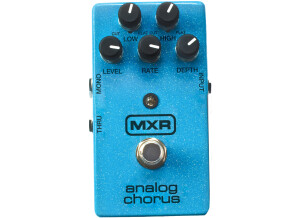
    Analog chorus Two EQ controls: low and cut One volume control One rate and one depth control Two output: mono and stereo USE I haven't opened the manual. It's very easy to find your sound. The EQ and parameters allow for a really wide variety of sounds. SOUND QUALITY It's simply awesome. It colors sound in a wonderful way. You need to find the right balance between rate and depth so that it's not to muddled (unless that's what you're looking for, obviously). Personally, I don't like it when it becomes a tremolo. I use it between my amp and preamp (because I don't have an effects loop). I think it could also be used as a booster. In short, the sound is both versatile and excellent. OVERALL OPINION I've had it for several months and I don't regret it. It's a quality unit, plus it looks nice. I love '80s thrash and was looking for Megadeth's sound in "So far so good so what" and I immediately found my own tone (both with clean and distorted sounds) with this pedal. I didn't give it 10/10 because nothing is perfect and, especially, because I have nothing to compare it to (except too digital multi-effects), but I dreamed about it.

  • « Its THAT phaser sound »

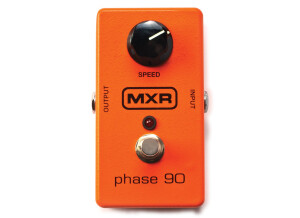
    This is a simple pedal at face value, and in truth it is very simple. Just one knob? Well that's all you need. It's a phaser...sort of. And there's no need for a ton of parameter knobs with this pedal. Because it's not trying to be all phasers at once. It knows exactly what it is. UTILIZATION Seems solid enough. MXR boxes are generally a cut above everything else in their price range. But these days if you don't have metallic housing and metal switches, most people won't bother. The large knob is a nice feature on a lot of these style pedals. MXR gets high marks for ease of use and reliability here in my book. SOUND QUALITY Here's the thing. This is not a traditional phaser. Yes it does have that 80's jet engine thing going on. But you would expect this since it is after all the EVH phaser and his whole sound is basically a very flagrant thick jet style phaser. It's definitely not subtle. If you want a musical phaser or a vintage style one, this is not your pedal. If you want the EVH solo phase tone this will get it. It also does that crazy 90's phase that you hear so much in grunge rock stuff. Here's the thing though, it also has a lot of chorusing going on, and for that it's not just a true jet phaser. It's honestly a bit of a unique effect. Want a vintage phaser that sounds simpler? Get EHX or a more boutique offering. People say this thing sounds a lot like a script logo but I don't hear it. The script is way more subtle. OVERALL OPINION About the only thing it could use it some sort of tempo control since it's heavy on 'swirls' as some people call them. But using the single knob you can get about any territory you need. This isn't a do it all phaser by any means. But a lot of people, not just EVH fans seem to love it. I personally like it a lot for some solos and wacky passages. Outside of that I rarely use it. I'm not a phase nut anyway. For the price it's pretty good. Not an insane deal but you do get what you pay for.

  • « Killer little EQ pedal »

    - 6 bands of graphic EQ - LED lit sliders - Compact - Sturdy MXR enclosure - Powered by 9v battery or adapter - Solid components, jack, switch etc - True bypass UTILIZATION Beautifully simple to use. This is the little brother of the MXR 10 band, and is actually an improvement in some ways. To be honest, for a live EQ pedal, all you really need is 6 bands. This gives you the control you need without the extras. The compact enclosure is a lot easier to fit on a pedalboard, and the standard 9v power is much more convenient. Run it in front of the amp as a guitar EQ or boost, run it in the amp effects loop as a third channel EQ. Very low noise, reliable, sturdy, and powerful. It can totally pull the blanket off of your setup. I've found that the LED sliders on these can start to dim over time which is a little annoying. Otherwise they are great for a dark stage, and just look cool. This one doesn't have volume/gain sliders, so if that is something you want out of it, I'd look into the 10 band. SOUND QUALITY Its difficult to judge the sound of an EQ pedal independently, but this one is really great. Dead silent, which can be unusual in this price range, and can really transform your sound. Six bands is really all you need to fine tune your tone, anything from a mild boost to a total revision or third channel. OVERALL OPINION This is, without a doubt, a killer little EQ pedal. Don't let its size fool you, it will probably become the most powerful tool in your arsenal. That said, EQ is probably the most overused/misused pedal among guitarists. I've seen a lot of people pick one of these up because "I might as well, everyone needs one." If you actually feel that your setup could benefit from some fine tuning, this is a great option. It also works really well as a boost, and can clean up some mediocre DIST pedals like the Boss MT2. I'd also recommend looking into a parametric EQ, they aren't quite as widely used but can be a very solid option.

  • Audiofanzine FR's review

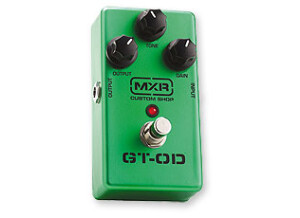
    (Originally written by Vicente121/translated from Audiofanzine FR) The GT-OD is a compact-size overdrive pedal with metallic housing and green finish. 3 controls: Gain, output and tone. Analog pedal from the MXR Custom Shop. The unit is easy to use, to transport and to connect (except for the power supply socket) and it has a true bypass. Even without battery the sound goes through when it's turned off. Doesn't slip on the ground. Seems to be robust. UTILIZATION Install a battery (you'll need a screwdriver), plug two cables, depress the footswitch (LED lights on) and get ready to be blown away!!! SOUND QUALITY What an overdrive! It has all the qualities of the mythic green pedal: warmth, character and that little something that makes it stand out: class. The sound comes bursting out of the amp. The bass frequency range has more dynamics than an Ibanez. The tone and gain controls work accurately. With a clean channel you'll get the blues. It has a very powerful output so you get a killer sound with a lead channel, even with low gain you get a high output level. And it works with every amp, from the worst to the best. It faithfully reproduces the source signal and has an awesome sustain. It's a professional tool. It's great to switch between rhythm and lead without having to switch amp channel. It produces an endless sustain. I compared it to a Fulltone OCD, which is a great overdrive pedal that sounds clearer and more vintage with an incredible accuracy but with a much lower output level. I daisy-chained both units, GT OD first (high output level, very low drive) and then the OCD... The SOUND was TERRIFIC for fat blues, rock and hard rock songs. When we put the Fulltone first the results were depressing!!! OVERALL OPINION I've been using it for 1 year and I take it everywhere. SRV, AC-DC, Santana, Gary Moore... there's nothing this pedal can't do. It's a bit expensive but I sold my Ibanez TS since I bought it... It's a bomb!!!

  • « MXR Zakk Overdrive - Love Zakk but hate this »

    The MXR Zakk Wylde overdrive came as most boost pedals do with output, tone and gain controls. Nothing fancy except for the paint job and lets face it, as a fan that's all that matters, or so I thought. Basic input and output controls and power adapter. Built well as most MXR stuff usually is. Characteristics get a 7 rating based almost solely on looks. UTILIZATION It doesn't get much easier to use than this and a boost should not be a complicated piece of equipment. 3 dials and they all perform their function, although lack a great range in all cases. Manual is perfectly fine, no complaints. SOUND QUALITY Ok here is the meat of the review, this overdrive was a huge let down and I'm surprised Zakk let his name be placed on this. I can't express enough how muddy and dark this thing sounds. It really lacks range in the controls and doesn't do much to boost the signal, just makes it muddy and grainy. Listening to Zakk live, that is the exact opposite of his true tone. He is balls out boosted Marshall without grainy, muddy, messy noise. In other words, his tone is the exact opposite of what his signature pedal does. I tried to like this for a long time and could not find anything appealing about this other than the paint job. OVERALL OPINION Overall there are much better choices out there for a true boost and even a boost with some gain. The Fulltone OCD and basic Ibanez TS-9 come to mind as better choices right off the bat. I can't stress how truley dissapointing this was. The tone of my amp was muddied up and could not be dialed in with even the three basic controls. Definately not worth the money, and this is coming from a fan who loves signature gear and knows you pay mostly for the name. In this case, I'll pass! Built well and looks good but that's about it. I also hate having to carry a screw driver around to change the batteries. Bottome line, there are much better choices out there.

  • « Good Tremolo »

    Great tremolo pedal from MXR. Does stereo panning and regular tremolo. Three knobs, two footswtiches. UTILIZATION This pedal is super easy to use. IT nails nay kind of cool tremolo effect you could want SOUND QUALITY Sounds are superb! Great tremolo sounds coming from this pedal. MXR hit it on the spot with this one. I used to have the old original version. This one is just as good if not better than the original they made OVERALL OPINION I wanted a tremolo to give some vintage texturing to my sound and I'm very happy with this box. Its sounds fantastic, no noise or tone sucking, can do stereo tremolo, has nice big metal knobs that can be adjusted by foot. Tap tempo would have been nice, but not a big deal for me. It's a bit larger than other tremolos but that's ok. It uses 18V DC ~20mA, but most modern pedal board power supplies can handle that voltage easy enough. Goes through 2x 9V batteries at a time so you really should have a power supply anyway.

  • « Cool delay »

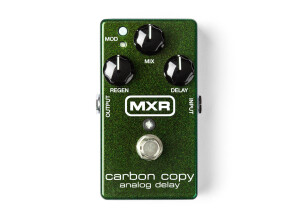
    The pedal is nice and compact...no bigger than a phase 90. Sound-wise it's not quite an echoplex...but does have warm tonal characteristics that remind me of the old school delay sounds. The modulation button is a nice touch and does sound similar to the tape warble heard on the echoplex. It basically varies the speed of the echo...creating a chorus effect when heard along with your original signal. This is a very subtle chorus sound...but that's how I remember (and like) it. The pedal will also self oscillate when the repeats are pushed to the max for some crazy sounds...just take care not to blow up your speakers. I did notice some very minor noise on the longer echos when playing clean bright tones, however, I've read that this is not an uncommon thing with analog pedals. UTILIZATION It's very easy to set up and get a good delay at any point. SOUND QUALITY I had the privilege of using an original Echoplex delay box that was lent to me years ago. After returning the Echoplex, I've relied on an inexpensive digital delay pedal that recently began to bomb out on me. After reading a lot of info and positive reviews on the MXR Carbon Copy Delay pedal, I decided to take the plunge and purchase it. I must say that I was pleasantly surprised. OVERALL OPINION My only gripe with pedals like these are the internal controls. Personally, I think the whole trimpot concept is barbaric anymore. It just doesn't make sense to make the user disassemble an entire pedal to access additional controls. I doubt it would take much for Dunlop to drill an additional 2 holes into the housing to accommodate these features. Also, take care when disassembling these things. The jack threads are made of plastic...which can cross thread very easy if the metal nut fastener is tightened too much or incorrectly. Overall a really nice pedal. I was initially concerned that the 600ms delay wouldn't be long enough...but as it turns out...it's actually a little more than I need. Sounds cool, looks cool, and not too pricey. I think most musicians will find this a valuable addition to their setup.

  • « MXR Dyna Comp »

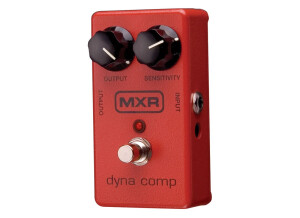
    This is the tried and true red 2 knob MXR Dyna Comp. It's been around forever, well more accurately, I think since the 1970s. I acquired this pedal used for $40. New they run about $70. It is simple to use. It gives a great boost as well as will tighten things up if needed. Great if you want to even out your guitar's signal. The best sound I got out of it was using is together with a clean Fender strat into a Fender Twin Reverb. Reminded me of some of the sounds you might hear from Stevie Ray Vaughan or John Frusciante. If I had paid the new price of what these pedals go for I might feel a bit let down. The pedal is noisy on the high end. There isn't much else out there for the same price. I did hear that Behringer is coming out with a similar pedal. I'm curious how that will stack up. The Behringer will probably not be as durable, but it will most likely be half the price. Quality and construction are fair for a sub $100 pedal. If you need a simple compressor for your live guitar rig, this is it. If you want a better hi-fi sounding one, look elsewhere. You will hear a little noise and that is the only reason I suggest it more for live use than in a studio setting. This review was originally published on http://www.musicgearreview.com

  • « MXR Stereo Chorus »

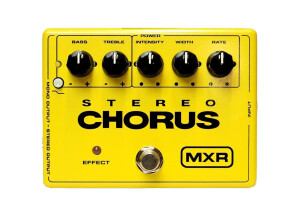
    It's 'pearl' yellow, footprint is about 4' x 5', and it's not actually marketed as a specifically bass-dedicated device, but there's 2 reasons I'm reviewing it under 'Bass Guitar Effects': 1stly, cuz thaz how I use it, and even WHY I use it; and 2ndly cuz I don't give a ratzass about geetards and their pedal abuse addiction. I play a lot with just vox, KB and bass, aka 'The Diva Duo' , and thaz got much to do with my 'Reason Number 1'. I don't recall where I got it or what it cost, but I doubt I bought it brand new. The 'Why I got it' is cuz sometimes I play fretted bass guitar in the Diva Duo along with Ms. D. on digital piano. Fretless or upright basses do not routinely 'beat against' the lower notes of the digital piano, since the FL notes are not that precicely 'sculpted'. Fretted notes have a more definite 'shape', and since the majority of notes on a fretted instrument will be very very slightly out-of-tune compared to the digital piano, there's a slight 'beating' effect that makes things sound 'not right' . So the job of the chorus box is to mess with the fretted bass notes such that they are no longer so sharply sculpted, and therefore the 'beat' does not arise. It has a 2-band EQ that can be handy, but thaz no big deal really. I get the impression that the EQ is only about +/- 10db anyways. The Real Deal here, for me, is the full control over the chorus effect, meaning control over intensity, width, and rate. Without getting into what each one does, I can tell you I do need all 3 controls to find that sweet spot where there's no obvious effect. IOW my sound still seems pretty normal to the audience and Ms D., yet a subtle effect is actually delivered, and it's enuf to avoid the 'not right' sound of the slight difference between fretted bass and Ms. D's left hand. So, It does exactly what I need. It eliminates Ms. D's complaints. Also it has a non-adjustable shelving-type bass boost, so I guess thaz really a 3rd reason to review this under 'Bass Guitar Effects'. The shelved bass boost is similar to the 'Ultra Bass' button on an Ampeg. Finally, another good thing is that this is an 18v box, so it's quite low-noise, important in such a duo. We can't get away with the crap that you can hide under rock band sound levels ! No dislikes, so I'll use the 'dislikes' area to mention the 'don't know' or 'no comment' stuff. It's a *stereo* device, but I never bother about that, so 'no comment'. Also no comment on the quality of the stomp switch. I mean, it looks OK, but I don't stomp it, cuz I use it continuously. But I will point out a potential for trouble if you do stomp it: The 'Effect Engaged' LED protrudes from the box about 1' to the left of the stomp switch. Dumb that. So, if you stomp, take two ordinary hardware store washers, like for a 3/8' bolt, super glue them into a stack of 2, and glue that stack onto the box, to put a 'fortress' around the LED without hiding it from view :-) It's a cast metal box, and it has the well-proven old-school 'leaf-spring' type of jacks, with the usually metal retaining nuts. The more modern jacks with the black plastic nuts do not have the very forgiving long internal leaf springs. The newer jacks can be fussy about what plugs will fit without extra effort or without damaging those jacks. I don't know how old my pedal is, but I hope MXR doesn't switch to the newer jacks for boxes newer than mine ! ! ! The pair of 9v battery chambers are not the hinged pop-up types, and inside is a molded hard plastic 'dual-snaps' terminal, on a length of wire. Not the most convenient, but not so fragile as the pop-up types. All in all, it seems well made with good components, so maybe I am needlessly wary of the LED being near the stomp switch ? Well made, works for my purpose, but I'm not a stomp-crazed geetard and I don't crank the effect to levels where it's obvious that an effect is in use. I'll repeat here my praise for the 18v power that provides a low-noise device, which is very important for those who use effects in a more subtle way ... like me. I know that there are some really ultra sooper effects devices out there, at ultra sooper prices, but I feel this one has some 'above average' points, so I'll rate it in between a '5' and a '3'. There's no '3+' so it gets a '4' . This review was originally published on http://www.musicgearreview.com

  • « MXR Micro Amp »

    Gigging and recording musician for 30 years but got pretty rusty on guitar for a long time (synthesizers took over) but recently inspired by the purchase of a Danelectro 56 Pro, have begun to play again. Currently trying to unlearn all my bad habits but having great fun with a 1974 Fender Vibrolux, Colorsound Wah Wah, Fender Jazzmaster and mxr micro amp. I got mine in a boot sale for £5 in about 1995. I'm guessing it is a mid-late 70s model, without the red light. I love the primal simplicity of this box - a rugged chassis, a decent switch, minimal logo and a single enormous black rubber dial (that'll be GAIN, then).... The bottom is secured rather over-entusiastically by 4 screws and a metal plate, not exactly convenient but a lot better than a flimsy plastic hatch. After about the fourth battery change you'll probably be considering leaving the damn thing off altogether...probably not a good idea though. The Micro amp does what it says on the tin really...it acts as a pre-amp stage to drive your amp at low levels without altering your tone. You get pure crunch without the fuzzy mess of most distortion units. In my humble opinion most distortion pedals out there are no match for an overdriven valve amplifier. Having said that I quite like a bit of fuzzy mess on the top once in a while :)...Big Muff, anyone? I would have to say the lack of the light is a bit of a pain. Generally speaking however, when this bad boy is ON...you'll know. Other than this little quibble there's nothing to dislike about this pedal. Basically it's a block of steel. Built like a tank. Go on, kick it around for a while. Then check for broken toes. The Micro amp is a very simple idea, executed perfectly. When you can't drive your amp too much (neighbours etc.) this will do it for you, without compromising your essential tone. I don't know how it sounds on other amps, but it sounds pretty fantastic with some hot valves! I haven't been using a distortion unit since my Roger Mayer Mongoose Fuzz got nicked a while back, and am still considering adding a distortion unit, maybe a Rat or a Tube Screamer. But I see the distortion pedal as a kind of final stage for when you can afford to go over the top...then you can back it down to the Micro amp stage and return to your 'real' sound. I'd just like to say I'm in no way a guitar guru, these are just my personal impressions of gear I own and use. Hope this helps someone. This review was originally published on http://www.musicgearreview.com

  • « MXR M-107 Phase 100 »

    Primarily a singer, I've been playing guitar for about 10 years, been in a band (drummer!), and have continued to record and play with other musicians on a non-professional basis. My styles range from folk to hard rock, with heavy power-pop leanings -- Big Star, not Green Day. I bought this at Truetone Music in Santa Monica, CA for about $120. I needed an '80s-inflected tone for an upbeat rock song. The phasing effect has a nice, instantly recognizable quality that evokes Eddie Van Halen's tone. Rhythm parts become much thicker and more hi-fi, giving chunky chord work a different dimension than ordinary high-gain crunch. Compared to the classic Phase 90 pedal, the Phase 100 also has an extra Intensity knob in addition to the Speed control, giving you that much more control over the sound. Not much, really, except that the battery compartment is a big nuisance to get at. Why any manufacturer would still not provide simpler battery access on an effects pedal, I don't know. The Phase 100 requires that you remove four huge screws and the entire metal bottom plate, and the first time I had to put a battery in, I almost sprained my wrist because the screws were in so tight. The plastic appendices you can cap over the control knobs (the grooves on top allow you to turn the knobs with your foot) are a nice touch, but their fit is so tight that once they're on, they're very hard to get off. Finally, the knobs themselves come off the pedal with just a gentle tug. I've had two pedals do this, and I don't believe any good comes of it -- it just means you can lose the knobs or accidentally put them on the wrong way so that the indicators don't reflect the actual setting of the controls. The knobs should stay put with the pedal. The body of the pedal is heavy and sturdy. I don't like that the knobs can be yanked off very easily, however, and the on/off switch is a bit stiff. I love the sound of this pedal, but some construction issues (battery access, knobs, knob appendices) could use major improvement. But for what it does for my sound, the Phase 100 is worth you trying to weather some of its irritations. This review was originally published on http://www.musicgearreview.com

  • « MXR Jim Dunlop Phase 90 »

    I bought this timeless classic effect off of Musician's Friend for a mere $59.99 - I'd shopped around forever and believe me, it's the best price you'll get. The reason I purchased this unit is simple - it is a must have for musicians in every genre! I love the sound - it's timeless, classic, vintage . . . it can be incorporated into nearly everything from classic rock to contemporary to alternative to heavy metal . . . I find that it is very versatile and sounds great with just about anything. I can't think of anything that I don't really like about it. Guess it'd be nice if they were manditorily issued with every guitar!!! The construction is the simple vintage looking orange metal box . . . quality? Ask Jimmy Hendrix. The bottom line simply is, if you're a guitarist, this is a must-have effect and nothing delivers like the MXR Phase 90 (although, you could up the ante, if you're feelin' froggy and jump on the MXR Phase 100!) This review was originally published on http://www.musicgearreview.com