Log in
EN
FR

Morley Guitar Effects

103 products found

Categories
Series
Filter
Sort by
Morley
Evaluation
  • Reviewed or not
  • Editor’s award
  • Reviewed by Audiofanzine
Availability
  • Available or not
  • Sold new or used
  • Sold new
  • Sold used
Must-have products
  • All products
  • Flagship products
  • Best rated products
  • Hot products
  • Popular products
Price
  • Freeware
  • Low-cost (< $150)
  • Mid-range ($150 - $200)
  • Premium (> $200)
€
Clear
Sort by
  • Popularity
  • User ratings
  • Price - low to high
  • Price - high to low
  • Used price, increasing
  • Used price, decreasing
  • Name (from A to Z)
  • Name (from Z to A)
  • Added on
Sort results
  • Popularity
  • User ratings
  • Price - low to high
  • Price - high to low
  • Used price, increasing
  • Used price, decreasing
  • Name (from A to Z)
  • Name (from Z to A)
  • Added on
Filter results 103 results found
Brands
Evaluation
Availability
Must-have products
Price
  • Freeware
  • Low-cost (< $150)
  • Mid-range ($150 - $200)
  • Premium (> $200)
Show results

The best Morley Guitar Effects reviews

The reviews Audiofanzine members found the most helpful.
  • « Great multifunction pedal »

    I was wanting, needing a volume pedal with a wah but, came across and, man I'm glad I did. If you use the drive in moderation and set the tone and level you also have a boost pedal also. These used to sell for about $180 new and $70 I paid for it was an awesome deal! I use it on the floor not on a pedalboard. My new Fender Mustang GTX100 already comes with a pedalboard and this Morley just finished the whole package. Love it!!!!!! I didn't mention anything about distortion or overdrive because I'm using that part for a clean boost but, it will perform that function if you want it just turn the drive knob up. If you're looking for heavy distortion like for metal probably won't do that well but, overdrive not bad if you're wanting that. I had one of these a few years ago but, sold it. Should have kept it but, now I was fortunate to find a good used one. Just needed a cleanup some pot cleaning and very slight adjusting. Good as new. Morley pedals are built like a tank. That's all I'll ever use.

  • « Multi-Functional Wah with Noiseless Operation »

    SOUND: Around since 1969, Morley is known for its wah pedals. They have a very distinct ‘whaaah’ quality that isn’t mild and meek like a Cry Baby, but not honking either (at least the few I’ve tried over the years, and the Dragon Wah 2 Mini fits that category). Also, it uses an Electro-Optical Circuitry, which is a ‘light emitting diode’ that shines on a ‘light dependent resistor’ to control the wah, volume and switching. What this means is very smooth pedal operation while reducing any unwanted noise typical with wahs controlled by a ‘pot’ or potentiometer. If you’re familiar with typical wah pot technology, you know there’s that slight scratchy or ‘off’ sound as you press your toe all the way down, along with some line interference noise (particularly when feeding into a distortion or overdrive pedal). The Dragon Wah 2 Mini remains surprisingly quiet while producing very sweet vocal wah tones with a clean amp, but also clearly defined wah tones with higher gain settings. The Dragon 2 Mini wah produces various. First, there is a typical broader sweep wah, which activates only when stepping on the treadle (it is a switchless wah) and is bypassed otherwise or when not in use. Then there is the WOW feature, which produces a shorter sweep in that deeper and middle range (growling) wah zone, which actually sounds like someone saying “WOW.” Next is the Wah Lock feature that allows you to lock into any frequency along the Wah (or WOW) range and then maintains that particular vocal tone while playing. The Volume control increases output with slight gain, but nothing exaggerated (it’s not a 10dB boost, for example). And with all elements considered, this is a super silent wah… no switching (clicking) noises. OVERALL IMPRESSION: The George Lynch Dragon Wah 2 Mini was designed to use less pedal board space, but while offering all the features of the regular sized Dragon Wah 2 (full sweep wah, WOW wah, Wah Lock with Notch selection, and Volume). With only 600 made, its price of $249 USD is typical of a quality buffered wah, but since it uses silent operation electro-optical circuitry (no pots to wear or make noise) you are getting a highly functional and quiet piece of gear that will outlast many other less expensive wahs. Morley has a long-standing reputation in the music industry, since 1969, and I can recall an uncle who used to jam out with nothing more than a fuzz and a wah pedal… a Morley wah. That thing was still around even after 20 years of use and abuse. Consequently, besides sounding great there certainly is a degree of nostalgia in having the Dragon Wah 2 Mini on my board and in my collection. GENERAL USE: The Dragon 2 Mini wah remains cocked back with your raw signal running through (absolutely no coloration through this true tone bypass and buffered wah circuit) until in use (and springs back automatically so that you don’t have to full-toe or full-heel click it on or off). The basic wah (set to George Lynch’s preferred tone and sweep) has a generous sweep that does not sound shrill or tinny with toe all the way down (I heard other wahs with a slightly broader sweep, but the most forward position is hardly usable and you try to stay away from it). Stepping onto the WOW switch produces a shorter sweep found in that deep register, which sounds awesome and whether playing raunchy rhythm or throaty leads. The Wah Lock switch keeps the wah tone locked into a particular register, whether using the full wah or the WOW setting. This is determined by turning the Notch knob (no need to step on the treadle to find it) and is ideal when you want that short-range auto-wah type effect. The Volume control is subtle and affects all the wah settings – you can hear the difference whether turned all the way down versus all the way up, but it’s not significant like a 10dB boost, for example. Rather, you hear a slight increase in volume with a slight increase in light gain to help give your tone some edge. The clarity of this wah makes it ideal for both clean and high-gain environments and you will achieve some impressive tones no matter the settings. Hey, if it’s good enough for George Lynch – and it works for guitar, bass and keyboards. OTHER DETAILS: The pedal’s cold rolled steel chassis has yellow and purple zebra stripes (with some Japanese writing for extra mojo) and with quality powder coating. Measuring in at 173.4 mm (L) x 114.3 mm (W) x 63.5 mm (H) or 6.85 x 4.5 x 2.5 inches, the treadle has a glow-in-the-dark non-slip grit finish on its top (for easy viewing on stage), with the Morley name along with a Dragon emblem. Both the WOW and Wah Lock foot switches have a solid click in feel, although silent in the signal when switching on and off. Both Loudness and Notch knobs are smooth and solid when turning. All switches and knobs are below the level of the treadle, to prevent accidental switching on/off or damage. The guitar input and output, as well as the power output, are located toward the front ends of the pedal, which keeps them far removed from your wah-wah foot. An issue of concern, to prevent damage, is to make certain the proper power supply is used, viz., Morley’s 9VDC 300mA regulated adapter with a negative center pin polarity. An improper adapter will cause some low frequency hum in your amp, but also could damage the pedal – if that is the case, then opt for a battery. The Dragon Wah 2 Mini only uses 13mA of power, and so a regular Alkaline battery will last quite a while (the battery inserts in the bottom through a ‘quick clip’ battery door) and, as usual, keep your guitar unplugged when not in use to preserve battery life.

  • « Switchless wah with a wide sweep. Cut through the mix! »

    The Mark Tremonti Signature Wah pedal is the result of a collaboration between rock guitarist Mark Tremonti (Alter Bridge, Creed) and Morley. The Wah features a switchless design which means that the user doesn't have to push the pedal down and click a toggle switch to engage the effect. Just by placing your foot on the rocker pedal and moving it, the effect engages. The rocker is spring loaded and by removing your foot, it returns to its original position and the effect disengages! This is extremely handy in live performances, especially for someone with a single-tracked mind like myself! No more worrying about turning the wah off after your big solo, just take your foot off and you're done! There is also a trim pot inside the unit that let's you set the trail-off time of the effect. As if the great design wasn't enough, Morley also included a "wah boost" knob that lets you dial in a predetermined boost value for kicking your leads into high gear and making them sure to be noticed! The pedal has a built-in buffer circuit that is made to drive long cables and retain clarity in your signal. I'm not sure that I like this feature, as it seems to affect the way that certain pedals react that follow in its signal path. I prefer a hard-bypassed signal, but it's not necessarily a bad thing. Many players don't even hear the effect of the buffer. Maybe it's all in my head! The pedal runs is powered by a standard 9 volt battery that can easily be accessed by a plate on the bottom of the unit. Just push the latch open and take the cover off for access. An adapter can also be used such as the Visual Sound One-Spot, or Voodoo Lab Pedal Power. I have to mention that the rubber diamond plate tread on the rocker and the rubber pads on the bottom of my unit actually melted off of the pedal shortly after I bought it...It had been extremely hot and humid in our rehearsal space and my guess is that's what caused it. I super-glued them back on and they've been fine since, but this needs to be addressed if it hasn't already. I would have rated this section a 10 if not for that issue. That knocked it down to a 9. UTILIZATION Step on it to engage the effect. Take your foot off to disengage. Set the wah boost knob to taste. It doesn't get any easier than that! SOUND QUALITY I decided to buy the Tremonti Wah because I wanted a unit with an extended range and a sound that would cut through a dense mix. I also liked the idea of the switchless design. I had been playing a Jimi-Hendrix Crybaby and felt that for the style of music I was playing (modern rock/metal) the Crybaby wasn't cutting through, had a very limited middle "sweet spot", and it seemed like the effect wasn't audible when playing bends or legato runs on the high E string. It was as though all of the vocal in between sounds weren't coming through and the sound jumped from backed off to all the way in toe-down position. There was no middle sweet spot in the sweep range. (not to say the Hendrix Crybaby is a bad pedal, it just wasn't for me) The Tremonti delivered everything I was looking for, and then some! It is voiced perfectly for heavy gain with enough clarity to cut through and remain present at all times, but without fatiguing the ears. The boost is a well thought out addition as it kicks in just a bit more edge and volume. Leads just jump out when using this wah! Removing your foot from the rocker pedal automatically shuts off the effect, but not before the wah effect trails off for a brief moment. Even with the internal trim pot dialed all the way down for minimal trail-off time, there is still a short delay. This can be a bit annoying when you want the effect to stop at the exact moment you take your foot off of the rocker, but it is a small sacrifice considering the ease of use and performance you get in return. The other small drawback to this pedal is that the wah sounds aren't made for clean tones. If you're a funk/r&b player, look elsewhere. The Tremonti retains its sharp attack on clean tones and can make them sound shrill. But if you're buying this pedal, you're most likely a rock or metal guitarist and that's what it's made for, so no worries! OVERALL OPINION The only negatives about this unit I can point out are the cheap rubber diamond plate tread and stopper pads on the bottom, and the buffer in the circuit, which seems to color certain overdrives that follow it in the signal chain. The Mark Tremonti signature Wah from Morley is an outstanding pedal for the rock or metal guitarist seeking a unique and cutting wah tone with an extremely vocal sweep range. Buy one and you may never go back to the traditional switched design!

  • nickname009's review

    This is a 2 in 1 pedal by Morley meant to save space on your board and put two functions together that would ideally be very convenient. A wah and a volume, both of which operate optically (that means with no pots but with light sensors). Features: combo electro-optical volume and wah in a small housing (see pic below) smooth audio taper for volume control steel housing led indication, wah level adjust, easy access battery compartment Feature wise it's pretty good it's got everything one would really need for both a wah and volume in it's simplest form. UTILIZATION If the switch isn't engaged and the light is off, the pedal is a volume pedal. If the switch is hit and the LED lights up then it is a wah. That's the only real difficult part, the rest is the same as any other foot-rocking guitar effects pedal. Pretty standard. It's smooth in terms of the foot motion and its construction is quite solid too. Don't see this mucking up on me down the road anytime soon. One big beef with this pedal is the button seems to be a bit too close to the rocker pedal, i end up either not pressing the switch properly or end up moving the rocker which reduces the volume since it's in volume pedal mode. You have to be precise with your foot when you hit the switch, not very gig-friendly me thinks. SOUND QUALITY This is the hard part. It sounds decent as a wah. Stock it's quite shrill and bright on the toe down position compared to standard non-optical wahs. This has generally been the case with optics vs pots. However, there's the tech talk section on morley's site that's given me quite a bit of insight regarding adjustments to the pedal that can be made by just moving the optic sensors in different directions etc in the pedal. I've tried this and have come up with a better sounding wah sound, it's more throaty now and not so shrill on the toe down position. As a volume pedal, it works. But it's not very good in my opinion. It just sort of has this jump from 0-5 (say 10 being the loudest) and then goes to 10. It's probably because of the optics and the time that the light catches the sensors, that just makes it engage and you hear a big jump. It's not smooth like a pot would be in that sense. It's still usable for swells and whatnot but definitely needs more tweaking with the optic sensors or I need to work around the pedal somehow and get used to it. But to be honest I'm not happy with it as a volume pedal. Too much adjustments needed. OVERALL OPINION Overall I'd say it's just an average pedal. I mean it's not great but it's not good. I think the wah sound is decent once adjusted, as a volume pedal you'd really have to work with it somehow, and also if you have small foot or narrow shoes you'll be fine with hitting the switch. I think the idea is good but it's not really the best version of the wah/volume idea. I also sometimes get confused with the pedal, sometimes my guitar signal is suddenly out and I don't know why, then i look back and yes it's my morley I left it in the heel down position thus the cut signal. Maybe it's just me, I like to save space on my board but if I keep running into this problem then a 2 in 1 wah/volume is definitely not meant for me.

  • « The Sweep and Tone with High-Gain is Unbeatable »

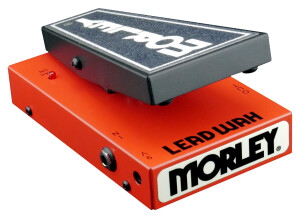
    Morley’s Lead Wah is one of the latest in the 20/20 family with many of the same great features. It is a switchless, optical wah, which means there are no pots to wear or get scratchy, and you merely have to step on it to engage the effect, or step off to halt the effect. The Lead Wah also has the 20/20 Buffer circuit to maintain that pure guitar tone you strive to preserve when you have a host of pedals on your board, or are running long cables on stage. Other standard features include the exclusive Morley MQ2 custom inductor, built-like-a-tank cold-rolled steel housing, LED indicator and glow-in-the-dark treadle grip and toe-end logo for easy access and viewing on dark stages. The Lead Wah operates via one 9V battery or any 300mA 9VDC (negative tip) power supply. If using a battery, there is a quick-clip door under the unit for fast and easy changing. It comes with a typical one-year warranty, but that extends to a lifetime warranty upon registration – which means, it’s built to last a long, long time. It also has a reasonably small footprint, measuring only 6.85” (L) x 4.5” (W) x 2.5” (H) or approximately 17.4 x 11.43 x 6.35 cm. Now, with all those features most gear heads want to know how it sounds, and the included video demo addresses that aspect without a doubt. Suffice to say, whatever Morley did to the circuitry for this wah version is pure ear candy. The Lead Wah was made for high-gain signals, although it does sound quite acceptable with clean or crunch tones. But with high-gain amps/pedals it sings with its loudest voice; it growls without honking and has a superb wide sweep that ranges from throaty to harmonically sweet without that trebly (and annoyingly harsh) bite. Overall, the Lead Wah can be used with clean or slightly dirty tones, but it experiences its full potential with raunchy rhythms and, obviously, soaring leads. As simple as this wah is, with no bells or whistles like some of the other Morley models (e.g., the Wah Lock), it truly puts forth a great impression. At $149 USD, the Lead Wah is reasonably priced among wahs that will not disappoint.

  • « Built like a tank!!! »

    I've had 2 of these now, 1975 and a 1977. They sounded slightly different from each other but not big enough to keep them both. They are easily modifiable due to how they work so the difference could have been just a slight modification. These are a very cool design and too bad they're not made any more. With the fuzz and wah off it's a volume pedal. With the fuzz on the pedal controls how much fuzz to clean ratio you want. Toe down is full fuzz, toe up is clean. With the wah on it works like a normal wah pedal. Both the fuzz and wah can be used simultaneously. UTILIZATION The pedal works with a "falling curtain" design. Most wah pedals work off of a potentiometer. When you rock the pedal it turns the pot and that controls the sweep. On these when you rock the pedal it moved a black curtain inside the pedal. There's a little light bulb and depending on how much light there is it controls the wah sound you hear. Simple mods are moving the light bulb slightly so there's either more of less light throughout the sweep, either having the pedal work at lower frequencies or higher. SOUND QUALITY I used this on bass similar to Cliff Burton of MetallicA. While it doesn't nail his tone it is a very unique sound. I've tried many different pedals, including newer morleys, and none of them sound anything like this. With distortion in front of the wah it has the screaming sound when you rock it forward. For a good example listen to MetallicA's "Pulling Teeth", "For Whom The Bell Tolls", and "The Call of Ktulu". Cliff actually used the Power Wah Boost, which is the same wah pedal, just with a boost instead of fuzz. These are full range wahs, meaning they go from the lowest lows to the highest highs we can hear. So it can be used on guitar, bass, keyboards, vocals... anything you can think of. Guitar wahs generally work only in the mid frequencies cause that's where guitars are. Newer morleys just don't sound the same, but are still much closer than dunlops of vox's. OVERALL OPINION I've since sold both of them, cause while they are very cool and unique I just didn't have much use for them. I paid $150 each which is average and IMO totally worth it. I'll probably buy one again eventually just to have it, but don't know how much I'll use it. For anyone looking for a great but VERY different sounding wah pedal for any instrument I'd highly recommend checking these out.

  • « A more vocal offering from Morley »

    A signature offspring of Morley designs, the Steve Vai’s Bad Horsie features -optical switchless, auto-return on and off -power off of 9 V battery or AC adapter -standard ¼” in and out for connection between amplifier and guitar -adjustable delay before pedal turns off UTILIZATION Given its switchless operation, the Bad Horsie is very easy to use, and especially perfect for live situations. The quick on and off allows one to apply the affect in many more situations, where the typical ‘toe-down’ on/off would prove cumbersome and impractical. Additionally, the optical circuit implemented will never wear, so there is no need to worry of eventual maintenance as with your standard wah pedal. As with all Morley switchless pedals, a trim pot inside the pedal itself allows one to adjust the amount of delay before the pedal shuts itself off. The only downside of the switchless, auto-return feature is that achieving a stationary ‘cocked wah’ sound takes some more effort and a steady foot. SOUND QUALITY If you’ve listened to Steve Vai’s music, you have heard the sound of this wah pedal. The Bad Horsie is full of the smooth and vocal sounds that characterize his leads. When you need it to scream, it is there, but it performs equally well for a more laid-back wah lead as well. The pedal performs very well over the range of the neck, with good response in even the upper region of the treble ‘E’ string. Compared to the Tremonti wah form Morley, this pedal is definitely more vocal and smooth-a little more expressive rather than so cutting. The range, as with most Morley pedals, is more than enough for great expression. The pedal also does better on the clean channel, and does not tend to overdrive so easily. OVERALL OPINION Another great pedal from Morley, offering a slightly more vocal and smooth wah, contrary to their usual modern and aggressive tones. The auto on-off feature is irreplaceable for live players!

  • « Classic Distortion Tone with a Wide Sweeping Wah »

    If having a wah pedal isn’t enough, Morley reinvented the concept to include an effect that nearly anyone can appreciate and wants – a Distortion + Wah. Morley also has a Fuzz Wah, for those who can’t quite get enough high-gain wah. The distortion in this pedal works independent of the wah, and so you can have one without the other, if preferred. That makes it diverse and saves pedalboard space, allowing you to crank out the riffs and only occasionally throw in some wah. (FYI: the wah feeds into the distortion when operating both). Or perhaps you like plenty of wah (ahem, Kirk Hammett), but don’t have enough drive in your amp. Regardless of the reason for your gear obsession, the combination works wonderfully and sounds great. Now, the distortion sound may not be everyone’s cup of tea, but overall, it is about as ideal and archetypical as it comes. It does not sound over-the-top (high-gain modern), yet provides enough bump and grind for classic rock or to add to a high-gain amp to give it added dimension, edge and harmonics for today’s metal. It has a fine-to-medium grain texture. When working with a clean amp, you certainly can crank the distortion without any mud or unruly saturation; and with dirty to high-gain amps a little goes a long way to fatten up a tone – even with the distortion all the way down. If that’s wasn’t enough, you also can control the distortion’s level and tone. Relative to my gear (and I tried it on various amps), the tone seems to sit very nicely between 11 and 1-o’clock, which means there is plenty of range for those unusually dark or bright amps. The wah is pure Morley bliss and it has a very decent sweep – not as broad as Morley’s Lead Wah (to my ears), but not far behind; and definitely more than Morley’s classic wah. In effect, no pun intended, the wah sweep and growl merges nicely with the distortion… in a traditional, yet slightly more modern approach that is perfect for 2020… and whether playing rhythm or lead. The accompanying demo video provides plenty of insight as to the Distortion Wah’s versatility. Like the other 20/20 Morley pedals, the pure analog Distortion Wah has an electro-optical design, which means no scratchy pots to wear, but also a solid build of cold-rolled steel and a lifetime warranty (upon registration). Further, it has the Morley custom MQ2 custom inductor, 20/20 Buffer to prevent tone sucking, an LED indicator, and easy-to-see glow-in-the-dark treadle grip and toe-end logo. If you can’t find it on stage, then you may need to ease up on the pre-gig partying. The Distortion Wah operates via one 9V battery (accessible via its quick-clip door) or any 300mA 9VDC (negative tip) power supply. Its smallish footprint, measuring only 6.85” (L) x 4.5” (W) x 2.5” (H) or approximately 17.4 x 11.43 x 6.35 cm, makes it pedalboard friendly, particularly if eliminating another distortion pedal that takes up valuable real estate. Overall, it is difficult to fault the Distortion Wah, designed for a wide array of amps to meld with any genre of rock. And at $169 USD, the Distortion Wah is a great price, considering you’re getting two fine pedals in one.

  • « Versatile wah with three modes of operation »

    SOUND: The 20/20 Wah Lock’s clarity of tone certainly has much to do with the the new 20/20 Buffer, thus keeping the signal clear, tone strong and without any signal loss. The quality of the wah tone certainly is not one-dimensional as there are three different wah modes: Standard, WHOA and Locked (set with the Notch filter knob). The Standard wah mode has an excellent sweeping sound that offers up some depth and high end without sounding muddy or shrill, with a focus on a big mid-range. The WHOA mode produces a more aggressive and gritty version that is deep and thick sounding. The Lock mode can be used with either the Standard or WHOA mode, and requires you to set the Notch filter knob in the position preferred. A typical wah pedal allows you to set the treadle in the position you like, but since the Wah Lock pedal is switchless and spring activated you set the ‘position’ via the Notch knob and then activate via the Wah Lock footswitch. The accompanying video demonstrates this feature. OVERALL IMPRESSION: For $169 USD the Wah Lock comes with several features and is Morley’s most versatile switchless optical wah. Some things come standard with this pedal, as with any of their latest wah offerings, such as cold rolled steel housing, the new 20/20 Buffer, the MQ2 custom inductor and glow-in-the-dark treadle and toe-plate end. What takes the Wah Lock into an entirely different realm is that it offers three different modes of operation: Standard, WHOA and Wah Lock. Standard mode is a full-midrange wah, whereas the WHOA mode (engaged via a footswitch) offers a grittier wah with more pronounced vocal overtones. And rather than cock the treadle and hope for the right locked wah sound, you set it via the Notch filter knob and engage the Wah Lock mode when ready and by way of a simple footswitch. If that wasn’t enough, you also get upward of a 20dB boost via the Loud knob, easy enough to adjust with a turn of a foot. You can power the Wah Lock with a 300mA 9VDC power supply or a 9V battery (through the quick clip battery door). Morley is super proud of its gear robustness and even offers a lifetime warranty when you register online. GENERAL USE: There are three different wah modes. For a standard or traditional mode, the WHOA and Wah Lock LEDs should be off and unlit. The wah’s treadle is spring loaded, which means the pedal is switchless (with no added pops or noise as a result) and you will need to step and press the treadle to engage the wah effect. Keeping your foot off the treadle or cocked back fully both disengages the wah effect. As with any wah, tipping back the treadle produces a lower frequency filter, whereas pushing the treadle forward produces a higher frequency filter. The WHOA function is a more aggressive, grittier, thicker and deeper sounding wah. This is activated by pressing the WHOA switch along the left side of the pedal and using the treadle as usual. Now, since this is a switchless wah, it is spring loaded and always returns the treadle to a heel-back position when not in use. Consequently, in order to ‘position’ the treadle for a locked wah sound you do so by way of the Notch filter knob (and by engaging the Wah Lock footswitch on the right side of the pedal). Turning the Notch knob counterclockwise produces a deeper filter sound, whereas clockwise produces a higher filter sound. OTHER DETAILS: The Wah Lock measures 173.4 mm (L) x 114.3 mm (W) x 63.5 mm (H) or 6.85 x 4.5 x 2.5 inches. With a powder coated orange chassis made from cold rolled steel, its black treadle has a glow-in-the-dark non-slip grit finish on its top and ends (for easy viewing in dark areas). Both the WHOA and Wah Lock foot switches have a solid click in feel, although silent in the signal when switching on and off. Both Loud and Notch knobs are smooth and solid when turned. All switches and knobs are below the level of the treadle, to prevent accidental switching on/off or damage. The guitar input and output, as well as the power output, are located toward the front ends of the pedal, which keeps them far removed from a stomping foot. The Wah Lock pedal does require a 9VDC 300mA regulated adapter with a negative center pin polarity – an improper adapter will cause some low frequency hum in your amp, but also could damage the pedal. Another option is to use a 9V battery, which inserts via the quick clip battery door in the bottom of the pedal. A regular alkaline battery is best for longevity, although you do need to unplug your guitar unplug when not in use to preserve battery life.

  • « Classic Wah with Superb Clarity of Tone »

    SOUND: Focusing on the mid-range of the EQ spectrum, the Wah Boost is a classic sounding wah with a fairly wide sweep. It does avoid that high-end shrill sometimes apparent with wahs, but also that low (sometimes muddy) bottom end. In essence, this is not a big honking wah, but very much a standard all-purpose wah that serves well for both rhythm and lead, but without any unusual characteristics that would make it ideal for high-gain or other specific music genres. The Boost function adds 20dB of ‘clean boost,’ although I find it very clean on a clean channel while adding a touch of hair to higher-gain amps (more specifically, it likely emphasizes the ‘hair’ already in a high-gain signal) – which is fine, since adding Boost and a hint of dirt to a higher-gain signal works well for lead solos. The Wah Boost also is fairly quiet as far as wah pedals go, contributing only a bit of ‘swoosh’ to the signal, common among wahs. Its quieter operation likely is due to this being an optical wah with no pots to wear or to play a part in any added noise. Lastly, the new 20/20 Buffer by Morley helps to maintain a great sounding signal, even when added to a host of other pedals. Gone are the days of that dark, muddy and nasally wah tone. OVERALL IMPRESSION: Generally speaking, there are a number of solid features of any wah in the current Morley line-up, and the engineers really know how to hone in on a wah that is made just for you, with different models offering different features, e.g., whether it’s a signature model (e.g., Steve Vai’s Bad Horsie) or a built-in Boost, like the Wah Boost. Second, although you can get larger more traditional Morley pedals, many musicians now are opting for the mini-pedals to save pedalboard space, being both reasonably sized, but also large enough to work effectively and comfortably with your foot. Third, all the new Morley pedals now come with its 20/20 Buffer, which does an excellent job keeping the signal clear and true (and if you’ve ever heard a wah without an added buffer in the signal, you know it can sound darker and sometimes too nasel in tone). Fourth, they now all have glow-in-the-dark (non-slip) treadles and end logos for easy identification on a dark stage and pedalboard. Fifth, the new line of wahs includes the MQ2 custom inductor, quick clip battery door, solid construction and life-time warranty (upon website registration). These are all general features, whereas the Wah Boost also includes upward of 20dB of added gain (with a knob positioned well enough that you can turn it with the side of your foot) and its own unique color, steel grey. Individual custom colors do make it easier for identification if linking more than one Morley pedal. The Morley Wah Boost also focuses on the mid-range of the tonal spectrum, thus making for a very universal and classic sounding wah. GENERAL USE: This is a switchless optical wah, meaning you hear only the original signal (no wah) when not stepping on the treadle or by keeping your foot cocked back. If keeping the foot in place (cocked back) it allows you to play seamlessly between raw tone and a wah tone, which is far more difficult with wahs that need to be switched on and off (keep the heel back… play some chords or notes as you typically would… then add in some wah by working the treadle). You then can adjust the loudness of the wah (which does not affect the original raw signal) with the Boost knob, adding upward of 20dB of boost. The wah is rather quiet with the Boost set around 9-o’clock, and with my gear it seems to be around parity with the raw tone at about 11-o’clock. Thereafter, the wah tone becomes louder and has an apparent ‘kick’ around the 2- 3-o’clock range. Powering it up requires a standard 9V alkaline battery (inserts underneath via a quick-clip battery door) or a 300mA (negative tip) power supply. OTHER DETAILS: Manufactured with a cold rolled steel chassis, the Wah Boost is powder coated grey with black treadle. It measures 173.4 mm (L) x 114.3 mm (W) x 63.5 mm (H) or 6.85 x 4.5 x 2.5 inches, the treadle has a glow-in-the-dark non-slip grit finish on its top (for easy viewing on stage), with the Morley name on both top and end plate. The boost knob is smooth and solid when turned. The treadle has a very firm spring tension, although not so much that you have to over-work the foot to produce the effect. The guitar input and output, as well as the power output, are located on the sides, but toward the front ends of the pedal to keep them far removed from your foot when in use. Although you can use a 9V battery, you do require a 9VDC 300mA regulated adapter/power supply with a negative center pin polarity if going that route. An improper adapter will cause some low frequency hum in the amp, but also could damage the pedal. If using a battery, opt for a regular Alkaline battery for longevity (the battery inserts in the bottom through a ‘quick clip’ battery door) and, as usual, keep your guitar unplugged when not in use to preserve battery life. As a bonus, although the Wah Boost comes with a one-year warranty, you get a lifetime warranty merely when registering on the Morley website.

  • « Great Sound and Space Saving »

    SOUND: You’re guaranteed a lot more purity of tone with minimal background noise (a real concern with high-gain tones and a wah combination) with Morley’s Optical (MQ2 custom inductor) technology. The Volume component of this pedal is very smooth – a taper that ranges from zero sound to full sound over a short treadle stroke. The wah is impressive in that it offers a vintage wah sound that seems to be primarily mid-range – there is no muddy or muffled bottom end and the top end is only a bit more trebly than the original tone. Gone is that top end shrill you sometimes hear with wah pedals, which makes wanting to avoid a full toe-down position during play. Concurrently, if you want a honking or growling wah, this is not it – the Power Wah Volume is far more classic Morley wah. Part of the great sound and clarity of this pedal comes from its 20/20 Buffer Circuit that retains your tone and prevents any tone loss or volume drop, but also the silent switching to prevent pops and noise. The demo included with this review combines both clean and driven sounds while playing an Eastwood-Backlund 400 DLX guitar into The Countess V4 Preamp (MESA cab sim via the Axe-Fx II). But rather go simple with the tone I also included the Eventide H3000 Band Delay plug-in so that the volume and wah of this pedal manipulates some wild and freaky presets for some impressive results. GENERAL USE: Easy to operate, just like any basic wah or volume pedal. Give it juice via a 9VDC adapter or with a 9V battery (via the quick clip battery door in the bottom). If using a battery, you will need to unplug the input when not in use to prevent battery drainage. The input and output are standard for this type of pedal, along the sides and with ¼-inch cables. Choose whether you want to use the Volume or Wah aspect of the pedal with the side footswitch (in wah mode the LED lights up). The pedal is switchless, and so simply step on and use. In Volume mode there is no sound with heel fully down, whereas there is full signal strength with toe fully down. In wah mode you activate the lower frequencies with heel down and the higher frequencies with toe down. Moreover, you can adjust the strength of the wah signal with the Wah Boost knob, which gives upward of 20dB of clean boost. Of course, you can use either volume or wah in specific and limited settings, e.g., use the Wah as tone filter by leaving in desired position or set the volume level by leaving in any desired position. OVERALL IMPRESSION: Morley’s 20/20 Power Wah Volume is a solid buy at $159 USD (there are several pedals in the 20/20 line, a moniker that refers to “focused and new; a refocus of the Morley pedal line for 2020”). It has a solid build in every respect and operates flawlessly, from its very smooth volume taper (with the Volume component) to its unmistakable classic Morley wah sound. Not only do you have a space-saving design by combining two pedals in one, you actually get two more pedals under the hood. First, the wah component has a 20dB (clean) Boost knob, just in case you want to push your lead (or rhythm) up a notch. Second, this pedal includes the new 20/20 Buffer Circuit that prevents signal loss while maintaining tone (and most buffers do cost $75 or more), allowing for the use of a lot of pedals on your board or long cables. Other pleasant features include the classic Corvette yellow cold-rolled paint with the Morley glow-in-the-dark grip topper on the treadle. As well, along with its compact size, the treadle breadth is short when compared to larger volume/wah pedals, which makes any treadle movement highly sensitive (which is good for those who know how to control their wahs/volumes, but not so good for those with uncoordinated feet). This is something I like, since you don’t have to sweep big distances to produce a desired outcome or to get a favorable result.

  • « Morley Bad Horsie »

    I purchased this pedal along with my fender deville 2x12 at Guitar Center in Dallas, TX. I had been wanting to get into the wah pedal stuff, but knew I would hate a wah pedal you had to click on and off. Those of you who know that other brands of wah pedals you have to rock the pedal all the way forward and then click on, then same to turn off. To me this is redundant and you would think someone would build a better mousetrap - enter Morley and Steve Vai. I love everything about this unit, especially the fact that it is dummy proof. Step on and wah away, step off is bypass (no wah). This thing is reliable, its got the tone when you want it, no problems. And sturdy as a brick outhouse. The only thing I don't like is that I wish it were the Bad Horsie II. I like the idea of tweaking the tone to my taste. Don't get me wrong, this pedal kicks the crap outta those other guys pedals. Tone = Gorgeous, Build = Friggin Rock, Reliability = Tour over a year, no backup = Priceless... Like I said, I would definitely buy again, but would prefer the II, just for that little dial (only difference in two). I love it and wouldn't get rid of it!!! This review was originally published on http://www.musicgearreview.com