Log in
EN
FR

Seymour Duncan Guitar Pickups

545 products found

Categories
Series
Filter
Sort by
Seymour Duncan
Evaluation
  • Reviewed or not
  • Editor’s award
  • Reviewed by Audiofanzine
Availability
  • Available or not
  • Sold new or used
  • Sold new
  • Sold used
Must-have products
  • All products
  • Flagship products
  • Best rated products
  • Hot products
  • Popular products
Price
  • Freeware
  • Low-cost (< $150)
  • Mid-range ($150 - $300)
  • Premium (> $300)
€
Clear
Sort by
  • Popularity
  • User ratings
  • Price - low to high
  • Price - high to low
  • Used price, increasing
  • Used price, decreasing
  • Name (from A to Z)
  • Name (from Z to A)
  • Added on
Sort results
  • Popularity
  • User ratings
  • Price - low to high
  • Price - high to low
  • Used price, increasing
  • Used price, decreasing
  • Name (from A to Z)
  • Name (from Z to A)
  • Added on
Filter results 545 results found
Brands
Evaluation
Availability
Must-have products
Price
  • Freeware
  • Low-cost (< $150)
  • Mid-range ($150 - $300)
  • Premium (> $300)
Show results

The best Seymour Duncan Guitar Pickups reviews

The reviews Audiofanzine members found the most helpful.
  • « Picky when it comes to woods »

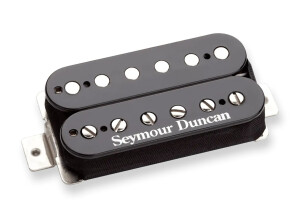
    The Seymour Duncan JB is, without a doubt, the most popular pickup in the Seymour Duncan lineup. It has been one of the pinnacle pickups in the ‘80s, and it’s still extremely popular today. It features slugs on one coil, adjustable screw heads on another, four conductor wiring and an Alnico 5 magnet. The JB is an extremely love or hate pickup. It has such polarizing opinions that it’s crazy. The biggest reason is that it’s very picky when it comes to what guitar it mates to. It’s also very picky when it comes to pickup height. Both of these can lead to either an amazing sound or an awful sound, depending on what it was mated with. The low end on this is fairly vintage sounding. It’s not terribly tight, but it’s just tight enough to work for metal. The midrange is a bit “stringy” at times, and the treble has a bite to it. This helps it really cut through the mix, and it generally doesn’t get too harsh. Split coil and parallel tones are great, too. I find this pickup to sound best in mahogany. Most of the time, when I try it in alder, it sounds a bit too bright. However, it totally depends on the guitar in question. In my alder bodied Strat, this pickup just screams like crazy. The same went for my alder bodied ESP M-II. It’s really a pickup you have to try for yourself to see if you like it, and be sure to spend some time with it adjusting the pickup height. Some people use the JB in the neck, and while it does work, I find there are better pickups out there for the neck. Given how popular the JB is, it’s worth at least trying one time in your life. They’re so plentiful that they’re very cheap on the used market, so there’s no reason to avoid it. If you don’t like it, just sell it or maybe swap in a ceramic magnet to have a baby Duncan Distortion.

  • « Great... at what it does »

    Seymour Duncan SH8 Invader. 3 ceramic magnets with 12 large hex pole pieces. It by no means a bad pickup, it's just is it what you want? I bought it mainly because ole Papa Hetfield had used one in his Electra V for Kill Em All and I wanted to have my go at somewhat copying that tone. And while it does get that distinct grind it's soo hard to control this pickup. It has so much bass that it's actually hard to keep it from getting muddy/ flubby. If you have multiple guitars with different pickups rest assured that you WILL have to change the settings if you use this pickup, so in my opinion that's a big con for playing live. Constantly having to tweak you amp. Now there's many people who've used these with success and great tone, but I can't figure out how. In a thin bright guitar such as a Jackson, maple neck thru, ebony board, alder wings... this would be great to thicken it up a bit and give back some low end. But in a solid mahogany guitar it was too hard for me to get it where I wanted. I play faster paced metal where tightness and articulation is key so for me this was definitely not it. If you're playing more classic rock/metal, sludge, doom or styles that don't rely on speed and articulation as much then this might be a great pickup for you. It will make any guitar thicker and beefy but it'll really lose the definition. It’s also very aggressive so along with being muddy it doesn’t have good cleans. It’ll overdrive your amp too easily so getting sparkly cleans is a real challenge. If you don’t mind a somewhat clean/ light crunch tone then this may work for you, but in my experience a true clean tone was very hard to get. So while it's a great pickup and does everything it's supposed to do, it's just not what I need or want.

  • « Seymour Duncan Cool Rails »

    Now I've got your attention, I'd like to share a story with all those out there about to spend hundreds of pounds on new pickups. I've got a Yam Pacifica 312H (review on this site) and I was going to upgrade the pickups. I spent hours looking at all the choices and got really quite confused. Everything Seymour Duncan seems to come in at 90 quid or so, so that's not a problem, but I don't know anything about pickups and was unprepared for the vastness of the choice. After some reading I was told by Yamaha that the only difference between a 312H which is available only in Japan and the 412, which is for the rest of the world, is a slight difference in body shape, colour choices and the pickups, which are ceramic in Japan and Alnico V in UK. I also found out that ceramics are the brightest and most powerful pickups and that covers tend to be used to mellow the sound. So I took the covers off the single coils. The difference in tone is significant and definitely for the better, with increased woodiness, attack, pick sensitivity and power is up about 40%. It basically sounds like I put new pickups in, for no money and 30 mins fiddling. I also snipped the wire from one of the coils on my bridge humbucker and totally messed it up, but I got a Yamaha specialist to permanently tap the bridge-most coil with the adjustable pins, then reverse the pickup seating so the active coil is further away from the bridge. This has meant the balance from pickup-pickup is much nicer, with no big change in the last two positions. I got the tip from another website I can't remember, but a tapped 'bucker in the bridge-most position apparently is far too harsh and doesn't sound like a strat. Now I have added lucidity and fluidity twith the overdriven sounds. I'm not in a hurry to change my pickups anymore, tho obviously if I did spend 270 quid on a balanced set of cool rails or soemthing it would sound better than it does now. There's just no need, cos it already sound more than good enough and a lot better than many strats out there. . . . . This review was originally published on http://www.musicgearreview.com

  • « Seymour Duncan DimeBucker »

    i got this pickup at Sam Ash for $84. this is an awesome pickup. Great high end, nice and bright, and loud. When i got this put in, i had to turn my amp down! not much, it does tend to be a bit to noisy, sometimes when i take my finger of a note to make it stop, it just keeps on sounding. But i do have a crappy amp. it's a pretty sweet looking pickup, it's seymour duncan, so it's good quality. I totally got what i paid for great lead pickup, one of the best out there This review was originally published on http://www.musicgearreview.com

  • « Easiest way to get a humbucker sound in your strat »

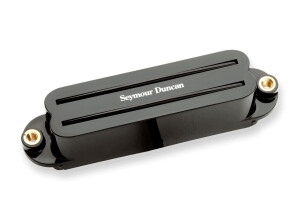
    Seymour Duncan is probably the most popular pickup maker in the world. They are known for their humbuckers and vintage style single coils. This Hot Rails is a more modern style single coil sized pickup more in the style of what Dimarzio does. Dimarzio is more known for their single coil sized humbuckers than Seymour Duncan is. Duncan is known for their vintage hot rodded single coils that everyone loves and their vintage Humbuckers. This is a single coil sized humbucker. It does not sound much like a single coil because of this. It sounds more like a humbucker than a single coil. It has a very big and fat sound. It is not thin and twangy like a single coil In the neck is has a smooth tone like a vintage paf or something. In the bridge it can give a nice fat tone for hard rock playing. It can be split which is something you dont think about much when you are playing with single coils. The split tones sound more like single coils but it kind of defeats the purpose of this pickup. If you are going to split it why not just get single coils to begin with. Some of the older models have a different kind of case with a little lip on the top. If you are working the tremolo hard your strings can get caught on the lip of the pickup. This is the reason you see some 80s players putting tape on the bottom portion of their pickups to prevent the strings form getting caught under heavy tremolo use. If you are looking a fat humbucker sound in your strat and do not want to get a new pickguard or carve out your body this is probably one of your best bets from Dimarzio.

  • « Benchmark neck pickup »

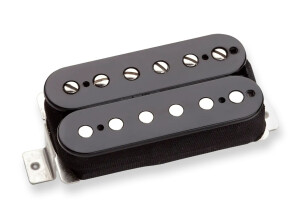
    Seymour Duncans are put in tons of guitars from many different companies but the most popular combination is the Jb in the bridge with the 59 in the neck. The 59 is probably their most popular neck pickup because of this. The 59 is a great modern day PAF pickup. And the PAF qualities is what people want in the neck position of their guitars. The pickup features four conductor wiring like most every modern pickup and an alnico 5 magnet. With this vintage design you get super smooth lead tones when used in the neck position on a high gain setup. The low end on the pickup is super smooth and the high end is clear but not harsh. It has some high end spank and crispness but it does not overpower the strong mid and lows that this pickup puts out. This really gives the pickup the ideal tone for neck position lead playing. Since this is based off a PAF it naturally goes well in Les Paul style guitars. The fat tone of the Les Paul with the fat tone of the 59 gives you a super fat super smooth tone where ever it is. The notes ring out like crazy but never sound harsh. They have a fat open sound that everyone wants from a good neck position pickup. They can also work well in guitars that arent as dark in mahogany. In a brighter guitar this pickup in the neck can help level out the high end and give you a fatter tone. This pickup is the jack of all traits when it comes to the neck position. There is not much more you could ask from a pickup in the neck position. Its smooth without being muddy and clear without being harsh. This should be on everyones short list when they are looking for a neck pickup.

  • « picky »

    I recently installed this pickup into the bridge position of my ESP Sc6 just to see if it could hang with the Anderson h3 I have been using for years.The SC6 has an alder body, maple neck through, ebony fret board, and a tune-o-matic bridge. My main amp is a Framus Cobra 100 watt tube amp and I also played it through a Peavey 5150 and Hughes & Kettner triamp.I mainly play metal along the lines of pantera, botch, the dillinger escape plan, and also some spacey ambient stuff. Plugging into my amp without changing my normal settings and the pickup was very thin compared to the Anderson.The clarity is great and the clean sounds are really nice but it lacks the chunk in distortion that I'm used to with the H3. I took a bit and re-did my EQ to try and compensate but was still a bit underwhelmed by it. Boosting the bass got me a little closer to what I was looking for but started to muddy up the sound. I then used an EQ pedal to try and find a happy medium but never quite got the thickness while retaining a tight low end. I have a friend who uses one in his LP style guitar and it sounds great. The construction of that guitar is completely different with a mahogany body and a rosewood board I am sure it is nowhere near as bright of a guitar as my ESP. He also tunes down to B and in that tuning the pickup sounds incredibly full and well balanced. Overall I would say this pickup would be much better in a guitar made of mahogany or other woods with a lower resonance. The alder and ebony combination is just too bright for it. I would suggest this pickup to people playing classic rock as it has that high-mid thing going or for anyone dropping an LP style guitar down to B and playing some slow doom music.

  • « A great and unique sounding take on the PAF »

    The Seymour Duncan PATB-3B is based on their popular Parallel Axis humbucker, but voiced to the requests of the guitarist Blues Saraceno, best known for his stints with bands such as Poison or Transmission OK. He's always had a very interesting tone that has a very apparent upper mid voicing that can best be described as "honk." It cuts through very well in a band mix and doesn't get in the way of other tones. This pickup from Seymour Duncan is supposed to get players one step closer to that great and unique tone. Upon first inspection, this pickup looks a little bit different than a conventional humbucking pickup. Most humbuckers have 6 circular polepieces per coil. However, the Saraceno humbucker has two horizontal, rectangular polepieces for each string (one is placed directly above the string, one is directly below it)so now each coil effectively has 12 pole pieces. To my ears this seemed to react like a rail magnet based pickup with a good strong string pull overall. It's supposed to be like a PAF on steroids, and being a fan of Blues, I have a decent idea of what his tone is like. I tried this pickup loaded in the bridge position of a Fernandes Monterey Les Paul clone (mahogany body/neck with ebony fretboard). It was paired with the stock Sustainer system humbucker in the neck position. I tried it through a Mesa Boogie Dual Rectifier Roadster head/Orange 4x12 and a Soldano Astroverb 16 combo. The tones were very pleasing overall. Cleans had a nice chime to them as well as the aforementioned "honk" based midrange frequency, which really suits a Les Paul type guitar very well in my opinion. The dirty tones were really cool. For being essentially a PAF style pickup, it has gobs of output and sustain on tap. It's not a modern or tight voiced pickup in the slightest... I found it to be very loose and somewhat fuzzy, much like Blues' classic tones on record were. For playing vintage voiced rock with lots of gain though, whether playing power chords or sustained lead passages, this pickup sounds awesome. In closing, I felt that this pickup was a really cool alternative to the typical PAF clones that are out there. I like the fact that it has a different design for the polepieces and I like the voicing and output that this pickup offers. For what it is worth, the pickup that was replaced in the guitar (owned by my good friend Andrew) was a stock EMG 81, and Andrew commented that to him, this pickup had more output than the stock EMG did!

  • « P-90 tone in a humbucker size »

    The Seymour Duncan Phat Cat P-90 sure is a cool cat. With this pikcup you get all the output, tone and sustain of your favorite humbucking pickup but with the all the definition and note clarity of a single coil. This pickup is super dynamic. It can be warm and thick for blues or be crunchy for rock. P-90s respond well to how you are playing and goes along with you. These pickups are very lively and punchy. They have a thinner bottom end than most P-90s but there are a ton of mids and top end spank. They are very responsive and sensitive to pick attack. I compared the Phat Cat Les Paul to a 2004 Gibson Classic SG with stock Gibson P-90’s which are the traditional big P-90s. I also compared it to a Les Paul Historic Special Double Cut reissue, (modeled after the 1960 Les Paul Special DC). I found the Gibson P-90’s in both guitars to be both a bit warmer and smoother with greater bottom end. Overall, the Gibson P-90’s had a much fuller and “wider” sound while the Phat Cats seemed more closely aligned with a hotter Fender single coil sound. With that said, the Phat Cats do not sound bad at all. The Phat Cats sounded very good overdriven and with high gain. They were surprisingly quiet and certainly would help cut through the mix in a band setting. Some tonal differences between the Phat Cat and the Gibson Traditional P-90s can be explained by the Gibson P-90 being much larger in size and able to pick up my frequencies. This also means that they cannot be easily installed onto a guitar that didnt come with them. The Phat Cat can do a variety of tones and could be used for many styles. I could do country to jazz to rock even. If you are looking for some of that classy P-90 tone and do not want to have to cut up your guitar to get them to fit, the SD Phat Cat may be for you.

  • « Excellent neck pickup! »

    The Seymour Duncan Jazz, along with its sister pickup the JB, makes up one half of what is possibly the most widely used pickup set from Seymour Duncan. I purchased a 2009 Jackson King V Select (USA made) that had this pickup combo. I was less than impressed with the JB in this particular guitar, but the Jazz was a different story. It really had a nice clear sound that was neither muddy nor thin. The nice thing about this pickup is that it is able to go from very clean jazzy tones to very high gain applications for rock/metal/shred and not lose any clarity or definition. I often would channel switch on my amplifier to a very fat sounding clean tone and the Jazz was great for comping and single note lead lines. Playing complex chord voicings on a clean tone were a breeze, as the clarity that this pickup has allowed each note to ring through clearly. The dirty tones were great as well. In my opinion, this pickup has a very tight response that is wonderful for shred type lead work. I was using it in conjunction with a Mesa Boogie Mark Five and got very thick and tight lead tones a la John Petrucci or Steve Vai. Again though, even on dirtier tones, the sound has a killer clarity that allows even the most blindingly fast passages to cut through a mix very well. This pickup suffers from none of the inconsistency of the JB either, which is a plus. I've tried it in a few guitars over the years and noticed a great set of tones regardless of guitar brand, construction type, or woods used. There obviously will be some differences from guitar to guitar but it is a much more consistent pickup than the JB to me. If you're looking for nice, thick neck position tones that still have good clarity with both clean and dirty tones, give the Jazz a shot for sure!

  • « CRUNCH! »

    I have the distortion installed in the bridge position of an ESP Eclipse standard (mahogany body and neck, maple top, rosewood fingerboard) to replace the stock Duncan JB. I mainly run it through a Framus Cobra tube amp and sometimes with an H&K triamp or Peavey 5150. I bought this pickup on a suggestion from a fellow eclipse user when I was looking for something with a similar output to the JB but with A smoother top end, tighter bass, and more beef. In this guitar that is exactly what you get. The pickup has a great crunch and top end that allows you to cut through mixes without the harsh quack sound of the JB. In low to mid gain settings it gets a very classic sound then just gets meaner and meaner when turning the gain up. The bass is tight to the point that you really have to tighten up your right hand technique because any slop will show but it's very rewarding when you lock into some double bass and everything just pummels out into the crowd. Chord work retains definition in high gain settings again to the point of exposing any slop in your playing. The one area I don't think it excels at is lead work. Fast flurries are well defined but it's missing the fluid sound I like in single note runs and it just sounds A little plain. I will not do leads on this pickup without some sort of verb or delay otherwise it just sounds empty to me. I will admit I love effects so I may just be biased to a wet lead sound. Overall I would definitely try this in other guitars. I think it's tailor made for the classic LP wood configuration and any lack of lead sound can be made up for with a nice neck pickup.

  • « Great vintage sounding single »

    The Seymour Duncan SSL-1 single coils are one of the most well known single coils that Seymour Duncan has to offer. The SSL-1 is a low output single coil that features staggered Alnico 5 magnets and two conductor wiring. It also comes in reverse wound, reverse polarity to work nicely in the middle. The SSL-1s are very vintage sounding pickups that go great with Stratocasters. These pickups are fairly bright and clean sounding, but they also have a fairly nice bottom end. The highs are crisp, just like you’d expect from a single coil. The midrange is pushed back a bit to help give it some clarity, and the low end is very even sounding to complement the overall tone. Clean tones totally sing and can get an awesome Eric Johnson style tone. Chords are also very clear and precise sounding. Under medium gain, these things really have some nice attitude and can give sound great vintage style gain tones. High gain tones, however, are a bit lacking given how low output they are. I’m a big fan of these in the middle position. Given that I tend to like hotter single coils, I prefer something a bit hotter in the neck. When they’re in the neck, they give a great clean and midgain tone, but for higher gain playing, they fight me too much in strats. Obviously, they’re a bit too underpowered for me in the bridge position, but they might work if you’re into more vintage style tones. In the middle position, it gives a great clean tone and leads to an awesome “quack” when combined with a neck single or split coil humbucker. If you’re looking for a more vintage style single coil in the Seymour Duncan lineup, these are probably your best bet for the money. They’re great sounding pickups that should work in most situations.