Log in
EN
FR

Seymour Duncan Guitar Replacement Parts

551 products found

Categories
Series
Filter
Sort by
Seymour Duncan
Evaluation
  • Reviewed or not
  • Editor’s award
  • Reviewed by Audiofanzine
Availability
  • Available or not
  • Sold new or used
  • Sold new
  • Sold used
Must-have products
  • All products
  • Flagship products
  • Best rated products
  • Hot products
  • Popular products
Price
  • Freeware
  • Low-cost (< $150)
  • Mid-range ($150 - $200)
  • Premium (> $200)
€
Clear
Sort by
  • Popularity
  • User ratings
  • Price - low to high
  • Price - high to low
  • Used price, increasing
  • Used price, decreasing
  • Name (from A to Z)
  • Name (from Z to A)
  • Added on
Choose a category
Selected category: Guitar Replacement Parts
Sort results
  • Popularity
  • User ratings
  • Price - low to high
  • Price - high to low
  • Used price, increasing
  • Used price, decreasing
  • Name (from A to Z)
  • Name (from Z to A)
  • Added on
Filter results 551 results found
Brands
Evaluation
Availability
Must-have products
Price
  • Freeware
  • Low-cost (< $150)
  • Mid-range ($150 - $200)
  • Premium (> $200)
Show results

The best Seymour Duncan Guitar Replacement Parts reviews

The reviews Audiofanzine members found the most helpful.
  • « A great sounding, but choosy pickup. »

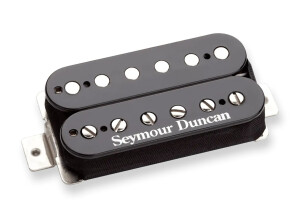
    The Seymour Duncan JB (JB standing for Jazz/Blues, NOT Jeff Beck as many people think!) has been a mainstay in the Seymour Duncan line of pickups along with the '59 and Jazz. It's a very good sounding pickup overall and that's the reason you can find it stock in a lot of guitars today. However, it is my opinion (and apparently many others' opinion as well) that this pickup is very picky/choosy when it comes to the wood it's being mated with. I'd take that one step further and say it's not just the wood being used, but it's also got something to do with the body shape and quality of the wood being used. In some guitars it has a great L.A rock type sound with a round bass, nice biting top end and scads of gain. However, in other guitars it can sound thin, weak and have no definition with higher gain settings. Case in point, I've owned two guitars in the last year that have come with the JB stock as a bridge pickup. One was a 2010 USA made Charvel San Dimas with an alder body, quartersawn maple neck, and an Original Floyd Rose tremolo. The other was a 2009 USA made Jackson King V Select with an alder body, maple neck with ebony fretboard, and an Original Floyd Rose tremolo. I would have definitely thought that guitars with such similar specs would sound very similar and hopefully have that biting top end and thick low end that I really like from this pickup. The Charvel hit home on all fronts... it was to me a prime example of a great sounding L.A rock machine, and the JB in the bridge just had this beautiful, snarling attack. The Jackson, by comparison, was a complete and utter letdown. For a guitar that had such similar specs, I was absolutely shocked at how thin, weak and lifeless the JB sounded. It had none of the aggression that the Charvel did, and there was a serious lack of sustain as well... definitely confusing. All in all, I would say if you are looking to buy this pickup, tread with caution. Though it CAN sound great, it really does depend on the guitar you are using, and as my experience shows, similar specs doesn't mean a similar tone.

  • « Fat sounding bridge pickup »

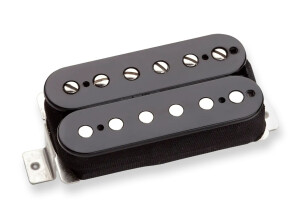
    The Seymour Duncan Seth Lover is Duncan’s tribute to the original Seth Lover PAF humbucker featured in the original Gibson Les Pauls. It’s a purely vintage pickup that features an Alnico II magnet, single conductor braid shielded wiring, adjustable pole pieces on one coil and is not wax potted. The Seth Lover is a true and true vintage humbucker. They come in both neck and bridge models, so you can get a nicely calibrated set if you’d like. The bridge pickup has a lot of similarities to the original ’59 that Duncan offers, but it’s more harmonically rich and fatter. This pickup works awesome with clean tones and mid gain tones. The clean tones are very complex and clear, yet fat and smooth. I’m surprised they were able to make a pickup that was able to do both so easily. The midrange is fairly even sounding, so it’s neither too dominant, nor is it too scooped. It seems to sit perfectly in the frequency spectrum. As expected, these pickups tend to sound best in Les Pauls, but I find they can work in just about any wood you throw at them. They’re versatile enough to handle nearly anything you throw at them. The biggest drawback, however, is that they’re not wax potted. Because of that, they can really squeal under high gain, and that’s a big no-no for heavy metal players such as myself. Once you wax pot them, they sound quiet, but they seem to lose some of that great vintage style sparkle they were known for. If you’re looking for a fatter ’59, I highly recommend checking these out. However, just be aware that they’ll probably squeal under high gain, and if you wax pot them, they’ll lose some of the more complex tones these are known for.

  • « A confused pickup »

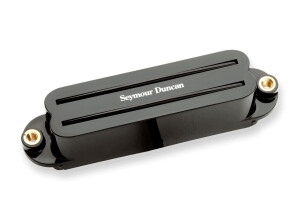
    The Seymour Duncan Cool Rails is a unique take on single coil sized humbuckers. The main goal was to create a lower output single coil humbucker in contrast to the Hot Rails which was blazing hot. It features two blade rails like many of these single coil humbuckers have, four conductor wiring and a ceramic magnet. While the Cool Rails called is a lower output single coil humbucker, but it’s still got some output going on. It can work in any position, but I find it best to be suited for the middle position – and I’ll get to that in a bit. It is a bit brighter and clearer than the Hot Rails, which can be a good thing for some and a bad thing for others. Here’s the issue I have with this pickup. It sounds like a mix between a single coil and a humbucker. It can’t decide how it wants to sound, so it’s trying to sound like bot.h at the same time. Consequently, I feel it fails in both sounds. It’s not fat enough to be a humbucker, and it doesn’t have the awesome grind like single coils do. It just sounds kinda bland to me. Split sounds and parallel sounds aren’t really anything special, either. In the neck, it’s bright and kinda okay. In the bridge, it’s too bright and lacks output. That’s why I put it in the position I use the least – the middle position. The lower output allows it to be somewhat useful in the middle position for some clean tones. If you’re looking for a single coil sized humbucker, there are better ones out there. I tend to recommend the Hot Rails the most if you’re looking for a single coil sized humbucker in the Seymour Duncan line. Some people dig this pickup, but no matter what wood I tried it in, it was the same result every time.

  • « good for super tight metal! nothing else.. »

    Oh the famed invader pickup!! Made famous most likely due to James Hetfield using it back in the day on master of puppets. Can be coil tapped if you get the 4 conductor version. I've fortunately been able to use both the neck and bridge pickups together in a Jackson Stars Rhoads V. I have not tried it tapped. as a neck pickup (CLEAN): Not bad. Not shimmery or clean-like either. Though it is lower output than the bridge pickup. Clean it doesn't break up if you don't want it to, depending on where you set the height. Of course the magnets are HUGE, so the pickup height should definitely be set properly. as a neck pickup (DIRTY): The distortion is very modern with the ceramic pickup. I guess the best way to put it is gritty and a little bit crispy, yet thick at the same time. It's a very stiff sound, not very saggy and saturated at all, which, depending on your uses, can be a good thing. as a bridge pickup (CLEAN): Clean this pickup is definitely no fender single coil. It breaks up depending on your right hand technique, which is good for some. Though I personally don't mind break up, this type of break up is not what I'd prefer. Again, like the neck pickup the distortion sound is very stiff, even though it's very bassy it has a very specific sound. After owning the set for over 2 years I can almost hear it distinctly on songs/records or guitars. I wouldn't say this is a dynamic pickup, it doesn't clean up well with the volume rolled down, nor does it sound very good on low/medium gain. Overall I think these are a great metal pickup and you're looking for a very tight sound with some grit. The clean is only average and not great. So it's not a very versatile pickup. On the positive, no matter how much gain you throw at it, it will stay tight.

  • « No strat 'quack' »

    I've had good experience with Seymour Duncan products, and bought these to go in my frankenstrat at neck and middle positions. I wanted something with that strat 'quack' but with more output to blend well with the humbucker in the bridge position. I love Duncans as a general rule, but was disappointed. They're pretty hot - wound at 13.3 k - but do not have that crisp, glassy strat bite I wanted. Back to the drawing board.

  • « Syrupy and cutting. »

    Seymour Duncan's SH-1N is the neck model of his take on Seth Lover's original design. Using many of the same basic components as the original it proves to be a faithful reproduction. I have this installed in the neck position of my '97 American alder Stratocaster. The pickup is a hum bucker and is capable of splitting into single coil mode. Mine is wired so in single coil mode it can be run in series or parallel. The tone of this pickup is very satisfying to me. I usually find that neck pickups tend to be a bit harder to please me. The tone of this pickup seems to me to fall in between two worlds. It has just enough smooth syrupy feel while still being able to cut through without getting lost. In hum bucking mode it provides a lead sound smooth in nature while leaving enough high end response to still pull out some nice pick harmonics without loosing them or having them sound dull or weak. It has a nice throaty nature to it and speaks with authority. While not a high gain pickup its voicing provides a well balance slice through the mix. In single coil mode it retains its smoothness but adds a nice open nature to the sound. I would not call it a faithful reproduction of a single coil sound however it is a very useable sound all the same. I would equate it more to a backed off hum bucker than to a true single coil in that respect. I find that it works better in this mode when coupled to the bridge pickup. Speaking of that in hum bucking mode it actually works very well with the bridge pickup unlike many other combinations I have tried over the years where instead of working together they fight each others characteristics. I have this paired with a Pearly Gates Plus. This pickup is well worth its cost and will work well with most medium output bridge pickups. Its tone lives in a nice middle ground between thick and thin where many other choices seem to lean one way or the other. I consider this to be a sweet and juicy tone where I have it and would not break it from the pair I have now.

  • « Razor sharp, very modern pickup »

    I got this in a Dean Dime O Flame. Based off of Dime's L500XL, whether it was the B&B or the BLUSA isn't known and doesn't really matter, they're incredibly close. There's rumors it was based off a custom L500XXL made just for him but that's not a proven fact. This is a very bright pickup, which happens to be it's #1 complain. A simple 250k pot swap will smooth out those highs and make this pickup sing. Designed to be used in a full mahogany guitar which is pretty dark, so if you put it in an already bright strat style guitar what else would you expect? This pickup isn't bad in any sense but it wasn't as tight or clean as the B&B L500XL. It has higher gain and IMO a bit too much. It is a little fuzzy for that reason, they needed to take off a few winding's to calm it down a bit. Like the L500 this pickup is very clear. Listen to some Pantera to get an idea of how articulate these are. He used the L500 during Pantera but they’re so similar you’ll get the idea. Along with the articulation these have a very smooth razor like sound. It’s not thick but it’s not thin either, it just makes staccato playing effortless, cause it wants to be tight anyways. Again this is definitely not a bad pickup but for what it is (a L500XL copy) I don't see the point is spending another $30 for the words "seymour duncan" and Dime's signature on it. I'd rather just buy the REAL thing for $50 and have very slightly better tone. There’s a huge debate over B&B vs BLUSA, I don’t buy into it at all. They both make great pickups and are close enough in tone that no one should ever care. I guarantee no one would be able to tell which is which in a blind test, without getting lucky. There’s a youtube video floating around that compared the B&B, BLUSA, and the Dimebucker, all in the same guitar. I suggest you check it out.

  • « Seymour Duncan Hot Rail Pickup (bridge) »

    I bought this off of ebay for 70 bucks new. looking for a good replacement for my Mexican Strat. I love its tone, great for any style. Im in a cover band which plays all types of music, this pickup does it all. Also great for hammer-ons. Great clean or distorted. Nothing to dislike. I havent had any problems with this pickup, I play a gig about twice a week and this pickup is in my primary guitar, I give my poor fender too much of a beating, and she still works, so i would would say good quality. Awesome pickup. Very versatile. This review was originally published on http://www.musicgearreview.com

  • « Seymour Duncan Hot Rails »

    I got this baby from music scene mansfield through mail order for around £70. where do we begin. well it beats the crap out of the original single coil pickups fitted to my strat. i thought maybe because it is much smaller than a regular humbucker that it might not be as good, but it has really good levels of output and gives you all the crunch and reythem needed for hammering out those barre chords. it makes the other pickups sound crap. well its very well sturdy and fits into a normal single coil slot on a strat body. as long as you dont hit it with a hammer or anything i think it'll be fine. If you are looking for a pickup to give your single coil equiped guitar more crunch and a more solid sound , you cant go wrong with one of these. This review was originally published on http://www.musicgearreview.com

  • « Will fatten up any 7 string, maybe even too much »

    The Seymour Duncan Invader is one of the older extreme pickups. Before there were Bareknuckle pickups and all these extreme pickup companies there were not many really heavy passive pickups to choose from. This and the X2N were your only accessable options back in the day. The modern advent of extended range guitars has given new life to these older extreme pickups. This pickup is essentially the same as the 6 string version but for 7 strings. It still has all the pros and cons of the old pickup but with some extra caveats. The Invader is known for its huge low end and the 7 string version retains that. On a 7 string since you are going to have extra low end from the low B with this Invader pickup the low end can get really boomy if this is in a mahogany guitar. This pickup works best if you have a guitar not made from great tonewoods. If your guitar has a thin natural sound or something like an Ibanez a pickup like this would fix it right up. The huge thickness this pickup has will make any guitar sound huge and this is its benefit and its detriment. A pickup like this can be very boomy and get muddy if you are playing big chords. The problems with these pickups are pretty well known. It is a very noisy pickups due to its huge magnets. It picks up interference from just about everything. Also with the huge screw pole pieces when the strings hit these you get more noise as well. If you have a 7 string that is in desperate need for a bigger sound this is the kind of pickup you need. This pickup makes not excuses for its tone, it is just big and huge all the time.

  • « A good heavier alternative to the JB »

    Seymour Duncan is one of the big 2 pickup makers in the guitar industry. It pretty much is them and Dimarzio ruling and making most of the pickups most people use. They kind of fill in different segments of the guitar industry with Dimarzio having a more modern and contemporary heavier area and Seymour Duncan filling in the more classic and vintage area. There are always exceptions to this rule though. The Duncan Custom is one of their more unique creations. While most of their pickups come with Alnico magnets the Custom has a ceramic magnet that gives it a bit more of a modern edge to it. The pickup has a slug on one coil and the screws on the other end. Seymour Duncan classifies this pickup as a medium output pickup but the output is more than adequate for just about every type of music you could want to play with a passive pickup. The pickup like most every modern pickup comes with 4 conductor wiring. If you are getting a new one you can do yourself a favor and get the liberator Seymour Duncan wiring system and help yourself to easier pickup swaps with their solderless system. This pickup reminds me of a hot rodded JB which itself is a hot rodded PAF. The tone is super tight in the low end for a Seymour Duncan. The low end frequences are also a bit more refined than on the JB. It is fat and the high end is nice but not harsh. The pickup has good high end clarity. This pickup goes great with a 59 or Jazz in the neck position. If you are looking for a Seymour Duncan for your bright position that is nice and tight and not a JB this is a good alternative to what everyone else is using.

  • « 7 string active warmth and fullness »

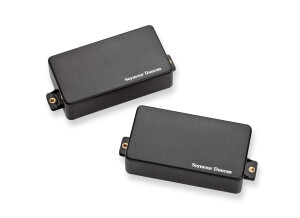
    Seymour Duncan Blackouts are taking over the metal pickup market. For the longest time there was 1 name in the active pickup market and that was EMG. Now Duncan is in the market and they are giving everyone a new look and something to compare the EMG's to. It seems that Duncan set out to do with their active pickup what the EMG was weakest at, warmth and fullness, both things hard to achieve with active pickups. They have succeeded. With the extended range guitar market taking off they need to offer their Blackouts for those guitars as well. They did a smart thing by making the 7 string Blackouts the same size as the 7 string EMG pickups. The size is irregular but I guess they figured someone who already had active pickups would be more likely to try out the Blackouts in their guitar. If you want to put these pickups in the place of a passive 7 string pickup you will most likely have to do some modding to the body of the guitar. Comparing these pickups to the classic EMG 707 which is probably one of the warmer sounding EMG pickups you get a lot more warmth. I found that most Blackouts have an eq more tilted to the low end compared to EMG's. This is true for this pickup as well as it seems that the high end is more refined and not as raw and active sounding like on EMG pickups. The high end bite is more natural sounding on the Blackouts and they seem to take into account better what kind of guitar they are in where as EMG's tend to sound the same no matter what kind of guitar they are in. You may like this for consistency but some people may like to bring out the character of the guitar instead. If you have a 7 string with active EMG pickups and are looking for something a bit different, maybe a bit warmer or a bit more full in the low end, you should try the Seymour Duncan Blackouts they seem to do well what the EMG's are weak at.