Log in
EN
FR

Lexicon

74 products found

Categories
Series
Filter
Sort by
Evaluation
  • Reviewed or not
  • Editor’s award
  • Reviewed by Audiofanzine
Availability
  • Available or not
  • Sold new or used
  • Sold new
  • Sold used
Must-have products
  • All products
  • Flagship products
  • Best rated products
  • Hot products
  • Popular products
Price
  • Freeware
€
Clear
Sort by
  • Popularity
  • User ratings
  • Price - low to high
  • Price - high to low
  • Used price, increasing
  • Used price, decreasing
  • Name (from A to Z)
  • Name (from Z to A)
  • Added on
Choose a series
Sort results
  • Popularity
  • User ratings
  • Price - low to high
  • Price - high to low
  • Used price, increasing
  • Used price, decreasing
  • Name (from A to Z)
  • Name (from Z to A)
  • Added on
Filter results 74 results found
Evaluation
Availability
Must-have products
Price
  • Freeware
Show results

The best Lexicon reviews

The reviews Audiofanzine members found the most helpful.
  • « Small and easy reverb with the Lexicon sound »

    Small digital reverb in 1U rack format, very easy to use but enough for live gigs. 32 effects that can be chosen via a rotary knob: 16 single effects + 16 dual effects. 1 knob to adjust the intensity of the effect. 1 LED lights up when you switch to the factory preset. UTILIZATION Very easy to use and intuitive. It has all the indispensable. For redundant things you can choose a more comprehensive and complex model. SOUND QUALITY Its main asset is the flawless Lexicon sound. I tried other reverbs of other brands, but their sound didn't convince me because it was very artificial, often metallic or imprecise. This one is perfect for my needs live. I use it to add a touch of reverb to the vocals and guitars, to give them more breadth without the need to worry about having to look for algorithms or any other bizarre things. And only when the acoustics of the venue itself don't add too much reverb already. OVERALL OPINION I've used it for 8 years and see no reason to change it. Ideal quality and ease of use.

  • pixel's review

    It's one of the nicest reverbs around. There are basically three types of reverbs available: Plate / Chamber / Hall. Do note that the rack makes a lot of noise and the unit must be ventilated. Extending the remote is very easy, you only need to connect a Sub d-25 cable (but all 25 pins must be connected). It can be up to 40ft in length without any problems. It has two stereo inputs (it's a single engine unit), but it has four outputs A/B/C/D, for quadraphonic sound. So it can still be used for 5.1. UTILIZATION It's easy to get the feel of it, the parameters are clear, but be careful with the detuning when editing them, you need to wait a couple of seconds for the circuits to really adjust. Editing sounds is very easy, but also a bit limited. You may or may not find the sound you want, but you don't have to turn 20 knobs to find that out. SOUND QUALITY The reverb tails are very nice, but be careful with the sound sources. All elements with aggressive high mids, like electric guitars, make the input converters distort. Strings fatten in a magical way. The 12-bit converters give high frequencies a lot of warmth, it's very gentle given the definition you usually expect from this type of tool. OVERALL OPINION I've had it for 3 years. I bought it because it was a great deal, but it's a unit that needs to be disassembled every two months due to the processing cards that aren't perfectly adapted to the rack slots. Even at the current secondhand price, together with the QRS Quantec, it remains a reverb without any rivals in terms of results within a mix.

  • Audiofanzine FR's review

    (Originally written by oxyde31/translated from Audiofanzine FR) Monolithic converter (PCM54 BURR-BROWN) with dual processor! Not bad for its time! CAUTION: All old Lexicon owners must change the chemical condensers which tend to leak. The acid corrodes the circuit boards (I serviced about 10 units within three years and they all had the same problem). UTILIZATION Stage and home studio SOUND QUALITY Very detailed, almost natural sound OVERALL OPINION I bought it pretty cheap because it had the problem I mentioned above, but I repaired it last spring. I used it for three jazz concerts last summer and it's a true JEWEL compared with the SPX9000 and other processors you usually find in live setups.

  • « Good product »

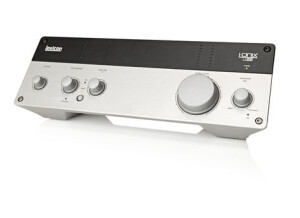
    Good quality audio interface! 2 inputs, 2 buses, 2 outputs, directly powered via the USB port. The system allows you to always have connected a mic/line input and an instrument/line input whose input gain and monitoring is adjusted from the front panel. The latter also features a high-impedance instrument input, as well as an amplified headphones output. I use it with a PC to record my pianos. UTILIZATION It works very well with Cubase SX3, the drivers are stable. Recording is of good quality. Latency could be better, but I'm anyway forced to use ASIO4ALL due to MIDI precision. GETTING STARTED Fast driver installation. Hassle-free USB detection. It works very well with Cubase SX 3. OVERALL OPINION I've been using it for several months and think it's a pretty good product. I recommend it. Images linked to this review

  • moosers's review

    The Lexicon PCM 41 is a digital delay effects processor that is rackable and will take up a single rack space unit. Since I use this at a studio that has it premounted, I'm not 100% sure what kinds of connections it has, but I'm pretty sure it has both 1/4 inch and XLR inputs and outputs. UTILIZATION The general configuration of the Lexicon PCM 41 is easy to follow, even though there is a lot that this unit can do. It is easy to set a basic delay tone, and there is a great deal of experimentation that can be done because of all the parameters it has. It is split up into a few different sections to control certain areas of the sound, which makes it easy to get the sound you are after. I don't have a manual for this, but it is easy enough to use that you don't really need it. SOUND QUALITY The sound quality of the Lexicon PCM 41 is definitely above average and the effects are not only usable, but quite effective. You can get a number of cool sounds from this and is great for use with just about any instrument or sound you'd like to use delay with. I have found it sounds great with guitars and back up vocals, but these aren't the only things it will work with. You can do a lot of cool things with this unit and is up to the quality I have come to expect from Lexicon. OVERALL OPINION I've been using the Lexicon PCM 41 digital delay processor for about two years and I've found it to be a great sounding unit. However, the sound quality doesn't blow me away, it just sound good and usable. Because of this reason, I tend to shy away from using this unit all the time unless I am looking for a specific sound because I can get comparable sounds much easier with a plug-in. If you can find one of these used, they aren't too expensive, but unless you are a big fan of outboard delays and are looking for a new flavor, I would try this out to see if its for you.

  • Audiofanzine FR's review

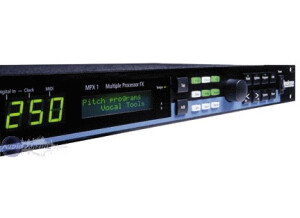
    (Originally written by Aurochs4/translated from Audiofanzine FR) Very comprehensive connections for everything you need. UTILIZATION The user's manual is miserable. It's printed on a postcard format so it's almost unreadable, however I did manage to find the information I needed (mission accomplished!). 4 controls for direct parameter access. I like how they feel. The editing possibilities are good but you'll need some time to make the best out of it. I find the display is a bit too short. I also miss an editor software. It would have been so convenient!!!! Live on stage, the four controls allow you to edit the main parameters and they are ergonomically placed. Each knob allows you to edit several parameters at one time. SOUND QUALITY The strong advantage of this effects processor is the processing quality: echo and reverb effects are perfect, flanger and chorus effects sound wonderful. Even long reverb effects sound accurate although a bit cold. The dynamic response is excellent: the input compressor certainly plays an important role. No noise... I use it for reverb, echo, chorus (excellent) and flanging effects. I didn't really try out the other effects but I noticed the rotary effects sound good. OVERALL OPINION Very good value for money. Very good effects processor! I take one point off for an awful defect present on my two MPX 550: the power switch produces a switch-on thump when I power off the unit (which isn't really difficult to solve: even Behringer can do it!). It's the one and only complaint I have. I compared this unit with a MidiVerb and a TC One. The MPX is better than the MidiVerb in every respect. Compared with the TC, its reverb effects sound a bit colder (especially long reverbs). But the sound definition is very good and there's almost no need for corrections. The presets sound good and are easy to edit. I miss MIDI implementation (is it so difficult to develop a small software??). Connections are very comprehensive. I recommend this unit, it's a true delight to use it and it provides a very good sound quality.

  • « A very basic oldie but goodie »

    The Lexicon PCM 60 is a 16-bit mono in/"stereo" out digital reverbration unit dating to the mid-1980s. The unit is a dead-simple bare bones affair, with only two main programs: Plate and Room. For either program, there are two banks of four additional shaping settings: one for decay time, from short to long, and another set for effect size, from small to large, which also affects perceived reverb time. The only other sonic shaping available are two "Contour" filters, one for bass and the other for treble. The unit's front panel also has controls for input and output level trims, effect mix from 0% to 100%, a bypass switch and unit power. Metering is a color-coded 5-segment affair that is easily viewed. All connections are at the rear panel, are all analog, and are all 1/4" jacks. There is one input, "stereo" (but not true-stereo) output, and effects loop, and a footswitch jack for bypassing which I have never used. Operating levels in and out are switchable between +4dBu and -20dBv. If you're after a multieffect unit, this isn't it. I rate this section based on what this unit IS--a simple reverb unit and NOT a multieffects unit. It does only what it endeavors to, and no more. That's good enough for me! UTILIZATION Reverb Units don't get much simpler than the PCM60. There are no displays, no menus to scroll through, just a single row of pushbuttons. Settings are easy as pie and although there's no recall, all you need to do is kick it old-school, write down the button and knob settings and keep that with your other sessions notes (you DO keep your sessions nice and organized, right?? ;-) Setting input and output levels are simple, and the rotary pots are still smooth and reliable after all these years. I prefer to use it as a mono-in, mono-out unit, preferring true stereo in and out reverb units where possible. The manual is perfectly adequate; it explains the basic functions of the unit complete with pics and example settings, and also has a page that you can copy for recall sheets. SOUND QUALITY This is a 16-bit unit, so care should be taken to leave some headroom on the input level--we don't want any squared-off 80's digital distortion, now, do we!? The quality of the reverbs is surprisingly good considering the vintage. The PCM60 has the familiar Lexicon family musical (but not transparent) character of sound to it. Bottom is smooth; higher frequencies come off as grainy yet lush, and smoother with the Treble Countour engaged. The Countour filters are especially useful for vocal and drum reverbs; engaging them essentially rolls off highs or lows for a more absorbed sound at the frequency extremes. The sounds this unit produces are of course limited, but when they work for a source (you will quickly find out if it does or not by twiddling a couple knobs and pushing a few different buttons), they work very well and sound...for lack of a better expression, nice! I tend to go for the plate sounds more often and especially for vocals and drums, but the room program has its place, especially for some vocals and the odd guitar or drum track. OVERALL OPINION PCM60s seem to be trading today for around $400 give or take, which is a bit of a surprise. I'm not sure it represents the best value at that price, considering other, more feature-packed and sonically diverse units at that price and particularly on the used market (where there are also more modern Kurzweils, TCs, Yamahas, lower end Lexis etc)...but for a good classic Lexi and "vintage character piece," the price of entry is on the more doable end of things. The PCM60 will appeal to persons after a musical two-trick pony with a classic sound and character that other units don't achieve--the PCM60 does have its own place in the digital reverb world. If you can get a really good deal on the price and want a couple interesting reverbs of the Lexi variety, I say go for it. The unit I'm most familiar with dates to the mid-80s and it's dead reliable, doesn't skip a beat.

  • moosers's review

    The Lexicon LXP Native Reverb Plug-in Bundle brings the highly respected sound of Lexicon digital reverb right into your DAW! Lexicon has been a leader in digital reverb and other effects since the start, and this is one of the first plug-in bundles to feature their classic reverb algorithms. While not as versatile as the Lexicon PCM Native Reverb Plug-in Bundle, there’s a ton that you can do with this software. I wasn’t the one to take care of installing this software on the studio’s systems that I work at, so I can’t comment on this process of getting the software running. Once you do have the plug-in up and running, which I can’t imagine would take long, then you can start diving into all of features this has to offer, which is really a nice amount. There are four different reverb algorithms to choose from – chamber, hall, plate, and room. Each has their own parameters and all that to work with, all of which get quite in depth and give you pretty much total control over the end result. A manual might be a good thing to hav around if you’re going to be sitting down and learning all the ins and outs of the software, although I have not seen it myself. SUITABILITY/PERFORMANCE Even though this software is a Native version, the studios we’ve got on site where I work are all Pro Tools HD based. It’s a good thing that our computers are extremely powerful on there own and can handle their own native plug-ins as well when necessary as is the case here. The A room where I’ve primarily used the software has Pro Tools HD and a Mac Pro computer consisting of dual 2.66 Ghz Intel Xeon processors and 10 GB of RAM. This huge amount of RAM makes it easy enough to run this software without hiccups in my experience. OVERALL OPINION Without a doubt the Lexicon LXP Native Reverb Plug-in Bundle is one of the best sounding plug-in reverbs that I’ve used to date. It’s comparable in it’s high sound quality to the PCM version of this bundle as it’s definitely of the same caliber. All of the algorithms are extremely clean cut sounding and the vast array of parameters given here allow for total control over what you hear back. I’m not sure that I could choose any one mode here, as they’re all great in their own ways even though I usually end up using the plate one. I don’t know what the difference in price is between the LXP and PCM Native Reverb Plug-in Bundles, but both are awesome reverb plug-ins that maybe matched out there but I’d be hard for me to say I’ve seen better…

  • moosers's review

    The Lexicon LXP-1 is a compact multi-effects processor, but contains mostly reverb sounds. It also has chorus and delay tones, but again primarily has reverb tones. The unit is a digital one and is about half the size of a single rack mountable piece of gear, but isn't designed to be placed in a traditional rack space. The LXP-1 has stereo 1/4" inputs and outputs as well as MIDI connections and a 1/4" jack for a foot switch. The box requires a nine volt power supply. UTILIZATION Using the Lexicon LXP-1 is a fairly simple process, as everything is laid out as simple as possible. There are parameters for input, mix, output, decay, and delay, as well as a mode knob that has about 15 different settings include for two different small, medium, and large reverbs, as well as hall, plate, room, reverse, and gate reverbs. It then has two different chorus settings and two different delay settings. Everything you need to know is right on the front panel, so I don't think that you need a manual for it. SOUND QUALITY The sounds possible with the Lexicon LXP-1 are varied and generally quite clean sounding. It is definitely impressive how many different sounds you can get in this tiny box. You're getting the classic Lexicon reverb sound with the LXP-1, although they sounds aren't as refined as more modern Lexicon units. The LXP-1 can be used on pretty much anything that you would want some reverb, which in different situations can be almost anything. While not the most impressive sounding reverb tones in the world, they are very clean and will do the job well for most situations. OVERALL OPINION Even though they no longer make the Lexicon LXP-1's, you can definitely find used ones without looking very hard. There are a whole bunch of different multi-effects processors like this one out there by made Lexicon, some better and some worse. The price of the LXP-1 is very reasonable which is one of the best parts about the LXP-1. If you're looking for some real Lexicon reverb in a very compact hardware unit without having to spend much money, the Lexicon LXP-1 is a great option.

  • moosers's review

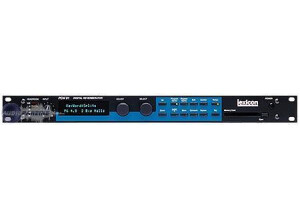
    The Lexicon PCM 91 is a digital reverb unit. It is rack mountable and it will take up a single rack space unit. It is a stereo unit and it has both 1/4 inch and XLR inputs and outputs. It has a memory card slot for those who have older units or want to store their pre set sounds on the memory card to swap them between different Lexicon units. I have only used the PCM 91 in the studio, but it would also work well within a rack based guitar rig. UTILIZATION The general configuration of the Lexicon PCM 91 digital reverb unit is basic for a unit like this, but does like a bit of figuring out if you are not familiar with effects like this. It is easy to get and control the reverb pre sets and parameters that this has to offer, and also won't take to long until you are making and storing your own. The manual for this is pretty complete, and is definitely good to have around while you are trying to learn how to use the PCM 91. SOUND QUALITY The sound quality of the PCM 91 is top notch. The reverb effects are full sounding and the unit is overall versatile in terms of the different types of reverbs you can produce with this. I have used the PCM 91 on a myriad of different instruments, including electric guitar, lap steel guitar, vocals, and snare drum. I won't ever record with this on my signal, but while mixing it can come in quite handy. OVERALL OPINION I've been using the Lexicon PCM 91 for about five years, and while it is a great sounding reverb unit, I find myself using plug-ins more and more for reverb. The reason for this is because it is much easier to control and save, and I can get some sounds that are comparable o this unit at a fraction of the cost. While the reverbs on this will probably be better than that of most plug-ins, sometimes the convenience of plug-ins can outweigh a slight difference in sound quality. This being said, if you are looking for a rack mountable reverb unit, you definitely can't go wrong with this, but the big price tag will make a lot of people shy away because they can get reverb within their digital audio workstations. Overall, if you want a digital reverb unit like this, this is worth a try.

  • moosers's review

    The Lexicon Prime Time II Model 95 is a digital delay processor that has both delay and reverb like tones in its capability. It has XLR inputs and outputs and it is indeed a rackable piece of gear that will take up two rack space units. UTILIZATION The general configuration of the Prime Time II is pretty easy to follow, but because there are so many different options and parameters, it takes a bit to figure out exactly what everything does. It has two groups of five sliders - one for input mix and one for output mix. It also has four knobs for LFO controls, including ones for manual sweep, depth, shape and rate. It then has a slew of other controls and an LED window. It is easy to get a quick sound from this, but you can also sit there and twiddle with it for a while if you'd like, as there are a ton of different sounds that this can get. I don't have a manual for this, so I can't speak to how sufficient it is, but if you have one it is definitely a good idea to have it around, as this unit can be confusing at times. SOUND QUALITY The sound quality of the Lexicon Prime Time II is pretty great. It is versatile and can get a number of different high quality delays. I have used it on all types of instruments, including pedal and lap steel guitars, electric guitar, drums, and lead and back up vocals. I like the sound I get with this because it is warm and the different types of delays I can get is far and wide. All of the parameters it has can seem confusing at first, but only add to the overall versatility this has. OVERALL OPINION I've been using the Lexicon Prime Time II digital delay processor for about a year and a half and I have found it to be an overall useful and great sound delay unit. While I try to use outboard gear like this as little as possible, as it is a hassle when compared to plug-ins of this nature, the Prime Time II has a unique sound that I turn to when I am looking for it and can't find it within the box. The Prime Time II has an awesome look to it and if you can find a used one, it isn't too expensive at all. If you are looking for a piece of hardware to go along with your delay and reverb plug-ins, the Lexicon Prime Time II Model 95 is a fine choice.

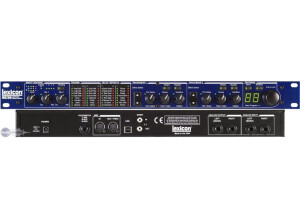
  • « You can use it in a studio too »

    The Lexicon MX400 is a dual stereo style reverb. It is a rackable unit that will only take one rack space and it has an LCD screen so you can create the reverb you want to work with. It is easy to set up but could take a little time figuring out the navigation and sub menus. The special thing about this unit is that you will have full control over your reverb; all of the parameters can easily be edited and changed at the turn of a single knob. UTILIZATION There are 17 different reverbs total and a handful of delay and modulation effects. Right out of the box you will be able to do some cool stuff just by messing around with the reverbs and seeing how they sound. This unit is very fun to work with and it can be used in a professional manor too for your live set. You will be able to get the exact style of reverb and sound you want with minimal effort. SOUND QUALITY The MX400 is MIDI capable with MIDI in and MIDI thru. There are also XLR and TRS ins and outs on the back of the rack. The sounds you will get with vocals using this unit are truly amazing and you will love all of the variations of reverbs that you can create. For many of our live shows we have to have reverb and some of the speakers and processors that we work with do have reverb built into them but it is nothing like using the MX400 because you will not have full control nor will you have a lot of options to work with. OVERALL OPINION This is the best unit for the price, which you can work with to get the reverb you are looking for. You can use it in a studio recording too and add some solid reverb to your vocals and almost anything you want to add reverb too. This unit is very versatile and well built.