Log in
EN
FR

Manley Labs

45 products found

Categories
Filter
Sort by
Evaluation
  • Reviewed or not
  • Editor’s award
  • Reviewed by Audiofanzine
Availability
  • Available or not
  • Sold new or used
  • Sold new
  • Sold used
Must-have products
  • All products
  • Flagship products
  • Best rated products
  • Hot products
  • Popular products
Price
  • Freeware
€
Clear
Sort by
  • Popularity
  • User ratings
  • Price - low to high
  • Price - high to low
  • Used price, increasing
  • Used price, decreasing
  • Name (from A to Z)
  • Name (from Z to A)
  • Added on
Sort results
  • Popularity
  • User ratings
  • Price - low to high
  • Price - high to low
  • Used price, increasing
  • Used price, decreasing
  • Name (from A to Z)
  • Name (from Z to A)
  • Added on
Filter results 45 results found
Evaluation
Availability
Must-have products
Price
  • Freeware
Show results

The best Manley Labs reviews

The reviews Audiofanzine members found the most helpful.
  • « Solid tube monoblocks with sonic options »

    The Manley Mahi (cleverly named since they're monoblocks and when you have two, you have Mahi Mahi) are high-end, mid-powered monoblock hi-fi amplifiers utilizing a quad of EL84s in the power section, a 12AT7 at the input, and a 6414 driver tube. Fans of tube rolling take note: it's best to stick with the EL84M power tubes sourced by Manley themselves for safe, reliable operation--but you can have yourself some fun with the 12AT7s ;-) The Mahis come well packed in nice boxes with excellent purpose-made foam packing, and the amps themselves are petit-sized at less than a foot wide or deep and about half a foot tall. They also weigh in at less than 20lbs each, thanks to Manley's own, unique power transformer which pack a lot of punch into a small package. The manual supplied by Manley is also a hoot to read, with a more laid-back, off the cuff prosaic yet highly informative nature that really provides some insight to what a fun and enjoyable yet serious company this is with a character such as EveAnna Manley at the helm. Coupled with the unusual yet lovely charcoal and purple paint scheme of the amp chassis, you get the feeling that Manley enjoy what they do and want the end user to have fun and enjoy their products as well. The Mahis have a couple interesting tricks up their sleeve compared to similar amps. Using a pair of easily accessible toggles on the top of each you unit, it's possible to switch between Triode and Ultralinear operation, as well as vary the negative feeback in three positions between 3dB, 6dB, and 10dB (labeled as "minimum," "standard," and "maximum" respectively. Output power depends on what settings you're using. Into a typical 8-ohm speaker, in Ultralinear, Manley claims 24 watts-41 watts depending on feedback, while in Triode mode it's 14 watts-25 watts depending on feedback. This makes the amps quite versatile regardless of the speakers you're using, which can happily work with medium- to high-efficiency speakers in a variety of room sizes. Only very power-hungry speakers in large, voluminous rooms will be wanting for more tube power. The sonic characteristics will, of course, depend on how you're operating the amps. Generally speaking, you can expect a clear, open, and taught sound from EL84 power tubes and this particularly describes the sound in Ultralinear mode. In Triode, you can expect a smoother, more sparkly or sugary coloration. In either mode, you will get the most muscular, up-front sound from minimum feedback, while switching in more feedback will create a greater depth of soundstage at the cost of some bass muscle. I run these amps with my medium-efficiency Kharma CE-1.0 speakers. The Kharmas are magnificently clean and clear sounding, with a smooth and polished yet precise top end. These 3-way, ceramic-mid driver speakers throw a huge soundstage and the Mahis are quite up to the challenge of matching them with a highly resolving, large, clear sound. The Kharmas have very big and well-damped cabinets and rather large kevlar woofer to control and even in my small listening room, I have preferred the Mahis set to Ultralinear and either minimum or standard feeback settings for the best muscle with rock music in particular, and also softer rock, folk/acoustic or classical recordings mastered at the lower volumes of yore. Of course, given different speakers in different rooms, your amp setting preferences will vary! The Manley Mahi Mahi monoblocks are a good choice for the person interested in a mid-powered pair of tube monos that have some play in their power and presentation, can throw a big sound that remains clear at frequency extremes, but that nevertheless retains the refined, seductive midrange characteristics that only tubes can provide. Other good points are its low operating costs, since EL84s and 12AT7s in particular are quite ubiquitous and very affordable compared to larger or more esoteric tubes. The efficient power section also drinks less mains power than bigger amps while still giving the amps sufficient bass muscle. Those looking for a more "classic tube sound" with a fatter, more wallowy bottom end and a thicker, more syrupy midrange should look elsewhere--the older EL34-powered Conrad Johnson camps come to mind. Indeed, the Manleys are amps that can satisfy those craving the broadband clarity of a good solid state design while still offering the big, smooth seductiveness that only tubes can deliver.

  • moosers's review

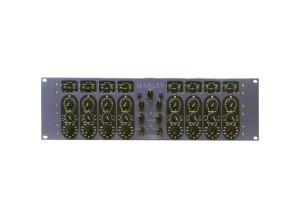
    The Manley Langevin Massive Passive EQ is a stereo parameter equalizer. I'm not sure what type of connections it has (although I think it has XLR) as the one I have used was pre-racked in a studio and I was not invovled with racking it. This is an analog piece of gear that is rack mountable and will take up four rack spaces. UTILIZATION Using the Manley Langevin Massive Passive EQ isn't too difficult as everything is laid out clearly and the unit is overall easy to follow. Each of the stereo channels has four bands of EQ, each including parameters for frequency, bandwidth, and gain, along with switches for either boost or cut and either shelf of bell. Each channel also has an overall gain parameter and a bypass button and there is also a high pass and low pass filter on the unit. The overall editing of your tone is easy granted that you understand how to use a basic parametric EQ and for that reason I don't think that a manual is needed in most cases. SOUND QUALITY The sound of the Manley Langevin Massive Passive EQ superb. It is extremely clean and does everything it is supposed to do. I feel confident using it in pretty much any situation, but I would say it excels extremely well when you are trying to get a stereo spread like on a piano or on drum overheads. This is definitely more of a clean EQ than a warm one, but when used right this can be the perfect type of EQ in a lot of different situations... OVERALL OPINION I've been using the Manley Langevin Massive Passive EQ for about half of a year and was definitely impressed with it from day one. I love the tone it has and I love that it is so easy to use and so familiar looking in terms of the parameters that it has. This is definitely a piece of gear that I would recommend to professionals looking for a stereo EQ with great tone regardless of price as this does cost a lot! Even if you can't afford to look at buying one, if you're ever in a studio that has one like I did, you won't be disappointed if you give it a try!

  • moosers's review

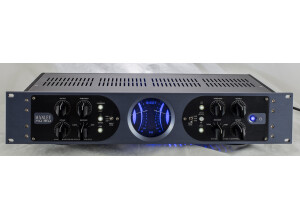
    Manley Langevin Slam! is a stereo microphone preamp and limiter. I believe the pre is a combination of digital and analog components, containing a variety of connections in back, some of which are familiar and some unfamiliar. I do know that it has XLR and AES connections at the least. The unit is rackable and will take up two rack spaces in a traditional rack space. UTILIZATION The configuration of the Manley Langevin Slam! does have a decent amount of stuff going on, but after a while of playing around with it I found that everything was pretty easy to use. While it isn't the type of unit that you can know everything about with a single glance, everything is laid out nicely in order to insure that it can be as user friendly as possible. Each of the two channels has the following parameters: input level, output leve, FET limiter, release, an attack switch, and ELOP limiter, and a knob for choosing the source (mic, line, DI, etc). There is also a switch for choosing the frequency of the high pass filter as well for linking the two channels and for choosing your metering. I've never seen the manual for Slam! so I can't say anything about its make up. SOUND QUALITY It is hard for me to describe the incredible sound quality offered by Manley Langevin's Slam! channel. Both the mic preamp and the limiter are some of the best modern units of its kind. I've used the unit for a variety of applications including vocals, drums, and guitars, and find that no matter what type of application I'm using this for, that it sounds incredible. The best way that I can describe the sound is the perfect mixture of warmth and clarity, which are two things that often aren't seen paired together, as it is usually one or the other. You've really got to hear Slam! in order to believe it... OVERALL OPINION While Manley Langevin Slam! is one of the best outboard channel strips that I've used in my days as an engineer, the price tag is so large that it will shy most away from buying this, and I can't blame them. If you're looking for one of the most well designed preamp/limiter combination channel strips, look no further. This unit is aimed at those looking a high quality piece of gear regardless of what it costs, so I assume that if you're looking into buying this that you fall into that category. If you ever get the chance to try out this unit, I suggest doing so as you'll want to use it over and over again!

  • moosers's review

    The Manley Langevin Dual Mono MicPre is exactly what the name suggests - two mic preamplifiers in a single space rack mountable unit. These are tube microphone preamps and this also comes in a single mic preamp version. It has 1/4" inputs in the front for going direct but also of course features XLR connections in the back. UTILIZATION It's not hard to operate the Manley Langevin Dual Mono MicPre. Each channel has it's own phantom power and a phase reverse switch. Each also has a direct/mic switch. For setting your level, it's got a unique approach, using one fixed gain knob for both mic pres and then input attenuate knobs for each channel. I don't know if I prefer this over a standard mic pre configuration but you have to admit that it's interesting to say the least. Even so, there's no need for a manual. SOUND QUALITY The sound of the Manley Langevin Dual Mono MicPre puts it up there with the best mic preamps available. It's got a huge sound, and that's an understatement. The preamps will work for any and all applications, but I've only used these as a stereo pair for drum overheads and also for recording vocals, since I don't have the luxury of having one of these at home or the at the studio where I work most consistently. The Manley Langevin Dual Mono MicPre simply sounds fantastic. OVERALL OPINION The Manley Langevin Dual Mono MicPre is one of the best bang for your buck deals when it comes to high end microphone preamps. You're always going to have to spend a good amount to get good mic preamps, but at least here you're getting two them for a bit more than what it would cost for one for a number of other high end preamps. There is also a version of this that comes with built in EQ. I haven't used it but it's nice to have that option. Anyone in the market for a set of great mic preamps needs to consider these...

  • moosers's review

    The Manley Langevin Pultec EQP-1A is a stereo reincarnation of the classic Pultec EQP-1A equalizer.<span> </span>While it doesn’t have the same look, it is supposed to have a pretty similar make up to the original.<span> </span>I’m not sure of what types of connections it has since the one that I’ve used was already rack up in the studio that I used it in.<span> </span>The EQP-1A will take up two rack spaces in a traditional rack case. UTILIZATION <p class="MsoNormal">If you’ve got experience with parametric equalization, the Manley Langevin Pultec EQP-1A won’t present any problems for you as far as utilization goes.<span> </span>The EQ is split up into a few different sections.<span> </span>Each of the channels has a low frequency section, a high frequency section, and a cut section.<span> </span>The low frequency section has boost and cut parameters, and a knob to choose between five different low end fixed frequencies ranging from 20 to 120 Hz.<span> </span>The high frequency section has boost and bandwidth parameters along with fixed frequency selector, but this time you’ve got a lot more frequencies to choose from (about 10).<span> </span>Lastly, the cut section allows you to cut at five different frequencies.<span> </span>Unless you’re unfamiliar with how parametric EQs function, a manual isn’t necessary. SOUND QUALITY <p class="MsoNormal">The overall tone quality of the Manley Langevin Pultec EQP-1A is pretty outstanding.<span> </span>It is true to the make up of the original, and definitely has a comparable sound quality, although I’ve never had a chance to shoot them out.<span> </span>The tone is extremely clean, and won’t color your sound other than what you ask it to do.<span> </span>They couldn’t say it if it wasn’t true, and this is definitely a bonafide copy of the original. OVERALL OPINION This is great idea by the people at Manley, as it makes the classic Pultec sound available for anyone who wants it without having to seek out and pay a fortune for one.<span> </span>Don’t get me wrong, as this will cost a considerable amount of money, just not as much as the original Pultec EQP-1A.<span> </span>For professional studio owners looking to get a piece of the Pultec sound with modern day casing and reliability, the Manley Langevin Pultec EQP-1A is something you need to look into.

  • moosers's review

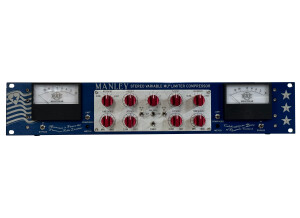
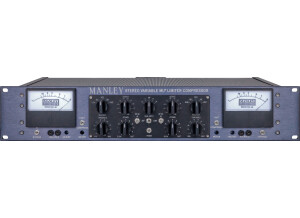
    The Manley Langevin Stereo ELOP (Electro Optical Leveling Amp) is a dual channel compressor that has XLR connections in the back. It is an analog piece of gear and will take up two spaces in a traditional rack space. UTILIZATION The configuration of the Manley Langevin Stereo ELOP is extremely easy to understand and follow. Each channel only has a few parameters to work with, including knobs for gain and reduction and a variety of switches. After a quick glance those of us who are familiar with compressors will be able to understand everything going on, and even those without much experience should be able to get the hang of everything rather quickly. I don't think a manual is necessary, but I haven't seen it for this unit so I can't say how well put together it is or not. SOUND QUALITY The sound quality of the Manley Langevin Stereo ELOP is pretty great overall. It has quite a realistic tone and is great in a variety of different situations. My favorite thing to compress with this is drums, but it will also be outstanding with use on vocals, guitars, and just about anything else you use in tandem with it. The unit is easy enough to use that I find it easy to manipulate the unit to get a variety of different tones, which is a big advantage with an easy interface like this one. I don't have extensive use with the ELOP, but for the times that I've used it I've generally been very impressed with the sounds that I am getting. OVERALL OPINION If you're looking for a stereo compressor that has a top notch tone, the Manley Langevin Stereo ELOP is an overall great choice. It has a price that will scare home studio owners, but has a sound that won't sound compromised by professionals. It has an extremely realistic tone and is perfect for those professionals who are looking for quality regardless of price. Considering that you are getting two channels here, the price is definitely reasonable considering the top notch tone available here. All in all the Manely Langevin Stereo ELOP is an impressive piece of gear that should definitely be of interest to professional engineers.

  • moosers's review

    The Manley Langevin 16/2 Mixer 8+8 is a rack mountable analog mixer. This can be used in place or in tandem with a full console, as it works very well either way. The setting that I used this in was in a studio that did not have a real analog console. They had the 16/2 Mixer and a variety of outboard preamps and signal processing to make up for this, with the 16/2 Mixer being a main part of what went on. For all intents and purposes, this is just as good as an sixteen channel console, which is basically what it is. It's got 16 dual XLR & 1/4" inputs, along with 1/4" outputs for each as well. It also has monitor and mix outputs in the form of both XLR and 1/4" as well, so you can route everything through this as you would a console if you so choose. It's also got insert connections, phantom power, and four auxiliary channels. UTILIZATION The make up of the Manley Langevin 16/2 Mixer isn't too complicated, but will take a little bit of time to get used to due to the fact that there is a good amount going on with it. If you understand the principals behind analog mixers like this one, you shouldn't find yourself being too lost since everything on here is pretty standard. In terms of the front panel setting controls, it's just like a real console. Each channel has gain control, pan, and solo and mute buttons. The top eight have insert control and the bottom eight have aux control. I haven't seen a manual for this so I don't know anything about it. SOUNDS The overall sound quality of the Manley Langevin 16/2 Mixer is outstanding. The mic preamps are top notch as they can be used across the board. They have an extremely full sound and are versatile in terms of what microphones sound good with it. It definitely sounds like a Manley piece of gear as it has a similar tone quality to some of their other gear that I've used like the Manley Slam!. There isn't any built in EQ or effects, but what more can you really ask for. OVERALL OPINION The Manley Langevin 16/2 Mixer is the perfect mixer for the smaller professional studio or larger home studio. Instead of spending a ton of dough on a console, the 16/2 Mixer 8+8 will get the job done just as well, as doesn't take up nearly as much space. While perhaps you don't have as much versatility as you would with a console, it's a trade off with how compact this is and it's price. I'd recommend the Manley Langevin 16/2 Mixer 8+8 for anyone who wants the sound of an analog mixer at the size and price of something much less...