Log in
EN
FR

Art Microphone preamplifiers

24 products found

Categories
Filter
Sort by
Art
Evaluation
  • Reviewed or not
  • Editor’s award
  • Reviewed by Audiofanzine
Availability
  • Available or not
  • Sold new or used
  • Sold new
  • Sold used
Must-have products
  • All products
  • Flagship products
  • Best rated products
  • Hot products
  • Popular products
Price
  • Freeware
€
Clear
Sort by
  • Popularity
  • User ratings
  • Price - low to high
  • Price - high to low
  • Used price, increasing
  • Used price, decreasing
  • Name (from A to Z)
  • Name (from Z to A)
  • Added on
Choose a category
Selected category: Microphone preamplifiers
Sort results
  • Popularity
  • User ratings
  • Price - low to high
  • Price - high to low
  • Used price, increasing
  • Used price, decreasing
  • Name (from A to Z)
  • Name (from Z to A)
  • Added on
Filter results 24 results found
Brands
Evaluation
Availability
Must-have products
Price
  • Freeware
Show results

The best Art Microphone preamplifiers reviews

The reviews Audiofanzine members found the most helpful.
  • « Really nice and useful »

    I've had it for a year. I use it with an electric guitar inserted before the effects chain or a programmable Marshall MG or Fender Mustang V v2 amp. It's a tube preamp/opto-compressor combo with comprehensive connections, all within a compact and sturdy package. The PSU is external, it's like a digitec (rp155), so it's easy to replace if you ever need to. It features an XLR input with 48V phantom power, if needed, a jack instrument input on the front panel (for a standard electric guitar, for instance), one balanced XLR output, (transformer-isolated), and one unbalanced jack output with line/instrument level switch (which is great to input a guitar amp directly without any level issues). The buttons are backlit, which is indispensable and well thought-out. And it's analog, obviously. It has an on/off switch. USE I use it as a guitar player and it's easy to use and effective without racking your brains. You only need to find the right dialings for the compressor section. I, for example, use these settings: Compressor and phase invert engaged, the pots set to 3, 9 and 2 o'clock, and instrument level selected on the rear. My goal: I have lots of different guitars, so I needed a leveler to avoid having to fiddle with the rest of my setup, which is much appreciated with dialed-in amps, obviously. And to get some sonic advantages while at it. SOUND QUALITY My guitars benefit from more warmth and more precision, too. It's huskier and more aggressive, even though I use the built-in compressor (it can't be compared to my compressor pedals, which simply flounder in comparison). The ART substantially enhances my programmable Marshall MG, be it with clean or distorted sounds. It's a real treat. What's more, the ART reins in a bit the bridge pickup of my Telecaster, making it less shrill, but still incredibly useful with distortion. It really embellishes sound. Once the compressor has been set I don't need to touch anything else, except the instrument input to change guitars, but that's it. OVERALL OPINION It's a real treat for what I use it and it doesn't produce any noise. Do note that it's better to let the tube warm up for about twenty minutes before you start dialing in, because it does have an effect on sound. The days when it was a pain to switch guitars with my programmable amps are now gone thanks to the ART (by the way, I don't understand why none of the modern programmable multi-effects/amps feature a simple analog input gain control). Regarding the use with headphones within a home studio, the quality that the ART brings with it is obvious. It's great for those endless winter afternoons (I used an excellent Autocom via insert before, but for guitars you don't want hi-fi!). It's simple but comprehensive, versatile as hell, with a distinctive and nice sound, and it doesn't generate any unwanted noise. Plus, it's sturdy, inexpensive and looks sexy. I would probably buy it again, even though the Presonus studio channel is tempting me, because it offers more possibilities, but it's also more expensive and less sturdy.

  • « Perfect Tube Preamp for Pro's and Starters »

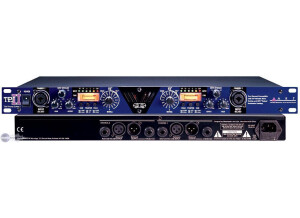
    Let me start by saying that this unit has been more than just a simple 2-channel tube microphone preamp. It is a tone monster! With selectable impedance, 3 gain stages, 2 choices of High and Normal Plate Voltage and a really useful and transparent Low Cut Filter, this unit will perform with any kind of source and provide you with a kaleidoscope of sounds. On top of that, you have the option of running the 2 channels with only one set of knobs through its Stereo mode, for Room micing applications or even running stems through it! It also processes your Mid-Side micing setups for that really wide stereo capture. And it just sounds better than doing it ITB. There is somehow more coherence between the center and the side channel, and you can really push the side more for that HUGE drum sound. The construction is top notch, and as a testament it has stepped knobs. I’ve owned this unit for almost 5 years now, I’ve travelled with, and it just feels like the first day. Other features include Phase Invert and +48v switch, a 2 set of High-Z Instrument inputs, as well as your standard XLR inputs and outputs, and a set of balanced TRS outputs. Oh and a word of caution, there's a tiny little button on the back to switch between Pro (+4 dBv) and Consumer level (-10 dBu). It tripped me off the first time because I had it disengaged and was getting minimal signal level coming into my interface. So, to most users, just leave it pressed. UTILIZATION As I said before, this preamp is versatile. Through its different gain stages you can really shape your sound: 1. Gain: controls your signal going into the tube amplification stage. 2. +20dB: more often than not, I have it engaged. It pushes the signal going into the valves to really color your sound. By means of the “Tube Warmth” display, you can easily measure the input drive of the tubes. I’m generally driving it when I’m for instance, recording a soft passage of a vocal take. When I go into the chorus of the song I back it off to give it a little more room, but even if you go into the red, it’ll give you a really nice distortion. I recorded a Bass Guitar for a reggae song and it sounded great by having it on red almost all the time. 3. Output Level: gives your final level control going into whatever you’re recording with. There’s always plenty of headroom in this unit and this is where the VU meter come in handy. But even so, it’s not that important, as with anything in the analog world, it is more about the tone. The Impedance knob has a range that will work with most condenser and dynamic microphones. It’s really tough to describe what it does to the sound, but sometimes I feel it like it gives you a more focused mid-range on one end, and on the other a more rounded, balanced response. Lastly but not least, is the Plate Voltage switch. It will give you shimmering highs that for female vocals works wonders. It feels like an aural exciter, but works only on the upper end of the frequency response. You may feel that you can achieve the same effect with EQ’ing but trust me you won’t. It is about commitment with this one. SOUND QUALITY Even when you pair this amp with a cheap mic, it’ll give that warmth and that extra percent that is hard to put a finger on. Really I have nothing to say but good things about it. Obviously you have to consider that this is a tube preamp, so it will color your sound substantially. Now, one thing that really blew me away was when I ran a full mix through it. For lack of a better word, the sound just became real. And when pushed, it rounded the transients kind of like the effect of a tape machine. OVERALL OPINION It may seem complicated to work with, but believe me it is not. Plug in your favorite mic and there’s no way you’re going to make it sound bad going through this preamp. You will have instead, colors and colors to choose from. Pros: - Great tube warmth - Great construction - Stepped knobs - Stereo Mode and Mid/Side Matrix Cons: - I really had to look into for this one but you may have to calibrate your VU meter needle from time to time. But this could be even considered normal.

  • « For the money not bad »

    For the money this tube does a pretty good job. I tell my students that want a tube preamp for their home studio www.comia.us that this is a great way to learn the art of tube pre amps. The sound is colored but in a pretty good way. Trust me I use top of the line pre amps all day but this unit for a desktop unit is very good. In the old days of recording we use to "ride the input" meaning controlling the signal as it is being recorded. This unit is great in that it sits on the desk and it so reasonable it really does the trick and it can take a hit. There are settings that are all over the internet that a lot of guys share or post but there is really not much to the unit. It has a simple design to it. I recommend this unit for my beginning students that are not aware of any uses for tube or that may over do it and not recognize the sound of a tube pre amp. Most younger guys have never use a tube at any time in their lives unless they play guitar and know the difference. Most can't even hear what tube can do for the sound. Sometimes I get a bit of a buzz from the stock tube but it goes away. It is not to noisy for the money but it does have a bit of noise. Always watch the way you use this tube pre amp. If you are slamming the tube you will hear everything including the noise but if you just use it in moderation it will bode well for you. Don't try to saturate the unit with really hot levels of inputs. UTILIZATION Very easy to use and not hard at all to get use to. Great sound for the money. I like it for simple vocal tracks and it is a good starting point for people that do not know how to use pre amps with tubes. It is extremely simple to set up and use. I do like the table top aspect of the unit. I like the fact that you can use it and ride your input stage right by your right hand. I ride the input all the time when recording vocalists and I wish more tube pre amps and or pre amps that other companies would make table top units. As engineers having the input gain right at your finger tips is a real plus when I record vocalists. SOUND QUALITY Colored sounding but not in a bad way very decent and the tube is fine. Don't waste money switching it out. The sound is somewhat like a gritty tone that is not real high quality but in no way does it sound bad. It is like the blue tube or the old blue tube presounus tube amp pre amps that you could get for about 150.00. OVERALL OPINION For the price I would really consider this unit. It gives you a tube sound for a very low price. You can't beat it. Again for the price what is out there that can even compare. I saw a review where they were saying the MPA II was ten times better but I have them and they are not 10 times better than this pre amp. I would say the main difference is the gain input stage and in some ways this unit is very much like the MPA.

  • songboy's review

    This is an analog, tube based preamp. There are a pair of 1/4" input/outputs and a pair of XLR input/outputs. The are no traditional effects. I guess you can say that the Phase correction is an effect. This comes in handy when setting up your mic correctly. Yes, it is rackable. Thats what its designed for. UTILIZATION This is all analog with all the parameters that you can edit on the face, so yeah, its very easy tweaking the sound. The setup/configuration is fairly simple. I had not had much experience with tube preamps before, but the manual is actually quite helpful in guiding you. After I read it, I felt pretty confident on this guy and was able to get some really good sounds out of it. SOUND QUALITY Yes, it is transparent if thats what you are setting up to be. It also colors the sound and warms it up a bunch if you set up to do so also. The quality of the "Tube" sound (if thats what you are going for) is highly dependent on the quality of the tubes you put in it. It comes with a pair of cheap chinese tubes (i forget what brand) originally. I got online and bought a nice pair of Gold plated Tung sols and it made a world of difference. Very warm sound now and much more transparent than the original tubes. OVERALL OPINION What I like most about this unit is the very good quality sound you can get out of it with the Right tubes. Even with the right tubes, this thing didn't cost me more than $400. Thats not bad for a quality preamp. What I didn't like...? Nothing really. When I got mine in the mail, one of the VU meter's Lights wasn't working. I called ART and they express mailed two new ones to me, free of charge and explained how to change it myself (they did say I could return it or have it serviced, but doing it myself was the quickest and easiest way). All good stuff to me. I was shopping around for a Tube preamp for awhile on a budget, and this was by far the best I could find for the price. The precision and quality of the sound is quite good for how much I spent on it. I used a really nice Avalon preamp in a studio a few years back. It was amazing, the sound was fantastic. I would have definitely bought an Avalon if I could afford it, but they are $2000 minimum. Other than that, I only read reviews to figure out which preamp to buy. I am happy to say that the ART Mpa is a pretty solid machine and I wasn't disappointed at all. Yes, I would make the same choice being as it is that I can't afford an Avalon yet.

  • sat4n's review

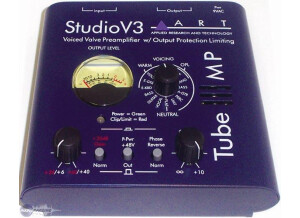
    This is what you might call the hot-rodded version of ART's famed, low-priced tube preamps. The hot-rodding here has to do with variable voicings, which means that you can change the way the tube affects the signal. I'm not sure exactly how they do this, whether they do it by modifying the signal itself with capacitors or by modifying the plate voltage in the tube or some other way, but it basically gives you a bunch of slightly-different midrange peaks to choose from. These are all labeled things like "bass" and "guitar," but I usually just turn the knob around until I find one that sounds good for the signal I'm recording, and ignore the labels. It's also got all the usual stuff for a preamp: phantom power on and off, boost, input level, output level, phase reverse. It has a cool analog output meter, though the input meter is just an led that turns green for signal and red for clip. It's powered by a wall wart. There is no on off switch, so when you want it off you just unplug it. UTILIZATION This is one of those somewhat-controversial "starved plate" designs. This means it's not what is traditionally meant by a tube preamp, even though it does have a tube in it and it delivers what many would call authentic tube sound. Basically it's a solid state preamp which also runs signal through a tube. The way I understand it (I'm no expert) the voltage on the tube is lowered to make the tube work harder in passing the little bit of signal it's given. This imparts a little bit of tube warmth and distortion, like a traditional tube preamp being driven really hard. In a traditional tube preamp you have lots of tubes and input and output transformers. This sounds a lot better, but can cost literally a hundred times what the V3 costs ($4000 rather than $40). SOUND QUALITY Many people don't like the whole "starved plate" thing because it imparts a kind of exaggerated tube sound. This can be good for some kinds of music and some kinds of signals, but not for all. It sounds terrible, to me, on the sound of a miced tube amp, because that sound is already plenty tube-y. It sounds pretty good on bass guitar when you're going direct, but less so on a miced bass amp. It sounds *awesome* on vocals. The starved plate design can generate a lot of noise, so you don't want to use this on every track of an 8 or 16 track project, the cumulative effect would be really buzzy/hummy. I've had great luck using solid state pres on most things on a song and using this just on the vocals, though. It gives the vocals a nice faux-60s sound which, because you're using it only on the voice and not on the instruments, never becomes a sad parody of itself. OVERALL OPINION The bottom line is: This is a great tool to have. Only use it on one (or at most two) tracks on a given song. It sounds best on vocals, especially with a large-diaphragm condenser. Don't use it on anything you want to be really clean, or anything that is already being tube amplified (i.e. electric guitar). It tends to make acoustic guitar sound really unnatural, but not unpleasant. People who complain about this thing are usual mad because either 1) they think it should sound like a $2000 "real" tube pre, or 2) they are using it on everything and don't like the amount of noise this generates. Use it once in a while on something you want to have a distinctly and unnaturally warm tone and you'll be happy with it.

  • « valve warmth in a cheap mic pre / Di »

    Excellent DI / Mic pre, with dial in valve warmth/saturation. Great for Re-amping techniques and Di signal from Bass / guitar, or providing phantom power. Ground lift, 20db pad, phase reverse switches. jack i/o, xlr i/o, simultainiously. 12AX7 tube dialed in via a pot. Good gain structure with extra 20db present if needed. However supplying the phantom power from a desk is a more stable alternative to battery power. The powersupply wallwart handles phantom requirements adequately if no mixer connected. Low self-noise and a set-and-forget item. excellent. Often use as Bass Di for added harmonics, boosting hi-mid presence whilst allowing all the bass through. Incredible for it's price, about 45€. Recommended as a cheap capable mic pre .

  • « ART TPS »

    I was looking for a relatively inexpensive tube preamp, and found this one for $250 CAD at my local music store. I love the v3 feature - variable valve voicing - because it makes it easy to get set up fast. The unit lets you select what you are recording from the rotary selector and how much tube sound you want. Very nice feature. I don't like having no TRS input on the back... it has a trs/xlr combo on the front for input but only xlr input on the back. Makes it hard to use with my patchbay. Also.... it's purple.... This thing is heavy! Although most tube stuff is. Luckily the rack ears are strong enough to hold it up without rear support. I have some other ART gear and all of it has been reliable. Quality unit, worth the money. This review was originally published on http://www.musicgearreview.com