Log in
EN
FR

Microphone preamplifiers

1185 products found

Categories
Filter
Sort by
Brand
Evaluation
  • Reviewed or not
  • Editor’s award
  • Reviewed by Audiofanzine
Availability
  • Available or not
  • Sold new or used
  • Sold new
  • Sold used
Must-have products
  • All products
  • Flagship products
  • Best rated products
  • Hot products
  • Popular products
Price
  • Freeware
  • Low-cost (< $600)
  • Mid-range ($600 - $1,500)
  • Premium (> $1,500)
€
Clear
Sort by
  • Popularity
  • User ratings
  • Price - low to high
  • Price - high to low
  • Used price, increasing
  • Used price, decreasing
  • Name (from A to Z)
  • Name (from Z to A)
  • Added on
Choose a category
Selected category: Microphone preamplifiers
Sort results
  • Popularity
  • User ratings
  • Price - low to high
  • Price - high to low
  • Used price, increasing
  • Used price, decreasing
  • Name (from A to Z)
  • Name (from Z to A)
  • Added on
Filter results 1,185 results found
Brands
Evaluation
Availability
Must-have products
Price
  • Freeware
  • Low-cost (< $600)
  • Mid-range ($600 - $1,500)
  • Premium (> $1,500)
Show results

The best Microphone preamplifiers reviews

The reviews Audiofanzine members found the most helpful.
  • « Every studio should have a Cloudlifter! »

    The Cloudlifter CL-1 is a single channel, in-line microphone pre-amplifier that delivers a transparent gain boost of 20db via 48V phantom power. It is manufactured by Cloud microphones, who are renowned for their boutique quality passive and active ribbon microphones. They designed the Cloudlifter series with powering high-end, passive ribbon microphones in mind, which require a considerable amount of gain compared to comparable studio condenser mics. However, they have been proven to be a secret weapon when combined with low-output, high-end dynamic microphones, such as the Shure SM7b and the Electro-Voice RE-20. UTILIZATION The Cloudlifter requires no consultation of the manual, simply plug and play! The XLR connections are top quality and are very stable. The unit is sturdily built and would be perfectly at home in the studio or on stage. It is delivered with a sensibly designed velcro strap that allows you to attach it to a microphone stand. This is an important feature, as Cloud say the CL-1 should be placed close to the microphone with as short of cable as possible. That being said, I do feel the velcro strap should be easier to tighten flush to the microphone stand. SOUND QUALITY The gain is perfectly transparent and makes for a night and day difference with the dynamic mics I tested it with. Even when paired with a trusty old SM57 on a preamp that already had plenty of clean gain, I found I could attain crisper results and more efficient gain staging. In the audio samples below, I compare an SM57 mic'd guitar cab both with the Cloudlifter and without: Without Cloudlifter: https://en.audiofanzine.com/embed/audio/473658 With Cloudlifter: https://en.audiofanzine.com/embed/audio/473657 You can consult the attached image showing the waveforms to verify these recordings were done at unity gain. OVERALL OPINION For me, the Cloudlifter is an essential tool for any studio owner. In particular, if you own an SM7b, I don't see how you could live with out it. In my personal case, I had high hopes of using an SM7b with my Universal Audio LA-610 channel strip. Given the vintage output of the LA-610 and the notorious low output of the SM7, my initial results were poor. However, the Cloudlifter instantly solved my problems and I've enjoyed great success with this trifecta. Additionally, the contributions it has made to any situation where I'm using a dynamic mic has been much appreciated. Anytime I've used it with an SM57 on any sound source, I've always found gain staging to be much smoother with the Cloudlifter than without. Pros: +Ease of use +Truly transparent gain +Added clarity to any dynamic mic recording +a much needed boost of clean gain for use with vintage style preamps +Every SM7B user should have one! Cons -The velcro strap can be a bit difficult to get flush and tight to the mic stand. -No small light indicating that phantom power is successfully reaching the unit

  • « I love it!!! »

    I use this preamp in my home studio/project studio. As I love great electronic circuitry, I wish I could afford a Neve 1073, but since I can’t I decided to try this API500-format rendition of it. The result is a very good surprise. While I can’t actually compare it with a real 1073, I can confirm the feeling of it being “larger than the real thing”. First on a drum kick, just through headphone, the result was pure pleasure! (this feeling was confirmed later after recording and mixing) The same with a snare or a DI-ed bass: a big, big sound. My Soundcraft Venue II’s preamps now seem a bit thin-sounding, though they’re still correct. As to my TC "Gold channel" preamp, it shows its difference: while a bit “cold”-sounding compared with the MP573, it remains very classy and clear. I can get results just as punchy after working on it and a little help from my DBX 566. My MP573 is the first version, with a matte black front, which I put in a Bento 2. The only thing I regret with the MP573 is its lack of an output level setting, as the more you push the gain the huger the sound gets… The problem being to be able to attenuate it afterward.! As soon as I start getting the MP573 to clip, I’ve been in the red for a while on both my mixer and (even worse) my sound interface! So, I have to use the DBX566 for attenuation. This small problem has not dissuaded me from buying a new ready-to-assemble unit (a new version, with impedance choice on the input) which I have just received. Next, the EQ. Now, excuse me to leave but the iron’s hot and waiting for me!

  • « Really nice and useful »

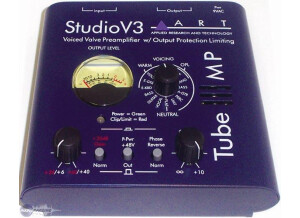
    I've had it for a year. I use it with an electric guitar inserted before the effects chain or a programmable Marshall MG or Fender Mustang V v2 amp. It's a tube preamp/opto-compressor combo with comprehensive connections, all within a compact and sturdy package. The PSU is external, it's like a digitec (rp155), so it's easy to replace if you ever need to. It features an XLR input with 48V phantom power, if needed, a jack instrument input on the front panel (for a standard electric guitar, for instance), one balanced XLR output, (transformer-isolated), and one unbalanced jack output with line/instrument level switch (which is great to input a guitar amp directly without any level issues). The buttons are backlit, which is indispensable and well thought-out. And it's analog, obviously. It has an on/off switch. USE I use it as a guitar player and it's easy to use and effective without racking your brains. You only need to find the right dialings for the compressor section. I, for example, use these settings: Compressor and phase invert engaged, the pots set to 3, 9 and 2 o'clock, and instrument level selected on the rear. My goal: I have lots of different guitars, so I needed a leveler to avoid having to fiddle with the rest of my setup, which is much appreciated with dialed-in amps, obviously. And to get some sonic advantages while at it. SOUND QUALITY My guitars benefit from more warmth and more precision, too. It's huskier and more aggressive, even though I use the built-in compressor (it can't be compared to my compressor pedals, which simply flounder in comparison). The ART substantially enhances my programmable Marshall MG, be it with clean or distorted sounds. It's a real treat. What's more, the ART reins in a bit the bridge pickup of my Telecaster, making it less shrill, but still incredibly useful with distortion. It really embellishes sound. Once the compressor has been set I don't need to touch anything else, except the instrument input to change guitars, but that's it. OVERALL OPINION It's a real treat for what I use it and it doesn't produce any noise. Do note that it's better to let the tube warm up for about twenty minutes before you start dialing in, because it does have an effect on sound. The days when it was a pain to switch guitars with my programmable amps are now gone thanks to the ART (by the way, I don't understand why none of the modern programmable multi-effects/amps feature a simple analog input gain control). Regarding the use with headphones within a home studio, the quality that the ART brings with it is obvious. It's great for those endless winter afternoons (I used an excellent Autocom via insert before, but for guitars you don't want hi-fi!). It's simple but comprehensive, versatile as hell, with a distinctive and nice sound, and it doesn't generate any unwanted noise. Plus, it's sturdy, inexpensive and looks sexy. I would probably buy it again, even though the Presonus studio channel is tempting me, because it offers more possibilities, but it's also more expensive and less sturdy.

  • « Sebatron Review »

    What Technology? (analog, digital, tube...) This is a tube Pre-amp made in Australia which I bought from a recommendation of a friend of mine.The tubes run on full valve voltage.The construction is solid. Is it rackable, or in rack form? It is a 2U wide rack mounted shape.Fits in a standard sized rack. The outputs and inputs are XLR balanced and 1/4" phono TRS which makes it handy to monitor direct. UTILIZATION Is the general configuration/setup simple? Getting a good sound out of this Pre-amp is very easy.It has a character that is mild and tasteful on everything.I never had a bad experience with recording or committed any sound that was not use-able. Setup is very easy .The only let down was the manual which I thought was too brief. I would've liked more detailed information about the tubes and how to maintain them. SOUND QUALITY The Pre-amp has low noise and has a detailed wide sound yet has ample flexibility to suit many microphone and instrument arrangements. The Eq has sufficient effect to modify sounds on the way in.The pad control changes the 'flavor' .I liked using the 'air' switch on vocals and drums. The direct Input also has a desirable tone when used with basses or keyboards guitars etc. OVERALL OPINION What thing do you like most/least about it? The manual.It's Too brief . What is your opinion about the value for the price? I am very happy about the sounds I am getting so for me this quipment is worth the cost.It is very well built and I would buy another one if I decide to expand my studio setup. Knowing what you know now, would you make the same choice? I would make the same choice and buy.I am already considering getting another one. Precision and quality of the sound? Very detailed , up-front sound. Makes cheap instruments and voices sound expensive.

  • moosers's review

    The AEA TRP Ribbon Pre is definitely the only 'ribbon only' mic pre that I've used, or even seen for that matter that I can remember. The TRP is two channels that each have XLR and 1/4" inputs and outputs. This is a very compact preamp and won't take up a full space in a traditional casing, as it takes up about half of a single space. UTILIZATION There isn't too much to know about the AEA TRP Ribbon Pre in terms of using it. Each channel simply has parameters for gain and level, and then there are buttons for a high pass filter and polarity. It of course doesn't have phantom power since that isn't needed for ribbon microphones and would actually be detrimental to the mics if used. A manual isn't necessary at all for the TRP. SOUND QUALITY While it would make sense to use the AEA TRP Ribbon Pre with an AEA ribbon mic, I've yet to have the chance to try out this chain. I would imagine that this would be the best use for the TRP since gear made by the same brand usually works best in tandem. However, the TRP sounds great for recording with a Royer 121, and I would bet that it would sound great across the board with ribbon mics. I've also used it as a stereo coupling with the Coles 4038 ribbon mics, which were also a great match. Since the TRP is designed for use only with ribbons, it gives you more than enough head room and picks up all the details that you would be after with a ribbon mic. OVERALL OPINION I wouldn't recommend the AEA TRP Ribbon Pre for home studio owners, as most home studio owners won't be using ribbon microphones enough to justify having something like this. Both for those professional and home studio owners who do have a few ribbon microphones and use them a lot, having the TRP around would definitely be a worthwhile investment. Having an AEA isn't a requirement, but would certainly sweeten the deal. While ribbon microphones will of course sound great with other preamps too, the TRP is a great sounding preamp with extended coverage for ribbons.

  • « Organic and Authentic Sounding »

    SOUND: The Orange Acoustic Pre is incredibly full-bodied, clear, warm, harmonically rich, organic and with natural compression – unlike many other acoustic preamps that color your sound or add some type of ‘enhanced’ processing. Focusing on Channel 1 (designed for active and passive instruments), the Gain and Heat knobs work well together by increasing sharpness and vigor in the signal, which is ideal for finger-pickers… or you can dial back these controls to warm up the signal if you’re a flat-picker. The EQ is quite excellent, in that the entire spectrum is not exaggerated, but tailored to work with an acoustic guitar (as well as other instruments) so that a lot of bass, midrange or treble does not sound out of place. Besides indicating how much midrange you want, there is a midrange emphasis or sweep knob that ranges from 180Hz to 1.8kHz for more of a tailored sound. Regardless of where you establish your EQ, the tone is very real and not artificial sounding. Channel B is super clean and clear, with an uncolored and flat frequency (it is not driven by the internal tube). It is meant for a secondary instrument, mic (for singing) or to run a guitar with two internal pickups, all of which can have a mono or a stereo output. In one part of the demo I hooked up a Kiesel guitar that has two such outputs… one for the humbucker pickups and the other for the bridge piezo pickup. Because each channel has its own FX Loop, you can add different effects into each channel, run it in stereo and produce some very unique tones and results (I added the ZVEX Vibrophase to Channel B/Piezo pickup). One other thing I should mention is that the manual suggests running a patch-cable from Channel A’s Send to Channel B’s Return (and then go out in stereo via the two XLRs) to achieve Reverb in stereo, a built-in effect. The demo shows me doing this, although I recorded in Mono. Interestingly enough, the signal not only sounded louder with that patch-cable trick, but the tone sounded fuller and of a higher quality. I’m unsure why that is, but I’m not complaining. I very much like the Heat knob, as increasing ‘heat’ drives the valve a bit harder to add some subtle, fatness, harmonics and modest compression (ideal for finger-style picking, to make the notes pop better, but also to add a punch to flat-picking). OVERALL IMPRESSION: I could not get the sound I wanted in my acoustic recordings, and so, I didn’t bother with the medium much… until now. Although I still need some engineering/mixing experience in that regard, the Orange Acoustic Pre, the world’s first stereo valve acoustic preamp/active DI, produces an outcome that is both realistic and encouraging. With its tube-driven technology (12AX7/ECC83), this preamp produces warm and natural sounds that can be boosted via its HEAT knob, to drive the tube gain even harder. What this does is produce a sharper attack for finger-pickers, or simply dial back the preamp’s Heat for a warmer attack and for flat-pickers. Moreover, the valve circuitry was designed to amplify a much wider frequency range in order to project those subtle details inherent in acoustic instruments. Beyond its great sound, you can add a mic or second instrument to Channel B (which does not have a heat knob and produces a flatter response) or run your guitar in stereo (ideal for instruments with two pickup sources). The Orange Acoustic Pre also includes a built-in Reverb, which sounds very natural and ambient, and if you run a patch cable from Channel A’s Send to Channel B’s Return (fx loops) you can run the Reverb in stereo. There are several other features, including regular lines in/out, but also balanced XLR in/outs (for that stereo effect), Phase Inversion switches for both channels, ground lifts and a Mute switch (a separate on/off foot switch can be included via the rear of the unit). Although the Orange Acoustic Pre has a few short-comings, such as Channel A having an 18dB boost, whereas Channel B has +/- 12dB, no notch filter, boost switch or tuner output, this unit still delivers in sound quality that will match what can be found in quality studios. In fact, the Orange Acoustic Pre was designed for live and in-studio use with the assistance of Harpejji and fingerstyle jazz guitarist Martin Taylor (guitarist for Stevie Wonder). GENERAL USE: Somewhat easy to use, depending on the complexity of your setup, the Orange Acoustic Pre takes little time to get to know. To look at it from a simple perspective, there is a quarter-inch line in and out, which is true of both channels, although most mono players would use Channel A only. That channel has both a Gain and Heat knob. Gain adjusts the level input, whereas Heat alters the level of valve gain in the upper frequencies (adding compression and harmonics), which helps keep the signal sparkly and punchy for finger-pickers, whereas flat-pickers will experience better results by keeping the Heat down (unless you want a sharp attack). The EQ is straight forward, in that you can mix as much bass, treble and midrange as desired, whereas the midrange also has a sweepable Frequency knob to select the center frequency from 180Hz – 1.8kHz, a feature that really adds to tonal shaping. Channel A is very warm and organic sounding, whereas Channel B has a flatter response not driven by the internal 12AX7/ECC83 tube (meant as a very clean channel for a mic or secondary guitar input, e.g., a guitar with two pickup outputs). Channel B has the same EQ controls with a Gain control. Both Channels are affected by a Line Volume control, but also a Main Volume (which affects the XLR outputs). There also is a 48V phantom power that you can switch on for Channel B’s XLR input (if you choose to use that input, although that channel also has a quarter-inch input). Both channels have a Phase Inversion switch, which reverses the audio waveform, ideal if a guitar with two pickup sources run out of phase. However, when flipping this switch with a regular guitar you do get a more ‘pinpoint’ or dynamically narrow tone (if that’s what you like). Both channel XLR outputs have a ground lift, to reduce any background noise/hum. A cool feature is that both channels has its own FX Loop, which means you can add a phaser or flange to one channel, whereas the other could have a delay or tremolo, making for a lot of different hookup possibilities and sounds. Finally, there is a built-in reverb, which is very natural and quite good in its own right, affecting both channels concurrently. OTHER DETAILS: A beast of a pedal, the Orange Acoustic Pre measures 11.4 (l) x 5.9 (w) x 3.5 (h) inches (29 x 15 x 9 cm) and weighs 5.5 lbs (2.5 kg). Its solid-steel chassis with rack mount handles has a power-coated paintjob and was built for rigorous road use. Although it may seem large and heavy, it is meant for acoustic instruments, and so most acoustic-based musicians will not have large pedalboards that are common among electric players. Therefore, having the Orange Acoustic Pre on a pedalboard, along with a handful of modulation/delay pedals certainly would not be out of place or excessively heavy/large. There are no foot switches, and turning the unit on and off is controlled either by a toggle switch (Mute) or via a separate foot pedal (that connects to the back of the unit). There are fourteen control knobs, all of which are of good quality and the pots turn with a solid and smooth feel. There are six toggle switches that control mute, ground lift, phase inversion and +48V boost (XLR Channel 2) that all produce a solid click, located at the top of the unit. All cable (including power) inputs/outputs are located in the back for tidiness and to keep any cables out of the way. The LED is a large high-quality crystal-type light. The Orange Acoustic Pre also comes with a 12V 1.25A power supply with interchangeable plug ends (to accommodate various countries). Overall, this ‘tank’ will provide years of service, whether in studio or on the road.

  • « Perfect Tube Preamp for Pro's and Starters »

    Let me start by saying that this unit has been more than just a simple 2-channel tube microphone preamp. It is a tone monster! With selectable impedance, 3 gain stages, 2 choices of High and Normal Plate Voltage and a really useful and transparent Low Cut Filter, this unit will perform with any kind of source and provide you with a kaleidoscope of sounds. On top of that, you have the option of running the 2 channels with only one set of knobs through its Stereo mode, for Room micing applications or even running stems through it! It also processes your Mid-Side micing setups for that really wide stereo capture. And it just sounds better than doing it ITB. There is somehow more coherence between the center and the side channel, and you can really push the side more for that HUGE drum sound. The construction is top notch, and as a testament it has stepped knobs. I’ve owned this unit for almost 5 years now, I’ve travelled with, and it just feels like the first day. Other features include Phase Invert and +48v switch, a 2 set of High-Z Instrument inputs, as well as your standard XLR inputs and outputs, and a set of balanced TRS outputs. Oh and a word of caution, there's a tiny little button on the back to switch between Pro (+4 dBv) and Consumer level (-10 dBu). It tripped me off the first time because I had it disengaged and was getting minimal signal level coming into my interface. So, to most users, just leave it pressed. UTILIZATION As I said before, this preamp is versatile. Through its different gain stages you can really shape your sound: 1. Gain: controls your signal going into the tube amplification stage. 2. +20dB: more often than not, I have it engaged. It pushes the signal going into the valves to really color your sound. By means of the “Tube Warmth” display, you can easily measure the input drive of the tubes. I’m generally driving it when I’m for instance, recording a soft passage of a vocal take. When I go into the chorus of the song I back it off to give it a little more room, but even if you go into the red, it’ll give you a really nice distortion. I recorded a Bass Guitar for a reggae song and it sounded great by having it on red almost all the time. 3. Output Level: gives your final level control going into whatever you’re recording with. There’s always plenty of headroom in this unit and this is where the VU meter come in handy. But even so, it’s not that important, as with anything in the analog world, it is more about the tone. The Impedance knob has a range that will work with most condenser and dynamic microphones. It’s really tough to describe what it does to the sound, but sometimes I feel it like it gives you a more focused mid-range on one end, and on the other a more rounded, balanced response. Lastly but not least, is the Plate Voltage switch. It will give you shimmering highs that for female vocals works wonders. It feels like an aural exciter, but works only on the upper end of the frequency response. You may feel that you can achieve the same effect with EQ’ing but trust me you won’t. It is about commitment with this one. SOUND QUALITY Even when you pair this amp with a cheap mic, it’ll give that warmth and that extra percent that is hard to put a finger on. Really I have nothing to say but good things about it. Obviously you have to consider that this is a tube preamp, so it will color your sound substantially. Now, one thing that really blew me away was when I ran a full mix through it. For lack of a better word, the sound just became real. And when pushed, it rounded the transients kind of like the effect of a tape machine. OVERALL OPINION It may seem complicated to work with, but believe me it is not. Plug in your favorite mic and there’s no way you’re going to make it sound bad going through this preamp. You will have instead, colors and colors to choose from. Pros: - Great tube warmth - Great construction - Stepped knobs - Stereo Mode and Mid/Side Matrix Cons: - I really had to look into for this one but you may have to calibrate your VU meter needle from time to time. But this could be even considered normal.

  • « The Best Pre Ever »

    If you want a Pre Amp that has massive head room and sounds so clean it will blow your mind, then buy API. API is a the industry standard in the larger studios such as mine. This unit is used daily on every and any instrument we record. We always turn to API. API on vocals is a must and on kick and bass. No other pre amp has the headroom and sound of an API. To use an example, we have a great deal of pre amps both new and old. We record everything from bands to singers to songwriters to major records every week of the year. If a drummer is in my room we use the API for kick, snare and bass as well as all our vocals aside from vocalists that need compression while recording live. It has 48V, Pad, very sturdy. On the input stage I usually red line the signal into the unit and I never get any distortion what so ever at any point. I can literally have a kick drum microphone red lined on the input stage and I don't get any distortion into Pro Tools. Same with vocals. I always input vocals very hot into all my pre amps but none can take the high gain inputs that I like to use better than the API. I also like the sound of API more than any other Pre Amp on the market today. It just has such a strong sound. The -20 pad is useful for kicks and snares and we rarely use the pad due to the input headroom. UTILIZATION No need to complicate a pre amp. Set your level and record. There are balanced inputs both line and mic and both sound great. All discrete and it has a great reputation and a great resale value. API has the best resale value of any pre amp you will buy. Most people don't sell their API pre amps unless they are getting out of the business. I have seen some of the older ones get far more than I expected. SOUND QUALITY 100 % transparent and clean. API does not color the sound in any way which is what you want when you are about to spend the kind of money that it cost to buy this pre amp. The sound is clean and transparent and the bass is not enhanced nor is the top or highs or high mids. I can rave enough about why you want to own an API. I like all of their pre amps and have never been into in big time room and they don't have API as one of their main pre amps. It is a universal pre amp that sounds great on any and everything. if you listen to records you are listening to API probably on most all of the instruments recorded. If you have every had the pleasure of working with an API console you will know what I am saying. OVERALL OPINION I have four of these and they are absolutely the best pre made. Kick drums sound so fat and have 10 db more headroom. I red line mine all day with zero distortion. I know the API reputation so I did not hesitate to buy all my API pre amps. It is the most reputable company around and it is an investment in your studio and shows you know waht the best is.

  • « Great Pre Amps »

    UA makes some really good stuff. Good layout and good set up and not difficult to use. Sounds like UA audio, great stuff but it has a specific sound and you have to have a taste and time to work with this unit when recording hot inputs. When using these units you have to be aware they are a bit authentic sounding in that you have to pick what you are going to use them on. If you use them on drums they sound great and on guitars. Vocals can be a bit more tricky. You have to find a mic that sounds right with the singer that your recording. You will find that they are a bit sensitive and you would not get turn it on and just hit go. There are a bit more tricky in that they are more colored so as you get your input you need to pay attention to the sound and what you are getting. Don't use any plug ins to start with nothing on the playback input track and get a feel for the active input. As you turn up the input you will find that there are defined differences in what your inputs or instruments are. On vocals it is bet harsh at 4.5K so dip that at least 3 db and you should be good to go. Also the pre has a bit of a bump in the lower frequencies 50 to 80hz so use a high pass filter. UTILIZATION There is not much to the set up. Plug in turn up the input based upon the instrument your micing and get to work. SOUND QUALITY Very clear sound but they do have a colorizing effect on the mid range. I have noticed this a lot with female vocalists no matter what mic I use. OVERALL OPINION They are a bit pricy and there are other pre amps like the focusrite 8 channel preamp ISA that I like. If you like a little color on the sound then I would get this one. Not as transparent as some of the other preamps.

  • moosers's review

    The Shadow Hills Industries Mono GAMA Mic Pre is a 500 series module for your recording studio. About a month ago I had the pleasure of using a set of these at a studio I often work at - he just recently got them in. These will only work within a 500 series casing as they won't be able to stand on their own. It's only rackable in one of these casings. UTILIZATION The configuration of the Shadow Hills Industries GAMA Mic Pre isn't complicated but it does have a lot of options for you to work with, which for me is always something that I enjoy. In addition to microphone gain control, phantom power, polarity, and a -20 db pad, it has a three mode parameter that allows you to choose between three different transformers for slightly different tones, as is found on other Shadow Hills mic preamps. The GAMA Mic Pre also has a 1/4" input for going direct. SOUND QUALITY The sound of the Shadow Hills Industries GAMA Mic Pre is amazing. I've had the chance to use these preamps for a few different applications, but only for one session. I started off using them for drum overheads but then also used them for a bit of Hammond organ and vocals, which they excelled on. I'm going back to the same studio again soon, so I hope to try them out for other applications. OVERALL OPINION The Shadow Hills Industries GAMA Mic Pres are the perfect addition to any 500 series rack. They're excellent mic preamps with a lot of control and headroom. While not cheap, I was surprised to see what they cost as I thought they would be at least $1,000 US dollars as they are closer to $800 a pop. If you have a 500 series casing that you're looking to expand, I would give these a try!

  • moosers's review

    The Shadow Hills Industries Equinox is a really complete recording device for your front end. Not only does the Equinox have two grade A quality microphone preamplifiers, but it also serves as a control center for your studio, featuring monitor and talkback controls as well. This is an all analog piece of equipment and will take up two spaces in your rack system. For connections, the microphone preamps have their own XLR inputs and outputs, as do the connections for the built in summing bus for left and right channels. It then has 24 channels in D-Sub connections for hooking up to your DAW for summing, and then has another 8 channel hub for mono inputs and another for your speaker outputs. It also has an 1/8" talkback remote connection, although I did not use this. Lastly, it has it's own power supply that is sold separately. UTILIZATION It's not very difficult to use the Shadow Hills Industries Equinox. I've only used it on a handful of occasions since I've used it at an outside studio. The owner of the studio showed me the basics of the controls and I was good to go from there. Each of the two preamps has controls for gain, a pad, direct switching, and phase. It's also awesome that you can choose between three different transformer settings for slightly varying tones. These include settings for nickel, iron, and steel. There is also of course built in phantom power for your condenser microphones. As far as your monitoring section is concerned, it has a speaker select for A, B and C, a mono/stereo switch, a talkback switch, and a dimming switch. I absolutely love the feel of the Equinox overall, as the switches/levers are cool as are the super big controls for gain and overall monitor level, each moving a small tick at a time. It makes it easy to zero in and remember specific gain volume on your preamps. I haven't seen the manual for this and probably never will. SOUND QUALITY The preamps in the Shadow Hills Industries Equinox sound absolutely superb. They have a really warm sound that seems true at the same time. I've only used the preamps for recording vocals, but I've used them on a bunch of different singers and it did a nice job on everything. I haven't ran anything through the summing bus on this, but I'd be surprised if it didn't sound great and is nonetheless an incredible thing to have along with preamps. Not much more to say other than you can't go wrong with this soundwise... OVERALL OPINION While the Shadow Hills Industries Equinox is definitely aimed at professionals with a budget looking to get a top of the line piece of gear for their front end, to me it still seems like a great bargain considering all that you are getting here. The price is probably worth it for the two stellar preamps along - the fact that you get a 30 channel summing bus and monitor control makes it all that more sweet. This is a great choice for the home studio owner as well if you're looking to take your demo studio to the next level. With this, a good converter, good monitors, and a good mic, you'd have yourself a pretty good little set up!

  • « fixed coloring issues »

    The Grace Design M101 is a microphone preamp that cost a good amount of money. At first I didn’t think that it could possibly be worth that much and then I heard how good it made the mics in the studio sound and I was completely shocked. There are LED indicators right on this unit and it has a built in power supply so no need to plug it into the wall. Though they say this is mainly for Ribbon mics I do think it sounds great with dynamic microphones as well. UTILIZATION There is a high performance line driver (output) amp and HPF amp. I have used many microphones over my years as a musician and many times microphones with color your sound and you will not notice sometimes until you get the chance to work with a microphone amplifier like this one. The Grace Design M101 has done some amazing things for some of my microphones and the microphones that we record with a lot. I think it was well worth the 750 dollars to purchase this little box. SOUND QUALITY It packs a powerful punch with what it does on my microphones. There is a switchable high pass filter and will work if you need phantom power or no phantom power. You can take one of your cheaper microphones (as an experiment) and use this with it and watch how much better they will sound instantly. If you take a decent ribbon microphone with this amp then you will get great quality. I highly recommend any home recording musician who has invested money into a decent microphone and still isn’t happy with the sound or feels like it is being “colored”. OVERALL OPINION The Grace Design M101 will take care of any problems you are having and give you a crystal clear sound without any effort on your part. There are other modules that are similar to this one, but I still say this one is the best under 1000 bucks.

Categories that may interest you