Log in
EN
FR

Channel Strips

275 products found

Filter
Sort by
Evaluation
  • Reviewed or not
  • Editor’s award
  • Reviewed by Audiofanzine
Availability
  • Available or not
  • Sold new or used
  • Sold new
  • Sold used
Must-have products
  • All products
  • Flagship products
  • Best rated products
  • Hot products
  • Popular products
Price
  • Freeware
  • Low-cost (< $1,500)
  • Mid-range ($1,500 - $3,000)
  • Premium (> $3,000)
€
Clear
Sort by
  • Popularity
  • User ratings
  • Price - low to high
  • Price - high to low
  • Used price, increasing
  • Used price, decreasing
  • Name (from A to Z)
  • Name (from Z to A)
  • Added on
Sort results
  • Popularity
  • User ratings
  • Price - low to high
  • Price - high to low
  • Used price, increasing
  • Used price, decreasing
  • Name (from A to Z)
  • Name (from Z to A)
  • Added on
Filter results 275 results found
Evaluation
Availability
Must-have products
Price
  • Freeware
  • Low-cost (< $1,500)
  • Mid-range ($1,500 - $3,000)
  • Premium (> $3,000)
Show results

The best Channel Strips reviews

The reviews Audiofanzine members found the most helpful.
  • moosers's review

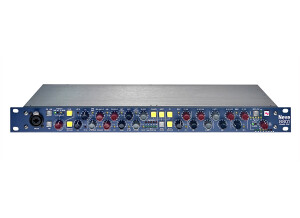
    The Neve 1073 is a channel strip that is found as a module in a Neve console. I believe that they can be found in a few different consoles, but I've used them in a 8068 console. The console mostly has 31102 modules, but there are four 1073 modules in it for whatever reason as well. There isn't much of a difference between the modules that I can tell, but some have claimed to hear a difference between them. Perhaps I'll need to do a proper shoot out of my own someday. These are analog modules and the types of connections it has will depend on the casing that they're in. UTILIZATION The make up of the Neve 1073 isn't too much different than other Neve modules, so if you know the basic formula you should be able to catch on quickly here. Even if you just have a basic knowledge of channel strips or their individual parts in a preamp and a EQ, this should feel pretty simple to you. The 1073's have a gain knob for setting your microphone's level coming into the pre, and also have a four band EQ, with the middle two being dual tiered knobs to control both frequency and gain. I don't believe you'd be able to find a manual for an original 1073 module. SOUND QUALITY In terms of sound, it really doesn't get any better than a Neve 1073. You might be able to find comparable channel strips, but I don't think you'll hear anyone saying that they think something is better than a 1073. To me, the Neve sound is the best when it comes to preamplification, and there's a reason that the 1073 is such a popular module. It's easy to use and simply has a killer sound quality all the way around. Both the preamp and the EQ are hands down some of the best I've heard... OVERALL OPINION You'll find incarnations of Neve 1073's all over the place, as there are many many clones built nowadays, but finding an original is somewhat hard. If you could find one to purchase, it would definitely cost a good amount of money plus you'd have to get a casing and power supply for it if you were going to use it outside of a console. Luckily for me, the studio that I work at has a console with four of these 1073 modules in them, and they sound awesome!

  • Audiofanzine FR's review

    (Originally written by Lonewolf/translated from Audiofanzine FR) Channel strip with preamp, compressor, 3-band EQ (fully parametric mid). Each section can be switched on/off. Front panel: Preamp section - High-Z 1/4" jack input for instruments (guitar, bass, etc.) - Pad - 20dB - Phantom power - Line switch - Phase invert switch - Input gain control (with Clip LED) Compressor section - On/off switch - Level control - Attack and release controls EQ section - On/off switch - High - Mid (parametric) - Low - Output level control with LED meter - On/off switch Rear panel - XLR input - Line input - Insert (for external signal processors) - Two 1/4" jack balanced outputs (parallel outputs, not stereo) - Power socket with fuse holder for mains power selection Cheap finish (as if it were home-made) but it's not really that important. UTILIZATION Intuitive use. It's not always simple to use a compressor but this one is quite easy to set. The controls are effective and allow you to quickly find the adequate setting. The same applies to the EQ. A beginner won't have any problems with this unit. No noise even when the unit is connected to a cheap mixer. SOUND QUALITY Here is where it becomes interesting. Don't expect a preamp with the most transparent sound! It has a nice sound character with a slight growling effect in the low mids (the name "British Channel" is not a coincidence) and the compressor section adds a bit of thickness to the sound. I've read several times that this Joemeek preamp generation (I never tried out the new 6Q, 1Q, 3Q, etc.) is very useful for male vocals and I totally agree. But the unit is also great to record bass and electro-acoustic guitars live. OVERALL OPINION I used to own the Meekbox (a previous generation) but I had to sell it and I regret it a lot. The VC6Q is a logic development of the Meekbox where the enhancer section has been replaced with an EQ (which is a good thing). I use this preamp for thrash/death metal vocals. It sounds perfect since I have a deep voice. The dynamic response, sound color and thickness of the VC6 make it the perfect tool for this particular application. For rehearsals I feed the preamp with a Sennheiser E835 and its output goes to a TC M300 effects processor I use for deessing and reverb. I haven't had the chance to do a recording with my Oktava MK219 but I don't see any reason why the result shouldn't be good. As a summary, you might find this jewel secondhand for a nice price, but it's getting tougher because the owners don't have any real reason to sell it... It's worth the money.

  • moosers's review

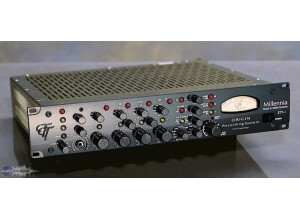
    The Millennia STT-1 Origin is an in depth channel strip that is billed as a "recording system." The unit contains a four band EQ, compressor, and de-esser. This is an analog piece of gear that has both XLR and 1/4 inch connections as well as a variety of other options. This is indeed in rack mountable form and will take up two rack spaces. UTILIZATION The configuration of the Millennia STT-1 Origin definitely has a whole lot going on, but is definitely welcome considering how versatile this unit is. The basic parameters are easy to locate and most of them will be recognizable for those who have experience with channel strip like. While it would take too long to go through all of the different sections and parameters available on the STT-1, one feature that sticks out to me is the rare ability to control both tube gain and solid state gain on the mic pre, which allows for getting some interesting sounds. I haven't seen the manual for this, but would definitely recommend having it around as this is a detailed piece of gear. SOUND QUALITY The sound quality of the Millennia STT-1 Origin absolutely top notch through and through. Everything on this channels trip has full bodied sound and I can't say that I've found an application where I wouldn't want to at least try this channel strip if I had access to it. The mic pre is definitely of top tier quality as is the EQ, compressor, and de-esser. All of the features have some in depth parameters, some of which are unique and some of which will be very familiar to experienced users. Overall, this is a great sounding unit and in terms of sound quality I have no complaints whatsoever. OVERALL OPINION While I wish I had the Millennia STT-1 Origin more at my disposal, when I have been able to use it in the recording studio it has been an absolute pleasure. However, this is defiintely an expensive piece of equipment and is probably only accessible for professionals. Having said that, I do think that if you are a home studio looking for a channel strip to get an overall better tone and are willing to make an investment, that the Millennia STT-1 Origin is a great way to go...

  • « UA LA-610 | A Vintage Channel Strip with Modern Capablities »

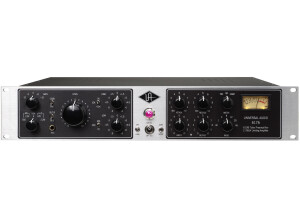
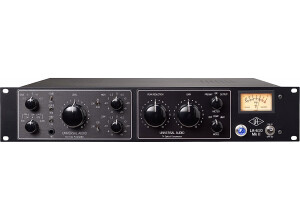
    The Universal Audio LA-610 channel strip is a modern interpretation of two classic, vintage tube designs, the legendary Bill Putnam designed 610 console pre-amp and EQ and the now ubiquitous LA2-A Compressor/Limiter. "Modern" is the key word here: while the design of this unit harkens back to the glory days of the 1960s, both in its retro looks and the 5 tubes it has under the hood, the LA-610 is surprisingly capable of achieving a variety of modern, brighter tones along with the myriad of harmonically rich and darker vintage tones that one would expect. Therefore, it should be noted that this unit is far more capable than just a boutique, color piece. While it's overall set of controls and connections may seem sparse, the LA-610 has a few distinct characteristics that set it apart from other rival channel strips. For example, the input selection knob on the front panel has four distinct impedance settings for microphones and high-impedance instruments. This means the LA-610 will play nicely with a variety of different microphones, along with both passive and active instruments. The other key feature is the line level input connection on the back panel. This allows anyone with an output from their soundcard to effectively re-amp audio from their DAW through the entire circuit path of the LA-610, utilizing the preamp section to add color and drive and the optical compressor section to add warmth and punch, along with additional harmonic distortion from the compressor's output gain. The ability to use the LA-610 as both a competent channel strip and a line-level conditioner is one of it's strongest attributes. UTILIZATION The design at surface level is straight-forward and simple and any experienced audio technician or home studio owner could likely just dive-in. However, the controls do have an unorthodox configuration that will take some experimentation to fully grasp the concept. The large Level and Output knobs are the most prominent controls on the front of the unit. This leads one to believe that 'Level' is the input gain and 'Output' is the output gain. However, this is a misnomer, because these controls exist on separate circuits. The 'Level' knob is in fact the output gain for the pre-amp section and the 'Output' knob is the output, or make-up gain circuit for the compressor. This becomes problematic, because upon first use when trying to achieve a clean signal, one initially turns up the 'Output' knob thinking they are turning up the output of the pre-amp and then in turn, lowers the 'Level' knob as low as possible, thinking they are keeping the pre-amp input gain low to avoid distortion. In reality, what has happened is that the user has turned the output gain of the pre-amp way too low and then in-turn is distorting the weak-signal by having the make-up gain of the compressor turned up too high. The result is a dark, muddy signal that will leave first-time users puzzled as to what the vintage appeal is really all about! This is where reading the manual is very important, as it explains the controls adequately! The input-gain for the pre-amp is in-fact the small, disproportionate knob in the top-left corner of the faceplate. It is referred to as the "Coarse Gain Adjustment", meaning that the input gain is set to a fixed power curve whose overall level is adjustable in steps of + or - 5 decibels. Therefore, set at -10 and -5, the pre-amp is at it's cleanest, most transparent state. Likewise, the 0, +5 and +10 settings add in more tube saturation ranging from light vintage coloration to rich overdrive depending on the source signal. Therefore, in practice, the best approach to setting up the LA-610 would be to turn the large "Level" knob all the way to 10 and then adjust the coarse gain knob in increments until an adequate level is achieved. Then you can back the level control down ever so carefully until you achieve the desired levels in your DAW. Understanding how the input and output gain structures work on the pre-amp side of the unit, one can then make better use of the compressor/limiter side. While the LA2 side won't be a formidable replacement for the real LA2-A, it is fully capable of delivering that signature, smooth sound and rich tone that the LA2-A stand-alone unit is known for, particularly for bass and vocals. It is also important to note, that it is an essential element of the channel strip's overall design! While, the photo-optical cell used in the LA2 design to compress audio is revered for it's smooth, rich sound quality, it's also notorious for making the source signal much darker. Therefore, the preamp circuit has been modified from its original vintage design to be a bit brighter in order to compensate for this darkening effect. Therefore, a few dBs of gain reduction and a little bit of the make-up gain can go along way to evening out the tone of the unit as a whole, espeically if you find the pre-amp to be initially a bit bright or sibilant on its own. The compressor is also very easy to use, simply turn the Gain Reduction knob and follow the VU Meter. Like the original LA2-A, or with most LA2-A plugins, you will similarly find that the output, or make-up gain circuit can add a lot of color and drive. This could be particularly useful if you run your LA-610 into a mixing desk first and have a fader to control the ultimate level that reaches your DAW. The only feature untouched here would be the EQ controls. Oddly at first, the EQ section comes before the compressor. This is because the EQ controls paired with the 610 pre-amp mirror the same design pairing found on the original 610 console from which it was based. The eq consists of a high and a low shelf filter. Along with the impedance settings, these controls are particularly helpful in this first position in adapting the LA-610 to different microphones or instruments. For example, a modern condenser microphone that may appear too bright at first may be thickened up with the low end and have some of the highs rolled off. Likewise, a vintage microphone or line level signal can be brightened up to compensate the effect of the compressor. Additional warmth can be added to the low end of electric pianos and basses and some of the harsh top-end can be rolled off of electric guitars and guitar amp cabinets. SOUND QUALITY With proper grasp of the controls and setup of this unit, the sound quality is certainly worthy of any professional studio. Below I will touch on how this unit performs in different scenarios: Bass: This unit is often found in professional studios purely for tracking DI Bass. Because of the inherent tube saturation of it's design, effective EQ controls and signature optical compressor tone, the LA-610 is a world-class unit for DI Bass. From a warm vintage tone with moderate coarse gain settings and subtle compression, to radical gain settings that induce rich overdrive, the LA-610 can cover a lot of ground. If you can't achieve a solid bass tone with this unit, then you haven't set it up right. Here is an example of Viola bass recorded through the LA-610 in a classic rock context, showing off the picking dynamics and thick tone: https://en.audiofanzine.com/channel-strip/universal-audio/LA-610/medias/audio/a.play,m.473853.html Vocals: The other most common application for the LA-610 is for vocals. For many studio owners, this would be the tube-powered foil to their pristine, solid state pre-amps. With low coarse gain settings and moderate compression, the unit delivers surprisingly clean and transparent tones, especially when paired with an equally transparent condenser microphone. It even works perfectly for voice-overs, providing a warm, slightly colored tone with plenty of clarity. Upping the coarse gain setting, the harmonic distortion becomes more apparent, inducing a vintage vibe to vocals. With even more coarse gain and compression, you can achieve Motown like distortion and overdrive to pure destruction depending on the source and microphone. In conjunction with the eq and compressor settings, the saturation on hand with this unit can be very useful for beefing up thinner vocal tones. Pushed to its limits, it easily overdrives, but does so in a musical way. While the LA-610 will surprise in it's versatility for recording vocals, a few notes should be made here about microphone pairings and the amount of available gain. This is not a Neve 1073 or comparable Great River pre, it will not deliver heaps of scorching gain. This is a vintage tube unit that easily, but musically overdrives at its limits. It should have more than enough clean gain for most condenser microphones. However, if you are like me and you want to pair a ribbon or a dynamic microphone with it, I highly recommend purchasing a Cloudlifter. In fact, I consider it indispensable when using an SM7b. Likewise, many people often comment on this unit that it doesn't suit one microphone or another. While the LA-610 is far from a Swiss-army knife in terms of versatility, if you spend time playing with the impedance settings and the EQ, you will find that it adapts to most scenarios surprisingly well. Guitar: The LA-610 can work nicely as a pre-amp for Cabinet mics. For example, if you are using a punchier, solid-state pre-amp powering a dynamic mic on one part of the speaker, you could provide an alternate, airier tone with a condenser mic powered by the LA-610. Using the different controls to color the signal to taste, one can get some interesting tones to pair with their standard on-axis SM57 approach. Likewise, powering a dynamic like the SM57 through the LA-610 can help add warmth and at times extra saturation to amp recordings. However, what I have found the LA-610 to truly excel at with guitars is a front-end for DI recording and Amp Simulators. Amp simulators and their effectiveness are much debated, but it's certain that an amp simulator is only as good as the pre-amp you play through. The tube design of the LA-610 feels and responds to an electric guitar with the same sensation and picking dynamics as a standard Tube guitar amp. It's saturation does a wonderful job of adding organic color to your DI tone before it hits your DAW and eliminates a lot of the hiss and high-end unpleasantness that even the best amp simulators are prone to. Furthermore, it responds very well to effects pedals! Guitar effects pedals, particularly higher-end and boutique pedals, are designed to be used in front of tube amps. So, their sonic characteristics interact more naturally with the tube-powered LA-610 verses the HI-Z input on your soundcard. Being able to add rich overdrive tones into your favorite amp sim via the LA-610 is major coup for the small studio owner who doesn't own a fleet of vintage tube amps, much less a sound-proof space to use them. Another quick note on using the LA-610 with guitars is its effectiveness as a volume booster. Think of it as a rack-mounted tube treble booster with built-in optical compressor! All you need is a re-amp pedal so the line output from the unit can feed into your regular signal chain of effects pedals on it's way to the input on your amp. Active Instruments: This area I don't have much experience with the LA-610, as I primarily work with midi synths and keys. However, the lower of the high-impedance DI settings is designated for Active keyboards, basses and guitars and I imagine would be very effective in this area. While experimenting for a soundtrack project recently, I ran a multitude of signals from my iPad into the 47 k impedance setting with great results. From adding saturation to GarageBand app strings to adding analog depth to the Animoog and Korg iMS-20 apps, the organic quality that was added by the LA-610 was very noticeable and appreciated. Re-amping: The Line-level input on the LA-610 really opens this unit up for experimentation in the studio. When re-mixing other people's projects, the ability to re-amp signals and add in harmonic content and saturation to previously dull sounds is indispensable. Likewise, it's a perfect unit for slamming drum samples, both for effect and for parallel compression/distortion. This same technique applies for vocals. A mono print of the lead vocal bus, distorted and heavily compressed, can be mixed to great effect back in under the dry tracks. In fact, this approach can be applied to anything in the mix that needs a touch of character and attitude. OVERALL OPINION Ultimately, the LA-610 is a top-class unit worthy of its place in any professional studio. It's not the most versatile of channel strips available, but it will accomplish more than you think. While its weak points may be discouraging for some, it should be noted that it performs its strengths better than most units in this price range. It won't replace or perform all of the functions of a stand-alone LA2-A, but the combination of the 610 pre-amp and the reduced format LA2 compressor side provide a character-full, superb sound quality at an accessible price point for project studios and professionals alike. Ideally, having one cleaner, solid-state pre-amp would be good to have in the rack next to the LA-610, but if you're looking for a front-end to your favorite DAW capable of delivering a wealth of organic, analog tone to any signal source, than I highly recommend the LA-610. Pros: +While not inexpensive by most project-studio standards, being able to obtain this pre-amp/compressor combination on the used market for under $1000 is remarkable. +Variety of Impedance settings for matching a myriad of different microphones and instruments to the unit. +Line input and reamping capabilities open up this unit's vintage tone to a world of modern experimentation. +A perfect front-end for recording guitars. It's ability to respond to guitar effects pedals and greatly improve the sound quality of amp sims is a major consideration for the project studio owner. +If there is one thing no professional will argue, it's that this unit is world class for recording bass. +The rack appeal of it's vintage design is an immediate statement of intent in any studio. Cons: -For a unit that will attract most people for it's use as a saturation-inducing tone-box, the limited ability to control the input gain on the pre-amp section is disappointing. If this is your sole concern and the compressor side of the unit isn't of great interest to you, then you should consider the stand-alone 610 Solo from UA. It has fully-featured Gain and Output Level knobs for dialing in the precise amount of saturation, along with the same EQ and Impedance controls. -VU Meter: While it's accurate, it is quite small. It has since been made larger on the MKII version of this unit. -Lack of available gain for lower-ouput microphones, such as an SM7b or ribbon mic. (Easily corrected with the addition of a Cloudlifter to the signal path) -No true bypass for the compressor section. The bypass switch is a misnomer, as the gain element is still active and only the photo-optical cell is disengaged. -Likewise, no bypass for the pre-amp in order to re-amp sounds directly to the compressor side. However, setting the pre-amp section so the signal passes to the compressor as transparent as possible certainly wouldn't detract from the source signal. -Only XLR inputs and outputs for line-level signals, no balanced input jacks. Will require a balanced jack-to-XLR cable for those whose soundcards do not have XLR outputs.

  • Raoul's review

    Optical compression that adds a bit of coloration and makes sure that the natural dynamic response of a sound is respected (especially the vocals). EQ with set frequencies that adds a lot of coloration. The QCS version features an enhancer that provides a very airy effect. USE Über-easy to dial in. It's very easy to use to get fast results, but it requires some time to get a more subtle compression. SOUND QUALITY With a tube mic, like a Studio Projects, the sound is rather flattering, but be careful because it can easily turn imprecise. OVERALL OPINION I've been using it for one month. I would've preferred an EQ with frequency controls I also have an Envoice, which has a harder compression and a preciser EQ, but the sound of the JOEMEEK preamp has a wider response. It's already a collector's item Unbeatable value for money It remains to be seen what TFPRO does now. And watch out for Asian derivatives that will soon carry only the JOEMEEK name.

  • moosers's review

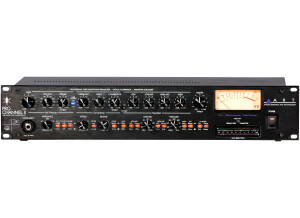
    The Art Voice Channel is an all-in-one channel strip and interface, with a built in microphone preamp, equalizer, and preamplifier. In terms of connections, it has an XLR/1/4" input on the front, as well as both 1/4" and XLR connections in the back. It also has ADAT, word clock, and a USB output to send it to your computer. It is rackable, as will take up two rack spaces in a traditional rack mount. UTILIZATION While there is definitely a lot of parameters and features to work with on the Art Voice Channel, after breaking down the unit a little bit I think you'll see that everything is pretty straight forward and that there isn't anything too out of the ordinary here. The mic pre has gain and impedance knobs as well as phantom power, a pad, invert (phase), and a lot cut option. The compressor has parameters for threshold, ratio, attack, and release, as well as de-esser with parameters for de-essing frequency and gain. There is also a gating feature available. The equalizer is made up of four bands, with the mid bands having both frequency and gain parameters, and the high and low just having gain. Lastly, there is an option for sample rate and an overall output leveler. As you can tell, there is a lot going on, so if you feel like you might need some assistance, the manual is probably a good thing to have around. SOUND QUALITY While the Art Voice Channel doesn't boast the most impressive tones available, it definitely makes up for this in versatility. While it is called a 'voice' channel, this most certainly can be used in a variety of situations as I have used it for both electric guitar and bass guitar in addition to vocals. Since it is tube based it does have a good amount of warmth, but isn't the cleanest sounding unit in general as it goes with thickness over clarity. Don't be fooled by the title though, this is an extremely versatile piece of gear... OVERALL OPINION Considering the price, the Art Voice Channel is definitely made for home studio owners more than anyone else, as it is a great deal. Having all sorts of signal processing in a single unit at this price is really a great thing for home studio owners, but the sound quality isn't up to par for professionals. Having said this, if you're a home studio owner looking for a versatile channel strip that will give you some outside of the box warmth on a number of different fronts, definitely scope out the Art Voice Channel.

  • JackLudden's review

    This is a Fantastic analog tube preamp/channel strip. In addition to a great sounding preamp, there's also a compressor with variable threshold, attack, release, and ratio, and an EQ section. The EQ has a high and low shelf, as well as three sweepable bands with variable frequency and a hi/low Q switch. There is phantom power, a high pass filter with variable frequency, a phase reversal switch, a High Gain switch (hotter, much dirtier signal), and switches to enable/disable the compressor or EQ.You can also set this unit to place EQ before compression, or compression before EQ, which is a handy feature. It also has a nice backlit VU meter. which you can use to meter output or compression attenuation - another handy feature. The connection type is of course XLR. It is a rackmounted strip, taking up two standard rack units. UTILIZATION The front panel is laid out very simply considering the amount of options present. You can use this as simply as just being a preamp - basically just using the preamp gain for signal level and also the desired color of the tone, and then the output gain to get the level right. However the other elements are quite easy to use. The controls are laid out in a standard way as far as the parameters for the compression and EQ. One thing that may have a bit of a learning curve is that the compressor attack/release times are not labled in milliseconds - but rather a pot that has fast on one side and slow on the other. So you may want to play with that a bit to get a feel for the times. Avalon provides a very extensive manual, even providing you with some suggested settings to start with on certain instruments. SOUND QUALITY This is definitely a preamp that will color your sound - but almost always in a very good way. In addition, the amount of color that is added is something I have found to be variable depending on how hard you have cranked the preamp gain knob, and if you have the compressor working. The compressor has this crunchy, crispy sound that I love. I put a U87 through this preamp for vocals, compress lightly on the way to my DAW, and it sounds fantastic. It is a tube preamp, so if you have the gain set high, there is going to be a saturated tone. If you are looking for something more crystal clear - you may want to go for something like the AD2022 by Avalon. OVERALL OPINION I have been using this for about a year. I absolutely love what it does to the sources I put through it. Everything you put through this pre seems to become larger, and more up-front. So that being the case, it is usually best suited for things that are going to be prominent in your mix - perhaps vocals, a lead guitar, or a bass guitar depending on the song. This unit also can record a DI instrument, and I've had great results recording DI bass with the 737. This really is a great pre, and combined with a Neumann U87 mic it's hard to beat for vocals - you've heard this combo on countless hit songs, and actually it is very frequently used for voice overs in film and television. The compression sounds great and has a nice character, and the EQ is very smooth. Especially the highs. You can boost the high shelf at 32k, which sounds silly because you can't hear that high, but it DOES make a difference - it somehow affects the highest part of the spectrum that you can hear in a very attractive way if you need something to be a bit more airy and bright. One thing that I sometimes have a problem with is noise. With 24-bit recording it's tempting to get a very high level, and one shortcoming this pre has is that at the upper limits of the gain it provides, it begins to get very dirty sounding - which sometimes is good and sometimes not. The High Gain switch provided I have found usually introduces too much noise to be useful, unless you want it as an effect. This item is pricey, but I have found it to be a worthy investment. I'd buy it again.

  • moosers's review

    The ADR (Audio & Design Recording) Vocal Stressor F769X-R is a British channel strip from the 1970's. It's made up of an equalizer and compressor and is one of the first of it's kind in that respect. It's an analog piece of gear, the connections of which I don't know since when I've used it it has been hooked into a patch bay for easy connecting. It will be rackable and will take up two spaces in a traditional casing. UTILIZATION The configuration of the ADR Vocal Stressor F769X-R isn't difficult to follow if you're familiar with the general make up of channel strips, compressors, and equalizers. If you're new to the game I'd recommend doing some general research on what everything will do, but otherwise you should be able to figure it out pretty easily. The equalizer has four bands with a gain knob and a frequency knob to go along with each as well that has about four or five fixed frequencies to choose from on each. There's also a switch for peak, 0, or dip settings. The compressor is a bit more complex as it has separate sections for the compressor and for an expander, as well as a variety of other controls. A manual might be helpful if you're new to signal processing, but chances are that if you're new to signal processing you won't be using this. SOUND QUALITY I love the sound of the ADR Vocal Stressor F769X-R, as I think it's a great signal processor across the board. The equalizer is super fine as I find it to be quite flexible even if it's not fully parametric. It sounds outstanding as it's incredibly clean. The dynamic processing section has a lot to offer and there is really a lot that can be done with it. The box as a whole sounds great for more than just vocals even though that's what in the name, as it's awesome for drums as well. It's very flexible and in my opinion will pretty much work well across the board... OVERALL OPINION The ADR Vocal Stressor F769X-R is a pretty rare piece of gear, and I believe that you'll find it under a few different names if I'm not mistaken. This is definitely the classic British channel strip, as it's got the make up and look to match as well. It's like a Helios sort of channel strip outside of the console of course, which is really great to have in any situation. It's not going to be easy to find one of these, and they will certainly cost a lot of if you can get one. Having said this, if you get the chance to use one of these in a studio as I did, the bottom line is that it's an awesome chain for recording vocals and beyond.

  • moosers's review

    The Summit MPE-200 is a high end microphone dual channel preamplifier and equalizer. It was designed by Rupert Neve in tandem with Summit Audio. It's got analog circuity, but works with LED screens and a digital interface. I don't know all of the connections that it has, as the one that I have used was already hooked into the patch bay and there wasn't a need for me to do anything with the connections. It is rack mountable and will take up two spaces. UTILIZATION Using the Summit MPE-200 definitely takes a bit of getting used to, but if you're familiar with preamps and general equalization, it shouldn't be too hard for your to figure this out. The main thing is adjusting to the LED screens. However, on the EQ you've got your standard parameters for gain and frequency, as well as bandwidth shape. There's an input gain knob for the preamp and also a master output volume. I haven't looked at the manual, but it might be helpful if you're buying one and want to learn everything there is to know about it. SOUND QUALITY The Summit MPE-200 is an all around amazing sounding channel strip. The preamps on this are some of the best of their kind, as everything comes in with a great amount of detail and fullness, depending on the microphone of course. It always seems to paint a very accurate and realistic sound of whatever you're capturing. The EQ is also outstanding and there is an almost endless amount of control as you can get super fine with it. Basically, if you're looking to boost or cut in small amount at specific frequencies, this is possible with the MPE-200. You won't be able to say that about most channel strips, and when paired with the killer preamps, it's hard to beat the MPE-200. OVERALL OPINION Summit Audio has an outstanding line of gear to offer, with the MPE-200 being one of their finest products. Of course it's going to cost you an arm and a leg to get one, and to be honest I'm not really sure that it's worth the price. Having said this, I use one at the studio where I work, so I don't have to pay at all for it. It's basically the front end in one of our smaller rooms, and it certainly sees a lot of action. If you're interested in dropping a ton of money on a dual channel preamp/EQ combo for your front end, whether it be in a professional or home studio, the Summit MPE-200 should definitely be in the discussion.

  • « Modern Clarity with Old School Vibe »

    The 6176 is a composite two of universal audio’s finest pieces: the preamp of the 610 series coupled with the compression of the 1176. This is an analog unit with tube circuitry- not to be confused with the starved plate designs of inexpensive units, this preamp delivers actual tube warmth. There is a direct input available, which (for me) excelled in di bass recording situations. The typical xlr connectors allow mic inputs. There is a solid needle; I owned cheaper units where the needle bounced around so much it was basically useless. This UA meter responds the way it should, presenting the critical information needed to dial in a great sound. UTILIZATION It may be hard to jump in and get a great sound with this unit. The preamp is notorious for having a large number of criticisms, particularly in the preamp gain staging. With quick dialing, it appears difficult to get a hot level to disk, it seems to go from low/moderate gains to ugly breakup. The key is to use the pad (when necessary) and …get ready for it…dial with your ears, not your eyes. The interplay between the settings is symbiotic; everything has a drastic impact on other parameters and thus the end product. Also know that most of us are no longer recording to tape, but to disk, so extremely hot track levels are unnecessary and mostly ill advised. SOUND QUALITY I would not describe this preamp as transparent; it is a character piece. That being said, you could dial in some decent clean tones, but if that is your goal, look elsewhere. This preamp loves old school gristle and delivers in a big way. Sinatra to Van Halen, UA has been on a lot of legendary records. This unit helps to take the edge of that surgical clarity that cpu recording tends to deliver. OVERALL OPINION I spent most of this review speaking of the preamp, but the compressor is beyond glorious! It slays in every application I throw at it: kick drums, overhead, room, VOCALS (YES!), bass guitar, acoustics…it can give cool special fx with the all buttons in. I love that compressor, the preamp on the other hand was more love/hate. The gain staging is not an easy task, and there are many units that will deliver more accurate results. So if you are looking for 1 killer preamp, I may not recommend this unless you are a Sinatra type performer. But if you have an array of modern preamps and need one that will be unique flavor, look right here. Sadly, I flipped this piece…regretted it a year later, than proceeded to flip that one too. I’m just not getting the business nor utilizing my studio enough to warrant a preamp of this cost…but if I run into a (2) 1176 at a good price, I would pounce. I think the biggest flaw in the 6176 is knowing that you will want two to serve as a stereo set, making it a costly investment. Perhaps the day will come when I can swing that….

  • « Joemeek Twin Q »

    I'm not a fan of green but the joemeek twinQ is sexy. Dual channel strip with EQ, compressor, and mic pre, and of course DI. I got this to have a channel strip to use for recording and to run tracks through to mix. I purchased this from American Musical for $949 and got two free Joemeek mics with them as well. The mic pre sounds good. I wouldn't put them up there with API and Trident pre's but they are a step up from your typical audio interface pre's. I like the EQ, I like to add some air to vocals while recording and this has a 12k button. The twinQ has digital out which is great if you don't want your interface to do A/D conversion on your signal. The DI sounds GREAT on bass. This unit has given me the best bass sound I've ever recorded. My biggest gripe is the compressor. I just couldn't get a gentle setting from it, which is what I wanted on vocals. The build quality is good. If your a guitar player you would love this, as far as for vocals I just couldn't get it to do what I wanted. This unit just doesn't fit my needs, but in the right hands I do believe it can work magic. This review was originally published on http://www.musicgearreview.com

  • « on a budget? »

    The Summit ECS 410 channel strip in my opinion is the best channel strip you can get for your buck. Both the pre-amp section and the compressor section are extremely useful. Most of the time I will record using the compression straight to Pro Tools, but many times I'll go back and use the compressor on previously recorded things. It has XLR inputs and outputs. UTILIZATION In terms of ease of use, it doesn't get much easier. The pre-amp has a bunch of equalization options as well as gain and a leveler. The compressor is only two knobs, like the LA-2a which it is based off of. I haven't had a need to use the manual, it is easy enough to use if you have any sort of experience with recording and compressors. SOUND QUALITY I couldn't be happier with overall sound this thing produces. It sounds great on vocals (I'm using a Neumann TLM103) as well as on guitars and drums. For bass I just plug directly in...I have no need for my direct boxes anymore when recording keys or bass, I just use this. The pre-amp is pretty transparent if you run it with no EQ, but I love having the options of boosting or cutting using the pre's EQ. OVERALL OPINION I've been using the LA610 for about 6 months. The thing I like most about it is that it is a compact channel strip that I can use over and over again for my overdubs. I haven't had any complaints, although I wish there were some 1/4'' connections in addition to the XLRs. I've used all sorts of other Summit products (LA-2a, 1176, LA-3a, etc) and this definitely can hold it's own. If I lost it or broke it I would definitely buy a new one. Being that I work out of my project studio mostly and I am on a limited budget, I couldn't have asked for anything more.

Categories that may interest you