Log in
EN
FR

Solid-State Pre-amps

858 products found

Filter
Sort by
Brand
Evaluation
  • Reviewed or not
  • Editor’s award
  • Reviewed by Audiofanzine
Availability
  • Available or not
  • Sold new or used
  • Sold new
  • Sold used
Must-have products
  • All products
  • Flagship products
  • Best rated products
  • Hot products
  • Popular products
Price
  • Freeware
  • Low-cost (< $950)
  • Mid-range ($950 - $2,500)
  • Premium (> $2,500)
€
Clear
Sort by
  • Popularity
  • User ratings
  • Price - low to high
  • Price - high to low
  • Used price, increasing
  • Used price, decreasing
  • Name (from A to Z)
  • Name (from Z to A)
  • Added on
Sort results
  • Popularity
  • User ratings
  • Price - low to high
  • Price - high to low
  • Used price, increasing
  • Used price, decreasing
  • Name (from A to Z)
  • Name (from Z to A)
  • Added on
Filter results 858 results found
Brands
Evaluation
Availability
Must-have products
Price
  • Freeware
  • Low-cost (< $950)
  • Mid-range ($950 - $2,500)
  • Premium (> $2,500)
Show results

The best Solid-State Pre-amps reviews

The reviews Audiofanzine members found the most helpful.
  • « Nice pre for the money »

    Mine is the Mk.II model of the Pre73. The GAP Pre73 is a Neve 1073 clone. The input impedance of the microphone input can be switched between 300 and 1200 ohms, which makes it possible to affect the tone of most microphones. There is also phase switch and an simple 4-step LED signal level meter. The output level control makes it possible to make fine gain adjustments and also to overload the main gain stage for more character and then lower the signal to a suitable level before the output stage. The PRE73 Mk. II has a maximum gain of 80 dB on the mic input and the gain range on the Line input is -20 to + 10 dB. There is also a high-impedance instrument input. Only on Mk. II: -Unbalanced insert jack for inserting units like the coming GAP EQ-73, a three band eq. -LED meter levels adjusted. -600 Ohm termination resistor and jumper added to power supply board. -Revised Gain switch, turning the know clockwise now increases the gain. -Reduced noise at high gains by a change to the power supply grounding scheme. One minus for the fact that you need to buy an external rack plate to make it rack mountable. UTILIZATION Using it is dead simple. Max the Output and use the Line/Mic knob for maximum headroom, which this thing has plenty of. Do it vice versa for maximum coloration and/or some nice distortion of the preamp. I did an A/B test of it with my Firepod pres and it wins unsurprisingly hands down. The pre73 has way more headroom as well. The audio comparison can be heard here: https://soundcloud.com/nakedzen/golden-age-project-pre73-and-1 SOUND QUALITY As I mentioned above, it can be used as a transparent pre when setup that way. It also gives very nice coloration if need be, especially useful on vocals. OVERALL OPINION I'll get another one of these as soon as I have the cash for it so I can use them for kick and snare. Maybe a third one for the room mic. :D I'm not too experienced with mic pres but this is very good value for me as I only record as a hobby.

  • moosers's review

    The Aurora Audio GTP8 is a set of eight channels of microphone preamplifiers, designed after Neve 1073 modules. These are only mic preamps (no EQ's) and aren't a direct copy of a 1073, but they're in the same vein and do have a similar sound. They are solid state preamps, all consisting of class A circuitry. Each of the eight channels has it's own XLR connections in the back and the unit as a whole will fit within two spaces of a traditional racking system. UTILIZATION The preamps on the Aurora Audio GTP8 couldn't be much simpler to use. They give you all the basic controls but nothing really beyond that. Each channel has a line input knob for setting your level as well as a smaller knob for gain for making finer adjustments to your level. The smaller adjustment knob is definitely necessary as each jump on the input trim will give you a good amount of more gain. Each of the channels also has phantom power, a phase button, and a 1/4" input for going direct. I've never had a look at the manual for the GTP8 and don't think I'll ever have a need to either. SOUND QUALITY The sound of the Aurora Audio GTP8 preamps is definitely that of a high quality. I haven't tried these out side by side with a Neve 1073, and while I don't think it's a direct match, these are still great sound preamps regardless and they definitely have a Neve sort of vibe to them. They are quite full sounding and definitely suitable for recording any and all instruments. I recently started working in a band's home studio where they have two of these and that's the extent of the preamps they have. They do a great job for recording vocals, drums, piano, and just about anything else. OVERALL OPINION The Aurora Audio GTP8 is a great way to get eight high quality Neve-like preamps in one place for one set price. If you're after a set of real 1073's, it's probably going to run you just about as much as this would for eight channels. If you don't need eight channels and are willing to spend the dough on a set of 1073's, all the power to you. However, if you're looking for high quality preamps in bulk, this is one of the best ways to do it. It's hard to go wrong with the Aurora Audio GTP8 considering you're getting eight channels!

  • moosers's review

    The Rane MS 1 is a single channel microphone preamplifier for use in the recording studio. It's a simple preamp, coming in a unique casing that doesn't take up much space even though it's not traditionally rack mountable. There are a few different versions of the MS 1, including the MS 1B and MS 1S, the latter of which this review is for. The MS 1 also has XLR connections for microphone input and line output. It has built in 48 volt phantom power as well. UTILIZATION You really don't need to know much to operate the Rane MS 1. It just has a knob for setting the gain, and from there you're pretty much good to go. The only other things that you need to know about are when to engage the phantom power and also the polarity switch that it's in the back. The box has LED meters to indicate when phantom power is on as well as for when a signal is being passed and when it's being overloaded. I haven't seen the manual for this... SOUND QUALITY The sound of the Rane MS 1 is about average, as it's nothing incredible to write home about but will definitely get the job done in a home studio situation and beyond. It's a pretty clear sounding mic preamp for the most part, but lacks a certain depth that the best mic preamps will have. It's definitely better than most stock audio interface preamps, but I guess that's not saying too much. I've used the MS 1 for recording electric guitar, but also have tried it for some other applications. Electric guitar was really the only application that I tried where I thought it excelled... OVERALL OPINION The Rane MS 1 isn't exactly a popular microphone preamp since it's not all that well known, but it's still a decent enough mic pre that it's worth scooping up if you can get one or two at a cheap price. I almost bought a set of them a while back but decided to spend a few more bucks on some better preamps. If you're just looking for preamps that don't sound terrible to add to the back end of your studio, the Rane MS 1's will do the job, otherwise I'd probably recommend springing for something a bit better.

  • moosers's review

    Crane Song's Flamingo is a dual channel microphone preamplifier designed for use in the recording studio. It is an analog piece of gear and will take up only a single space in a rack casing. I don't know the types of connections that it has since it's all racked up and connected to the patch bay in one of the smaller studios that we have on site at the studio complex where I'm working. UTILIZATION Using the Crane Song Flamingo preamplifier isn't too difficult, but at the same time there is more here than you'll find on your average preamp. Each of the two channels has knobs for gain and attenuation, which is a unique make up when compared to other preamps out there. Each channel then also has switches for phantom power and phase. There are then a set of unique tone knobs - one is a fat/norm switch and one is an 'iron' switch which basically changes the low frequency color. The manual is helpful and complete if you have any questions about the unit. SOUND QUALITY The overall sound of the preamps in the Crane Song Flamingo are very impressive. They've sounded awesome for every application that I've used them for, which includes snare drum and acoustic guitar. They're incredibly full sounding and the unique tone parameters offer up some nice colors that you won't find anywhere else really. While the preamps are very full sounding they also have a great deal of clarity and detail, as they seem to pick up all of the minuet details necessary for high quality recording. OVERALL OPINION If you're interested in a set of high quality microphone preamplifiers for your front end, the Crane Song Flamingo is a great way to go. These are definitely designed for professionals, but as your top piece of gear in your home studio, these would be awesome. Either way, they are going to cost you a little bit of money, but considering you're getting two preamps here this is a pretty good price for this high a quality preamp. If you just had this, a computer, and a few decent microphones, you'd have yourself a pretty nice little home studio...

  • moosers's review

    The Sytek Audio Systems MPX-4A is a four channel microphones preamplifier with a simple configuration and big sound. The MPX-4A has solid state, transformerless design, consisting of all class A parts. It only has XLR inputs and outputs for each of the four channels and no other connections at all. It is in rack mountable form and will only take up a single space, which is awesome considering there are four mic pres in here! UTILIZATION Using the Sytek Audio Systems MPX-4A is just about as simple as it can get for a set of microphones preamps. Each of the four channels consists of the same configuration, with a gain knob for each and buttons for mute, phase, and phantom power, and that's it! That is literally all that you need to know about this, making it just about as fool proof as you can get. A manual certainly isn't necessary to use the MPX-4A. SOUND QUALITY The sound of the Sytek Audio Systems MPX-4A is overall outstanding. In a recent recording session that I worked on, we used all four of these mic preamps at once for use with a live band. We had the preamps going to all sorts of different places. We had one on acoustic guitar, one on the bottom of a snare drum, one on a scratch vocal, and one on the inside of the kick drum. Just from seeing the wide array of applications that I used them for, you can probably tell that I believe these preamps are quite versatile. I think you'll agree when you hear the high quality sound that you achieve with these preamps regardless of the application. While I might not use these for the most important things during the recording of a live band, they are perfect for supplementing higher end preamps when you need more high quality preamps beyond your Neves, etc. Of course there are times when I would not want to use these pres, but more times than not I think they'll work great. OVERALL OPINION While the Sytek Audio Systems MPX-4A comes in a few different versions, the one that I have used is the standard one. In my opinion this set of four mic pres is one of the best bang for your buck deals out there in terms of microphones preamps. For under $1000 USD (which this costs) I think you'd be pretty hard pressed to find another set of FOUR microphone preamps that is of this high of a quality. I've been very impressed with the Sytek Audio Systems MPX-4A in my time using it, and it is definitley something that I'm thinking of adding to my home studio as well...

  • moosers's review

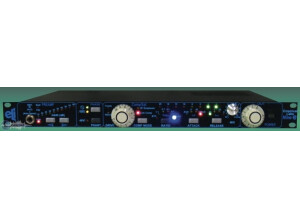
    The Empirical Labs EL9 Mike-E is an analog channel strip that consists of both a mic preamp and a compressor. The unit has both 1/4 inch and XLR connections and is generally pretty user friendly. It is indeed a rack mountable piece of outboard gear and will take up only a single space in a traditional rack. UTILIZATION The make up of the Empirical Labs EL9 Mike-E isn't too hard to follow overall. It is easy to use and has parameters that are ubiquitous across most mic pres and compressors, so those with previous experience with channel strips like this one should be able to adapt to this rather quickly. In the mic pre section, you've got parameters for plus or minus gain as well as a phase button and a phantom power button. The compression section has parameters for drive, comp mode, ratio, attack, release, and mix. There is also an overall output level knob that is in its own section. I haven't seen the manual for the EL9 so I can't say too much about it. SOUND QUALITY The all around sound quality of the Empirical Labs EL9 Mike-E is very impressive. The mic pre is quite accurate and has a sound that can be described as fat and wide. The compressor is probably the most impressive part about this unit, however. Since compressors are their specialty, the compressor in this channel strip has an incredible sound. It has a variety of parameters that make it possible to get all sorts of different tones. For this reason I find it easy to use the EL9 in tandem with just about any type of instrument or voice as it can adapt to all sorts of different situations. OVERALL OPINION I've been using the Empirical Labs EL9 Mike-E for about a year and it has become one of my favorite pieces of gear made by Empirical Labs, which is saying a lot considering their impressive line of gear. I would definitely recommend it as a top choice for those looking for a top tier channel strip with a great sounding pre and an even better sounding compressor. While the price isn't exactly cheap, it is reasonable and is aimed at those professionals looking for great tone regardless of the price. All in all the Empirical Labs EL9 Mike-E is a very impressive unit that should be looked into by any professional engineer interested in new and exciting channel strips.

  • moosers's review

    The Great River MP-2NV is a dual channel microphone preamplifier that is simply a two channel version of the Great River ME-1NV as it has the same configuration. This is an analog unit that has XLR connections in the back and has 1/4 inch inputs in the front for plugging directly into this. This is indeed a rack mountable piece of outboard gear and will only take up a single rack space. UTILIZATION The configuration of the Great River MP-2NV is easy to follow as there isn't anything unusual to be seen here. Each of the channels simply have knobs for gain and output level and buttons for polarity, phantom power, impedance and loading. Each also has a meter for both the input and the output levels. I can't say that this is hard to manipulate at all and I think that most people won't have any problems operating this pre amp. I can't say anything about the manual as I have never needed to look at one. SOUND QUALITY The sound quality of the Great River MP-2NV is exactly what you would expect - it is outstanding. It has a great deal of warmth and clarity and it definitely portrays an accurate picture of the signal that you sending to it, whether that is with a microphone or direct. I would say that the MP-2NV is pretty much suitable for use with any application in terms of instruments as I have had success using it with just about all of the applications that I have used it with. The bottom line is that it is just a good mic pre and this will translate to whatever you use it with. OVERALL OPINION I've been using the Great River MP-2NV for about a year or so and I've always been extremely pleased with the sound that this has. It has a very authentic sound and is a great pre to have around even if you have a console as it will give you another option to go to. Of course with great quality comes a price and for this reason this isn't a cheap set of pres. I believe however, that this is a good deal even if it is out of the price range for most home studio owners. Overall, the Great River MP-2NV is a special pre and is a great all around choice in terms of stereo mic pres.

  • moosers's review

    The Amek 9098DMA is a dual channel solid state mic amplifier. I'm not sure exactly what type of connections it has since the one that I have used was pre-racked in a studio, but I think it has both 1/4 inch and XLR. It is indeed rack mountable and will take up a single rack space. This unit was designed by Rupert Neve himself, so you have to trust what he has done here... UTILIZATION The make up of the Amek 9098DMA is pretty easy to follow as it has somewhat standard features and parameters. It has gain knobs for each channel as well as a slew of buttons that do various things including a low pass filter. If you have experience with mic preamps (which I will assume that you do if you are looking into this model), then you shouldn't have any trouble figuring out how to use this as it is pretty standard. I haven't seen the manual for the Amek 9098DMA so I don't know how well it is put together... SOUND QUALITY The sound of the Amek 9098DMA is pretty outstanding for all sorts of applications. It can be used with pretty much any microphone and for any application, but I like using it for vocals and for guitars mostly, but have also used it for all sorts of keyboards including Hammond organ, Fender Rhodes, and acoustic piano. The preamp won't color your sound and is pretty transparent, but it does have a certain sound that works better in some situations than in others. If you are a fan of Neve preamps (and who isn't), you will definitely like the way that the Amek 9098DMA sounds. OVERALL OPINION I first used the Amek 9098DMA about a year ago and I've found it to be a pretty great set of preamps at a very reasonable price considering how good this sounds. It is quite easy to use as all you have to do is simply set your level or switch on one of the various buttons if you need to. This is one of Amek's best models because it was designed by Rupert Neve himself and really stands out as a great mic pre. Whether you are a professional or home studio owner, the Amek 9098DMA is a great set of mic pres at a great price.

  • « A good piece of gear with many features »

    This is a microphone pre-amp channel, which includes the pre-amp as well as compression, de-essing, and EQ. It's got a lot more features than your average mic preamp. The pre-amp itself has a phantom power switch as well as a phase reverse which is important. This is then followed by an EQ, which has several parameters to control. Then comes the compression and de-essing, followed by a master output. If you wanted to have your track as perfect as possible coming into a session this is a great tool to have. UTILIZATION This is definitely a little trickier to use than your average mic pre, unless you want to bypass the EQ and the compression as well as the De-eser. Otherwise you'll have to deal with an input gain knob as well as a six-knob Parametric EQ, a four-knob Shelving EQ, a five knob compressor, a two-knob de-esser, and a master output. There's a ton of options here and they all require time and attention. This is good news for people who aren't getting the sound they want immediately. However I will say that in general, getting EQs and compression down perfect is going to be tough to do right from the get-go. SOUND QUALITY This is a pretty transparent pre-amp in general. Like the other Focusrite pre-amps that I've tried, it's not incredible, but it's certainly very good. The extra features do a lot to help bring out the best of it too. I really like the way that the two EQs work, they help breath life into this piece of gear pretty well. I don't think the compression sounds the best I've used but the fact that it's right there on the pre-amp goes a long way. I rarely ever do de-essing on anything but vocals, and I don't usually do it right away. So basically I would say that it's a great sounding piece of gear that I can't always use, but when I do use it it's great. OVERALL OPINION I like the array of controls on this thing a lot. The sound of the pre itself is nothing to die for but the EQs and effects are all better than using plug-ins most likely. For that reason it comes close to justifying it's price, but not really. It's still really expensive. Even though it's a great piece of gear it doesn't get five starts mainly because of the price. There's better sounding things out there that don't need their own eq and compression to sound good.

  • moosers's review

    The Scully 280 is a microphone preamp that is originally found in a tape machine. I don't know the year that these are from, but they're pretty old from what I can tell. We've got a set of these preamps in a floating rack at the studio where I'm working, although they don't see all that much use. They're in some sort of a casing, but I'm not sure if it's custom or what the deal is with it really. This is a solid state preamplifier and will take up two spaces in a traditional rack casing. UTILIZATION The make up of the Scully 280 isn't hard to follow, although there's some parameters and features that don't really apply to it once it's been taken out of it's original tape machine home. It does have both playback and record levelers, but depending on the mode you're in only one will be active at a time. We just use the record leveler for getting a level coming into Pro Tools. I don't think you'd be able to find a manual for this preamp specifically, but perhaps you could for the Scully 280 tape machine. SOUND QUALITY The sound of the Scully 280 is definitely it's own thing. It's got a vintage, throw back kind of sound and is really cool for warming up a stale sound or for injecting a little color into your tone. It's definitely a specific sort of sound and I don't use them for recording too many things traditionally. Rather I'll run a track back into them to warm them up a bit and/or to add a little life to them. They're cool as traditionally preamps as well, but really only when used in the right situation. OVERALL OPINION Unless you're working at a professional studio or are a seeker of vintage gear, you're most likely not going to find the Scully 280 around, especially outside of it's original home in a tape machine. These are nice colors to have, but by no stretch are they necessary. In a professional studio they're nice to have around as you never know when you might need a certain color, but they're probably not worth seeking out yourself.

  • moosers's review

    Presonus' DigiMax LT is a straight forward set of eight microphone preamplifiers. It's simple in just about every way, as I guess it needs to be in order for them to fit eight channels of mic pres in a single space rack mountable casing. It's got dual XLR and 1/4" inputs for each of the eight channels, which basically means that it has an 1/4" input in the middle of the microphone input. It then has 1/4" connections for channel inserts for each of the eight channels. It is also expandable as it has an ADAT output and a word clock input and output. UTILIZATION Using the Presonus DigiMax LT couldn't really be any simpler. Each of the eight channels has gain control on the front panel, as well as buttons for phantom power and a pad. Each also has single light LED metering. There is also a button for selecting your sample rate (either 48, 44.1 or 32) and for the word clock. A manual isn't going to be necessary with the DigiMax LT unless you're having problems with the word clock or something like that. SOUND QUALITY The microphone preamplifiers on the Presonus DigiMax LT actually sound quite pristine. I wasn't expecting all that much since many of the Presonus preamps that I've heard end up sounding stale, but I was definitely pleasantly surprised. They aren't the fullest sounding in terms of pure body sound, but they have a nice high end and cut through pretty well. They are definitely all purpose so you can use them for anything in your home studio, which is where I'd recommend keeping this... OVERALL OPINION While they are no longer making the Presonus DigiMax LT mic preamps, if you're after one you can definitely find them used pretty easily since this wasn't discontinued all that long ago. Getting eight microphone preamps at this quality for this price is definitely a lot of bang for your buck, and when you factor in the ADAT feature it's almost a no brainer for home studio owners. While I wouldn't recommend this for professionals, it's the perfect addition to a home studio if you need some more mic preamps.

  • moosers's review

    The Neve 31102 is a channel strip that consists of a preamplifier and an equalizer. I've used these preamps in a Neve 8068 console, which I believe these come standard with. They are very similar to the popular Neve 1073 channel strips, but these have a few extra features which I will outline in this review. It doesn't have any standard connections, as it is a module that fits in a board. It isn't rack mountable outside of a board, but I would imagine that those who have these outside of a console have it in something homemade. UTILIZATION It isn't too tough to learn how to use the Neve 31102, as it's very similar to a few other Neve modules. Even if you don't have experience with Neve modules, I think it's still easy enough to figure out how to use. However, it will definitely help if you are familiar with the make up of Neve modules. The equalizer is a four band EQ, with the top high band having a band to put it in or out, which is one of the differences between the 31102 and the 1073. Each band of equalization has parameters for frequency and gain. The module also has a trim knob for the preamp, and an EQ bypass and phase buttons as well. I haven't seen a manual for this Neve module... SOUND QUALITY The overall sound of the Neve 31102 makes it one of the best sounding modules that I've used. The Neve 8068 (which this module is from) is overall one of my favorite consoles out there. The preamps have an extremely full sound, and are versatile enough to be used for any application, which is what you would expect from a module from a console. The EQ is very easy to use in my opinion, and it's great for getting proper equalization during tracking or mixing. It's hard to put down in words the pristine nature of this sound, but it's really one of the best Neve modules I've used. OVERALL OPINION I don't know how easy it would be to find a Neve 31102 outside of the 8068 console, but I would imagine that they do float around and are available. The 31102's don't have as much acclaim to their name as the 1073's or the 1084's, but they are every bit as good as them, if not better as it has more features than the 1073. If you can afford a few of these modules or the full 8068 console itself, I'll assume you're a professional studio owner as these are incredibly pricey! If you do get the chance to check out these modules (or buy one!), you'll be very pleased that you did as these are definitely some special channel strips.

Categories that may interest you