Log in
EN
FR

Microtech Gefell

55 products found

Categories
Filter
Sort by
Evaluation
  • Reviewed or not
  • Editor’s award
  • Reviewed by Audiofanzine
Availability
  • Available or not
  • Sold new or used
  • Sold new
  • Sold used
Must-have products
  • All products
  • Flagship products
  • Best rated products
  • Hot products
  • Popular products
Price
  • Freeware
€
Clear
Sort by
  • Popularity
  • User ratings
  • Price - low to high
  • Price - high to low
  • Used price, increasing
  • Used price, decreasing
  • Name (from A to Z)
  • Name (from Z to A)
  • Added on
Sort results
  • Popularity
  • User ratings
  • Price - low to high
  • Price - high to low
  • Used price, increasing
  • Used price, decreasing
  • Name (from A to Z)
  • Name (from Z to A)
  • Added on
Filter results 55 results found
Evaluation
Availability
Must-have products
Price
  • Freeware
Show results

The best Microtech Gefell reviews

The reviews Audiofanzine members found the most helpful.
  • moosers's review

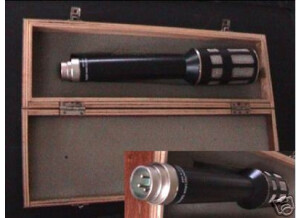
    The Microtech Gefell DM 622's are vintage small diaphragm dynamic microphones that are somewhat rare and unknown. I only had the chance to try these out recently when I was an assistant engineer on a session where the engineer brought them in to use. I was surprised to find that they were dynamic mics, as Gefell (an offshoot of Neumann), as usually they only will make condenser microphones and I'm not sure that I've ever used a dynamic from Gefell and Neumann has literally only one and they just made it within the last few years. These are also omnidirectional mics. OVERALL OPINION The Microtech Gefell DM 622 are pretty cool microphones to use in some unique situations. I don't think too many engineers will be coming across these any time soon as they seem to be very rare and not too many people know much about them. I had never heard of them until I had the chance to try them out, as they're actually really cool sounding. The engineer was using them as room mics, which I thought was an interesting until I heard it and they sounded great! They pick up a good amount of detail for a dynamic microphone and I could see how they would be mistaken for condenser mics. They're good as room mics since they're omnidirectional and will pick up everything around them. I'd be curious to try them out for some applications as I'm not sure what else they'd be good for as it's definitely unique to have a mic that is both dynamic and omnidirectional. I haven't seen Microtech Gefell DM 622's for sale at all, so I'm not sure what they would go for if you could find them. If you're into vintage mics, the DM 622's might be pretty cool to mess with since they're very unique.

  • « In the line of the Neumann and MV691 »

    This MV690 preamp is the first version of the MV691 and MV692. It can be used with M70 or M94 capsules, but also other models such as the omnidirectional M93. Mine is equipped with a cardioid M70 with nickel diaphragm. This is a real condenser mic, with an internal high voltage converter. Originally fed in 12V (phantom), I modified it to take XLR 48V, making it more practical to use. Age: mics of this model are 40 years old or more, so I changed all chemical condensers. The very old design (tension converted in a metallic cylinder) makes any mod difficult to realize, I also changed the FET as well as the 220M resistor. I use it on stage and want it to be reliable. Use: just like the KM84 (which the really resemble soundwise), they're fit for string instruments, OVH, small percs, ambiances... They're cheap (although rather rare), but they must be serviced and modified for use with XLR/49V, so the final, "real" price is much superior. Only for those who really know what they're doing with electronic mods...

  • moosers's review

    The Microtech Gefell M 300 is a small diaphragm condenser microphone that is designed for use in the recording studio. Microtech Gefell is a company that was founded by Georg Neumann, obviously of Neumann fame, so these mics are in the same vein as the best in the business. The M 300 in particular has a cardioid pick up pattern and picks up frequencies between 40 Hz and 18 kHz. I wouldn't use this mic outside of the recording studio considering it's price and fragility. It isn't designed for other uses anyway, so I wouldn't even try. OVERALL OPINION The Microtech Gefell M 300's are without a doubt some of the best sounding small diaphragm condenser mics that I've got experience using. Probably the most used application for these microphones will be for recording drum overheads, but the M 300's are great for just about any application where you're looking for a good amount of mid to high end detail. They sound immaculate on just about every application I have used them for, which also includes acoustic guitar and violin. While I used one M 300 in tandem with a large diaphragm condenser for recording acoustic guitar, I definitely could have gotten away with just the one M 300 placed around the 12th fret, as it really did a great job of getting a full sound with a silky smooth high end. The M 300's are without a doubt in the same vein as the Neumann KM 84's and 184's, but I haven't had a chance to shoot them out ever. If you're a professional studio owner or engineer looking for an absurdly high quality set of small diaphragm condensers, definitely keep the Microtech Gefell M 300's in the conversation although they will cost about as much money as you can spend on a small diaphragm condenser.

  • moosers's review

    The Microtech Gefell M 930 is a large diaphragm condenser microphone designed to be used in a professional recording studio environment. This review is specifically for the M 930, as I haven't used the M 940. However, I believe that the only difference between the two is that the M 930 has a cardioid polar pattern while the M 940 has a hyper cardioid pattern. While the M 390 has a large diaphragm, it is a very small microphone in general as it fits in the palm of your hand. It comes with clips, but you can't turn the mics up side down with it or they will fall out, so you do have to be careful. These mics also come in a stereo pair, which will also come with another clip to put both mics on in a stereo XY fashion. The mic will pick up frequencies in the range between 40 Hz and 18 kHz. OVERALL OPINION The only application that I've used the Microtech Gefell M 930s for to date is as room microphones. On a few different drum sessions I set up the M 930s up pretty high and in the corners of the room to pick up all the ambient drum sounds. These are really the perfect little microphones for the job, as they simply do a superb job of picking up all the details you'd want in a room sound. I feel like the sound that I got with these really added a whole lot of depth to the overall sound of the drum kit. Beyond using these are room microphones, I haven't yet had a chance to try these out. I'm hoping that in the near future I'll be able to experiment with them a little more, as if the previous sound I've gotten with them is any indication, they should sound great for a variety of other applications where you'd want some detail to be a main factor. These microphone certainly aren't cheap, but when you get a Gefell mic you're getting a top quality microphone from a company that is respected with the best of them. The Microtech Gefell M 930 is absolutely a microphone for you to know about.

  • Audiofanzine FR's review

    (Originally written by Bernard Ancèze/translated from Audiofanzine FR) Cardioid mic Condenser mic 12-volt Tuchel phantom connector or 48-volt XLR connector (modified) Hand-held mic. OVERALL OPINION It's a radio-type mic that can be used on stage but it has a poor feedback rejection. If you're having trouble with the stage monitoring system the PM860 won't make things easier. But what a sound! Thick lows, authentic mids and smooth highs. It provides a German sound and reminds me of old U87, U89 and KMS85 models. I own a Gefell CMV692U70 that sounds pretty similar, but it has more low-mids and softer high-mids. Very effective low-cut filter. Even without the low cut the proximity effect is milder than with a KMS105, KMS85 or Shure SM87. It's perfectly suited to record vocals in the studio but it lacks a bit of air. It has a big, in-your-face sound. It's also good for guitar and bass amps, double bass, bass drum. Instruments sound fatter with this mic than with an U89. It also good with a piano. But it's just average with saxophones, flutes and strings (although that could be my fault!).