Log in
EN
FR

Samson Technologies

411 products found

Categories
Series
Filter
Sort by
Evaluation
  • Reviewed or not
  • Editor’s award
  • Reviewed by Audiofanzine
Availability
  • Available or not
  • Sold new or used
  • Sold new
  • Sold used
Must-have products
  • All products
  • Flagship products
  • Best rated products
  • Hot products
  • Popular products
Price
  • Freeware
€
Clear
Sort by
  • Popularity
  • User ratings
  • Price - low to high
  • Price - high to low
  • Used price, increasing
  • Used price, decreasing
  • Name (from A to Z)
  • Name (from Z to A)
  • Added on
Sort results
  • Popularity
  • User ratings
  • Price - low to high
  • Price - high to low
  • Used price, increasing
  • Used price, decreasing
  • Name (from A to Z)
  • Name (from Z to A)
  • Added on
Filter results 411 results found
Evaluation
Availability
Must-have products
Price
  • Freeware
Show results

The best Samson Technologies reviews

The reviews Audiofanzine members found the most helpful.
  • « I love these keyboards, but please upgrade your quality »

    This keyboard is by far the best in the controllers that I've used. I've been using it for years on stage now. + Has aftertouch (yess!!!) but should be harder, it activates to fast now. + enough controller knobs and sliders + good info screen + handy octave/transpose button (but should be lit!) + 4 pads with 2 banks (could use 8) but are not so good responsiveness + low weight but bad plastics - decent keybed, feel and weight, but low quality china keys that break after a while, so I bought 3 of these keyboards because they have a low price, but I always need to glue the keys internally. - knobs should have better response instead of gel buttons - rotary and sliders are plastic components If this was a better quality I would never look at others again. But unfortunate it isn't ! Please Samson make a mk2 and learn from your mistakes.

  • « really quiet »

    The S-Phone is made by Samson, it is a 4 channel headphone amplifier that has 3 outputs on each channel. It has 5 input channels and 4 output channels. You can rack this unit up to keep out of the way in the studio. I have used his unit about 10 times in total over the last 2 years. It control has a volume options, panning knob, and high and low filter knobs. You will need to put a stereo signal into the auxiliary port on the front of the S-Phone so you can get full sound out of both sides of your headphones, because otherwise you will only get sound out of one side of your headphones. Mainly we used it in the studio to have volume control over all of the headphone sets that we had at the time. It gave us exactly what we were looking for it and it was very quiet. It didn’t push any hissing or humming through our headphones. Even when messing with the options like panning and high and low pass filters it didn’t push through any clicking or any sounds at all. I have used similar models in the past that any time you messed with an option you could hear some sort of a click or noise through the headphones which could get really irritating for anyone who has the headphones on. The value of this unit for what you get is great, you will get a very quiet unit that will give all of your headphones in the studio a quiet signal with crisp and clean sound quality. I would not purchase this if you don’t have several headphones that need to be listened to at the same time. Otherwise you will just be wasting your money with this unit. If your studio is a decent size and need to have multiple headphones hooked up then this is a must have.

  • « comfortable but lack mid range »

    The SR850’s come in at a very low price, for them to be 60 dollars the frequency response is pretty good! They are a pair of semi open studio monitors that have a driver size of 50mm. They come with a ¼ adapter as well. When it comes to price and performance, I would choose these over some of the Sony headphones that cost almost double what these do. Though the SR850’s have a great frequency response and they are affordable you still need to be careful with them, they don’t take much wear and tear and can break on you easily. They also can be a bit heavy when it comes to overall sound. I would not plan on getting a perfect mix with these but if these are all you can afford they will hold you over until you can afford to upgrade and invest into a solid long lasting pair. The Samson SR850’s are comfortable to wear for long periods of time, they can be adjusted to fit your head size and they fit perfectly over my ears. I did not use these long, they became more of a regular set of headphones for me to just listen to music in. The bass sounds solid and it is very clean, the highs are crisp. But the mids are the issue when it comes to mixing in these headphones, they seem to make the overall sound really heavy to me. The SR850’s mid range is a bit shaky and can mess up your whole mix if you try to fully mix in these monitors. But I am happy that I purchased them and wouldn’t take it back for anything because they are affordable and great to have around in case I am going somewhere and want to take a decent pair of monitors with me to listen to some rough drafts of stuff that I have recorded. They do need some changes but what can you expect to get for 60 dollars. This is about as good as it gets for that price range.

  • Audiofanzine FR's review

    (Originally written by jfherts/translated from Audiofanzine FR) See manufacturer's specs... Just one thing: I only miss an EQ (at least for the highs). SOUNDS Quite linear response... The most linear response I've heard in this price range. Good stereo imaging, I rediscovered some of my CDs... It's always pleasant to know that you didn't spend your money on nothing :o) The sound precision could be better. The main value of this speakers is that they allow you to adjust the balance of a mix very precisely and you can rest assured that this balance will be the same in other systems. Con: the ribbon sounds a bit too soft and fuzzy, the transient response is not very accurate. Sometimes I check EQ settings with headphones (for vocals for example). Vocals should be more precise and defined. But don't forget the price!! The dynamic response is ok, but it lacks a bit of punch!! Nevertheless I was blown away by these small speakers. Their sound is not tiring at all (they sound even too smooth). OVERALL OPINION Two years ago... I plan to replace them with something that has more punch and precision but still has a flat response. In spite of some comments I've heard, I don't think they are perfect. But it's also a matter of price! For this price, I would definitely buy them again. I tested many speakers before buying them (HS 80: too much highs and too aggressive, KRK: too much high-mids, Alesis: no comments, etc.). For the price, they are great. But they are not the best monitors in the world!!! (certain reviews lead you to have a false impression...). You can find much better and more accurate speakers on the market but you'll have to spend twice the money... For this reason, I give them 8/10 in every respect!

  • « My first 4 in and 4 out compressor »

    This compressor is a rackable unit that is very affordable costing only 170 USD. There are 4 XLR inputs and 4 XLR outputs on the Samson S-Com4. We upgraded to this compressor after 2 XLR inputs and outputs just were not enough for us anymore. The knobs on the front of the unit where not as well built as I thought they were going to be. But if you take care of it, you will not have any troubles with anything breaking. The threshold is -40dB to 20dB with a ration of 1:1. The frequency response is decent but there are no side chain inserts and no side chain in or out capabilities. UTILIZATION Getting the sound you want to get out of the S-Com4 will not come easy if you are a beginner. But if you understand compression and read through the manual thoroughly you will not have any issues down the road with being able to get the sound you want quickly. I do not feel this compressor is portable for the reason that it does not feel very well built and the knobs feel rather cheap. SOUND QUALITY You can use this with your master tracks or individual tracks and instruments to apply some compression and bring the total sound up to the proper decibels. It will make your sound overall big and warm but not as warm as some of the other compressors that I have used in its price range. I think this is a lower end compressor for a 4 in and 4 out. OVERALL OPINION The sound quality will work and it is decent for the price. If I could make the decision all over again I would have just invested a little more money and got a better quality 4 XLR compressor that would be a little better built that would have been more portable. It is not a bad compressor by any means, but it does have a lot of areas for improvement.

  • Audiofanzine FR's review

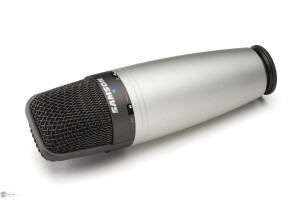
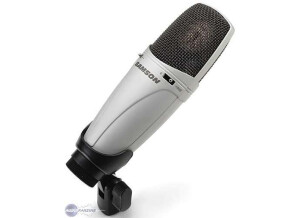
    (Originally written by windgong/translated from Audiofanzine FR) Large diaphragm condenser microphone. Cardioid, Omni and figure-8. Dual 1.1" capsules with 3-micron gold sputtered diaphragms. Hi-pass filter, 12 dB / octave at 100 Hz. Pad -10. 36-52-volt phantom power. Internal shock-mount. Plastic case included. The mic is well designed. It's quite heavy. OVERALL OPINION I'm a drummer/ percussionist and I use a couple of Samson CL8 as stereo overheads (MS or XY) for contemporary percussion research with drums and gongs using a Tascam HD-P2. For a cymbal-only recording (about 15 cymbals from splash to china of different brands, plus Paiste's percussive Flanger Bell and Mega Cup Chime) the sound is very clear and accurate with a cold and analytic character, but it delivers pleasant and authentic results. It doesn't emphasize the excessive response of China and percussive cymbal models. They are easy to use, produce a detailed sound and are able to highlight the sound of each cymbal type and brand out of a homogeneous ensemble (2 x Samson CL8 as overheads with a Tascam HD-P2 without filter or pad). As overheads for a drum kit (mix of Sonor Force 3005, S-Class, Delite and Tamburo Formula), the sound is also clear and accurate (especially with the toms), and the low-end response is tight so you don't need a filter (just a -10 pad). The overall sound is a bit cold (but not metallic) with controlled dynamics so that the CL8 doesn't overload when low toms or china cymbals are played harder. I record at 24 bits / 48 kHz because at 96 kHz, the Samson CL8 produce a way too detailed sound emphasizing details that you don't hear in real life, and I find this sound doesn't match the acoustic reality anymore. For example, I noticed a noise on the toms sound when drum rolls are played. You can hear it when the stick hits and bounces off from the drumhead. At 96 kHz the sound doesn't match real life anymore and exceeds our hearing capability, IMO. At 48 kHz, the recording sounds more authentic, natural and it doesn't add noise. This mic provides detailed results. (2 x Samson CL8 as overheads with a Tascam HD-P2 without filter but with -10 pad). Regrading the gongs, which aren't easy to record, especially in a large ensemble (15-20 gongs), the CL8s provide good results and nearly never overload, unlike other mics (especially with sounds that have a short attack and loud resonance and overtones). With a gong ensemble, the CL8 produces a controlled, linear and realistic sound. It's a quite transparent and faithful mic that colors the sound slightly (2 x Samson CL8 as overheads with a Tascam HD-P2 without filter, sometimes with -10 pad). As a summary, the Samson CL8 is a good and versatile mic offering a good value for money. It gives quiet good results for percussions recordings.

  • « Good Choice for Theatre! »

    These Samson SE50's are a solid choice for theatre groups! The earpiece design is a bit odd and a few people have complained about them being uncomfortable to me, but for the most part they seem to get the job done. The color is a big plus for stage use! For the price, these hold their own against headsets that cost 50-100$ more. Also, the included extra windscreens and multiple connections are quite handy. These mics will mate with very nearly any popular body-pack transmitter, just make sure that you tighten them down. They use an odd plug in then twist to tighten design that threw me off for a second. The sound quality is very good for a miniature condenser in this price range and they hold their own against some of my more expensive headset mics. As is par for the course with mics of this type, they can handle surprisingly high SPL's but if you scream into a mic 1 inch from your face you should expect distortion. I use these with a local theatre group and with some musicians and mic control and experience with this type of mic is definitely key to using these. Overall the SE50's are a relatively good choice for theatre or live music comparatively. I didn't choose these as my first choice but the company that I do work for decided that they would buy a few of these since they are a bit cheaper than what we had been using and I'm not dissastified with them. These are actually better than some other Samson wireless mics that I've used in the past. All in all, these SE50's are not a bad choice and you should be pleasantly surprised with them. One thing to keep in mind however is that you MUST clean these guys regularly. I suggest a diluted mix of rubbing alcohol. No one wants to slap on a headset mic with someone else's ear sweat stains on it! Especially if they are used for theatre productions, under those lights your performers will sweat and these guys can get icky!

  • « the Q7 is still better »

    The Samson Q8 is an upgrade form the Q7. It is a supercardioid dynamic microphone that will keep all of your feedback issues away. It does cost a little more than the Q7 but I still think its under-priced. The Q8 will give you warm crystal clear vocals for your live set or performance. I do think this microphone sounds better on a female’s voice though, females have softer and lighter toned voices. A males voice is deeper and more harsh, and the Q8 just does not respond the same to a males voice as it does to a females. This is where I would say that the Q7 was better because it sounded great on both female and male voices and tones. OVERALL OPINION On a male voice, the lower tones and frequencies are a bit harsh for some reason. I am not sure why because the Q8 and Q7 have virtually the same exact specs. The Q8 handles feedback better than the Q7, but the Q7 hands male vocals/voices better. So it could be considered a tossup between the two microphones but if you ask me I still say that the Q7 is better than the Q8. The Q8 has an impedance of 300 ohms and has a frequency range of 60Hz-16kHz. It does come with a microphone clip and a carry case. The Q8 is a solid microphone for a female’s voice, but if you are a male and want a good affordable stage microphone get the Q7. The Q7 will give you a better sound, and it will save you about 50 bucks in the process. If you want the Q8 because it has a better frequency range then go for it, but from my personal experience the Q7 is better. But the value for both of the microphones is great considering the money they cost. They are both affordable but the Q8 just is not as good as the previous Q7.

  • « Warm sound »

    The Samson Q7 is a dynamic vocal microphone that has a supercardioid pickup pattern. It has a built in shockmount and comes at a great price. If you are in need of an affordable microphone especially designed for a live show then the Q7 is the best one for that situation. For the Q7 to only be 90 USD I was surprised on how good it was. I have purchase several of these microphones about 2 years ago and they still work to this day, I don’t use them much anymore but they still get used from time to time depending on what is going on. The frequency response is 80Hz-12kHz and the output impedance is 200 ohms. You will experience close to 0 feedback because of the pickup patter that the Q7 has. This was my number one vocal stage microphone for about a year, and I loved using it because it was cheap enough that I didn’t have to worry about it if something where to happen. OVERALL OPINION If you are looking for a live microphone that has a good sound and has a nice and warm then look no further. The Samson Q7 is a high quality very affordable microphone that will bring your voice out crystal clear. Though I never heard anyone in s studio record with this microphone, it would not surprise me if it was good in that setting too. The value for the price of this microphone is amazing, I would expect this microphone to cost more around 150 instead of 90 bucks. The Samson Q7 is precise and affordable, what more could you ask for in a live microphone. I have even had this microphone dropped and stuffed in a box with a bunch of cords and it never got damaged or had any serious thing happen to it. It just keeps on working great no matter what the circumstances are.

  • « Monster for overheads on tour »

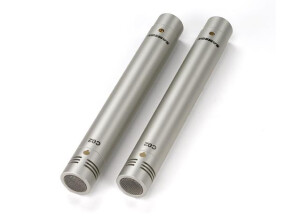
    Very simple matches pair of condensers. No filters or any excess features. Just two cheap matched pair mics. OVERALL OPINION No let's be clear. Nothing beats a pair of $700 shure mics for overheads in the studio. Nobody is debating that. I'm not going to write this review and tell you that a pair of Samson cheapo mics for a little over a hundred bucks can compete with a pair of mics over five times the price. But am I about to bring my $1000 set of matches condensers on tour with me? NO. I've tried before and they've been destroyed, stolen, you name it. So case in point, if I ever do drum tech work, I need a go to matched pair that's reliable and cheap. The Samson C02 set is just that. I'll start with the sound. They are very very clear. When I listen to a pair of overheads in a mix, I have a method for evaluating whether I like them or not. I isolate them in a stereo track. And I listen to them all by themselves. I listen to see if it sounds like I'm standing right above the drummer as he plays. (this is what the good pairs sound like) If I can hear that, it's a great pair. The Samson C02 comes pretty darn close to that and it's almost scary. No they aren't perfect and don't expect miracles, but for the money I'm impressed. Now, durability. These kinds of mics are at a disadvantage because not only do they get dropped the most, but they are also the most fragile sometimes. I see matches pairs all the time with dents in the grills and it gets annoying. People drop them. Okay. The question is, have these held up to me dropping them? Well yes. Although as far as I can remember I've only dropped them 2 or 3 times in the couple of years I've used them, they haven't suffered as a result. So I'm satisfied. If they break I'll write another review. Till then, you can bet I'll be using these on every tour I drum tech.

  • « A Controller for a Niche Audience »

    The Samson Carbon 49 is a new 49-key MIDI keyboard, most notably featuring a slot to insert an iPad for use with mobile software. The keyboard, while serving some functions excellently, is lacking in other areas that make the keyboard a perfect fit for some while not at all what others need. First of all, the keyboard is the expected size comparable to main competitor M-Audio Keystation 49, though the iPad slot on the far front side seems to distend the end somewhat. At around 6 pounds, the keyboard is easy enough to transport but a little uncomfortable for lap play, which slightly counteracts the bonus of the iPad slot. The machine's powering is a bit strange--it draws power from a USB type B interface, but when used at a high keystroke frequency with an iPad (which it must draw power from with the Apple Camera Kit) the user is occasionally met with a sound-stopping "insufficent power" message, throwing a kink into some high intensity pieces. While the keyboard does contain a dedicated MIDI out, it still must be receiving power through the USB port to send through it, making control of non-USB controllable devices a bit awkward to power. MIDI mapping is somewhat difficult and requires a thorough read of the manual, and quite a bit of menu-diving is necessary to achieve the desired results. The keyboard itself plays fairly well, with semi-weighted keys that occasionally feel too quick or too slow on the return when playing intense, slow, or pieces with lots of note sustain. The 1/4" input jack for sustain and expression pedals function well, and the pitch bend and modulation wheels are surprisingly well-built. The volume slider and data knob, while a bit unpleasant to tweak, they are built very sturdily. The standard octave control is accompanied by a useful semitone transpose control, and both have light-up buttons. The octave or transpose range is displayed on the three-digit LED, and the other MIDI controls have their value (from 0 to 127) displayed on this when tweaked. While the Samson Carbon 49 fulfills its job as a basic DAW keyboard, it has a few trip ups when used with its iPad function that makes it feel overloaded and underprepared. Still, it is available at a very reasonable price and useful for people looking for an entry-level MIDI keyboard with iPad and external MIDI support. 3/5.

  • « Be mobile! »

    The Samson C01U is a large condenser microphone with a 19mm diaphragm. It is pretty much just a plug and play type of microphone, as long as you have a 2.0 USB port than you are good to go. I only used this microphone for some small recordings and podcast while out with my laptop. It has a cardioid pickup pattern and does a great job of keeping off those background noises. It comes with Cakewalk which is a program that I already had, so I didn't have to install it again. But installing and working with CakeWalk Sonar LE is very simple. OVERALL OPINION The C01U comes with a microphone stand (desktop stand) a microphone clip, USB cable and a pouch to carry it all in. The recording quality that I experienced with this microphone was a little colored and unnatural, I expected it to be though considering it was a USB microphone and at this price I could not expect much more. But it was still pretty clear and clean, it did exactly what I needed it to do. When it comes to USB microphones I always second guess purchasing them because I have had some really bad ones in the past. This C01U is definitely better than another other USB microphone that I have used because it does a great job of not picking up sounds from all around the room. Normally when I would record on this it would be in places where external sound is definitely a factor. The C01U does a pretty good job not picking up those sounds. You can use this microphone in pretty much any program/DAW that you want to use it in. It will be plug and play no matter what software you use with it. It is very mobile and eliminated the need to carry around a preamp/interface which I was very fond of. I still own this microphone; I do not use it all the time though just when I am out with my laptop. I recommend it if you just want to do some small demo recordings or if you are very mobile. I would not suggest using a USB microphone as your main microphone though.