Log in
EN
FR

Malekko

Series

61 products found

Categories
Series
Filter
Sort by
Evaluation
  • Reviewed or not
  • Editor’s award
  • Reviewed by Audiofanzine
Availability
  • Available or not
  • Sold new or used
  • Sold new
  • Sold used
Must-have products
  • All products
  • Flagship products
  • Best rated products
  • Hot products
  • Popular products
Price
  • Freeware
€
Clear
Sort by
  • Popularity
  • User ratings
  • Price - low to high
  • Price - high to low
  • Used price, increasing
  • Used price, decreasing
  • Name (from A to Z)
  • Name (from Z to A)
  • Added on
Choose a series
Sort results
  • Popularity
  • User ratings
  • Price - low to high
  • Price - high to low
  • Used price, increasing
  • Used price, decreasing
  • Name (from A to Z)
  • Name (from Z to A)
  • Added on
Filter results 61 results found
Evaluation
Availability
Must-have products
Price
  • Freeware
Show results

The best Malekko reviews

The reviews Audiofanzine members found the most helpful.
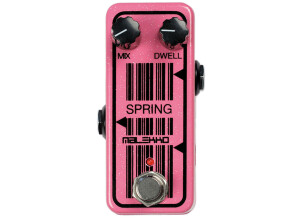
  • « Beautiful spring reverb »

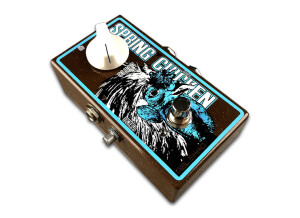
    - One simple knob for “cluck” - High quality components - Top notch Malekko construction, hand soldered - True Bypass - Powered by 9v battery or standard Boss style adapter - Purple LED indicator - Discontinued and rare - Compact - Killer graphic UTILIZATION Just about the easiest pedal on the market to use. Just one knob, labeled “cluck.” It basically controls both the intensity of the reverb as well as the length of the decay time. These are actually digital, as are most reverb pedals, despite a lot of opinions to the contrary. No springs to worry about, and they won’t spiral out of control into an analog mess. A cool mod for these is the addition of a dwell mod which Malekko will install for a fee. It turns them into a more ambient type reverb. Certain limited edition versions of the pedal come with the dwell mod stock. SOUND QUALITY The sound of the Spring Chicken, is both unique and difficult to describe. I’ve never heard anything like it on another reverb pedal. Almost like a true spring reverb with a little something extra. The decay isn’t really consistently downwards, there are number of peaks that almost sound like echo/delay within the trajectory. Definitely not your standard ambient/hall reverb. I understand that the addition of the dwell knob can turn it into a more atmospheric pedal, but have never used one of those and can’t verify it personally. But for any kind of classic rock, blues, etc, this makes a really killer reverb pedal. OVERALL OPINION Probably the coolest sounding spring style reverb I’ve ever used. Unfortunately, these are now discontinued, and pretty pricey/difficult to get a hold of. Ebay prices seem to chart between 250-300, and I’ve seen the limited edition ones go for over $400. That said, I’ve picked two of these up over the years for $150 each, so it’s quite hopeless. Other solid reverb pedals include the Strymon Blue Sky, Eventide Space, and Neunaber Wet, and Dr. Scientist RRR. Malekko has since released the Spring Chicklet which isn’t quite the same. There isn’t really anything quite like the Spring Chicken (and it looks incredible on your board).

  • « The Best Analog Delay for the Money! »

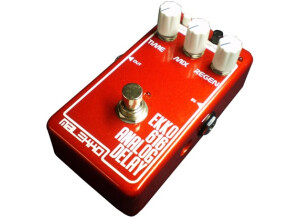
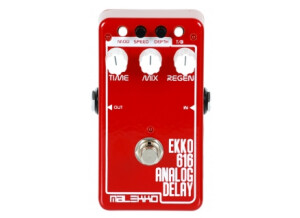
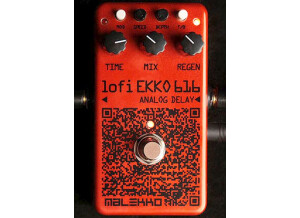
    - 650 milliseconds of delay time - Controls for speed, volume, and feedback (labelled: time, mix, regen) - Switchable true/buffered bypass - Switchable modulation (controls for speed, depth) - Powered by 9v DC (-) input, or 9v battery. Draws 200 mA of current - Internal gain/volume trimpot UTILIZATION Malekko has done an excellent job packing an impressive array of features into a compact pedal that is simple to use. Everything is clearly labelled, sturdily built, and intuitive to control. It will work with standard boss style adapters which is very convenient. That said, the controls are very sensitive (true analog circuitry), and will take a little while to get used to and dial in. It is well built with high quality components (jacks and plugs are top notch), and in my experience, Josh at Malekko is happy to help you out in the event that any issues arise. SOUND QUALITY The consistency of sound quality is the most impressive aspect of this pedal. I've used it with both high gain amps (in the loop) as well as in front of cleaner vintage fenders, with single coils, humbuckers and soapbar pickups. The 616 is very difficult to clip out, and is a great analog delay for pretty much any setup. This delay will not deliver perfect repeats, if that is what you are after, look into something digital. On the other hand, it does produce warm and organic echos that will disintegrate gradually in a very musical way. My one issue with the pedal is the ease with which it can be sent into wild oscillation. Some players like the crazy sounds it can produce, but I found it wasn't very useful in most types of music. The modulation controls are similarly sensitive, they sound fantastic at lower levels, but get wild very easily. That said, once it is dialed in to optimum settings, it sounds fantastic. OVERALL OPINION Overall, for the relatively low price these can be found for, it is unbeatable. I have yet to find a similarly priced delay that will sound this good, and I have been through many. The 616 sounds great with any setup, is packed full of features, and is very easy to use. Aside from a few delicate control issues, it is fantastic. It will not sound as lush as some higher end delays, but gets you pretty close without breaking the bank. Highly recommended.

  • moosers's review

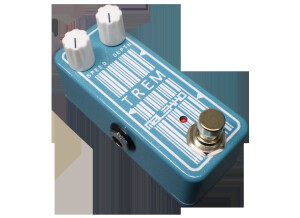
    The Malekko Heavy Industry Trem is a super small tremolo pedal suitable for use with all electronic instruments but designed for electric guitar. The pedal is an analog one, consisting of 1/4" jacks for input and output and runs of a standard nine volt power supply. The pedal is definitely smaller than any pedal I've seen out there other than other pedals made by Malekko Heavy Industry. UTILIZATION There's not much at all to using the Malekko Heavy Industry Trem pedal. It only has two parameters for speed and depth, which is a pretty standard make up for tremolo pedals and are the same parameters you'll find on Fender amps for the same effect. The pedal probably isn't big enough to hold any more parameters anyway! SOUND QUALITY The Malekko Heavy Industry Trem definitely gives you that classic tremolo sound much like that found on vintage Fender amplifiers. You don't need to do much at all in order to get a good sound from the pedal, which is one of my favorite aspects of the pedal. You control it to get the sound you want from it rather than controlling it to get a good sound from it, if you know what I mean. I've used the pedal with a Fender Telecaster and I don't remember the amp, although it was obviously not a Fender since we were using a tremolo pedal. OVERALL OPINION While not the most versatile tremolo pedal out there, it really doesn't matter too much as the Malekko Heavy Industry Trem has a great overall sound. I also love how small this pedal is as it makes it easy to bring around if necessary. It's also the cheapest pedal in this line of pedals from Malekko Heavy Industry, at $100 US dollars. There are definitely cheaper and more versatile tremolo pedals out there, but this one has a great sound that is hard to beat, even if it's not a open to manipulation as others out there. I'd recommend checking out this pedal and the others in this super small line of pedals for sure!

  • « From Simple Tremolo to Complex Sequence-Type Patterns »

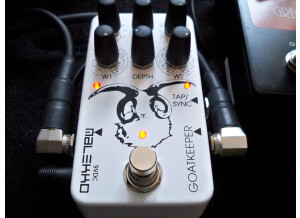
    SOUND: The Goatkeeper is rather quiet, even when combined with a high-gain amplifier (there isn’t too much ‘swooshing’ in the background when not playing, which you often hear with tremolo-type pedals). Also, the quality of the effect is rather excellent, whether turned up low (to color the original dry tone) or to produce a full-on effect with maximum depth. Obviously the sound of your guitar, bass or synth will alter with progressively more as you increase the depth, but not in a negative way. Third, being able to describe the nature of the sounds possible with the Goatkeeper does not do it justice, which is why there is a demo video accompanying this review. Even with the depth up only quarter way, the effect is fairly pronounced; and in most instances you don’t need the depth/mix much higher than 12-noon for an intense result. Essentially, the Goatkeeper can do some interesting things to a guitar tone, beyond the usual single tremolo classic results (e.g., slow Pink Floyd Gilmour to fast Surf Rock). With the depth only quarter way it can pack a punch with high-gain Metal rhythm and create unusual pulsating or percussive results that are truly unique. Of course, much of this has to do also with how you combine the two stages of this dual-tremolo pedal, as explained in the General Use section. OVERALL IMPRESSION: The Gatekeeper is a serious contender if you’re looking for a tremolo that is beyond a typical tremolo. At $225 USD it is a middle-priced pedal, capable of classic tremolo and into the realm of synth sequencing patterns. Developed by an electronics company that makes both guitar pedals and synth-based gear, you know you’re getting the real deal whether using the Goatkeeper with a guitar, bass or synth (along with some freaky results if used on vocals). The range and diversity of the Goatkeeper, besides its quiet operation, make it nothing short of impressive as you mimic some basic classic tremolo or delve into the other three modes: Sequential, Composite or Modulation (see general use for explanation). Even with the same settings (sine waves, repeats, depth and rate) there are different flavors and results, but begin mixing and matching the waveform and repetition parameters and it doesn’t even sound like the same pedal. The potential complexity of the Goatkeeper may scare off the plug-and-play crowd, but for those looking to experiment and create unique patterns and sounds this pedal is a keeper. GENERAL USE: There are two master controls (besides the footswitch engaging and disengaging the pedal) – the Depth (the amount of mix with the dry signal) and the Rate (how fast the tremolo works). Now, there are two different stages or tremolos in this pedal, and if you keep to just the first stage you achieve some pretty classic tremolo effects while using one of five waveforms (sine, ramp up, ramp down, big square and pulse). There is a sixth wave option which is random. You then control how many repeats the tremolo has, from one to twelve, with a thirteenth ‘random’ option. And so, just with the one stage you can go from fairly basic to very interesting and wacky as the waves play randomly with a random number of repeats. To make things more interesting, you can combine a second stage using any of the waveforms and any number of repeats (from one to eleven). How you combine the two stages for some unusual and interesting patterns vary significantly since different waveforms and repeats have different outcomes generally, but also different outcomes specifically based on three other types of settings. Besides the basic tremolo first described, you can run the two stages Sequentially (the two stages run one after the other). You also can create a Composite (the two stages run at the same time). Finally, there is a Modulation combo (the two stages run together, but the second waveform modulates the first waveform). This is not as complex as it sounds, but the Goatkeeper definitely is not a simple pedal with a few options. It takes a solid afternoon of having fun with the pedal to get to know its characteristics and how it can affect your instrument. This is true not only relative to all the possibilities and the pattern effect you’re trying to create, but also how much depth/mix you apply and its rate of speed. OTHER DETAILS: The Goatkeeper measures 5.5 (L) x 2.25 (W) x 2.5 (H) inches or 13.97 x 5.7 x 6.35 cm and weighs 10 ounces or 290g. Its all-metal chassis has a powder coated white paintjob with black screen writing/graphics. The footswitch feels solid with a click when engaged/disengaged, although there is no audible clicking in the signal. The waveform/multiplier knobs are detented (they click in place for each position) for quick and accurate settings and the depth/rate knobs feel smooth and solid when turned. There are separate LEDs to show the waveform intensity of each stage, throbbing red in time with the Rate or speed. The Goatkeeper can work on a 9VDC battery or a standard power supply (negative tip) while drawing 50mA of current.

  • « Doom tone in a box »

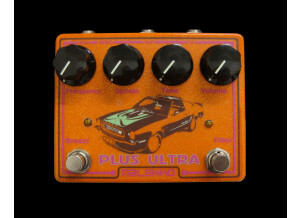
    This is an old school Fuzz pedal if you cant tell by the 70s car on the case. Malekko Heavy Industry is a pedal company out of Portland Oregon in the USA. They special in old school boutique pedals with cool names. This pedal is the Plus Ultra 213 and it has tons of fuzz tone. It has a couple cool features that make it more versatile as a fuzz pedal if that is even possible. The controls are pretty normal for a fuzz for the most part. Across the top you get Frequency, Sustain, Tone and Volume. You get two switches on the pedal. One turns the pedal on and the other is a all pass filter that is tied in to the frequency knob. UTILIZATION The pedal itself is kind of a pastel pink color. The writing on it is purple which kind of makes it hard to read. There is no way you would be able to read the pedal in a dark room. The knobs are clearly marked so you can see those. The LED's on the pedal are red and one tells you when the pedal is activated and the other tells you when the Filter is on. There is an extra jack up top for an expression pedal. You can tie an expression pedal into the filter sweep and it takes place of the frequency knob and you can rock out wah style. I preferred to just set the frequency where I liked it. The filter sweep that way gave a huge lead boost. SOUND QUALITY This pedal is really good if you are into doom more stoner music. It has that classic gain structure with just enough of that sour top end crunch. You can get a wide range of fuzz tones as well. You can get a really nasty fuzz tone if you turn the sustain all the way up. If you turn the frequency knob all the way down and hit the filter its like having a fuzzed up bass guitar hit the sound. With the frequency knob turned up its like you have a cocked wah in front of the fuzz. The frequency shift can give you a nice lead boost. Turn up the tone knob a bit and you get a dryer desert rock fuzz tone. Turn down the fuzz knob and you get more of a blanket over the amp type of sound. OVERALL OPINION A pedal like this could replace a couple pedals in someones pedal board. It can cover a wide range of fuzz sounds from really thick and solid to gritty and nasty. With the frequency shift function you can get an extra boost on the sound that puts this fuzz over the top. The ability to use an expression pedal with this unit makes it a kind of pseudo wah as well. A pedal like this isnt cheap but for the features and the built quality it is not bad at around 200 USD.

  • moosers's review

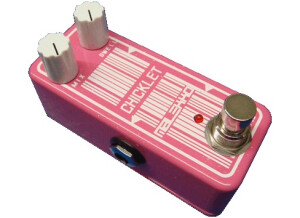
    The Malekko Heavy Industry Chicklet Reverb is a super slim guitar effects pedal. It's definitely the smallest reverb pedal I've seen, hence the name "chicklet." I guess there are a few different pedals of this size in this series, but to date the only one I've used is the Chicklet Reverb. The pedal has a standard 1/4" input and output as requires power from a nine volt power supply. It isn't going to be rack mountable since it's a pedal. UTILIZATION Using Malekko Heavy Industry Chicklet Reverb is really easy no matter what sort of background you have when it comes to pedals and reverb in general. The two parameters that are found on the Chicklet Reverb control your mix level and dwell, which is essentially your decay or how long the effect will last for. Since that's all there is to using the pedal, a manual shouldn't be necessary. SOUND QUALITY A client recently brought in the Malekko Heavy Industry Chicklet Reverb in his guitar rig, so while I don't an in depth account with the Chicklet Reverb, I've heard it and seen it used enough that I know exactly what it can do. For starters, it's got a very realistic sounding reverb, although there isn't very much room for tweaking. It's great for getting a quick and simple reverb sound, but this isn't going to be as versatile as many of the modern reverb pedals are today. I guess you wouldn't expect too much on that front however, considering how small of a pedal it is. It does have an overall rich sound to it, although I'm not sure what type of reverb exactly they are trying to emulate. A great feature of the pedal is that it will continue with it's decay even after you turn the pedal off, so you won't lose that trail if you want to disengage the effect at the end of a lick or something. OVERALL OPINION Malekko Heavy Industry's Chicklet Reverb is a nifty little pedal that is smaller than most pedals out there that I've seen. It has a very good sound quality, but since it doesn't have that many options it is somewhat limited in the sounds it can achieve. The price also isn't the cheapest for a pedal of this size and with this flexibility, but it isn't too expensive where everyone wouldn't be able to get it if they wanted a reverb pedal. Personally, while I like this pedal a lot, if I'm going to be spending over $100 USD on a reverb pedal, I'd go with something with a bit more options...