Log in
EN
FR

Studer

73 products found

Categories
Filter
Sort by
Evaluation
  • Reviewed or not
  • Editor’s award
  • Reviewed by Audiofanzine
Availability
  • Available or not
  • Sold new or used
  • Sold new
  • Sold used
Must-have products
  • All products
  • Flagship products
  • Best rated products
  • Hot products
  • Popular products
Price
  • Freeware
€
Clear
Sort by
  • Popularity
  • User ratings
  • Price - low to high
  • Price - high to low
  • Used price, increasing
  • Used price, decreasing
  • Name (from A to Z)
  • Name (from Z to A)
  • Added on
Sort results
  • Popularity
  • User ratings
  • Price - low to high
  • Price - high to low
  • Used price, increasing
  • Used price, decreasing
  • Name (from A to Z)
  • Name (from Z to A)
  • Added on
Filter results 73 results found
Evaluation
Availability
Must-have products
Price
  • Freeware
Show results

The best Studer reviews

The reviews Audiofanzine members found the most helpful.
  • moosers's review

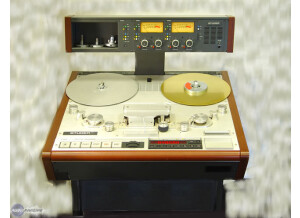
    The Studer A721 is a tape cassette deck that I have used for transferring cassette tapes over to digital form. However, this was intended for other use when it was made, but since no one really uses cassettes anymore, it is now most useful for transferring old tapes into digital audio. I have this hooked up to a Pro Tools HD rig via a patch bay and we use it at the studio solely for transfers. The unit has served us well for transferring tapes and definitely does its job well, but it is quite limited in its use and really only comes in handy once and a while. The Studer A721 isn't hard to set up and everything about it is pretty user friendly. There are a decent amount of buttons and parameters, but the typical functions are easy to find and operate. I can really only speak about using this as a device for transferring cassette tapes to a digital means because I really don't have any experience with using it for anything else, which isn't to say that it couldn't be used for other things, I just have no use for it otherwise. Since these are obviously no longer made, they are somewhat hard to come by, but won't cost all that much if you can find this particular model. There are a few other models of the Studer tape deck like the A710 which I probably like better overall because it is designed better in my opinion. If you are looking for something to transfer cassette tapes, this will definitely do the job and is definitely okay for simply listening to tapes, but I wouldn't recommend expecting to get anything else out of the Studer A721. Overall, this is a machine that will die out in the coming years but does still serve a purpose.

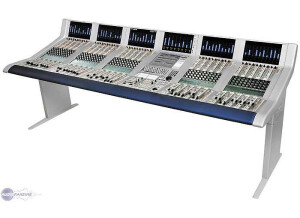
  • « On-Air 2000M2 as multitrack recording console »

    These digital broadcast consoles can be used in traditional music recording studios with the right configuration of modules and a LOT of wiring. Mine started out life in 2002 as a 12 fader producer's console for Mississippi Public radio, was never used for on-air or regular general production. A very low mileage unit only used for a once a week program. The eBay seller had stripped out the modules, I had to track down all the ones I needed over a period of time from multiple sources. I did later find an additional bucket section, turning it into an 18 fader console. I decided to configure the single left bucket for all the line level sources, so settled on 2 stereo analog modules, an analog hex module, 2 digital modules, and a digital hex module. The left 3 faders are for 10 stereo analog sources, and the right 3 faders 10 digital sources. The two right hand buckets have 2 each stereo analog modules, and 4 mic modules, totaling 8 stereo and 8 mono inputs. The mic inputs are normaled to the studio XLR plate, and the mono line inputs are normaled to the multitrack outputs. The analog inserts on the mic inputs are all brought out to a patch panel. The Control room mic and guest mic go through external mono pre/processors and come in on faders 7 & 8. The last two faders (17 & 18) are fed from stereo mic pres for uses like drum overheads, keyboards, computers, etc. Using the snapshot feature, the console can be switched from tracking mode to mixdown with only 2 keystrokes. As far as features and sound quality, this quarter century old console can still hold its own against most modern broadcast consoles. These are at the age where many of the caps are failing, but fortunately it's not too difficult to replace them. Some of the metalwork on these consoles had faulty plating, I've seen a number of examples of the plating flaking off. Not really a big deal, but doesn't look good. I have the matching studio talkback box, which is a nice option to use with the studio talent. Currently still using the hot running on-board power supply, but I have 3 of the outboard rackmount supplies to build the auto-redundant setup. Still need to build the cables for that. I'm trying to build an inventory of spare modules to keep this console running well into the future. The On-Air 2000M2 console is underappreciated in my opinion and can be successfully used in many situations, not just broadcast.