The Flexi 50 is a handbuilt tube amp made in Seattle, Washington by a mad scientist by the name of Andy Marshall. The power output is switchable between 50w and 20w. Unlike many other amps that have this feature, this variation in output power is achieved by changing the HT supply voltage to the tubes rather than a pentode/triode switch. This keeps the tone and response of the pentode operation at a lower volume. There is a switch on the back to select between 2/4 Ohm and 4/8/16 Ohm output impedances. Very useful for those who have oddball 2 Ohm cabs. There's a switchable boost function with level and tone controls. It can be fairly transparent or cut/boost high end for different tones. Very useful for live situations as it can be controlled by a footswitch in addition to the front panel switch. To keep things simple, there's only one input but there's a switch to change between high and low gain signal paths. It's not switchable via the footswitch unless you configure it to switch in/out with the boost. The master volume is switchable by either a front panel switch or footswitch. Great for a lead boost if you're already running it fairly high. The rest of the controls are volume (gain), treble, middle, bass and a cut knob. The tone stack is of the Baxandall type and as such allows for great flexibility and precision. I'm not sure where in the circuit the cut knob is but it acts much like a standard presence control. There's also a line level series FX loop that works great for rack FX and a transformer isolated line out with a level control that is awesome for those who run dry/wet stereo rigs. There are also external bias test points that make biasing a simple 30 second operation, a god send due to the ability to switch out power tubes as you wish. The O'Netics transformers are also shielded for low noise. UTILIZATION Dialing in a good sound is extremely simple. Some sample settings are included in the manual for those who would like a good place to start. The manual is great and explains limitations and valid tube substitutions. It also explains how to bias the amp with precision and consistency. If you ever lose it, a copy can be found on the THD website very easily and the tube substitutions are listed on the chassis. SOUNDS I use either a '56 RI Strat with Lollar Blackface pups or a Standard Strat with a BareKnuckle VHII in the bridge. Both sound killer. I find that the mid knob likes to be run fairly high, ie past 2 o clock, the bass knob likes to be kept low when using distortion and higher when using cleans. The treble knob is similar, as is the cut knob. The boost tone can be set pretty much anywhere and sound great, it just depends on what you want out of the boost. The touch sensitivity is outstanding. With the gain all the way up in high gain mode with the boost on, you can clean it up completely just by using your volume knob and the tone doesn't thin out or muddy up like many amps. The boost function does seem to add a bit of compression, though it's nothing too much. With 6L6 or 6V6 power tubes, I can get a nice Blackface Fender type tone with some scooped mids and higher bass/treble/presence. They're not exact, particularly due to the Black Back speakers I use but they're close enough for live use and could be dialed in further for studio use. With EL34 power tubes, classic Marshall and hot rodded Marshall tones come very easily. Mids turned up, bass set with moderation and treble/cut set to whatever I'm feeling that day, classic Led Zeppelin and AC/DC through Van Halen and Ratt tones come very easily. All with fantastic clean up ability. Clarity and note separation are killer. Complex chords can be played with moderate gain settings if you've got articulate pickups. OVERALL OPINION The thing I like most about it is the build quality. The THD stuff is built by FAA certified assemblers and it shows. The very first day I had it, I managed to drop it down a flight of stairs. Other than a few minor scratches and a slightly bent corner of the steel shell, it worked flawlessly afterwards. The steel corner was very easy to bend back into place and looks just like new now. The thing I like least about it is that the variety of tones are a bit difficult to access live. Switchable channels would be great. The value for a studio musician is killer. This could easily replace 2 or 3 amps that the muso would no longer have to cart around, saving set up time. For those with no experience in that area, time is very valuable in a studio. A gigging musician may not like the lack of on the fly versatility but to be honest, it doesn't make near as much difference in that situation. You could easily do a gig with varying cleans and heavy tones throughout with the Flexi, it just won't be your ideal clean or dirty tone. The amp sounds consistently great and I wouldn't worry at all about it all of a sudden sounding bad right before an important gig. I didn't really try any similar amps before this as I wasn't looking for this type of amp when I bought it. I do have experience with many similar amps though and I can say the Flexi easily hangs with the best of them. After owning the Flexi for a few months, I'd easily buy it again at the price I got it at and probably even the new price, though I don't really buy music gear new. It's honestly the only single channel, vintage style amp a guy could ever need.
Super simple single output tube, 2 pre-amp tubes lunch box style amp. 2 inputs, volume, bass, treble, attitude, attenuation controls. Hot Plate on/off, lo/hi power, standy and power switches. On the back it's even more simple. Single speaker jack, impedance selector, line out with level control, and instrument level/line level switch. UTILIZATION Super easy amp to dial in as long as you use your ears and not your eyes. Extremely sensitive to guitar and even mores input volume changes. SOUNDS Depending on tubes and setting anywhere from the neighbor hood of like an old Bogen PA head used for guitar, or Oahu pedal steel amp, You can get to behave anywhere between a Tweed Champ to a 20 watt Marshall. OVERALL OPINION One of the hippest aspects of this cool little amp is that you have endless options in the tube swap department. It can get bright, but that's part of having a bright cap on the volume control. Lower the gain structure with lower gain pre-amp tubes so that you can turn up the volume more and the brightness isn't going to be any issue. Depending on power tube you're looking at anywhere from 2 to 18 watt. Small tubes have to run in the lo voltage setting in order to not burn out from the higher current draw of the hi voltage string. Big bottles you can run at either so an EL34 will get you either a 7 or 15 watt amp. Another cool feature is that the speaker jack shorts to ground. So when nothing is plugged in you can use it as a loaded down head. UniValve into a 100 watt power amp into a 4x12 is a thing of beauty. Touch responsive and manly. Impedance selector has a setting for 2/4 ohm and another for 8/16 ohm loads. And unlike tapped transformers in this case you use all the windings of the transformer's secondary all the time. in the 2/4 setting its in parallel, in the 8/16 it's in series. So technically the 16 ohm and 2 ohm settings are mismatches but other than s slight volume drop it's all good.
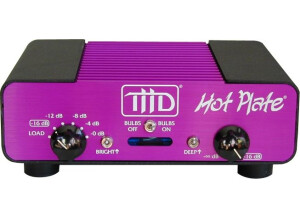
We all know that tube amps sound best cranked, and we all love big amps because on a 100 watt amp that bottom simply sound much better than on a 10 watter. Unfortunately once you get those amps to levels where the power stage actually starts to “breath” it gets loud. Loud enough that your band mates will bet angry, and the sound man will take you out of the mix. This is where attenuators come in, they take the amps signal from the speaker tap and dissipates it into...well hot air. The layout is simple, on the back you have 4 1/4 inch jacks. They are input from amp, speaker 1 and 2, and line-out plus a line out control. Up front you have a 6 position stepped selector switch, which attenuates the signal down from bypassed (labelled 0dB attenuation), in 4 dB decrements. Once you get to the -16dB setting it will bring the continuos control on the right into play letting you gradually go from 16 dB of attenuation down to a whisper. Side effect however is that if you’re attenuating that much the amp’s interaction with the speakers are gone and the tone becomes anemic. So, I wouldn’t suggest this for bedroom usage but rather to tame a loud amp. In addition to this you have a bright and deep switch to inrease the frequency you loose when turning down. Same concept as your car stereos loudness button at work here. Now if you’re needing a very quiet volume out of your loud amp the 6th position of the attenuation dial...LOAD is where you want to be. The just send the line-out to a power amp, effects return of another amp or into your recording software with a speaker simulator plug-in and you’re good to rock that amp at whisper volumes with great tones.
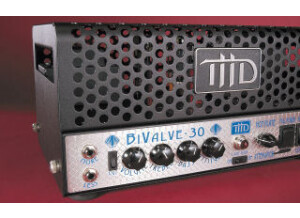
THD is really known for their attenuators when you need to bring down the sound of a non-master volume amplifier such as a martial sexy. They have really taking a good hold on the market as far as attenuator's go. Now I'm starting to see more products being developed by his company and some heads in the mix. This is one of those amplifiers has a decent sounding tone based around EL 34 power amp tubes. This amplifier is a 30 w class a amp. It is a single channel hand built amplifier that has your basic EQ control knobs of volume, treble, bass. It also have an attitude job which is basically a boost and also it's famous THD attenuator bill right in so you can drop the volume down more usable bedroom standards. UTILIZATION Features THD BiValve-30 30W Class A Amplifier Head 30W Class A amplifier Single channel Hand built Accepts almost any preamp and power tubes in any combination Ships with 3 - 12AX7s (preamp) and 2 EL34s (power amp) More and Less inputs Volume, Treble, Bass, and Attitude knobs Built-in Hot Plate output attenuator SOUNDS These amplifiers can be very British voice tones. So if you're looking for something that could be closer to the Orange amplifiers, or Marshall, or hiwatt amplifiers and this is getting a good alternative for you. It really didn't get the American clean tone or the American high gain tone I cannot hear from Mesa boogie do you really going to get a decent saturated British style sounds. So if you're looking for that type of tone and this is a decent amplifier. OVERALL OPINION One cool selling point on this amplifier isn't little lunchbox casing. This amplifier is basically a size of a small kids lunch box they were carry to school. These lunch box style into cars are becoming very popular in recent years because everyone's looking for a smaller road ready in mobile amplifier. And since it's only 30 W within attenuator, you can get some very low in manageable sounds for recording or for low silent style playing in your home or office.
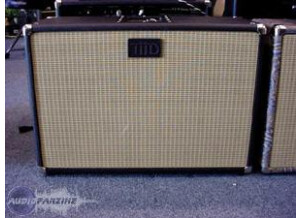
I bought this cabinet used after reading many glowing reviews in Guitar magazines 15 years ago, and ti this day it still is my go to cabinet. It’s a very small, light, slot ported 2x12. Made out of birch ply. It had a very even response with the Celestion Classic Lead 80s modded to THD Long Horn speaker specs. But that speaker didn’t work for me for close miking with a Shure SM57. Over the years I’ve been through lots o different speakers in this cab from Celestion Greenbacks which funnilky enough sounded more like an Alnico Blue than a Greenie, Celestion H30 which were missing bottom and had too much top, a set of vintage H30 which sounded quite lovely and nothing like the re-issues. To Emminence Red Fang Alnicos which were a lovely speaker, from there I wanted an Alnico that was able to stand more than the 30 watts that the Red Fang is rated for which brought me to the Ceslestion Gold. I used that set-up for like 3 years, adn after that I settled on Celestion G12-H65s, which is like a less bright Greenback in this cab. Some where along the way I rewired the standard set-up of 2 parallel jacks that lets you piggy back into a second cabinet whne used with an amp with a single speaker jack. Now it was two inputs so I can use it as a regular 8 ohm mono cab, or a 2x16 ohm stereo cab for my rack set-up. I’ve been through numerous 2x12s with numerous speakers from Rivera Q-cabs, Guytron closed back, Mesa Recto cabs, etc... but none of them ever did what the THD 2x12 was able to. Not wanting a 4x12 behind me. The THD cab doesn’t sound like a 4x12, only a 4x12 does, but unlike other 2x12s it isn’t missing the bump on the bottom around 110 Hz, and that sems to make all the difference for me...regardless of this years speaker choice I load into it. Only downside it's slightly narrower than my marshall head.
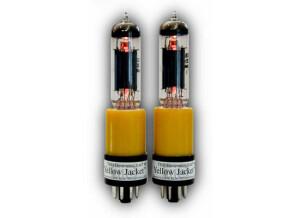
The THD Yellow Jacket is an adapter to use EL84 type tubes in amps that use 6v6/6L6/EL334/6550/KT66/KT77/KT88 power tubes. This is the easiest way to mod your amp, plus it’s a plug and play reversible modification. They drop the voltage and current the tube sees, this way you can use a smaller tube in place of a bigger one without toasting it. In addition to that it will let you the EL84s pin-out which is a 9 pin tube in place of the regular octal 8 pins. What does it sound like? Depends on what you start with, as a rule it makes your starting point half an AC30...sonically. They come in numerous versions, for grid biased amps, like Mesa, marshall, Fender type stuff, for cathode biased amps like Fender Princeton and Champs, as a non power reducing version of cathode biased amps, etc... So back to tone...I used to have this 72 marshall Super Lead was ungodly bright. With a Strat I could never use the bridge pick-up, until I put some Yellow Jackets in it. The ear piercing upper mid spike was replaced with a bell like top end, and I was actually able to finally use that amp on the bridge pick-up with my at that point fave Strat, which was a Suhr Classic. The other cool thing about the Yellow Jackets is that you can...in amps that run 4 power tubes run them together with two of the original tunes. This 2+2 set-up in a Marshall or Fender Twin will give you the best of both worlds. With the big bottles taking care of the bottom and punch, and the EL84s delivering the sustain and top-end. And of course the smaller tube reduces volume as a side effect...a Super lead with 4 yellow Jackets foes from 100 watts to 60, run a pair of Yellow Jackets only and you got a 30 watter, run it with 2 Yellow Jackets and 2 EL34s and you have a 80 watter.