Log in
EN
FR

Acoustic guitar pickups

143 products found

Filter
Sort by
Evaluation
  • Reviewed or not
  • Editor’s award
  • Reviewed by Audiofanzine
Availability
  • Available or not
  • Sold new or used
  • Sold new
  • Sold used
Must-have products
  • All products
  • Flagship products
  • Best rated products
  • Hot products
  • Popular products
Price
  • Freeware
  • Low-cost (< $100)
  • Mid-range ($100 - $250)
  • Premium (> $250)
€
Clear
Sort by
  • Popularity
  • User ratings
  • Price - low to high
  • Price - high to low
  • Used price, increasing
  • Used price, decreasing
  • Name (from A to Z)
  • Name (from Z to A)
  • Added on
Sort results
  • Popularity
  • User ratings
  • Price - low to high
  • Price - high to low
  • Used price, increasing
  • Used price, decreasing
  • Name (from A to Z)
  • Name (from Z to A)
  • Added on
Filter results 143 results found
Evaluation
Availability
Must-have products
Price
  • Freeware
  • Low-cost (< $100)
  • Mid-range ($100 - $250)
  • Premium (> $250)
Show results

The best Acoustic guitar pickups reviews

The reviews Audiofanzine members found the most helpful.
  • « Budget acoustic pickup »

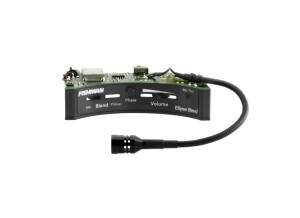
    Fishman is well known for their acoustic guitar pickups. The Infinity is a budget acoustic pickup add on that is easy to install on the under saddle of your guitar. The pickup needs a small hole to be made through the top of the guitar near the bass end of the saddle slot. You will also need to make a hold for the end pin jack. These are the only permanent things you need to do to install this pickup. Many acoustic pickup add on units require extensive modification to your guitar. Some need large holes to be cut and whatnot. A control unit with a tone and volume control with a bass boost button is attached to the inside of your guitar with some adhesive. I have found that this adhesive can wear out if you are playing in humid conditions. This may cause the control unit to become undone and bounce around inside your guitar. The battery pack for the 9v battery is held on with velcro. The pickup has a built in noise reduction system. It rejects the feedback you would normally get amplifying a guitar like this. The feedback reduction system works really well even at high volumes. You can trust this setup not to give any feedback even in live settings. The clarity of the pickup is really nice. You can really hear every note and nothing gets lost in the sound. The pickup picks up the dynamics of your guitar playing really well also. From soft to aggressive it picks up all the nuances of your playing. This picks up the sound evenly with every string. Uneven sound from string to string is a problem some pickups like these have. If you are looking to amplify your acoustic and dont have much to spend this setup could be for you.

  • « Cheap pickup... fake sound... do not buy! »

    I purchased a new Larrivee L-03 acoustic in late summer of 2009 and decided that I, for some inexplicable reason, needed a pickup for it. However, I only had a budget of about $50. The only thing I could get within that price range was the Dean Markley Pro Mag. It's basically a single coil pickup that slips into the soundhole of your acoustic guitar and from there, a long cable with a 1/4" plug on the end of it protrudes out so that you can plug it right into an amplifier. There are no controls for this pickup whatsoever. No volume, no tones, no equalization sliders, etc. All adjustments for the sound or output level coming from the pickup have to be done from the amp, and while it's nice not to have to drill into the guitar to install controls, not having ANYTHING to adjust is a major pain. Another problem was that I didn't have the budget for a proper acoustic amplifier or sound system to run into for a purer signal, so I had no choice but to run into electric amps. This produced a pretty terrible sound, but even when I was later able to try it through a Fender Acoustasonic Junior amplifier, it really didn't sound much better. The tones from this pickup could be characterized as anything but acoustic sounding. It basically sounded like a very dead, muffled, and generally un-natural tone that was not pleasing to the ear. The closest comparison I have is plugging an electric guitar into a cheap, small amplifier, using the neck pickup and rolling the tone completely off. Basically a dead sound that has no brightness or overtones. This isn't helped by the fact that it has no controls to adjust it... so what you see is what you get. Not impressive as an acoustic pickup at all... it made my $1,000 Larrivee sound like a $100 guitar from Wal-Mart when it was plugged in. In closing, this is a terrible example of an acoustic pickup. It's like putting a blanket over your guitar to completely deaden the sound, and then, just like a blanket, this pickup has no controls to adjust your tone, so again what you see is what you get. I (very fortunately) managed to sell this pickup for the $50 I paid and learned my lesson...

  • moosers's review

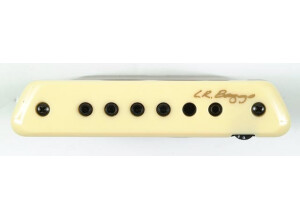
    The L.R. Baggs M1 is a simple acoustic guitar pick up, best suited for use during live shows. If your acoustic guitar doesn’t have a built in pick up, it’s usually going to be a good idea to get an external one like this one if you think you’re going to ever want to amplify the instrument. There isn’t too much about the L.R. Baggs M1 that sets it apart, other than it having a clean sound that helps to translate the original intended sound of your acoustic guitar to an amplifier or PA system. I don’t know much at all about the electronics behind the M1, but recently used a friends and was really impressed. I plugged in her Martin DX-K2 with this pick up right into my Fender Twin Reverb amplifier and definitely dug the sound a great deal. Usually external acoustic pick ups like this one are pretty bland sounding, but I found the M1 to do an overall great job covering the full spectrum of the acoustics’ sound. I have a cheaper pick up for my own Martin guitar and this one really blows it out of the water. I also like that it’s nice a compact and fits easily into the sound hole on your guitar. It’s not at all hard to place it and get it to stay there, as I’ve encountered issues like this with other pick ups of this kind. I didn’t know anything about L.R. Baggs until trying the M1 and will definitely be checking out their other pick ups in the near future as I may look to upgrade my current pick up to something like the M1. I really don’t think you could go wrong with the M1 as a pick up of choice as it’s all around really that solid. The only thing is that it’s not the cheapest pick up on the market, but as always you’re going to have to pay for quality and if you’re playing shows a lot it’s definitely going to be worth it to have a better sounding pick up in the long run.

  • « Another solid acoustic pickup from Dean Markley! »

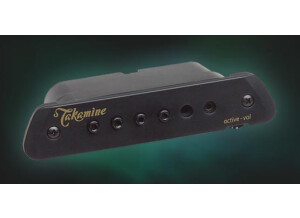
    This is an acoustic guitar pickup that is made by Dean Markley. That brand has this type of pickup down, if you ask me. The Pro-Mag is a standard amongst acoustic guitar players. This one is a little bit different, but the tone is the same. In which case I mean that the Tahoe pickup sounds just as solid and full as the Pro-Mag. They use the same single-coil technology, so the sounds aren't too different in general. The shape of this pickup is one feature that sets it apart, as it has the black pickup with the actual coils that correspond to each string visible. The one thing I've noticed with some guitars is that the soundhole doesn't always line up with the strings, meaning that the strings don't always rest in the appropriate spot below the strings. I think that this can be an issue with a lot of players, fortunately it worked fine for me. I also liked how this pickup, due to its size and a stereo jack, can be used in tandem with another. It doesn't fit with the Pro-Mag so I haven't tried it, but I'd like to see how it works in tandem with a different kind of pickup (The box suggests using a piezo pickup). The tonal varieties are pretty cool in this way, as you can send them both to amps or PA channels (or one to each), and you can adjust the tone on each channel. This thing definitely has an advantage on the Pro-Mag if you are willing to use it in tandem with another pickup. It's still fine on its own, assuming that you don't have any issues with the pickups and strings like I mentioned earlier. This is a great product for acoustic players who play gigs and need decent tone.

  • Audiofanzine FR's review

    (Originally written by dariasse/translated from Audiofanzine FR) I've been owning it for one week. I installed it on my Guild. It doesn't require you to make a hole on the side. The system for the jack looks awful but it's hidden buy the strap. I know Fishman and Bband very well. Each one has its own advantages and disadvantages. Inside the guitar you'll find a big preamp with two trim controls for high and low frequency adjustment. Its nice to have these possibilities but they are not easily accessible. You have to take everything apart and reassemble it again. Very irritating if you didn't make the right setting!!! Very easy access to the battery! Very good sound. But don't expect it to remove all "quacks" because the guitar still uses a piezo pickup. I've noticed some level unbalance between strings. I think (I hope) it's a nut problem. When plugged to an amp the sound is crystal-clear. It is brilliant and smooth. And it's true that you can play violently without saturation. I will update this review once I have solved my problem with the low E string (too loud) to describe the whole frequency spectrum. Compared with the Fishman (I speak about the piezo and not the electret mic in the body) and the Bband (which has a poor signal to noise ratio), the D-tar sounds better (although I mounted a Prefix premium Blend in one of my acoustic guitars). It's not perfect, but better. However I have to say that the acoustic sound of the Guild is much better than both others, which sport pickups from other manufacturers. I will update this review later. UPDATE: I filed down the bridge nut to lower the action. Now the volume balance is nearly perfect on all strings. The low E string is not too loud anymore. The sound is good amplified when I play at home but I haven't tested it live yet. You can play hard without distortion. The sound has less "quank" than the Fishman. As a summary, I'm very happy! PS: I made all tests in my home studio with linear speakers not with an acoustic amp.