Log in
EN
FR

Roland Analog Modeling Synths

10 products found

Filter
Sort by
Evaluation
  • Reviewed or not
  • Editor’s award
  • Reviewed by Audiofanzine
Availability
  • Available or not
  • Sold new or used
  • Sold new
  • Sold used
Must-have products
  • All products
  • Flagship products
  • Best rated products
  • Hot products
  • Popular products
Price
  • Freeware
€
Clear
Sort by
  • Popularity
  • User ratings
  • Price - low to high
  • Price - high to low
  • Used price, increasing
  • Used price, decreasing
  • Name (from A to Z)
  • Name (from Z to A)
  • Added on
Sort results
  • Popularity
  • User ratings
  • Price - low to high
  • Price - high to low
  • Used price, increasing
  • Used price, decreasing
  • Name (from A to Z)
  • Name (from Z to A)
  • Added on
Filter results 10 results found
Evaluation
Availability
Must-have products
Price
  • Freeware
Show results

The best Roland Analog Modeling Synths reviews

The reviews Audiofanzine members found the most helpful.
  • « Awesome, for improvisation »

    See manufacturer UTILIZATION Great product, as long as you accept its improvisational and old-school side. You can't save a single sound!!! You can't associate a sequence to a sound, you can make your own pattern (thank goodness), but the sound will always remain the same. This means that if you wish to change the sound you may bump into surprises because not all sounds have the same volume (some are much louder than others) and all parameters act in real time, which means that if you have a cut-off set to 3/4 on a sound, it will also be set to 3/4 on any other sound you change to. The effects: Some of them are pretty interesting and even very good, but unfortunately they are associated to sounds, so if you like a distortion effect you can't use it on any sound you want (even though we must concede that the manufacturer made wise choices in this regard). So you can't save sounds nor choose effects per patch. The piano: Rather good overall, no problems for step-by-step recording, but if you intend to play in real time, don't expect to be able to play what you recorded. It has a function to play without notes (like on he Kaoss pad), but it's impossible to record with it. Like on the tr-8, you have the lazy function (to randomly generate a pattern). Program change OK, control change OK. 2 bars max per pattern with the possibility to link 8 (16 bars in total). SOUNDS In terms of sound it is truly excellent, it includes the sounds of the TB and much more. You will have the sounds of the TB, which have been used by many artists for 30 years, the TB with distortion of Daft Punk or Prodigy, the TB with reverb or delay of Aphex Twin, etc., etc...But also new sounds. Some patches feature up to 4 oscillators, it's awesome. OVERALL OPINION An irreproachable sound, but with old-school handling. Unlike the tr-8, it's an instrument that aims at the future with its new acid sounds (while the TR-8 remains more traditional in this respect). Unlike the tr-8 you can fully decontextualize the TB and move towards new horizons (but also to remain more traditional). For $300 you will have much more than a TB-303. If you compare both, this one is truly awesome, but I expected more in terms of editing (and saving your mods). I don't regret my purchase, even if I will need to find a solution to be able to change patches live with more precision. PS: It would've been nice to have a push-on knob to change sounds. It would allow to switch from A30 to B33 (for example) without having to hear all the sounds in between.

  • FP User's review

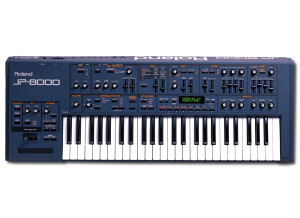
    Extremely good performance control in terms of Motion Sequencing, Velocity/Ribbon assignment to any parameter, great Pitch/Filter/Amp LFO options for the mod stick......but.... The MIDI implementation could be much better.....and only a MIDI IN and OUT - no THRU? Come on Roland! Price paid £525 UTILIZATION While programming sounds you hardly ever have to use the small backlit LCD screen. Having all the controls in front of you makes it a joy to use. The manual (in true Roland style) is often cryptic, but for anyone used to using synths, its doesn't often need referring to. The light plastic casing looks fairly robust but I wouldn't want it to risk a fall from a keyboard stand. Control knobs are a little light but feel robust enough. SOUNDS Very bright and clean 'Digital' quality about it. Not the warmest VA you've ever heard but that can mean it doesn't take up too much space in a mix. One thing you have to be careful with is the fact that the output can distort fairly easily. The synth best suits dance music (I produce tech/deep-house). Due to the 'thinness' of the sound at times, Bass, Treble and Chorus knobs are provided on the front panel, as well as Delay controls (Time, Feedback, Level). There are a few types of delay available and the Chorus control can be made to change to either a Phasing, Flanging or 'Twisting' effect. There could be a more comprehensive effects selection. OVERALL OPINION Whenever I'm about to program a new sound in the studio, the JP8000 is nearly always the one I turn to first. It perfectly suits what I play and I'd be very reluctant to sell it. Originally posted on FutureProducers.com Posted by: Unknown ( 5-, 2002)

  • moosers's review

    The Roland GAIA SH-01 is a compact virtual-analog synthesizer. While it’s technically not a true analog synth, it has all the sounds and controls you’d get with one and essentially operates just like one. It runs on three virtual analog sound engines for it’s tone, each with it’s own oscillator. The keyboard itself has 37 keys and polyphony up to 64 voices at once. It has all sorts of audio and MIDI connections, as well as USB ports for saving sounds and the like… UTILIZATION The configuration of the Roland GAIA SH-01 is just like that of a more traditional analog synthesizer, so those familiar with the controls generally associated with analog synths should feel pretty comfortable here. It’s got sections of parameters for your oscillators, a filter, envelope control, effects, an amplifier, and an LFO. Each has a nice amount of control as there really is a ton of different possible sounds between the three oscillators and all of these controls. I haven’t seen a manual for it, but if you’re at all new to analog synths, I’d recommend having it. SOUNDS I don’t think I’d be able to tell too much of a difference between the Roland GAIA SH-01 and a true analog synth. For all intents and purposes, this might as well be a real analog synth and it really doesn’t bother me at all that it isn’t since it still sounds like the real thing. You’re going to be able to get all sorts of analog synth sounds here, and between all the controls you should be busy with it for quite some time. It also has effects like delay, reverb, distortion, and more. I don’t believe that the Roland GAIA SH-01 is lacking anything in the sounds department. OVERALL OPINION The Roland GAIA SH-01 is the perfect little synth for those looking to get analog synth sounds without the hassles of it. You’re not going to encounter the same issues with this that you might a true analog synthesizer, which is definitely a good thing. The price of the Roland GAIA SH-01 isn’t outlandish considering the great instrument you’re getting. Those after an analog synthesizer need to seriously consider the GAIA SH-01.