Log in
EN
FR

Hammond

Series

115 products found

Categories
Series
Filter
Sort by
Evaluation
  • Reviewed or not
  • Editor’s award
  • Reviewed by Audiofanzine
Availability
  • Available or not
  • Sold new or used
  • Sold new
  • Sold used
Must-have products
  • All products
  • Flagship products
  • Best rated products
  • Hot products
  • Popular products
Price
  • Freeware
€
Clear
Sort by
  • Popularity
  • User ratings
  • Price - low to high
  • Price - high to low
  • Used price, increasing
  • Used price, decreasing
  • Name (from A to Z)
  • Name (from Z to A)
  • Added on
Choose a series
Sort results
  • Popularity
  • User ratings
  • Price - low to high
  • Price - high to low
  • Used price, increasing
  • Used price, decreasing
  • Name (from A to Z)
  • Name (from Z to A)
  • Added on
Filter results 115 results found
Evaluation
Availability
Must-have products
Price
  • Freeware
Show results

The best Hammond reviews

The reviews Audiofanzine members found the most helpful.
  • moosers's review

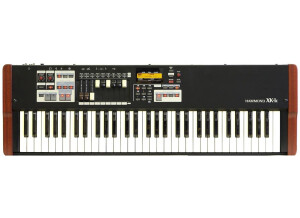
    The Hammond XK3C is a digital organ made by the premier organ manufacturer out there. This organ combines the analog look, feel, and draw bars of a traditional organ and puts it together into the digital realm that opens up a new world of possibilities. This is a fully polyphonic keyboard with a number of effects and a ton of parameters to control your sound as well as presets like analog Hammonds do. What makes this organ so authentic sounding is the tube preamp it has to power it up... UTILIZATION While there is a lot going on with this organ, it is a pretty user friendly keyboard and I didn't have too many problems figuring out how to do what I wanted to. I love having the draw bars as it makes me feel as if I'm using a real B3 and makes it easier for me to dial in the right tone. If you have experience with an analog Hammond organ you will definitely notice a lot of similarities, but there will also be a lot of new features to get used to, which in my opinion is a great thing as it really expands what this organ is capable of. I haven't seen the manual for this organ so I don't know how well put together it is, but it is probably a good idea to have it around if you are new to organs. SOUNDS The sound of the Hammond XK3C is outstanding overall and is quite realistic sounding. While I always try to use a real B3 for recording if possible, this is just about as good as it gets in terms of a replacement for an analog organ. The real tube pre gives it an extremely realistic sound and I would bet it would sound even closer to the real thing if you had a Leslie to use it with, but this isn't necessary as the effects on the organ are quite good as well. If you are looking for a digital organ to get those classic Hammond sounds, look no further than the Hammond XK3C. OVERALL OPINION All in all, the Hammond XK3C is a really special organ. It has an awesome look and feel and provides you with all sorts of tone control so you can get pretty much endless amounts of organ sounds. The price isn't cheap, but if you are serious about getting a great digital organ you have to know that you are going to have to spend some money. This would definitely be my top choice for a digital organ as this is as close as you can get to real analog Hammond in the digital realm.

  • Audiofanzine FR's review

    (Originally written by TeDire/translated from Audiofanzine FR) Phonic wheels organ built in 1967... So no Midi, no controllers, etc. 44 keys (two keyboards), integrated speakers, unlimited polyphony, volume pedal, tube amp, 13 bass pedals, spring reverb, 9 drawbars for the top keyboard, 8 drawbars for the bottom keyboard. The percussions and vibrato scanner are very similar to the B3. The instrument weights 242 lb. so it's not easy to transport. This organ belongs to the Spinet family. Unlike console models (B3, C3, A100), which where often used by professional musicians, they were conceived for amateur musicians. So the sound range is less wide than console models... Among Spinet models you'll find the L100, T100... but the M100 is different due to its tube amp and its vibrato scanner, which are almost the same as on the B3. This organ was used by Rick Wright in the early Pick Floyd years (until Obscured By Clouds)... UTILIZATION Is it easy to make settings? Yes, it's very easy and you'll quickly get used to it. - Is it easy to edit sounds or effects? The preset editing tabs are very practical. But they don't age very well. - Is the user's manual clear and comprehensive? No user's manual. SOUNDS Do the sound presets fit your music style? Yes. - Are they authentic? Of course... - Are the effects effective and do they suit your application? I don't use the reverb but it sounds very good... - Which sounds do you prefer / hate?... I connect it to a Leslie 122 cabinet. Huge sound! The sound of the speakers is not very good. OVERALL OPINION - How long have you been using it? Three years. - Which feature do you like the most / the least? Pros: classy, sound, vintage. Cons: weight, plastic keys, not very convenient, average speakers. - Did you try any other models before buying it? No - How would you rate its value for money? It's the Hammond organ with the best value for money. It's three times cheaper than a C3. With a Leslie cabinet you get a Hammond sound even if it isn't quite the sound of a real B3. - Based on your experience, would you buy this product again? Main advantages: sound, vintage, service (it's always possible to repair a Hammond organ if you have spare parts... and you'll find them very easily on the web). Nevertheless, the quality of digital Hammond clones increased during the last years and many manufacturers offer very good instruments that reproduce almost perfectly the sound of a real B3. So you don't need such a bulky and heavy instrument anymore unless you're a vintage fan... That's the reason why I give it only an 8. But I wouldn't hesitate to buy it again because I don't play live on stage. My M100 stays in my home studio...

  • moosers's review

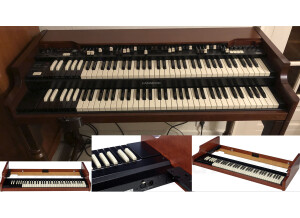
    The Hammond B3 is the organ. When you think of the organ, you think of the B3. It is the holy grail of organ and cannot be matched. It has 2 levels of keyboards, bass pedals, a ton of draw bars and presets with the black keys. You can a variety of different organ sounds from the B3, ranging from the classic leslie sound to a more subtle sounding. UTILIZATION The B3 has a pretty simple layout. There are two keyboards so you can have two different sounds going at once and there are separate draw bars for each of them. It is easy to get a good sound on the B3 using the black keys on the left that have presets for different organ sounds. There is also the leslie switch for use with a leslie cabinet. I've never seen a manual for the B3, but it has a much copied design to it and has become almost the standard set of controls for the modern organ. SOUNDS The sound of the B3 suits a number of different musical styles that I play, including blues, rock, and folk. You can find the B3 in almost any genre as it seems everybody can't get enough of it, and for good reason. I love everything about the tones this organ produces, and it is an extremely fun instrument to play. It has a great feel to it and you always feel good while playing it because the sound is so brilliant. While some modern day organs can replicate the B3 sound pretty well, ain't nothing like the real thing. OVERALL OPINION I first used a B3 five years ago and have used it extensively on a number of projects. While I can't afford to own one, like most, whenever I need to record organ for a serious project I always arrange to have one for recording. For some reason I can't live without using a real B3 whenever I feel I need an organ part. It has a beautiful, expressive tone that has become ubiquitous in modern music and has a staple in music history as the holy grail of organs.

  • Audiofanzine FR's review

    (Originally written by fonck/translated from Audiofanzine FR) ( https://imageshack.us ) Nice organ that sounds like its big brother B3 with its scanner vibrato and tone wheels. You get the real Hammond sound. I don't have a Leslie but I plan to buy one. The sound is not comparable to the one of new emulations... It's authentic! This model was produced between '61 and '67 and Hammond sold more M-Series instruments in one year than all other Hammond models together!! It's true, you must learn to play the bass with your feet and get a real organist playing feel. But it's a delight to play it. I've tested several B3s and the sound has nothing to envy them! It's a real pleasure! UTILIZATION Easy configuration. Easy sound. You won't need the user's manual! SOUNDS Real vintage Hammond sound (I don't like their new products). OVERALL OPINION For sure!

  • moosers's review

    The Hammond S6 Chord Organ is a unique keyboard instrument that has a traditional keyboard as well as a section of chord buttons, like those found on an accordion. The keyboard itself spans about three octaves and has a unique knee lever for setting the volume. It has built in speakers and two bass pedals. There are a few different versions of the Hammond Chord Organ, although I'm not sure when these were made. UTILIZATION Using the Hammond S6 Chord Organ takes a little bit of getting used to, but since there isn't really all that much on here, most users will catch on rather quickly. As far as controls go, there are a series tone buttons for choosing different types of sounds. Basically, it has different organ, strings, and flute sounds. The chord section is it's own little thing, as it's got a button for virtually every type of chord. A manual probably isn't necessary, and it would probably be hard to locate anyway. SOUNDS The sound heard from the Hammond S6 Chord Organ are definitely unique. This isn't going to give you any real traditional Hammond organ sounds, so don't expect that from it. It's kind of it's own animal, as if you can play the chord buttons and keyboard at the same time (which I can't), you can get sounds unlike other organs out there. In general the sounds are a bit cheesier and less defined, which can definitely work in some situations where a B3 wouldn't, and vice versa. OVERALL OPINION The studio that I work at has one of these Hammond S6 Chord Organs, but it doesn't get used very often and has almost become sort of a piece of furniture I'm sorry to say. It certainly looks cool sitting there, but the one we've got needs a little bit of work before it can be used for recording since it's so old. Even when it was working 100% is wasn't be used very much. While it's definitely got some cool sounds and features to offer, unless it's in your studio it's not really worth it to have around since it takes up so much space and isn't very flexible in what it can do. This having been said, what it can do is quite cool and is worth messing with if you ever get the chance...

  • moosers's review

    The Hammond ExtraVoice F-100 is a unique electronic organ that is unlike most other Hammond organs out there. I believe that this was made in the mid 1960's. We have one of these at the studio where I work, and it's definitely nothing like the B3 we have that often sits right next to it. There is one 52 key keyboard as well as a series of foot pedals as well. It has built in speakers and weights a whole lot, so I wouldn't recommend trying to use this for gigging! It is a fully polyphonic keyboard and doesn't have any pitch or modulation wheels. UTILIZATION It did take me a little while to get used to everything going on with the Hammond ExtraVoice F-100, and to be honest I'm still learning things with it. The basics are definitely easy to get a hold on, but figuring out what the best sounds are and what the best combinations are is a different story. It's a lot of fun to mess around with the ExtraVoice, so don't be afraid to try things out! The manual is put together well and should be informative for anyone who wants more information on this organ. SOUNDS The Hammond ExtraVoice F-100 offers up a few different emulations of different acoustic instruments, including settings for strings, flutes, and reeds. It's basically a little smorgasbord of sounds, and it's a lot of fun to see what different types of tones you can get from it by combing different tones. It also has a variety of effects and other parameters to further utilize your sound. Generally speaking, the sounds on the F-100 aren't exactly realistic, and at times they can be a bit cheesy, but when it works, it works really well! OVERALL OPINION Don't expect a classic Hammond organ sound from the Hammond ExtraVoice F-100, as it isn't that type of organ. Instead, it's a unique organ with a variety of other sounds available. I wouldn't recommend this as a go to organ for any sort of use, as the sounds aren't reminiscent of an organ at all! However, if you want some cool colors to have on the side for when the mood strikes, the Hammond ExtraVoice F-100 is a great tool to experiment with!

  • Bonamici's review

    In the mid 70th I was blow away of the rich sounds from Tony Banks Hammond T-102. 30 years later I found my T-222 at "Svenska Hammond in Stockholm". Bought it and my joy and inspiration is still growing after one and a half years of playing it. I am suprised over how well it sounds in rock and progressive rock. Rich overtones, it's easy to use, the internal leslie sounds pretty good actually, the scanner vibrato is superb esp. the celeste vibrato. The T-200 is just a great find. I miss the range of the keyboard thought... UTILIZATION It has 4 Upper Presets: 1 - Drawbars & Percussion 2 - Strings 8" 3 - Full Tibias 16" 4 - Theater Brass 16" (Very Tony Bankish) ...and 2 Lower Presets: 1 - Drawbars 2 - Ensemble 8" And various percussions, scanner vibratos and three fantastic string reverbs. Also you can add over tones with the "Second voice and Brilliance" function... SOUNDS Here it's strength really shows up, It sounds just great, you can really hear the sounds of mid 70th's Genesis and YOU are in charge of the keys. I highly recommend this organ for Progressive/Symphonic/Metal Rock!!! OVERALL OPINION After using the T-222 for over a year now I am certain to keep it in shape, remember to fill the tone-generator Hammond oil, keep it dust free, It's my 2:nd Hammond, my first one Hammond 144J Composer (electronic) was bought by my bassplayer I'll keep the Hammond T-222 as long as i live...

  • « touch sensitive »

    The Hammond SK2 Organ comes at a high price, it cost $2,890 bucks. It is the SK1 plus it has the extra keyboard with 61 keys attached which forms the SK2. The harmonic drawbars have 9 pitches and everything is very touch responsive. There are also a lot of effects on the SK2 Organ like Vibrato, Chorus, Overdrive, EQ, Reverb, Master EQ, and Multi Effects (and some more). There are over 100 patches (user) and over 100 preset patches. UTILIZATION Setting up the Hammond SK2 Organ is simple but using it could take some time if you have not used a Hammond before and especially one with two keyboards on it. You have two keyboards but only one interface that controls both of them so before you get into the live use of the SK2 I suggest you learn to change your sounds quickly and apply effects quickly too. Because the SK2 Organ has two keyboards it is a little heavier than a normal Hammond which makes it a little less portable to me. It still only weights about 40 pounds but once you put that into a keyboard case it could make it difficult to take it around with it (if you can find a case to fit it). SOUNDS The SK2 Organ has MIDI in and MIDI out on it plus audio line out left and audio line out right. There is also an input for a foot switch or damper pedal. All of the sounds on the SK2 Organ sound really good and well designed. The feel of the keys are touch sensitive and have a nice weight to them. The on board effects are pretty solid for this style of dual keyboard. OVERALL OPINION The least favorite thing about the SK2 Organ has to be the price, but for what you are getting it is worth it for the live musician. My favorite part about the SK2 Organ is how good it sounds and how easy it is to change and navigate through your sounds.

  • « 15" woofer! »

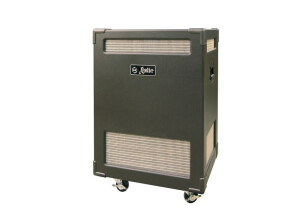
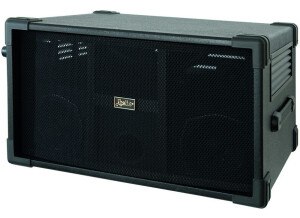
    The Hammond Leslie 3300 Rotary Speaker is a 220 watt bass amp and a 80 watt treble amp. It has a 15” woofer and master volume, bass, mid range, horn level, and sub woofer controls on it. The Leslie 3300 is very well built and can take a lot of abuse. The inputs are a 11 pin and 8 pin Leslie connector with a ¼ footswitch jack and ¼ line in jack. On the Leslie 3300 you can control the bass level separate from the horn level, also you can control the rise of the rotor speed right on the speaker. UTILIZATION The Hammond Leslie 3300 is portable to an extent but it still weighs over 100 pounds so it could be a hassle taking it to different places where you need it. The Hammond Leslie 3300 has a lot of low end sound that will provide a full and rich texture to it. Changing your sounds and frequencies is easy to do on the Leslie 3300 because you do it right on the speaker, and setting it up takes no effort at all. SOUNDS If you use the Hammond Leslie 3300 Rotary Speaker on your electronic keyboards it will take your sound and carry it across a large space. The sound that comes out of the 3300 is very big and travels even when the speaker is not turned all the way up. The 15” woofer is my favorite feature with this speaker. I have used a lot of other speakers and amps but nothing has compared to this one. The 3300 is also a lot more expensive then most other units that I have used in the past 5 years. OVERALL OPINION It comes at a high price, but it is worth it. I have heard rumors of the Hammond Leslie 3300 shorting out over long periods of use, this has never happened to me and I have never seen it happen just heard about it online. But just in case, I am pretty sure this speaker comes with a warranty for at least a year from Hammond.

  • « great polyphonic keyboard »

    The Hammond R124 organ is a dual keyboard compact electronic organ. It has outputs for a speaker cabinet, as well as for a sustain pedal and organ foot pedals, among other connections. The Hammond R124 has all types of sounds, but specializes in a cheesy organ sound, rather than your traditional Hammond or pipe organs sound. The keyboard is fully polyphonic. UTILIZATION The configuration of the Hammond R124 is pretty easy to follow, but it does take some time to figure out what everything does because there are a lot of parameters and functions available on this organ. It is easy to get basic tones and to explore different sounds, but mastering the uses of the Hammond R124 can take a little while. I don't have a manual for this keyboard, so I can't speak to how helpful it is or not. SOUNDS The sound of the Hammond R124 is awesome, but it does have its specified use and isn't incredibly versatile. It is more versatile than most of the other compact organs made by R124, but still outputs a similar tone throughout the entire spectrum of the instrument. The Hammond R124 is easy to play, with the keys being quite light and pretty sensitive. Overall, a great sounding organ for what it is when you are looking for that compact organ sound. OVERALL OPINION I've been using the Hammond R124 compact organ for about a year and it is one of my favorite organs of this type that is out there. I'm a big Elvis Costello fan, so naturally I would be a fan of the sounds that this has. It is somewhat rare at this point, and isn't that cheap if you can find one used, but also isn't that expensive. Overall, this is an awesome keyboard that I highly recommend for those interested in a great compact organ.

  • « This thing is cool! »

    Wow is all I can say about this amp. Specifically voiced for the guitar, this amp produces some of the coolest most authentic leslie tones for the modern world. What is unique about this amp compared to the old Leslie speaker cab is that the drivers for the amp are designed specifically for the guitar instrument. There isn't a phaser or leslie pedal that can emulate the authenticity of this cabinet. Leslie G37 Combo Guitar Amplifier with Rotating Speakers Features at a Glance: A Leslie built 100% with guitar in mind Onboard 100-watt amplifier with a vacuum tube preamp Single-Channel Input features low and high gain input jacks 2-speed horn and bass rotor Slow and fast rotational speeds can be individually adjusted Horn and bass rotor will automatically stop in the forward position when the stop mode is selected 12" vintage V30 low-frequency drive made with all original materials Genuine Leslie high-frequnecy horn driver FS-10TL dual foot switch allows you the select slow, fast, and stop speed Optional variable speed control pedal (V-20RT) available Rugged-built, black painted cabinet made of 3/4" MDF, with protective corners and folding handles Details Type Tube Number of Channels 1 Power 100W Speakers 1 x 12" Vintage V30, 1 x High-frequency Horn Effects Yes (Rotary) Reverb No EQ Treble, Mid, Bass No Amp Modeling No Power Tube Inputs 2 x Instrument Outputs Rotor Control Footswitch and Speed Pedal Outputs Footswitch I/O No Effects Loop Height 26.5" Width 20" Depth 20.25" Weight 100 lbs. This amp sounds fantastic with any guitar you throw at it. Whether that be a Fender Stratocaster or a Gibson Les Paul the vintage rotating speaker tones are so chimey and surreal. The high gain channel of the amp is very nice and smooth as well. Not really a high gain amp per se but a distorted Leslie tone that is very usable in the recording studio. This amp is very great and extremely usable in a recording booth. At new these amps come in at around $1500, which might be a little high for a lot of people. Especially since this is a unique and particular type of tone you need to be sure this is the sound you are going for. I would recommend this to anyone who has an old Leslie that they wan to to preserve or someone who owns a studio who would like to get a new sounding pure Leslie amp.

  • moosers's review

    The Hammond M3 is a classic organ in the same vein as the Hammond B3. It's got pretty much the same make up, and a similar sound for sure. It has two sets of keyboards, each with about three and a half octaves worth of keys. It has a full set of draw bars, in pretty much the same fashion as most of the classic Hammond organs. It is a fully polyphony keyboard, and also has a foot pedals and a volume pedal. UTILIZATION If you're familiar with the standard lay out of organs, you'll definitely know how to use the Hammond M3. It doesn't really have any setting controls out of the ordinary that I can think of if you were to compare it to a Hammond C3 or B3. If you don't know much about organs, there's definitely a bit of a learning curve here. Having said this, accessing the basic features of the organ should be easy enough for all users. I don't know anything about the manual for the M3. SOUNDS The sound of the Hammond M3 is everything you'd expect from a real Hammond organ. I've used it for recording with a Leslie 122 speaker cabinet, and the end result is definitely something special. I don't think that too many users will be able to tell the difference between the M3 and other Hammond organs, as it's very similar to the B3 as far as I can tell. I used a set of Gefell M 930 to record the Leslie, which picked up all the details very well. The M3 is definitely the real deal when it comes to organs... OVERALL OPINION I don't know how readily available the Hammond M3 is, or what kind of price it would command, but it's definitely a fine replacement for the B3 if you can't afford one. While I've never had the chance to have the M3 and a B3 side by side, I'm fairly confident that most people wouldn't be able to tell much of a difference. Don't be fooled with the fact that this isn't a B3, the Hammond M3 is a top notch organ.