Log in
EN
FR

Jackson Other Shape Guitars

46 products found

Filter
Sort by
Jackson
Evaluation
  • Reviewed or not
  • Editor’s award
  • Reviewed by Audiofanzine
Availability
  • Available or not
  • Sold new or used
  • Sold new
  • Sold used
Must-have products
  • All products
  • Flagship products
  • Best rated products
  • Hot products
  • Popular products
Price
  • Freeware
€
Clear
Sort by
  • Popularity
  • User ratings
  • Price - low to high
  • Price - high to low
  • Used price, increasing
  • Used price, decreasing
  • Name (from A to Z)
  • Name (from Z to A)
  • Added on
Sort results
  • Popularity
  • User ratings
  • Price - low to high
  • Price - high to low
  • Used price, increasing
  • Used price, decreasing
  • Name (from A to Z)
  • Name (from Z to A)
  • Added on
Filter results 46 results found
Brands
Evaluation
Availability
Must-have products
Price
  • Freeware
Show results

The best Jackson Other Shape Guitars reviews

The reviews Audiofanzine members found the most helpful.
  • « Very nice modern shredder »

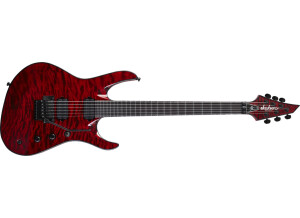
    Chris Broderick is an all around cool guy. He has played guitar for Nevermore and is currently the lead player for Megadeth. He use to play Ibanez guitars. He is primariliy a 7 string player but with Megadeth he is back rocking the 6's. He has left Ibanez and is now supporting Jackson and Jackson has given him a signature model with all his individual preferred specs. The base specs are not too unusual for a Jackson. The guitar has neck through construction with a mahogany body with a quilted maple top and a maple neck with an ebony fretboard. The fretboard is free of any inlays and has 24 jumbo stainless steel frets. Up top on the 3x3 headstock you get a set of Planetwaves trimlock tuners that are locking and trim the string ends. You get a locking nut to go with the low profile Floyd Rose. The pickups are a set of custom Dimarzios specially voiced for this guitar. The controls are pretty creative. There is a 3 way toggle that is horizontal so it is kind of like a 3 way blade. The neck controls is a volume knob that was a push pull function for coil splitting. The next knob is a tone knob that has a push pull function to take it out of the circuit kind of like a no load tone knob. The next switch is just a kill switch. The Output jack is facing upwards so you can easily wrap your cable around your strap to keep it from coming out. UTILIZATION You can really tell that Broderick had a lot of input on this guitar. It has a lot of unique features that lots of people wish they have on their guitar. The stainless steel frets are nice and smooth. There are tall and narrow and give a great feeling. The trimlock tuners are very nice. Every guitar should have locking tuners and having some that cut the string ends off the string is a bonus. The low profile tremolo is pretty nice. I am not a big tremolo user but it feels like a high quality unit. The push pull tone knob is pretty cool. It is great that you can take it out of the circuit when you want a wide open sound but its still there if you need to dial off some tone for a clean or lead tone. The guitar balances perfectly. The body has a slightly offset design to it and the strap peg is raised from where it would normally be so the guitar naturally sits in a balanced classical position when you are standing up. SOUNDS These custom Dimarzios have a real high end bite to them. They sound almost like active pickups. They seem pretty close to the Dimarzio D-Activator pickups which are designed to sound like actives. Broderick use to use Bareknuckle pickups. I wish he had stuck with those in his Jackson. I guess Jackson wanted him to use a more mainstream pickup maker for his signature model. The Bridge pickup in this guitar is super tight and has a nice grind to it. Almost like a passive 81. It doesnt clean up that well but you can make it work with a bit of tone knob action. The neck pickup has a bit of grind as well, almost too much for me. Broderick is so smooth in his lead playing he can get away with having a lot of edge in his lead tone. Most people would need a smoother lead pickup to sound good. This neck pickup will force you to be smoother. OVERALL OPINION Its cool seeing someone come out with a signature model that isnt an just a normal model with a paintjob on it or something. This is a really unique and creative guitar with a unique design. There are no silly logos anywhere so you wont feel like a billboard. I hope Jackson makes this model for a long time and I hope they take some of the traits from this guitar and use the ideas in some of their other guitars. If you are looking for a shred guitar that has a super modern design and a modern feel the Chris Broderick soloist is a great find.

  • « Wilkinson version of JJ1 »

    For those who ever wanted to have a bridge to divebomb on their JJ series guitar, this is the one you're looking for. The guitar's main difference is that this has a Wilkinson installed on it -- hence the W designation in the name. The guitar features a mahogany body with a maple neck, a rosewood fretboard with 22 frets, special inlay, a Wilkinson bridge, two humbuckers, one volume, one tone and a three way switch. UTILIZATION The first thing I noticed about this guitar is that it's pretty heavy compared to some of the other ones. If you're more into the lighter guitars, you might want to play a few of these and choose accordingly. The best part about this guitar is the Wilkinson that was added to it. To me, this makes all of the difference in the world. Not only can I do those killer Anthrax riffs with this guitar, but I can also do my lead lines I normally do which involves the tremolo. The guitar had locking tuners installed on it as well, which I'm fairly sure were an aftermarket thing. The nut was cut nicely on this, and it only had some light fretwear overall. Really solid for what you're getting but just slightly heavy. SOUNDS This guitar actually had EMGs swapped into it. It had two EMG 89s installed with a push/pull on the volume knob to split between the two different tones. This really made the guitar super versatile. In the humbucking mode, you had a real thick sounding, aggressive rhythm sound. For leads, this was awesome, and it wasn't too bad for rhythms, either. I usually prefer the 81 in the bridge, but the 89 is pretty cool as well. It's not quite as thick as the 85, but it's close. In single coil mode, you could get the really nice clean tones, and it also allowed you to get some cool funky tones as well. The pickups can sometimes sound a touch sterile, but that's just the way EMGs are. OVERALL OPINION This is my favorite JJ model since it has the Wilkinson bridge. I'm in love with Wilkinsons, and they're second only to my love for floyd roses. If you can find one of these, I recommend picking it up as they're very solid guitars, and they can be quite a bit more versatile than you might think.

  • « Killswitch model »

    This guitar is much the same as the previous ones. The main thing that makes this special is the mahogany neck-thru design instead of the maple bolt-on neck. On top of that, this has a special kill switch installed on it for some crazy effects. The guitar features a mahogany body, a mahogany neck with an ebony fretboard, special 12th fret inlay, a hard tail bridge, two humbuckers, one volume, one three way switch. UTILIZATION The mahogany neck-thru design and mahogany body were surprisingly light. Compared to the JJ1W I played before it, this was a much more balanced instrument. The mahogany neck felt awesome, and it had this almost raw feel to it. The neck wasn't super thin, but it wasn't super thick, either. It was somewhere in the middle, in my opinion. The kill switch that was on this allows you to get all kinds of crazy effects with it, and right now, I'm sure most people can relate to Buckethead using it for some unique effects. I think kill switches are a bit of a waste, usually. One cool thing you can do if you have a two volume knob equipped guitar is just turn one volume knob on 0 and the other on 10. Then swap between pickups with the pickup selector. You'll get the same effect going on. SOUNDS The guitar was very resonant compared to some of the other JJs that I've played before. Everything seemed to really click, in my opinion. The guitar had the two Scott Ian pickups installed in it, and they were flame throwers. They were super high output, and they really slammed the amp. They had a strong bass, fairly flat mids and a slight dip in the treble with this guitar. I was able to do some crushing rhythms in E without any issues at all, but I wonder how they'd be tuned down with this body configuration. The neck was a bit too high output for me, and I wasn't a huge fan, but it's not too bad. OVERALL OPINION These are probably my second favorite JJ style guitars. The all mahogany construction makes it a much bigger sounding guitar, and I find that it seems to resonate a lot better than the mahogany/maple combo that they used on the other ones out there.

  • « Unique HS PC model »

    Phil Collen has always been known for this pretty awesome superstrat model, but he also used to have this really neat HS model with a unique cutaway and slanted neck pickup way back in the day. This is one of those guitars. The guitar features a maple body with a maple neck, an ebony fretboard with binding, 24 extra jumbo frets with shark fin inlays, a schaller floyd rose, HS configuration with one volume and a three way switch. UTILIZATION This guitar had some weight to it, but considering it was all maple, it was to be expected. The guitar had a Schaller floyd installed on it, and these are very solid floyds. In fact, I have them on a few of my guitars, and they stay in tune perfectly fine. One thing worth noting is that they don't flutter quite as well as the original floyd rose does, and they seem to sound a little warmer overall. The pot on this was starting to go out, so that needed to be replaced. Spraying it with contact cleaner didn't fix it. The frets had some wear to them, but it wasn't a huge deal considering the age fo the instrument. Pretty solid overall. SOUNDS The neck pickup is probably the most unique thing about this guitar. The neck pickup itself was just a Hot Rails, but because it was shifted back the way it was, it seemed to have less output. That can be good or bad depending on what you're going for. It seemed to sound cleaner, and it also had some characteristics of the Hot Rails in the middle position. The bridge pickup was a Custom Custom that someone put in it as I don't believe that was stock. It really thickened up the maple body quite a bit, and it was a welcomed edition to the guitar. OVERALL OPINION These are hard to find, and not everybody likes them. In fact, I prefer the other Jacksons with the figured tops and normal configuration as well. It just seems to suit me more, but I'm more of a traditionalist when it comes to these kinds of things.

  • « Hot rod style »

    Things were changed up a little bit with the JJ Custom, and I'm not entirely sure why. It might have had to do something with copyright issues, or it might have just been Scott Ian's own personal tastes. Regardless, there are a few things that make the JJ Custom a bit different. One of them is that the body is thinner than the other ones. The headstock is also a little different. I'm going by memory, so forgive me if some of these stats are wrong. The guitar features a mahogany body, either a mahogany or maple neck (I forget), a rosewood fretboard with a unique fretboard inlay on the 12th fret, a hard tail bridge, special paint job, one humbucker, one volume and one tone. UTILIZATION This was pretty much your no-nonsense guitar. You have one humbucker in the bridge, an old school flame hot rod paint job, hard tail bridge and that's about it. It's meant for those who just want to rock, really. The guitar was put together fairly well. The nut needed to be either reshaped or replaced from the wear. Actually, I think somebody might have filed it to accept really thick strings, or somebody just started filing it for no reason at all. Regardless, a nut replacement was needed on this due to some sort of wear and tear. The neck felt real nice, and the finish was still holding up after all these years without much of an issue. SOUNDS This is pretty much a no nonsense guitar. The guitar had the Scott Ian pickup installed in it, and it was a fire breathing monster. The thing had tons of output for super aggressive rhythm sounds. You could put this through a stock boosted marshall, and you'd instantly get that old school thrash sound without any issues at all. It cleaned up decently once you started rolling down the volume, but it's not exactly the most versatile pickup in the world. One thing with these guitars is that I always find myself missing the neck pickup. As a lead player, I tend to rely on the neck pickup for leads, so that was slightly disappointing. OVERALL OPINION The guitar is very solid, and despite the changes that occurred, it's still a very solid guitar. You'll want to search for these on either eBay or different forums for the best deal. I wouldn't recommend trying to look for one in the stores.

  • « Unique hybrid guitar »

    Jackson went and decided to create some sort of unique hybrid guitar. By hybrid, I mean that they're trying to combine a telecaster, strat and les paul all in one guitar. It's a really unique take on things, but there are other manufacturers that do this way better, specifically Tyler. The guitar features a spruce body with a figured maple top, a mahogany neck with an ebony fretboard, 22 frets with dot inlays, a hard tail bridge, special telecaster/strat/P90 pickup combination, one volume, two tones and a five way switch. UTILIZATION The top on this guitar was really stunning. It had that classic style look thanks to the stain on it, but you also had this 3D depth to it that really popped in person. It's hard to really see what it's like without being there in person. The ebony on this actually had some streaks in it, and I was surprised to see that from Jackson. Most of their ebony boards are jet black. Not all people know this, but there is ebony out there that's almost like maple in terms of color. It all depends on what type of ebony you get. Most people just buy the jet black ebony or get ebony and dye it jet black. The bridge on this was decent, but I wasn't a huge fan of the hard tail bridge. In fact, I think a tele style bridge would have been a lot cooler on this, and it would have made that tele pickup spank all that much more. SOUNDS The guitar had all Seymour Duncan pickups in it, and they sounded pretty cool for the most part. The bridge pickup was pretty much all that tele sound. It could do that spank without much of an issue, but I felt that it didn't have quite as much of that telecaster quality without the actual tele bridge. The middle pickup was actually a 59 Jr, and it didn't do the single coil sound that well as it was a humbucker. I wasn't a huge fan of this, really. The neck pickup got a really cool P90 sound, and I was able to bust out some sick blues riffs, but besides that, it seemed limited. OVERALL OPINION The guitar has lots of features and options, but I can't help but think that, given the price these things go for, you can get a guitar that is, in my opinion, much better. My favorite guitar that does this is a Tyler, and it's one hell of a guitar. In fact, it's one of the best guitars ever made, but we're not exactly comparing apples to oranges at the moment.

  • « High quality but kinda ugly »

    This was one of Scott Ian's first signature guitars he ever had, and it was a bit of a mixed bag, in my opinion. It didn't seem to be well received, and they never sold a lot of these in my shop. We never stocked them because of that, so maybe it was a bit of a catch 22 there. The guitar features a mahogany body, a maple neck with a rosewood fretboard, 22 fets with a unique inlay, a hard tail bridge, two humbuckers, one volume, one tone and a three way switch. UTILIZATION The guitar was perfect in terms of weight. It was a real light 7 lb guitar, and it was a joy to play. I'm not a huge fan of the way these look, to be honest. However, there's no denying the quality of this guitar. The guitar had some great fretwork, although there were a few spots at the first few frets where it was starting to wear. This is pretty normal for used guitars, so that's to be expected. Rosewood was nice and dark, and it looked great with the body color. The hard tail bridge I'm not a huge fan of. I tend to prefer the vibrato bridge version, but that's just me. The rest of the guitar was top notch without any issues. SOUNDS The guitar had a Seymour Duncan JB in the bridge and a Seymour Duncan Jazz in the neck. The JB in the bridge is pretty much the go-to pickup for nearly every guitarist today. Almost everyone out there has played this pickup, and there's a reason that it's installed in so many guitars. It's not the best pickup out there, but it does so many geners well that it's hard to truly hate on. The mahogany body helps keep the "stringy" treble from getting out of hand, too. The Jazz in the neck works awesome for clean tones, and it's pretty good for leads, but I tend to prefer the 59 in the neck instead. OVERALL OPINION The guitar is very solid, and if you like the body shape, you'll want to pick one of these up. You can get them for some great deals on the used market, and most of them are in pretty good condition considering. The wood combination is well proven, the pickups are solid and you most likely won't be disappointed.

  • « Indie style guitar »

    During the 90s, there was a strong indie movement going on. One of the popular guitars that really took off was the Fender Jaguar. This reminds me quite a bit of that guitar, and it has a very similar vibe, too. This guitar is very good for those who are looking for that indie vibe, but it might be a bit too odd for other people. The guitar features a basswood body, a maple neck with a rosewood fretboard, 22 frets, dot inlays, a hard tail bridge, one humbucker and one lipstick style pickup, one volume, one tone and a three way switch. UTILIZATION The guitar had some small issues, but it wasn't too much of a big deal. The one thing that stood out was that the nut needed to be replaced. After years of changing strings and gigging, it seemed to have worn away quite a bit, and it had some tuning stability issues. The neck joint wasn't a big deal, and the fretwork was decent on this. It wasn't awesome like some of the higher end Jacksons are, but it wasn't bad. I was able to get some good action with this. The neck's finish was completely worn away, so it was a real dirty maple neck. You could see dark spots everywhere, and it would take quite a bit of sanding to take that out. Hard tail bridge had some pitting, but it wasn't too bad. SOUNDS The guitar had a Seymour Duncan Custom 5 installed in the bridge, but the neck pickup was stock. The guitar also had a push/pull in the bridge tone to split the bridge and give it some extra versatility. The Custom 5 in the bridge is a great pickup. It has a nice bottom end, good mids and some nice treble that doesn't sound too harsh. It can work great with high gain, but it can also do stuff like blues and other genres without any issues. The split in the tone was nice, but it wasn't exactly the best split sound in the world. The lipstick pickup was stock, and I can't say I was a huge fan of it. Then again, I was never a real big fan of them to begin with. OVERALL OPINION The guitar looks basically like a Fender Jaguar clone, and if you're into those guitars, you'd probably really like this guitar. If you don't, I'm sure you wouldn't want anything to do with this. The basswood aspect is a bit disappointing, but the rest of the guitar is not too bad.

  • « Hard tail version of the SS »

    This is the hard tail version of the slightly odd looking SS series Jackson. They're basically like short scale super strats but with modified horns. The 2 designates that this is a hard tail version instead of the normal wilkinson style version. This also has a different body wood. The guitar features a poplar body with a maple neck, a maple fretboard with 22 frets, dot inlays, a hard tail bridge, two humbuckers, one volume, one tone and a three way switch. UTILIZATION The guitar was put together decently, and it was pretty much standard for what you'd find around this time. One thing worth noting is that this fretboard was crazy dirty. Whoever played this before must have made it his number one for quite awhile. The frets on these were worn, but they were recently leveled, so they weren't too bad. The neck joint on this particular guitar wasn't too bad. The hard tail bridge on this had some pitting going on, and I assume the last guy's sweat was pretty acidic. The saddles had some grooves in them, and I also noticed that they were reversed compared to stock to allow for some more room for intonation, so I almost wonder if he kept this guitar down tuned. SOUNDS The pickups were swapped with some EMGs, and I'm not sure they really suited this guitar. The poplar body and maple neck combined with the EMGs gave it a unique tone, but I tend to prefer EMGs in either mahogany or alder guitars. The EMG 81 in the bridge had a lot of cut to it, and it can do tight metal rhythms with ease. It works great for heavy metal, but it's not the best for other genres out there. It tends to sound a bit sterile at times. The EMG 81 in the neck was also very bright and "shreddy." If you're looking for tons of compression and strong pick attack, this is the pickup you want. I tend to prefer the 85 in the neck as it's a bit thicker and smoother. OVERALL OPINION I prefer the maple fretboard on this model, but that's about it. The rest of the guitar, I tend to prefer the SS1 instead. The Wilkinson and ash body suits me quite a bit more than the hard tail and poplar on this guitar. If you're going to buy one, be sure you don't mind taking a loss on it as they're hard to sell.

  • « Short scale with wilkinson »

    For anybody who has ever wanted a slightly different strat shape with a shorter scale, this is what you have been looking for. To be honest, I think this guitar would have been a lot better if they would have left the horns normal sized. It would have looked a bit more normal to me, but I'm more of a traditionalist. The guitar features an ash body, a maple neck with a rosewood fretboard, 22 frets with dot inlays, a wilkinson style bridge, two humbuckers, one volume, one tone and a three way switch. UTILIZATION The guitar was put together decently, but man it was heavy. I'm not sure where they got this ash, but the guitar had to have been in the 8+ lb range. I have an issue with real heavy guitars. For one, I have a bad back, and standing up with these for awhile can be a real pain. The other is that I don't think they resonate quite as well. I feel they sound more vibrant when they're medium to lighter in weight. This isn't a rule, obviously. The Wilkinson bridge on this is very cool, and it happens to be one of my favorite style bridges out there that's not a dual locking bridge. The bad parts are that there was a small neck joint gap, the frets weren't as good as they could have been and the nut needed to be reshaped. The nut was the biggest issue as I kept going out of tune during bends thanks to it binding, and lubing it up is only a temporary solution. SOUNDS The guitar had stock pickups in it, and they were fairly uninspiring. They sounded like your average medium output humbuckers. The bridge pickup wasn't super high output, and it sounded fairly flat overall, but it didn't have any real character to it. I like my pickups to have some sort of uniqueness to them, and it's hard to explain. They lacked overall clarity, too. The neck pickup was much the same, but I was able to get some decent clean tones and decent lead tones out of it. If I were to keep this guitar, I'd swap them out for something else. I think a DiMarzio Breed set would suit this quite well. The extra midrange push should help even up the ash a bit. OVERALL OPINION The Wilkinson is the best part about this guitar, but there are a few issues about it that I couldn't get over. Not all of these will have that issue, and some of these will be real killer players. You basically have to take a chance when you buy one of these, but you're always taking a chance when buying guitars used. Just keep in mind that it may be hard to flip.

  • « Jackson's supertele »

    Jackson was never really into the whole tele thing. They were always either doing the superstrat kind of thing or just trying to be a bit more extreme by tapping into the metal market. The shape itself isn't really a true tele shape, but the single cut is definitely more on the traditional side. The guitar features an ash body, a maple neck with a rosewood fretboard, 24 extra jumbo frets, dot inlays, a licensed floyd rose bridge, HSS configuration, one volume, one tone, a mini toggle switch and a five way switch. UTILIZATION The fretwork on this had a bit of wear. Considering how old this is already, it's not a huge surprise, but it's something to keep in mind when buying one of these older guitars. The ends weren't sharp, so that was a good sign. The bridge on this was originally a licensed floyd, but it was replaced with an original floyd rose. It's a good improvement, in my opinion. The original floyd rose flutters better, stays in tune better and just sounds better. Another thing that was added to this was an oversized brass block. These help make the guitar sound quite a bit bigger, and it gives it some more sustain. The pots were a bit scratchy, so they needed to be either cleaned or replaced, depending on how bad they are. SOUNDS Someone took out the original pickups and swapped in a JB in the bridge and SSL5s in the neck and bridge. The JB in the bridge is great for doing pretty much any style. One thing that really helps make this JB even better is the series/parallel switch. This doesn't work on the singles, but it gives the bridge pickup an extra bit of versatility. In parallel, it gives the guitar an almost tele-like sound. It makes it a bit hollow and gives it a neat spank. The SSL5s are normally bridge pickups, but in the neck, they give a pretty awesome, super high output single coil tone. You can do leads with ease thanks to the output, they sound thick enough to do legato, gave a pretty decent clean tone when in position 2/4 and matched nicely with the JB. OVERALL OPINION The guitar is pretty cool, and with the upgrades this model has, it makes it into a real monster. Once I perform a fret level on this, it'll be on hell of a player. These can be pretty hard to find, so you'll have to keep your eye out for these. Try searching eBay or the JC Forums.

  • « Budget Infinity model »

    This is a guitar that you don't see too often, and for very good reason, if you ask me. It's not exactly the prettiest guitar in the world. In fact, it could even win some awards for the most bizarre strat style shaped guitar ever made. However, it had a few cool features. The guitar features a basswood body, a maple neck with a rosewood fretboard, 22 jumbo frets, no binding, dot inlays, a licensed floyd rose bridge, two humbuckers, one volume, one tone and a three way switch. UTILIZATION The guitar was put together decently. I should mention that this had an original floyd rose swapped into it, but the guy didn't change out the studs. He just dropped it in. I hate that as the studs on this model aren't as good as the original floyd's studs. The original floyd's studs allow for better fine tuning, and they don't move around as much. If you're going to do a swap, do the swap in its entirety. The fretwork was decent for this kind of Jackson, but it had some wear going on. Considering the age, it's not too much of a surprise. The weight of the guitar was decent, but I couldn't get over how bizarre this guitar looked. SOUNDS The guitar had EMGs installed in it. The owner put in two EMG 85s in this. The EMG 85 in the bridge is super thick sounding. It's not as tight as the 81, nor is it as cutting. However, it offers some girth where as the 81 simply doesn't. A lot of people dislike how bright the 81 sounds, so their solution is to put in the 85. It can work, depending on what you're going for. I generally prefer the 81 though. The 85 in the neck is great for leads, and it can deliver some sick smooth lead tones. I really enjoy this pickup for leads, but cleans can be a bit sterile at times. Then again, that goes for all EMGs, so it's nothing really new. Good for metal but average for any other genre. OVERALL OPINION The guitars are different looking, and they can probably use a few upgrades when you buy them. We had these pretty cheap in the shop, so you could buy them without spending too much money. Search eBay and the such for these if you're looking for a good deal.