Log in
EN
FR

Gibson Other Shape Guitars

60 products found

Filter
Sort by
Gibson
Evaluation
  • Reviewed or not
  • Editor’s award
  • Reviewed by Audiofanzine
Availability
  • Available or not
  • Sold new or used
  • Sold new
  • Sold used
Must-have products
  • All products
  • Flagship products
  • Best rated products
  • Hot products
  • Popular products
Price
  • Freeware
€
Clear
Sort by
  • Popularity
  • User ratings
  • Price - low to high
  • Price - high to low
  • Used price, increasing
  • Used price, decreasing
  • Name (from A to Z)
  • Name (from Z to A)
  • Added on
Sort results
  • Popularity
  • User ratings
  • Price - low to high
  • Price - high to low
  • Used price, increasing
  • Used price, decreasing
  • Name (from A to Z)
  • Name (from Z to A)
  • Added on
Filter results 60 results found
Brands
Evaluation
Availability
Must-have products
Price
  • Freeware
Show results

The best Gibson Other Shape Guitars reviews

The reviews Audiofanzine members found the most helpful.
  • « Reissue of a 70s Gibson »

    In the 70s Norlin era for Gibson they had a ton of unique models come out. Most of these models are long forgotten and probably will never be reissued. The RD is one of the few models from those years to escape obscurity. The shape is kind of like a modern reverse Thunderbird. When the RD first came out it was way different than this model. It has a maple fretboard and a maple body with a 25.5 inch scale neck. It was designed to have a brighter sound. Some models were also packed with electronics for tone shaping. The construction is typical Gibson. The body and neck are mahogany. The neck is set in and has the fat 50s profile. The neck is 22 frets with a rosewood fretboard. On the Standard Gibson headstock you get 6 non locking tuners and the bridge is a standard non locking tune-o-matic. The pickups are a set of Burstbuckers and the controls are pretty simple. You get a volume for each pickup and a master tone with the pickup selector down right next to the other controls where it should be. UTILIZATION If this guitar was neck through it would be perfect. With the 50s neck profile the neck is already big and in the current Gibson design the neck joint starts at the 15th fret so beyond that the neck is even bigger. The upper frets are almost impossible to reach. If this guitar was neck though it wouldnt have as much of a heel to get in the way. The guitar is also very heavy. It has a large and thick body so it has tons of mass to it. I love the control layout. So many 3 knobbed Gibsons put the pickup selector out by itself instead of by the rest of the knobs. This design is clean and compact and everything is easily reached. I wish Gibson would start putting locking tuners and bridges on more of their guitars. Every Epiphone nowadays comes with a locking tune-o-matic so there is really no excuse for Gibson not having them. They supposedly increase sustain but really they make string changes much easier. SOUNDS Burstbuckers are not my favorite Gibson pickups but they sound decent in this guitar. They are pretty hot. They were breaking up my clean tone when I was playing. There is plenty of mass on the body so the guitar has good natural tone. With a dirty setting the pickups are bright and gritty. This gives good clarity but sometimes can sound harsh. The neck pickup is slightly smoother but not as smooth as I would like. Some people prefer a super clear neck pickup. The bridge pickup is nice and punchy for riffs. With the neck and heel being the way they are I could not really get into lead playing with this guitar. If you are just looking to crank out heavy riffs this guitar could be a good choice due to its mass. OVERALL OPINION The RD is a cool design and Im glad Gibson did not forget it. Even though this model is pretty different than the original RD this new model will appeal more to the Gibson player. The original models with their maple bodies and necks didnt really carry the Gibson tone. The complicated electronics in the original models also caused problems and added unneeded complexity. The guitar is a throwback to the 70s when guitar makers were willing to do something different and werent just endlessly reissuing the same guitars year after year. If you are looking for a Gibson that is something way different the RD is a good choice.

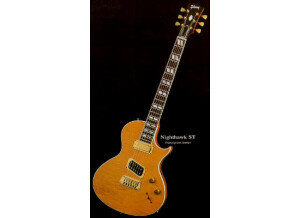
  • « Nighthawk is very versatile and Easy to play »

    I just bought this second hand from a seller on Facebook Marketplace. The first thing that struck me positively was the weight of this guitar. Way lighter than a Les Paul. The neck has a 60’s profile which makes playing this instrument a breeze. I was able to adjust the guitar to get a nice low action with no fret buzz anywhere on the fretboard. The construction is good, but I have seen a few of these guitars that have what looks like a crack just below the binding on the body. There is no actual crack...just a visible line along the body just below the binding. The pickup selection is very versatile. This model has a three way switch, and a coil tapping option by pulling up on the Tone control pot. This give you the option of 6 unique sounds available with this configuration. The back of the guitar has a body cut away like a Strat, and the single cutaway is very similar to a Les Paul, but deeper allowing much easier access to the upper fret region on the neck. Gibson made these guitars to lure over Fender players to the Gibson line of guitars. This guitar has a 25 1/2 inch scale length, and the pickups are bright with a nice Strat like jingle to them. It’s a great guitar for Blues and Classic Rock. Swapping out the pickups would likely make this into a great Metal guitar. The materials and construction are very good. The wood is Poplar so the guitar is very light. The neck is mahogany with a roasted maple fingerboard. So far, I just love this guitar. The overall feel, neck profile, and great vibes are well worth checking out. I would definitely choose the Nighthawk over a Strat or Tele because it has more tone options, plays better than most Fenders and the Plentum Blue is a very good color for this guitar. I would highly recommend this guitar for anyone from novice to a Professor. I give it 9 stars out of 10 for ascetics, a 10 out of 10 for playability, and 10 stars out of 10 for versatility and tonal expectations.

  • « Gibson Marauder »

    The Marauder was a mid 70's attempt by Gibson to compete with the cheap Japanese copies which were flooding the west at that time. Although it was never particularly cheap (around £300 in the UK, which was quite a wedge in those days) they were considerably cheaper than a Les Paul. Mine is the original '75 production with the natural finish (there was also a wine-red finish available), maple or alder body and rosewood fingerboard. It also sports the original three-way pick-up selector switch (much better than those horrible chicken headed pots on the later models). As befits a 40-year-old veteran the finish is not perfect and there are a few dings in the bodywork, but they always say you should never refinish a vintage guitar as it ruins the value and they don't affect the sound. It has the original Bill Lawrence pick-ups. The neck is a standard double-coil humbucker. The bridge is not, as many people think, a single coil but is actually a specially designed double-blade humbucker. The action has never been altered since I got it and has always been low and fast. It's a dream to play and it weighs a lot less than a Les Paul. Sound wise I've played it through Marshall and Fender amps and always been happy with the sound. I don't play heavy rock or metal but I find it perfect for blues (especially swamp blues), country (using the bridge pick-up gives a fair imitation of a Tele) and rock and roll. All in all I'd recommend this guitar to anyone who wants the Gibson name without the Gibson price tag.

  • « Gibson Nighthawk »

    I saw this guitar at a local music store, Silverlake Guitars while browsing. I played it through an old Fender Super Reverb, and it really sounded great. The price seemed a bit steep, at $650, but I decided to get it anyway since I wanted that particular axe. First impression, it looks great! It's a translucent red with a very pretty wood grain underneath. It has a very sleek style and the gold hardware is very classy. I like having just the two knobs for volume and tone, rather than four like on my LP. The five way switch makes it easy to get such a wide variety of tones that this guitar really is a jack of all trades. I don't think this guitar has enough grind for Metal, but it will give you all you want and then some for rock. Split the coils on the neck pu and you get an awesome clean sound. This guitar has a thinner than usual body for a Gibson, making it also fairly light... A big plus two hours into your show. I am a bit worried about the top strap button as it is set at a little of an angle. That seems to create the risk of the guitar falling. The bridge pickup is good, but if it had just a bit more gain this guitar could do anything. It's a good quality axe. It feels solidly contrstructed, though I haven't had it for long. It's definately a flawless assemby and finish. I like the location of the controls too. This is a really good guitar for Rock and Blues. I am sure its good for other stuff, but that's what I know. B+ for style. A for versatility. A- for design. and A+ for quality. This review was originally published on http://www.musicgearreview.com

  • « Gibson Nighthawk Special »

    Purchased used for $850.00 Cnd. Discontinued in 1999. This is the two-pickup model from 1999. This is the most versatile guitar I have owned. It can sound like a Strat or a Les Paul simply by using the five way switch. Very nice action although I've had to adjust the stress on when I went to light strings. The hardware is goldplated which looks great but has a tendancy to tarnish. The Gibson looks tiny on my body, and comes with a not so sturdy case, but there's not much else to dislike. Although small, the guitar is all Gibson including the quality. Nice ebony finish. I've only just bought it, only time will tell. I don't know why they discontinued this model. It seems to be a real sleeper. I play blues and rock and this is an instrument that is quite versatile and looks great. This review was originally published on http://www.musicgearreview.com

  • « Modern take on a 70s Gibson with simplified switching »

    The Gibson L6S is a fringe classic from the 70s. It was designed by Bill Lawrence back when he was doing his best work with no budget. It is supposed to be an everyday version of the old Gibson L5s jazzbox. It was endorsed by many of the big players at the time and pretty popular. I believe this is the first time it is being reissued and there are some minor differences that probably make the guitar more favorable for a lot of people. This Gibson has the crazy 70s all maple construction. The fretboard is maple as well with 24 frets. It was one of the first Gibsons to have 24 frets. Up top you get standard Grover tuners with a standard tune-o-matic bridge. The switching is what makes this model cool and different from the originals. The originals had some crazy switching with phase and series in and out crazyness. This guitar takes all that and replaces it with more usable switching. The 6 way chickenhead knob on this guitar gives you every option of humbucker and single coil with both of the pickups. The rest of the controls are a master volume with a tone control for each pickup. UTILIZATION The upper fret access is pretty good which is rare on a 24 fret Gibson. Its 24 frets but still has the 24.75 scale lenght so the upper frets are a bit crowded but you can get to them fine. The body is kind of an odd shape for a single cut. Its like they took a jazz box and made it flat and solid. The 60s neck on this guitar is nice and what I expected from a 70s style model. I wish Gibson would start putting locking tuners and bridges on more of their models. They have them on very few but the fact that some models have then show that they can do it and just dont want to. Every new Epiphone comes with locking bridges now so I dont know what the deal is. SOUNDS If this was an original model it would have come with some awesome Bill Lawrence pickups but with the crazy switching. This reissue is a bit of a trade off. You get new Generic Gibson pickups but with more usable switching. The 70s Bill Lawrence pickups are legendary and even more so when you think of the kind of budget he had to work with back then. The switching on this reissue gives you some versatility even with the mediocre pickups. The first position is your typical bridge position. It is a generic modern Gibson humbucker sound that you have heard a million times in a million different guitars. Position 2 is the bridge pickup split into a single coil. The split tones are decent but you can really tell that it is not a real single coil. The 3rd position is both pickups, the neck and the bridge split. This gives you a kind of Telecaster sound that a Stratocaster cant do due to its switching limitations. Position 4 is both pickups unsplit in full humbucker mode. This is a typical Gibson position and is good for clean tones. Position 5 is the neck in single coil mode. Like the bridge the single coil tones are decent but you can really tell that the pickup was designed for its humbucker tones primarily. The 6th position is the full fat neck humbucker that is great for bluesy leads and jazz tones. Make sure to memorize the switching because the paint on numbers that Gibson uses on these switches wear off after like 5 minutes. OVERALL OPINION This guitar was pretty underrated back in the day. It looks kind of odd and has too much maple for any hardcore Gibson player but it is still a decent guitar overall. The lack of Bill Lawrence pickups is disappointing but a sign of the times since he left Gibson years ago. The simplified switching provides much more usable tones than on the original guitar. With Gibson getting wacky these days it wouldnt be surprised if they started reissuing some more Norlin Era Gibsons. If they sell or not will be the big question. If you are into wacky Gibsons here is a period wacky Gibson for you.

  • « Could be better »

    This Gibson Nighhawk Standard 3 guitar is an American made guitar The guitar has a tremolo bridge and a mahogany neck with a rosewood fretboard. The guitar has two humbucker pickups, a volume and tone knob, and a three way selector switch which is located far behind the bridge. The guitar has 24 frets. UTILIZATION This guitar plays really well, as do most guitars by Gibson. It's a heavier guitar, not quite as heavy as a Les Paul but more weight than a Strat. The guitar feels and plays really well and isn't too difficult to move around. The guitar that I played was in great shape, stable, good action, and overall a comfortable instrument. Honestly though, I don't know if it's quite as comfortable as some nicer Gibsons, which in my opinion, feel better than almost any electric guitar out there. SOUNDS This guitar, for some reason, doesn't seem real to me. By that I mean, I don't think that this is the actual guitar that Santana plays. I think that he endorsed this product purely for monetary reasons. Gibson sells these for far cheaper than some of their other models, guitars which, in my opinion, are far superior. The tone just isn't there on this one, the other Gibson give you far better sustain overall, and they ring with a great middle range that really cuts through. OVERALL OPINION This guitar, unlike most Gibson, isn't too expensive. I can't say I wouldn't recommend it to other people, especially since most of my peers wouldn't be able to buy a nicer Gibson without some serious saving. However, I realized a long time ago that it would be worth it to eventually just buy a nicer one, it will pay off more in the long run., I doubt I'd be so disappointed with it, which is why I'm giving it an overall high score. But it feels to me like Gibson is putting out lesser instruments to increase their sales, and using Santana's name as a marketing ploy more than a sign of the instrument's quality.

  • « Simple Riff Machine »

    Joan Jett is the frontlady for the band the Blackhearts. They are a pretty simple band with simple music. So she has a rugged guitar to throw out all her riffs on. The body is a modified double cut melody maker. The body is a bit thinner than usual for lightness. It has a set mahogany neck and the neck is a slim 60s profile neck. The finish on the guitar is a faded type Gibson finish so the neck is very smooth and fast. The fretboard is ebony and has a 12 inch radius with 22 jumbo frets. The tuners up top are mini Grover tuners. The bridge is your standard tune-o-matic setup. The controls are a bit unusual for a single pickup guitar. You get one pickup but the switch on the body is a kill switch. There are volume and tone knobs as well. UTILIZATION This guitar has a pretty fast feel for a Gibson in some says but in some other ways it does not feel fast. The satin finish gives a smoother feel to the finish but the neck profile itself is not super fast. The guitar is lightweight and comfortable. The neck is not to big as you would imagine being designed for a woman. The neck radius is not super flat though it is more set up for rhythm playing. This is what I mean when I say it is kinda fast but isnt. The kill switch is a pretty cool touch since it just has one pickup. A hot pickup like this may provide some unwanted feedback and turning on the kill switch when you are not playing and prevent this when playing live. The jack is mounted flat on the body on the pickguard which I do not like. Playing live with a guitar like this one errant tug on your cable and you can crack your pickguard since the jack is perpendicular to it. It is better when the cable faces downwards towards the ground where a pull will just pull it out completely instead of pulling it sideways and putting stress on your pickguard. It is pretty silly that simple things like this are still done on guitars. Its like the people designing them do not play guitar. SOUNDS This guitar is as close to a one trick pony as you can get without fully being one. This guitar is not a singing lead machine. This guitar is at its best when it is cranking out thick powerchords. This guitar has a burstbucker 3 pickup which I am normally not a fan of but it fits well in this guitar. With this guitar you are not really going for smooth warm sounds you are more going to gritty distortion. The distorted tone offered punch, thickness, and clarity, and it was a nice mix of rumbling lows and singing highs that really cut through without being too harsh. The humbucker had plenty of crunch and sustain, making the guitar great for aggressive rhythm playing in punk, hard rock, or heavy metal.Since there is no neck pickup or coil tap or anything this guitar is a one tone tool pretty much. You can sorta get a neck pickup tone if you roll off all the tone but the design of the guitar is still limiting. OVERALL OPINION These are one of those signature guitars where Gibson made them more to pay tribute to the artist and not really to give consumers what they want. I dont think many people were looking for a guitar like this. This guitar is good for people who want to be like Joan Jett or Blackhearts fans other than that this guitar is overly limiting and there are way better guitars you can get for the money. This guitar gives you some versatility but it is way below that of a normal guitar. I would pass on this unless you are a Joan Jett in the making or a big Blackhearts fan.

  • « Super simple signature guitar »

    Joan Jett is the frontlady for the band the Blackhearts. She is known for playing Les Paul Juniors and whatnot so now she has a Signature model that that combines the features she likes into a super simple design. The body is a thinner dual cutaway mahogany body. It has a set mahogany neck and the neck is a slim 60s profile neck. The finish on the guitar is a faded type Gibson finish so the neck is very smooth and fast. The fretboard is ebony and has a 12 inch radius with 22 jumbo frets. The tuners up top are mini Grover tuners. It has a standard tune-o-matic bridge. You get a single pickup on this model and it is a zebra bobbin Burstbucker 3. For that pickup you get a volume and a tone knob. The pickup selector is converted to a kill switch to finish everything off. UTILIZATION The satin finish on this guitar makes it nice and smooth to the touch. The guitar is lightweight and comfortable. The neck is not to big as you would imagine being designed for a woman. The neck radius is not super thin though it is more set up for rhythm playing. The kill switch is a pretty cool touch since it just has one pickup. A hot pickup like this may provide some unwanted feedback and turning on the kill switch when you are not playing and prevent this when playing live. The jack is mounted flat on the body on the pickguard which I do not like. Playing live with a guitar like this one errant tug on your cable and you can crack your pickguard since the jack is perpendicular to it. It is better when the cable faces downwards towards the ground where a pull will just pull it out completely instead of pulling it sideways and putting stress on your pickguard. SOUNDS This guitar is pretty raw and rugged. This guitar is best when you are cranking out power chords. I am not a fan of the Burstbucker pickups but the Burstbucker 3 works well in this guitar. With this guitar you are not really going for smooth warm sounds you are more going to gritty distortion. The distorted tone offered punch, thickness, and clarity, and it was a nice mix of rumbling lows and singing highs that really cut through without being too harsh. The humbucker had plenty of crunch and sustain, making the guitar great for aggressive rhythm playing in punk, hard rock, or heavy metal.Since there is no neck pickup or coil tap or anything this guitar is a one tone tool pretty much. OVERALL OPINION This guitar is good and simple but it is not really something you would buy if you are not a Joan Jett fan. Gibson makes other guitars like this in a similar style and layout. With the mahogany body and satin finish with the thin mahogany neck this guitar is very easy to play and get into. The single pickup means you wont get much versatility but it is nice and hot and can give you some good rocking tones. This guitar is a good solid one trick rock and roll machine but there are other guitars like that out there. And I am sure most guys are not going to want heart inlays on their guitar.

  • phraseland's review

    This is an American Gibson Nighthawk. I think they released this newly developed modell around 1994 (maybe a bit earlier). The idea was to craft a new type of guitar that differed from the classic LesPaul and SG Shapes. The guitar is quite small and very light. The neck and playability feels quite like a LesPaul. They designed some new pickups for this modell - one small Humbucker at the neck and a diagonally placed Humbucker at the bridge postition. There is another version with a Single Coil in the middle (P90 or standard) - at the time my budget did not allow for it. I bought this guitar at Elderly Instruments in the US. UTILIZATION The neck feels great! That has always been the big plus point of Gibsons and this one is no exception. I also like how light it is and the small body makes it very comfortable to play. Maybe it doesn't have the same bottom end as a LesPaul but it can still deliever long sustain and can definately stand its own. The sound is very dynamic - this is good...and bad at times. When I play leads or single lines this makes the guitar sing very nicely. When I play rhythm and sing along it becomes harder to handle (I am used to a Stratocaster). SOUNDS As I said I love the sound it makes. I usually use the front pickup as I like the warmth on this position. It also complements my Fender Twin '71 quite nicely and gets a fat lead tone with my Tube Screamer and Bluesdriver turned on (maybe some delay added...). It does not 'crunch' as nicely as a good LesPaul would but the single notes really sing. OVERALL OPINION I own this guitar now for 14 years and it has had its ups and downs. First I had to replace the tuners as they didn't really take a lot of beating. So I installed Schaller Locking Tuners. After about seven years the neck started warping in the middle - which is the worst place. I had a luthier take out the frets and file down the neck (having to replace the Abalone inlays) in order to get it straight again. I hope this will be it for the future as this couldn't really be done a second time. He actually showed me another Gibson where the Truss Rod was inserted so close to the neck that while filing down he actually broke through! So beware! I really don't like the company. They have been making crappy guitars for years now and keep feeding on the few things they have done right. But then they make instruments that are a joy to play at the same time...it's complicated :-)