Log in
EN
FR

Gibson Electric Guitars

1502 products found

Categories
Series
Filter
Sort by
Gibson
Evaluation
  • Reviewed or not
  • Editor’s award
  • Reviewed by Audiofanzine
Availability
  • Available or not
  • Sold new or used
  • Sold new
  • Sold used
Must-have products
  • All products
  • Flagship products
  • Best rated products
  • Hot products
  • Popular products
Price
  • Freeware
  • Low-cost (< $2,000)
  • Mid-range ($2,000 - $4,500)
  • Premium (> $4,500)
€
Clear
Sort by
  • Popularity
  • User ratings
  • Price - low to high
  • Price - high to low
  • Used price, increasing
  • Used price, decreasing
  • Name (from A to Z)
  • Name (from Z to A)
  • Added on
Sort results
  • Popularity
  • User ratings
  • Price - low to high
  • Price - high to low
  • Used price, increasing
  • Used price, decreasing
  • Name (from A to Z)
  • Name (from Z to A)
  • Added on
Filter results 1,502 results found
Brands
Evaluation
Availability
Must-have products
Price
  • Freeware
  • Low-cost (< $2,000)
  • Mid-range ($2,000 - $4,500)
  • Premium (> $4,500)
Show results

The best Gibson Electric Guitars reviews

The reviews Audiofanzine members found the most helpful.
  • manubiou's review

    There's not much to add about the features. I would simply emphasize the exceptionally huge sound due to the top being almost completely free. Finish is not Gibson's main strength, but having seen other similar models (the ES-175 reissue), I think it's well-achieved. USE I got my ES-65 yesterday morning. So this review captures only my first impressions after one night of playing. The neck is comfortable, but I'll wait until I have finished setting it right to tell you more about it. The position of the volume control is very unfortunate, it would've been better below the pickguard. SOUND I already have a semi-hollow Ibanez sg-100 I bought in 1982. It has a very jazzy sound, very warm, very "Wes". The ES-165 "twangs" more, it's more of a folk sound when it's not amplified and without the (awful) original Gibson strings. I quickly replaced the strings with a set of 13-56 flatwound strings and it makes a huge difference! It still sounds clearly jazzy, but not too smooth, it's clear and has attack and sustain. The balance between bass and treble is amazing. I use it with a KMD 100w tube amp and, for the time being, I don't miss the tone control. No feedback issues either. I want to use it onstage to complete my review, but I'm sure I'll enjoy playing with it :-) OVERALL OPINION Given the price of the ES-175 (both new and secondhand), the ES-165 is an excellent value for money.

  • « A superb guitar »

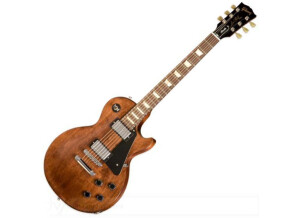
    - Mahogany body - Maple top - Mahogany neck - Granadillo fretboard (an interesting rosewood alternative) - Standard Gibson 24.75" scale with 22 frets - Neck pickup: Gibson 490R Humbucker - Bridge pickup: Gibson 498T Humbucker - 2 volume and 2 tone controls - Made in the USA - Lefty version, in my case UTILIZATION This guitar isn't what I would call light, but it's also not extremely heavy. It can be easily carried with a good strap and it doesn't tip down, which is a good point. The neck is nice, its '50s profile allows fast playing much better than my Epiphone Les Paul Custom. Access to the upper frets is good but it requires some time to get used to it, especially if you have your guitar below the ankles! The tuners hold the pitch pretty well, I was very surprised by their effectiveness! It stays in tune even if you play really aggressively, so you won't need to tune the guitar every two chords, like on some guitars. The pickups were a great surprise! When I first bought the guitar I thought about changing them, but I finally kept them. I play essentially metal and they suit my needs, besides being splittable and having a very convincing sound. I also recommend you to get a straplock, regardless of the guitar. It will avoid ugly surprises on the varnish and the painting! SOUNDS As I said before, I play essentially metal, but I also play blues and rock, and the pickups are up to standard! Except maybe for extreme styles, but that's a matter of taste, too! The neck pickup renders a wonderful clean sound with a triaxis and a chorus, to play nice ballads. In split mode the sound remains very good. A good point is that the volume is almost the same, regardless of whether you use it as a single-coil or a humbucker, and the same goes for the bridge pickup. In lead mode, the neck pickup allows you to play great solos, it is round and warm, without being muddled. You can even try more high-voltage things while always having a good precision and a good dynamic response. The bridge pickup is, in my opinion, great to play rhythm guitar. It's precise without being sharp, it allows you to play different styles from blues to metal!! It also comes out pretty good with clean sounds, and it's even better in split mode, you can easily find Ennio Morricone "western"-like sounds. But that's not its main strength, a strat would certainly do better. I play with a Mesa Boogie Triaxis preamp and a cab with G12T75 speakers to get a Master of Puppets sound! It's perfect for me! OVERALL OPINION I bought it in an auction for $900 in January 2014 and I'm more than thrilled with it. It's my first Gibson and my first mid-range guitar. I now find it difficult to use my other guitars! What I like best: The SOUND and look! The Studio series is a good value for money and secondhand it's even better! Don't let its lower price in relation to a Standard nor the fact that it's a Studio model deceive you. This guitar has all the features of a Standard without the flame maple top nor the body and neck binding, that's why it's less expensive!

  • « Custom shop looks for a lot less cash »

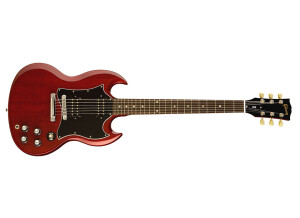
    The Gibson Jeff Tweedy Sg is a collaboration between Gibson and the frontman for cult band Wilco. The guitar is modeled after a '61 SG with some unique refinements bespoke to this guitar. The Tweedy SG features a mahogany body and neck with rosewood fingerboard. The electronics consist of a pair of burst bucker pickups wired into separate tone and volume controls with a 3 way toggle. A Lyre Vibrola adds an amazing sense of class along with the blue mist finish. I greatly enjoy the pairing of the finish with the cream hardware. UTILIZATION The guitar is advertised to have a satin finish neck, but the model i received came with a glossed neck, albeit unpainted. The neck's shape is comfortable and not as thick as the current SG standards. Tuning stability is decent but the equipped vibrola must be used sparingly to maintain your sanity in live environment. SOUNDS I played the Tweedy SG through a variety of amps, all through a mesa boogie 4x12. No pedals. The guitar plays like any old '61 SG would. It has bark and bite, great rock n' roll tone. The slightly under wound pickups deliver a sweet overdrive tone while also maintaining wonderful note separation. The guitar can be used for just about any style of music from country to aggressive metal. I liked the sound and action of the vibrola, however, anything more than subtle applications can lead to horrible tuning situations. OVERALL OPINION The Tweedy SG is a beautiful guitar with more class than anything else Gibson is offering in the price range. To get a '61 SG body with a bespoke finish, vibrola, and details like an unpainted neck-- should put you in the Gibson Custom Shop territory well above $2500. However, the Tweedy SG offers all of this in a sub $2000 price point coming in at $1699 on the new market. The guitar has some shortcomings, but all in all is an excellent value for money considering the whole of Gibson's current catalogue. The guitar has recently been discontinued and only a small selection are still available for purchase. This should strengthen the guitar's influence on the used market significantly.

  • « write me a melody »

    Gibson has really owned a large portion of the market with there great sounding and rich volume guitars such as the Explore, SG, and especially the infamous Les Paul. This is basically the cheaper version or junior version of a LP guitar. This guitar is shaped like a LP and has that familiar tone and ring to it. This guitar features a single coil pickup which is unusual to many of the models that Gibson guitars make. UTILIZATION Features BODY Body Species: Mahogany Jack Location: Top NECK Species: Mahogany Profile: Rounded Neck Joint Location: 16th Fret FINGERBOARD Species: Rosewood (or baked maple depending on stock on hand) Scale Length: 24-3/4" Total Length: 18.062" Number of Frets: 22 Nut width: 1.695" Inlays: Dot HARDWARE Plating Finish: Chrome Tailpiece: Wraparound Knobs: Black tophat Tuners: Vingate white button ELECTRONICS Bridge Pickup: single-coil Controls: One volume, one tone Manufactured in: Nashville, TN SOUNDS This guitar sounds like a LP guitar because of the shape first of all but also the wood combination that is used throughout the construction process. This guitar has a nice rich tone but it has a cool single coil quality to it that makes it a very different sound than I am used to in the Gibson instruments. I am used to that thick Gibson sound and this is more of a focused tone that has a little beef behind it. Tye sound could use a little bit more beef and I think a pickup replacement would be in order with this guitar. i would suggest getting a nice boutique single coil from another manufacture's and sticking it in there to get a better overall tone with the instrument. OVERALL OPINION The price of this guitar is very nice. You can get a great sounding American made guitar for right at around $450 which is stellar price. Overall, this is a cool guitar but in my opinion it is not a main stay guitar. It is not going to be a main guitar for most people because it just has that unusual tone that most people I think are unfamiliar with. This is a very less expensive version of the true Le PAul guitars but it still has a wow factor in my eyes that appeals to me.

  • « What a cool guitar! »

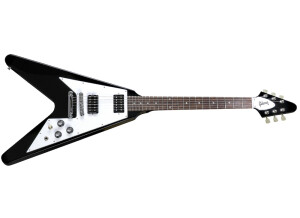
    Body Species Maple Body Type Slab Adhesive Franklin Titebond 50 Neck Species Mahogany Profile Melody Maker Truss Rod Traditional Adjustable Joint Angle 1.75° (+/- 15 seconds) Adhesive Franklin Titebond 50 Neck Fit Joint Mortise & Tenon Adhesive Franklin Titebond 50 Joint Angle Tolerance +/- .005" Fingerboard Species Baked Maple Frets 22 Radius 12" Nut/E.O.B 1.695"/2.260" Inlays Dot Nut Material Corian Width 1.695 Slots Gibson PLEK System Headstock Truss Rod Cover with Hot Stamp Gold Gibson Logo Black Antique Bell Tuners Model White Button Tailpiece Type Wrap Around Tailpiece Plating Chrome Hardware Knobs Black Top Hat Strings .010 - .046, Genuine Gibson strings Strap Buttons Aluminum Pickups Bridge Position Seymour Duncan HB-103 (Ceramic) Electronics Potentiometer 1 Volume Control Type 300k Linear Volume Coil Wiring Machine Wound Output Jack Traditional 1/4" Finish Sealer Nitrocellulose Process 1-1.5 mils Satin EbonySatin BlueSatin WhiteCase Type Gigbag Accessories Additional Materials Gibson Owners Manual UTILIZATION Cool! I started playing guitar in the 80s, and regularly going to guitar stores (and pawn shops) in the early 90s. Back then, there were all sorts of 60s Melody makers around. Most had the traditional Les Paul shape, some had the sharp doublecut shape (like an early Epiphone Olympic), and some had the SG shape. I always thought the SG -shaped MM was a very cool guitar, but I wondered what would happen if Gibson gave the same Melody Maker treatment to some of their other iconic body styles. Here's my answer! The Flying V has become a Melody Maker now, and to great effect. Gibson did a good thing and gave this guitar a humbucker pickup instead of the single coil they usually put in the MM models of the past, and it is a much better guitar because of it. SOUNDS The guitar is pretty simple - one pickup, one knob. It sounds bright and cutting, all the time. The only real way to affect any change is to change amp or effect settings. What you see is what you get with this guitar, and it's great for any rock style, even metal. OVERALL OPINION I'm a fan of this. The cool factor is way up there, and it's good to have available a USA-made Gibson Flying V for under $500! It's for minimalist guitarists - players that don't feel like futzing about with their knobs and players that just wanna rock. Very nice, Gibson.

  • « Worst idea Gibson has had in a while »

    Maple body Maple neck and fretboard Slim Taper neck profile 490R and 489T humbucking pickups Nitrocellulose finish Tune-o-matic bridge Grover tuners Hardshell case Additionally, this is basically one of Gibson's "new revolutionary" designs that I keep hearing about. During the last few years the company has come out with a lot of new guitar ideas and most of them have tanked because players don't stick with them. The main sticking point for this one seems to be the non traditional body wood and shape and also the 6 way tone selector. None of these things are new ideas, but for Gibson it's something different. UTILIZATION For one thing I'm not even entirely sure what all the 6 way positions do. One is a single coil splitter. There also seems to be a bass roll off and treble roll off. To be honest this is a fairly useless feature besides the coil tap. I could do without having a massive knob on the pick guard too. I would say the guitar is pretty comfortable to play. It resembles a melody maker in how it is designed. The overall construction is surprisingly good though, even for Gibson. Tuners are good. Bridge is solid. There aren't any major flaws or anything. Finish is good. SOUNDS This is where it gets awful. Making this guitar all maple was a silly and terrible idea. As expected the tone is a trebley mess of bright maple awfulness. It seems like Gibson tried to pick some humbuckers that would be very warm to balance this out but the guitar itself has such a bright character that it doesn't matter. Even through my Cornford RK100 which is a super bass heavy amp, this guitar has an ice pick tone to it. OVERALL OPINION Unfortunately I returned this thing two days after buying. The sound is just that bad. Functionally it is a pretty good, although honestly very ugly design. I was told gibson actually made this style of guitar a while back and it never caught on then either. Apparently they had the bright idea to do it again with terrible tone woods. It's advertised as a guitar that can cut through the mix. Well that's an understatement. It cuts through your ears and does it with extreme pain. Not recommended unless you have the muddiest amp ever.

  • « What an affordable LPC? »

    Gibson is not really known for their reasonably priced guitars. In fact its quite the opposite. With 2011 a lot of strange things went on at Gibson. They were forced to change some of their construction methods and materials. As a result some guitars came out with features that should have been above their price range. This is one of those guitars. This is the Gibson Les Paul Classic Custom. The big change on this guitar is the Baked Maple fretboard. This is what they are using now instead of rosewood. The color varies widely with this wood from very pale like maple to dark like rosewood. If you put some lemon oil on it the fretboard will darken up and give you a better look. The guitar has a mahogany body with a maple top. The finish on this model is black so it looks like all the classic black beauty Les Paul Customs. The neck is mahogany with the aformentioned baked maple fretboard. The fretboard has block inlays like a Custom should. It has the big custom headstock with the split diamond inlay. Everything is bound and the body is double bound. UTILIZATION Gibson playability is Gibson playability at this point. There are only a few guitars were it is any different like on the Axess models. This model has your standard Gibson fare. This model comes with the 60s neck so it is a bit thinner and faster. The baked maple fretboard is smooth and gives you a feel similar to ebony. The upper fret access isnt great but thats part of the Les Paul playability. SOUNDS People who say the fretboard change is going to ruin the Les Paul sound are all wrong. The fretboard has very little impact on the sound of an amplified guitar. The pickups and bodywood are what are important when it comes to an electric guitar amplified. Real Gibson Les Paul Customs come with Burstbuckers but I prefer the 57 Classics that come in this guitar and other cheaper guitars. They are both good PAF copies but I think the 57 Classic is the better of the two in my opinion. They have the vowel quality and good sag. If you are looking for vintage Les Paul tone these pickups are going in the right direction. The classic tones pour out of the guitar and once you are playing you wont remember that this isnt a 4000 dollar Les Paul Custom. OVERALL OPINION This is probably one of the best alternatives to a Les Paul Custom you can get. It is a real Gibson with all the right features. The only difference is the fretboard. Once setup they will both play great. If you think having any ebony fretboard is worth paying 2200 dollars more by all means pay full price, but the baked maple fretboard doesnt feel much different and with some lemon oil or something you can darken it right up so hardly anyone will notice your guitar is different. If you are looking to buy a new Les Paul Custom you should check out the Classic Custom first to see if you can save yourself a bunch of money.

  • « Could use some work on pickups »

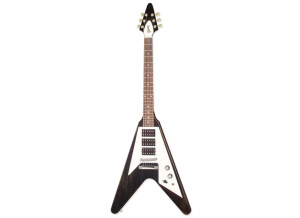
    USA made. Mahagony body and rosewood fingerboard. Crazy tuners. 4 control setup. Typical firebird pickups. It's a fairly stripped down guitar. The scale I believe is Fender instead of the shorter length you usually see on gibsons. For such a pricey guitar it's not a massive feature set but on the other hand these are not the most popular guitars. Seems like they don't make very many. UTILIZATION Some people say these are awkward to play. I can see how some would say that and I think it's because the longer scale length kind of throws some guys. Personally I'm used to the length so I'm right at home playing this guitar. The body shape is pretty comfortable and kind of reminds me of an SG in a lot of ways. All things considered it's an ergonomic design despite what the wacky lack might make you think. Fret access is great. Knobs feel pretty solid. These are definitely well made unlike a few models that Gibson makes which are know to have QC issues. Maybe I just got a good one. SOUNDS Here's my gripe with these. The pickups on them sound nothing like actual vintage Firebird pickups. I have played a couple original Firebirds and the pickups they put on this reissue model are way too hot and not EQ'd right. They're very muddy and don't have that high treble the old ones do. I realize it's hard to recreate a pickup perfectly, but saying that the reissue doesn't get close is putting it nicely. The new ones sound more like P90 single coils than anything. The original sounded more like a ticked off telecaster. That said, they aren't bad pickups. But if you want the original sound you'll have to shell out the extra $200 or so for a repro set. A guitar that costs this much should not need an upgrade like that however. OVERALL OPINION I'm impressed with everything but the pickups. Actually this is a really nice reissue despite being a bit hard to find sometimes. Like I said before, I have seen and played a few original ones and this remake does do the design justice. If you are more concerned with getting the look down, this will be a satisfying axe, but if you want accurate sound and looks, expect a pickup switch.

  • « classic guitar »

    The neck on the Gibson L6S 1974 Feels Great! That has always been the big plus point of Gibson’s and this one is no exception. I also like how light it is and the small body makes it very comfortable to play. Maybe it doesn't have the same bottom end as a Les Paul but it can still deliver long sustain and can definitely stand its own. The sound is very dynamic - this is good...and bad at times. When I play leads or single lines this makes the guitar sing very nicely. When I play rhythm and sing along it becomes harder to handle (I am used to a Stratocaster). UTILIZATION It is 100 percent maple wood, which is a classic feel. Really takes me back to the good ol days when most all good guitars where made out of maple wood. With 24 frets and every single of the higher ones are easy to reach with out any problems. SOUNDS unbelievable classic sound. OVERALL OPINION I own this guitar now for 17 years and it has had its ups and downs. First I had to replace the tuners as they didn't really take a lot of beating. So I installed Schaller Locking Tuners. After about seven years the neck started warping in the middle - which is the worst place. I had a luthier take out the frets and file down the neck (having to replace the Abalone inlays) in order to get it straight again. I hope this will be it for the future as this couldn't really be done a second time. He actually showed me another Gibson where the Truss Rod was inserted so close to the neck that while filing down he actually broke through! So beware! I really don't like the company. They have been making crappy guitars for years now and keep feeding on the few things they have done right. But then they make instruments that are a joy to play at the same time.

  • « One of the most underrated Les Pauls. »

    USA made Mahogany/balsa body Maple top Mahogany neck (set in) Ebony fretboard Gibson tuners Tuneamatic bridge Gibson 500T and 496R high output ceramic pickups 2 volume, 2 tone, 3 way pickup selector Black speed knobs Black hardware Translucent finish UTILIZATION This guitar, if you'll excuse me for saying it, is badass. Incredible take on the Les Paul design - they just use balsa wood for the center body section! That's one way to make it lighter! It sounds like a terrible idea in theory, but the guitar is way lighter, very stable, and sounds great. No balance issues when standing, either. The guitar plays like a great Les Paul should. SOUNDS This guitar sounds fantastic. Big, screaming tones, with plenty of definition. Neck pickup sounds warmmmmmm and smoooooooth and gets all the Slash/Eric Clapton "woman" tones you could ever want. OVERALL OPINION I love this guitar. This axe is my friend. It's the guitar I've owned the longest, and while I have other guitars that might play a bit easier, do a bit more, etc..., this guitar will stay with my until the end. I feel conflicted about writing this review, honestly, because I want to tell people how good the guitar is, but I don't want the word to get too far out there, because then the price will drive up, and it will make it harder to get another one in the future. Anyways, great, great guitar!

  • ybubgn's review

    Take a Les Paul Junior Special P100 pickups and replace the 490R Alnico magnet with a humbucker 498T Alnico magnet and a humbucker (the same as for a Les Paul Standard) and this is the guitar of your dreams to 3 times cheaper For Gibson CHARACTERISTICS: https://www.gibson.com/products/gibson/LesPaul/lpjsh.html In APRS the serial number, it does makes Nashville in August 2002. UTILIZATION N'tant not a great player, I can gure how this part. For cons, I did try a professional guitarist friend and his opinion is positive about the use trs. <Edit 2005-04-22> APRS over a year of use, I find it really enjoyable to touch. Unlike some Les Paul Junior / Special, Access in acute trs is good (cf https://en.audiofanzine.com/lp-shaped-guitar/gibson/Les-Paul-Special/). </ Edit> <Edit 2005-04-25> Small correction to the prciser Access in acute is good for a Les Paul;) </ Edit> SOUNDS Led Zep fan of blues and rock, this guitar fits perfectly in my range of sounds! Plugs into a Marshall 8080, trs sound is good. <Edit 2005-04-22> With a POD XT and a Tech21 Power60, it sounds even better: D </ Edit> OVERALL OPINION Purchase in very good state for $ 800CAN (~ = 530 Euros), I think I made a good deal trs;) The price quality ratio is awesome! It's barely three months I use this guitar but I am very satisfied. The model is no longer produced (discontinuous since 2002). The little less, the black patent tarnishes in the long run APRS utilistation. It is no hsitation I take the same guitar ... If you want a Les Paul but you can not afford, look for this guitar in hand, it is worth it!

  • « Unique sounding Gibson »

    When the Nighthawk came out Gibson was trying to break out of their normal rut. They were looking to give their loyal customers a guitar with a unique feel and tone. This is what they did with the Nighthawk. It looks familiar but the sounds and feel of it are pretty different. They took the classic Les Paul. They widened the body but the body is still smaller overall and opened up the cutaway. They extended the neck scale to 25.5 inches. The neck is mahogany with 22 frets. They also designed 3 new pickups for the guitar. They put a high output slanted humbucker in the bridge. They put a Gibson mini humbucker in the neck and a specially designed high output single coil in the middle. With coil tapping, as many as 10 different combinations were available. There is a large Fender style bridge with string through stringing. It has a 5 way blade pickup selector and the tone control is a push pull that can split the bridge pickup. There were other versions of the nighthawk with different pickup configurations but this was the most popular. UTILIZATION This guitar feels a bit different than a normal Les Paul. You may not notice by looking at it but the guitar has a 25.5 inch scale. Which means there is more room to play on the fretboard and the strings have more tension. You may or may not like this. More obvious is the larger cutaway that allows better fret access on the upper frets. The bridge is more of a fender style with individual saddles. It has a string through design which offers great sustain. It also will not fall off when you change strings. The neck is pretty beefy with a comfortable D shape SOUNDS This guitar has a crisper sound than a normal Les Paul due to a number of things. The bridge is more directly mounted to the body which transfers more resonance through the guitar. This combined with the string through design gives more instant attack. The longer scale on the neck gives more tension in the strings and that also increases the crispness of the attack. This combined with the 3 different pickups provides many tones. The mini humbucker is very smooth in the neck. Almost like an old PAF. At some positions it gives out a very Telecasterish sound. This may be because of the slanted bridge pickup putting out more treble frequencies and the extra tension. The single coil is great to mix in with the other pickups because it will add extra clarity and ring ontop of the thick humbucker sound. A major disadvantage to the slanted humbucker in the bridge is that it would be very hard to replace if you didnt like the tone or it was damaged. OVERALL OPINION This guitar kind of got mired in the back when it first came out. Now with Gibson doing reissues of everything not from the Norlin era it could come back and be popular. It is one of the more versatile sounding traditional guitars that Gibson has ever put out. If you see one at a guitar store or something used you should check it out. You will be surprised at the myriad of tones you can get with this guitar.