Log in
EN
FR

SeriesGibson Explorer

40 products found

Filter
Sort by
Evaluation
  • Reviewed or not
  • Editor’s award
  • Reviewed by Audiofanzine
Availability
  • Available or not
  • Sold new or used
  • Sold new
  • Sold used
Must-have products
  • All products
  • Flagship products
  • Best rated products
  • Hot products
  • Popular products
Price
  • Freeware
€
Clear
Sort by
  • Popularity
  • User ratings
  • Price - low to high
  • Price - high to low
  • Used price, increasing
  • Used price, decreasing
  • Name (from A to Z)
  • Name (from Z to A)
  • Added on
Sort results
  • Popularity
  • User ratings
  • Price - low to high
  • Price - high to low
  • Used price, increasing
  • Used price, decreasing
  • Name (from A to Z)
  • Name (from Z to A)
  • Added on
Filter results 40 results found
Evaluation
Availability
Must-have products
Price
  • Freeware
Show results

The best Gibson Explorer reviews

The reviews Audiofanzine members found the most helpful.
  • « 1988 Beauty »

    A 1988 beauty made in the USA. This is an older Explorer Pro with a 10% undersized mahogany body and normal neck, 24 jumbo frets on an ebony fretboard with killer split diamond inlays, one bridge pickup (a non original EMG 81) and one volume control, tune-o-matic bridge with string through body. UTILIZATION The guitar neck is nice and slim, like a 60's LP carve, but a bit thinner after the 12th fret and up. The neck combined with the lower horn cut away provides very good access to the upper frets. The guitar is limited in the sounds it can produce because it only has the bridge pickup and one volume control. The 10% reduced body makes this more ergonomic than it's regular sized brothers. I found it to have a nice balanced weight. SOUNDS I used this guitar with custom built Peters amplifiers, which are kind of a cross between a Peavey 5150 and high gain Marshall/VHT with a little Boogie thrown in. The amp was paired with an Avatar 4x12 that had Celestion G12h -30's and a Splawn 4x12 with Governor/ManOWar speaker combo. I usually go for a nice thick Jerry Cantrell AIC tone, to use with my modern rock/metal band. The guitar had a very focused sound that all mahogany guitars seem to have. It was nice and balanced all across the frequency spectrum. It held up well with high gain lead and rhythm playing. The EMG didn't clean up very well for clean sounds. OVERALL OPINION Overall this was a nice guitar. I bought it used, so there were some dings - but nothing too bad for being 20 years old. The guitar had nice sounds across the board with distortion and useable sounds for clean, due to the single EMG pickup. I liked the neck carve, the weight and distorted tones the best. The cleans were passable. For being used, the action, fit and finish were very good. I have been through many guitars and had a number of years where I would buy, try and flip, which enabled me to have many guitars around to try out. I bought this via the internet and was not able to play it before purchase. I bought it because it looked cool and had a good price and I knew I could resell it without too much of a problem. In the end, it was too limited in sounds without having a neck pickup and it seemed to be very small when strapped on, I think I would have liked the regular sized better. Knowing what I know now, I would have passed on buying it, even though I broke even.

  • « Subpar »

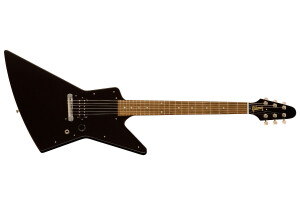
    This guitar seems to be another attempt by Gibson to lower the overall quality of their products. This is the Melody Maker Explorer. I dont know why anyone would buy the regular Melody Maker and this is no different. The quality on this guitar is below that of all but the cheapest Epiphones. This guitar has a maple body in a slightly smaller Explorer shape. The body has a satin faded finish. The neck is a huge set mahogany neck. It is the standard Gibson scale. The headstock is like a mini flying V headstock for some reason. The tuners up top are pretty poor. The bridge is a wraparound bridge but its a Gibson wraparound bridge so the intonation is not very good down the neck. The single pickup in this guitar is Duncan Design pickup so its like a half quality Seymour Duncan. You get a single volume knob for controls to complete the melody makerness. UTILIZATION The quality on these super low end Gibsons is laughable. At some points it is hard to believe that these guitars are made in America. The tuners are the cheapest Ive come across on any modern guitar. They do not hold tune well at all. The wraparound bridge design was bad back in the 50s and it is still bad. This is no PRS bridge. The intonation on this guitar is bad past the 12th fret and it is mostly because of the bridge. Having a guitar with bad intonation is the worst because you can tune it and tune it but everything will always sound slightly off. The neck on this guitar is huge. It is like a 50s Gibson neck. I guess a bigger neck is easier to make. The frets on this example were not leveled very well and there was buzzing up and down the neck. It is quite amazing to see the differences in quality between a guitar like this and other Gibsons which are all made in America. The baked maple fretboard even though there is nothing wrong with it, the pale look of it to me makes the guitar look cheap overall. If they threw some varnish on it and darkened it up it would look a lot better. SOUNDS Gibson was pretty clever. On the specs it says the pickup in this guitar is a Seymour Duncan HB-103. On the surface that makes it sound like this guitar has good Seymour Duncan pickups but when you look up what a Duncan HB-103 is it just a Duncan Designed pickup which is what they put in cheap low end guitars when they dont want to use no name pickups. The pickup in this guitar does not clean up well because it is jsut a bridge pickup and there is no tone knob. The maple body in this guitar gives it a different sound than you would normally get with a Gibson. The sound is brighter and that kind of accentuates the low quality of the pickup. With gain it has a sort of harsh but muddy high end tone to it. OVERALL OPINION I really wouldnt recommend this guitar to anyone. You can get much much better quality Gibson style guitars if you buy an overseas made guitar. Be it an Epiphone or a copy like an Agile or Edwards. The quality on all those guitars for the same price as this guitar would be head and shoulders over this guitar. If you are looking for a low priced Gibson I would strongly advise you to not get a Gibson like this and to start looking at guitars as a whole and not just a name on the headstock.

  • « Would be cooler without the tribal stuff »

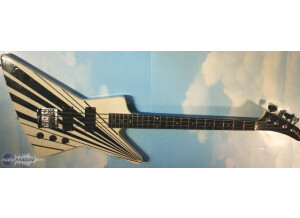
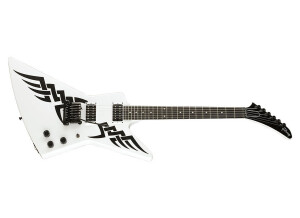
    This Gibson Explorer is part of the 2009 run of limited edition guitars. Gibson came up with a new gimmick guitar every month for this series and in my opinion the Tribal Explorer and V were the best guitars to come out of that run. The Flying V and Explorer were way ahead of their time when they were first introduced in the late 50s but in the 80s they came into their own. This guitar emulates the style of the time with its finish and hardware. This Explorer has a mahogany body and neck like most Gibsons. The set neck has an Ebony fretboard with 22 frets. Up top you get no locking nut or even locking tuners which normally would be fine but since you have a Floating tremolo its just a sign of lazyness. The Kahler model on this guitar isnt even a good one its just a top mount model that goes into the tune-o-matic posts. You get two standard Gibson pickups on this guitar. The 496R in the neck and the 500T in the bridge. The controls are simple with a master tone and master volume with a 3 way toggle. You get silly black graphics on the white finish of this guitar. Kind of looks like a tribal tattoo mixed with the Van Halen logo. UTILIZATION Without the tremolo system this would just be a normal Explorer, but the tremolo system makes it worst. It makes the guitar worse because it does not have a locking nut to keep it in tune. It has locking tuners which are nice but with a tremolo you need a locking mechanism at the nut because tremolo use will cause binding and snagging at the nut. This guy comes with the 50 baseball bat neck which does not lend itself to fast playing unless you have huge hands. The ebony fretboard is nice. The model I tested out was a bit dry but some linseed oil fixed that up. SOUNDS The pickups in this guitar are nothing special. They are Gibson pickups that they put in just about every guitar that they think needs a modernish sound. You get the good mahogany base which is key to the sound on any Gibson. The 496R is kind of bright for the neck position but 80s tone is all about brightness. It can really cut through. The bridge pickup 500t is nice and crunchy. It has decent output and nice string clarity on every string. The Gibson pickups are alright but with the style of guitar this is some hotter or active pickups would have been better. A set of EMG pickups would have gone well with this guitar. White Explorer with EMG's is a classic metal look and it would have the classic metal sound. OVERALL OPINION This guitar is another one where Gibson was close to getting it right. They have Explorers that come with locking nuts so I dont know why they couldnt have put one on this guitar. They have Explorers with Floyd Rose tremolos that come with locking nuts. Why bother putting a Kahler on this guitar without a locking nut. Why didnt they just paint the Floyd Rose guitar white with the tribal stuff. That would have been a better guitar overall. People like Floyds more than Khalers anyway. If you are looking for a white Explorer than get a white Explorer. If you are looking for an Explorer with a tremolo than get one with a Floyd Rose and locking nut.

  • « 7 string Explorer »

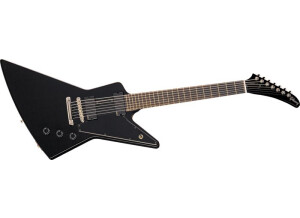
    Gibson was a little late to the party with this guitar and I think now it might be discontinued. This is the 7 string version of the Gibson Explorer. It has some good features and some bad features. Some of the good features is that it is pretty much a traditional Explorer. Two volume and a master tone with a 3 way switch. The fretboard is clean with no inlays which is cool but on a guitar this expensive they should have put on a ebony fretboard. The rosewood fretboard doesnt really fit with the rest of the black guitar. Gibson chose to use their traditional scale length which is not great for a 7 string. The neck 24.75 inch scale mahogany neck. Instead of trying to figure out their own 7 string pickups Gibson wisely choose to use EMG pickups. This guitar has a 707 in the neck and a 81 7 string version in the bridge. Because the pickups are active you will need to use a battery to power them. Gibson was nice to include a separate battery compartment so you dont have to open up the entire control cavity to change the battery for the pickups. The fact that it has EMG may be a reason why it might be discontinued now. I noticed that other Gothic models that use to come with EMG's have switched back to Gibson pickups. UTILIZATION The neck on this guitar is pretty big. Gibson decided not to use their 60s profile for this guitar. On 7 strings I prefer thinner necks to help compensate for the much wider necks. Gibson instead made the neck thicker. The Explorer shape gives great balance. When playing standing up the guitar will naturally come to rest in the perfect position for playing. I like fretboards with no inlays but it might be a problem for some people who have not been playing guitar as long. There are always markers on the side of the neck. The only problem with the EMG 7 string pickups is that they are so big they require a proprietary route. You would need major modifications to your guitar to change these pickups to another brand of 7 string pickups. The low B string on the stock set of strings is only a 59. I do not think this is enough for a low B on a 24.75 inch scale guitar. I have used a 60 low E string on 24.75 inch 6 strings before. SOUNDS Thanks to the EMG pickups this guitar sounds great. The 707 in the neck is great. The 707 tonally is like a mix between the 85 and 81. It is nice and thick like the 85 but still has the top end attack of the 81. The 81 in the bridge is a grind machine. It brings the clarity. This helps make up for the short scale of the neck. With this short 24.75 inch scale on a 7 string the low B will be pretty loose and flubby. This would produce a muddy sound with anything but the tightest pickups. The 81 is really tight and has lots of high end bite. These good pickups and the large body of the Explorer makes this guitar sound huge. Explorers sound big as 6 strings and this is a 7 so it is gigantic. If you are feeling frisky you can do the 18v mod to the EMG pickups to get even more tone. The 18v mod helps give you more head room and will help the EMG sound more natural. This especially helps warm up the clean tones which are generally the weakest part of the EMG's. OVERALL OPINION I dont know why Gibson teases people like this. They will put out something great for a couple years then pull it without telling everyone. By the time everyone knows about it the guitar is out of production. Its like Gibson wants to make more metal guitars but does not want to commit to it. Oh well. If you have this guitar you are one of the lucky ones. If you are looking for a nice Gibson 7 string and you spot one of these you should grab it.

  • moosers's review

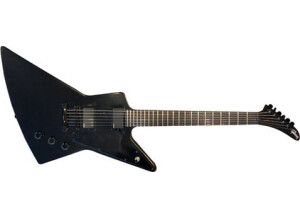
    The Gibson Explorer Gothic is a limited edition electric guitar. A number of years ago Gibson put out a number of different Gothic style guitars, including this one, an SG, and a Les Paul. As far as I know, it is pretty similar if not the same in make up to a normal Explorer. It has two humbucker pick ups with the traditional pick up selector switch and knobs for tone and volume. UTILIZATION Playing and using the Gibson Explorer Gothic is definitely a fun thing to do. As far as getting your tones, as long as you understand how to work any electric guitar, you won't face a problem with this one as it is pretty standard. It is easy to play all around the neck, with the very upper notes not being a problem at all to reach. The weight of the guitar is little bit heavier than average, but it isn't too heavy to carry around or anything like that. It has the classic Explorer body and look, matched with the all black Gothic colors. SOUNDS In terms of sound quality, the Gibson Explorer Gothic absolutely sounds like your classic Explorer. It has a very thick sound, as the humbucker pick ups give it an overall fat signal. You've got a good amount of control and versatility as the bridge and neck pick ups have nice contrasting tones. I've used the Gibson Explorer Gothic edition with a Fender Hot Rod Deville amp, without any effects, for a few different recording sessions. While the look will indicate that this guitar should be used for metal and heavy rock, it definitely has the capabilities to extend beyond these genres. OVERALL OPINION Like all of the Gibson Gothic edition guitars, the Explorer Gothic is no longer being made. I don't think that I would recommend this version of the Explorer over any other, as it is pretty much the same guitar in a different look, as far as I can tell. The price of a used one of these will be priced somewhere in the middle, as these aren't the most readily available guitars since they are no longer made. If you're a fan of Explorers or are looking to get one in general, the Gothic edition is like your normal Explorer, worth researching and playing to see if it will work for what you're looking for.

  • « A Classic Lives on in both tone and quality »

    The Gibson Explorer was introduced in 1958. It was an outlandish design for the time, and as a result, low demand caused only 100 to be made. These are now incredibly collectible, sometimes fetching 6 figures on the auction block. Gibson shelved the design, and reintroduced it in the 70's with a few updates, one of them being the choice of pickups. By this time, the Gibson 496 and 500T pickups had been introduced, giving players more power over the previous model of humbuckers, which were lower output. As a result, the Explorer quickly became popular for the evolving sound of rock n' roll that pushed for more distortion and sustain. The modern Explorer remains rather unchanged from its 70's incarnation, still sporting the 496R/500T pickup configuration, the hybrid 50's/60's set neck with 22 fret rosewood fingerboard, tune-o-matic bridge and stopbar tailpiece, and two-volume/one-tone control configuration with 3-way toggle switch. UTILIZATION Someone at Gibson must have visited a psychic while designing the Explorer. The psychic would have said "guitar players will have the desire to play fast, much faster than today." because that's exactly what the Explorer is designed for - blazing speed. One listen to Brenden Small's guitar playing on any Dethklok album will confirm that shredding is a breeze on this guitar. Access to the higher frets is open, making those wide runs easy. To facilitate this, the fretboard radius feels rather flat all the way down the neck, allowing for easier bending and faster runs than more traditional radius fretboards. Still, its nut width and scale length are Gibson standard sizes. It doesn't take a keen eye to see that the Explorer isn't the most ergonomic design in the guitar world. In fact, it's rather large and awkward, which is ultimately why I ended up selling mine. Moving around a small stage or practice area almost always resulted in bumping the headstock or rear corner of the body on something or someone. However, despite its size, the Explorer is surprisingly light in weight. SOUNDS The Explorer does well with a variety of sounds, but it would be a mistake to assert that its forte is not rock and metal. The 500T comes alive through a properly distorting tube amp, driving the preamp into harmonic armageddon and evoking a midrange grind that is addictive. This pickup works well with everything from Bad Company-style plexi gain to Stoner Metal to compressed, soaring power metal. The 496 does cleaner tones and alternate-picked runs surprisingly well, although lower notes tend to blend together on fast runs. It has a very warm, mellow quality without being weak. OVERALL OPINION The 2009 Explorer I owned was immaculately constructed, leading me to wonder where the complaints of quality with newer Gibson guitars was founded. The guitar played well, sounded excellent, and looked badass. I actually regret selling it, and will likely own another some day. Gibson guitars have a lifetime warranty, and are still hand-made right here in the USA. There are plenty of great guitars made elsewhere for less money, and there are many excellent values from many manufacturers. I think every guitar player should own at least one Gibson in their lifetime, to have a chance to connect with a great American legacy that has helped shape an artform and a culture for more than 75 years.

  • « Perfect Explorer »

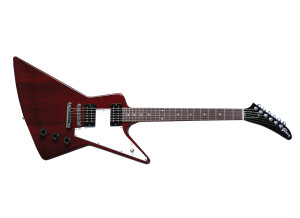
    Exclusive to Guitar Center. Gibson's Explorer Traditional Pro features a solid mahogany body, 60's slim taper neck, and a rose wood fingerboard. As for electronics, the guitar has a '57 classic in the neck and a burstbucker iii in the bridge position, both sporting exposed zebra coils. Although the scale length remains the same as a regular explorer (24 3/4") the body is reduced in size by 4% --lending it a very compact feel. I very much enjoyed the wine red finish and appreciate the bound body and fretboard, appointments typically not seen at this price point for Gibson USA models. UTILIZATION The plek'd fingerboard translates to great playability and feel. The reduction in size feels exaggerated by the shape making the guitar seem very light and easy to get around. The neck profile feels very good in the hand and allows for quick position changes for those with medium sized hands. Tuning stability was very good, i felt very confident with the equipped grover tuners and felt no need in replacing them. SOUNDS I played the Traditional Pro through a Mesa boogie Royal Atlantic. Mesa 4x12 combo. No pedals. The pickups are very hot. Played through a el34 based tube amp, I could easily get both bluesy and searing high gain tones from the combination Gibson provided. The coil tap feature was excellent and allowed for very nice single coil tones, before unheard of from an Explorer body. OVERALL OPINION It's the nicest iteration of the Gibson Explorer series since the E2 models from the early 80's. The Traditional pro is essentially a reboot of the 2007 GOTW explorer pro's, featuring updated electronics. At $200 less than the typical explorer, it's great value for money. It can be noted that not many of these guitars are circulating in the used market.

  • « Nice studio model »

    To Gibson Explorer guitar is a great hard rock. Looking guitar and it certainly has that hard rock tone as well. If you've ever played any type of Gibson instrument then you know that has a nice deep rich thick tone that translates very well into rock or metal type musical setting. This guitar just has that look of aggression and anger it really dries your guitar playing into new sonic stratospheres. I love the look of this guitar and couple that with a nice mahogany wood which gives you a great solid foundation for any type of rock or hard rock tone. UTILIZATION BODY Species: Poplar (90% of regular X-plorer body size) NECK Species: Mahogany Profile: Rounded Peghead Pitch: 14° Thickness at 1st fret: 0.800" Thickness at 12th fret: 0.850" Heel Length: 0.625" Neck Joint Location: 19th fret FINGERBOARD Species: Rosewood Scale length: 243/4" Total Length: 19.062" Nut Width: 111/16" Width at 12th fret: 2.062" Frets: 22 Inlays: Pearloid Dot HARDWARE Plating Finish: Chrome Bridge: Tune-o-matic Tailpiece: Stopbar ELECTRONICS Pickups: Neck Pickup: 496R ceramic magnet humbucker Bridge Pickup: 500T ceramic magnet humbucker Controls: Two volume, one tone, three-way switch SOUNDS This tone has a nice warm suitable tone for any hard rock or metal setting. I pretty much like this instrument and all settings in all types of music imaginable. It has a different sound and voicing compared to Gibson Les Paul but it certainly does follow the product line of Gibson guitars. Most of their instruments have that familiarity to them in their voicing and sound but they do you have a different feel any different tone alter themselves. This guitar has a great tone and will sound fantastic. Whether it be a clean amplifier or a medium amplifier or any overdriven ultrasonic distorted amplifier. OVERALL OPINION These guitar you can find for right around $1100 or so. It's a great looking if you're really into the hard rock or metal scene and this is a cool guitar to have as you're main axe for recording or any type of gigging situation. I recommend this guitar for anyone to use or even to have another guitar collection because it's such an iconic instrument and has such a great sound for pretty much any style of music. It's an extremely versatile guitar and will compliment your guitar collection quite well.

  • « Death Metal »

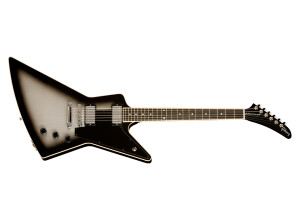
    The Gibson Explorer is definitely a unique looking guitar. It has almost a star shape that really lends itself to the hard rock and metal players. I don't think I've ever seen this guitar use by country player or anyone who plays a clean bluesy style guitar. This is the kind of guitar that is really aimed at someone who wants to play aggressively and in your face. I love the shape of this guitar and it's one of those iconic instruments that it stood the test of time. UTILIZATION Silverburst Finish Mahogany Body Slim Fast Profile Mahogany Neck Ebony Fretboard 24-3/4" Scale Length 1.695" Nut Width 12" Fretboard Radius 22 Medium Jumbo Frets Burstbucker 1 Neck Pickup, Burstbucker 3 Bridge Pickup Two Volume, Master Tone Controls 3-Way Pickup Selector Grover Mini Tuners Tune-o-Matic Bridge with Stopbar Tailpiece Chrome Hardware SOUNDS The tones of these guitars very similar to a Gibson Les Paul guitar or Gibson SG guitar. It features mahogany wood throughout the body and in the neck. It also has a Rosewood fretboard as well. The tone of this guitar is very warm and articulate and it also gives you a sense of a full sounding extremely aggressive thick saturated tone when you use a lot of distortion or overdrive. Quite surprisingly this guitar cleans up not pretty well comparatively to Gibson Les Paul guitar. Even though the shape of this guitar as a little bit more would it gives off a brighter and cleaner clean sound to my years in a Gibson Les Paul guitar. Overall this is a great sounding guitar and has a full warm tone. OVERALL OPINION You can find these guitars pretty easily but not quite as easily as a Gibson Les Paul. I seen these gopher right around $1600 all the way up to about $1700 new. They're cool guitars and if you really dig the body shape and this is right up your alley. If you're not into the body shape and you're probably pass on this and go straight to the Gibson Les Paul instrument.

  • « Stripped down Explorer... oh yeah »

    The Gibson Faded Explorer was introduced by the company to round out their "Faded" line of guitars which take the traditional Gibson designs and bring the costs down by offering thinner finishes that only consist of pore filler coats and a couple thin passes of nitro lacquer. This is one such guitar, and other than its thinner faded finish it's essentially a standard Explorer. It features a mahogany body and neck, a rosewood fretboard with 22 frets, Grover tuners, a tuneomatic bridge and stopbar tailpiece, a pair of hot Gibson 496R/500T ceramic humbuckers and made in the USA construction. Control wise it features dual volumes, a master tone and a 3 way pickup selector. UTILIZATION The design of the guitar is fairly ergonomic considering the rather bulky shape that the Explorer offers in general. I find them heavier than the Flying Vs and sometimes a bit more unwieldy to hold/play for longer periods of time. However, as far as pointy guitars go, this one isn't as bad as some of the guitars I've seen for access around the guitar. The weight is usually reasonable and the upper fret access is decent enough to get right to the 22nd fret. Also, the satin finish all over the guitar makes it really easy to glide up and down the fretboard. Getting a good tone out of this guitar is pretty simple. It's not designed with sheer versatility in mind, and the pickups are definitely on the hotter side, so I'd really say the guitar is meant for rock or metal styles primarily. It sounds pretty solid though and definitely like a Gibson should. There is a wonderful low-midrange heft in the tone that is classic Gibson territory here, and it sounds great through a variety of different rigs. SOUNDS I've tried the guitar through various amps and have concluded that it seems to sound better for higher gain stuff as a general rule. It works really well for sludgier stuff like High on Fire or Spiritual Beggars where you need a thick and meaty sound, or even for tighter more modern rock or metal tones. The clean tones aren't bad either but the pickups are a bit too hot in output to sound great clean, at least for my tastes. It's definitely a guitar that's designed with a vintage voiced high octane vibe in mind. The nice thing is that it's not overly compressed like many modern metal guitars... the pickups still allow a really nice airy and open sounding quality to come through in the mix. OVERALL OPINION All in all I think the Gibson Faded Explorer is a great guitar for someone looking for a really cool looking and great sounding guitar for rock or metal styles. The faded finish makes it really easy to play, the tones are great for hard rock or metal and the price (usually around $500-$600 used) is quite attractive for a USA made Gibbo. Definitely worth a look if you can try one!

  • « Just pure rock n roll!!! »

    The Gibson Explorer guitar is a funny looking guitar at first glance. If you've been looking at Fender Stratocaster's or Gibson Les Paul's or anything like that then looking at a Gibson explore guitar would be a little bit unique. You can associate these guitars with hard rock or metal or even hair metal from the 80s but it is a fantastic and pretty versatile guitar. It was the guitar that the Egde from the band U2 first owned when the band started out playing back in the late 70s. So even mild moderate rock bands could pull off this kind guitar look on stage. It almost looks like half a lightning bolt in a way. UTILIZATION It features two humbucker pick ups the couple volume knobs and a tone control knob. This is pretty standard and most Gibson guitars and the features wise don't really deviate from guitar instrument to instrument. It has a nice balance overall and feel to this guitar. He probably wouldn't expect that because of the unique shape in unusual body and neck appearance. It features mahogany wood in the body and in the neck as well as rosewood fretboard. So the materials used is pretty much the same for every Gibson guitar whether that be a Gibson Les Paul and SG, and this guitar. SOUNDS The tone of this guitar is very reminiscent of a Gibson Les Paul guitar because of the warm thick tones that it produces. It also cleans up pretty well which is surprising because of how big this guitarist body is. It seems to be a little bit awkward when you look at it but when you have it on a guitar strap and you're playing it doesn't really feel unbalanced. So if you use this guitar with a high gain amplifier of some sort you'll going to get a good rock 'n roll tone that can be very thick and juicy. If you play with a clean tone then you will still going to need to use a compressor or something of some sorts to really get the chime that you want this guitar. It can be very difficult to play any type of clean guitar tones with this instrument just because of the thick warm mahogany wood that is used throughout the instrument. OVERALL OPINION I recommend this guitar to anyone is looking for an alternative to Gibson SG or a Gibson Les Paul guitar. They usually float around the used sections for right around thousand dollars or so and they're pretty easy to find. They're not as common as a Gibson SG or Les Paul but they're pretty easy to find. They're a fun instrument and a great rock 'n roll guitar. If you're into music such as Metallica and you've probably seen this guitar used by James Hetfield number of times.

  • « Holy strange »

    The Gibson Holy Explorer is one of their Limited Edition model guitars that were built with unique features such as finishes, different pickups or other things that might be deemed as wild or cool. The Holy Explorer takes that to a rather odd extreme by cutting out many pockets of wood from the body. It contains seven different holes that go all the way through the body, each of varying sizes and shapes. It's also got a very thin finish a-la the Faded series Gibson as well. Otherwise the features conform to the specs of the regular '76 reissue Explorer, except that it doesn't have a pickguard. It features a mahogany body and neck with a rosewood fretboard, 22 frets, dot inlays, Grover tuners, tune-o-matic bridge and stopbar tailpiece and dual Gibson humbuckers. This particular model is loaded with a 496R in the neck position and a 500T in the bridge position. It was made in Gibson's regular USA plant in Nashville TN for the year 2009. UTILIZATION This guitar despite having several pockets of wood removed from the body is no more ergonomic to me than a traditional Explorer guitar. It's a bit lighter due to the reduced amount of wood, but the general shape is still there, so it's not like the ax is any easier to hold or play. The upper fret access is the same as a regular Explorer - decent but not the greatest in the world. Getting a decent sound out of this guitar is a tad more difficult in my experience simply because the reduced wood mass gives it a tone that loses some body and low end compared to a typical Explorer, so it makes getting tones for rock or metal a little bit harder to achieve overall. SOUNDS I've tried this guitar through various different amplifiers from companies like Fender and Mesa Boogie and have concluded that the guitar for the most part sounds like a thinner and more hollow sounding version of the Explorer. The signature Gibson bark is mostly there, and the guitar has a fairly cool thing going on for classic rock tones, but for harder rock and metal sounds it just doesn't have the tightness or punch in the low end. I find the same problem with the chambered Les Pauls too - the tightness factor isn't really there. It might be to a player's advantage to get this guitar if you're looking for a looser, more wooly sound. The cleans are nice and bright, good for funkier sounds, and the drive tones have a decent top end focus that's great for classic rock textures. OVERALL OPINION All in all I think the Gibson Holy Explorer is an interesting yet really weird thing for Gibson to produce. It's basically a typical Explorer that has these strange cutouts and a tone that's definitely lighter sounding than its regular counterparts. They were a limited run and didn't sell all that well when new which isn't really surprising given the odd appearance...