Log in
EN
FR

Fender Other Shape Guitars

70 products found

Filter
Sort by
Fender
Evaluation
  • Reviewed or not
  • Editor’s award
  • Reviewed by Audiofanzine
Availability
  • Available or not
  • Sold new or used
  • Sold new
  • Sold used
Must-have products
  • All products
  • Flagship products
  • Best rated products
  • Hot products
  • Popular products
Price
  • Freeware
  • Low-cost (< $750)
  • Mid-range ($750 - $900)
  • Premium (> $900)
€
Clear
Sort by
  • Popularity
  • User ratings
  • Price - low to high
  • Price - high to low
  • Used price, increasing
  • Used price, decreasing
  • Name (from A to Z)
  • Name (from Z to A)
  • Added on
Sort results
  • Popularity
  • User ratings
  • Price - low to high
  • Price - high to low
  • Used price, increasing
  • Used price, decreasing
  • Name (from A to Z)
  • Name (from Z to A)
  • Added on
Filter results 70 results found
Brands
Evaluation
Availability
Must-have products
Price
  • Freeware
  • Low-cost (< $750)
  • Mid-range ($750 - $900)
  • Premium (> $900)
Show results

The best Fender Other Shape Guitars reviews

The reviews Audiofanzine members found the most helpful.
  • « Fender Prodigy »

    After looking around for a suitable Strat-style guitar to play in my country/southern rock/party band, I bought this one from my lead player for $200. I'm not sure where he came up with it, but except for a small piece of pickguard chipped off next to the output jack it was in excellent shape and seemed to be everything I was looking for. The neck of this Prodigy is sort of the classic "C" shape: not too big, but just enough to fill my hand. The shape is reminiscent of my old SRV signature model Strat. The maple fingerboard feels like the flatter-than-vintage 12" radius and is very comfortable to play. The body is narrower and the cutaways are sharper than the traditional Strat-style, but all the familiar contours are there. The controls are all in their traditional places, except for the rear tone control which is replaced by the output jack. This does away with the Strat's angle-mounted jack, which eliminates the extra hole in the top. The pickup configuration of two single coils and one humbucker was just what I was looking for. I can play an entire show without having to change guitars. There is not much to dislike about this guitar, but there are a few snags. Though I have owned and enjoyed other Fenders with a maple neck, I prefer the warmer tone and the feel of a rosewood fingerboard. The finish on the maple necks seems to be a bit thick, and I find it to be more difficult to bend strings and slide up and down the neck on maple. Also, after playing a while a maple neck seems to get a little slippery. The factory pickups on the Prodigy are not exactly top shelf. The single coils in the neck and middle positions give the traditional Strat cluck and jangle, but are not hot enough for my tastes. The humbucker at the bridge sounds a little muddy, and is also not quite hot enough. The Floyd Rose locking tremolo is not one of my favorites. Retuning in the middle of a set is out of the question, but the fine tuners help a little. Why Fender decided to mount the output jack in the pickguard is a mystery to me. This, in my considered opinion, was not a wise design decision. The fit and finish of this Prodigy, like every other Fender I have owned in the past 20-plus years, is flawless. Nuff said. I would, and probably will, make a few changes. First, the output jack needs to be relocated, probably to the lower bout (like a Les Paul). Next, the pickups will be replaced with aftermarket units, probably a pair of Fender Texas Specials and maybe a Seymour Duncan Pearly Gates. I would prefer to have a Wilkinson tremolo on this guitar, but the routing for the Floyd Rose precludes that option. That said, the Fender Prodigy is a well made, versatile guitar that does almost everything I need it to do. I would recommend it to anyone looking for a "workhorse" who doesn't mind a little compromise. This review was originally published on http://www.musicgearreview.com

  • « This guitar is UGLY, yet awesome! »

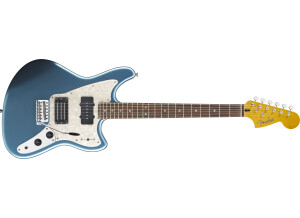
    Model Name: Modern Player Marauder® Series: Modern Player Color / MSRP* / Part # : Lake Placid Blue $559.99 024-1400-502 Black $559.99 024-1400-506 Body Body Material: Koto Neck Neck Shape: "C" Shape Number of Frets: 22 Fret Size: Jumbo Fingerboard Radius: 9.5" (24.1 cm) Fretboard: Rosewood Nut Width: 1.650” (42 mm) Scale Length: 25.5" (64.8 cm) Electronics Pickup Configuration: T/S Bridge Pickup: Fender® Triplebucker Pickup (Bridge) Neck Pickup: Modern Player Jazzmaster® Pickup (Neck) Controls: Master Volume, Master Tone Hardware Hardware Finish: Nickel/Chrome Bridge: Vintage Style Synchronized Tremolo String Nut: Synthetic Bone Miscellaneous Strings: Fender® USA, NPS, (.009-.042 Gauges) Accessories Control Knobs: Jazz Bass® Knobs UTILIZATION This guitar is so weird! It is one of the most bizarre mainstream guitar designs I've seen in a long time, and it is strange to see it coming from Fender now. They've been pretty traditional with guitar designs for quite a while, and this looks like a Jazzmaster and a Mustang got together and had a baby in the back of a pawnshop. The neck plays well, and the guitar balances nicely. SOUNDS First of all, what the heck is a triple coil rail pickup? While it may be so bizarre-looking, it is a very clean, compressed sound - incredible for country spank. But with some drive, it sounds excellent for rock leads and riffs. The Jazzmaster pickup has sweet warmth to it as well, and will haunt you with it's angelic sustain. OVERALL OPINION This guitar won me over. I saw it, was revolted, then I picked it up. As weird-looking as it is, it is a great player, it is super versatile, and it sounds amazing. I'd pick this guitar for anything except the most technical of metal styles. Nice job, Fender! Keep making weird guitars!

  • « Light as a feather »

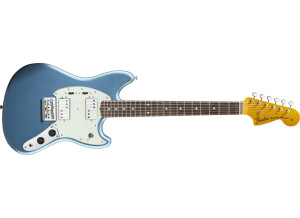
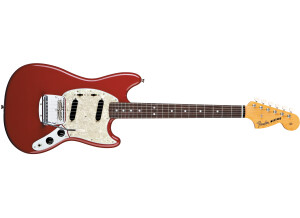
    The Fender Pawnshop series has been interesting, dishing out some of the cooler guitars Fender has to it's name. The idea was to join together ideas from different guitars to mimic what might have been found in the highly modified--secondhand environment. The Mustang special features an alder body, a maple "C" shape neck, and two "enforcer" wide range humbucking pickups. The guitars finish is pleasant to the eyes and it feels more expensive than the tag would suggest. It is surprisingly light as well. UTILIZATION I found the switching setup to be awkward but effective. The single coil sounds, while not the best out there, were definitely passable. The 24 inch scale length made for a nice elastic playing feel. I've found that the Fender fret jobs have been shaming Gibson USA's lower cost models for a while now. My only complaint in this department is that the tuning stability is pretty mediocre. SOUNDS Played through a Vox AC15 I was able to get some decent clean sounds with both the humbucking and split coil configurations. I felt that the separated coils were more convincing when applying gain. The Mustang Special, while being underpowered for more aggressive styles of music, held it's ground with higher gain levels through a variety of amps. It's strongpoint, however, lies in the low to mid- gain realm. OVERALL OPINION This guitar is my favorite of the series. Fender's sense of aesthetics and finish quality sorely beats out Gibson USA and other manufacturer's at this price point. While tuning stability is at a loss here, the guitar can always be upgraded-- keeping with the spirit of the pawn shop line. With other manufacturer's starting to incorporate coil tap functionality in entry level models, the switching features on the Mustang might seem dated. However, this guitar was never intended to draw out consumers looking for cutting edge feature sets.

  • « Fender Mustang »

    I've played guitar for over 30 years. I've played different stuff over the years--mostly blues & rock, but now primarily play my 12 string at church I had tried a Mustang a couple of years before I actually bought one--they weren't to common around here in the late 70's/early 80's. I bought it in 81. I was in a music store to buy a phase shifter--instead I put a down payment on a Mustang. The store was having a moving sale and the lower price was impossible to pass up! (I later got the phase shifter as well.) The small neck. I have long fingers, and can handle larger scales--but it's fun to really stretch out on the smaller scale. Also it's great for learning tricky pieces before trying them on another guitar.Also the sound--I love the out of phase setting.I also love the floating trem--it's smooth, subtle and works well. I'm more a humbucker guy than single coil, but I think if I put humbuckers on this, it would ruin it. It can be quiet--as far as volume, but I guess that's why amps have volume controls! In any case having the pickups out of phase sort of, (but not exactly), gives a humbucker sound--although the coils are separated. (Humbuckers have 2 coils out of phase.) Sturdy, bolt on neck.Electronics on pickguard. There were 2 Mustangs at the store--one a beautiful sunburst with a maple neck, and an ugly brown one with a rosewood neck. At first I was hesitant in a way as I don't like maple fingerboards. The salesman said they could swap necks--so I did that. Sunburst with rosewood fingerboard! This review was originally published on http://www.musicgearreview.com

  • « Fender Cyclone »

    I got this guitar as an early birthday present because I couldn't wait until July. I purchaced it off of Musicansfriend.com for 459 dollars. It had free shipping. I love both the Atomic humbucker and the Tex-mex single coil. The problem I had with my other guitar is the clean channel sounded distorted. The cyclone sounds perfect. It also stays in tune very well, if I bend or crank on the wammy. Both pick ups pump out smooth tunes and the humbucker can really growl! And the off-set body looks cool, and feels great. Lastly, the pearloid pickguard looks a lot better than just a regular white. The only thing I didn't like is that one of the tremolo springs came loose. That nothing a philips head screw driver can't fix. It is made of solid poplar wood, so it it is heavy. The benifit of that is that it is a very durable guitar. The Cyclone is built like a tank. I've bumpped it against my computer desk about three times, and no dings or scratches on the head. The strap buttons are completly secure. The input jack is also very tight. No problems here. I love this guitar. It is one of the "exotic" Fender's rather than a Strat or Tele. Good price for a great guitar. If someone stole it, I would hunt them down and kill them, then take my guitar back. (Just kidding) This review was originally published on http://www.musicgearreview.com

  • « Fender Cyclone II »

    Local guitar store, new. Love the look, love the sound, love the feel. The Pickup switches are the only thing I don't like on this thing. They're in a bad location and I think a toggle switch would be more practical. I've only had it a few months, but i've had no problems with the quality yet. Great buy. If I lost it or something, I would definitely buy a new one. As I said...the pickup switches are the only complaint. This review was originally published on http://www.musicgearreview.com

  • « Fender Competition Mustang Reissue »

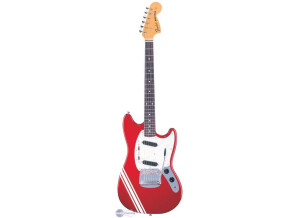
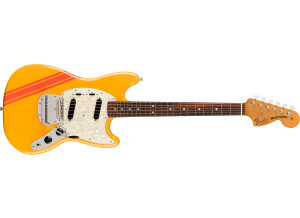
    I am a drummer, and i decided i wanted to play guitar as well. I am a huge nirvana fan, so this was perfect since kurt cobain used a mustang 50% of the time. I bought it at the House of Guitars in Rochester N.Y. (the greatest music store on earth) for about $400.00...It was totally worth it!!! First of all, the Candy Apple Red is a really buetiful color, and the stripes on the side adds a nice vintage, high school- garage rock look to it. The body almost molds to my body. It just works. The Neck's small size is great because i'm a small guy... The brigde is great too. It has all sorts of clean sounds possible. When its dirty, man its dirty. The Distortion is great. I hate the pickup switches right above the low e string, they every once in a while get in the way of playing, but only sometimes. These were not made for hard rock or metal, so its a good idea to purchase hotrails for the bridge and/or get yourself a good distortion pedal. Its really light weight...Its built brilliantly and everyone i see tells me how pretty it is. Its built so solid, i ocassionally bang the headstock on something, but it can take it and doesn't show alot of damage. I accedently droped it and it got some minor dings, but not any that have chipped (knock on wood). The guitar over all, is built very well for the price. Oviously by looking at my review, i'm a big talker, but much is to be said about the mustang. For alternative rockers, it is a must. Its built nice, its extremly comptorable when sitting and standing, it sounds incredable, and looks oh so cool. It just rocks, don't waste your money on anything else. This review was originally published on http://www.musicgearreview.com

  • « Fender Lead II »

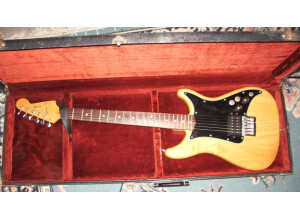
    My son's father bought one of these in the 1970's - I'm not sure for how much, but it was around $300 to$400 back then apparently from a friend, or used from a music store, but in excellent shape - mint condition. Almost a year after he passed away, my son wanted a guitar. I walked into a music store, and while I was looking for something for him to start on, I ran across the same guitar his father owned, that was on the wall. The salesman was trying to puch a Peavy guitar, and tried to use differnt amp settings to show me how great this Peavy guitar was. The Peavy was "twangy" on th same settings, and at the time I thought the Fender Lead II was one that just looked like his dad's. I decided to buy the used Fender, as the sound quality was far superior to the Peavy, and although it costs significantly more, I was impressed that much more with the sound quality, and bought it from a store that sold used and new music equipment of all sorts. Later on we discovered it WAS my son's father's old guitar. Apparently he was meant to have it. I found some distinctive marks (although most people wouldn't even have noticed them, I knew, as I was the lead singer for the group, and we had a child together. This was an awesome expereince, and we'll NEVER sell this guitar!) The sound was already great, and I think I paid about $1200 about 9 years ago for it (the music store was selling it on consignment, so I think I got a pretty good deal. Although there were other Fender Lead IIs out there for less, they were not in near the great condition this one was in. His dad always had taken incredibly good care of it, as he didn't have a lot of money, and it was his only source on income, other than odd jobs, at the time. Obviously whoever bought it from his mom also took extremely great care of it, or simply never played it?) The Fender Lead II's sound is a rich, and has a lot of depth to it. Compared to other guitars on the same setting on a variety of amps, the others have a higher and some have a twangy sound - not condusive for someone serious about guitar sound. While price-wise it may not be a great beginner guitar, it is an easy guitar to play. The neck is curved (longways on top slightly), as is the nut, so one can play for hours & hours without getting marks on one's hands from a squared-off neck (on top) which causes fatigue, and is simply uncomfortable - especially after playing for a while. The sound is awesome, and there are few electric guitars, to this day, which can match the sound, without spending thousands. This is truly an instrument for the serious guitar player, or at least one who has an ear for, and appreciates the incredible depth of sound. If you play it by itself, you might not notice the difference, unless you play it for a while, or better yet, play it on the same amp as other guitars (and change amps as well and do the same), with the same settings for comparison, but different settings as well with both the Fender Lead II and whatever else you are looking at in the way of guitars. This is an awesome guitar with sound rivaling the best in the business (and the most expensive!) Shop around, and if you are lucky enough to find anyone selling a Fender Lead II in good condition, it is definitely worth investing the extra money (which may seem like a lot, but it's worth every penny!) I suspect also that the value of these guitars, which BTW are no longer made, will only go up! The ONLY thing I don't like about this guitar is that in order to replace a broken nut, which it took about 25 years of playing hard rock to do!!!, one has to find either a flexible nut (I think they are nylon originally?) that actually fits this guitar or have one made from bone, and professionally curved to the nut slot, as it is not flat (unless it has been altered, which I STRONGLY DO NOT RECCOMMEND!) Altering (or gouging out the wood in the neck where the nut goes) can affect the play of the guitar significantly, and damage the neck of the guitar altogether. If you see one for sale like this, I'd be leary of buying it. I have seen one, and flattening out the back of the nut just to get something in there to fit makes it sound a little different, and not quite as good... I'm not sure exactly why, but I would NEVER alter one of these guitars! Either find the right sized flexible nut (and buy several and keep them in your case) or have a PROFESSIONAL grind a bone nut for you. Check credentials, and be sure it is done right by someone who knows what they are doing! I had 3 ground for my son's guitar, none of which were done corerctly, until I finally found a guy that knew what he was doing, and recommended the vinyl-plastic flexible nut anyhow, and had them in stock. The bone nuts are much more durable (but then again the first plastic one lasted about 25 years!) however they DO change the sound a bit, which I find undesirable. I don't know a whole lot about construction, other than to say that it is solid hardwood, has two pick-ups, a tone and volume control on the deck, and some have "Whamy bars", others do not. These can be removed without altering the guitar, and unless you use one, you might want to remove it, but keep it around in case some day you decide to change your mind, or if you decide to sell it. As with many guitars with "Whamy bars" or the equivelant, it can have you retuning your guitar a lot, however, if you get a heavier weight string, you'll not be disappointed, and will be tuning your guitar a lot less. I do NOT reccommend light weight strings with a "Whammy Bar", so before you decide to take one off, try some heavier strings! This is an extremely well-made guitar of solid wood contruction with an incredible rich sound, and even for a beginner that is serious, to those who are out on gigs nightly, it is one of the best guitars I've ever listened to. Definitely recording quality (AND not only has been used by many artists, is better tha many of the other electric guitars I hear on the radio these days.) If you can find one in good condition and can at all afford it, BUY IT! It will be a great investment, and wil serve one for a lifetime, as long as you take care of it! This review was originally published on http://www.musicgearreview.com

  • « Fender Toronado »

    I bought this guitar at Sam Ash (before I discovered Guitar Center), for about $525. What a purdy one she is! It stays in tune pretty well as well.The Toronado looks amazing. I bought it in orange, and it definitely stands out. This guitar is very easy to play and I love it to death. It plays very well and I wouldn't dare sell it for a long long time. It's the best built mexican Fender out there in my opinion because it plays better than any other mexi tele or strat that I've played, and it also looks prettier. It stays in tune pretty well also. About a year after owning it, a volume knob fell off, but it's nothing that some super glue and careful placement can't fix. I made the mistake of pressing real hard on it after I glued it back on and it sort of grinds against the body of the guitar, but it's not noticable when performing. There is a surprising amount of feedback from this guitar, and it messes with me when i play shows, but it's nothing a few seymour duncans can't fix! I'd highly recommend replacing the atomic humbuckers with seymours. Very solid. It's built very well and after 2 years of owning it, the only things that have come loose are the volume knobs. The guitarist of Brandtson plays a red toronado, so that proves that it has good enough quality for even touring bands. Good stuff! I'd recommend this guitar for anyone from intermediate to pro. I love it so much and it's treated me well throughout all the shows i've played despite the feedback issue. But again, if you replace them with some seymour duncan pickups, then you'll be set. I would rate it a 5 if it wasn't for that little problem. GREAT BUY! This review was originally published on http://www.musicgearreview.com

  • « Fender Esprit Elite »

    Spotted this guitar in a little second-hand (used) music shop in South side of Glasgow. Was compelled to buy it despite the competition of a gorgeous Tele Thinline. Paid £350.00 for it, with fitted Fender case. It looks like a piece of art rather than a musical instrument. Beautiful black body and neck, which looks like part of the body, but is glued on, I think, rosewood fretboard with pearl inlays, black and pearl headstock with pearl machine heads. I discovered that it wasn't perfect on closer inspection at home. The clown who'd owned it before me had routed out a big hole between the pick-ups,(presumably to put another in) and covered the damage with a Yamaha SG2000 scratchplate. Criminal. Anyone who can tell me more about these guitars, please e-mail me. Sounds great, though...........great rock guitar. see above. damage to wood. top quality I love this guitar. This review was originally published on http://www.musicgearreview.com

  • « Erm... well, it's a Fender. »

    The Fender Music Master is a guitar that was introduced by Fender in the late fifties to have an instrument that was very simple in the features department (and in the price department) for the younger starting player. It also features a shorter scale than your average Strat or Tele, which makes it a cool choice for someone with smaller hands. It features an alder body, a maple neck with rosewood fretboard and 22 frets, standard Fender tuners, a hardtail bridge, and a single coil pickup in the neck position wired to a simple volume and tone control set. The CBS era guitars are much clunkier than their predecessors, which could also mean that contouring in the bodies went away or got more slight. They were built in the US of A. UTILIZATION The design of this guitar is ergonomic enough. Certainly the smaller design was something that would definitely appeal to players with smaller hands or of a more diminutive stature. It's reasonably lightweight, and the balance of the guitar is pretty good too. The CBS era models I've tried tend to be a little clunkier and a bit heavier too, which is just a sign of the times I suppose. The upper fret access is not too bad on these guitars, but it's not great, nor was it intended to be, as most beginners are just tending to play on the lower frets. Getting a good sound out of this guitar is not really hard, though it only has the one pickup, and a single coil at that, so you aren't looking at a very versatile ax, just something to do a passable clean and a bassier overdrive tone. SOUNDS This guitar is a pretty simple instrument, and that transfers over to its tones. This model is loaded with a single, stock Fender single coil. The CBS era of pickups really was not all that stellar. I didn't particularly find the tone all that remarkable. Plugged into a clean amplifier yielded a bassier, yet still somewhat bright tone that was sort of reminiscent of a Strat. It didn't have a lot of bite or girth to it though and I can't say it works for any particular style, just as a generic clean tone from a single coil to play on. The drive tones are not bad, but the pickup is fairly noisy and there's not a lot of brightness to get harmonics or anything for rock music. It's really only worth using in a grunge or punk context where the tones are not of the concern, but rather just having something loud and brash for jumping around. OVERALL OPINION All in all I think this guitar is an interesting yet not very useful piece. The CBS era models are not made all that well and the tones really don't make me want to run to buy one. Once the novelty of it being a US made vintage Fender wears off, you start to see that it's just your average guitar. It might be cool with some mods, but then you're sinking more money into an instrument that might be better left just hanging on the wall to say you own a vintage piece... who knows?

  • Heavyspender's review

    Made in Mexico. It has 21 frets with two single coil configuration. The bridge is a fixed stock Fender bridge. One control for volume and one control for tone. Has a three-way selector switch. Not sure what the neck is made of, but it doesn't feel like an expensive wood. The action is OK, mine needs a good set up. UTILIZATION The neck is OK. It doesn't play well since the strings are old and it is time to have it set up. With the double cutaways, it is easy to access the top notes. Unfortunately, with only 21 frets, you don't get much range. Being a smaller scale and what I consider a beginner guitar, this one is very light. It's your typical strat style design in a smaller, more 60's or 70's design. When this guitar was younger, it actually sounded decent, especially through a Fender Twin. It needs some TLC now, but I am unsure if that will even make it better for me than my beginner Ibanez. There simply aren't enough frets, and the guitar needs to be bigger for a bigger sound. SOUNDS This guitar can do in a pinch if I break a string on my main guitar. Not exactly a metal guitar or even a shred guitar. It's nice for smooth, slow solos. It's also easier on the hands as it is a smaller scale, but that doesn't really help one's development and hand strength. I used to plug straight into whatever amp I was using at the time. Since I don't use this guitar much, it doesn't get plugged in to my current setup much. Like I said, it's not that great for metal or hard rock. But it can work for that jangly 60's and even 70's sound. I guess you could play Santana, or David Gilmour with it. There is a cool sustained harmonic that automatically appears when you play the 5th fret of the 3rd string, without having to pinch the string or purposefully attempt to create a harmonic. It is probably the coolest signature of this guitar. This is good, because I don't feel it has too many other cool features. OVERALL OPINION I bought this guitar to gig with my college band in the 90's. I haven't really used it much since. I just lug it around as a spare guitar, but usually I just keep on playing even with a broken string on my Ibanez rather than pick this guitar up and play. I like it's convenience, but it's playability and tone is barely adequate for me. I didn't try many other guitars at the time I bought this, because the price was right, and it's a Fender. If they had my Ibanez for the $200 purchase price of this guitar, I probably would have bought it instead. However, I have seen that these things go for $300 on ebay, which is $100 more than I paid, so they appear to be appreciating ! So I figure I can hang on to it so I can let it appreciate more so I can have more bargaining posture when I get my next guitar or even my next amp.