Log in
EN
FR

Audix

212 products found

Categories
Series
Filter
Sort by
Evaluation
  • Reviewed or not
  • Editor’s award
  • Reviewed by Audiofanzine
Availability
  • Available or not
  • Sold new or used
  • Sold new
  • Sold used
Must-have products
  • All products
  • Flagship products
  • Best rated products
  • Hot products
  • Popular products
Price
  • Freeware
€
Clear
Sort by
  • Popularity
  • User ratings
  • Price - low to high
  • Price - high to low
  • Used price, increasing
  • Used price, decreasing
  • Name (from A to Z)
  • Name (from Z to A)
  • Added on
Sort results
  • Popularity
  • User ratings
  • Price - low to high
  • Price - high to low
  • Used price, increasing
  • Used price, decreasing
  • Name (from A to Z)
  • Name (from Z to A)
  • Added on
Filter results 212 results found
Evaluation
Availability
Must-have products
Price
  • Freeware
Show results

The best Audix reviews

The reviews Audiofanzine members found the most helpful.
  • Deleted member's review

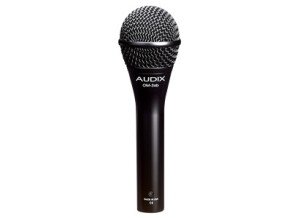
    The Audix OM3 is a handheld microphone designed for live use. It is a vocal microphone, and is a dynamic, so it falls under that overpopulated category. Does the OM3 have a place in a singer's arsenal? The Audix OM3 has a polar pickup pattern of hypercardioid, so by itself, it has a very good rejection of all off axis sounds. However, Audix seems to tighten up polar patterns more than usual for live vocal microphones to reduce bleed, so the Audix OM3, along with all of the other microphones from the OM series, are especially tight, and offer absolutely superb off axis rejection. This makes them rather unsuitable to micing a group of singers, but that was not what they were designed for in the first place. The Audix OM3 has a frequency response from 50 Hz all the way up to 18,000 Hz, far higher than the industry standard SM58's response that only goes up to 15,000 Hz. Audix includes so tagline claims in this as well when they market. They have very low mass microphone diaphragms to increase output levels, and to improve the transient response of the microphone. It also boasts a proprietary anti feedback design, which I am not quite sure what the definition is of, but the shape and taper of the microphone body, along with its finish, is absolutely stunning. OVERALL OPINION I think that the problem of the OM3 lies in the fact that I personally do not understand where it fits in the market. It is a flatter version of the OM2, which puts it closer to the OM7, but it includes the slight vocal presence in the middle, making it a slightly more tapered version of the OM7. I do not dislike it, I just do not quite understand where it fits, because it seems to be a toned down version of the OM2, but not so toned down that it is as versatile as the OM7. Either way, one should listen to and try the microphone before making a decision.

  • Audiofanzine FR's review

    (Originally written by leruisseau/translated from Audiofanzine FR) Cardioid mic Max SPL: 130 dB (without Pad) Frequency response: 40Hz - 18KHz Impedance: 100 Ohms Pad: -10 dB Low cut: 150 Hz Condenser microphone for overheads, string instruments and percussion. I own two of these mics and each of them has a different dynamic response and sensitivity. I noticed important differences by doing comparison recording tests with the same source and the same position for each mic. I use it for percussion, cymbals and instruments with a rather narrow frequency response. I find it sounds too dry for an acoustic guitar. The result isn't pleasant at all. I compared it to an Oktava MK-12 which sounds much better. It's obvious that this mic wasn't conceived for that. It would require extreme EQing... I got good results as I recorded a cajon with an ADX-51 stereo couple plus an Oktava MK-12. I have a problem with the grid of one of the mics because it's not properly fastened and comes off pretty easily. OVERALL OPINION I've been using them for 6 months in my home studio. Pros: versatility, precision, high frequency range, transient response Cons: considerable dynamic response difference between mics, rather dry sound, lack of warmth, grid fastening I own a dozen of different mics to compare them to.

  • Audiofanzine FR's review

    (Originally written by lechauve/translated from Audiofanzine FR) I have only used it for vocals so I don't know how it performs with other sources. Made in the 90's, this dynamic mic with hypercardioid pattern and pad requires a mixing desk with good quality preamps. OVERALL OPINION I've been using it weekly since last summer. I have four mics for the vocals (8 singers). It's a delight to my ears. FYI we are a parody rock band with a big chorus, two to four guitars, bass, brass, and percussions that generate plenty of SPL throughout the whole frequency spectrum. And sometimes we even have to be able to make a pennywhistle audible... Pros: read the excellent and comprehensive previous reviews. Cons : Not found yet... Dynamic mics which I've used over the last 20 years: really bad things (SHURE UNISPHERE, PHONIC, FOSTEX, ...) and SHURE SM58 (HS), BETA 58 (HS), SHURE 55SH, BEYER M88N (HS), AKG 330BT, SENN BF5xx/E840/E845, AKG D880, etc. Dynamic mics which I currently use: AUDIX OM7, EV N/S767 and AKG 330BT. Dynamic mics that stay in their cases: SENN 845/840, AKG D880, SHURE SM58. Dynamic mics which I tested and gave away to karaoke fans: AKG D750, AUDIX F50. Value for money? Two OM7 cost approximately the same as three SM58... Four OM7 are enough for me and this purchase is one of the best technical choices I've made in my whole amateur musician life.

  • moosers's review

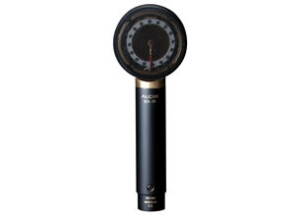
    The Audix SCX25A is a condenser microphone for recording with a unique circle shaped cage. I wouldn't recommend bringing it outside of the recording studio since it's not cheap and is indeed a condenser mic. The mic has a cardioid polar pick up pattern and a frequency response ranging from 20 Hz to 20 kHz. These mics were a new addition to one of the studios that I frequently work out of, so I only recently had the chance to check them out and I'm glad that I know about them now. These are definitely impressive mics. OVERALL OPINION The Audix SCX25A's are nice microphones for a variety of purposes. I've used them a few times for piano and I also tried one of them out for acoustic guitar. I think that two that are at the studio where I used them are a matched pair as you can buy a set of two of them that are matched. For recording piano, I was blown away by the sound of these. The studio has a nice and warm grand piano that was a nice match for these microphones. The mics picked up the sound with stunning detail and nice warmth too. I wasn't expecting this kind of sound from an Audix, although I hadn't used many condenser microphones from them since they are primarily known for their nice dynamics mics. Still, the SCX25A's aren't cheap so it's a serious decision to pick up one or two of these. I'd consider them and try them for yourself if you're looking for a set of matched condensers that aren't more traditional pencil mics. There are tons and tons of microphones out there so be sure to do your research. That being said, including these in that would be a good idea as they are unexpectedly amazing microphones for any price range!

  • « For the throat! »

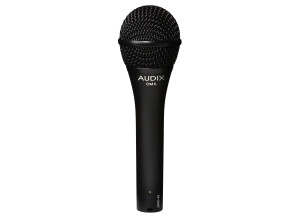
    The Audix OM5 is a microphone designed for live lead OR background vocals. Immediately, you can infer that the claim of it being able to do both lead and background says that the microphone is very natural and authentic in its reproduction of the voice. The OM5 is a dynamic microphone that is handheld, naturally. It has a hypercardioid pattern, and thus has very superior off axis rejection compared to your typical cardioid vocal microphone made by X company. However, Audix takes this a step further, in that they tighten up the pattern even more! This results in excellent isolation. The OM5 has a frequency response from 48 Hz to 19,000 Hz, and tends to include all of the magical claims that Audix lauds on its microphones. For one, the very low mass diaphragm of the Audix OM5 yields a higher output and a very, very fast transient response, something that live dynamics always seem to struggle with. It is also capable of handling sound pressure levels of up to 144 dB, and is touted as being incredibly durable. It certainly does not feel cheap, and the tapered body with its smooth finish screams quality. OVERALL OPINION As loathe as I am to compare things to the industry standard, the simple truth about the Audix OM5 is that it is certainly different from the Shure SM58. The 58 has a midrange push, and it cuts through a mix in a live sound far better than an OM5. However, the OM5 is incredibly natural, and is engineered with a newer design. It is a more precise microphone than the SM58 in its pickup pattern and frequency response. This is simply a microphone that research by the purchaser must be done before the purchase. Its sound is far different, and most people are split on which they prefer, so one cannot judge.

  • « Had to boost some frequencies »

    The Audix VX5 is a super cardioid condenser microphone that cost almost 250 dollars. I have used the VX5 on vocals and on an acoustic guitar. Some times when we record vocals with the VX5 we have to boost a lot of the higher frequencies because it is really full with the mids and lows but the highs don’t pop enough for us. This is not the case when we record acoustic instruments with the VX5. All of the acoustic recordings sound amazing and make us want to go out and buy more of the VX5’s. OVERALL OPINION The frequency response is 40Hz – 16.5kHz, and you can use this microphone for live or recording sessions. I think it sounds better in a live situation though, when using in a live setting the acoustic instruments sound really full and the sound travels. When used to record acoustic instruments with you can still get a little too much mid range and low range. It could just be personal preference but I like to have a little more highs and pop to any recording whether it be vocals or instruments. I do not regret getting this microphone because of its live use, but for studio use I have to set this aside and pull out a different microphone. This microphone cannot compete with some of the other vocals studio microphones that we have on hand here. The VX5 does look nice, and it is well built. It seems to have the build to last a long time and it is made for the road. But the sound quality lacks some crucial points for us when recording. Knowing what I know now I probably would not have got this microphone because it only gets limited use. It is still good to have it around though, but if I could go back I would have spent that money on a different microphone.

  • « found the sweet spot »

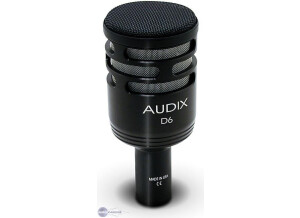
    The Audix D6 is a cardioid kick drum microphone that cost 200 dollars. It is very good and very affordable. We use to use a AKG kick drum microphone for a while and then went with a Shure microphone for the kick. Now we have the Audix D6 and wow, I have not seen a microphone in this price range do what the D6 can do. OVERALL OPINION The Audix D6 has a nice punch to it, so if you are making easy listening music or some type of jazz music then this microphone might not work for you. The Audix D6 has a full and rich low end to it. The frequency response on the Audix D6 is only 30 Hz-15khz and you won’t need to position it perfectly or find that perfect microphone location in order for it to give you that great sound either. As long as you have the microphone about 4 to 6 inches away from the drum you will get a full sound. I do think the Audix D6 sounds better in a live show than it does being recorded. It just has a live feel and flavor to it, if you record with it you may have to pull back the kick drum a little bit in the mix or else it could be a little over powering and drown out your mix. The Audix D6 is better than the Beta 52’s without a question. I was a Beta 52 user for about a year and then fell in love with the Audix D6 about 3 months ago and have not though about the Beta 52 since then. The precision and quality of sound are amazing for the price and I am extremely happy with our choice to use this microphone. This is the first Audix drum microphone that I have ever seen or used, and from now one it is my favorite kick drum microphone.

  • « great insrument mic »

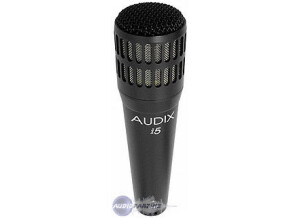
    The Audix i5 was used in a studio that is on the other side of town that I go to a few times each month. It is an instrument mic and I must say it sounds great. It sounded so go it made me come home and look it up online and I was surprised that I actually didn’t cost as much as I though it would. This instrument mic seems to be way better than a lot of the other ones that I have used and even better than some Shure Mics that are suppose to be the best on the market for instruments. You get a very natural and clear tone when recording with it you wont have to boost anything gin the eq part because it pretty much already does that for you. Now most people would purchase this for a home set up they would get the shure mic but this is no where close to comparing too it. The Audix i5 is in a class of its own and can compete with mics that are almost twice its price. OVERALL OPINION I myself will probably never purchase this mic but I get to use it a lot at the studio I just don’t do any live recordings here at home and don’t have room to do any. So its best that it stays in the main studio. But if I do every need a mic that for instruments this would be the one that I would buy. It is one of the best that I have heard hands down and I expect more people to start purchasing it. I actually havent even really heard of Audix too much until I looked up this mic. So apparently they are still under the radar. You will have to purchase this mic if you need a instrument mic, there really isn’t an alternative.

  • Deleted member's review

    The Audix f5 is a versatile microphone from the company Audix, that is touted as being able to be used on absolutely everything. This seems like sensationalist advertising, but I will still endeavor to review it fairly. The Audix f5 has a size and shape not unlike that of the Shure SM57, or rather the PG57 with its grill. The grill is actually nice, because although the diaphragm is slightly removed from the source no matter how close the microphone gets placed to the source. The Audix f5 has a frequency response from 55 Hz to 15,000 Hz. The special factor about the Audix f5 is that, like many of its cousins on the Audix family tree, it boasts a tighter hypercardioid pattern, which makes the Audix less of an area microphone and more of a single source microphone. It can also handle sound pressure levels up to 137 dB, a respectable number. Audix claims that this microphone is perfect for all percussion, snare, toms, guitar and bass cabinets, brass, flute, woodwinds, electric and acoustic instruments, vocals and speech, and many other things. The microphone is also nice and heavy in the hand, and feels like it was made to last. It is a very robust microphone, and it seems like it could handle quite a bit of punishment. OVERALL OPINION In use, the Audix f5 honestly seemed quite useful, and I could see people using these to multi mic many different things. I would not be opposed to substituting these for SM57s. However, the SM57 is, in comparison to the f5, extremely cutting and robust sounding, as opposed to the almost forced natural sound of the f5. While the SM57s were not quite authentic, they had a little bit more life to them than the f5's, and I would certainly feel that coughing up $20 more for a 57 would be worth it. I however do not dislike the f5's in any way, and would still recommend them to people a little tired of the hype of the SM57.

  • Deleted member's review

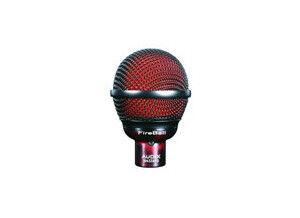
    The Audix Fireball V is a harmonica microphone. It is dynamic and cardioid, and is designed to deal with the wind of harmonicas and the close proximity of the harmonica to the microphone when playing. This means that it can handle sound pressure levels of up to 140 dB. Audix claims that it can be used on many sources, but remember the engineered purpose of the microphone is to amplify harmonicas cleanly. It boasts a frequency response from 50 Hz to 16,000 Hz, and is just over a quarter of a pound, so it is not inhibitive to playing. OVERALL OPINION Now I am not a harmonica player, but I have tried to do so with this particular microphone. I was actually surprised to find such a specialty microphone in a store, but I have a little harmonica that I enjoy to mess around with, so I thought: why not give it a try? I've heard the Green Bullet before, and the Fireball V is a much cleaner, smoother sound, without that characteristic distortion that people are used to. However, it is incredibly comfortable to hold in the hand, and it is incredibly fun to play a harmonica through amplification. What surprised me was how good it was on vocals. Believe it or not, the smooth response of the Fireball V gave vocals a very pleasant sound. And since it is a harmonica microphone, designed to deal with the wind of the harmonica, the built in wind screen stops pretty much anything that a voice can produce without obviously trying to cause wind noise. The one thing to note is that because this microphone is a harmonica application specific design, it rejects everything that is not extremely close to it. This is, to me, a plus, because the only people who would reasonably consider the Audix Fireball V are harmonica musicians. However, it is just, to be shallow, very attractive looking, and singing into this was a blast, because having a neat microphone can add to the mystique of a performance. At any rate, the Audix Fireball V is a fantastic clear microphone for harmonica, and voice if need be.

  • « Thunder »

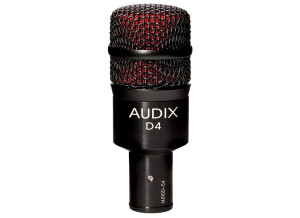
    The Audix D4 is a dynamic microphone designed for use with instruments. It has a frequency response that is tailored to use with lower instruments, and Audix advertises the Audix D4 as being great on a kick drum, a bass amp, and any other low instruments due to its "flat, linear, response." The microphone has a hypercardioid pickup pattern, and it is capable of handling sound pressure levels of up to 144 dB. It also boasts many of Audix's signature taglines for its microphones. The D4 has a proprietary anti feedback design, isolates each instrument's "sweet spot," and has a very low mass diaphragm to improve its transient response. It also has exceptional feedback and off axis rejection, and it built very ruggedly, so that it is capable of taking a trashing or a beating. The microphone itself does admittedly look a little bit cheap, not quite keeping in line with many of Audix's other microphones. However, this is entirely deceptive, and the ruggedness of these microphones does in fact hold true to Audix's claims, completely contrary to what one may expect when seeing this microphone. The D4 has a frequency response from 40 Hz to 18,000 Hz, and is very much like the D2 in that it is under 4 inches long and weighs just over a quarter of a pound. OVERALL OPINION The Audix D4, in use, has that thunderous sound that one may expect from an Audix drum microphone, and this one is particular keeps it tight and clean. It sounds a little bit oxymoronic, but the truth is, the Audix D4 has the special unquantifiable something that makes the microphone very versatile, especially in the studio. It gives you that big sound, but does not make it impossible to tone it down by coloring it. I can without hesitation recommend the Audix D4 to anyone who wants just a little more oomph out of their drums but is just slightly afraid of the muddiness that usually comes with that oomph.

  • moosers's review

    The Audix F10 is a dynamic microphones ideal for use in both the recording studio and on the stage. It is designed for use on drums and percussion, which is the only application that I've used the mic for, so I can only speak about this application. The mic will only pick up frequencies between 50 Hz and 12 kHz, so it definitely has a limited capability. It is however specifically designed to pick up this mid range sound very well. It has a standard cardioid polar pick up pattern and doesn't have any pad or filter. OVERALL OPINION I have used the Audix F10 in the recording studio only, but I do feel that this gives me a pretty good idea of what the mic truly sounds like. I've used it to record both snare drum and tom tom drums, which are the main recommended uses for the F10. It can really only be used for recording instruments like this that have a lot of mid range presence, as it simply doesn't pick up frequencies very low or very high. It is however, very good at picking up these mid range frequencies, as I was very pleased with the sound that I was able to get for both snare and tom drums. The mic is pretty inexpensive in general, as you can find them now for a very good price if you look hard enough. While the F10 isn't the most versatile mic in the world, if you're looking for something solely for recording drums and hand percussion, or for something to use for live sound, the F10 will definitely get the job done. Audix is known for making some great, inexpensive drum microphones, so mics like the F10 are really their forte. While this microphone would not be my first choice for recording on any drum, as I don't like it as much as a Shure SM57, it is still a very solid microphone at a good price for recording mid range drums...