Log in
EN
FR

Boss Other guitar effects

34 products found

Categories
Series
Filter
Sort by
Boss
Evaluation
  • Reviewed or not
  • Editor’s award
  • Reviewed by Audiofanzine
Availability
  • Available or not
  • Sold new or used
  • Sold new
  • Sold used
Must-have products
  • All products
  • Flagship products
  • Best rated products
  • Hot products
  • Popular products
Price
  • Freeware
  • Low-cost (< $200)
  • Mid-range ($200 - $450)
  • Premium (> $450)
€
Clear
Sort by
  • Popularity
  • User ratings
  • Price - low to high
  • Price - high to low
  • Used price, increasing
  • Used price, decreasing
  • Name (from A to Z)
  • Name (from Z to A)
  • Added on
Choose a series
Sort results
  • Popularity
  • User ratings
  • Price - low to high
  • Price - high to low
  • Used price, increasing
  • Used price, decreasing
  • Name (from A to Z)
  • Name (from Z to A)
  • Added on
Filter results 34 results found
Brands
Evaluation
Availability
Must-have products
Price
  • Freeware
  • Low-cost (< $200)
  • Mid-range ($200 - $450)
  • Premium (> $450)
Show results

The best Boss Other guitar effects reviews

The reviews Audiofanzine members found the most helpful.
  • « very clean »

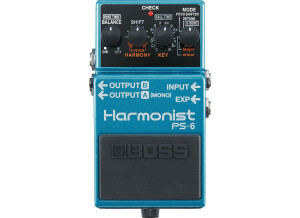
    The Boss PS-6 Harmonist is a very simple, but highly effective octave pedal. The pedal has a pretty standard make up in terms of it's general characteristics, consisting of 1/4" connections for your input and output, and requiring power from a nine volt battery or power supply. The pedal has true bypass, so you won't get any signal loss when the pedal is disengaged. The PS-6 Harmonist isn't rackable as it's a stomp box. UTILIZATION The make up of the PS-6 Harmonist really couldn't be any simpler. The three parameters that the pedal has are for controlling the direct level, octave up level, and octave down level. You can blend the three of these any which way you like, which can give you a variety of results. I've never seen the manual for PS-6 Harmonist , nor do I think I ever will. SOUND QUALITY The overall sound of the PS-6 Harmonist makes it one of the cleanest sounding octave pedals that I've used to date. Most of this has to do with the tracking, as it's got awesome tracking that doesn't break up unless you try to play too many notes at once. I like both the octave down and octave up sounds equally, but I do think that the tracking is slightly better on the octave down. It's great that you can also blend the two of them, with or without the original signal in there. OVERALL OPINION If you're looking for an awesome octave pedal for guitar, the PS-6 Harmonist is probably the pedal I'd recommend you check out first. There is a newer version of the Octron, the Octron 2, which is a bit more in depth, but I like this simpler one just fine. It's not going to be the cheapest pedal on the market, but I do think it's reasonably priced considering the high quality the pedal is made at. This is one of my favorite octave pedals that is currently available new for sure...

  • « One of the First »

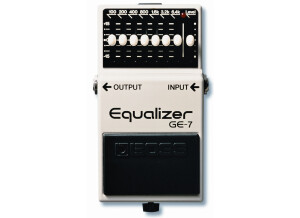
    Boss made these pedals back in the late 70's. These were great pedals for adding the right or missing frequencies to your guitar tone. Unlike the MXR Eq pedals this one has the middle position at the 800 hz where as the Mxr would have their middle position at 1 K. The GE-6 has 6 bands with frequencies 100, 200, 400, 800, 1600 and 3200 Hz. The 800 is better for being in the middle because that is where the major changes of a guitar's tone will take place in this range. This pedal can either cut 15db of volume or it can add 15 db of volume to your tone. It will add some distortion if you run it in the front of an overdriven amp. UTILIZATION Specifications Controls: 6 Band Graphic Equalizer Connectors: Input, Output, AC Adaptor Current Draw: 7 mA (DC 9V) Equalizer: 100 Hz, 200 Hz, 400 Hz, 800 Hz, 1.6 kHz, 3.2 kHz Recommended AC Adaptor: ACA Series SOUND QUALITY These pedals are great for getting your guitar tone to exactly what you want to ehar. SO many amps will favor or be missing certain frequencies but you like the voicing. This is where this pedal will get you the right highs, midrange, or low end and be able to run into with your favorite voiced amplifier. The pedals were great in the 80's for guys who wanted to boost the midrange of their amps. Most metal or rock guitarist during this era would boost their amps mostly in the 800 hz level so they could get that tone they were looking for back in those day. Many guitarist used the Furman PQ3 which was a great pedal for this type of setting and it was an interesting circuit that makes a lot of noise as well. This peal is a floor unit and will be able to boost basically in the same way that the Furman would have been able to do. This is a muc smaller and not as versatile but he 800 hz is there and the most important frequency gauge anyway. OVERALL OPINION These were manufactured up until 1981. You can still find them on the used market pretty easily. I have seen the for right around $100, which isn't a bad pickup for that price. this is a great pedal to boost the best frequencies and take out the ones you don't like. a great pedal and must for many guitarists out there.

  • « Excellent Octave Pedal for Bass Guitar »

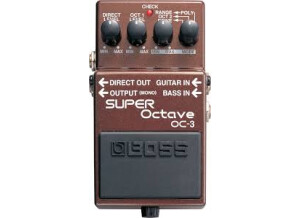
    I am a bass player so I am only using this pedal with bass guitar. First I have to say it tracks really well. The octave sounds are very clean and it doesn't glitch as much as with other pedals. You can create a range of different sounds from clean synth sounds to heavy distorted sounds. The second octave is only useable in the last frets of the neck on a four strings bass as it's probably too low to track properly. You can use it as a distortion pedal if you select the drive mode and turn the octace generator to zero. I couldn't really find a use for the polyphonic mode, maybe it is more suitable for guitar players. See the video below for a demo I made of this pedal. https://www.youtube.com/watch?v=XJqxo9pORuY

  • « Boss AC2 Acoustic Pedal »

    Player 29 years freelance acoustic guitar strictly Country It was a gift (about $89.00) good acoustic sound from electric guitar. Plenty off controls for tweaking sound. the volume only controls the guitar when it's set for acoustic , so you can set your volume loud for your electric leads and stomp the box to lower the acoustic side for srumming, cooool! slightly noisey but manageable. Build like a tank! BOSS (enough said.) while not a replacement for a true acoustic guitar , it works quite well for doing acoustic songs live without the need to bring and swap guitars in the middle of a set. This review was originally published on http://www.musicgearreview.com

  • « Boss Boss HR-2 Harmonist »

    I bought a Digitech Whammy a year ago because I needed a harmonizer, but the whammy is only a basic harmonist, you have to do most of the work yourself. I was always looking to buy the HR-2 but could never find one, Boss discontinued them back in the late 80's. I finally found the HR-2 a few weeks ago at a pawn shop that I was going to sell a few of my pedals to, and the HR-2 is in perfect condition! Not a scratch on it and works flawlessly! The pedal I have has to be at least 15+ years old and still be in almost perfect shape and work like new, you know Boss is doing something right when their pedals last for years and years. The HR-2 didn't come with the box or manual, but I really don't need either, as long as the pedal works and looks great. Mine cost me about $126, I don't know how much they went for new back then, but if you find this pedal buy it right away, you will probably never get a chance to buy one again unless you get it off ebay. I tried out Boss's other harmonizers, the PS-3, which is only a basic harmonist with delay (why did they add in delay and get rid of the key you are playing in to make the pedal an intelligent harmonizer?) I also tried out Boss's new PS-5, it really isn't work it at all, doesn't sound as good as the HR-2 and costs more than it should. The PS-5 is really a crappy version of a Digitech whammy put in compact pedal form, which wasn't a good idea. 1st off, if you put the HR-2 after your distortion, you better get a Y cable to put into the detector in, because the distortion will distort your signal and the HR-2 will have a hard time figuring out what note you are playing and what note it should be playing, which produces a wierd sound, stray notes ringing on and off trying to hit the right note it should be playing. But, if you use a Y cable or use a tuner pedal that is 1st in your setup, use the 2nd output to go to the detector in input of the HR-2, then use the 1st output on the tuner to go to your other pedals so when you use the tuner it mutes your guitars signal when using the tuner. If you use the detector in from a tuner that is 1st in your setup, you won't have any problems, the HR-2 will hit every harmony on the dot, such a great pedal to have and use, especially if you know how to use it right like I do, then you can play things that would take an extra one or two more guitarists to play with you. The pedal has two voices, voice A and Voice B, you can pick any interval for either one, from 1 octave below, 6th below, 5th below, 4th below, 3rd below, detune, 3rd above, 4th above, 5th above, 6th above, and 1 octave above. Voice A and B have their own separate volume also, so you could use one or both harmonies. As long as you know what key you are in and what interval you want to use and what sounds best with what, you won't have any problems. You can get amazing sounds out of this pedal. Using this pedal, you can play stuff that would really take 2 or 3 extra guitarists to play, that's if they could even handle it themselves. That's why I had to buy this pedal, I can't find anyone else who can handle actually playing guitar, I'm not talking about little power chords and 4 notes solos, I'm talking about real, full chords with occasional power chords (with the 3rd in there), twin lead guitar riffs and solos, and melodic solos and also fast, crazy solos that most can't play or ever even seen some soloing techniques. The HR-2 takes care of me searching for another guitarist for now, it can handle playing in 3rds with me either on the rhythm part and solos. You can get the best sounding harmonies with this pedal. The tracking on this pedal is really good as long as you use the detector in. I wish Boss would bring them back into production! They haven't made a single good harmonizer after the HR-2, the PS-3 is basic and the PS-5 is basic and intelligent, but you can only add one voice since they added in the stupid whammy bar sounds. This pedal is proof that Boss makes some of the best pedals, my HR-2 is over 15 years old and works like new and looks like a brand new pedal. Most vintage pedals are a lot better than new digital crap. The HR-2 is Boss's 1st and best harmonizer, you can add in 2 voices. The PS-3 and PS-5 only adds one voice. The digitech whammys are all basic pitch shifters. The difference between basic and intelligent pitch/harmonists is this. Basic: simpler pitch shifter that adds in the interval you select to your signal, it adds the interval in directly without harmonizing it with the key you are in. Intelligent: detects you signal pitch and adds correct harmony(s) to the notes you play. An intelligent pitch shifter does take more musical knowledge to use rather than a basic pitch shifter. Bottom line: The HR-2 is the best intelligent harmonizer you can find that is in pedal form. It can almost take the place of 1 or 2 more guitarists, but takes some thought and musical knowledge. You're not going to find a pedal better than or like the HR-2. This review was originally published on http://www.musicgearreview.com

  • « Boss GE-1 Equalizer »

    i got this for about a hundred bucks at some music store in LA. 2years ago and havent put it down since. my favorite thing about this pedal is that it boosts up my metal zone. When i bought my metal zone i didnt think it had thet much distortion until i hooked it up to the ge-7 now it has twice as much distortion. there isnt really anything i dont like about it. the only thing is it took me a long time to get the right sound. all ive got to say is that its a BOSS! dont waste your money on a rack eq, get this and you wont be sorry. or if you want to get more punch out of your distortion pedal get this. This review was originally published on http://www.musicgearreview.com

  • « nice features »

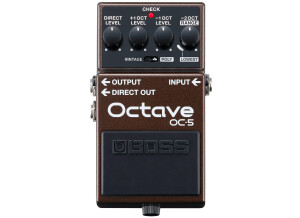
    This is primarily an octave shifter pedal, with a few extra unique features such as the Polyphonic Effect and a drive mode which features distortion. The pedal uses digital technology. There are two quarter-inch inputs, one for guitar and one for bass, as well as two outputs, a direct out and a mono out. The direct out would take the signal directly to a DI box, and the mono would be run through an amplifier. UTILIZATION The pedal isn't too difficult to use. The effects are easy enough to handle. The pedal in its original mode (the same mode as the similar OC-3) is capable of blending up to three signals, the direct signal, a signal an octave lower, and a signal two octaves lower. The other option is the drive mode, which is basically adding a distortion to the signal you dial in in the original mode. . SOUND QUALITY The first octave shifter that I tried was the Digitech Whammy pedal, which colors the sound far more than this one does, but also offers you the option of shifting the signal two octaves up. I can't help but compare this pedal to that one in terms of functions, and I usually can't help but be disappointed. As far as sound quality goes though, it is a bit less unnatural-sounding than the Whammy, so if realistic-sounding octave drops are your thing, this is definitely a good pedal to get. OVERALL OPINION I think I liked the flexibility of signal the most about this pedal. The fact that I could blend three different octaves together into one signal is pretty cool. It greatly expands the range of your instrument, albeit in a limited way. The price isn't really that bad, it usually lists at about $120. I do think that you could get a cheaper octave pedal and be satisfied, but not to the extent that this pedal would bring. The sound quality is one of the more natural-sounding octave pedals I've played. I have played a few other models, and compared to this one, the sound quality was inferior, even if the functionality was greater. I would ultimately recommend this pedal to anyone looking for a more conventional octave pedal.

  • « Hard to find »

    These pedals are getting more and more rare thanks to collectors trying to buy them all up and then sell them at a crazy price. They're really not worth the price considering you can get a Build Your Own Clone version for WAY less than these go for on the used market, and it'll sound either just as good or better. That said, these are some pretty cool pedals if you're looking for that sort of swell effect. The pedal features two knobs -- a sensitivity knob and an attack knob. By adjusting these, you can get all kinds of cool swelling effects. UTILIZATION These pedals are built like tanks. You could throw this off of the Sears Tower (please don't) and it would survive without any issues. I've seen these pedals take so much abuse that it's ridiculous. They always seem to function no matter what kind of abuse is thrown at them. The pedal is super easy to use, and you don't need a manual for this at all. Want to adjust the sensitivity of the pick attack? Adjust the sensitivity knob. Want to adjust the swells? Adjust the attack knob. I'm sure the manuals in these are well written, but I've never seen one of these with a manual. In fact, I've only seen one of these in my entire life, and we sold it for a crazy price. SOUND QUALITY The sound is very good. You can get some real cool swells with this, but one of the tricks to using this pedal is to pair it up with another pedal. Throwing a compressor out in front helps even everything out. Add delay, and you can get this real cool E-bow effect. Using it alone is somewhat limited in overall because it's a bit of a bizarre effect, but I'm sure the experimental guys would really dig this device. OVERALL OPINION You have to be a real hard core collector to own one of these. I really don't think they're for the average guitarist just because of the price. You're better off buying one of the BYOC models of this device if you want that kind of effect. It's somewhat limited overall, but you can get some really neat experimental sounds once you start combining this with other pedals in the chain.

  • « Glitchy »

    I am reviewing the made in Japan version with the black bottom label. The pedal has standard 1/4" input and out put jacks, rear 9 volt dc input jack for standard boss power supplies, and a battery compartment under the bypass "door". There are controls for octave 1, 2 , and direct dry signal. Octave 1 is one full octave below the original note and octave 2 is two full octaves below the original note. UTILIZATION Set up is a breeze with this pedal just like any other Boss single stomp box. There are only three controls and they are easy to understand. Boss has always been good at laying things out simply. I bought this used and did not get a manual but I doubt I would have opened it if I had received one. SOUND QUALITY As with all boss pedals there is the always active buffer. I have had some that were pretty bad like in the TU2 but his one was not a tone killer and since it was placed first in my chain it served to help drive my signal through the rest of my effects and cables. I have heard that the earlier versions of boss circuits, especially the ones made in japan, were of better quality.I used this pedal in a guitar set up and always kept it first inline to make sure it was fed a strong signal. Octave effects typically need to be first in line to properly track the note you are playing. Even when used first in line I was not happy with he tracking of this pedal. Higher notes were fine but the notes in the lower register like anywhere below the 12th fret on the low E just did not track. It made a wobbly sound that sounded out of tune. Even when using the neck pickup which i s supposed to make it easier for pedals to track the note I still could not get a clean octave out of it. This was with both 1 and 2 octaves below. The higher notes that actually tracked did sound good. Other octave effects I have used gave a digital quality to the effected note but this remained smooth sounding. Having the ability to blend the two octaves and dry signal is nice but I just could not justify using this over my Digitech whammy. The whammy tracked better and when it did glitch it was not as bad as this pedal OVERALL OPINION Unless you like things to sound off, or are into noise music, I would not suggest this pedal. It just does not perform that well.

  • « more than just mode 7 »

    Digital delay with tied in pitch shifting capabilities. Standard boss construction of a rock solid stomp box, 1/4" input, 1/4" stereo outputs, 1/4" expression pedal input, four parameter knobs, and 9v DC input jack. There are 12 different modes with varying levels of delay time and pitch shifting. UTILIZATION This sets up just like any other boss pedal out there. Plug in your standard cables, get some power, and start turning knobs. The manual is good enough to explain which modes do what and give you an idea how the knobs interact with each other. The fact that the knobs interact with each other does make it more of something you have to play around with to completely grasp. SOUND QUALITY I use this in a guitar set up but have also had good results with synths. Like all boss pedals the bypass is buffered which seems to be a subject of great discussion with guitar players. I'm of the belief that having a couple boss stomps in your chain is not going to destroy your tone and for some can actually improve it by helping your signal carry through the rest of your cabling. Most people buy this pedal for the Mode 7 which is an odd mix of reverse delay and pitch shifting. It really is a unique sound that I have not been able to create with other boxes. It is similar to the eventide crystals sounds but a bit more glitchy and not as smooth sounding. The majority of the time I see people use it they have the feedback and time knobs cranked but for me it's the in between sounds that are more interesting. You can get many different intervals all the way to +/- 2 octaves or no pitch shifting at all. The other non pitch shifting delays are okay but sterile. They don't have any warmth or character to them so for me they are not very useable. OVERALL OPINION This pedal is geared more towards the noise, massive effect crowd. I actually got it from a friend who said he could not understand why anyone would use it. The regular delays are boring and easily outdone by any of the other boss delay pedals. The one big downside to this pedal is the lack of adjustment to the user. The knobs are tied in together so increasing the delay time also changes the pitch shift. I really wish they could be controlled independently but I have learned to live with it. The used price is also one of those funny things where the item did not sell so it was discontinued and now for some reason it's more desirable and commands high prices. If I saw another pop up for 100$ or so I would grab it in case this one ever breaks. I don't think boss will service it and ,like I said I, can't get the sounds I use out of any other box.

  • « Nice pedal! »

    This is Boss's newest edition to the acoustic simulator. This is virtually the same exact pedal as the Boss Ac-2 but this has one added feature of reverb. Within the level control knob you have a sub control knob that allows how much reverb you want in the signal. This is a nice addition to an acoustic sound. When I first heard about the acoustic simulation pedals I was a little bit leery of how good the simulation would sound. Then I heard Slash from Velvet Revolver and Guns N Roses use one live in some gig I saw on tv. To my pleasant surprise it actually sounded pretty good. He was playing a Gibson Les Paul and those guitars can be very girthy and robust on tone and to get a guitar like that to sound like a wood hollow body it a big feat of strength. Details Type Acoustic simulator Inputs 1 x Instrument Outputs 2 x 1/4" Power Supply Included No Batteries 1 x 9V Height 2.4" Depth 5.1" Width 2.9" Weight 0.9 lbs. UTILIZATION BOSS AC-3 Acoustic Simulator Features: BOSS's most advanced acoustic-guitar modeling in a compact pedal Four simulation modes: Standard, Jumbo, Enhanced, and Piezo-equipped Top and Body knobs for fine-tuning the virtual-body resonance Built-in reverb, optimized for acoustic-guitar simulation Advanced modeling for authentic acoustic guitar sounds Fine-tune controls to shape the acoustic sound you want Reverb included Versatile output paths SOUND QUALITY The only difference in this and the AC-2 is reverb. all the same tone and simulation is the same. the tone of this pedal is decent for the playing who doesn't want to carry an acoustic guitar to a gig and only use it for minimal parts. You can just bring this pedal and your favorite electric guitar and have that acoustic sound quickly and easily for live uses. This pedal does work and works very well. Let me be very clear, it will not replace the tone of a real acoustic guitar no matter how trashy a cheap acoustic guitar sounds. If you have a cheap acoustic guitar, that guitar will sound better and more natural than an electric guitar using this pedal. However, this is great for a gigging musician that has an acoustic part in a sound and needs to switch quickly to an electric part of a song. OVERALL OPINION At new these pedals come in at around $129, which isn't bad for a pedal like this. You get a great sounding simulation for acoustic and a nice added reverb section. I would not recommend this pedal as a replacement for an acoustic guitar in a recording session. This pedal will not get the hollow tone or organic feeling of a real acoustic guitar.