Log in
EN
FR

Other guitar effects

771 products found

Categories
Filter
Sort by
Brand
Evaluation
  • Reviewed or not
  • Editor’s award
  • Reviewed by Audiofanzine
Availability
  • Available or not
  • Sold new or used
  • Sold new
  • Sold used
Must-have products
  • All products
  • Flagship products
  • Best rated products
  • Hot products
  • Popular products
Price
  • Freeware
  • Low-cost (< $100)
  • Mid-range ($100 - $200)
  • Premium (> $200)
€
Clear
Sort by
  • Popularity
  • User ratings
  • Price - low to high
  • Price - high to low
  • Used price, increasing
  • Used price, decreasing
  • Name (from A to Z)
  • Name (from Z to A)
  • Added on
Sort results
  • Popularity
  • User ratings
  • Price - low to high
  • Price - high to low
  • Used price, increasing
  • Used price, decreasing
  • Name (from A to Z)
  • Name (from Z to A)
  • Added on
Filter results 771 results found
Brands
Evaluation
Availability
Must-have products
Price
  • Freeware
  • Low-cost (< $100)
  • Mid-range ($100 - $200)
  • Premium (> $200)
Show results

The best Other guitar effects reviews

The reviews Audiofanzine members found the most helpful.
  • « Killing but the rules of art »

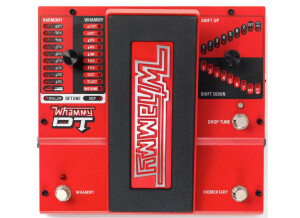
    Ok UTILIZATION Simple and practical. SOUND QUALITY Excellent. OVERALL OPINION Finally, an intelligent and unique multi-effects pedal. I didn't like older versions but this is not even comparable, it was a real surprise, a real clean whammy, with intuitive operation and a robust housing, not to mention not bad to look at. Moreover, TRUE BYPASS IN PLACE! Bye bye parasites, hum, crackles, murmurs, everything is clean (much more than other models anyway) micro dynamics loss has noted the engagement of detune, but it is a trivial concern compared to the efficiency and overall quality -I feel that this product will not be comparable if bought used, so I took the plunge and bought it new. Even though I don't like the color much, at least it matches the Christmas theme. &nbsp;Aside from the absurd color which reminds me of severely beaten kidneys, it seems to be an excellent product. Nice one Digitech.

  • « Play Guitar Harmony Instantaneously »

    SOUND: Some pedals tend to get you more excited than others. The Quintessence Harmonizer is one of those pedals. Not only can it give your tone that added touch, thickness and dimension, as though playing with another guitarist, but TC Electronic did an excellent job in its tracking technology. Other harmonizers that work this well and sound this good cost a lot more (are more bulky on the pedalboard) and often involve scrolling through digital screens – Quintessence operates with knobs and switches. Below is a YouTube demo of how this pedal works, followed by examples (starting at 2:15 in the video) for its use with various scales/modes. The Quintessence merely replicates whatever note or notes you play (it’s polyphonic, by the way) – if you play clean you will hear harmonized clean and if you play distorted, then the harmonized note is distorted. Now, the best way to explain what happens with harmonization is to consider a basic two-finger power chord – this likely is one of the first things we learn as guitarists, placing the index finger on the thickest string (any fret position) and another finger (often the ring finger) on the next string below and two frets up. As we crank out some riffs up and down the fret board, and on those two strings with that spacing, we unwittingly play a root (the thickest string) and a fifth (next string down). For example, if the main (root) note on the top string is A then on the next string down and two frets over we have E… the FIFTH of the root. And so, in essence, what the Quintessence allows you to do is select what KEY you are in… what SCALE you’re playing over and what HARMONIZING note you want to match, whether it’s the 5th, a 4th or a 3rd + 5th combination, etc. Again, the video above provides sound samples that explain far better than written words; there are several lead examples, as well as how the pedal can be incorporated with rock rhythm and bar/power chords. There are other features to this pedal. First, there is a CUSTOM position under Scale. By default this is the Locrian mode; however, you are able to visit the TC Electronic website and upload (via USB or Smartphone) a different scale, e.g., Lydian Dominant or Whole Tone. Second, under Harmony there is TP1, TP2 AND TP3 (these stand for Tone Prints 1, 2 and 3); those presets are configured to produce one octave below and one octave above harmony (they all are the same), but again you are able to upload custom Tone Print harmonies. The third function is called MASH, which allows you to vary a linked effect parameter when you press down continuously on the footswitch and with variable pressure. This too can be customized, but it is set to ‘bend’ a note upward (whether a half-stop or a full stop depends on the note and what scale you are playing); the last part of the video demonstrates how this works, giving some very nice and authentic pedal steel guitar sounds. A very cool function is that the Quintessence can operate in stereo. This allows you to have a line out for the actual note being played (an analog-dry-through signal path so your note remains unaffected) and a different line out for the harmonized note. Of course, you can operate in mono and both the played note and harmonized note blend. The stereo out is very useful when recording, as you may wish to increase or decrease the volume of certain harmonized notes at different points in a composition – to provide emphasis or to downplay (or eliminate). Or for those who gig in stereo, you can have two different signals going to two different locations on stage. OVERALL IMPRESSION: Encased in steel, Quintessence Harmonizer is of steel construction and plastic knobs. The two toggle switches are far removed from the stomp switch, and each are also protected between two knobs. The stomp switch is a ‘soft’ switch, in that it is used to toggle the pedal on and off, but also used to activate the MASH function (by holding it down). The standard 9v (100mA) power input is located at the back, and away from wandering feet (it also works on a 9v battery). Although it is possible to apply the Quintessence throughout an entire song – either using the same or different settings (depending on Key, Scale and desired Harmonized note), where this pedal really shines is when you want to provide emphasis to your guitar playing, e.g., during a solo or part of a solo, chorus of a song, etc. In that regard, the Quintessence’s stomp switch can be set for Momentary (step on it when you want to harmonize) or Latched (keep it on until you decide to switch if off). I’m also a fan of subtlety. I really like this pedal at about 40% MIX or slightly less, as the harmonized note is about the same volume or slightly less than the original note, which I find more complimentary rather than distracting. When used in this manner, you can even apply a harmonized note that is slightly dissonant, yet sounds supportive if turned just below a particular threshold (producing a slight drone effect and while fattening up a guitar’s original signal and tone). EASE OF USE: A person who will enjoy and make use of this pedal likely is not a beginner; it will be someone with a modest music theory background. Beginners who want to get a fatter guitar sound are better off looking at the Mimiq Doubler by TC Electronic, which merely replicates a guitar signal 1-3 additional times, e.g., multi-tracking. With Quintessence you need to know what key you are in and what scale you are using – at the very least some tweaking will help you figure it out, but I suspect doing so will intimidate and frustrate some beginner players. Likewise, you need to know what harmonizing note you can play over top a particular scale (some sound sweet while others are dissonant – a 4th may work fine, whereas a 6th sounds grating). The reason why this is important is that how any harmonizer TRACKS notes that are played and what the harmonizing note should be (whether selecting a 3rd, 4th, 5th, etc.) is based on the scale, and the scale’s relation to the root note. C Mixolydian, for example, has a Bluesy sound and it is different (it has a flattened or lowered 7th) when compared to C Ionian (major)… and so when playing harmonizing notes over C7 (which makes more musical sense than over a C Major chord when using the Mixolydian scale) Quintessence’s Harmonizing 5th over Mixolydian’s lowered 7th will be different than it is for a regular 7th in the Ionian scale. Again, some tweaking makes it clear what sounds good and what does not. Regardless, if any of this seems confusing the group over at TC Electronic have provided a lot of excellent information on basic music theory and how to use the pedal accordingly. Below is the user manual to give you a better handle on its potential: http://cdn-downloads.tcelectronic.com/media/7668628/quintessence_harmonizer_m_en.pdf

  • « Big Range of Sounds with Added Features »

    Bit crushers are a specialty pedal, and some may consider their use limited and when wanting a lo-fi sound. However, I do find them most appropriate for guitar when applied in a low dose, which I’ll address later. The Sonicake Wave Crush is a different animal, and for the price, it offers a lot of diversity. First, the Bit Resolution ranges from 5-16 bits (when turned all the way counterclockwise, you have full 16 bits and clarity of signal). The Crush knob ranges from 44.1 kHz to 750 Hz (when turned all the way counterclockwise, you have the highest sample rate). The Dry/Mix knob controls how much of the original signal vs. wet you hear (when turned all the way counterclockwise, it’s all dry). https://www.youtube.com/watch?v=9BYaFz5QQL0&t=3s Depending on how broken up you want the signal, you can go from fully clean to a sputtering distortion, and with some fine tuning, a growly fuzz effect can be achieved. The way I like it with guitar is to have the Mix half-way and with both Bit Resolution and Crush turned up just a bit (e.g., 8-9 o’clock), which adds grain and growl for a more robust and thicker sounding crunch and lead – although I do turn the Mix up full with single-note lead playing. I think where the Wave Crush shines the most is with synth, as it adds a lot of texture to very smooth tones, providing a massive range of possibilities from just one preset. But having said that, there is another very useful function on this true-bypass pedal. It has a Normal setting (neutral down-sampled sound), but a flip of the toggle produces a vintage Gramophone sound, and another flip produces a vintage radio sound. Both examples are demonstrated in the video. Both these are very cool if you’re looking for that effect, and it works equally well with various instruments and voice. To get the best results with either, all you have to do is place Mix on full with Bit Resolution and Crush totally off or up just a touch. Now, although the Gramophone and Radio settings may seem limited, they also act as an EQ when applied to instruments. The Gramophone produces more mid-range, whereas the Radio produces more high-end – and just enough (to my ears) to make very usable and obvious differences in tone, when applied to guitar or keys. Overall, the voice settings (Normal, Gramophone and Radio) are a big plus and when coupled with the other controls, thus making the Wave Crush a better bit crusher than others I have tried. And considering the price of only $59 USD, it’s a no-brainer if you’re looking for such a pedal. The micro size also is a benefit if your pedal board is getting a bit tight and you have limited room for this specialty effect.

  • « Mimic the sounds of a Jumbo, Grand Auditorium, Steel String, Nylon String and others »

    SOUND: Your acoustic guitar will sound like an acoustic when combined with the OMNI AC (it does not sound artificial) You are taking your raw acoustic tone and customizing it so that it sounds more like a different type of acoustic. For example, you could have a nylon string and have it sound like a steel string, or a dreadnaught, a Gibson Hummingbird, or a grand auditorium acoustic. Likewise, your steel string mid-sized body could sound more like a jumbo or a nylon/classical string guitar. In essence, you are taking the tonal characteristics of a different acoustic and applying it to your acoustic. The options in the OMNI AC certainly are varied, with the second ‘grand auditorium model’ being my favorite (while playing my Ibanez Euphoria guitar… each guitar will have different outcomes). In the demo I use the Ibanez through an Orange Acoustic Pre, which produces a particular flavor or tone. Certainly I can customize that tone via the EQ of the Orange Acoustic Pre, but the ‘flavors’ offered via the OMNI AC certainly sound convincing, unique and affords you a host of other instrument choices without having to buy more acoustic guitars. I also found many of the models added ‘life’ to my tone – a bold, crisp attack that made the notes stand out even more. Now, while using an electric guitar the OMNI AC did not make the electric sound 100% like an acoustic. However, certain models (the Gibson Hummingbird matched with my Eastwood-Backlund 200 electric with middle pickup selection) did a pretty convincing job of producing a more lush and ‘acoustic-like’ ambience – it sounded as though there was more ‘air’ in the notes. OVERALL: Why buy several acoustic guitars when you can play the one you like and still have it sound like other acoustics? This is the objective of the OMNI AC as it simulates the tonal characteristics of various steel strings, dreadnaughts, jumbos, grand auditoriums and nylons. There’s even a preset for mandolin and two types of acoustic bass (fretless and double). The sounds are very convincing when working with an acoustic guitar (you’re simply altering the characteristics of what you’re playing, and although an electric guitar may not sound exactly like an acoustic, selecting your pickups properly and fiddling with the pedal’s EQ certainly give a very close representation. Relatively easy to use, you have access to all parameter changes via the knobs (while viewing the OLED), or via the free downloadable computer software (IOS and Windows), either of which allows you to select various parameters – the acoustic guitar type, the adjustment of volume, and EQ and Gain associated with each EQ parameter (bass, mid and treble). At $199 USD the price is reasonable relative to the quality of sounds produced and particularly if you still don’t have the acoustic sound you need or if you want to spice up the sound you do like. GENERAL USE: You can access all controls and functions via the OMNI AC’s knobs and switches, but also through the free computer software. The software certainly makes it easier to navigate, providing a larger and clearer representation of the controls that necessitate hooking up to your computer via an 8-inch USB cable, but the onboard controls are easy enough to use (visible via the OLED screen). The pedal has a master volume control and a Function knob. When you turn the Function knob left or right you select a preset. When you press down on the Function knob you enter the menu system, whereby you can make a number of changes (again, this can be done via the computer software). There are 15 presets or options, e.g., steel string, jumbo, dreadnaught, etc. You could have all 15 presets the same guitar with different EQ and Gain settings or each one can be a different guitar/acoustic instrument (and any combination between). Via onboard or through the software you can set the overall preset volume, whether playing an electric or acoustic, and the EQ setting associated with low, mid, high and presence. With each EQ setting you can set the Gain, thereby reducing the bass, upping the midrange, etc. The Footswitch is assignable so that it can bypass, mute, change modes (whether using an electric or acoustic guitar) or scroll up or down the presets. What’s cool about this pedal is that it has a Thru so that you can blend your original acoustic or electric guitar tone with one from the OMNI AC. There’s also a balanced XLR out (to a mixing board, for example) with a ground lift option, a headphones jack and an Aux In (to connect an MP3 player or other device). OTHER DETAILS: Slightly smaller than a standard pedal, the OMNI AC measures 101 mm (D) x 58 mm (W) x 47mm (H) or (3.97 x 2.28 x 1.85 inches). The metal chassis (feels aluminum, although there is good weight to the pedal at 224g) has a gold finish, which does not appear to be painted, but rather the color of the metal. The input impedance is 1MΩ (mono) and its output 100Ω (mono). The two knobs are made of aluminum and will withstand normal use and abuse. The footswitch produces a solid click without any popping or significant signal noise when switching. All inputs (cable inputs/outputs, USB, power input, etc.) are located in the back and along the sides of the pedal; some modest care is required to prevent damage to any input/output when stomping. The OLED screen is sandwiched between the knobs and footswitch and is safe from regular and normal use. The OMNI AC requires a 9VDC power supply while consuming less than 200mA of power – as a bonus this pedal also comes with its own power supply.

  • « Fat Distortion + 3 Octave Variations »

    SOUND: The Aquabox can sound heavy to downright massive, although it depends how far you want to push any of the octave controls and the Drive. The drive is very organic and raw sounding, and so it needs to be coordinated with a clean channel/amp or definitely an amp that is very low gain. This is important to realize since there is no volume unless you turn up the drive to some extent, e.g., quarter-way; and so, if you like the distortion of your amp or other pedals, the Aquabox will not be your cup of tea. But if you want to add a different slap-in-your-face tone with some gnarly octave layering that can turn a clean (or slightly driven) amp into a death metal box of rock, then the Aquabox will fill that quota in spades. The Drive can be used alone and without any Octave, but what fun is there in that? Adding any octave voicing will increase the output volume, and some tweaking is required with your amp or guitar volume knob. All three octave knobs can be very subtle to big and powerful. The Octave Up seems to make the Drive cut through the mix more, and you can add a little (barely audible) or a lot. The Octave Down and the Two-Octaves Down knobs produce a lot of bottom end, which sound pretty huge with a six-string guitar, but massive with a 7-8 stringer or a bass. OVERALL IMPRESSION: If you combine the colors blue and green you get aqua. In effect, the Aquabox is a combination of MXR’s Blue Box and Green Ringer circuits. However, the overall result is superior as you get some heavy distortion while being able to tweak the degree of mix among three added octave controls (one octave up, one octave down and two octaves down). As a result of mixing this blue with green you get aqua, or the Aquabox. When initially seeing this pedal I thought it might be a chorus or something shimmery (watery) with such a name, then quickly understood why it was called the Aquabox and by combining the best elements of two other well-known pedals. At $129 USD the price is very reasonable and the epdal extremely fun to use. You may be limited by the Drive’s tone (it’s very overpowering for use with other drives or distortions), but once you start riffing some Death Metal barre chords you will understand the marriage between the Octaves and the nature of this Drive. Very ‘heavy stoner’ sounding. GENERAL USE: Each of the four controls affects a different parameter, but all four control volume as well. There is a Drive knob, which produces thick distortion-type fuzz (it’s not fizzy and it’s not exactly a fuzz, but the demo will clarify that). You do need some Drive in order to hear the signal and it is fairly thick and fat sounding even when turned up a little – I doubt many would use the Drive full bore. There are three other knobs that control the Octaves. The UP knob controls one octave up and how much you hear that octave (the more you turn it up, the more it is in the mix). The DOWN1 knob does the same, but one octave down from what you’re playing. And the DOWN2 knob does likewise, but two octaves down. Now, the more you turn up any one of those knobs, the louder the signal becomes and the more apparent the effect. Let’s suppose you had the Drive at 12-noon, the Octave Up at 3-o’clock, the Octave Down at 12-noon and the Two-Octaves Down at 9-o’clock: if the volume was perfect for your playing and you decided you wanted to have less Octave Up, then your volume would drop slightly. This is not a big deal, but you may need to adjust your guitar or amp’s volume control to compensate. Another option is to increase the Drive slightly if you turn one of the Octave knobs down or vice versa. The one thing I would change with this pedal is the ability to use the Octave knobs independent of the Drive – that way you could use that tone of the pedal’s Drive if desired, but also use the Octave controls with a different amp/distortion tone. OTHER DETAILS: The Aquabox guts are encased in a 125B solid steel chassis and is of a standard pedal size, measuring approx. 122 x 62 mm (4.7 x 2.6 inches). The paint is a good quality in an obvious shade of Aqua and it has a nice blue LED ‘on’ light to match. The four control knobs and their pots are of high quality and smooth when turned. The foot switch produces a solid click under foot while remaining noiseless in the signal when switching on-and-off. The footswitch also is far removed enough from the control knobs that damage should not occur when stomping vigorously; nonetheless, the knobs are of solid construction and will take some abuse. Both input and output are located in the back, whereas the power input is located along the right side and next to the footswitch (some modest care needs to be taken, although it is set lower toward the base). The Aquabox pedal accepts a 9V battery or it can be powered by a standard 9V DC ‘center negative’ 2.1mm BOSS style input while drawing a paltry 6mA.

  • « Make any guitar more versatile with pickup/tone variations »

    SOUND: The EXchanger has one primary focus: Due to a pickup’s behavior you are able to dial into an ideal or different sound better. To make this obvious, the sound coming from a single-coil pickup is different from a P90, which is different from a modern high-gain/output pickup, etc. And so, when playing with the same pedals and amp you achieve different qualities in sound based on the guitar (pickups and electronics) used. The EXchanger’s key role is to allow those unique pickup changes so that a Strat can sound more like a Les Paul and a guitar with active-pickups can morph into the role of a Strat. Because the EXchanger is not a modeler, it does not reproduce specific guitars or pickups like you would find with amp/cab sims pedals/software, for example. Rather, as stated, you can get similar characteristics of different pickup outputs so that the same guitar sounds and behaves differently. An obvious example is those players who may like a Strat, but it sounds thin when playing some genres of Rock and particularly Metal. To make up for that short-coming often a player will use higher-gain equipment (pedals/amps), turn up the volume or perhaps try to add some EQ, which can work, but also muddies the signal. The EXchanger’s role is not to make the Strat sound exactly like playing a Dean, Jackson or some other guitar with ballsy pickups, but to enhance the Strat’s own pickups so that it mimics the behavior of those ballsy pickups better. I included various guitars with the accompanying demo video, including a Strat with vintage pickups, an 8-string with active pickups, and a few guitars between. I was impressed as to how the 8-string could sound very Strat-like, although with more meat on it. The Strat fattened up and could produce more of a well-rounded acoustic tone with the Supa’Clean mode, and a Strandberg guitar that is meant for Prog Metal actually beefed up nicely with the Modern Power pickup selection. Of course, the characteristics inherent with P90s, Les Paul 50th Anniversary and Wide Range humbuckers all shone through very well with each guitar. HOWEVER, each guitar still retained its underlying tone, but with the characteristics of the chosen pickups, e.g., more low end, a more even EQ throughout, more punch, more sizzle, etc. Generally speaking, the EXchanger is quiet, depending on the pickup choice, but also the pickups currently in your guitar and the other gear used, e.g., high-gain amp vs. clean amp. Any modest hummmm or ssshhhh can be eliminated easily with a basic noise gate, although you don’t hear any such signal disturbance while playing (only when you and the band/background music are silent and if you listen for it and definitely not while playing clean-ish. The footswitches are silent for the most part… the odd time I heard a ‘click’ when turning on the unit, and then other times I did not. Not a big deal. OVERALL IMPRESSION: The Keyztone EXchanger is not a simple EQ pedal… and if it were then many musicians would be dialing in some Hot Texas pickups for a thin-sounding Strat, or could make their regular humbuckers sound like P90s. It’s not happening, which is why guitarists regularly swap out pickups in favorite guitars. In effect, the EXchanger is a pickup enhancer that removes the limits of a pickup’s configuration (pickup + cable length + guitar potentiometers) and does so my separating the input tone from the output tone. This is done by making the input frequencies flat (from the guitar going into the EXchanger) and then reengineered to mimic the characteristics of different pickups so that your guitar could emulate bright vintage single coils, Rockabilly style pickups, super clean piezo/acoustic sounding pickups, etc. At about $220 USD, the EXchanger is an average and reasonably priced pedal when considered generally. But based on how much it can do for your tone and the sculpting of different sounds with the same guitar and I think it’s of excellent value. Tonal differences with the EXchanger are so obvious when playing clean or with a hint of dirt. And although the differences are more subtle in high-gain or distorted environments (due to more signal alteration) there still are apparent tone differences – enough, in fact, that I use it regularly in my compositions when I want different sound qualities when chugging heavy chords or playing lead. Someone with a few dozen guitars with various pickups may not see as much value in the EXchanger, but I suspect most people do not have a horde of guitars with 8 different pickups among the bunch. But even if that were the case, think about that one guitar you enjoy playing the most and how you wish it had pickup characteristics of a different guitar in your collection and you begin to get the point behind the EXchanger’s potential value. GENERAL USE: Obviously whatever pickups you have in your guitar will remain – but what the EXchanger does is alter their characteristics relative to those of a different type of pickup. This means being able to enjoy the pickups you have, but also to enjoy other tones that may be suited better in different instances (e.g., wanting more punch or low end for heavier rock music). To give an example, P90 soap bar pickups are characterized as ‘thick, slightly gritty with serious midrange presence and reasonable high-end response and punch.’ And so, if you have a Strat or even a guitar with humbuckers that tend to be thinner, more low end or without much midrange response, then those pickups will morph to represent P90s to a good extent (but will not make you sound like musician X playing a guitar with P90s… just keep that in mind). And so, once you select the characteristics you want to give your guitar (8 different pickup types in the EXchanger), so that it sounds more like a different type of guitar, you are able to fine-tune it even more with the Dark/Bright knob and the Bright Boost switch, which help to account for both cable length (longer cables can muddy or darken the signal) and pickup type (dark pickups will require more brightness to produce more of a vintage Strat sound, whereas a Strat will require more Darkness to emulate humbuckers better). Once you select the type of pickup you want and any dark/bright enhancement to zero in on the tone better, you are ready to go. Pickup selection is easy, requiring you to stomp through the selections (via the Tone Select footswitch) to the desire pickup – which then can be engaged or disengaged via the Bypass footswitch. Since power consumption is only 14mA, if you choose to use a 9v battery there is a ‘battery low’ LED indicator. OTHER DETAILS: Measuring in at 120 (L) x 85 (W) x 33 (H) mm (4.72 x 3.34 x 1.3 inches) and weighing 275g (0.6 lbs), the EXchanger has an aluminum chassis with a brushed metal finish. Its power 9V DC output is located in the back, whereas the guitar input/output both are located along the sides and slightly more than half-way up the pedal. The two stomp switches are far removed from any LEDs, switches, knobs and input/output cables to prevent any stomping mishaps. The Tone Select footswitch has a hard click, whereas the Bypass is soft-switching. The Bright Boost switch has a solid feel to it and is slightly longer than most switches of that type (making it easy to grasp and toggle). Both knobs are metal and the pots are solid in feel when moving the knobs. The Dark/Bright knob clicks in place (seven locations, with the middle at 12-noon representing neutral ground). The Level knob rotates smoothly without any locking positions. All LEDs (for tone/pickup selection, on/off and low battery) are small and slightly countersunk.

  • Audiofanzine FR's review

    (Originally written by Rivera75/translated from Audiofanzine FR) - What kind of effects or effect types are available? Good question... This pedal produces the effect you send in the loop. To put it in other words, this pedal is a high-quality looper AND a mixer. You can boost and equalize the signal going through the loop. - Which technology is used? Good analog technology, no noise, high-quality buffer, effective bass and treble EQ. - Connections? In/Out and Send/Return for the loop. Both switches allow you to bypass the pedal and to switch between looper and blender (mixer) modes. UTILIZATION It's very easy... Just use the loop... SOUND QUALITY It's a Xotic... It could be better but it's always very musical... OVERALL OPINION I personally use it to mix my Eventide Time Factor. I keep the DRY signal and I mix with the TF (Kill Dry function ON). The big knob can be controlled with the foot so it's like an expression pedal for the delay mix... The sound turns cleaner... I recommend this pedal to people who don't want to color the signal with digital effects like the Boss DD20 for example. I also tested it with an overdrive pedal... The result was great with the following settings: dry/wet mix = 20/80. The sound gained more punch and clarity thanks to that small amount of dry signal... People looking for a mono mixer for their pedalboard don't have many options but this one is a high-quality solution...

  • « Blew my speakers »

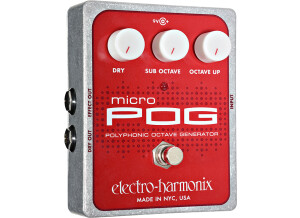
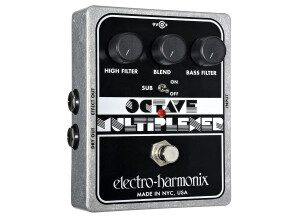
    So let me explain what this pedal professes to be. It has a high filter and a bass filter. A blend knob. A sub stitch. Has a dry and wet output which is a nice feature. Basically it's a sub octaver. EHX generally makes pretty well built pedals for the price this one feels solid. UTILIZATION I am a collecter of odd and out there pedals which means EHX stuff it a pretty frequent staple of me. They have a lot of octavy pedals and some of them are very nice. I bought this having no real idea exactly what it should be used for. There are really two applications for this pedal. You can use it as a bass emulator or as a special effect for vocals and such. SOUND QUALITY I first used this as a vocal effect for electronic music projects and for that it's pretty darn good. I tried it with my guitar briefly and decided it was pretty "toylike" for anything other than bass emulation. More on that in a bit. The vocal effect is a lot like something you would hear on a daft punk or Kayne track. Some people might find it over the top but I guess it depends on the genre. Now here's where the problem lies. My friend was at my practice space messing with some of my pedals and he was trying to make his strat do a bass emulation. He switched on the sub switch and had the bass knob rolled up and there was so much bass coming out of the speaker that it blew my 2x12. Speaks for itself. Dangerous costly pedal. OVERALL OPINION Now let me be clear, I really liked this pedal for the crazy vocal effects. But as a bass sim it blew my speakers and didn't even sound all that great to be honest. I haven't heard of other people blowing speakers with this. Maybe I just got unlucky. I have since let go of mine because I don't need it anymore and don't want anymore blown speakers.

  • moosers's review

    The Electro-Harmonix Attack Equalizer is a unique guitar pedal, suitable for use with electronic instruments of all kinds. This is a vintage pedal that is no longer being manufactured. They do have a reissue of the pedal called Knockout, which sounds pretty close to this one. The Attack Equalizer has 1/4" TRS connections for input and output, and has an on/off switch. This isn't a rack mountable piece of gear as it is a stomp box. UTILIZATION Using the Electro-Harmonix Attack Equalizer is very simple, as there are only three separate parameters to work with. The pedal has knobs for fundamental, which is the volume of your original tone, one for blend, and one for attack. Even if you're unsure off the bat what these parameters will do, after playing with it for a minute or two you should be able to catch on. A manual for the Electro-Harmonix Attack Equalizer would probably be pretty hard to find. SOUND QUALITY Let me start off by saying that the Electro-Harmonix Attack Equalizer isn't the type of pedal that is necessary a player of any type. It is a cool pedal to have if you're looking to have some subtle toning available at your feet. I've used the pedal with a '76 Fender Twin Reverb and a Fender Jazzmaster, so I'm getting a pretty good idea of what this pedal sounds like. I also use both a Big Muff and an Ibanez Tube Screamer, and this helps me to control the attack of my sound in great detail. I don't use it all of the time, but only in situations where I feel a tone I am already working on could use it. As always with EH, you've got a clean sounding pedal here without too much noise. OVERALL OPINION If one of the studios I've worked at didn't have the Electro-Harmonix Attack Equalizer, I'm sure that it isn't a pedal that I would have sought out myself, as these are pretty rare. Like I said earlier, they do have a reissue known as the Knockout, which works quite well and is a lot more readily available. If you're looking for ultimate control over your attack levels this is the perfect thing to help you level it all out, but isn't a necessity.

  • « excellent »

    The M harmonizer pedal gives you great effects to use if you sing and/or play a MIDI keyboard. I love the effects that are on this pedal, and the effects are not even the main function of this pedal but to me the effects are why I am so happy that I purchased it. There are 6 effects like reverb and modulation that you can use to put to your vocals. These effects are one of a kind and I have not heard another pedal that has effects like these. UTILIZATION This pedal can do some amazing things to your sound (vocals). We have not used it with a MIDI keyboard yet just because I don’t have the time right and now and a MIDI keyboard live act is not part of our current gig set up. But I plan on trying it out in the future, but just using it for the effects makes me more than happy. The last 6 live gigs/shows that we have had we have used this pedal the most. SOUND QUALITY You can set up your presets on this pedal so you can access them at any time and quickly. There are a few buttons on this unit and 4 knobs. I do suggest reading the manual just to know how everything works properly because it is unlike any other effects pedal that I have used or seen in the past. You can truly do just about anything with this pedal. OVERALL OPINION There is a Mic input, footswitch, and MIDI in Balanced XLR audio connections. There are two pedals on this unit and it is built for the stage! It is very durable and has rubber on the bottom to prevent it from sliding on the stage. This pedal will be used for many years to come, my only regret is that I wish I would have got this sooner like when it first came out but I was about a year and half late on purchasing it. But this now!

  • « Overdrive, boost, loop...it does it all... »

    The Triad is a sweet little gadget that combines a preamp with buffer, boost, loop and mixer in a small package. It's a wall wart powered stomp box. All analog circuitry with instrument in, audio out. And input and output for the loop. Also has a 1/8 inch stereo jack for remote switching of the boost and effects send if you want to use it in a rack set-up switched by relays controlled via your midi switcher ala G-system. The loop can be configured as a series or a parallel loop. Also the filters can be bypassed for the loop. And sweep between 60 and 200 Hz for the bass trim, and 1300 and 2200 KHz for the treble trim. UTILIZATION The set-up is simple enough, guitar in and amp out, plus an efx loop after gain. The manual explains the functions well SOUND QUALITY How does it sound? It's one of my have stomp boxes because of the sound first. The pre-amp is designed to sound like the pre-amp in the old Korg SDD 3000 delay. And it really does. Just amazing. In addition to that you get the boost option. So unlike other pedals that try to sound like the SDD 3000 where you end up with a cool vintage crunch into a clean amp you get a three channel amp...clean, crunch and over the top raging gain. Since the loop is configurable as series or parallel you can do some cool silly stuff. Like running an octave box so it's only on the delay return, or vice versa having a delay that is just the guitar note, but having the dry sound being doubled with an octave down. OVERALL OPINION What I like the most is how it sounds. Then how versatile it is. It's well worth its price. Had the original version as well. And its one of those have to replace if ever lost items. This pedal although a little hard to find is so worth the money.

  • « Good pitch shifter, but only one direction. »

    CAPO FEATURES Proprietary polyphonic up pitch Up tune up to 3½ steps in ½-step increments Full Octave Up Ttune and Octaver/ 12 string effect Latching EFFECT ON/OFF switch Momentary UP and TOGGLE/DOWN switches Bright backlit UP TUNE, OCTAVE, OCTAVER, TOGGLE and EFFECT indicators Rear panel TRIM LEVEL control with front panel LED level display IN, OUT and power supply jacks (power supply included) Rear panel USB port for software updates Patent Pending Rugged cast-metal chassis Two-year limited warranty UTILIZATION Why in the world would I need to spend a couple hundred bucks on a capo pedal when I can spend a tenth of that for a capo?" This was my thinking before I plugged in the Capo from Morpheus. However, once I did try it out, I was blown away. A few advantages this pedal has over physical capos - the guitar's entire fret range is still available, so now extra high notes are possible. Also, the fret markers are still useable - what I mean is, one doesn't have to mentally transpose what all the fret markers mean in the new key, using the Capo. The toggle functioning is cool, so one can change keys on the fly with the tap of a footswitch. Get a capo that does that! The display is easy to use, and the manual is very easy to understand, so it's a breeze to jump right in and create with this unit. SOUND QUALITY The magic is in the polyphonic pitch shifting! Full chords still sound like a guitar, with no weird sound artifacts! The effect is magical, like the DropTune. It works wonders for gigs where one needs to adjust to horns and other instruments that don't play in "guitar keys" very much. OVERALL OPINION I like this unit. It's a solid unit for the price. I just wish Morpheus would make a combination unit of the Capo and DropTune so one wouldn't have to spend $300-400 on pitch shifting - one pedal ought to be able to do both directions.