Log in
EN
FR

Modulation effects pedals

1468 products found

Categories
Filter
Sort by
Brand
Evaluation
  • Reviewed or not
  • Editor’s award
  • Reviewed by Audiofanzine
Availability
  • Available or not
  • Sold new or used
  • Sold new
  • Sold used
Must-have products
  • All products
  • Flagship products
  • Best rated products
  • Hot products
  • Popular products
Price
  • Freeware
  • Low-cost (< $95)
  • Mid-range ($95 - $200)
  • Premium (> $200)
€
Clear
Sort by
  • Popularity
  • User ratings
  • Price - low to high
  • Price - high to low
  • Used price, increasing
  • Used price, decreasing
  • Name (from A to Z)
  • Name (from Z to A)
  • Added on
Sort results
  • Popularity
  • User ratings
  • Price - low to high
  • Price - high to low
  • Used price, increasing
  • Used price, decreasing
  • Name (from A to Z)
  • Name (from Z to A)
  • Added on
Filter results 1,468 results found
Brands
Evaluation
Availability
Must-have products
Price
  • Freeware
  • Low-cost (< $95)
  • Mid-range ($95 - $200)
  • Premium (> $200)
Show results

The best Modulation effects pedals reviews

The reviews Audiofanzine members found the most helpful.
  • « Best of both (phaser) worlds ! »

    After a long hesitation with the MXRs (especially 90 script and logo models) and the EH Small Stone, I came across (through forums, videos...) this gorgeous, all dressed in yellow TC Helix which looked like it gathered all features from the aforementioned models. To say the least, I have no regret whatsoever regarding this purchase! I'm even close to ecstacy! To make it short, the Helix features several modes, the "Vintage" one is close to MXR (both the script or logo, yes it is!), the "Smooth" mode reminds of the Small Stone and the "Tone Print" allows to configure the pedal via USB or directly through an iPhone put right next to the guitar's pickups (go and see the videos, it's really, really ingenious). I'll only detail the first two modes here. 4 ins/outs, mono and stereo... a great start! In addition, the Helix features can be fine tuned with a very wide array of sounds: Speed allows to set the phasing effect's frequency, Depth defines the width of the variation, the feedback (like a delay) allows to set the repeat and signal regeneration rates, and the Mix (the only pedal with that option btw) which allows to mix the dry and the effect itself. A great feature, for sure! The "Vintage" mode is rather light ans will give it all on Van Halen-style rhythms or big overdriven solos where the phaser will bring real volume and roundness. I put it ahead of the OD, after which I put an EQ and delay. Once all pedals settings set properly, solos become huge! In clean sound it's very neutral even if you can get weird sounds by tweaking the knobs! The "Smooth" mode delivers a bulked up version of the effect. It really gets your clean and crunch sounds powered up for rock, funk and so on. On overdriven sounds, the effect is really present even if the "mix" knob allows to control the effect. I also noticed the Helix does not color the sound, it's really transparent! In a nutshell, it's really versatile, true bypass, noiseless - and addictive! A stompbox made to be soldered right on your pedalboard so as to never get away from it, ever! I had it for €115 at Thomann, a real bargain! TC Electronic quality... Plus, it's built like a tank!

  • « The best chorus. Period. »

    - Controls for depth and rate - Toggles for intensity(+, -) and chorus/vibrato - True bypass - Hand made, hand painted! - Solid construction, top quality componants - Powered by 9v battery or 9v adapter UTILIZATION Not the simplest chorus pedal made, but definitely not difficult to use or overcomplicated. Basic controls for depth and rate. These have a pretty wide range, so do take a minute to dial them in. The remaining controls on the pedal are two switches. One labeled +/- controls the intensity of the effect. While set to - the effect is much more subtle. Soft shimmers, just barely drawing you in. Switch it over to + and you get a very intense effect that I've heard described as "sea-sickening." The the toggle can be used to switch the pedal over to a vibrato effect. This isn't the chorus-like univibe of the 60s, it is more of a simpler pitch modulation. It feels a little naked and overwhelming to me, this switch is pointed to chorus pretty much permanently on my waterfall. All in all, the controls and their parameters were very well chosen, providing a range of sounds while retaining simplicity SOUND QUALITY We are pretty much at perfection here. The sound is exactly what a chorus pedal should produce. Yes, there is a wide range of tones that can be coaxed out of this pedal. But no matter what you set the knobs to, it simply cannot sound bad. It can go from a soft shimmer to a very intense chorus. But more importantly, it has NONE of the cheesy element that turns so many people (including myself) off chorus as an effect. Very sweet, yet almost dark sounding. Think the deepest of blues. OVERALL OPINION I've been through most chorus pedals, and this is the one. I am delighted with the range of sounds, and the clear tone that never gets cheesy. The waterfall has been on my board for almost a year now, and isn't going anywhere. Jam Pedals is a fantastic, under the radar, company from Greece. They do have a number of international dealers that can be found on their website. The waterfall isn't the cheapest pedal out there, and in testament to its quality, they very rarely go used. I've only ever seen 2 on ebay, and one of those is sitting on my board. The other went up to within $10 of the new price. Other good ones too look at are the Red Witch Empress and the Analogman chorus. But if you can afford to pick up a waterfall, it is the one to buy.

  • « A great chorus »

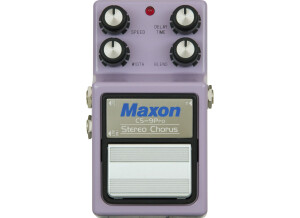
    I own a 1982 Ibanez CS9 - hence Made In Japan. If you fall for it on the second-hand market, don't hesitate to open it so as to clean it up and use an air spray to get rid of all dust then use it to clean the contacts, pots and jack. 2 setting knobs, 1 battery compartment, 1 9V plug. 1 guitar input 2 outputs: out and inverted out, each to be plugged to a different amp to take full advantage of the chorus effect. A 100% analog effect: very warm and musical! It sounds very well, I favor it over modern digital chorus effects which often sound colder. Plugged to the front of an amp, no problem, but used in the effect loop it will sound better with an overdriven sound. No true bypass or buffer so be careful when using it in a parallel fx loop with digital effects: it can cause real problems! I experiences losses in volume. I managed to get around it by setting my loop 100% wet (it behaves like a serial loop then) and separating the digital and analog pedals in two separate loopsusing the Boss LS-2, but any A/B box could do the same. Now, I keep the full volume. Once past this generation gap between the 1980s and 2000s, it's all perfect! In the end, in spite of the simple settings it is easy to find different settings. Ther's even a Leslie mod which allows to get a Vibe sound for those who want to go even further. A great stompbox, easy to find and not too expensive which will give you 80s-style chorus sounds!

  • « Killer chorus pedal! »

    - True Bypass - High quality components, durable, well built - True analog chips (1024 stage bucket brigade) - Powered 9v (can take up to 12v) batter or boss style adapter. Inserting an adapter disables the battery drain - Internal gain trimpot - Can be ordered in stereo, with depth mods. - Looks tasty! UTILIZATION Very very simple to use. Two knobs, speed and depth. Its pretty difficult to get a bad sound out of this pedal no matter what you do, definitely not one you need to spend hours tweaking. For some people, a good pedal is one that can be plugged in, and immediately sound fantastic. This is one of those. If you get any distortion for some reason, pop it open and roll off the internal gain trimpot. The pedal draws a very low current (about 10mA), so battery operation is viable. One really cool power related feature is the ability to plug in an adapter and disable battery use. So you can keep a battery in there fully charged, ready to be pulled off your board and used independently. SOUND QUALITY The Analogman chorus was originally a clone of the Electro-Harmonic small clone, and has been modified quite a bit since then. It claims to be there first boutique chorus pedal. It now sounds substantially better than a small clone. One of the best sounding chorus pedals out there in my opinion and experience, rivaled only by the Jam Pedals Waterfall. It is very warm and lush sounding, not too bright or glassy. It can go from light shimmer to full out throbbing seascapes. The AM chorus has very little of the cheesy factor that most chorus pedals are known and hated for. It really just opens up your sound. OVERALL OPINION Really just a fantastic chorus pedal at a very affordable price. It is probably the chorus that I recommend most frequently. Other comparable options are (cheaper) the Malekko Omicron and Cmatmods chorus, or if you want to spend a little more money, the Red Witch Empress, and the Jam Pedals Waterfall. But the Analogman is really the most viable in terms of quality for price, and definitely a solid choice. Highly recommended.

  • « Incredible Versatility »

    The Empress doubles as both a chorus and vibrato. Both can be subtle, vintage styled effects or over the top shoegazy noise makers. I tend to stick to the subtler stuff but it's nice to have options. Their are stereo outs which are great, but no stereo ins so you can use it with other stereo gear unless you place it after the Empress. Maybe a turn off for some but it doesn't matter much to me. The Empress utilizes an all analog signal path and contains the clever 'voice' control, which is the backbone of it's versatility. According to Red Witch, the voice control gives the user the ability to select the delay time. As the differences between most chorus pedals is the delay time, this allows you to simulate others without resorting to digital modeling. The velocity/depth/mix controls are self explanatory, as are the bright and chorus/vibrato switches. There is also a switch on the inside to select between two different preamp circuits, one mellower with less gain and one slightly more aggressive with slightly more gain. Build quality is outstanding to say the least. UTILIZATION Finding your ideal chorus sound is very easy. You simply dial in the voice knob to get the delay time you want and then adjust the mix, depth and velocity knobs to fine tune your tone. The bright knob serves to further tweak your tone. Set up is incredibly simple. Pick between battery or adapter power supplies and then plug it into your signal path. The manual is very concise and to the point. It explains the functions of the pedal very quickly and in an easy to read and understand format, something missing in a few other manuals for chorus pedals I've owned. SOUND QUALITY I only use the Empress with guitar, though I assume it would work fairly well for bass too. I use both humbuckers and single coils with it. I tend to prefer the single coils as the humbucker has a higher output and tends to distort the front end a bit if you're not careful with your pick attack. The chorus sounds I can get range from a Boss CE-1/2 lushness to an almost TC Stereo Chorus/Flanger sparkle. It seems to do a better job at the lush sounds of the Boss unit though. It doesn't sound 'metallicy' like some other choruses I've played, such as the EHX Small Clone. It can be very over the top with an almost ring mod type sound with the velocity and voice turned up high. The voice knob can vary the sound from a sea sick warble to an almost unnoticeable doubling effect. This is the key to the pedal's versatility and is an incredibly powerful tone sculptor. The voice knob varies the max amount of pitch modulation in the vibrato mode. With the voice and depth knobs turned all the way up, you can get over a semitone of pitch modulation for some really crazy sounds. The classic vibrato tones that come from old tube amps are available as well but they're not as much fun. It sounds good both before and after distortion, unlike many chorus pedals I've used. It can get quite hissy with the voice knob turned up a bit though. Lots of background noise that's only made worse if you're using it before distortion or compression. OVERALL OPINION My favorite thing about it is the versatility. I can dial in a chorus tone for every situation. I wish there were presets but it doesn't matter all that much to me. My least favorite thing is definitely the hiss. It's really the only fault I could find but it can be a biggy in certain situations. If your signal chain is already noisy, I'd probably avoid the Empress. If you can keep it quiet, I'd pick one up in an instant. For the $300 new price, I probably wouldn't pick one up. I'd probably spend a bit extra and pick up an Eventide ModFactor for even more versatility. But for the price I got mine for and the prices I usually see them at used, it's a no brainer. Nothing comes close for the price as far as versatility is concerned IMO. If you only need lush chorus sounds, an old MIT Boss CE-2 is a better option. The sound is consistent every time I use it, though I use it with a heavily regulated power supply. Some days it feels like it has less headroom than others though. I've owned several other choruses including a Fulltone Choralflange, Boss CE-2, TC SC/Fl etc. None of them can touch the versatility of the Empress. If I had to make the decision again, I might wait for the new Fulltone CFV-2 but it's likely I'd wind up with the Empress based on my previous experience with the Fulltone unit. The Empress is an all around more versatile and organic sounding unit, even without the flange mod.

  • « Great Chorus »

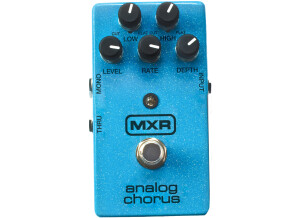
    Analog chorus Besides the classic controls (depth, volume, rate), you can also modify the tone (low and high). There are two "mono" and "thru" outputs to use it with two amps (which I've never done). The box is made of metal covered with metallic blue paint / spangles. USE Very easy to use. Consider the following drawbacks: - To change the battery you need to unscrew the bottom lid (not very practical during rehearsals or gigs) - The power supply on the side is not very practical - The pots are rather small, which isn't very practical when you have big fingers - The LED is VERY bright, it can blind you dark environments SOUND QUALITY The sound quality is excellent. You get an effective chorus, rather neutral (in the sense that its doesn't have a strong "character") and versatile. I get all the sounds I want, both with clean and distorted sounds (I place it on the amp's effects loop) and I think it provides a pretty warm sound (without a doubt due to its analog design). OVERALL OPINION I find this chorus pretty effective and versatile, it meets my expectations. It's doesn't have a strong character nor was it conceived to get bizarre sounds (not even with the controls all the way up), which is good to know when you are looking for a modulation pedal...

  • « Advanced Phaser also does Tremolo, Touch-Wah, Vibrato »

    SOUND: The HORIZONT’s is inspiring to use, with its crystal clear JFET phasing tones. The sounds generated vary greatly, as there are dozens of possible combinations. In essence, you can think of the HORIZONT as a combination tremolo, vibrato, wah and phaser – and with anything between. The vibrato can take on a Leslie attitude as the tone pulsates from speaker to speaker (particularly when using the Stereo Pan option). The tremolo produces classic results and the phaser definitely can take you back to the 1990s. Those are the sounds in simple terms, but what the HORIZONT accomplishes is so much more as you can select what frequencies feedback, whether using a LFO or Envelop filter, whether the Envelop is up or down, what wave you’re using (there are eight, including ramp up/down, square, triangle, sine, sweep, random steps and random slopes), and how smooth or how much spurt you want in the signal. You can make the sound very subtle or dominating (with the Mix), short-lived or long-lived (with the Decay and Depth), and even how touch sensitive you want your guitar (e.g., with Fuel on low the effect is modest unless you hit the guitar strings hard, which then becomes very obvious). The HORIZONT may be a touch complex, but it does come with an Exploration Guide so that you can achieve Classic Sounds (Phase 90, Smallstone and Univibish), LFO-Based Phasing, Envelope Phasing, Trem & Touch-Wah Style settings, as well as expansive section on Emphase-Settings (viz., effects you get by emphasizing feedback of the higher, mids and lower frequencies). I touched upon several of these examples in the demo video, but the point is that with about an hour of following the Exploration Guide you get a firm grasp as to some basic settings, and from there you can tweak to your heart’s desire to zero-in on the tone you want. And if you decide to attach an Expression pedal, be prepared for wah-type results that are so broad and sweeping that it would put any wah to shame. As well, there is an FX Loop, so that you can add a dry signal in front of the HORIZONT’s wet signal (try feeding in some delay or reverb for some spectacular results). One of the best features of the HORIZONT is the EMPHASE switching system, which allows you to emphasize a particular frequency range and to what degree. Although many other aspects of this pedal helps to sculpt your tone, you can do a lot with the EMPHASE switches so that you hear more of the higher, mid or low frequencies, but also to produce an overdriven sound, oscillating granular sounds, and even synth-like fuzz and growling glitch sounds. There are so many possibilities that my 5-minute demo only touched upon a handful. OVERALL IMPRESSION: A ‘massive’ pedal (lots of possibilities), KMA Machine’s HORIZONT can generate so many sounds and variations of those sounds that for someone wanting a basic phaser this pedal likely will be too much. For those who like to tweak, and also get wah-type effects, tremolo, vibrato and anything between, then you may have found the Holy Grail. Certainly you can keep it simple and low in the mix (for some Funk-style results), but when you begin to crank up the mix, depth, decay, etc., you can achieve some fabulous soundscapes; coupled with some delay/reverb and hold on to your rocket ship as you blast into the outer realms of deep space. At 289 Euro the HORIZONT is not an inexpensive pedal, but you get what you pay for – from classic Metal phasing to trem & touch-wah effects and spacey vibrato in true stereo effect (the Horizont is true stereo out, but not in total a stereo pedal; the audio circuit in total is analog and the LFO section is the only one that is digital). And the ability to use an expression pedal (to mix pure clean to down and dirty) is a bonus for those who value their sound effects, besides having a Tap Tempo to precision time the beautiful noise. The HORIZONT is made for guitar, bass and keyboards, and so there is a lot of potential as you select which frequencies you want to feedback, which of the eight wave forms you want to use, and a host of other features. A strict rock-n-roller may not have much use for the HORIZONT, but for those who like to experiment and even produce synth-like or alien-type sounds that can be mixed with the raw tone of a guitar (or dominate it all together), then this a worthy consideration. A warning: the HORIZONT is addictive and you will wonder where the hours went as you become intimate with your new best friend. GENERAL USE: Fortunately there is an Exploration Guide with sample settings; otherwise, the HORIZONT would be confusing and take a long(ish) time to get to know. But once you get an idea of how to set it for vibrato, tremolo, wah-type tones or phaser (four basic categories), it then becomes fun to tweak and explore. Some of the general settings include the Signal (outgoing), Mix, Depth (the breadth of phasing sweeps), Spurt (phasing speed from smooth to sputtering) and Wave (e.g., sine, square, random slopes, etc.). You can make any of these aspects subtle or strong within your signal (I definitely exaggerated the qualities so that they come through with obvious intent in the demo). The other controls then create further character. The most interesting is the EMPHASE, which allows you to emphasize a particular frequency (whereas the Regeneration knob determines how much of that frequency is exaggerated or emphasized). The FUEL knob dictates the sensitivity of the envelope, which also has a bearing on how hard you pick your guitar (making the effect more intuitive and responsive). The Decay knob adjusts if you want a short or long wave (good for short wah-type sounds or very broad and sweeping phasing). The sweep can be based on an LFO wave or an envelope; the envelope can be up or down, and the SPURT control (how smooth or stuttered) also can be assigned to LFO, envelope or both. And to create even more atmosphere you can have the effect in true stereo pan if so desired (a nice throbbing effect in mono, but the result is best with two speakers/amps). On the surface there appears to be too much, but using the Exploration Guide makes it easy enough to navigate – along with a free afternoon of experimentation. OTHER DETAILS: The HORIZONT has some heft to it, although the chassis is aluminum (along with a powder coated paint job that is as cool to look at as it is to play). A moderately large pedal, measuring 5.5 (l) x 4.75 (w) x 1.75 (h) inches (14 x 12 x 4.5 cm), the HORIZONT’s Tap Tempo and the Engage footswitches are solid, whereas the Engage switch has a solid click when pressed on and off. Those footswitches are far removed from the knobs and toggle switches to prevent damage from regular use. All the large knobs are metal (the smaller ones are plastic), and their associated pots feel solid in quality when turned. There are ten toggle switches, all of which feel solid when selecting parameters. All the main inputs are located in the back, including In, Expression, Power and Stereo Outs. The three LEDs on the HORIZONT (Envelope Status, Tempo and On/Off) are low profile and will not be damaged from regular use of the pedal. There is a Send and Return (FX Loop) located on the sides. The HORIZONT requires a standard 9VDC power supply while drawing only 75mA of power. Overall, a good quality pedal, which one comes to expect from German engineers in Berlin.

  • « Throbbing modulation madness »

    - Compact vibe enclosure - Analog circuitry - Optical vibe - Expression pedal input - Top mounted switchcraft jacks - Powered by standard boss style 9v negative center - Blinking green LED speed indicator - Red LED indicator - Controls for speed, width, and Center - Chorus/Vibrato switch - True Bypass - Internal level, bright, speed trimmers UTILIZATION Beautifully built. Dave Fox is definitely one of the best builders on the boutique market. It’s small and compact which is rare among true optical vibes, yet perfect for a crowded pedalboard. Very sturdy and well put together, I wouldn’t worry about reliability with this one. Speed and width (depth) controls are standard. The center control on the other hand, is unique to the Aquavibe circuit, and very helpful. It allows you to control what frequency the swirling modulation is centered around, making it by far the most versatile univibe I’ve used. SOUND QUALITY It sounds absolutely incredible. If you haven’t tried a univibe yet, do yourself a favor. It’s basically a throbbing effect that combines tremolo, vibrato, chorus, and phase shifting. The Aquavibe can produce anything from a light throb and shimmer to psychedelic madness that kidnaps your sound. I did find it a little difficult to find a good midpoint between those two extremes, but that is really a personal deal. There isn’t a setting on it that will sound “bad” you just need to take your time and dial it in. OVERALL OPINION Hands down the best Univibe I’ve used. The build quality is beautiful and compact, it sounds unreal, and has more functionality and versatility than any other vibe I’ve used. If you can get your hands on one of these, it is a keeper. The downside is the price and availability. These are difficult to make, and Dave only does a handful at a time, I believe the waiting list runs at about a year. Used prices are pretty inflated as well. A cheaper alternative is the Fulltone Deja Vibe, and if you’re looking for something high end, the Megavibe is fantastic, though to my understanding, no longer made. But all said and done, the Aquavibe is the one to get in my opinion, and It has my strong recommendation.

  • « Vintage chorus on the cheap »

    - Controls for depth and speed - Buffered Bypass - Vintage DOD construction - Compact - Powered by 9v battery or DOD style adapter - Solid and reliable UTILIZATION While this is an excellent chorus in many ways, the usability is a little annoying. The controls themselves are very simple, depth and speed/rate. Standard chorus controls, should be self explanatory. It is nice and compact which is nice. Now we get to the fun part. There is a very noticeable volume drop when the pedal is engaged. I had my own pedal converted to true bypass in hopes of rectifying this, to no avail. So it is great for studio work, or on songs that have the chorus all the way through. But for switching the pedal on in the middle of a song is going to be problematic. There is no LED indicator which can be pretty annoying. The adapter is a vintage DOD style, NOT the standard Boss one. There are adapters that will cross the two, but it is just plain annoying to deal with. SOUND QUALITY The sound itself is pretty great. I’ve been through a lot of choruses, and this one really isn’t bad at all, especially for the price you can get them at. Very warm and analog sounding. Anywhere from a slight shimmer to peaks and dives. Low noise, and not very cheesy sounding which seems to be the most common complaint regarding chorus pedals these days. Very similar to, but a little more subtle and refined than the more easily obtainable DOD fx65. OVERALL OPINION If you are after a solid vintage analog chorus at an affordable price, this is probably the one to get. Yes, it has some usability issues, and isn’t the most straightforward to plug in and use. But that is vintage gear in general, and the price you pay for using it. There aren’t really a whole lot of similar sounding chorus pedals to be had at this price point. That said, these aren’t the easiest to get a hold of. There are one or two on ebay from time to time, and they usually go between $70-100. I’d recommend mods for true bypass and a side mounted LED to make it a little more usable. If this sounds like it’s more of a hassle than you’re up for, I’d take a look at the Malekko or Cmatmods chorus pedals.

  • « Dual-Channel with Three Phaser Types, Vibe & Tremolo... powerful and sounds fantastic! »

    Pascal is a dual-channel (Green & Red) modulation pedal (it also is a module for the LiberaToe pedal/switcher systems). In effect, you have a separate set of controls for each channel. A channel can be turned on or off as usual (fast click via the footswitch), but if you hold the footswitch down for 0.4 seconds, it switches channels (or turns the pedal back on to the next channel). As much as I like the LiberaToe pedals for this reason, Pascal offers a lot of options, as demonstrated in the accompanying video. The Green channel offers a warm, subtle phaser; a classic phaser (typical of 1970s and 1980s) and an asymmetric phaser (more bite with a higher-end resonant response). The Red channel offers tremolo, vibe, and a wide phaser with a broader phase response. These selections are established via a toggle switch with the following combinations: Toggle Down – Green = warm phaser, and Red = tremolo; Toggle Center – Green = classic phaser, and Red = vibe; and Toggle Up – Green = asymmetric phaser, and Red = wide phaser. Now, if you wanted the warm phaser coupled with the wide phaser, or a different combination between the two channels, you will have to flip the toggle. As stated, each channel has its own controls, each having Level, Depth, Rate and Feedback. This means a very subtle phaser in one instance (perhaps to add this quality to rhythm), followed by a more robust phaser, e.g., for lead, via both Level and Depth. Moreover, you can have different rates (speed) and feedback (resonance). All of these features should make it obvious how diverse Pascal is and the potential modifications that are possible with very little knob turning, thus providing a gigging musician faster and better flexibility on the go. This analog true-bypass pedal has exceptional sound quality. The effects are very clear and defined, but also thick and organic. And with the variations of modulations possible, Pascal is an excellent consideration for phaser aficionados. At $147 USD ($85 for the module without the Shell casing), the sound quality and flexibility make this pedal a no-brainer. You do not need to spend a lot of money on ‘boutique’ pedals, when the boutique is available straight from Pascal (and that holds true for any LiberaToe pedal I have reviewed!).

  • « Great set of new 2023 pedals from Sonicake at excellent prices »

    https://www.youtube.com/watch?v=9us-MfQl01g TONE GROUP Tone Group is a true bypass 10-band EQ, ideal for any instrument, including bass (basic frequency range for bass is 40Hz-400Hz-4000Hz, whereas Tone Group ranges from 31.25Hz to 16kHz). Like other EQ pedals, this can be used to cut or boost specific frequencies; Tone Group’s cut or boost is up to 15dB (per frequency and the Volume slider). As a result, if you keep everything flat, the Volume slider can be used as a clean boost, and this works exceptionally well with the Tone Group as it is very clean and quiet; there is a hint more dirt if you crank the Volume, as it’s pushing the amp harder, but the added dirt is more noticeable with dirty channels. The amount of gain can increase or decrease, relative to whether any sliders are cutting or boosting, but while retaining the honesty of the amp. Certainly, Tone Group helps to mold or craft your tone, to make it a bit darker, brighter, to increase or decrease mids, remove the bottom muddy end, etc. Usually, EQ pedals are used often to provide a fatter sound, to cut the mids for more of an 80’s metal sound, or to add darkness for more modern rock tones. I provided a few examples in the demo. Tone Group has an analog circuit design and it works well; it does its job. LEVITATE Levitate combines a plate reverb with digital delay. This is a great sounding combination, but be aware that the delay is warm and has a slight modulation (warble) to the sound. Each side of the pedal works independently, with the reverb side having ‘mix’ and ‘decay’ knobs. The mix can be very deep, and to the point of being very acceptable for ambient-based music, although still very good for hints of room or studio reverb. The reverb is on the bright side, which teams up well with the decay (which is a bit dark). The Decay has a long schedulable time (10 seconds), which further supports the mix for ambient-style music. The Trail Function allows for the decay to be heard, even if the reverb is shut off. The delay side of the pedal has the standard Time and Feedback options; time can extend up to 2000ms and the Feedback has many repeats, although not infinite. What I like about this delay is that it has separate Wet and Dry knobs, which allows for more blending customization than just a ‘mix’ knob. The Dry does boost the signal a bit, but nothing excessive. The delay side also has a Tap Tempo option, accessible by holding the delay’s on-off footswitch for a few seconds (to get out of Tap Tempo, hold down the footswitch again). WARPED DIMENSION Warped Dimension is a multi-effects true-bypass pedal, combining classic chorus, flanger, phaser and tremolo. There are a few multi-effects out there that also have vibrato, lo-fi, rotary, or other. Warped Dimension includes the more commonly selected effects, but what I really like about it is the dial selector. You do not have to ‘click’ directly on the option, but turn the dial within an effect’s range, making for quick and easy change. Controls include Level, Depth, Rate and Tone. I like the Tone knob, as you can adjust for any ‘darkness’ or ‘brightness’ created by an effect (e.g., flanger becomes brighter as you increase its mix). And there’s a tap tempo, accessible by its own footswitch (no need to step on to engage as it remains active if on). The quality of the effects is good, and remember that these are ‘classic’ reproductions, which means they are more subtle than modern counterparts, particularly with the flanger and phaser. They are tasteful without huge exaggeration (bearing in mind that I set this pedal at the front of the chain as opposed to in an amp’s FX Loop). Both the chorus and flanger work best with just a slight touch of the Rate knob, whereas a larger portion of the Rate is more applicable for both phaser and tremolo. Moreover, I find the last 25% of the Rate too sharp, unless you want a RingMod effect. Having said that, you can crank the rate for any of the effects and tame the beast with the Depth knob for interesting tonal textures that don’t sound like a flanger or phaser typically. All these pedals retail between $50 to $59 USD and is at a very nice price range, whether looking for budget gear or an effect at a decent cost that may be used now and again. Combine these three pedals and there is a lot of tone sculpting to be had for under $200. Throw in a drive or boost and a pedal board is pretty much complete.

  • « From simple Tremolo, to Leslie to full-blown Organ »

    : Some tweaking skill is required to operate the Roctary; and because this pedal offers a plethora of tones it cannot be pigeon-holed into a particular sound. If we consider a simple function, you can add a subtle or very noticeable Octave effect (one octave up and/or one octave down) – in various ratios and a little or a lot in the mix. In fact, so much in the mix that you can Kill Dry the guitar’s original signal so that you get nothing but the Octave tone(s). The same is true when using any of the features, in that you can Kill Dry if so desired and get nothing but the wet signal. Ignoring the Octave function, you can add some basic Tremolo, either at a very slow speed or a fast speed (but not so fast that it sounds like it’s sputtering out of control) and you can establish the acceleration when switching from a slower to faster rate. There’s also a Leslie setting so that the Tremolo has a swirling quality – just like a Leslie speaker. You also can add some Drive to the tone, which has a fine searing distortion quality. Those are some of the straight-forward tone descriptions. Once you begin tweaking the Bass-Horn (which defines the mix between woofer and horn), the Octaves and the Balance, you can achieve some strange and eerie guitar tones (if done in a subtle manner), and all the way to a huge blaring pipe organ (consequently, somewhere in the middle, there are some very authentic sounding Blues/Rock organ sounds that mimic the real thing). OVERALL IMPRESSION: The Roctary is a steal at $129 USD – a pedal that has an addictive quality to it (hard not to play around with all the settings for several hours) and that allows such subtle nuances like a touch of Tremolo or Leslie, perhaps a dash of Octave up and/or done, or even a hint of added drive. However, what sets this ‘tremolo’ pedal from the pack is the ability to produce authentic sounding organ tones, from mellow, to Rock to a massive church organ. Consequently, the Roctary is not a one trick pony, but a combination of rotary speaker simulation with Octave features (hence the name, Roctary, merging those concepts) that allows an interesting vibe to your tone or an outright change of instrument with very authentic organ sounds. The various unique tones for both rhythm and lead are impressive enough, but even minor tweaking of any of the controls (Drive, Bass-Horn, Balance and Octaves) can produce very different results, and even more so when you use the Kill Dry setting and experiment with nothing but Wet. The Roctary offers so much that it can be used as a multi-tool on your pedalboard for when you need some Tremolo, or perhaps some Octaves in the mix or when your organist is away from band practice with the flu. GENERAL USE: Output/Volume is controlled by the Level knob, and since the Roctary is not a big headroom type pedal, you likely can set it about 12-noon to start. The Tremolo aspect involves both a Slow and Fast speed selection, which you can alternate via the Fast footswitch (this allows you to set two different tremolo speeds). You also can set the acceleration (rising speed) between the Slow and Fast settings by holding the Fast footswitch and turning the Slow knob to an appropriate level. By setting the acceleration the Roctary acts just like a real rotary speaker, viz., the woofer rotates at a slower speed than the horn. The Bass-Horn knob varies the mix between woofer and horn (the type of speaker setup found in a Leslie speaker cabinet); think of it as a Tone control, although its effects are a bit more interesting on this pedal. There are two Octave settings (an octave above the dry signal and an octave below), and they can vary in mix, from completely off to very dominant when turned up completely (however, this also depends on the Balance knob that I’ll address soon); the Octave function turns on/off via its own switch. The Drive knob adds some dirt into the signal, which adds sizzle to a guitar tone if used sparingly, but really has its use when creating a ‘dirty organ’ tone, viz., Rock Organ Lead. Now, if you want a Leslie sound, so that the Tremolo has more of a swirling around the room quality, that is achieved by holding down the Fast footswitch while powering up the unit (thereafter, by pressing both footswitches simultaneously you put the Brakes on the speaker rotation and you hear only the usual tremolo; rotation resumes by pressing either footswitch). Another feature is the Kill Dry, which removes your dry signal so that you hear only the Roctary’s sound, and this is done by holding the Fast footswitch and rotating the Octave Up knob full counter-clockwise (reversing those steps reinstates the Dry). The Roctary is not overly complicated to use, but it takes an hour or so of tweaking and experimenting, a rather enjoyable process with this pedal. Next, the Balance indicates the degree of mix between Dry and Wet. If you set the knob about 9-o’clock the Wet is subtle, although audible and can add some very unique characteristics to rhythm and lead. Around 12-noon and the mix is 50/50, although the Roctary can overpower somewhat and depending on the other settings (more particularly the Octaves). Beyond 12-noon and the Roctary dominates. Finally, you can use an Expression Pedal to control Tremolo speed. This feature is great if you want to play some rhythm or lead lines that end with a stronger vibrato (if you listen to the Demo accompanying this review you will hear that effect near the beginning when the lead guitar plays over the acoustic guitar). OTHER DETAILS: Roctary is a medium-sized pedal measuring 112 mm (L) x 100mm (W) x 55mm (H) with knobs (4.4 x 3.9 x 2.16 inches). The heavy duty steel chassis has a powder coated brown (with a hint of sparkle) paint job with cream lettering – for a pleasant vintage look. The eight plastic knobs are of typical fair and quality and should withstand normal use and abuse. All knobs have good quality pots (smooth and solid when turned). The two footswitches (on/off and tremolo speed selection) produce very subtle clicks when engaged or disengaged – there is no popping or significant signal noise when switching. The cable input and output, the expression pedal input, and the power input all are located in the back, which saves on pedalboard space, but also keeps them in a more secure location. The Roctary does not work via battery power and requires a standard 9VDC (center -) power supply, while consuming only 8mA of power.