Log in
EN
FR

Wah-Wah/Auto Wahs/Filters for Guitar

546 products found

Filter
Sort by
Brand
Evaluation
  • Reviewed or not
  • Editor’s award
  • Reviewed by Audiofanzine
Availability
  • Available or not
  • Sold new or used
  • Sold new
  • Sold used
Must-have products
  • All products
  • Flagship products
  • Best rated products
  • Hot products
  • Popular products
Price
  • Freeware
  • Low-cost (< $95)
  • Mid-range ($95 - $200)
  • Premium (> $200)
€
Clear
Sort by
  • Popularity
  • User ratings
  • Price - low to high
  • Price - high to low
  • Used price, increasing
  • Used price, decreasing
  • Name (from A to Z)
  • Name (from Z to A)
  • Added on
Sort results
  • Popularity
  • User ratings
  • Price - low to high
  • Price - high to low
  • Used price, increasing
  • Used price, decreasing
  • Name (from A to Z)
  • Name (from Z to A)
  • Added on
Filter results 546 results found
Brands
Evaluation
Availability
Must-have products
Price
  • Freeware
  • Low-cost (< $95)
  • Mid-range ($95 - $200)
  • Premium (> $200)
Show results

The best Wah-Wah/Auto Wahs/Filters for Guitar reviews

The reviews Audiofanzine members found the most helpful.
  • « Diverse Setup Options and Ultra-Clear Signal »

    SOUND: Some wahs have a growl or dirt to them, which is fine, but I found with the Wowee-Wah is how it stood out in the mix due to its great clarity. Certainly its non-potentiometer photo element has much to do with it; as well as its increased voltage wiring (to prevent distortion). But another big factor is the ability to customize your wah sound. This is important since what works well with a clean tone may not be best with a high-gain tone; likewise, what wah quality is best for some crunch rhythm may not be ideal for lead playing in a higher registry. The ability to customize your tone by giving it more or less bass (deeper wah tone), to keep the wah shallow or deep, whether there’s an increase or decrease in the wah boosting (Q Factor) and how loud you want your wah in the signal is both impressive and versatile to meet the needs of just about every wah user. When set for the biggest sweep, most depth and range/boost the Wowee-Wah ranges from typical to good. I heard and experienced larger sweeps, although sometimes that results in a very deep growl wah that sounds a touch muddy. Nonetheless, a feature of this wah is that it takes very little foot movement to create a wah tone (due to the photo element vs. a potentiometer). OVERALL IMPRESSION: G-Lab obviously selected a good name for a Wah that is so diverse and so clear in the mix. There is a lot of quality in this wah, including its all steel structure (with rubber foot pads and base feet), the photo element (rather than a potentiometer that wears) true bypass function that necessitates smaller resistance-to-motion for smaller effort and greater reliability, its fully analog circuit with increased voltage (which decreases distortion and lowers noise level), its battery on/off switch (if powering by battery) and its front light indicators for easy finding on a dark stage. Although the overall quality of the Wowee-Wah is impressive, there are a number of external switch elements that allow you to shape the sound of the wah and relative to your gear and the tone you’re trying to create. G-Lab provides guidance as to how to switch among lower- and higher-intensity settings when working with clean, crunch or high-gain tones, although you can adjust any of those parameters as desired and to your own liking. The Wowee-Wah allows control of the boosting of the resonance (how strong the wah sounds), how broad a sweep you hear and also if you want more high-end or low-end resonance to be heard. On top of that, you can select a classic mode (wah shuts off when treadle is all the way down) or touch mode (the wah only activates when you step on the treadle). Those are a lot of features in a wah for 198 Euro and a very reasonable price considering. GENERAL USE: There are a number of elements in the Wowee-Wah’s operation. First, there is a battery on/off switch. And so, if powering by battery you need to turn the pedal on (turning it off means you preserve battery life without having to unplug your guitar from the IN connector every time you’re not playing or not wanting to use the Wowee-Wah). Second, there are two modes of operation (switch located near the side of the treadle). The SWITCH mode operates like a classic wah, and shuts off when the treadle is all the way down. In TOUCH mode the treadle can be in any position and the wah does not activate unless placing your foot (there is pressure) on the treadle. If you want to park the Wowee-Wah and use a particular tone for some rhythm or lead, then obviously it needs to be on SWITCH mode. Now we get to the part where you can customize your wah tone. Obviously you can set the Wowee-Wah and use it for any application you wish, and there is a particular setting that mimics a typical and classic type of wah. However, if you want subtle or more extreme wah settings, and based on whether the tone is clean, crunch or high-gain, then you have options to customize a wah sound. Fortunately G-Lab has provided suggestions in its manual (that can be altered) that tend to work best in both low-intensity and high-intensity conditions when working with clean, crunch and high-gain gear settings. These are presented in the demo video, and so I will not belabor the six different applications here. Suffice to say that the differences are changes in the degree of sweep, the degree of high-end or low-end of the resonance and the boost or strength of the resonance. It takes a little getting used to, but it’s easy to zero in on combinations you like and it only seconds to ‘switch’ parameters. OTHER DETAILS: Standard weight and size at 1.4 kg (3 lbs) and 25 (l) x 9.9 (w) x 8.5 (h) cm or 9.8 x 3.9 x 3.3 inches, the Wowee-wah is made of steel, both powder coated (base) and stainless, which accounts for its solid weight and build. The top of the treadle has two rubber pads for secure footing. The bottom has rubber feet to prevent slippage when used, but there also are two pre-drilled holes in the base if you wanted to affix the Wowee-Wah to a pedalboard. Its use of a photo element, as opposed to a potentiometer, means smooth and reliable action without the wearing of any pots. There are two front LED lights to easily find the Wowee-Wah on a dark stage. It has a power supply ‘switching off function’ that protects from accidental battery discharging after unplugging the cable jack IN connector (and you don’t have to unplug your guitar if using a battery and when not playing). There are six switches to allow for various settings, all of which have a solid click and are low profile enough that they will not catch or be prone to breakage. The Wowee-Wah works on a typical 9VDC regulated power supply and only requires 10mA consumption. Finally, like any good wah, you can adjust the resistance to motion so that the Wowee-Wah’s treadle is a bit stiffer or looser in use by adjusting its spring set screw.

  • « Multi-Functional Wah with Noiseless Operation »

    SOUND: Around since 1969, Morley is known for its wah pedals. They have a very distinct ‘whaaah’ quality that isn’t mild and meek like a Cry Baby, but not honking either (at least the few I’ve tried over the years, and the Dragon Wah 2 Mini fits that category). Also, it uses an Electro-Optical Circuitry, which is a ‘light emitting diode’ that shines on a ‘light dependent resistor’ to control the wah, volume and switching. What this means is very smooth pedal operation while reducing any unwanted noise typical with wahs controlled by a ‘pot’ or potentiometer. If you’re familiar with typical wah pot technology, you know there’s that slight scratchy or ‘off’ sound as you press your toe all the way down, along with some line interference noise (particularly when feeding into a distortion or overdrive pedal). The Dragon Wah 2 Mini remains surprisingly quiet while producing very sweet vocal wah tones with a clean amp, but also clearly defined wah tones with higher gain settings. The Dragon 2 Mini wah produces various. First, there is a typical broader sweep wah, which activates only when stepping on the treadle (it is a switchless wah) and is bypassed otherwise or when not in use. Then there is the WOW feature, which produces a shorter sweep in that deeper and middle range (growling) wah zone, which actually sounds like someone saying “WOW.” Next is the Wah Lock feature that allows you to lock into any frequency along the Wah (or WOW) range and then maintains that particular vocal tone while playing. The Volume control increases output with slight gain, but nothing exaggerated (it’s not a 10dB boost, for example). And with all elements considered, this is a super silent wah… no switching (clicking) noises. OVERALL IMPRESSION: The George Lynch Dragon Wah 2 Mini was designed to use less pedal board space, but while offering all the features of the regular sized Dragon Wah 2 (full sweep wah, WOW wah, Wah Lock with Notch selection, and Volume). With only 600 made, its price of $249 USD is typical of a quality buffered wah, but since it uses silent operation electro-optical circuitry (no pots to wear or make noise) you are getting a highly functional and quiet piece of gear that will outlast many other less expensive wahs. Morley has a long-standing reputation in the music industry, since 1969, and I can recall an uncle who used to jam out with nothing more than a fuzz and a wah pedal… a Morley wah. That thing was still around even after 20 years of use and abuse. Consequently, besides sounding great there certainly is a degree of nostalgia in having the Dragon Wah 2 Mini on my board and in my collection. GENERAL USE: The Dragon 2 Mini wah remains cocked back with your raw signal running through (absolutely no coloration through this true tone bypass and buffered wah circuit) until in use (and springs back automatically so that you don’t have to full-toe or full-heel click it on or off). The basic wah (set to George Lynch’s preferred tone and sweep) has a generous sweep that does not sound shrill or tinny with toe all the way down (I heard other wahs with a slightly broader sweep, but the most forward position is hardly usable and you try to stay away from it). Stepping onto the WOW switch produces a shorter sweep found in that deep register, which sounds awesome and whether playing raunchy rhythm or throaty leads. The Wah Lock switch keeps the wah tone locked into a particular register, whether using the full wah or the WOW setting. This is determined by turning the Notch knob (no need to step on the treadle to find it) and is ideal when you want that short-range auto-wah type effect. The Volume control is subtle and affects all the wah settings – you can hear the difference whether turned all the way down versus all the way up, but it’s not significant like a 10dB boost, for example. Rather, you hear a slight increase in volume with a slight increase in light gain to help give your tone some edge. The clarity of this wah makes it ideal for both clean and high-gain environments and you will achieve some impressive tones no matter the settings. Hey, if it’s good enough for George Lynch – and it works for guitar, bass and keyboards. OTHER DETAILS: The pedal’s cold rolled steel chassis has yellow and purple zebra stripes (with some Japanese writing for extra mojo) and with quality powder coating. Measuring in at 173.4 mm (L) x 114.3 mm (W) x 63.5 mm (H) or 6.85 x 4.5 x 2.5 inches, the treadle has a glow-in-the-dark non-slip grit finish on its top (for easy viewing on stage), with the Morley name along with a Dragon emblem. Both the WOW and Wah Lock foot switches have a solid click in feel, although silent in the signal when switching on and off. Both Loudness and Notch knobs are smooth and solid when turning. All switches and knobs are below the level of the treadle, to prevent accidental switching on/off or damage. The guitar input and output, as well as the power output, are located toward the front ends of the pedal, which keeps them far removed from your wah-wah foot. An issue of concern, to prevent damage, is to make certain the proper power supply is used, viz., Morley’s 9VDC 300mA regulated adapter with a negative center pin polarity. An improper adapter will cause some low frequency hum in your amp, but also could damage the pedal – if that is the case, then opt for a battery. The Dragon Wah 2 Mini only uses 13mA of power, and so a regular Alkaline battery will last quite a while (the battery inserts in the bottom through a ‘quick clip’ battery door) and, as usual, keep your guitar unplugged when not in use to preserve battery life.

  • « Likely the Best Sounding Wah with Biggest Sweep »

    SOUND: The Rewah Pro by Mission Engineering is such a great sounding wah and likely has one of the biggest sweeps I’ve heard in a wah pedal (although you can adjust its tone and range, as I’ll explain later). Below is a YouTube demo video of the Rewah Pro by Mission Engineering, which covers its ‘standard’ setting and its customization features via internal dip switches. A few things come to mind with this pedal. First is the broad sweep of the standard setting (it’s huge!). Second is the quality of the wah, based on a custom inductor (which I’ll elaborate upon later). Third is the ability to customize the tone by way of internal dip switches, including adding some gain, making the wah more nasally, making the wah more bass-heavy and even reducing the gain for a cleaner wah. And you’re able to use whatever combinations/dip switch settings you like to zero in on that ideal wah effect. OVERALL IMPRESSION: Because of the custom designed inductor (similar in characteristic to the vintage ‘halo’ inductors used in some early wah pedals), this is the best sounding wah I’ve ever heard. The quality of the tone is incredible, and is most obvious with a clean or slightly dirty amp. If you use a high-gain amp, the wah effect/signal remains very clear and obvious and definitely not noisy or muddy (or over saturated). The ‘standard’ setting also offers one of the biggest sweeps among wahs, which means more tonal variations and characteristics, particularly useful if you ‘park’ the Rewah Pro in one particular location. Many wahs do offer customization, but I find the internal dip switch customization in the Rewah Pro highly usable. In fact, each dip switch result adds a different flavor, making it ideal for different applications, whether you want a touch of gain, a cleaner wah sound (with less gain), a bit more bass, or a shorter and more nasal result. Consequently, the Rewah Pro could potentially be the best wah out there if it had external controls, rather than having to unscrew the bottom feet to make a change. However, I’m speaking more from a ‘home studio’ user’s point of view (who always is changing things up for fun) as opposed to someone who uses a wah live and who tends to maintain one particular setting for gigs. EASE OF USE: The Rewah Pro is as simple to use as any other wah… you can ‘park’ it for a particular fixed tone or rock the treadle back and forth for a more obvious and wide ranging wah effect. However, the Rewah Pro requires a bit more practice when it comes to obtaining the desired result while playing – particularly if using the ‘standard’ setting with its big wah sweep and without using the internal dip switches. To explain, the Rewah Pro offers a longer sweep and has an extended range due to its large inductor core (twice the size of a typical wah coil); as a result, there’s a bit more practice required to nail those deep growls or nasally honks just the way you want or like them. I should add that besides the extended range, you also get excellent bass response and little saturation (viz., improved clarity, which makes it ideal for dropped tuning and extended range guitars), although the Rewah Pro also produces vintage wah sounds – and that’s where the internal dip switches come in handy. There are four dip switches under the hood, which alters the characteristics of the Rewah Pro. The first increases gain slightly, which is very useful when playing clean or with a bit of crunch – it’s like adding a slight volume boost with some overdrive, but not too much. The second dip switch lowers the filter’s center frequency slightly (reduces the width of the wah band) to give you a more nasal sound. The third dip switch lowers the center of the filter band to produce a more bass-heavy wah (I really like this one for lead playing). The fourth dip switch reduces gain slightly for a cleaner wah sound, which is very useful for Funk and Reggae music, but can be very useful when playing with high-gain amps when you want a cleaner wah signal with less saturation. The other cool feature is that you can mix and match whatever dip switches you want to use. You may want some extra gain while producing a more nasal sound, or perhaps you want to clean up the signal along with a more bass-heavy response. As stated elsewhere in this review, each dip switch and the possible combinations all are very useful, but it will take some tweaking based on your equipment and music style (sound) to nail your ideal wah effect. RELIABILITY & DURABILITY: Mission engineering has a solid reputation when it comes to its wah, volume and expression pedals (I own one of each, in fact). Pots always wear eventually in a wah, but straight out of the box it is quiet sounding and very smooth when working the treadle back and forward (as with other wahs, you can adjust the tension of the foot treadle). The Rewah Pro has a good weight to it, made of metal both top and bottom, and with a heavy ribbed (for an enhanced non-slip grip) rubber topping. The Rewah Pro also boasts a high-quality custom designed inductor, the type found in high-end audio amplifiers. Mission Engineering claims that every inductor is assembled and tested by hand at a specialist facility in the USA to ensure consistent performance. That’s a plus! As with other (typical) wah pedals, the input and output are located on the sides. The power input also is located on the side (9 volt 1mA), although it also runs on a battery… which lasts a long time with only a 1mA draw (just remember to unplug the guitar input when not in use to preserve battery life).

  • « Robotalk but with a tap tempo. »

    - Depth knob - Frequency knob - Step switch - Tap tempo - LED - External 9 volt power connection - No Internal 9 volt battery connection UTILIZATION There are two separate functions of this pedal. The first is the autowah function. You play, it funks up your guitar for you. It's really fun to use. The second is the "random arpeggiater" function, or sample/hold function, or the instant dance hit function... whatever you want to call it. I call it the main reason people buy this pedal. Using the Depth and Frequency knobs are easy enough to do, but once you add the tap tempo with the 1/2/4 step switch, it becomes a pain in the butt. The problem is trying to, on the fly, set the speed of the effect. And once you find a speed that fits the song, you lose it once you power off the machine.It would be a lot more functional if there was a knob that controlled the speed if you didn't want to use the tap tempo switch. SOUND QUALITY Both functions sound fantastic. Very fluid and transparent. Works well with all guitars and amps. It can also be used as a vocal effect where you almost get a autotuned effect on held notes. Really kind of cool. OVERALL OPINION I've owned the original Robotalk, the ZVex Ooh Wah II, and now this. This is probably the nicest sounding of the three. It's also the most difficult to use for my purposes. I'll need to play with the tap tempo to see if I become better at using that function. I'm also considering the other options on the market (Subdecay Prometheus, Subdecay Quasar DLX, etc). I haven't completely given up on this one yet. Just a word of caution. This pedal will not run on a battery. You will need to use a filtered 9 volt power source to use it.

  • « Switchless wah with a wide sweep. Cut through the mix! »

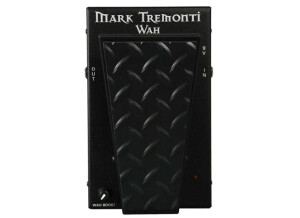
    The Mark Tremonti Signature Wah pedal is the result of a collaboration between rock guitarist Mark Tremonti (Alter Bridge, Creed) and Morley. The Wah features a switchless design which means that the user doesn't have to push the pedal down and click a toggle switch to engage the effect. Just by placing your foot on the rocker pedal and moving it, the effect engages. The rocker is spring loaded and by removing your foot, it returns to its original position and the effect disengages! This is extremely handy in live performances, especially for someone with a single-tracked mind like myself! No more worrying about turning the wah off after your big solo, just take your foot off and you're done! There is also a trim pot inside the unit that let's you set the trail-off time of the effect. As if the great design wasn't enough, Morley also included a "wah boost" knob that lets you dial in a predetermined boost value for kicking your leads into high gear and making them sure to be noticed! The pedal has a built-in buffer circuit that is made to drive long cables and retain clarity in your signal. I'm not sure that I like this feature, as it seems to affect the way that certain pedals react that follow in its signal path. I prefer a hard-bypassed signal, but it's not necessarily a bad thing. Many players don't even hear the effect of the buffer. Maybe it's all in my head! The pedal runs is powered by a standard 9 volt battery that can easily be accessed by a plate on the bottom of the unit. Just push the latch open and take the cover off for access. An adapter can also be used such as the Visual Sound One-Spot, or Voodoo Lab Pedal Power. I have to mention that the rubber diamond plate tread on the rocker and the rubber pads on the bottom of my unit actually melted off of the pedal shortly after I bought it...It had been extremely hot and humid in our rehearsal space and my guess is that's what caused it. I super-glued them back on and they've been fine since, but this needs to be addressed if it hasn't already. I would have rated this section a 10 if not for that issue. That knocked it down to a 9. UTILIZATION Step on it to engage the effect. Take your foot off to disengage. Set the wah boost knob to taste. It doesn't get any easier than that! SOUND QUALITY I decided to buy the Tremonti Wah because I wanted a unit with an extended range and a sound that would cut through a dense mix. I also liked the idea of the switchless design. I had been playing a Jimi-Hendrix Crybaby and felt that for the style of music I was playing (modern rock/metal) the Crybaby wasn't cutting through, had a very limited middle "sweet spot", and it seemed like the effect wasn't audible when playing bends or legato runs on the high E string. It was as though all of the vocal in between sounds weren't coming through and the sound jumped from backed off to all the way in toe-down position. There was no middle sweet spot in the sweep range. (not to say the Hendrix Crybaby is a bad pedal, it just wasn't for me) The Tremonti delivered everything I was looking for, and then some! It is voiced perfectly for heavy gain with enough clarity to cut through and remain present at all times, but without fatiguing the ears. The boost is a well thought out addition as it kicks in just a bit more edge and volume. Leads just jump out when using this wah! Removing your foot from the rocker pedal automatically shuts off the effect, but not before the wah effect trails off for a brief moment. Even with the internal trim pot dialed all the way down for minimal trail-off time, there is still a short delay. This can be a bit annoying when you want the effect to stop at the exact moment you take your foot off of the rocker, but it is a small sacrifice considering the ease of use and performance you get in return. The other small drawback to this pedal is that the wah sounds aren't made for clean tones. If you're a funk/r&b player, look elsewhere. The Tremonti retains its sharp attack on clean tones and can make them sound shrill. But if you're buying this pedal, you're most likely a rock or metal guitarist and that's what it's made for, so no worries! OVERALL OPINION The only negatives about this unit I can point out are the cheap rubber diamond plate tread and stopper pads on the bottom, and the buffer in the circuit, which seems to color certain overdrives that follow it in the signal chain. The Mark Tremonti signature Wah from Morley is an outstanding pedal for the rock or metal guitarist seeking a unique and cutting wah tone with an extremely vocal sweep range. Buy one and you may never go back to the traditional switched design!

  • Audiofanzine FR's review

    (Originally written by torros/translated from Audiofanzine FR) Wah Wah with 4-way Q selector (frequency range selection), booster with +20dB switch (on the bottom side) and two LED indicators for wah on/off (green) and boost on/off (red). UTILIZATION Very easy to use. The rubber covering around the Q control allows you to set it directly with your feet. And it's the same for the boost switch which is ergonomically placed on the right side. The LED indicators give you visual control and allow you to check if the wah is on, in case you forgot to turn it off. SOUND QUALITY All four frequency ranges provide good results. I like especially the last one which creates a strong low frequency modulation. I'm a funk music fan and I play an 80's Strat... The boost is especially useful with clean sounds to add them a bit of dirt and get a typical cry Baby tone. Turning it over 3/4 of the way will allow your guitar to cut through the music (especially good for special riffs or solos). The sound is exceptional. OVERALL OPINION I've been using it for 3 years for 4 or 5 live gigs per month. It has never disappointed me and it has killer looks. I often use the boost function to stand out from the band when we play louder. The wah's frequency ranges are a great creative tool. I bought it secondhand. I previously owned several Dunlop, Morley and George Denis models, but I won't go back to them. Even with clogged up ears I'd buy it again!!!

  • « Perfect! »

    So let’s start with the beginning : I got this limited edition pedal for cheaper than the normal edition at thomann. It really looks particularly good. The red paint with black stripes looks really great, plus it seems thick so no risk that it eventually goes away. The pedal seems sturdy, it’s all made of metal and there’s even a rather nice grip on the upside so you don’t slip when pressing it. Soundwise finally, I consider it sounds exactly as you’d expect from a wah. It remains precise no matter the position. The 2 small blue LEDs that signal when it’s switched on clearly are a good idea. No noise when you press the pedal. Overall, I have only good things to say about it, it even features a true bypass. No cons that I’ve noted. 5 stars – straight, no chaser!

  • « Finally a new wah that sounds like an old one... »

    The Voodoo Lab Wahzoo is one of those products that does a few things and does it exceedingly well. It's a vintage sounding wah pedal on one setting, and auto wah on the next and a programmable step filter on the third setting. It has 1/4 inch jacks for in and out as well as one for a tap tempo switch. Also it is powered via external supply only. On top of the pedal you have the auto wah sensitivity switch, step filter selector for 4 presets. And the on/off stomp switch. UTILIZATION The wah and auto wah mode are obvious enough. For the Step filter the manual explains how to program and store your own presets in easy steps. SOUND QUALITY In wah mode it sounds very much like the real McCoy (pun intended). Unlike other current productions I tried that claim to faithfully recreated a Clyde wah this one actually does sound like one with all the vocal qualities associated with it. For 70s Funk stuff the auto-wah is what the doctor ordered, it bubbles, it percolates and best of all depending on the setting of the pedal you can reverse the starting point, i.e. have the signal's filter envelope go up or down For the ultimate in fun use the Step filter. Here you can program up to 30 steps of a sequential on/off type of sequencer sound. Those then can be stored in one of 4 presets.The pedal will be your tempo control, for more exact tempo needs you can attach a tap tempo switch to the pedal which for me was a must have. OVERALL OPINION Even when I use a rack set-up with nothing in the front of the stage than a midi switcher and continuos controllers, this is the only pedal that I will put down because I have not heard anything that does what the Wahzoo does as convincing. The only down side it can think of s that it doesn't run on batteries, but since most folks likely will put it on thei pedal board and running it from their power supply brik that is a very small niggle.

  • « Killer versatility that sounds great »

    The Clyde Deluxe isn't as precisely tweakable as some other wahs, though it's mode switch and level control provide adequate control for nearly every situation. The LED indicator is great and much appreciated. The circuit is a classic inductor design that builds on the classic Vox 'Clyde McCoy' design. Unlike the vintage original however, it has a switch to select between the classic Vox circuit, a Maestro Boomerang circuit and a Colorsound wah circuit. All are very good approximations of the vintage equivalent. The level control lets you dial in unity gain with any guitar/amp combo. Never again will you have an unnecessary boost or cut when playing live. The pedal is all analog and features true bypass along with a shielded inductor for low noise. There is also an internal trimmer that can be turned to change the bass response. Very nice for tuning it for your individual situation while keeping the overall tone. The casing is custom made for Fulltone and enables a wider sweep. UTILIZATION Set up is easy. You have the choice of battery or power supply operation and then it's plug and play. Selecting your mode is very easy. Just rotate the switch to the position you choose, there are markers on the side to indicate which you've chosen. The manual explains the basic tone of each position. The volume is there so you can have unity gain or a boost if you so choose. Getting the right volume is very easy, just turn the knob until it sounds right. The switch is a bit difficult to hit but if you're standing up and can put some pressure on it shouldn't be a problem. The manual is great and lists contact info for Fulltone and warranty information in addition to basic operation instructions. SOUND QUALITY I use my Strats with both single coils and humbuckers into the Fulltone into a THD Flexi 50. Vintage wah tones come very easily. The Jimi mode sounds just like a vintage Vox Clyde McCoy wah. The sweep is quacky without being too abrupt, the high end is prominent but smooth and the lows aren't overbearing. Great with cleans and light to moderate distortion. Absolutely love it, though I find my Teese RMC3 did the sounds just a bit better. The Wacked mode sounds a lot like an old Colorsound wah but isn't perfect. It's actually a bit better than the Colorsound for my needs. The low end is a bit less prominent than it's vintage counterpart which is great, as I find the genuine article to have too much low end content that turns into mud with a bit of distortion. I tend to use the Wacked mode when I want a more modern sound when using high gain. The Shaft mode nails the Boomerang quack. Porno sounds abound. It can be a bit ice picky if you're not careful with your amp settings though. It doesn't sound very good with distortion for this reason. If you play funk, this is really the only sound you'll ever need though. I probably use the Jimi mode the most as it's the most versatile. Though with the modes on an easily accessible switch, I go back and forth quite a bit. OVERALL OPINION My favorite feature is the mode switch. It lets me get pretty much any tone I need for most situations I'm in and sounds great while doing it. I really don't have any complaints about it, though I do find my Teese RMC3 to sound a bit sweeter when going for the same tones. The price is reasonable and the build quality is great. I can't fault it at all. I've tried/owned many other high end wahs before this one and it hangs with the best of them. It sounds consistently great and I don't have problems with it all of a sudden sounding nasty. It likes the vast majority of amps I've tried it with as well. I'd probably pick up a Castledine wah instead just to see what it's about knowing what I know now. My RMC3 does the same tones in a slightly smaller package and I feel it does everything a bit better as well. The Clyde Deluxe is a great choice if that's not available though.

  • Audiofanzine FR's review

    (Originally written by poufinou/translated from Audiofanzine FR) The Wah Probe is a wah pedal combined with a Super Hard On (SHO). If you don't know Zack pedals, the SHO is a preamp pedal, which means it boosts the guitar's signal without coloring and altering it... The pedal doesn't use a foot plate but an "antenna" in the form of a copper plate that captures foot, hand and head movements. It's totally ZVex: vintage and modern. The device is heavy with a metal bottom side and a plexiglas cover containing the copper "antenna". The pedal is hand-painted and has a sturdy construction. It obviously has an on/off switch and an input/output. On the rear panel you have a drive control that allows you to adjust the gain of the SHO. The pedal requires a 9-volt battery and has no PSU operation (except via an optional ZVex socket). Luckily this product has a very low power consumption like all ZVex pedals! The bottom side must be unscrewed to access the battery compartment. It's not very pracical but it allows you to admire the handcrafted construction of the beast!! Stunning!! You can also adjust the sensitivity and the frequency response using two trim controls in the pedal!!! Each pedal is a custom product because it's handmade. You might even find one with a custom finish! The pedal is signed by the painter (Jason Mylord) and Zack Vex, who engraves his signature on the bottom side and on the copper antenna. The pedal is sold in an original cardboard box and cloth bag. That's right it's a high-class, handcrafted pedal whose quality and originality make it a work of art. UTILIZATION Plug and play. The user's manual is also atypical and very funny. ZVex pedals are a totally different species. Access to the battery is not easy, the lack of PSU operation is a turnoff, and the sensitivity and frequency response controls are not practical (you need a screw driver). But it's the typical ZVex style. It's handcrafted!! Using the "antenna" is easy, responsive and effective. Better than a rocker pedal! And you can use your hand to play with the wah. The effect response is very accurate even when you make fast moves! I give it 9/10 due to the small annoying details (which actually add to the personality of the product). SOUND QUALITY The sound of the Wah Probe makes it a high-class product. No emulation effect but a real wah with its own personality. The SHO circuitry is very interesting. It gives more punch to the sound, which gets thinner due to the wah effect (normal for a pass-band filter!!), but it also allows you to add saturation, sharpness and aggressiveness to the sound with the drive control. When the drive is maxed the wah effect becomes spectacular. In short, it's a wah pedal providing modern and vintage sounds thanks to the SHO circuitry. OVERALL OPINION Once again ZVex delivers a vintage concept with a very modern sound processing. It's a high-class product with a finish that almost makes it a work of art. Original and handcrafted like every other ZVex pedal, it's a totally new sound experience. i know, the price... do we really have to talk about it?

  • « Dunlop Dime Cry Baby from Hell awesome! »

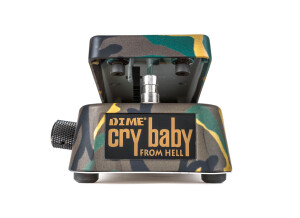
    The Dunlop Dime Crybaby from Hell definately comes loaded with numerous tonal options. The six position selector allows you to control the frequency of the wah effect which is where a basic wah falls short. This also 3 small POTS on the side to control volume/gain, the width of the wah effect and a fine tuner. The icing on the cake is a foot accessible 15 DB boost control. The camo paint scheme is pretty wicked and makes for a nice looking piece. UTILIZATION This thing took your basic wah and literally made it everything you could ever want in a wah pedal, over the top as Dime would have loved. The ability to control the entire sweep of the wah effect is, for me, one of the best features. Nothing worse than going to add a wah effect and having it flatten out at either the top or bottom of the sweep. This lets you adjust your way to the perfect setting to hit the top and bottom perfectly. The six position switch gives you a quick way to change basic wah settings and then use the fine tuners to adjust from there. I find myself dialing in my basic favorite and leaving it be. The kick boost is also a neat feature I use now and then. SOUND QUALITY No complaints on the sound. This purchase was the result of having had several basic Dunlop wahs and wanting something that went further and this was it for sure. The only other one that has me curious is the EVH wah after seeing Eddie play this live. I might have to give that a try and see if it brings anything else to the table above and beyond this great pedal. It does suck a little bass which is my complaint about most stomp boxes. OVERALL OPINION Overall the Dime wah fits perfectly into my playing style. I gig with this and from a sound perspective, I have been very satisfied. Definately head and shoulders above your basic Dunlop pedal, both vintage and new. The tonal possibilities with this are pretty endless. While I have a built in wah on my multi-effects, I never use it as it doesn't match what this can do. My only complaint is that I wish it were a little more road worthy. Battery cover broke off shortly after taking out to play and the rubber feet have fallen off, one of which I still have not found. This is a common issue with Dunlop Wahs and I wish for such a great unit, they would have improved on these aspects.

  • « Thick Vintage style Wah!! »

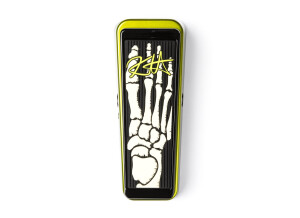
    Kirk Hammett KH95 Wah pedal, designed after his rack wah settings. Huge throaty tone like from MetallicA's Black Album. I'm a good sized fan of MetallicA but I bought this for the tone, not for who's it is. I could care less who's name is on the pedal as long as it sounds good. I did research and comparisons for a few years trying to find the right pedal. Went through like 8 different wahs and ultimately settled on this one, and this won't be leaving. The paint job is pretty cool, metallic green to black fade. The skeleton foot on the treadle isn't the most attractive, but who cares? It's a damn pedal. I looked at a few more boutique wahs like the Fulltone Clyde and the RMC picture wah and while they were great the price wasn't. I planned to get the Fulltone but for $245 I chose the KH95 and so happy I did. I've played a Fulltone since then and while it was great it was a bit overkill and the tone still wasn't quite where I wanted. So the Hammett was pretty much like a pedal designed for me, and a bonus at a killer price too. UTILIZATION Very simple pedal, no knobs or switches to mess with. Plug it in and go. Not a lot of tweakability if you like it, so that's a plus if you like it simple and the way it is, but a con if you want the options. SOUND QUALITY I bought this looking for that very thick, throaty sounding wah that most pedals I've tried couldn't get. I loved Hendrix's wah, and my favorite wah was Kirk Hammett's from MetallicA's Black Album. Very thick, throaty, and cuts through amazingly. Well supposedly he owns one of Hendrix's hundreds of wah pedals and used it on that album. Live he used a EBM rack wah to mimic his vintage studio wah. Later on he switched to the Dunlop rack wah again trying to mimic his studio wah. This pedal was designed by taking his rack wah settings and putting them into a pedal. So basically this pedal is a pedal form version of his rack wah which was tweaked to mimic a vintage VOX V846. I haven't played a vintage VOX but I have owned a Dunlop Crybaby from Hell, Original crybaby, Hendrix crybaby, VOX V847, Morley Power Wah Distortion, x2 vintage Morley Power Wah Fuzz's, and an Ibanez Weeping Demon. All were pretty different but my favorites were the KH and the CFH. Now of course this pedal won't nail the Hendrix or Hammett tone, there's so much more that goes into their tone than just the right wah pedal. But this does give you a close sound of that piece alone. My favorite example is the solo to "My Friend of Misery". Huge wah sound, everything I'd ever want from a wah. OVERALL OPINION So I'm very happy with this purchase. The absolute best wah pedal I've ever played, now for you this might not be the holy grail but for me it was perfect. I'd suggest to just try as many as possible THROUGH YOUR RIG (can't stress that enough) till you find the one that just makes you smile all day, this is that pedal for me.