Log in
EN
FR

Saturation effects pedals

4649 products found

Categories
Filter
Sort by
Brand
Evaluation
  • Reviewed or not
  • Editor’s award
  • Reviewed by Audiofanzine
Availability
  • Available or not
  • Sold new or used
  • Sold new
  • Sold used
Must-have products
  • All products
  • Flagship products
  • Best rated products
  • Hot products
  • Popular products
Price
  • Freeware
  • Low-cost (< $100)
  • Mid-range ($100 - $250)
  • Premium (> $250)
€
Clear
Sort by
  • Popularity
  • User ratings
  • Price - low to high
  • Price - high to low
  • Used price, increasing
  • Used price, decreasing
  • Name (from A to Z)
  • Name (from Z to A)
  • Added on
Choose a category
Selected category: Saturation effects pedals
Sort results
  • Popularity
  • User ratings
  • Price - low to high
  • Price - high to low
  • Used price, increasing
  • Used price, decreasing
  • Name (from A to Z)
  • Name (from Z to A)
  • Added on
Filter results 4,649 results found
Brands
Evaluation
Availability
Must-have products
Price
  • Freeware
  • Low-cost (< $100)
  • Mid-range ($100 - $250)
  • Premium (> $250)
Show results

The best Saturation effects pedals reviews

The reviews Audiofanzine members found the most helpful.
  • « "Les" Is More »

    An overdrive pedal that imitates the sounds of Fender’s 1950s tweed amps. Two knobs : the left one is a master volume control, and the other one controls the overdrive level. A three-way switch: To the left: the legendary 5E3 circuitry (Tweed Fender Deluxe) Middle position: High Power Twin sound (50′s Fender Twin ) To the left: Master Volume Tchula (a mix between the 5E3 and High Power Twin). Each of the three positions offer three very distinct sound flavours: The 5E3 provides less volume but more crunch. The High Power Twin offers mort volume and headroom. The Tchula is an elaborate mix of both, like a good 15W amp on the verge of crunching... While this pedal perfectly emulates the signature sounds of Neil Young or The Rolling Stones, it’s far from being a one-trick pony. After 3 years tweaking it, the Les Liu is IMHO a great, very versatile overdrive that can provide you with unexpected and exceptional sounds. Of all the OD pedals that I’ve owned (inclusing boutique models, Boss and so on), this is the one that sounds the slosest to a real amp, both soundwise and in term of behaviour. It’s very dynamic, and reacts greatly to every playing nuance (whether you have a strong string attack or go softly) as well as the guitar’s volume... It gets along well with each of my axes (an SSS strat with Alnico 3s, a ’75 Les Paul Deluxe with P90s, a PAF-equipped Epipgone LP…) and the sound is always impressive. I use it with my Fender Blues Deluxe Reissue and i discover a totally new amp... just SUBLIME ! As it’s not a conventional overdrive pedal with the traditional “volume-tone-gain” trinity, the Les Lius might disappoint you if you were to treat it as a mere overdrive pedal: please understand that it does not offer two interdependent channels, but rather a global master setting and a gain stage for even more juice – and when I say juice I don’t mean boost but overdrive. Treat it like a real amp, and it’ll serve you well!

  • « Transparency »

    American analog boost and overdrive pedal. Made in China. Two 1/4" metallic jacks for the input and output. One connector for an external 9V PSU with negative center. It can be operated with a 9V (6F22) battery (located under the pedal). One 9V Danelectro "Vintage Power Source" battery included. Electric current measured by myself: 4.52 mA inactive and 5.80 mA active. One True Bypass switch. One LED (blue). One gain knob, one volume knob and one concentric control to adjust bass and treble. Analog built-in circuit: One wide bandwidth dual JFET input LF353 op-amp. 4 DIP switches inside the battery compartment to activate blue or red clamping diode and JFET-type clamping pairs. The last one provides 6dB of additional boost (12dB in total). Surface-mounted components (SMC) (see pictures under "Media"). Cool Cat series: Aluminum case. The bottom of the pedal is covered with rubber. User manual. USE It's relatively easy to use, except for the DIP switches. It won't take you hours to find THE sound. The concentric control for treble and bass is a very bad idea and it's very unfortunately placed (between the gain and volume pots), making it difficult to set. The small DIP switches at the bottom of the battery compartment can be adjusted with a pick. The housing seems sturdy. SOUND QUALITY Light and effective overdrive that responds well to string attack. 6dB or 12dB boost with DIP switch 4 engaged. I use the boost with a bit of gain (the knob set to 11 o'clock or less) to get a light crunch with a solid-body equipped with single-coils and plugged into a solid-state amp. I don't use DIP switches 1, 2 and 3 right now. The pedal's major strength is its transparency. The output doesn't lack anything, from the lows all the way to the highs. Not being a fan of TS-like pedals, it was precisely this characteristic that made me go for it (besides the price). OVERALL OPINION I've been using it for six months. I hate the design of the Treble/Bass knob. I love its great transparency, which makes it worthy of its name. I really like its '50s household-appliance look and I think it's much more original than the usual square boxes. Truly UNBEATABLE value for money! If it ever breaks, I'll get another one.

  • « If I could only have one pedal »

    The Xotic BB+ preamp is based on the popular BB preamp which is one of the best overdrive pedals on the market. The "plus" is basically two pedals in one housing, adding a second footswitch and circuit. The term "preamp" is used loosely here, as this is merely a stomp box, but a great one! The pedal is organized into two "sides" or channels; A (red) which is based on the original BB, and B (blue) which has a three band eq section and a wider range of gain. This channel acts as a transparent clean boost with the gain rolled down and has a barky plexi character with the gain turned up. These two sounds can be selected separately, or stacked together for many different tonal options. Also included is a switch that reverses the flow of the signal, so A can be run into B, or vice versa. Each channel also has its own compression switch, which cuts a predetermined amount of your frequency. I rated this section a '9' because the ONLY thing I could think of to make this a perfect unit would be a second footswitchable gain control, because it can be difficult deciding where to keep the gain on each channel as it sounds great no matter where it's set! UTILIZATION The BB+ has so many tonal options and settings, that the only way to get fully acquainted with it is to spend a lot of time dialing it in with your own amp/rig. As with any pedal, results will vary drastically based on your guitar, pickup, amp and speaker selection. I can say that it's very easy to dial in a good tone with this unit. This pedal sounds great on almost any setting. A very musical pedal! Just listen to Andy Timmons:) SOUND QUALITY Many players use overdrive units to "boost" their overdriven tube amps into high gain territory or to add a tighter low end response (due to the od cutting the low end) After using many overdrive units for this purpose, I can say that I haven't found a better boost than the BB+. It beats out the TS9, 808, OCD, Lovepedal Eternity, and many others that I've tried. Of course this is based on my preference and your tastes may vary, but I can say I haven't heard a boost that keeps the amp's tone intact better than the BB. It doesn't change the amp's gain structure, it just adds more punch to it! This pedal sounds great boosting most amps' dirty channels, and sounds equally great with its own gain through a nice clean channel. I especially like it through Bogners and Boogies. Because it is difficult to review the effect a boost has on an already distorted amp, I will review the BB+ as a stand alone pedal through a clean amp: The right side of the pedal, or Channel A is your standard BB pedal with a single tone control and a compression button. When this button is engaged, the compression becomes hard and the bass response becomes a little different. The low end is more "full" with it engaged. When the button is up or off, there is still some compression present, but it is soft with less low end, and a touch more "open" sounding. This is not a high gain sound, but can get into mid-gain bluesy breakup. It sounds sweet and 'bouncy', with just the slightest bit of grit to give it a somewhat amp-like feel and tone. It doesn't sound or feel as amp-like as say, a Fulltone OCD, but more like a cross between that pedal and a Tube Screamer.(a REALLY good one at that) It's hard to get a bad sound out of this thing, and only with the tone knob set very high does it show any hint of sounding harsh. The left side or channel B with its own compression button and 3 band eq is a clean boost and a drive. It is punchy and has a bit more gain on tap than ch A. This side is very sparkly and with the gain set low to mid and the level up, it provides gorgeous semi-clean and in-between gain tones. This could be used for pop or country, or to give rawkers a very shimmering "almost clean" tone. With the gain dimed on this side, you can get some nice plexi-ish tones. I actually prefer to use this channel as a boost for high gain amps as it softens the feel nicely without taking away the 'balls'. I like this channel in itself more than channel A and more than the regular BB pedal. It has a huge range of tones with the eq and comp button, and a wider range of gain. Experimenting with the routing button that I mentioned earlier can get a large variety of sounds. For example, if you have channel A set up as your "distortion" channel, and B as your clean boost, you will get a hot-rodded lead tone running B into A, similar to boosting a gained up amp with an overdrive pedal with the gain rolled down and the level maxed. Reverse the flow so A feeds B, and you've got a compressed and loud Gilmour-esque type of sound that is very mid heavy and compressed. OVERALL OPINION I've been through many big-production stomps (MXR, TC, Boss etc.) as well as many boutique drives over the past few years. Many have gone and few have stayed, but the BB+ is one of those few. No matter if I'm playing a multi-amp rig with rack gear, or just plugging into a Deluxe Reverb, this pedal is always on my board. I can't recommend it highly enough!

  • « A very good Maxon unit »

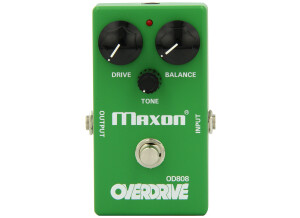
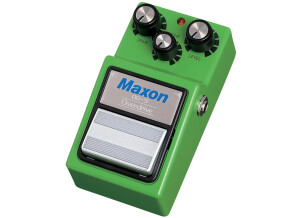
    It's an OD stompbox in the purest Japanese tradition, used on guitars and synths, it makes both tube and solid state sounds shine, can't be compared directly with models from different ranges and/or giving different sounds. A must have for classic rock and blues, it produces a soft, progressive drive, always accurate :bave: velvety sound. The assorted reissue distortion is also a killer with high gains, harmonics flow out by themselves. On my shortlist for other sonic contexts. Uses battery or a 9V supply, "reissue" format, pistachio green color that looks fine side by side with my two AD999 by the way. Three very sensitive, progressive knobs, the OD works fine with my amp/pickup/volume setup. THE SOUND: it's smooth, dense, homogeneous, creamy with a very efficient tone control. Pros: reactivity, flawlessly built, simple to use, respects the incoming signal, true-bypass, designed to provide a very specific medium color, which is very much part of its appeal... Cons: all ODs are known to eat out pat of the low end and this one is no exception, plus sometimes a little background noise at high level... A choice to be made again ;)

  • « Fantastic dirt box! »

    The Catalinbread WIIO is a straight forward dirt box as far as controls go, you have controls for Treble, Bass, Volume and Gain. It has a mono in/out and a 9v adapter jack. While the controls are simple, the vast array of different tones you can get out of the WIIO make it anything but your standard run of the mill amp in a box pedal. The EQ controls are very responsive and interact dynamically with each other. Unlike the EQ controls on some pedals, the WIIO lets you add Treble or Bass that feels natural, it adds to the right frequencies to make it feel very amp like. While meant to be used as a distortion, I've found the WIIO to add punch to a clean tone when set with the gain down and the volume up a little above unity gain. That is not to say that the WIIO isn't fantastic as a distortion, it most certainly is, but its much more than that. I find myself struggling to find a tone that isn't usable. UTILIZATION Couldn't be simpler to use, plug in and play. Runs off a 9v battery or a power supply. The folks at Catalinbread have told me that It will run at up to 12v, but the difference in sound is negligible so they don't advertise or recommend it. Did not come with a manual, but if you can't figure out how to use it then you should stay away from effects in general. SOUND QUALITY My primary guitars that I use have humbuckers, but the WIIO loves my Telecaster too. I run through a Palomino v50 or a Vox Lil Night Train. It doesn't matter which guitar or amp I'm using, the WIIO delivers. It can sound crisp with some bite on the top end, or when run into a semi dirty amp it can sound like an amp running balls to the wall. OVERALL OPINION I absolutely love this pedal. It has become my go to distortion. It doesn't matter what sort of tone I need, I know I can get it out of the WIIO. I'm yet to find another pedal that can do all that the WIIO can. I've owned pedals that can match the WIIO in a specific sound, but they are one trick ponies and its that sound or bust. For the price it can't be beat, my WIIO never leaves my pedalboard.

  • Audiofanzine FR's review

    (Originally written by Bacbacou/translated from Audiofanzine FR) Fat booster and light overdrive with three controls: input gain, tone and volume (output gain). It's simple and effective and all within an indestructible aluminum housing. The power supply comes from either a 9-volt battery or an external PSU. UTILIZATION It cannot be easier to use: only three controls for all sounds from booster to overdrive. Plug your guitar into the input connector, your (tube!!!) amp into the output jack and that's it. SOUND QUALITY And then... it's just incredible! First point: Even bypassed, the pedal enhances the sound!!! It is equipped with a buffer which regulates the impedance and provides clarity to the sound. And the more you daisy chain pedals the more this enhancement becomes audible! Second point: Turn it on... As a booster, this pedal gives some incredible presence and fluidity to the tone although it's so transparent that you'll totally forget about it! You'll cut through the mix without increasing the volume!!! With a bit more drive, it leads the amp to produce crunch sounds in a natural way which I've never heard before... and I still haven't heard anything better! Third point: Overdrive Increasing the gain of the pedal will overdrive your amp in a very natural and transparent way producing a light and warm saturation. The more you increase the gain (fat overdrive and even distortion) the more compressed the sound. It's a matter of taste... This clearly goes to show the unit's limitations: it's not an overdirve/distortion pedal. OVERALL OPINION I have tried all kinds of pedals from low-range Boss to Fulltone (much more professional) but the Klon took me to a new dimension... No other non-boutique pedal I've tried can even come close to it. But when you use it as a plain overdrive you'll notice its limitations: the unit is first and foremost a booster pedal. It's THE best fat booster ever. The fact that they are hand-made by the designer himself and that they aren't manufactured in series increase the price, but when it comes to sound quality... I give it 9/10 because of the price.

  • « Increase Note Definition and Harmonics with Any Amp or Pedal »

    SOUND: The YouTube video below demonstrates the SKYBOOST, a boost/overdrive/fuzz combination pedal with true bypass switching: Offering different capabilities with any modern genre of music, SKYBOOST is a very simple and highly usable pedal. It isn’t classified as high-gain, but it can be used to increase gain in a high-gain amp or pedal. The GAIN knob allows you to increase the harmonic quality of your tone when turned low, but increases saturation and fuzziness as you crank it up. I find that SKYBOOST actually adds an element of ‘life’ to a tone, whether using an amp with or without drive/fuzz/distortion pedals. The CONTOUR switch allows you to shift from a more bass-heavy tone to a more treble-enriched tone. The RANGE switch allows you to shift from a lower-gain (sweeter), which is cool if you want a good dose of fuzz that isn’t over the top, to a higher-gain (edgier) setting. OVERALL IMPRESSION: Known best for its super heavy and saturated sounding fuzzes and distortions, Black Arts Toneworks has a solid reputation in the industry. SKYBOOST actually is a calmer pedal within the family, although it offers some very unique qualities for those thriving on a cleaner tone (who want a bit extra boost or dirt when necessary) to those driving high-gain amps and tones looking for some boost or to add front-end definition and pizzazz. Definitely good value at $159 USD. In effect, you can get some very gentle full-range boost with nary a hint of distortion or fuzz, and all the way up to a very aggressive and clearly-defined fuzz. With its two EQ contours (a full-range and a treble emphasized boost) and two boost ranges (low gain and higher gain) there is a lot to work with regardless of the gear you’re using. The SKYBOOST definitely adds to the sound without distracting from the original tone, even when pushing the boost and fuzz (which remains very clear and defined, even when pushing the limits). EASE OF USE: Initially you should match the volume of your amp with the SKYBOOST engaged (via the VOLUME knob), and from there you add extra boost, fuzz, etc., as needed. The rest is hardly rocket science, although the range of what you can produce is significant enough and depending on your choices. The GAIN knob is very subtle from zero to even half-way, which range adds some dirt, but nothing over the top (good for a gritty clean or adding some definition to a higher-gain tone). Once you get to 3-o’clock the fuzz really kicks in, and once turned up full at 5-o’clock there is an even more significant difference in the fuzz, as though skipping a few steps into warp-drive. The CONTOUR switch shifts from more bass-heavy (flipped to the left) to more treble-emphasized (flipped to the right). There’s enough bass or treble at either end that you will need to adjust your amp’s bass and treble setting accordingly (unless you want a noticeable increase in bass or treble). The RANGE switch has low gain (flipped left) and higher-gain (flipped right). It’s not a high-gain drive as you would find on high-gain amps and some other pedals, but when placed in front of a high-gain amp you better turn down the amp’s gain, since it tends to drive such amps very hard and very well. RELIABILITY & DURABILITY: Black Arts Toneworks’ SKYBOOST is an average sized pedal, made of steel, and includes a standard lifetime warranty. The paint is smooth and slightly matt in appearance and feel (not glossy). The paint quality feels good and it would take quite a bit of abuse to scratch it off. The footswitch has a solid click and feels of good quality, as well. The two knobs (VOLUME and GAIN) are of plastic and sit far back enough from the footswitch. Then there is the LED and two switches (CONTOUR and RANGE) that also sit far back enough (the switches sit lower than the knobs and are protected in that regard, and the LED is relatively small and sandwiched safely between the two knobs). All lines (input/output/POWER) are located in the back, to save on pedal board space and to keep unwanted force or pressure away from a stomping foot. You cannot use a battery with SKYBOOST, but a 9v DC power supply (approximately 24mA).

  • « Well done, DOD! »

    I’ve used it on a 1966 Princeton amp with a single-coiled guitar. I’ve owned quite a load of ODs and boosts, yet this one is one of the best I’ve come across. I’ve always loved asymmetrical clipping, and the videos convinced me (especiallt that by Andy from PGS). First, the design is really beautiful (yeah, considering the price this also matters!), and there aren’t TOO MANY knobs. A clean, transparent boost, with a bit of dirt, a boot that adds both presence and brightness. From a very light overdrive to a heavy, rock’n’roll sound. Great dynamics. Not a real “sweet spot”, I’d say. It sounds really great no matter what settings are used. What I prefer is its grain, which is certainly the most difficult thing to describe. Nothing Tube-Screamer-ish here, the sound is very transparent yet warm in the same time (a bit more than a Timmy), and compressed just as needed. The only cons I find is I’d have preferred it to be a little less noisy, especially when the gain switch is on in the upper position. Also, activating this switch also provides a little difference in volume. When two worlds collide and “mass produced” meets “boutique”, it can work quite well (even if the price tag is more on the boutique side).

  • « A "traditional" distortion pedal. »

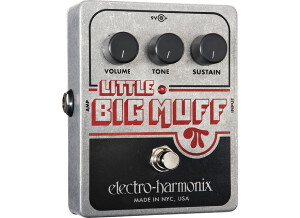
    A "traditional" distortion pedal. It differs from other Big Muffs as it doesn’t have the usual solid state circuit but two op amps : a JRC4558 – the same the Tubescreamer has – and a µA741, making it the first AOp ever built. While some claim these components are rare so as to sell their pedal, they lie: they’re still being manufactured now and they’re easy to get for 30 to 40 cents – or even less if you buy them by 1000, 10000 or 100000. Connectors include a 6.35 jack input and output, as well as a 3.5 jack for external supply. Of course, no computer editor, digital i/o, midi or anything of the kind. This version was sold for approximately 2 years in the late 70s, approximately 1977-78 or 78-79. USE Couldn’t be simpler: A volume, a tone (that can be switched off using a switch behind the pedal) and a sustain knob which actually commands the distortion rate which is generally left full on: you don’t take a Big Muff for a slight crunch or OD, do you? ;) SOUND QUALITY # Are the effects effective, adapted and realistic? You don’t ask a Muff to sound realistic: you choose it to get a filthily, heavily distorted sound that keeps playing when you’ve already stopped. The Muff AOp or V4 has a slightly more defined sound compared with its old, solid state sister models – still it remains a real Muff sound, hence terribly dirty : after all, it was designed by a guy who was all about psychedelism, and I’m not only speaking music here. ;) I’m still wondering how they managed to keep the same signature sound while changing technology (inversely i don’t find the recent BigMuff Tone-Wicker to have the same sort of sound at allanymore, and the BM Ge4 has nothing in common with it either, even though it’s another really great 60s-style vintage-y fuzz). As for this version, the Smashing Pumpkins’ own Billy Corgan uses one, I believe one of Iggy Pop’s guitarist does too but don’t ask me on which record. OVERALL # How long have you used it ? I’ve had this one for a year and a half, but I already owned one in the late 80s until the second half of the 90s. # Have you tried many other models before this one ? Which guitar player hasn’t tried an infinite number of distortion boxes??? # Quelle est la particularité que vous aimez le moins ? L'encombrement! Surtout que le boitier est surtout plein de vide et le circuit imprimé inutilement gros pour le peu qu'il y a dessus!!! En fait, ça pourrait sans problème tenir dans un boitier de petite pédale MXR : y'a + de composants dans un Phase90 que dans une Muff AOp, c'est dire! En même temps, ces bons gros boitiers ont quand même un certain charme, mais là, c'est peut être aussi un peu de nostalgie d'une époque où on se marrait quand même bien plus que de nos jours! # What are the pros and cons of this effect pedal? It’s a real, dirty-sounding Big Muff, but in the same time you get a little more control and playing dynamics than with solid state-equipped models. # How would you judge its value-for-money ? I got it for 354 bucks one and a half year ago ! I had just made a printed circuit board to make myself one when this offer popped up only 2 miles away from my home. Still, I also saw some offered for indecent prices eg 150+, which is just crazy, especially as most involve replacement parts less effective sonically, such as RC4558 instead of JRC, Indonesian-made UA741 instead of a real µA741, MKT orange condo (plain sh*t!) instead of greenies. Hard to expect a pedal that age to have never been restored, but doing it properly is just the least thing to do, especially as EHX doesn’t use high-end components. By the way, I’d definitely NOT recommend to use high-end components in a Muff, at risk of making it sound Mr. Clean-style which is definitely NOT what it’s expected to do! I can even easily reproduce this model’s circuit , and there’s even a website which sells printed circuit boards designed in a way, way more compact format! The only reason I bought it is so as to not waste time assembling it – plus, yeah, granted, this old, vintage box definitely DOES look good. # Would you do the same choice again ? I’ve already done it again: I’d owned an original for 6 to 7 years, then a homemade clone, but as I needed money I had to sell both. I then went with digital stuff as I only played my guitar very rarely (so no need to keep all that stuff), then when I took back music I wanted another good old Muff AOp. Now, such a device isn’t for just anyone: if you like psychedelic, space-rock, grunge or punk, then the Muff is bound to suit you. If you expect a clean, defined distortion, well… wrong direction here: feedback comes quickly, gain has to be at 200, the sound destroys everything around and it all sounds like getting stoned – legally or not. It’s not a hobo, pop-rock distortion, but for anyone fancying Pink Floyd, King Crimson or looking after a really filthy sound: yeah! Actually I suspect the AOp version will even better suit fans of Gilmour or Fripp compared with their solid state counterparts : you really get a better touch control and it sounds more airy and acid while remaining just as dirty. Otherwise, it’s also very good as a bass distortion, but you’d better have an all-tube bass amp as I only find it so-so on a solid state bass amp.

  • « A Unique Take on the Overdrive Formula »

    I was intrigued by the Sparkle Drive when it first came out. I liked the idea of being able to mix in the clean sound along with the overdriven sound of the pedal. I could see the potential of being able to marry the two sounds, but it was several years before I got the chance to try it out. My first experience with this type of effect was with the Glimmer Drive e-pedal for the iStomp by Digitech. I loved the effect, and it was one of the sounds that drove me from multi-effects to the individual pedal format. The problem with the iStomp was that since it was entirely digital it didn’t do the overdrive very well, and it didn’t react with the other pedals the way you expect an overdrive pedal to react. So I went shopping. I knew of the Sparkle Drive, and learned about the Mod variation plus Visual Sound (the company is now called Truetone) had introduced the Route 66 V3 that could blend the overdrive sound with the clean tone. I liked the Route 66, but I didn’t need a compressor since I don’t use one (if I had a dollar for every double pedal that only has half of what I want I’d be rich). The Route 66 was slightly larger in size so I focused on the Sparkle Drive by Voodoo Lab. I ultimately decided on the Mod version of the pedal since it offered extra voicings, and with it being the same size as the original version and only about $20 more it seemed like the right choice. I own a vintage Ibanez TS-808, and the Sparkle Drive Mod’s circuit that is based on this classic is dead on. The Lead, Rhythm, and High Gain, mods all are very different, and give you more flavors to play with. Most of the time I use the TS-808 voicing, and switch it over to the lead tone every once in a while during the set. This change needs to be done by turning the Mod knob, and cannot be done with a footswitch. The other knobs on the pedal are Gain, Tone, Clean, and Volume, which are all pretty self-explanatory except the Clean. The Clean is how you mix the clean with the overdriven tone. The clean can be turned down to “0” giving you the overdriven sound only, or to “10” which is the clean sound only. So it can be a more traditional overdrive pedal, or a clean boost depending on how this knob is set. I use it with the clean set at about 11 o’clock, which gives the overdrive quite a bit of articulation to picked passages. My gain is set very low at about 7 o’clock, I use this pedal to kick up parts that are more to the clean side of tone. You can use this pedal anyway you want, but this is the way I like it. The pedal looks fantastic with the plexi top panel. The input, output, and external power jack, are all at the top of the pedal which is great for saving space on a pedalboard. The footswitch is very smooth, and relatively noiseless. It is true-bypass in case that is important to you. You can power it with a battery, but I’ve always had it hooked up to an external power supply so I don’t know about battery life. My only gripe with the pedal is that it seems overly large. It is not enormous, but it seems it could be done in a small platform. I could be wrong about that since I don’t know much about the electronics that make a pedal tick. This is counteracted by the fact the Mod knob gives you four different voicings to choose from. Overall I love this pedal. It is a great TS-808 clone with enough changes to make it unique compared to the original overdrive pedal. I have read about other guitarists not knowing how to use the clean portion of it, but I find that you can use it to give some hair to a clean passage or clarity to an overdriven part. Being able to mix in the clean allows the amp to shine letting its voice to be heard clearly (or cleanly).

  • « Amazing for the price !! Mesa sound for sure! »

    A analog pedal simulator of the Mesa Mark 4 amp. UTILIZATION Very basic controls on the gain. Just the gain stages of a Mark 4! SOUND QUALITY This pedal sounds AMAZING! It needs a diecent tube amp's clean channel to sound correct. NOT for solid state amps (it will just sound like a regular distortion pedal). It relies on tube dynamics to complete the sound of a Mark 4. Also as it has no real mid control, extra EQ's are needed (amp eq or graphic eq). OVERALL OPINION After dropping the mids a total of 48db after the pedal, you get a perfect Metallica Black album sound. Great solo characteristics (dynamics/harmonics of the real Mark 4!!). It has plenty of dist but benefits from a OD (TS 808) boost. The gain stages are more low end gain/high end gain, not so much bass & treble (kind of a mix). As the Mesa Boogie Mark 4 is out of production and around $1600+ used this is a great invention and worth way more than $34! True bypass as well is very sterdy! I am estatic about it even though i have AMT Electronics E-1 & B-1's as well as Zoom G3 and ADA MP-2 amp sims, this is truly unique and has a smooth and tastefull voice all it's own when treated correctly. Excellent!

  • « The ultimate drive! »

    An all tube 9V distortin pedal. No battery support, but a univolt adapter is included. The adapter even features a "computer cabel" socket. It's green, and it's mean.. UTILIZATION The easy way to start, is to connect the guitar and amp. Set all controls at 12 o'clock, and start playing. No manual needed. Very easy to use. SOUND QUALITY My rig at the moment is: Suhr Custom Modern (ML single coils and an SSV+ humbucker), TC Electronic G-System (so the 'CUDA is looped), Blackstar HT Club 50 head into two Budda closed back 212 cabinets. The pre-amp is also inserted in the G-System. So it's a OK setup, sounds big and fat both clean and distorted. The 'CUDa offers a FAT and saturated distortion without taking away the guitar sound. I use it with the drive slightly above 12, volume slightly below 12. A nudge up on the treble and a bit back on the bass. Simply because it's FAT.. But it goes all the way from a old and trusted TS-808/TS9 to a full out head shredding distorted tone. But still with the guitar there. The tube is a 12AX7. I will some time try different 12a?7 tubes, just to see how they alter the saturation of it. The 'CUDA has replaced a Voodoo Lab sparkle Drive and more or less a Radial Trimode (tube distortion). It cleans up very nicely when you roll back on the volume control, and bites just that much more if you use a boos in front. OVERALL OPINION The 'CUDA is road ready. Heck it's tour ready. Just stop on by your local dealer, and grab one to go. I am saying this to all of you that don't play death/trash metal, since I can't sign off on your happiness with this pedal. Only because I don't play nor listen much to that kind of music. And most of the players inside that line of music uses the AXE FX. But if you play anything from blues via classic rock to rock. Don't be afraid. This WILL work perfectly