Log in
EN
FR

Distortions

1022 products found

Filter
Sort by
Brand
Evaluation
  • Reviewed or not
  • Editor’s award
  • Reviewed by Audiofanzine
Availability
  • Available or not
  • Sold new or used
  • Sold new
  • Sold used
Must-have products
  • All products
  • Flagship products
  • Best rated products
  • Hot products
  • Popular products
Price
  • Freeware
  • Low-cost (< $100)
  • Mid-range ($100 - $200)
  • Premium (> $200)
€
Clear
Sort by
  • Popularity
  • User ratings
  • Price - low to high
  • Price - high to low
  • Used price, increasing
  • Used price, decreasing
  • Name (from A to Z)
  • Name (from Z to A)
  • Added on
Sort results
  • Popularity
  • User ratings
  • Price - low to high
  • Price - high to low
  • Used price, increasing
  • Used price, decreasing
  • Name (from A to Z)
  • Name (from Z to A)
  • Added on
Filter results 1,022 results found
Brands
Evaluation
Availability
Must-have products
Price
  • Freeware
  • Low-cost (< $100)
  • Mid-range ($100 - $200)
  • Premium (> $200)
Show results

The best Distortions reviews

The reviews Audiofanzine members found the most helpful.
  • « Should stay in 70-ies »

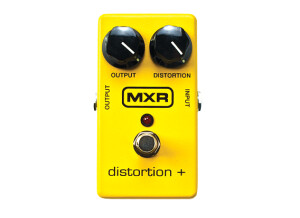
    I was looking for a distortion pedal to get some sound from 80ies. After watching couple of videos on youtube i decided to buy that MXR pedal. Surprisingly it have correct and good distortion upto fuzz (tested on my scope & signal generator before using my guitar). But how it's build.. well. That was made almost 50y ago (i had version end of 70 / beg of 80, 9v battery only). Honestly it must be improved & replaced: the LM471, ceramic caps on sound.. Also it was made when we did not had all these wifi around & strong EM mess. Hopefully it's in alu case so it helps a bit. I don't recommend that pedal except you wanna get some trashy vintage sound or just for collection purposes. There are much, MUCH better pedals on the market. So i paid it 50€, pretty cheap (some folks are selling on ebay for 100+) and sold recently for 59€. I had an occasion to play it cheap and now someone else got the same chance. I don't like that pedal. 3 stars for the construction: it will work in next 40 years. I used it w/ Jackson DKMGTFF & Orange crush 20. Vintage side of Orange gave some low to distortion that pedal do (made it better).

  • « Dual-Channel with Dry/Wet settings... will bite through any mix »

    My first review for a LiberaToe pedal, and I can’t say enough about this company (I’m already into my eighth pedal from this company, with more reviews coming). Fire Sword is one intense distortion and it has a number of things going for it, far superior to other distortions I have tried. One, it is quiet. I have played through other distortions that sounded fantastic, but as you turn up the gain, you get more unwanted noise. Not the case with Fire Sword. Second, it is dual channel, which means setting a crunch tone for rhythm and a heavier tone for lead work or more aggressive rhythm. Third, the EQ is super easy to control; both channels have a Tone knob, but also a Middle knob, which controls how much mids are scooped out or added. Yes, you can add that mid hump for a bigger, darker sound, but it is a gradual mid increase that does not produce any flub. Fourth, there is both a dry and ‘wet’ option; dry is slightly higher pitched and cleaner, whereas ‘wet’ adds a touch of volume (boost) with a tight bottom end. Again, this is perfect for thick, creamy leads, but adds a nice punch to rhythm. Fifth, Fire Sword is a module and part of the LiberaToe platform (pedalboard/switcher), but also is available as a stand-alone pedal. Sixth, this is a dual-channel pedal, which means setting up different settings and switching between those (quickly changed via the footswitch). What don’t I like about Fire Sword? Not much. It growls and bites, but does not too chunky and thick, making it far better for cutting through the mix. However, this pedal must be used sparingly (low gain) when coupled with a high-gain amp; when with such an amp, its gain has to be turned down accordingly. However, the effect you get is much more expressive harmonics and note detail. In fact, Fire Sword’s tone and dynamics are based on the distortion achieved with high-gain tube amps, without the cost of some of those amps. Accordingly, Fire Sword is a blessing with clean amps and when you want that high-gain tone and still have it sound like a quality high-gain amp. Another instance for consideration is when you have a high-gain channel on an amp, but you’re not fully pleased with it. I’m in that camp with my Hughes & Kettner Tubemeister 18… I do not mind the sound of the clean channel, but find the dirty channel very dark, even with the treble turned up and the bass/mid turned down quite a bit. That is not the case when added Fire Sword to the Tubemeister’s clean channel, or if merging it with its dirty channel. Now, I should qualify some of this, and it relates to that dark tone. For the second half of the demo, you will hear a far heavier and thicker sound than in the first half, where I do a composition with a different amp (I used its own cab sim). For the second half, I used cab sims via Spectre Studios (you can download them for free by checking the description link in Spectre’s videos on YouTube). Those cab sims are meant for heavy metal music, and they work well with high-gain amps/sims. Consequently, if you have favorite cab sims, or your actual physical cab has a dark presence to it, you do not have to ditch them. I suspect highly that Fire Sword can tame that dark gear rather well. Also, I have combined this pedal with another LiberaToe creation, the Darwin overdrive, which I reviewed previously. This works best with Fire Sword feeding into Darwin, both with their respective gains down considerably (9-o’clock or so). A very aggressive combination, but one that produces a unique high-gain flavor. Fire Sword Distortion replicates a self-distortion effect which occurs when a large tube power amplifier and speaker box output a high volume. To emulate the amp distortion tone generated by total 7 tubes of the pre-amplifiers and the power amplifiers, devices with the closest characteristics for each tube are selected without the clipping element. Thus, depending on the dial, Fire Sword Distortion shows superior performance compared to an overdrive that has only a few real tubes. The advantage of reproducing the tube's characteristics is that unlike normal distortion, it can extract near-clean textures at low gain, allowing the two channels to act like completely different effects. Equipped with the unprecedented middle knob that simply replaces three TMB knobs to hump or scoop the tone, Fire Sword Distortion can digest a variety of genres, including Blues, Hard Rock and Classic Metal. The combination of the middle knob and toggle switch allows you to produce a wide range of gain and tone, from almost clean to the very saturated. Fire Sword Distortion is recommended for those who like tube-like gain that doesn't get buried in by other instruments, who play hard rock and blues, funky, for those who want to easily pull backing and solo tones through the middle adjustments, and those who want to create diverse tones while maintaining a small pedal board. https://www.liberatoe.com/

  • « Destined to be a Classic for Sound and Diversity »

    SOUND: SIX produces a host of various tones/sounds, and overall they are very good (this may be due to the cap-less technology, viz., and capacity-free audio path). When working with dirt, SIX does a great job at hot-rodding the tone already there. I also find it sounds best on the 18v setting unless the signal is high-gain – in such an instance 9V can be better as it is slightly more compressed and tighter. Conversely, if you choose the 18v setting (via the built-in voltage doubler) there is a fatter or bigger tone with more headroom. There are six settings, and the information sheet describes these very well. And so, when it comes to a clean channel the Booster (BS) can be very clean when keeping the Gain low (and cranking the Volume), but as you increase the Gain you get a break-up and overdriven quality. The Overdrive 1 (OD1) setting is a smooth overdrive with a lot of mids (although with more Gain you definitely get a good heft of grain in the mix). The Overdrive 2 (OD2) setting has a more compressed and ‘creamy’ quality – compressed enough that as you crank the Gain it does not get much louder, but does get thicker and fatter. Distortion 1 (DS1) has an excellent amp-like quality, whereas Distortion 2 (DS2) has that same characteristic along with added bite and aggression. The sixth setting is a combination of OD1 + DS2, which sounds awesome with both clean and dirty channels and certainly makes a tone sound extra punchy. Now, all the above descriptions apply to a dirty channel as well, although the more high-gain your amp the less you’re going to notice those characteristics (they obviously shine through on a clean channel). I tend to prefer turning down the dirty channel and cranking up SIX, as doing so sounds more natural and organic, but if I keep my dirty channel turned up (e.g., gain at 1-o’clock) then SIX’s Gain sits very well at 9-o’clock and adds to the amp’s quality. When using SIX as an add-on, your amp simply sounds like it has some added aggression and without altering the original characteristics, but regardless how you use SIX it is a fantastic natural sounding pedal that has many uses and applications. The Mood (think of it as an EQ) and the High (which brings in more high end detail) work great together to help dial in the right sounds – you can get a thick low midrange tone and still make it sparkle with added definition and harmonics by drawing in more Highs. Both are great sculpting tools for the tone. OVERALL IMPRESSION: Tsakalis Audioworks’ SIX is a true-bypass Swiss Army Knife of dirt, hand-built in Greece. Whether you want a clean or grungy boost, an overdrive, a distortion or a mix of drive + distortion, SIX offers a lot of great-sounding options for 210 Euro. With six modes accessible via a rotary switch, it has a very amp-like quality that sounds natural as it enhances your amp’s tones by pushing a clean channel or supplementing a dirty channel. With a built-in voltage doubler (9v or 18v via a toggle switch), you can experience an 18v setting that sounds big, boisterous and filled with plenty of headroom and punch. Or if you prefer a more sizzling compressed quality that cuts through the mix, then the standard 9v setting and adds a nice mix of saturation as you crank the Gain. The Mood knob (bass/mids/treble) not only dials into a great sounding tone, but the High knob adds that extra sparkle and zing when you want a cutting quality. SIX is a natural-sounding pedal that produces a quality analog tone that becomes an extension of your amp, rather than technology that alters your amp. It is because of this quality that SIX will become a much sought-after pedal and remain an integral part of future pedalboards, which is a tough sell since there are so many great pedals out there and only so much pedalboard space. Regardless, I’m betting SIX will become a classic and rarely sold on guitar emporium sites. GENERAL USE: Whether you’re running SIX through a clean amp channel or a dirty channel governs the correct dial settings. As well, the amp channel’s level of gain will have a bearing on SIX’s gain level. Let’s consider a clean amp channel so that the tone either is very clean or slightly dirty/glassy. Placing SIX’s Gain around 9-o’clock will produce a modest amount of dirt or drive, good for soft rock type chording or to give some clean lead (e.g., Blues) a touch of hair and sustain. Getting the gain upward of 12-noon and beyond (2-o’clock sounds good to my ears) makes an amp’s clean channel very dirty while verging on high-gain. When working with a high-gain channel, there are two courses of action… keep the amp’s gain moderately high (but less than usual) and add in SIX at a lower level (gain around 9-10 o’clock)… or keep the amp’s gain relatively low (9-o’clock) and add in SIX at a higher gain level (e.g., 12-noon or a bit higher). Certainly the extent of either gain setting will depend on taste and the amp in question, but I find either of these actions work well (the former of which produces a bit less noise in the signal, although overall noise level is relatively low with SIX). Here are suggestions with the other settings. SIX comes with a built-in voltage doubler (no special adapter required). A basic 9v setting produces less headroom and a steadier and smoother tone; conversely, the 18v setting offers more headroom and playing dynamics, and I find it has a more amp-like quality. The Mood knob controls the bass-mids-treble contour, whereas the High knob adjusts the degree of that high end tone and sparkle. Depending on whether you like a smoother and more compressed signal, or one that has more volume and punch will dictate if 9v or 18v works best, and certainly tone adjustment will vary among amps and tone preferences. Suffice to say there is enough range with both Mood and High that it will accommodate any dark or bright amp, as well as take away harshness from thin and brittle pickups or give more life to those muddy humbuckers. OTHER DETAILS: SIX is a standard sized pedal made of heavy duty, lightweight aluminum with attractive gold powder-coated paint (suggesting it’s worth its weight in gold!) and black lettering. Measuring 112 mm (L) x 60mm (W) x 50mm (H) (4.4 x 2.36 x 1.97 inches), the footswitch is heavy duty and produces a solid click when engaged/disengaged. The six-position selection switch has a very solid feel to it, also produces a solid click when moved to a different selection, and the four knobs controlling Volume, Gain, Mood and High all have good quality pots (smooth and solid when turned). The voltage toggle switch is solid when flipped and small enough to be out of harm’s way when using the footswitch. The cable input, output and power input all are located on the sides and near the footswitch, and so some care should be taken when stomping. SIX does not work on batteries and requires a standard 9VDC (center -) power supply, while consuming only 10mA.

  • « From Subtle Drive to Thunderous Fuzz »

    SOUND: There is a wide variety of tonal possibilities with DeepSpace Device’s GOLEM, from barely audible change to a clean signal to a thunderous crunch, as demonstrated in this video: GOLEM is not your typical distortion/fuzz. There are so many setting possibilities that you would be hard-pressed to think it is the same pedal when hearing it from one spectrum to the next. The RAGE knob produces the gain and its density, and you can get a range from barely audible to a basic rock sound to a tone starting to push over the edge of chaos (particularly when combined with some other controls on the GOLEM). The FORM knob shapes the tone, which produces a very smooth bass to a very clean (non-brittle) treble. The SHIFT knob allows you to add some high-mids, which really helps cut through the mix. All the other switches serve to push those elements further into some of the thickest and heaviest sounds possible. OVERALL IMPRESSION: There are a lot of tone-shaping possibilities with the GOLEM, and for only $169, from subtle to hard rock to massively thick (as DeepSpace Devices indicate: “this monolith delivers stone-crushing tones by delivering tectonic plate-scraping sounds”). If you’re attracted to pedals because of how they look, the GOLEM is a keeper. Not only does it have a cool paint job, with a fantasy-art-based GOLEM character, but two of the switches are located at the GOLEM’s eyes (and the other two on his head, like horns or perhaps antennae sending off sonic signals). What is more awesome about this pedal is that it takes shape-toning that extra step by offering a three-stage ‘push’ (via the QUAKE switch) of what tonal character you choose (germanium diode, silicone diode or boost on the TREMBLE switch). Even the overall tone has some added tonal complexity – you choose how much bass or treble you want via the FORM knob, but then can add high-mids via the SHIFT knob and even more bottom end via the MASS switch. There is a lot of fun and experimentation with this pedal concept (distortion/fuzz) that tends to be more straight-forward with other pedals of its genre. In other words, with a lot of pedals of this ilk you usually zero in on one very usable tone and stay there, but with the GOLEM you can find more than one usable tone and then add to (accentuate) it in different ways and in different measures. EASE OF USE: Initially GOLEM is not an easy pedal to use, since it offers so much and adjusting one aspect affects what already is in place with the other aspects. However, sitting back, relaxing with the descriptive instructions and getting a sense of how things sound and ‘shape up’ soon will have you dialing in some killer sounds. Consequently, ease of use scores low for the initial hour (some intimidation) and then scores relatively high thereafter and once you know how all the ‘gears’ work. At least the GOLEM is all analog and you don’t have to scroll through a screen and make adjustments in that manner. Here is the GOLEM in simple terms. The POWER knob simply adjusts volume output. The two key sound elements are the RAGE (how much drive or gain you want) and the FORM (how much bass vs. treble). From there you fine-tune and alter the result. You can choose a germanium (thicker and heavier) or silicon (smoother and sizzling) diode or opt out for a hard-hitting boost, all via the TREMBLE switch. You can increase the effect of the TREMBLE two more stages by flipping the QUAKE switch (one element works off the other). You can add some bottom end to the overall signal by flipping the MASS switch. You can increase the high-mids via the SHIFT knob (very nice tonal contouring here). And, finally, you can get a gated-type drive (like lava burping from a volcano) with a flip of the EVOLVE switch. Now, having suggested how much you can change your tone, this may not be the easiest pedal to use on a dark stage if you tend to or need to make a lot of changes (at least partway through a song as opposed to between songs). However, that may depend on how well-versed you become in flipping switches and dialing into different sounds. RELIABILITY & DURABILITY: DeepSpace Device’s GOLEM is a medium-large sized pedal with a steel chassis… it needed to be slightly larger than average to allow all the tone-shaping controls on board. The paint/graphics are of a high quality… you can feel the thickness at your fingertips, and it would take quite a bit of abuse to scratch it off. The footswitch has a solid click and feels of good quality. The four knobs (POWER, RAGE, FORM and SHIFT) are of plastic and sit far back enough from the footswitch. Then there is the LED and four switches (TREMBLE, Shake, MASS and EVOLVE), all of which are housed safely and comfortably inside the perimeter of the four knobs. All lines (input/output/POWER) are located in the back, to save on pedal board space and to keep unwanted force or pressure away from a stomping foot. You cannot use a battery with the GOLEM, but a 9v DC power supply (minimum 100mA, which is no problem for any power supply on the market).

  • « The Maple Leaf Royal Drive is incredibly organic »

    SOUND: Two thumbs up for the Maple Leaf Royal Drive. This amazing drive/distortion allows for anything from mellow and melodic to a smooth and powerful tone, as demonstrated in the YouTube video below: What I first noticed is how much lead playing ‘sings’ out with a fabulously organic sound, in large part of Aleks K Production’s pedal building skill and also in part of the Maple Leaf’s guts and the quality of components contained therein. As well, there are a number of factors that make this pedal so versatile when it comes to tone. First, the Low and High EQ are very responsive, although full Low and it does not sound muddy, even when the Drives are up max; as well, full High and you don’t get a brittle treble (do note that his control is both ‘mid’ and ‘high’ as you rotate from one end of the spectrum to the other). Second, there are two Drives that run parallel – you can mix them as you like, or keep one fully off while adjusting the other. Drive 1 is a smooth and hard overdrive, and when up full it sounds pleasantly thick. Drive 2 is a light to medium gain overdrive. When combined you get a very massive distortion that remains clear in the mix (and there is no noise when turned up full – a very quiet pedal indeed!). Third, there’s an Auxiliary High control that adds gain/boost in the high frequencies, which adds bite to one’s lead playing, but also helps to clear up dark pickups. OVERALL IMPRESSION: I’ve gone through quite a few drives and distortions and I have concluded that the Maple Leaf Royal Drive is the best sounding I’ve heard (right up there with the company’s Red Scorpion 2). I base this not only on the quality of the tone produced, but that it offers enough variation in tones to accommodate anything from easy rock to Satriani leads. As impressive as the sound coming from the Royal Drive is how quiet this pedal is at full Drive. Everyone has those ‘standard’ pedals on his or her pedal board, and this pedal has reserved a top spot (alongside the Red Scorpion 2) on mine. The build quality makes this a true boutique pedal, and I’m surprised not more people know about Aleks K Production. From the pedals paint to the transistors and diodes to the lead-free silver solder for better conductivity, the Maple Leaf Royal Drive is worthy of the name ‘Royal.’ Each pedal is hand-built, numbered, personalized (with your name inside), and then signed and tested by Aleks K himself. No assembly line with this boutique pedal builder. EASE OF USE: You may have access to a number of tweaking possibilities, but it doesn’t take much to find a great tone no matter the mix. The Low control boosts the bottom end while sounding solid and thick, and definitely not muddy. The High control acts as a regulator between high and middle frequencies (which is different from usual ‘high’ controls). When turned down you get more smooth and thick middle end, and as you turn it up you get more high and less middle. All you have to do is place the Low and High controls at 12-noon and tweak a bit from there for great sound. This pedal contains two Drives (which helps to make it so diverse in the tones it can produce) that work in parallel and can be mixed in any combination for a host of beautiful tones. Drive 1 is more thick and high-gain (if you want it to be), whereas Drive 2 produces a lighter or medium gain – ideal for soft rock, etc. When combined you can achieve all sorts of flavors, but when both are up full the tone is powerful and thick… yet clear (some drives become too saturated and they sound muddy or messy in the mix). RELIABILITY & DURABILITY: This steel pedal has a US-made pearlized Violet metallic paint, the Maple Leaf Royal Drive utilizes the best parts in the industry. Backed by a 2-year warranty, it uses a Kobiconn power jack, Switchcraft in/out jacks, an Alpha footswitch, Alpha potentiometers with dust covers, the IC Chip is from Texas Instruments (and you get an extra one in case you mess up the power supply and fry the chip), the transistors and diodes are from Fairchild Semiconductors (USA), the capacitors from Vishay, and there are military-grade resistors from Vishay/Dale. The Royal Drive also boasts Canadian made PCBs with gold/nickel tracks, high quality tinned oxygen free copper wires and lead-free silver solder for better conductivity. As well, all components are RoHS (Restriction of Hazardous Substances) certified. The heavy duty aluminum knobs each include two set-screws for a solid hold, and I really like the groves in the knobs to optimize finger control, and they feel good to the touch. Finally, the Maple Leaf Royal Drive can operate on a standard 9V or 12V DC negative tip adapter or a 9V alkaline battery.

  • « Incredible Organic Sounding and Noiseless Distortion »

    SOUND: Below is a YouTube demonstration video using various guitars and the Red Scorpion 2 (Mega Distortion) by Aleks K Production, a Canadian pedal (and now guitar) manufacturer that goes over and above in quality and sound production in its second version of the pedal. The above is to demo the use of different guitars and Gain levels. The next video demos the various EQ (Low, Mid, High) settings, as well as the difference in the Tone switch: This distortion is both impressive and unique in its sound, offering up some thick, grainy drive that actually remains smooth the more you turn it up until you get a saturated milkshake of tones. The three EQ knobs (Low, Mid, High) produce a wide array of tonal possibilities, although I share only a few on the demo video. The tone knobs are highly responsive so that you can achieve very different results with varying amounts of Gain. There’s also a TONE switch that produces a sharper effect when up or more middle and smoothness when flipped down (great for melodic solos). OVERALL IMPRESSION: First, you get a heaping load of distortion to varying degrees, yet every note is clean and clear. Even with the Gain turned all the way down (off) you get a good amount of edgy distortion. One can say that the Red Scorpion 2 produces its own unique Brown Sound as it definitely does not sound like a hive full of bees… nor do you get that shrill or piercing sound from this pedal. As well, the tone rolls off exceptionally well when using the guitar volume knob, and without losing too much volume in the process – this allows you to still have some nice crunch for rhythm followed by a thicker saturation for lead. What is most noticeable is how the notes sing out when playing lead, along with a good dose of sustain. All this is what a person wants from a quality high-gain amp, yet it’s achievable with a clean amp and the Red Scorpion 2. As impressive, this is a very quiet pedal, although no noise gate is part of the circuit – simply amazing how you can crank up the Gain and barely hear any artifacts or hum. EASE OF USE: This pedal is easy to use, although tweaking of the knobs and Tone switch produces a wide range of possibilities ideal for classic rock and certainly when delving into various Metal genres. For example, too much Low with too much Gain can sound very bottom heavy and in your face, which is what a person may want, whereas easing off on the Low produces a very different effect akin to a sweet sounding chainsaw cutting through butter (I demonstrate this in the video). Both the Mid and High knobs are as responsive, although the tone remains very creamy even when the Highs are turned up a lot. The Tone switch can vary the effect, from improving crispness (when up) versus adding in some mids and smoothness (when flipped down); the former tends to work best with heavy rhythms, whereas the latter tends to work best with lead – although this all depends on the EQ of where you set the Low, Mid and High knob settings. RELIABILITY & DURABILITY: Aleks K Production takes great pride in its production quality. This goes beyond the all steel housing, as well as one of the toughest and most professional paint jobs around, or the black aluminum knobs with TWO set screws. Every part of the Red Scorpion 2 is manufactured with the highest standards, including a Japanese made switch, power jacks from Kobiconn (USA), in/out jacks from Switchcraft (USA) and an Alpha footswitch. As impressive is the Red Scorpion 2’s guts. The Alpha potentiometers have dust covers, the IC Chip is from Texas Instruments (and you get an extra one in case you mess up the power supply and fry the chip), the transistors and diodes are from Fairchild Semiconductors (USA), the capacitors from Kemet (USA) and Wima (Germany), and the military-use resistors from Vishay/Dale. As well, all components are RoHS (Restriction of Hazardous Substances) certified. Some of this likely doesn’t mean much to most readers, but when a company details every part used, including the tinned oxygen free copper wires and the lead free silver solder (for better conductivity), you know you are buying a quality pedal with no detail withheld. This not only makes the pedal reliable in regard to its outer construction, but the electronics are designed and built to last a lifetime.

  • « AUTOMAT autowah + distortion produces diverse array of sounds »

    SOUND: If you like autowah pedals, you’re going to like the Automat… it also has Distortion! Palmer’s Automat produces sounds that can be very subtle and snappy, and as clean as you want them, or very heavy and almost growling. The YouTube video below explores some of the possible settings of the Automat, while trying to demonstrate sounds different from other YouTube videos on this product (other videos tend to apply the Automat in more of a funky-wah style, whereas this video considered Automat’s use with heavier riffs and some higher-gain or rock settings): It’s difficult to demonstrate the sounds of the Automat beyond the video, since there are so many possibilities of tone based on how much Drive or Gain you use, if you’re using a Low Pass, Band Pass (flat) or High Pass filter, etc. In some instances I could mix in just enough of the wah effect to be barely perceivable (a slight fattening of the tone), whereas in other settings, particularly with a lot of ‘Wet’ and the Drive knob set around 11 o’clock you get some very obvious honking and deep wahs that almost seem too much (but not really!). Something else nice about this pedal is that it is quiet, even when you fully crank the Gain knob. OVERALL IMPRESSION: Most autowah type pedal effects usually are just that. The Palmer Automat included a Gain which really adds to its use. Moreover, along with all the other functions you are able to craft and develop a host of possible sounds and tones, making it a very diverse pedal. The Tone knob has an exceptional range of low to high and works very well with the filter knob (Low Pass, Band Pass and High Pass). The Low pass offers more of a low-end or bass response, which is actually quite effective when playing high-gain or rock (lots of ‘push’ in the tone). The High Pass is the opposite, offering more treble and a cleaner result, whereas the Band Pass is more flat in response. Because each of these offer very unique responses to the other settings (the Drive and Q knobs in particular), the Tone comes in handy to balance things out. The Mix knob is different from the Wet/Dry knob. The Wet/Dry determines how much of the effect is mixed with your guitar signal with 9 o’clock giving a nice hint and flavor whereas once you reach 12 noon you’re getting a lot of the effect in with the dry guitar sound. The Mix knob, on the other hand, determines the mix between the distortion (gain) and the autowah. I left the Mix up full in the video to emphasize the qualities of various settings. EASE OF USE: There’s nothing difficult about turning a knob, but there is so much that can be tweaked on the Automat. This may be an annoyance to some players who simply want to plug-and-play, but there may be times when you want a bit of thickness added to your tone all the way to some nice growling and long-winded wahs. And certainly preferences among players will vary, from those who play funk to those who play hard rock and metal. The Automat can fit into any of those genres, and as a result it necessitates a wide array of tweaking possibilities. Certainly you will need to balance the Tone knob with the filter type (Low Pass, Band Pass, High Pass), whereas you may want a higher sounding wah or one that is deeper and more throaty. The Wet knob is very sensitive, in that just a fraction of an inch (a millimeter or two) can make the effect mix a touch too low or maybe too high – although that could alter from one song or composition to the next and depending on your taste. Nonetheless, if you like experimenting with sounds and don’t mind investing some time turning knobs to discover some inspiring sounds, then the Automat has a lot to offer and will be right up your alley. RELIABILITY & DURABILITY: Palmer’s Automat is a well-constructed pedal. It has an all-steel housing, as do most pedals, but Palmer also included an extended back edge or guard (not sure how else to describe it, but do refer to the photo). This added framing will offer some additional protection of the cables and power chord. Likewise, the in/out cables and the power cable does plug into the back of the unit, which keeps one’s foot from stomping on them and which design also saves on some pedal board real estate since you can place pedals closer together. With the Automat you do not have to use a separate power source (9v and 12mA power consumption), but can opt for using a standard 9v battery (with an easy-to-open compartment located on the bottom, which location may not be ideal for those who affix their pedals with more permanency). The Automat also has a metal footswitch (to control on and off) and all metal knobs. The knobs have a very solid yet smooth feel when turned. Palmer pedals are highly affordable, but the quality of construction certainly suggests German engineering and made with pride.

  • « Deluxe Crunch with honey nuggets! »

    There was some Buzz around a handful of Joyo pedals where they were aped to be clones of top brands, so I took a look. Initially, what I heard and saw didn't move me greatly as I had gear in those camps already, but the DF 39 Deluxe crunch caught my attention. It is suggested this is actually a Fulltone Plimsol and I cannot confirm or deny that, but what I can say is that this pedal has some otherwise useful benefits. It has two gain stages that cascade, so you have two levels of gain on hand - a big boosted Pre amp Drive and post Gain. It isn't subtle, so you need to dial carefully, but what transpires is a 'Big Square Wave Form' that not only stacks well but in addition, thickens your guitar signal without a typical mid hump. With El34s and a Les Paul you actually get the sound of not just some loud Marshalls (aka 200w 'Pig) but a typical tone of Orange and HiWatt 100watters where the gain is loud and very OPEN. Is not harsh, just very Square edged. I have reviewed the EHX ERD here to and these two work well together to give great boost tones that are usually found only on the privileged boards of high end boutiquers! As an aside: for someone who only likes *very specific* fuzz, (Bearfoot Pink Purple for instance), I am able to get a nice fuzz-like vintage drive texture from this too... Extra + point A great find and addition for just a few $£ Oh, am also a little intrigued at the choice of aesthetic... another possible clue to its design maybe???

  • « Not bad »

    A rendition of the MESA BOOGIE American amp sound. I'm not that much into that kind of sounds, but I admit it has some advantages, so I'll be totally neutral. Only 4 control knobs: gain / tone / voice / volume. It looks simple, yet (just like on a real Boogie) the knobs interact with each other, taking time to adjust the settings... Imagine if there was a full EQ section... With Gain at 12:00 and Voice full on, I have no problem getting Metallica's "Sad But True" tone with my EMG81-equipped LTD. I'm stunned! :bravo: With Gain and Voice full-on, the sound is razor-sharp, but it's noisssssssssssy! :8O: My ISP Decimator has lots of work ahead! The Tone setting provides a rather dark sound for the first quarter of the knob's range, but after that it soon gets shrilly. To be set carefully, then no need to change it again. A lot of lows, sometimes even way too much. It lacks accuracy, so an EQ will be needed to fine tune it all, it tends to sound harsh. Some like it, others hate it... For rhythm playing, the pedal works well., but for soloing get your "compressor/EQ/noise-gate" ready to get an acceptable sound out of it. This box is said to have been designed for being plugged directly into a PA or sound interface for recording. Duh, I don't like it much, sounds messy! I really prefer to use it it as a "normal" pedal. On a side note, at home, when I plug the pedal alone with just the guitar and amp, no problem at all... But, when used with a T-REX Fuel Tank power supply, it goes noisy like hell with "whoooooom" sounds as soon as I switch the stompbox on. I've had problems with my home's not-so-recent electrical system so I won't really blame it on the pedal, but at least I've warned you, just in case... Overall, it's a nice pedal, but it won't be THE ONE versatile distortion in your gearset, especially since there are more convincing models out there. Pros: - small-sized - very good crunch sounds - good overdriven sounds - cheap - sturdy Cons: - not as good in solo as for rhythm - so noisy it requires a noise gate! - a big buzzing sound to be expected depending on your electrical system - doesn't sound like a real Mesa Boogie, more like a rendition of it

  • Le Taz's review

    Small overdrive/distortion pedal (it's truly somewhere in between), with a very "boutique" tone. Gain, level, tone, warp (which controls the type of harmonics, solid-state/tube, progressively). UTILIZATION It's easy to dial in if you have a good pair of ears, and even if you don't. The distortion rate is not very high (average for metal), and it's a bit noisy. SOUND QUALITY I struggle to find good distortions, with a guitar that sometimes makes my life pretty hard (mid-scooped sound with a lot of output power, so the sound is muddled or fuzzy-yuck sometimes). This one is one of the few that respects the sound of my guitar. Its tone is not very shapeable, so you'll need to work with it. I'd say it has a '70s rock sound, without being a fuzz, it's perfect to play Jeff Beck, Led Zeppelin, Deep Purple. It's neutral in a way, so it will leave you enough room to create your own sound depending on your amp. The warp control is not a gimmick, it will allow you to define the modernity of the tone. This is one of the rare distortion pedals that allows me to turn down the volume pot on the guitar and get an almost clean sound, which means it respects the sound of the guitar! OVERALL OPINION I use it with a Delta Blues, when I need a more rock or more modern sound than with the built-in overdrive. The noise is a drawback. The first finish in brushed aluminum was nice, but you'll find it in a more discreet black casing, but it's the same pedal. I tested quite a few other models, I won't tell you what I think about the DS1, Rat, because it's a matter of taste, but they don't convince me, like many other "new" products (mxr-cae, visual route 66, bbe, etc.). The small marshalls, which are really flexible (sometimes in excess, like the jackhammer, which can really turn into a Rube Goldberg machine) don't have any personality. The Blackstars don't really offer results on a par with their technology (and their price tag), but they are certainly more "classy" in terms of sound than the Vox, which are more biting. No, for the time being, I haven't found a better solid-state pedal than the XXL. Xotic is the only brand I haven't tried yet.

  • « Classic distortion tones »

    The BD-1 Brute Drive Distortion pedal is a pedal built by the E.W.S. brand based in Japan. Engineering Work Store (E.W.S.) set out to create a pretty basic pedal that can get you all the classic distortion tones you would ever want. The pedal can get tones from your normal classic rock tones to hard rock tones and they all sound pretty good. The pedal has an on and off switch along with a boost switch. There is a Red LED that goes with the on and off switch to tell you if the pedal is on or not and a Blue LED to tell you if the 10db boost is engaged or not. On the face of the pedal there is a Volume knob along with a Tone knob and a Gain knob. The face of the pedal has a Brute Drive graphic on it and the country of origin is proudly displayed. The appearance is a blend of the clean and clinical look of a mass produced unit with the uniqueness of a boutique unit that may be just bare metal with marker writing on it. There is a 9 volt DC jack and the pedal can be powered by a 9 volt battery. UTILIZATION If you open the pedal up you can see that the circuitry is nice and neat. You can tell that human hands have touched these circuits. There are two wave soldered circuit boards inside the pedal and you can tell that they are wired by hand along with the knobs and the jacks. The inside of the pedal is very tight no space is wasted. The case is made of shiny, bulletproof aluminum with clear rubber feet. All of the components are of excellent quality and the black knobs produce plenty of mechanical resistance so it feels solid when you are adjusting the knobs. SOUND QUALITY The Brute Drive is voiced for a smooth, classic distortion sound, and it is right on the mark. The tone knob elevates a specific part of the frequency range. When you turn the tone knob down you can get a very dark tone with much of the highs removed. Even with the gain dimed the pedal is not very noisy. At high gain power chords and leads still sound clear. The pedal is not built for metal but can do anything from blues to hard rock. The boost feature is quite nice. When you hit the boost switch you get a nice mid boost that is great for leads or if you just want more drive on the amp. The level of boost can be adjusted by an internal screw. At maximum it can produce a 10db boost effect. OVERALL OPINION The Brute Drive straddles the line between mass produced pedal and boutique. It is much more versatile than a mass produced pedal but it is also more expensive. The sound is a lot more natural than what you would get from your green or orange pedals but you still wont fool anyone into thinking that the sound is pure amp distortion. If you are looking for a pedal that provides great boost for leads but can also deliver buttery smooth rock tones you might find yourself looking at a E.W.S Brute Drive.

  • « A KILLER drive pedal from Zoom! »

    The Zoom Hyper Lead HL01 is one of the four pedals in Zoom's vastly unknown and underrated line of analog dirt boxes. This one was designed to be like a hard rock distortion, replicating the sound of a classic British stack amp. It has a very basic control set of gain, volume, treble, bass, middle, and range controls. The range control is very cool in that it adjusts the frequency and sweep of your midrange control, so you can adjust it to be more scooped in nature or more boosted in nature. As I said above, it is an analog pedal, so it does sound far more authentic than its digital counterparts. Being that Zoom is a company known for digital products, I was extremely skeptical that this pedal could work... but it does, and it does very well. I liked it so much that I sought out a PD01 Power Drive to run with it in tandem a few years later. UTILIZATION Setting up this pedal can be a little bit tough at first just because the controls need to be dialed in to counteract with one another, but once this happens it's a walk in the park. Most of the controls are fairly straightforward. The biggest one to dial in is the aforementioned "range" control. It really depends on the tone you are after. I find setting it at full gives the most "scooped" sounding tone, and moving it back towards 0 brings more midrange into the equation. I usually went for a fairly neutral tone (IE: setting it around 12 oclock or close to it) and it worked out quite well. SOUND QUALITY I used it most often with various Yamaha guitars and Yamaha and Laney amplifiers. One of the best hard rock tones I've had was my '92 Yamaha Pacifica with Gibson HBs into the Laney LC15R combo amp with the HL01 set up for a good seventies/eighties rock tone. I would set the Laney up for very mild overdrive (basically a clean tone with some grit when I picked harder) and use the HL01 for all my distorted tones. I used it in various rock, jazz, and blues projects without issue. The great thing about this pedal is that it's quite organic (due to the analog circuitry), and because of this it has a very tubelike tone and feel. When I plugged this pedal in, regardless of the amp, I FELT like I was using a tube amp, and that's a huge plus in the field of dirt boxes to me. OVERALL OPINION All in all, I feel that this pedal is great, and vastly underrated. I like it a lot, not only for the tone, but for how it feels when I use it. It's very versatile and works well for whichever musical styles I throw at it. I haven't used it or my PD01 as much since getting into more high dollar amp heads but occasionally I press it back into service when I have a pick up gig or a show that requires me using an amp that isn't my own. I want to try the other pedals in the series at some point as well, as I can imagine that they all have the same versatility and tubelike feel as the HL01. Definitely an awesome pedal, especially for the money... if you get the chance to buy or try one, do it for sure!

Categories that may interest you