Log in
EN
FR

Fulltone

77 products found

Categories
Filter
Sort by
Evaluation
  • Reviewed or not
  • Editor’s award
  • Reviewed by Audiofanzine
Availability
  • Available or not
  • Sold new or used
  • Sold new
  • Sold used
Must-have products
  • All products
  • Flagship products
  • Best rated products
  • Hot products
  • Popular products
Price
  • Freeware
€
Clear
Sort by
  • Popularity
  • User ratings
  • Price - low to high
  • Price - high to low
  • Used price, increasing
  • Used price, decreasing
  • Name (from A to Z)
  • Name (from Z to A)
  • Added on
Sort results
  • Popularity
  • User ratings
  • Price - low to high
  • Price - high to low
  • Used price, increasing
  • Used price, decreasing
  • Name (from A to Z)
  • Name (from Z to A)
  • Added on
Filter results 77 results found
Evaluation
Availability
Must-have products
Price
  • Freeware
Show results

The best Fulltone reviews

The reviews Audiofanzine members found the most helpful.
  • « Touch sensitivity and complex overtones in a solid box! »

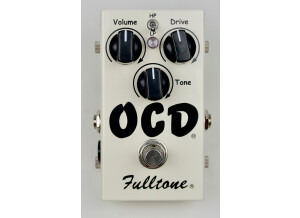
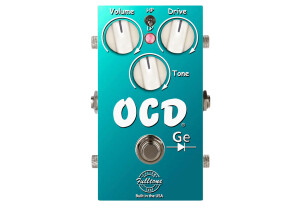
    The Fulltone OCD (Obsessive Compulsive Drive:) is a high quality overdrive/distortion pedal with amp-like overtones and feel. There have been several revisions of the pedal, each having slight tweaks to the sound. The pedal I am reviewing is version 4. Controls include Volume, Tone and Drive, and a toggle switch that selects either HP or LP which I believe stand for High Peak and Low Peak, respectively. The pedal is powered by a single 9 volt battery or a common 9 volt AC adapter. UTILIZATION It took me a while to find the OCD's sweet spot with my rig. The balance between gain and tone can be a bit tricky to find. I had a bit of trouble avoiding a congested, or harsh sound at first, but once I got it dialed in where I wanted, it was a blast to play through! SOUND QUALITY I tested this pedal with a Gibson Les Paul, Schecter C-1 Classic, G&L Invader and a cheap Hondo with Fender single coil pups, and then into three different amplifiers; a Mesa Boogie Dual Rectifier, Carvin MTS, and Fender Blues Deville. I felt that the humbucker equipped axes resulted in a slightly congested or harsh sound when used with this pedal. I noticed that while using the Schecter with the Seymour Duncan JB/Jazz coil-tapped, and the Hondo with single-coils, I liked the sound much more. Using single-coils with the OCD really opens it up and lets it breathe. Great tones can be had with any guitar however, and it just takes some experimenting with the HP/LP setting and getting the tone and drive set right. I felt that the pedal's sweet spot was with the tone just past noon and the gain at noon. I really liked this pedal as a mid-gain overdrive more than a maxed out distortion pedal. I also tested this pedal as a boost, to kick my already driven dirty channel into higher gain territory. I feel it was only average as a boost. It always felt stiff and hard and had an undesirable edge to it. Other pedals, like the Xotic BB (which I also reviewed) do the boost thing much better, at least for my preferences and needs. The HP and LP settings are useful, but can be frustrating. LP has a nice squishy feel. It "gives" like a good tube amp when you dig in to the strings, but this setting can also sound a tad bit muddy. Flip the switch to HP, and the pedal gets much louder, clearer and more distorted. My problem was that it got too nasty in the high end. I preferred keeping the unit in the LP setting and opening up the tone control until it just started sounding bright, but not overly so. The great thing about this pedal is how much it resembles a real amp, both in tone and feel. You can crank the volume up a bit and strum a chord and hear subtle overtones and complex textures in the gain. Most overdrive or distortion pedals sound flat and don't have that sort of realism or depth. Overall I'd describe the voicing of this pedal as more Fenderish and American than british. The mids are not pronounced at all in this pedal, regardless of the position of the tone control or HP/LP switch. These controls only affect the high frequencies. The mids always have a scooped sound to them. I feel that a mid-boost function would GREATLY improve this unit! OVERALL OPINION All things considered, the OCD is a fantastic achievement in getting that realistic amp feel in a stomp box. It excels as a touch sensitive overdrive with complex harmonics and overtones. However it is not voiced to fit in with every rig, and a mid boost function would greatly improve this pedal in my opinion. I sold my OCD pedal to fund another pedal purchase, but I will definitely be trying another Fulltone in the future! Perhaps a Catalyst or Plimsoul. Thanks for reading!

  • moosers's review

    The Fulltone Tube Tape Echo is essentially a reissue of the classic Mastreo Echoplex tape echo box. It gives you a true tape echo sound right in a nice and compact box. It’s got handles to carry it around, with ¼” connections for your input, two outputs, and a playback and echo off output as well. It’s not a rackable piece of gear as it comes in it’s own portable box. UTILIZATION The make up of the Fulltone Tube Tape Echo isn’t hard at all to follow. It has a nifty slider to set the delay time, which ranges from 0 to 35 ms, as well as knobs for guitar volume, echo volume and echo repeats. It also has switches for bypassing the effect and for setting it to a stereo mode if needed. Lastly, it has two smaller knobs for record level and echo tone. I doubt most users will require a manual for this… SOUND QUALITY The sound of the Fulltone Tube Tape Echo is pretty much just like the real thing. Even if it doesn’t match up exactly with the Mastreo Echoplex, which I’m not sure if it’s suppose or not, it’s an incredible sounding delay in it’s own right. You can definitely get a nice collection of different analog delay tones, but I like it best for it’s slapback. It’s hard to really describe how good this box sounds without you having the chance to hear it, but this is the ultimate true analog delay box for applications of all kinds. OVERALL OPINION While it’s going to cost you a pretty penny, the Fulltone Tube Tape Echo is really an incredible delay box. It’s perfect for use on anything and everything in the studio, but also would be awesome for your guitar on gigs. I don’t know what it costs to get an original Echoplex, but I would think that it’s definitely worth looking into this instead since it’s probably a bit cheaper (or around the same price) and is going to be in much better shape. Absolutely worth a try for anyone interested in acquiring an incredible delay box.

  • « The Best! »

    The Supa-Trem is a tremolo pedal available from Mike Fuller at Fulltone, and it lives up to the Fulltone name. Fulltone uses a three switch and two knob format for this pedal, which is different, but very easy to navigate. One knob “Rate” adjusts the rate of the pulsing (there is a LED that blinks to show you the rate the pedal is set at), and the other knob “Mix” adjusts the amount of dry signal it gets mixed with. A bypass switch turns the pedal on and off, a speed doubles or halfs the tempo of the tremolo depending on how you set it, and the hard/soft switch lets you go between shimmer to stutter. True bypass switching , a large LED, and sturdy metal construction round out the features. UTILIZATION Many pedals have the same features as this pedal, but not very many of them have them available via footswitch. Most pedals use toggle switches to change between settings but using footswitches is great for live settings. Being able to double or half the rate of the tremolo is great for adding special effects to parts of songs. It is very easy to get a good sound out of this pedal, and with about any amp I’ve paired it with. I believe it’s harder to get a bad sound out of it honestly. The pedal is laid out very well and the knobs are sturdy and turn very smoothly. Fulltone manufactures their own custom potentiometers according to their website “because what has been offered as "Industry Standard" has a 20% failure rate within 2 years”. I’m not sure about that fact, but the ones they put out are very nice. The bypass switches are also heavy duty and designed by Mike Fuller. SOUND QUALITY This pedal sounds super. It uses a real vintage style photocell, so it gets those true “tubeamp-like” tones but there is no external clicking like certain other tremolos that use this technology. I love that all the tones can be adjusted on the fly using your feet, either on the switches or the oversized knobs that can be turned with your shoes. This thing really does get that classic CCR style amp tremolo that really warms up a rhythm tone, and at a flip of a switch it can get go crazy and get super stuttering effects for dramatic intros and the like. There is absolutely no loss in tone or added noise with this pedal, or any other Fulltone pedal I’ve played. OVERALL OPINION Overall this is the last tremolo pedal I will ever buy. Fulltone pedals are pricey, but worth it in my opinion. You’re getting a well made pedal that is going to last that has been designed and hand built by a musician. Putting a 5 year warranty on these pedals says a lot too. If I were just looking for a basic tremolo to use sparingly I would probably just stick with a Danelectro Cool Cat Tremolo because really, it is a good pedal and is true bypass. If you’re looking for a few more options and an upscale tremolo pedal, you would be hard pressed to find a better one than this.

  • iamqman's review

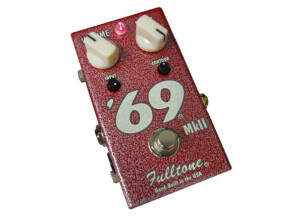
    I will go ahead and say it...this is Jimi Hendrix in a box. Of course you will need a Marshall plexi reissue of something similar like a Germino Monterey and with out a doubt a Fender Strat. This thing sounds exactly as it reads on the cover of the box.....'69. It sounds exactly like something right out of the rock playbook from the late 60's and early 70's. Fulltone '69 devotees include: * The Rolling Stones * Bush * Eric Johnson * Robin Trower * The Black Crowes * Joe Satriani UTILIZATION Features * Vintage-style fuzz that's fat and harmonic * Cleans up like a vintage Fender amp * Two hand-picked germanium transistors * Countour and Input trim knobs * Internal "bias" trimmer adjusts clipping symmetry, harmonics, and tracking * Volume and Fuzz controls SOUND QUALITY This is not a Big Muff thick chewy type of fuzz box. It is somewhere in between the Big Muff and a normal overdrive pedal. So you get a fuzz tone but on the thinner side and closer to a distortion box than anything. At least that is how i hear it in my ears. The is based on the germanium transistor chips. It has four control knobs that do quite a bit of tweaking for your tone. A level, bias, contour, and fuzz control knob. A Contour Knob lets you dial in Midrange, Harmonics and Sustain, also an Input Bias knob adjusts the EQ and gives great Overdrive/Distortion sounds when its level is reduced. This pedal is basically the same tone as the previous model but a newer case is really the only noticeable difference. OVERALL OPINION This is a great fuzz pedal that is a lot of fun to play with. If you fare on the side of light overdrive style of germanium transistor fuzz pedals then you will like this unit a whole lot. If you want something straight out of Smashing Pumkins then you will need a Electro Harmonics Big Muff. The Big Muff will be a whole lot thicker and rounder. This pedal will drive your amp's front end more and add sustain and a light fuzz tone. At new these come in right at $169.

  • « Killer versatility that sounds great »

    The Clyde Deluxe isn't as precisely tweakable as some other wahs, though it's mode switch and level control provide adequate control for nearly every situation. The LED indicator is great and much appreciated. The circuit is a classic inductor design that builds on the classic Vox 'Clyde McCoy' design. Unlike the vintage original however, it has a switch to select between the classic Vox circuit, a Maestro Boomerang circuit and a Colorsound wah circuit. All are very good approximations of the vintage equivalent. The level control lets you dial in unity gain with any guitar/amp combo. Never again will you have an unnecessary boost or cut when playing live. The pedal is all analog and features true bypass along with a shielded inductor for low noise. There is also an internal trimmer that can be turned to change the bass response. Very nice for tuning it for your individual situation while keeping the overall tone. The casing is custom made for Fulltone and enables a wider sweep. UTILIZATION Set up is easy. You have the choice of battery or power supply operation and then it's plug and play. Selecting your mode is very easy. Just rotate the switch to the position you choose, there are markers on the side to indicate which you've chosen. The manual explains the basic tone of each position. The volume is there so you can have unity gain or a boost if you so choose. Getting the right volume is very easy, just turn the knob until it sounds right. The switch is a bit difficult to hit but if you're standing up and can put some pressure on it shouldn't be a problem. The manual is great and lists contact info for Fulltone and warranty information in addition to basic operation instructions. SOUND QUALITY I use my Strats with both single coils and humbuckers into the Fulltone into a THD Flexi 50. Vintage wah tones come very easily. The Jimi mode sounds just like a vintage Vox Clyde McCoy wah. The sweep is quacky without being too abrupt, the high end is prominent but smooth and the lows aren't overbearing. Great with cleans and light to moderate distortion. Absolutely love it, though I find my Teese RMC3 did the sounds just a bit better. The Wacked mode sounds a lot like an old Colorsound wah but isn't perfect. It's actually a bit better than the Colorsound for my needs. The low end is a bit less prominent than it's vintage counterpart which is great, as I find the genuine article to have too much low end content that turns into mud with a bit of distortion. I tend to use the Wacked mode when I want a more modern sound when using high gain. The Shaft mode nails the Boomerang quack. Porno sounds abound. It can be a bit ice picky if you're not careful with your amp settings though. It doesn't sound very good with distortion for this reason. If you play funk, this is really the only sound you'll ever need though. I probably use the Jimi mode the most as it's the most versatile. Though with the modes on an easily accessible switch, I go back and forth quite a bit. OVERALL OPINION My favorite feature is the mode switch. It lets me get pretty much any tone I need for most situations I'm in and sounds great while doing it. I really don't have any complaints about it, though I do find my Teese RMC3 to sound a bit sweeter when going for the same tones. The price is reasonable and the build quality is great. I can't fault it at all. I've tried/owned many other high end wahs before this one and it hangs with the best of them. It sounds consistently great and I don't have problems with it all of a sudden sounding nasty. It likes the vast majority of amps I've tried it with as well. I'd probably pick up a Castledine wah instead just to see what it's about knowing what I know now. My RMC3 does the same tones in a slightly smaller package and I feel it does everything a bit better as well. The Clyde Deluxe is a great choice if that's not available though.

  • moosers's review

    The Fulltone Mini Deja Vibe is a compact version of the original Deja Vibe modulation pedal. This is made up of all analog components, and has standard 1/4" connections for input and output. It isn't rack mountable in any way as it is a stomp box. UTILIZATION Using the Fulltone Mini Deja Vibe is a very simple task, as it doesn't have too complicated of a configuration. It has knobs for volume and intensity, and a switch to choose between modern or vintage, as well as one for choosing between vibrato and chorus. Lastly, it has a large knob for controlling the speed. Unless you are completely unsure of what these parameters will do, a manual isn't necessary. SOUND QUALITY I don't have as much experience with the original Deja Vibe as I do with the Mini Deja Vibe, but from the experience that I do have, this seems to be a pretty good copy in terms of the sounds that you're able to get. I've used the pedal in the studio in tandem with a Fender Stratocaster and a '76 Fender Twin Reverb. The sounds that are possible with the pedal range from traditional chorus sounds to more out there modulation type effects, kind of a chorus/phasing combination. It is certainly a unique sounding pedal. All of the sounds possible with the Mini Deja Vibe are of a very high sound quality, as they come in crystal clear without any added noise. OVERALL OPINION The advantage of getting the Fulltone Mini Deja Vibe over the original Deja Vibe or the Deja Vibe II is that you're simply getting a more compact pedal. It has the same type of sounds and is of a similar price (depending on which ones you're comparing it to), but I'd still encourage those interested in this pedal to check out the other ones to see what will work best for you. Having said this, the Mini Deja Vibe is a great pedal regardless and is definitely worth a look for fans of some great modulation effects.

  • iamqman's review

    It is a great pedal with a bit more tweak ability that the '69 or 70 pedals from Fulltone. This one is more of a modern fuzz box that will allow you to dial in more usable fuzz and distortion tone fro today's new music standards. My opinion on the pedal is that is suits more towards the overdrive style of pedals than it does to fuzz boxes. I think more in the overdrive sound and voicing when I hear this pedal a great deal more than say a Big Muff from Electro Harmonics which I set the standard to for any fuzz box that I come across. It will get chewy like a Big Muff on the flame channel though. Fulltone CT-1 Catalyst Guitar Effects Pedal Features: * True Bypass switching * Volume Knob * Gain Knob * Spark/Flame toggle switch * Compact and tough metal chassis * Bass/Mids and Treble mini-knobs * Flame/Spark switch * Produce an array of fuzz, distortion, and overdrive tones * Use it as an effective clean boost pedal UTILIZATION Fulltone CT-1 Catalyst Guitar Effects Pedal Specifications: * Input Impedance: 1 mOhm * Output Impedance: 10 kOhm * Current draw= 5 milliamps * DC Power Options: 9 volt battery (included), voltage between 9 and 18 Volts DC as long as the adapter is (standard) 2.1mm x 5.5mm barrel plug with "Negative to Center Pin" configuration. * Limited 5-year warranty SOUND QUALITY Don't get me wrong the thing can get a little hairy and sound a lot more saturated then an Ibanez TS9, but the fuzz is more organic towards tube amp distortion. I like the sound of it but it find the thing that is most useful for this pedal is to get good fuzz overdrive clean boost going into an overdriven amp. You can get that on the spark channel. The flame channel is geared more towards the fuzz side of the pedal. If you do crank up the gain and switch it to flame channel then you do get a fuzz sound but I think the best this pedals sounds is over on the spark channel. OVERALL OPINION This is a cool little pedal for those who want a basicaly two channel fuzz/overdrive box. I know they don't advertise it as a two channel box but the spark/flame switch really changes things up to which constitutes my opinion that it is two channels. At new these units come in at $150. Not a bad price for a cool little fuzz box. I would recommend this unit to anyone who likes the style of a Big Muff but also wants to explore some simple overdrive capabilities.

  • sat4n's review

    There are four knobs on this pedal: Volume, Bias (which I think changes the voltage of something), Contour (basic mid-range shift), and Fuzz. True-bypass switch, in and out for instrument cables, and a power-adapter jack complete the picture. I don't recommend using a power adapter; the pedal will sound better with an old fashioned carbon battery anyway, and most power adapters will mess up the pedal because the transistors inside are reversed polarity in comparison to the electronics in, say, a Boss pedal. The transistors are germanium (of course). This accounts both for how good the pedal sounds and for the fact that it has been discontinued. UTILIZATION Basically, you just put all the knobs on 12:00 and the pedal will deliver a growling push to whatever you're playing which, considering how cool and psychedelic it sounds, is surprisingly transparent. Sometimes, when I want more fuzz, I turn the fuzz knob up to about 3:00, but basically this thing sounds perfect with everything set to midnight. I'm honestly not sure why they bothered putting knobs on it at all. When something sounds this good you don't need to tweak it. I will say, as a mild complaint, that it took me a while to figure this out. For a few months I was fiddling with the knobs trying to figure out what all the hype was about. Don't try to beat the thing into making "your" sound; just let it make its own sound. The sound it makes is fine, and pedals don't need to do a million different things, or even three or four, if they can do one thing really really well. SOUND QUALITY I have a lot of distortion pedals, including two other Fulltone pedals. I'm not sure why I have so many because I only ever use one at a time. Anyway, I have at least six or seven, and this is the one I use most -- more than half the time. As I said above, it's very transparent, which is a weird thing to say about a fuzz pedal, but it's true. The sound can get really fuzzed out, but at midpoint settings it's this perfect balance of the sound of your guitar when you play softly and the sound of snarling dogs when you play hard. OVERALL OPINION I've never played an actual 1960s Fuzzface, but I've played other Fuzzface "clones," including some that are supposed to be much more faithful to the original, and this pedal just sounds better. The thing about fuzz tones on records from the late 1960s is that they have this weird mix of subtlety and outlandishness. Like it wasn't about making extreme fuzz sound, but the most interesting and unexpected one. This pedal gives you better access to that pallet of sounds and that whole way of thinking about guitar effects than any other pedal I've tried. Maybe you want super high gain, or maybe you want an exact copy of some 1960s tone, and in that case you can do better elsewhere, but I'm pretty sure this pedal makes the sound that all those sixties garage bands were trying to get, even if what they actually got was different and equally good.

  • « Not so ultimate »

    The fulltone ultimate octave is fuzz pedal with a foot switchable upper octave effect. The pedal has controls for volume, tone, and fuzz as well as a fat/bright switch. The "fat" setting has more mid range while the "bright" setting is scooped out with tons of bass and treble. It can be run from a 9 volt power supply by using the rear DC jack or from a battery. There are two stomp switches one being the true bypass and the other is for the upper octave. UTILIZATION Setting this pedal up is simple as everything is clearly labeled. You plug your cables in then put some power to it and kick it on. The manual explains everything well and gives some tips on how to make the most of the octave effect. SOUND QUALITY I used this pedal in a guitar set-up mostly into a fender champ and a Framus tube amp. The pedal is true bypass so it does not change your tone when off. I bought this pedal looking for a mean sounding fuzz with an upper octave but it fell a little flat on my ears. It was not bad but also was not anything special. The fuzz was rather tame for my liking and was very picky about the amps it was being run into. I could not get it to sound good into a clean amp and had trouble getting good sounds when run into my main amp's light crunch channel. Running it into a tube amp with a slight break up yielded the best results. Another annoyance was any time I got a good sound then tried it with my band it would not cut through the mix. Then I would adjust the tone knob but when I got to a point that it could be heard it sounded brittle. The octave effect was also not very prominent and I wish there was some sort of dial to control the intensity of it. It should also be known that hitting the octave switch makes the sound drop for a brief moment before coming back in with the octave effect. I think this is the same with all analog upper octave pedals. I do not want to completely bash this pedal because there were some times where I could get a great sound out of it. Mostly in a recording environment where things can be further processed. It also sounded pretty good into older amps on the verge of break up. OVERALL OPINION I think at the 200$ range there are better options out there.I also had problems with the switches on my pedal and was not greeted with the best customer service. There are many people who love fulltone pedals but for me it just was not too inspiring to play.

  • « Not really worthy of the Fulltone name... »

    The Fulltone Distortion Pro is basically a standard looking stompbox that has a fairly typical layout of controls. There is volume and distortion (amount of gain) controls, and below these there are four smaller knobs labeled "Resonance," "Voicing," "Highs," and "Saturation." These basically act as further EQ shaping for the pedal. It promises to be a fairly good sounding and versatile pedal with all these features and the legendary Fulltone name backing it... but in my opinion, it just misses the mark, especially when compared to Fulltone's OCD or Fulldrive II. UTILIZATION As I stated above, there are six controls to tweak your tones. However, (much like the reviewer below me) I felt that the pedal sounded much more processed and "fake" sounding compared to Fulltone's better known pedals like the OCD. The controls seemed to be fairly responsive which was nice, but there was a very digital quality to the sound that I couldn't seem to dial out no matter what I did. I found it sounded cool with the highs rolled down and the saturation turned up for a quasi Eric Johnson "violin tone" sound. Mind you, it still sounded fairly digital, but it was at least a decent tone in a group of fairly sub-standard ones. SOUND QUALITY I tried it mainly with superstrat type guitars into either of my tube amps (Mesa Mark III head or Peavey Vypyr Tube 60 1x12 combo). At it's best tone wise, it's very "pedal" sounding. I was hoping for something more organic, especially from Fulltone, but it really wasn't happening with this pedal. Aside from the Eric Johnson esque violin tone I dialed in one evening with my Ibanez PF300 guitar and Peavey Vypyr amplifier, I really couldn't get a tone that didn't sound like a very digital distortion. If a very "pedal based" distortion sound is your thing, you might enjoy one of these. For those of us who prefer a more organic tube amp type tone... definitely look elsewhere. OVERALL OPINION Overall, I was just generally unimpressed with this pedal. I won't bother trying to compare it any further to the OCD (a killer sounding overdrive) or the Fulldrive II. Basically, it was a pedal that, in my opinion, tried to be something that it wasn't. I can see where Fulltone was trying to go with this (an organic sounding, versatile distortion pedal) but really, it just sounded digital and processed. Like I said above, if that sort of tone is your thing, it might be worthy to look into, but otherwise, I'd just stick to one of the truly good pedals out there. There is a reason that Fulltone discontinued this pedal...

  • iamqman's review

    I will begin with the new added or taken away features to the 3rd version of the OCD by Fulltone. Version 3- Serial numbers: #9474 - #16060 *NOTE *NOTE: Some OCDs with a serial number below #16061 have been marked v4 on the interior, nevertheless they still have the v3 circuit board and do not have all the modifications of the v4. A rumor has been going around that the labeling of these v3:s as v4:s was a joke from the assemblers - weather or not they truly differ from the v3:s is not known. Changes- -Drive-pot changed (500K-1Meg) (this modification is made to unit with serial numbers above #9127) -Tone-capacitor changed (0.1u - 0.047u) -Tone-pot changed (25k - 10k) Sound- -Stronger midrange -Increased sustain -Improved Tone-control Where do I begin with this pedal. This is quite simply one of the best pedal you can buy on the market. The OCD stands for Obsessive Compulsive Drive. This pedal is made to high standards and is quite an inexpensive boutique pedal. This pedal is good for slamming the front of your amp into high gain territory or just hitting it with some clean boost. Either way is equally spectacular. Fulltone OCD Obsessive Compulsive Drive Overdrive Guitar Effects Pedal Features: * Tube-like overdrive and touch-sensitive response * HP/LP switch for instant re-voicing and uses * Volume, Tone, Drive controls * True bypass switching UTILIZATION The OCD pedal takes over where the tube screamer left off. Not only does this pedal make your amp bite more but it really spanks the front end giving it good saturated distortion. The tone is very fat and warm. It makes a Strat get a little beefier when plugged into a clean amp. Pretty simple functions with only 3 knobs and one mini switch that controls the high and low peek voicings. Good for changing or tailoring the voicing to fit your needs or your amps needs. SOUND QUALITY The sound is spectacular with this pedal. The color of the tone and the versatility of the pedal makes this a standard in gear magazines must have pedals. There isn't a sound that I don't like in this pedal. It does all of it so well that it is hard to choose which setting I like best. If I had to pick, I would go with the clean boost setting which would be taking your gain to around 9:00 and you tone around noon and your level as desired and slam the front of a heavily overdriven amp. Use this with a Strat and a Fender Deluxe and you'll have classic rock tones for days. Put it in front of a Marshall JCM800 with a Les Paul or a Charvel and you'll be cranking some heavy rock n roll tones. OVERALL OPINION At the price point this just makes sense. And you don't even have to modify this pedal to get it to work. I give it a perfect for that reason alone. Being able to sound amazing at under $150 for a used one and be ready for stage use is a must own. I recommend this pedal to any gigging guitarist and home player. This pedal will excite the dreamer guitar player for world changing tone. It is a blast to play and will be in my pedal hall of fame.

  • iamqman's review

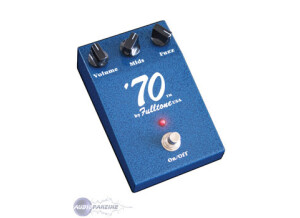
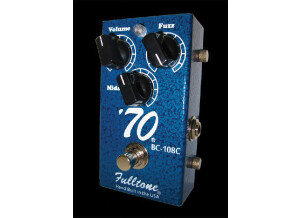
    Another wonderful pedal from the great people at Fulltone pedals. They did a run a few years back with the inspiration of the classic fuzz boxes from the 60' s and 70's. One being the '69 fuzz box which was based of the germanium transistor chips and this one which is based off of the silicon transistor chips. It is funny how a little chip can create such major differences in tone, feel, and voicing. The '69 and the 70 you would think since being in the same fuzz box family would sound the same. They do have familiar characteristic to one another but the voicing couldn't be further from each other. When You hear these two boxes side by side you get an understanding of why a little chip inside could create a whole new tone. I think the '69 has a little bit more of a raspy tone which seems inconsistent with the distortion. What I mean by that is that the fuzz sounds a little more open and out of control. The 70 has a straight forward tone that is more smooth and distinct. It seems more polished and defined. Not that it is better than the '69, but just a different take on the same idea. UTILIZATION This fuzz stompbox has 2 intentionally mismatched silicon transistors allowing for greater harmonic content. This one is for fans of Jimi Hendrix's sound circa "Band of Gypsies." The level control just adjusts your overall volume. The mids adjust the midrange frequencies, and the fuzz will dial in and out how much distortion you want. Fulltone '70 Fuzz Guitar Effects Pedal Features: * Growling, fuzzy harmonics via 2 intentionally mismatched silicon transistors * Powder-blue, 16-gauge chassis * Controls: Volume, Mids, Fuzz SOUND QUALITY I favor this fuzz pedal over the '69 for the more polished tone that it has inside. I like the '69 but it seems like a more out of control sound and I like my distortion to be a little more focused. You could own both and have two kids which one is a little ADD and the other is an honor student. I like this pedal with a Fender Strat and a Marshall plexi or JMP or another Marshall style amplifier. I think that the two pair well with one another since the majority of the time you heard this type of pedal was going into a Marshall amp. So the tone become a familiar comfort that recreates so many of the sounds that I grew up listening to. OVERALL OPINION It really is too bad that this item is discontinued. They do have a reissue model but like everything you always want a first addition. I would recommend this pedal to anyone wanting to recreate that old Jim tone. They are discontinued so I would pick up a reissue if this is the particular tone you are seeking.