Log in
EN
FR

Behringer PA/Live Sound Mixing Consoles

Series

37 products found

Categories
Series
Filter
Sort by
Evaluation
  • Reviewed or not
  • Editor’s award
  • Reviewed by Audiofanzine
Availability
  • Available or not
  • Sold new or used
  • Sold new
  • Sold used
Must-have products
  • All products
  • Flagship products
  • Best rated products
  • Hot products
  • Popular products
Price
  • Freeware
  • Low-cost (< $75)
  • Mid-range ($75 - $250)
  • Premium (> $250)
€
Clear
Sort by
  • Popularity
  • User ratings
  • Price - low to high
  • Price - high to low
  • Used price, increasing
  • Used price, decreasing
  • Name (from A to Z)
  • Name (from Z to A)
  • Added on
Choose a category
Selected category: PA/Live Sound Mixing Consoles
Choose a series
Sort results
  • Popularity
  • User ratings
  • Price - low to high
  • Price - high to low
  • Used price, increasing
  • Used price, decreasing
  • Name (from A to Z)
  • Name (from Z to A)
  • Added on

The best Behringer PA/Live Sound Mixing Consoles reviews

The reviews Audiofanzine members found the most helpful.
  • « Behringer PMH3000 Powered Mixer »

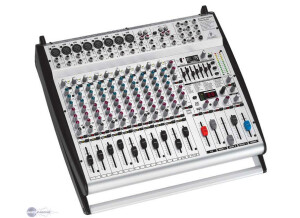
    I bought the unit online for $450. It is also advertised as the PMX3000 but the unit comes labelled as the PMH3000. I needed a low profile and light weight unit that I could use to mix to drive a sub and monitors in addition to stereo mains. The PMH3000 has many useful feature 1) Insert external effects jack on all 8 mic channels, useful for adding external noise gates/expanders/commpressors 2) Per channel prefade listen (PFL) for individual headphone soundcheck plus dB level check on the main soundlevel LEDs. 3) Two monitor and FX level mixers per channel 4) Built in effects unit is low self noise and lots of reverb and chorus effects 5) After Fade Listen (AFL) on output sliders for headphone monitoring 6) Mono output slider dedicated sub woofer 7) Main equalizer sliders have buitin LEDs to help pinpoint a feedback frequency The main speaker outputs are clean all the way up to the +10dB LED on main stereo out which is starting to hit 400w/channel into 4 ohms. LIGHT WEIGHT!! the unit uses a switched mode power supply in place of the normal bulky supply transformer. Easy to grab carrying handle This is not really a dislike but to get to 400Watts (as tested with a 4 ohm load resistor) the main stereo sound level must peg the +10 dB level LED (but not clip). 0dB on main stero out is about 40W/4 ohm and a safe upper level for headroom should be kept under 300 W/channel into 4 ohms which falls off to 150 W/channel into 8 ohms. An input channel has to be + 10dB on its PFL level check to generate these max speaker levels, needing condensor mics and pro line level sound gear. Otherwise think of the PMH3000 as having plenty of headroom! This unit does not have a "band break" swith to mute the mic channels. The main amps are very quiet when there are no input signals. The cooling fans are quiet. The attractive case is all steel. The Speakon speaker connectors are superior to 1/4" jacks but many people will end buying adapter cables. The PMH3000 is a versatile and lightweight unit. It doesn't have mind bending speaker drive but still has plenty of clean output and headroom for small to medium gigs. Behringer customer service confirmed that the unit can be used without connecting loundspeakers. The unit can double up as a low noise mixer with effects and two monitor busses. I give it a 4 only because the channels have to be driven to get to the rated output power, otherwise you get a lot of value for your money. This review was originally published on http://www.musicgearreview.com

  • « Behringer PMX2000 Powered Mixer »

    I bought this on EBay for $270 new from a music store in Tennessee. I couldn't beleive the price. I read the reveiws and decided that it was worth the gamble. Very glad I did. Its a nice unit. Some of the reveiws I read mentioned excess feedback and high noise levels. Thats not true at all, It's actually very clean sounding. Its got lots of headroom and it sounded much better than our old Yamaha powered mixer that weighs 5 times as much. The effects are OK. It's only got Speakon connectors, You can get a speakon to 1/4 inch adapter for about $10 which will let you use your old 1/4 speaker cables. There is no pan so if you run in stereo each channel is centered in the mix. There are 3 stereo input chanels but again there is no pan. Seems kind of light but that can be a good thing at 2 AM when its time to pack up. Construction seems to be good quality. Best deal for the dollar. I would buy another one. This review was originally published on http://www.musicgearreview.com

  • Audiofanzine FR's review

    (Originally written by motteherbeuse/translated from Audiofanzine FR) How long have you been using it? Six months for rehearsals (once a week) and live gigs. Which feature do you like the most / the least? I was fed up with having to transport an amp + an effect processor + an EQ every time I played. So I looked for a compact system with the best value for money on the market. I didn't take any risk thinking that if it was disappointing I would keep it for rehearsals and buy a better non-amplified one (Mackie). Everything went fine the first live gig, just like in rehearsals. Having two integrated multi-effect modules is a nice thing and they sound ok. For FOH we used two EV SX300 and for monitoring two active RCF ART 310A. A professional musician who played with me said we were lucky. We have a trio and we had less than an hour to do the sound check. My friend said we did pretty good in record time but we could've gotten a better sound with a bit more time. The output power was enough for the 250-person hall and the small EQ did a good job. Cons: perhaps the weight and the faders, which seem a bit fragile. Did you try any of other models before buying this one? Yes, my friend who is a pro has a small amplified Laney. But let me make something clear, you must have a good hearing to be able to compare and hear any difference. How would you rate its value for money? It's excellent right now, but time will tell... Based on your experience, would you buy this product again? Yes but if you want to get a good sound quality with such a mixer you must have high-quality speakers. In the worse case you'll have to add an EQ to the system. I recommend it to beginners and experienced musicians. But always use it with high-quality speakers (that's the most important thing)

  • frankP_en's review

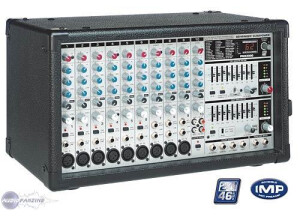
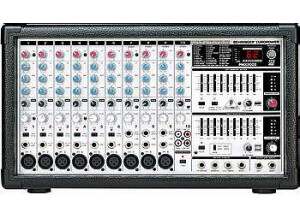
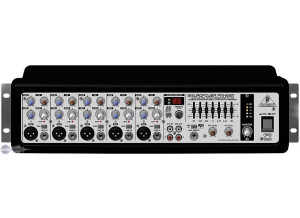
    I've been using the Behringer Europower PMH2000 for 2 years now. I like that it has 10 channels. 8 XLR's help a lot when playing with a full band. If you playing acoustic guitar or need the quarter inch inputs, they are provided. The left and right channel full graphic eq's are great to have for cleaning up the sound and adding amazing effects. The separate channels eq has high, mid, low and fx knobs. All great for the fine tuning the sound. I wouldn't have bought this piece of equipment if it wasn't for the effects. They make so much of a difference to get rid of the plain, old dry sound. 99 effects total that can be assigned to left and right main mix or to main mix and monitor out, augmented by a switchable low-cut filter for channels 1-6. Adding the reverb and chorus effect, makes my day. Not a lot of musicians use those, but it does help. The delay, flanger, and echo are not used often on a complete mix. I use to have one of the regular mixing boards that Behringer makes, but I really like the self powered side of this. The 250w and 180w split of 4ohms and the 500w bridge of 8ohms is enough power when playing in smaller venues. I have this paired with 800w Peavey speakers and they put out a punch. It's great for the youth bands to use because of the simple use and their low budgets. It's also great for recording. Let me tell you, I used it with my Behringer sound enhancer and compressor for both of my CD's and gave me everything I wanted. Who knew you could create radio friendly songs with this piece of equipment. You also plug in a CD player/Ipod or DJ system. The quarter inch pre-amps in and outs are great to have sending the feed into other devices like CD recorders. The phantom power makes it nice to use a high performance recording condenser mic. Using a regular mic and not the condenser for recording is a big mistake. At the Dimensions of (approx.): 11 in. x 18 1/8 in. x 10 5/8 in. (280 x 460 x 270 mm), it's right the right size. 35 pounds, not to hard to handle. I bought this new around $350. not band of a price. I would make the same choice but now I would there upgraded model.