Log in
EN
FR

PA/Live Sound Mixing Consoles

378 products found

Sort results
  • Popularity
  • User ratings
  • Price - low to high
  • Price - high to low
  • Used price, increasing
  • Used price, decreasing
  • Name (from A to Z)
  • Name (from Z to A)
  • Added on

The best PA/Live Sound Mixing Consoles reviews

The reviews Audiofanzine members found the most helpful.
  • « Roland PA-250, full of raw character »

    I found this mixer by pure chance at a secondhand market two years ago, its big, white-on-black Roland logo had aroused me among all the stuff that surrounded it. According to the seller, it had belonged to his father who used and abused it for parties in the country. Beware, it weighs a ton! I had to get a Uber to get back home with it! It’s an 8-mono channel mixer, each with a basic (low/high) EQ, an output gain control and an FX section (delay & reverb generated from aspring reverb within the table). When I got this, I mostly had non-analog, mostly digital gear, such as Kork/Elektron (which can sound a bit cold sometimes) and this mixer mostly helped me to bring their sounds alive. It’s perfect to warm sounds up, it adds a bit of analog dirt to anything that goes through it. Sprinkle the whole with the adequate amount of internal FX or even distortion by getting it into the red and a metallic-sounding synth turns into a LO-FI organic beast (ala LIES Records/ Lobster Theremin/ MORD etc). A real pleasure, but definitely not for someone looking for a neutral-sounding mixer that would provide a neutral sound without a hiss or hum. It blows, spits and distorts sounds if you want it to – in a word, it sounds alive!

  • « A workhorse among powered mixers »

    I bought it in 1999 (yes, last century) for small venues. It was my first powered mixer and I still have it (in 2013): That says a lot about its longevity and sturdiness. I still rent it from time to time together with a couple of speakers and it does its job pretty well: Amplify previously recorded music or sources coming from one or several mics. It is practical, without any irrelevant features, although it has lots of useful tools: Phantom power, 6 XLR channels, including two thar are also line + stereo, small 7-band EQ on the master but also for the second channel if you use it as return, small basic reverb (hall/plate/room), which is more than enough and, especially, easy enough for newbies to understand with a brief explanation. The pros: Reliability, ease of use, and decent sound quality The cons (being picky): A bit heavy, jack headphone out I wouldn't hesitate to buy it or its bigger sibling, the 860!!!

  • « Perfect and clean! »

    The Shure Vocal Master is an old P.A system made in the late 60s. It was used by The 5th Dimension, The Association, Conway Twitty, and many other bands. It is a great P.A for any sized gig or club. This system has the ability to project your vocals as they are, clean and true. The main mixer I have is a VA 300 connecting to two beautiful Shure column speakers. The mixer does a great job for being old technology. It has six channels for microphones/intruments. Each channel has a volume, treble and bass knob, anti feedback switch, and a knob that controls the amount of spring reverb in the channel. The master volume knob controls the overall volume. In the back of the mixer you can connect an echo unit and have the entire mix sent to a tape recorder. Very useful for recording a live band! It has been very reliable and I haven't had one problem with it since I bought it. I once purchased a digital powered mixer and I can honestly say the sound from Vocal Master blows it out of the water. As for the size and weight of this system it is not too heavy. Each speaker column weighs about 30-40 lbs and stands about 5.5 ft tall. The whole package fits perfectly in my 2001 Ford Expedition. I paid $300 (including shipping) for it used. What killed me was the shipping cost. If you find one locally, consider paying $200. What a steal! You get a great reliable P.A system that not only sounds fantastic but looks amazing up on stage. Another great thing about this system is the User/service manual. It contains the names and part numbers for easy repair if taken to an electronic technician. There is another model with a VU meter on the mixer and another model speaker column that is shorter. I Haven't tried those out but I would give it a shot considering my experience with my Vocal Master.

  • moosers's review

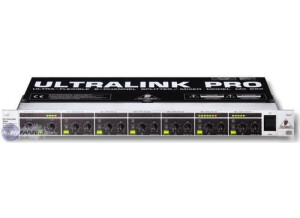
    The Behringer Ultralink Pro MX882 is an eight channel mixer and splitter that can be used both in the recording studio and on the stage. My experience with the Ultralink Pro MX882 is in the studio only however. You can use this in two different ways - either as eight channels of inputs and two outputs, or two channels of inputs and eight outputs to split your signal. The unit has two main XLR inputs and two main XLR outputs, as well as both an XLR input and output for each of the four channels. The last two channels have 1/4" connections for both inputs and outputs. It can be powered with a standard power cord and will take up only a single space in a traditional rack case. UTILIZATION The general make up of the Behringer Ultralink Pro MX882 is a very simple one to follow. Once you know what types of connections you'd like to make, there isn't too much left to do. Each of the six channels beyond that main two have parameters for input and output levels as well as a button for choosing between either spitting or mixing. The MX882 also has parameters for your main input and output levels as well as a main link button to choose either in or out. Each channel also has an LED meter for monitoring your levels. A manual probably isn't necessary for most users, but if you feel like you might not be able to understand it all off the bat I'd recommend having it around just in case. SOUNDS The Behringer Ultralink Pro MX882 doesn't make any sound of it's own, but you can judge it on how well it translates your signals. While it is hard to tell if there is any quality loss, since it is a pretty simple splitter/mixer, I would bet that it would be very minimal if any. If you're doing simple jobs with it to I can't imagine that you'd be getting any noise or anything like that as long as everything is connected properly. OVERALL OPINION For the price of the Behringer Ultralink Pro MX882, you really can't do too much complaining. It will definitely get the job done in more instances than not. Although I'm always weary of a Behringer product, I feel like this is the type of gear that you don't need to be spending too much money on, unless of course you're using it all the time. The only real downfall of the Behringer Ultralink Pro MX882 is that it feel cheap, but as long as it does the job, at this price I don't have have any qualms.

  • StainlessB's review

    I was hesitant to get this... and the first time I looked at it,as soon as I saw the Cat 5 cables... came an immediate "no way do I want to run cables... what a hassle...etc" I had been using the RME mix matrix and mixer, which works well... however, as a session wore on (in live settings and my own bands rehearsals in the studio) I seemed to spend a lot of time re-adjusting headphone mixes as ear fatigue set in (or someone turned up/down)... In fact...I was sick and tired of the whining and complaining! "I can't hear myself", "All I hear is him", "there's too much ... (take your pick)" I took the plunge. The 4 pack comes with a D-sub x 8 1/4" cable and 4 50' Cat 5 cables. I chose to run my own cables so as not to have any excess ....(only recommended for those with lots of patience) The mixers have a standard microphone mount on the back and I used Altas podium mounts, and a short extension for everybody but the drummer who got the podium mount and a mini-boom. Each mixer handles 8 channels!* was originally using an Aphex 141 D/A converter to sent mixes from the RME into a Presonus HP60. so I redirected the lightpipe and the D-sub to the Hear Back rack unit. The unit supports up to 8 mixers. Each mixer will run 2 headphones (same mix....and I haven't tried it) I ran extra cables in case we get a permanent player... which means I'll need to get another mixer (~$240...) THIS WORKS GREAT!!!!!! plenty of volume, a limiter so they can't blame me for going deaf... no more whining and complaining!!!! I bought mine from Sweetwater and they matched the best e-Bay price (I thought that was pretty cool) so plenty of pros.... and yes, a few cons* I wish channel 1 & 2 could be unlinked... while 3/4, 5/6 am\nd 7/8 can be linked, 1/2 cannot. I wish there was the option on an insert on the rack unit instead of just the mixers... and lastly (though I realize I'm reaching) it'd be superb if you could mix analog and digital inputs.. I read one dissenting opinion on one of the forums that complained about the 1.5 mSec latency....(?) all I can say is "Brother, your ears are a lot more astute than mine) You want the ability to have individual players be in charge of what they hear? This this is the real deal! I will very likely add a couple of more mixers to my studio (conveniently located of course!)

  • « Great with vocals and instruments »

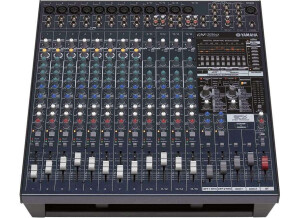
    The Yamaha EMX5014C is a powered mixer that has 10 channels and 14 inputs. There are 16 high quality effects to choose from on this mixer. When I first read the specs I didn’t think they 16 would fit me, but after hearing how good they are it was a must have. It would have been nice to have some more though especially at this price. You can rack this unit but only if you purchase a separate rack kit because it does not come with it right out of the box. You will need to purchase a kit called the RK5014 if you want to use it as a rack mount. But using it as a tabletop mixer is not bad it will look great and fit right into your set up. I love how this mixer controls vocals; it will give you all of the tools you need to get clean and warm vocals. Plus you can add a little reverb or chorus to give them more depth. I love using this mixer for live shows depending on the style of music that we are going to be working with. This is not the ideal mixer to use for other events like weddings or banquets because you don’t need to have all of the EQ options for those events like you would a music event. There is a 3 Band EQ on each individual channel and a master 9 band graphic EQ on the main channel to let you control the whole output of sound. You can use this mixer with just about any instrument or any type of microphone. It will sound great no matter what sound source you throw at it. I love the quality of this mixer and it is a great value for the price. I would make this choice again if needed and I recommend it to people all of the time.

  • « Portable but still sort of heavy »

    The Mackie PPM608 is a very portable and small mixer. This is the type of mixer to have if you need to have a lot of channels to work with and still need some good compression. There are effects on this mixer that are pretty decent for it being a small and at this price. The 3 band EQ is on each of the 8 channels giving you great control over the input sound. But for this mixer to be small it still weighs 25 pounds! That is still a good amount of weight for a small portable mixer. One of the most attractive things about this mixer is that you crank it up to max volume with compression and limiters on it and it will not get distorted at all. The sound will still sound very clean and crisp. Pair this up with a good pair of monitors and you will have a professional sound. At first I thought the price of this mixer was a little too much because it cost 700 dollars and I have used other mixers that are basically the same but cost about 150 bucks less! But after hearing it and seeing how well it is made, I would have no issue purchasing this for us again. I do however think that some of that price is going to the “Mackie” name because they also tend to charge a little more than other name brands do especially when it comes to live sound equipment. This 1,000 watt mixer will give you the sound you need for your live event, as long as you do not need more than 8 channels then this D Class amp should suit you just fine and it will also last a long time too. It is well and gives you a great sound. I recommend this mixer especially if you already have a good set of monitors to compliment it.

  • « preamps rock, and lots of effects »

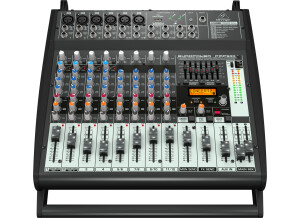
    The PMP 4000 is a 16 channel powered mixer that is made for a table top. It cannot be racked and needs to be on a flat secure surface. For some situations this mixer was our best option depending on where we had to be. But in some situations it was not the best option, so we used it only for certain shows or events. All of the knobs and sliders are very well made though and you can easily tell that it was made with the best materials because nothing feels cheap or plastic like. The whole thing is not heavy but it seems to be made out of solid metal making it very sturdy. There is a 3 Band EQ on each channel, but there is no compression. That is a deal breaker for some of the shows and events that I am at. There are some effects, they are pretty standard though and nothing that will really shock you. The EUROPOWER series of mixers has been great since the day they came out but for some reason it is like they do not put the essentials in the mixers for this line; like compression! The 3 Band EQ is decent and gives you a lot of control over the audio. There is also an LED Meter and phantom power. This whole mixer is pretty light, it weighs around 20 pounds which is very light. The preamps that are built into the PMP 4000 and the whole EUROPOWER line of mixer is very good. You will have no need to use any other mic preamps because of how good these are. You can use any type of microphone with them and it will sound clean and sharp. The effects that are built in are ok; there are a lot of them though. They are all 24 bit FX and you can use them on any of the 16 channels. But there are no effects that really stand out to me. Not saying they are bad, just nothing that makes say “wow”. But some people feel that the effects on the PMP 4000 are some of the best around.

  • « How will it hold up? »

    The Peavey PVi 4B is a channel powered mixer, it has 4 mic inputs (balanced) and another 4 ¼ line inputs. You can control the tone, reverb and levels of each channel easily on this mixer. Controlling the reverb on each channel was very important to me making my purchase of this mixer. There is no compression on this mixer and that was the downfall of getting it but I could work around that with an external compressor. There could also be more effects on the PVi 4B, that would make it more desirable as well but at this price you cannot expect to get all of the higher end features. This mixer does have phantom power and the mixer itself is a very good size. It is very portable because it is not that big nor is it that heavy. There is also a handle on the top that made it easy for me to take it around with me. This mixer has just come out and it is one of the newest mixers from Peavey. It will be interesting to see how it holds up over time. But in the last few days that I have had a chance to use it I can say it seems very durable so far and the knobs on the front are well made and do not feel cheap. This mixer only retails now for 180 dollars making it very affordable for someone who needs a smaller mixer. The PVi 4B comes with a manual and it is easy to use, I am not too sure how long I will be able to use this mixer due to most of the shows that I currently am running. In the long run I will need more inputs, but for now it is working just fine for me. This mixer just needs more effects, and it would be excellent. There are other Peavey mixers that have more effects and they will cost more too. I own a lot of mixers and though I would give this one a shot since it just came out and I had a chance to work with it.

  • « Use with good mics »

    The XR 8600 is a 10 channel mixer that has effects right on board. It has 10 different inputs, it use to be my main mixer a few years ago. I loved how portable it was, it is not that light but it does have a handle on it to carry it with. If you are in need of a quality sound system for your set up then look no more. I have used just about every mixer you can think of from Peavey, Shure, Behringer and all of the other leading brands. This mixer does come with a factory warranty from Peavey that will cover you for up to 5 years just in case something where to happen with it. The FX sounds are great and all of the ins are of great quality. The knobs on the main part of this unit are well built and can handle a lot of turning and tweaking. I have used this mixer for about a year and a few months before getting rid of it and trading it in. During that time it was probably used in over 50 shows and it has never failed me. I would not use this at any larger shows though or anytime that I had an actual group to DJ for because we would need more channels for those shows. But at smaller shows with just me it worked fine. It has over 15 effects and 8 separate preamps. The preamps are ok but not the best. It really just comes down to which microphones you are using with it. That will really make the difference in your sound quality. Don’t let the preamps do all of the work, make sure you are using good quality microphones with this mixer or your sound will suffer tremendously. In this price range there is another mixer that I feel is a little better than the XR8600 and it is a 8 channel mixer from Yamaha called the EMX512SC, because the preamps are better.

  • moosers's review

    The Peavey XR600C is a six channel mixer/amplifier for use with a PA system or something similar. I've used the XR600C a friends for band practices, although I don't own it myself. Each of the six channels has XLR and 1/4" inputs on the front and it also has 1/4" jacks for outputs, aux inputs, and the built in graphic EQ. Each channel has a three band EQ (bass, mid, treble), effect level (auxiliary), input level, and monitor level. The built in graphic EQ is made up of nine bands and is next to all of the leveling knobs for sends and returns and all that. It also has RCA tape inputs and outputs for recording. It's pretty standard as far as the make up is concerned as I wouldn't say that there's anything out of the ordinary on here. The mixer comes in the shape of an amplifier head with a handle for easy transportation. It's also got built in phantom power, which makes the unit a bit more versatile for possible studio use although I haven't used it for these purposes. I've only used this as a mixer for practicing with a band, mostly using microphones for vocals. The XR600C is a bit more versatile than this, but this is the other application that I've used it for. I don't know anything about when this was made or anything like that, as it was the kind of thing that I just happened to end up using and didn't seek out at all. I can't say that I would prefer using this over another similar amplifier mixer, but will say that this one certainly got the job done for our purposes and is definitley an okay buy if you're using it for this application and need something on the cheap...

  • moosers's review

    The Hear Technologies Hear Back Hub is part of the Hear Back headphone monitoring system designed for recording studios. You can’t use the hub on it’s own, as you need the headphone stations to go along with it, but this is the part of the system that connects everything together. The system has four stereo channels, all of which is routed through this hub and sent to the individual headphone boxes. There isn’t too much to know about the characteristics of the Hear Back Hub, as it’s a simple rack mountable piece of gear that will only take up a single space in a traditional rack casing. I don’t really know what the connections are in the back of this, beyond the Ethernet connections that are required to hook up the head phone boxes to this. I didn’t really need to look in the back of it as it was already set up and ready to go with the head phone boxes in a studio that I used to work at. While the Hear Technologies Hear Back Hub is built pretty well, this system as a whole isn’t my favorite out there. While it will get the job done as it did for us on many different sessions, it still wasn’t the most reliable piece of gear as it would sometimes be quirky. You’ll need the purchase the whole Hear Back system in addition to the Hear Back Hub if you’re interested in this system, but I’d probably recommend checking out some of the other headphone systems out there like those made by Furman and Mytek before committing. While the Hear Technologies Hear Back Hub and system in general will cost you a bit less than those that I just mentioned, if you’re running a studio where players are playing together on a regular basis, having a reliable headphone system is essential, so if it was me I’d spend a few extra bucks on the Mytek Private Q system or something in between the quality of this one and that…