Log in
EN
FR

Percussion

791 products found

Sort results
  • Popularity
  • User ratings
  • Price - low to high
  • Price - high to low
  • Used price, increasing
  • Used price, decreasing
  • Name (from A to Z)
  • Name (from Z to A)
  • Added on

The best Percussion reviews

The reviews Audiofanzine members found the most helpful.
  • moosers's review

    I recently got to check out the Latin Percussion Generation II Professional Bongos on a recording session and they're probably the best wood bongos of this size that I've used before. Usually you'll find bongos like this to be on the cheap, but as the name obviously states, these are professional. They do come in a few different variations, but the traditional version is the one that I've got experience with. I wasn't the player on the session but was recording it, so while I only got a chance to mess with playing them for a minute, I got an up close listen to them with a trained percussionist playing them. I was using a Josephson E22S microphone to record the bongos and was really happy with the end results. Even just when played in the room they sound fantastic as they are super crisp sounding and quite vibrant. A lot of bongos like this will sound pretty dead, but these are full of life and cut through quite nicely. They're also built extremely well and of the finest materials possible I believe for a set of bongos like this. Of course all this comes with the trade off of these being quite expensive for bongos. Unless you're indeed a professional who is after a very high quality set of bongos, I'd think most would be able to get away with using a pair not quite as expensive as this one. If you can afford them, all the power to you, but unless you're a percussionist who is working with these all the time, it's probably not necessary considering the price. For those who it is, the Latin Percussion Generation II Professional Bongos are some of the best available, and for those who it isn't LP definitely has some other nice models that aren't quite as expensive.

  • « Latin Percussion Mini Timbales »

    Bought from Wembley Drum Centre, London UK in 2002. Paid £149 for 6"+ 8" model Great sounds, easy to tune and adds some serious colour to your run-of-the-mill drum kit voices. These mini timbales project better than you might imagine- I've used them unmiked in smallish venues and they cut through clearly. Their size also means it's easy to find a good place for them in your existing drum set up (or percussion rig, I guess) The supplied attachment clamp - see below. Nothing else really - it's hard to fault. I've not replaced heads yet, but they may be hard to find.... High quality construction, mirror finish chromed steel, good LP heads; easy to tune, with supplied tool. I tried out Tama's mini timbales at the same time and they looked shoddy in comparison. Mounting them is easy as they come with the arm necessary to attach the unit to a cymbal stand. However, the clamp is a vicious little shite, and will happily screw up your favourite chrome-finish DW boom stand. Use some gaffer tape to insulate. A great add on for some latin expression. Well made, quality sound, good brand name. A touch expensive, but LP seem to be the best at what they do... This review was originally published on http://www.musicgearreview.com

  • « Tama Octobans »

    I got the octobans from a dealer ship, AJ's pro Percussion. I got them for a christmas present, and I think they were about 70 $$$. I love the sond, so I asked for them. I love the sound and look of this instrument. It is a high-piched but warm sounding quad of long, small-circumference drum. I also love how u can play that race horse song. Also, exellent mounting features The only thing I didnt like about the octoban is that the drum heads are very hard to find. But, somehow I found them (i broke the previous ones out of my own neglagence). Very high quality, and I have no clue how they are made. Definatly money well spent. Another thing i love about the octobans is that u can integrate the sound into any environment, including punk to latin. This review was originally published on http://www.musicgearreview.com

  • « Affordable, useful, and sounds fantastic! »

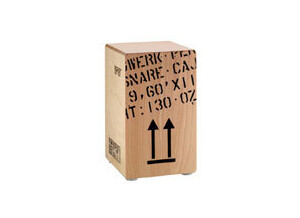
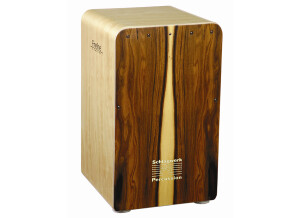
    Cajons are really a new tool to the westernized musician, but none the less a useful one at that. I had the opportunity to play one in south America some years ago, it was custom made from teak and Brazilian wood. Fast forward to a year ago, I was in a studio where I saw this Meinl Cajon. I immediately started using it and realized how cool it was. It is a fantastic drum. It has the sounds needed for any style of music, great touch, terrific non-echoed resonance is something I noticed with this unit. It is very light and easy to carry around as well. I often spot street performers using these in santa monica, and I was stupid to have not purchase one sooner since it is so cheap. At under 100 dollars I purchased one with a mahogany front face, because most people who build their own use mahogany in the united states of america. Since it is played with the bare hand or hands, it will outlast most other instruments in the realm of percussion. The only thing I noticed with mine, is the occasional need to clean the front face with lemon seed oil, something I use for my guitar fret board. I also like to let my little cousins play the instrument since they are young, and have little regard for care and good treatment of my drum sets, I prefer to let them smash on this cajon with their bare hands and feet. They get out all their energy, and the cajon goes unharmed for the most part. All in all, I believe this cajon is a steal at under 100 dollars, and cheaper used, I think any good percussionist who is into world music, or different styles of rhythm can and would make good use of such an item if added to the arsenal. Not to mention, it is a nice conversation piece and can be placed outside of the studio or basement and look nice in the living room with furniture.

  • « a must for any drummer who plays small acoustic venues or dinner bars »

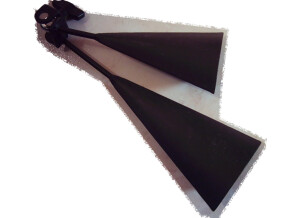
    These sticks are very good at what they are meant to do. They are great at quieting one’s drum sound while not slowing down the attack. They have a different sound then solid sticks and are soft enough to play with a band to do acoustic stuff, or simple quiet rhythmic tones to aid in different either south-American style percussion, or African style stuff. I enjoy these because they are light, and are adjustable on how loose to make the tips. Beware, too loose, and they will break like twigs. Also, another down side that I have noticed is a tendency for the middle sticks to start to come out when really playing hard. But, a good drummer will have control over attack, and not break them quickly. No big deal just a couple whacks on the ground and they are ready to crank again. I liken these sticks to the perfect candle lit acoustic jam, and often use them for playing in small dinner cafe settings with a small 3 piece set. They are really great for getting sound out without over amplifying the down hits. Again, you will need to buy 2 sets, always have a backup handy just in case one breaks while playing, but this is common drumming knowledge and should be understood as such from the get go. As a guitarist, I’ve met drummers who refuse to use these, and i make sure to never work with them again. They help me distinguish the mindset of a crappy drummer from someone who understands their place in the band and there sound dynamic purpose. Every good drummer knows there is a time and place for these sticks, and a definite must carry for any drummer. Also make sure to carry some black eletrical tape, as from the first day just one stick out of the pair has been rebellious and the rods tend to slip out which causes the other ones to shift in the rubber grip. This can be annoying and troublesome, but as long as you are aware, and take some eletrical tape to the problem it is solved.

  • moosers's review

    The Cosmic Percussion Handheld Sleigh Bells is a high quality percussion instrument for use in the studio or on the stage. The only setting that I've used these bells in has been in the studio for recording some Christmas music. They're great sounding bells and they're easy to record as it outputs a pretty loud sound. I don't really know too much about sleigh bells in general, but these sound very crisp and clear and definitely cut through the mix well. I also don't know very much about Cosmic Percussion, but they definitely seem to have done a great job here and I'm sure they have other great instruments as well. Just from holding the Cosmic Percussion Handheld Sleigh Bells in my hand I could tell that they're well built and built to last for sure. Buy one of these for your studio and you should have one for life. Of course most people are not using sleigh bells very often, but even outside of Christmas music I think they work well as a percussive instrument in certain settings. The price of the Cosmic Percussion Handheld Sleigh Bells doesn't appear to be too much after doing a quick Google search, but I don't know what your average set of sleigh bells goes for. I would imagine that it's right around what this costs, which isn't much and is worth it for anyone looking for a quality set of these for any application. It's a great idea for studios to have a complete set of percussion instruments including these as you never know what is going to come up in a session. The sessions that I've used these on was definitely a major league session, so if they were good enough for them, I think they're going to be good enough for you too!

  • moosers's review

    The Rhythm Tech Hat Trick is a unique tambourine that sits on top of your hi hat in the context of a complete drum kit. It's specifically designed to be mounted directly on the top of your hi hat, making it so it sounds with each hi hat click. It's definitely a nice little 'trick' to have around, as it makes it possible to get the sound of the tambourine happening without needing an extra arm. The Hat Trick comes in a few different models, as you can get it with either a single layer of jingles or dual layers. You can also get it with either nickle or brass jingle, with the latter being a bit more expensive. I'm not so sure how different the sound will be, but I'm assuming that there is a little bit of difference. The version that I've used has silver jingles. The studio I'm currently working at has one of these in our percussion box, although it only sees occasional use. It's probably going to be more useful in a live setting where you wouldn't have the luxury of overdubbing a tambourine. However, it's not exactly the same sound as you'll get with a typical tambourine, as you're going to be playing it differently. I would think that most drummers who wanted this sound would have it already and probably wouldn't be picking it up in the studio. I'm really just judging this on the fact that I've never really seen any outside drummers pick ours up and use it. That said, it's an awesome tool to have around as you never know when it's going to fit a situation perfectly. Rhythm Tech makes a variety of other percussive instruments that can be mounted to drums, so I'd check out the full array of what they have to offer if you think this is as cool of an idea as I do.

  • moosers's review

    The Royce Procussion CF-450 Congas are simple percussion instruments that can be used for use of any kind. We've got two of these at the studio where I'm currently working at, each of them being a slightly different size. I'm pretty sure they are of the same make and all that, however. These congas were made in Thailand and are actually built pretty well considering this. I'm not a drummer or a percussionist by trade, as I'm an engineer and stringed instruments player primarily, and I recently used these on a session where I was the engineer and not the player. We used Josephson E-22S microphones, and the overall sound coming from these congas was immaculate. Of course we had a pretty good chain going with the E-22s and our Neve console, but nonetheless it all starts with the source. I have played around a little bit with these congas outside of this recent session, and they definitely seem easy to play even though I certainly don't know the proper techniques associated with conga playing. They have a very vibrant tone that cuts through very well and can also stand on it's own. I really don't have any background knowledge of these congas, and I wouldn't have ever used them if they weren't owned by the studio and always around, so I'm not sure how easily accessible these would be. They seem to be the perfect in between congas, as they aren't cheaply made and also aren't going to be the most expensive. In this respect they are perfect for a professional studio like the one that I work at, as you want something that sounds good, but not the top of the line since they won't see use everyday, or that often at all as the case may be in this studio. If you're looking for an in between conga like this, the Royce Procussion CF-450 Congas are definitely some drums worth checking into.

  • moosers's review

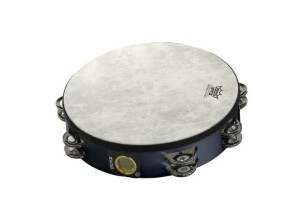
    Remo’s standard Tambourine is a 10 inch percussion instrument that I’ve used for recording with a friend of mine. I don’t own the instrument as it was his, but we’ve recorded with it a number of times in my home studio. The Tambourine is 10 inches in diameter, with eight pairs of jingles and two rows each. Remo isn’t known for making percussion instruments, or at least not that I was aware of before using this, but this tambourine is definitely a good one. I wouldn’t say that this is exactly a professional’s instrument, but it’s pretty good nonetheless. It’s easy enough to play if you know how, and definitely has a vibrant sound that cuts through a mix well. I don’t know if they have many different models of tambourines, but the one that I used didn’t have any model number or anything on it. I don’t even know the type of drum skin on it or anything like that either, but it seemed to be somewhere in the middle in terms of it’s sturdiness and overall make up. So while I wouldn’t say that it feels cheap or like a toy, it also isn’t the sturdiest tambourine that I’ve used before. The price of the Remo isn’t known for making percussion instruments, or at least not that I was aware of before using this, but this tambourine is definitely a good one. The price of the Remo Tambourine is definitely not too much at all, making it the perfect tambourine for the studio owner or player who might not be using it all the time, but wants it around just in case. You never know when you might need a tambourine, especially in a recording studio environment, so the Remo Tambourine is a great option for those looking for a solid, low cost tambo.

  • mooseherman's review

    This is a tambourine made by Remo that features the Prince symbol, from his days as "the artist formerly known as Prince." It has a black skin and frame, with the logo being in a tan, almost beige color. The drum has 8 pairs of jingles, has a 10'' diameter, and a depth of 1 11/16 ". While I think that the tambourine is cool for the novelty factor, being a pretty big fan of Prince, I don't know if it's the greatest tambourine. That being said, it's pretty cheap, and as far as cheap tambourines go, it's one of the better ones. Its definitely got a little bit more room for subtlety than most tambourines I've played, and it's a great choice for people who aren't willing to shell out more money for a better one. The tone is nice, it doesn't drown out every other instrument in the percussion section when recorded, like some of the other ones do. That being said, it's not great for recording in every situation; sometimes when it makes up a large part of the rhythm you need a tambourine to have a fuller, richer sound. I also find at times that the jingles don't move as quickly as they should, which results in it being difficult to keep time with it. It's main use, I think, is for lead singers who need something to do onstage when they aren't singing. However, given that it has Prince's logo on it, I doubt everybody would really want to use it if they're trying to make a career on their own. As much as I wanted to like this tambourine, I realized that I would have been better off getting one that has more versatility and that doesn't have another artist's logo on it already. I would have to only recommend it to fans of his who aren't necessarily going to need much more out of it than the novelty factor.

  • mooseherman's review

    This is an interesting percussive instrument. I haven't been able to find too many of these around, and this is the one that I usually see for a relatively cheap price. According to the people I've discussed and my own attempts at playing the pandeiro, I must say that I think this one is pretty good. Many people seem to confuse these things with tambourines. While they look and feel somewhat similar, the pandeiro is cool in that it is far more flexible. For instance, the skin can be tuned in order to produce different pitches, both high and low. Thus, the instrument is capable of a far wider variety of sounds than the tambourine. For instance, Airto Moreira is capable of emulating the sounds of an entire percussion ensemble with a pandeiro. As far as this brand is concerned, it's OK, but nothing too crazy. The price makes it worthwhile, if you aren't a serious student of the instrument, you might not really want to shell out a ton of bucks for it. This instrument is more than competent to make a good introduction. When Brazilian Percussionists come into the studio where I work, they probably won't be using this, but it's great for the beginners, and it's expensive enough that if you decide to eventually buy a good one, it won't have been too much of an investment. It also gives you enough flexibility with the tuners to understand how to get the different tones out of different parts of the instrument. Other, nicer pandeiros will be capable of delivering more subtly, and will be easier to play to a certain extent. Just to reiterate, this is clearly a beginners instrument. To wrap up, a quick warning; learn how to tune it properly! You could damage it irreparably if you tune it too tight!

  • moosers's review

    The Stagg Tab 2 1/2 Size Tambourine with 16 cymbals is a simple percussion instrument, which I own and have used for both live shows and recording. I'm not a drummer, but I do often play different percussion instruments on my own recordings and on people who I produce as well. So while I'm not the best tambourine player, I do have a good amount of experience playing them. This one is made out of plastic, and has a handle on it which makes it easy to hold and in general easy to play. While it is nice to have a few tambourines around, as they can have pretty differing sounds, the sound of this Stagg tambourine is pretty much your standard tambourine type of sound. It is bright sounding and cuts through a mix very well. It doesn't have a 'drum' sound like a lot of older tambourines do, as it doesn't have a head on it at all. When searching for a tambourine, it makes sense to be able to identify the different styles and types of tambourines, so you know what is out there and what kind you might want. For recording, I use a Shure SM57 or a Sennheiser MD421 for picking up the sound from the Stagg Tab 2, and I feel I can get a sound that is just what I'm going for. I love having this tambourine not only for the sound, but mainly because it is half size and easy to play. Other tambourines are harder to grasp and grip, while the Stagg Tab 2 fits perfectly in my hand without any problems. Another major consideration in my quest for a tambourine of course came with the price, and the Stagg Tab 2 was one of the cheapest I could find. While the tambourines made by LP are definitely better sounding and should be had for percussionists and those who play it often, the Stagg Tab 2 is the perfect option for those who want a tambourine but don't want to spend much money at all...