Log in
EN
FR

Waldorf

86 products found

Categories
Series
Filter
Sort by
Evaluation
  • Reviewed or not
  • Editor’s award
  • Reviewed by Audiofanzine
Availability
  • Available or not
  • Sold new or used
  • Sold new
  • Sold used
Must-have products
  • All products
  • Flagship products
  • Best rated products
  • Hot products
  • Popular products
Price
  • Freeware
€
Clear
Sort by
  • Popularity
  • User ratings
  • Price - low to high
  • Price - high to low
  • Used price, increasing
  • Used price, decreasing
  • Name (from A to Z)
  • Name (from Z to A)
  • Added on
Sort results
  • Popularity
  • User ratings
  • Price - low to high
  • Price - high to low
  • Used price, increasing
  • Used price, decreasing
  • Name (from A to Z)
  • Name (from Z to A)
  • Added on
Filter results 86 results found
Evaluation
Availability
Must-have products
Price
  • Freeware
Show results

The best Waldorf reviews

The reviews Audiofanzine members found the most helpful.
  • « I recommend it!!!! »

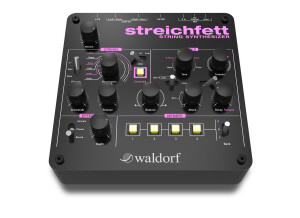
    This emulation is specialized in old string machines If, like me, you lived the heyday of progressive bands that used them profusely (Ange, Genesis, Francis "Bilitis" Lai, and even Jean Michel Jarre, to name a few) you will adore it... The sounds are strictly identical to those produced by machines like the excellent ELKA RHAPSODY, or even the SOLINA, CRUMAR, LOGAN, WELSON to name just a few! Some sounds even bring to mind the good old MELLOTRON! UTILIZATION Very intuitive! You only need a couple of minutes to master the unit and it sounds big, very big... I'd say the user's manual is virtually useless!!! Very comprehensive, it features its own reverbs, chorus, phasing (which has a tendency to be too upfront and is hard to deactivate completely: That's the machine's only flaw, in my view, and it's the reason why I don't give it the best mark. That said, I still need to learn how to use it right...) SOUNDS One thing is for sure, this machine is VERY specialized! A must for fans of the aforementioned devices! I'm not sure whether a modern music producer would agree with the concept. Even if it's a matter of trends and all trends are progressive and, very often, cyclic... Don't trust the demos available on YOUTUBE, the guy doing the demos is pretty bad (I would like to ask him if he know anything else other than BILITIS!!!) Go hear it or try it at a music store. One last remark: It is reasonably priced, so why deprive yourself!!! OVERALL OPINION I got it yesterday and I am convinced it is really useful for the kind of music I like.... Progressive rock and "psychedelic" music. In short: Hear it and make up your own opinion. As far as I'm concerned, I love it and recommend it!

  • « My most faithful companion »

    My most faithful companion I've been using it intensively for several months in different manners: With Ableton sequences, with Machinedrum sequences or played with a midi keyboard. It's awesome in all cases! Overall opinion: It's simple, ever since I got it, it's almost the only thing I use. It really offers amazing synthesis possibilities. Its sound is precise under all circumstances with a very present character so that you cling to it, but discreet enough so that you don't get tired of it. The arpeggio is pretty mad (swing, time, glide, different events, trigger delay, loading other patches' patterns or random generation....). The paraphonic mode has its charm (it sounds pretty vintage with the detuned unison) and it can come in handy, although I don't use it much. The modulation matrix allows lots of things, although I would've loved to have more destinations. There's not much to say about the filters, other that they are precise and capable of many things. I sometimes input some beats and what comes out its truly great! As for the envelopes, they are fast enough to make drums and, once again, very precise, like everything else. The pros: - Less expensive and cheaper than competing products, there's nothing to envy similar products from other brands at this price point for - Everything goes pretty fast with some practice, because everything is quickly accessible, with almost no submenus - The sound! Personally, I love it. It sounds, fat, cold, warm, metallic, organic, anything you want, all at the same time :P It's fantastic if you know some synthesis basics! The cons: - The volume cancels out when you increase the filter's resonance, which is good to know to anticipate the creation of a patch - It lacks different triggering modes for the LFOs and only the second one can be thinned down, which is a pity - It still has some MIDI bugs, particularly with the arpeggio, but the final OS version is not available yet, and I trust Waldorf will fix it quickly enough :)

  • « Waldorf Q /32 voice Phoenix edition is becoming a collectors synth »

    The Waldorf Q is a direct descendant of the famous PPG 2.3, but with extra features. It differs a lot from the Microwave or XT/K in that way that the Q has 3 oscillators of which 2 are independent Wavetable OSC's (not so with the Microwave or XT/K) The Q has a phenomenal filter section, and a very extensive Matrix Modulation. The sound of the Q is extraordinary, super quality, aggressive, but also can be honey sweet, warm analogical like. It simply is a top-tier synthesizer. I wanted to trade my Q Phoenix for a newer Quantum, but after trying in my studio, I decided not to do so because although the Quantum offers a zillion possibilities, but sound wise doesn't even come near a Q Phoenix. There are of course downsides like with every synth. That is the power supply that can break. Skipping pots if you are unlucky with buying a second hand unit. But of course, they can be repaired easily. Then there is the Nextel coating which is a nightmare on following Q types: original blue Q Keyboard, some of the dark blue Q Rack units, the "Halloween Edition" Q, and the early yellow Q versions. The Nextel coating is a nightmare and becomes dirty, peels off. Repaint is the only option. But again, sound quality wise, the Q is a monster and has not many competitors in that sense... Finally, the one to have as only about 300 units were made is the Q Phoenix 32 voice or the Phoenix Q+ (with analog filters) However, the Q+ tend to have problems and bugs and the analog filters don't do much different than the digital version. These last versions 2 will become true collectors.

  • moosers's review

    The Waldorf Micro Q Keyboard is a smaller and less versatile version of the regular Waldorf Q keyboard. The Micro Q Keyboard has 37 keys, which is about three octaves. It has both pitch and modulation wheels and 1/4" outputs for pedals and most of what you'd expect from a synthesizer. This synth isn't an analog one, but is indeed made up of digital components. It doesn't have full polyphony, but I've never had a problem playing it because of this... UTILIZATION The Waldorf Micro Q Keyboard certainly has a ton of parameters to work with. While off the bat this can make it a little bit confusing to get used to, in time you'll find that this helps more than anything as it gives you complete control over your sounds. The keyboard has a ton of filtering options, as well as a built in vocoder and a ring modulator. You can expand the keyboard as well to give you more polyphony and other features. A manual might be a good thing to have around when trying to learn this versatile synthesizer. SOUNDS While not a true analog synth, as far as digital synthesizer emulating analog sounds, I haven't heard a much better one than the Waldorf Micro Q Keyboard. You can get some seriously awesome sounding synth sounds to start with, and then they can be manipulated in all sorts of cool and interesting ways if you so choose. All of the sounds are extremely realistic sounding for a digital synth, and I'm a pretty big critic when it comes to digital synths. The sounds are pretty unique to Micro Q, but this isn't a bad thing at all as I think most users will find this to be a big plus... OVERALL OPINION As far as compact synthesizers go in this price range, they don't come much better than the Waldorf Micro Q Keyboard. They also make this keyboard in a rack mountable version if you want to just have the sounds and use a MIDI controller. I'd definitely encourage those interested to also check out the Waldorf Q, even though it is more expensive to see if it might suit you needs better, as it does have some things to offer that this synthesizer does not. A must see for anyone looking for a great synthesizer at a great price...

  • Audiofanzine FR's review

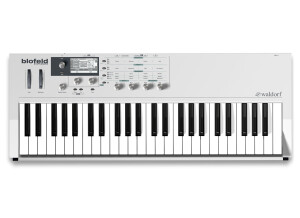
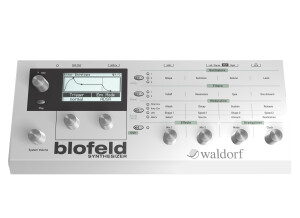
    (Originally written by nth206/translated from Audiofanzine FR) Some important details: - 1 Midi In port, Midi Out managed via USB port - Audio output on TRS jack - 16 multi-timbral parts but no Midi Off selection (see below for part muting) - About 1000 sounds of all sorts organized in 8 banks (if I recall correctly) - 2 menu knobs and 4 controls UTILIZATION Very easy to use for those who already know Waldorf synths like MicroQ, etc. On the contrary, newbies will need some time to get use to it. Lots of editing possibilities, it's a Waldorf!!! Even if the menus and sub-menus seem tedious, it's not really a problem, except for live applications. Since all parameters are editable via Midi, you'll quickly get used to automating everything to get the best out of the unit. The user's manual is clear, period. SOUNDS No surprise for those who already know Waldorf. For everybody else, it's a digital synth with a particular sound character. This synth sounds rather loud compared to other digital instruments I already tested (even the famous E-mu range). The factory presets are good. We're talking about real synthetic sounds (forget the trumpets!!). I believe the unit is conceived for hard house, hard trance, progressive or even ambient music producers. The presets are so many that you can get the impression that they are endless... Delay and reverb effects are average but the distortion is excellent (big German sound!!) OVERALL OPINION In spite of all these qualities, it is still possible to criticize the Blofeld. (see the high amount of posts on the forum) First of all, the unit keeps on having lots of bugs even after the 4th upgrade. (which, by the way, can take a long time to solve and become a real headache before installation) The theory according to which "distorted and crackling sounds are normal" may have to be reviewed because presets do sound much better after updating the unit. Some presets are designed to sound distorted or with crackles but you'll notice immediately the difference between them and a preset that's being distorted because the unit is not working properly. The synth sometimes freezes during playback and all your editing gets lost! (it is really bothersome to have to always look for updates in order to get the unit to work properly) Concerning the use of the unit, I was really surprised to learn that it's not possible to use only 3 or 4 parts in multimode, it's either 16 or one. As a result, if you have a system with several instruments (as in my case), you'll have to use the synth's USB MIDI interface to increase the Midi Outs and use all your gear. But if you want to play live without a PC (like me), it will be exasperating because you'll need 2 Midi Outs on your sequencer. I actually wrote to Waldorf about this and their answer was that the unit was not conceived for such applications! Great! To wrap it up, I'll say the unit is good for studio use or as a complement in live situations if you already have a sequencer. Its performance problems don't really undermine its enormous potential, they only are irritating. I'm really happy with this synth, I really like its warm and powerful sound. This unit fits perfectly in any synth rig thanks to its plentiful presets and its compact size... and it looks really nice!!!

  • FP User's review

    Lots of features, much more depth than an 'ordinary' VA. A nine because i wish it had a vocoder. Price paid AU$ 1650 UTILIZATION The manual was alright, didn't use it much, still don't unless i'm stuck. They should have included the wavetable charts with it. It's reasonably easy to use, the extra knobs help compared to a microwave 2, but my only real complaint is to have 16 modulation patches and knobs for only 2 of them. never had to use their support, although i've heard it's quite good. Buttons seem a tad gummy, but otherwise quite robust, a solid chunk of metal. Would probably gig with it. SOUNDS Sound is great. You have to work a bit harder to sound warmer, but it can be done. The natural zone of this instrument is digital weirdness but it can go other places. OVERALL OPINION I Love it, it is a synth after my heart. For the centre of my setup, supplemented by samples, BassStation and NI pro 5. Get the 30 voice expansion though or you'll get frustrated. Originally posted on FutureProducers.com Posted by: Unknown ( 1-, 2003)

  • « Better than the original Waves 2 »

    Waldorf PPG Wave 2.V was developed by Steinberg and is compatible with MAC or Windows. It will work differently on a Windows computer than it doesn't on a Mac though. In my experiences on a Windows computer it works more “fluid” like and on a Mac there are some small bugs. I am not sure if they have every updated those bugs yet either. So MAC users beware. The original Wave 2 was realest almost 30 years ago, Steinberg has brought it back to live with this plug in. SUITABILITY/PERFORMANCE It was easy to install, and it ran perfect on my XP and Vista Machines, but not too well on MAC. There are many bugs that I have seen and dealt with while running it on a MAC. So I don’t even use it on there any more, working around those bugs and dealing with them are a headache. OVERALL OPINION The sounds are the best thing about this plug in, they have managed to take some of the older sounds from the original Wave 2 and bring it to the computer music world but with a twist. Also its very affordable, I have been using this for almost 8 year now. The Waldorf PPG Wave 2. Has some very unique filters and effects that are very CPU light, you can go crazy with the effects and it wont effect your systems performance at all (on Windows). Now on a MAC that’s a different story. They have constructed this VST to highly resemble the look of the original Wave 2 don’t to every color and button. Difference is, the Wave 2 was not affordable at all for the average person when it first came out, you weren’t able to get it unless you had a huge budget. The Waldorf PPG Wave 2, is better than the original and its cheaper. You will love the quality of sound, I am extremely happy to say that I purchased this 8 years ago and I am still using it to this day. I would make the same choice all over again if I needed to.

  • songboy's review

    I have had no compatibility issues so far running this on my Macbook. I have not needed to reference the manual as this is a fairly simple plugin. Yes, the general configuration is simple and setting it up is very simple too. Its really a matter of selecting individual sounds or grabbing a whole kit, do some tweaking with the parameters to the right and thats it. The typical functions are fairly easy to access in regards to the fact that they are all right in front of you. Some of the buttons and text are very small though and hard to read. SUITABILITY/PERFORMANCE I run this synth on Logic 9 and Ableton 8 and so far it seems to work great. As I mentioned with the Waldorf PPG synth, for some reason the laptop keyboard doesn't respond well with this plugin in Ableton 8. It works great with a real midi board but the laptop keyboard is sluggish and basically decides when it wants to play the note you hit. The software is very stable, no crashes or lost presets. As for performance with a midi controller, it works perfectly well. I have been using this for two months. OVERALL OPINION What I like most about this synth is the sounds. It has about 9 kits that are all pretty good sounding. They are designed to sound like old drum machines so actual acoustic drum realism is not what we are going for here. I really enjoy the 808 and the 9000 kits, very fun to play with and generally make me want to write some old late 80's hip hop, haha. I guess the only thing that irritates me about this synth is it can be hard to read in a live setting. I wish everyone followed the format of Logic 9 where you can expand the size of you plugins and everything inside the GUI gets bigger too. I paid $100 for this and two other plugins. I like this one the most out of the three so I am ok with paying the price for mainly this guy. I give it a 10 out of 10 for sound quality. Pretty believable to me. Yes, I have used a lot of other drum synths like Impulse, battery, Ultrabeat, tattoo, etc... and this one is a very small stripped down synth in comparison. Yes, I would buy this one again, its nice to have a drum synth that is just designated for these old sounds.

  • Audiofanzine FR's review

    (Originally written by Bill3107/translated from Audiofanzine FR) I use it with my Macbook Pro + RME Fireface (to reduce the CPU load) under boot camp, but I only use Midi and audio from the RME. UTILIZATION It's a war machine and in spite of its 50 controls it remains logical and intuitive... it's a delight for sound editing. One control = one function... Clear user's manual. SOUNDS Nearly everything is possible regarding the sound... just spend some time with it. When you listen to the presets the first time you'll immediately think of the 80's, but you can also get modern sounds. The device has an analog and digital feel... That's its main advantage (compared with a Virus, which is more expensive). Very good keyboard and metallic wheels... You can also use it as a control surface for your favorite VSTi... I love the lead sound, and you can also create good pads... Ideal if you want to embellish your songs. It's very versatile (you can use it for any music style unlike the Virus that only provides modern sounds) but it also has its own sound character. It's exactly what I was looking for!!! OVERALL OPINION Pro: sound Pro: versatility Pro: playability Pro: controller number ;-) Con: you need to work your butt off to get the right sound! Con: you need a computer (or a Qcard) to save your presets. Con: it requires you to spend a long time with it (but that's the purpose isn't it?)

  • FP User's review

    Bags of features. Polyphony is enough for me. Sound is basicly same but Q has more DSP-power. There is 3 oscs (max. 5oscs using ALT), 3 LFO's, tons of filters etc. Oscillators sound great and different and you can easily make fat bass sound. You can go grazy with FM (I use a lot), filters and sync-stuff. Effects are good and I find reverb and tempo-delay very useful. There is no huge effected sounds like in Virus and older Novations which I don't like. Easy to ruin your mix. Features 10 points, I wouldn't ask for more. UTILIZATION Years ago I used couple of Micro Q's and I had to get Q because the better interface. I use it in every song. It's so easy to edit. MS2000 and Novation (Super)Nova is in same category but far more limited (great synths tho). Of course Roland JP-80x0 is king of all interfaces.. So interface is great: 9 points. Metal construction, durable knobs and buttons. Very well made. 10p SOUNDS Great quality, very musical sounding. Pads are awesome but I use many other sounds too. Lead-sounds are only category I don't find it great for my tastes. I love it over Access Virus C-series which is better for trance IMHO. I'm happy to own both tough. But Q will never leave the studio.. clear 10 points. OVERALL OPINION I love it over my other equipment... with Studio Electronics ATC-1. It has made right things to my music and inspiration. And it's nice yellow above orange Microwave XT. Originally posted on FutureProducers.com Posted by: deadzone ( 3-, 2006)

  • FP User's review

    Lots of features for the money IMO, plenty of options in the synth engine but the FX could have been better, there are some midi syncing bugs with the LFO's and the delay FX but i can live with them Price paid usd 800 UTILIZATION Hmmm, The µQ is not the most intuitive synth out there IMO, it takes a while to know it, and there are lots of menus which can be confusing for some folks, I got sound diver to program it so I don't really care if it's difficult or not So far mine is in perfect shape, but the knobs can get jumpy if you don't use them so twist them from time to time to make sure they work ok SOUNDS A nice little synth with a very unique sound, more on the agressive side of things but it can also sound very smooth, some wonderful lush pads can be obtained with the Micro Q with some programming, the comb filters are great for dreamy sounds, the synth engine is also quite powerful, fast envelopes, lots of options, decent enuogh efx without any realtime modulation capabilities, it has a sound which you'll like or not, personally I dig it, but it's sometimes difficult to make it cut thru a dense mix, the sound is more hyped on the highs and lows so sometimes you have to eq it a bit to make it stand out OVERALL OPINION I like the µQ very much ... I don't think I'll sell mine, it's not perfect but it has that mojo, and now that waldorf is dead it's more of a collectors item for me Originally posted on FutureProducers.com Posted by: MusickMan (January 0-, 2005)