Log in
EN
FR

Analog Multitrack-studios

62 products found

Filter
Sort by
Evaluation
  • Reviewed or not
  • Editor’s award
  • Reviewed by Audiofanzine
Availability
  • Available or not
  • Sold new or used
  • Sold new
  • Sold used
Must-have products
  • All products
  • Flagship products
  • Best rated products
  • Hot products
  • Popular products
Price
  • Freeware
€
Clear
Sort by
  • Popularity
  • User ratings
  • Price - low to high
  • Price - high to low
  • Used price, increasing
  • Used price, decreasing
  • Name (from A to Z)
  • Name (from Z to A)
  • Added on
Sort results
  • Popularity
  • User ratings
  • Price - low to high
  • Price - high to low
  • Used price, increasing
  • Used price, decreasing
  • Name (from A to Z)
  • Name (from Z to A)
  • Added on
Filter results 62 results found
Evaluation
Availability
Must-have products
Price
  • Freeware
Show results

The best Analog Multitrack-studios reviews

The reviews Audiofanzine members found the most helpful.
  • « Decent cassette based idea pad »

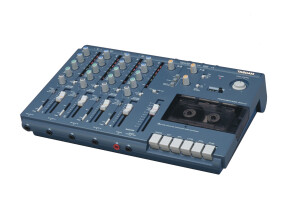
    This is a cassette based (1/8") 4 track recorder that records on high bias, type II cassettes in a single direction. It has dbx type II noise reduction, but on my used machine this had drifted, so recordings sounded better without it engaged. dbx on track 4 can be disengaged separately for timecode purposes. There is a pitch wheel that allows for 15% plus or minus speed change, putting the wheel to the maximum speed will cut down on some of the tape hiss. There are four main channels which correspond to the four tracks. There are faders for these channels along with high and low eq knobs and pan controls. There are two stereo channels, 5-6 and 7-8 that can be used for effects routing or as auxiliary inputs. These channels only have volume knobs without an other control. Inputs are all 1/4" and RCA. All four tracks can be recorded onto simultaneously. There is an analog tape counter with engageable zero return. There are no facilities for automated punch ins, but there is an input for a punch in pedal. This machine is much more limited than its big brother the 424 and recordings are not as high quality as that machine. By comparison, this machine's recordings sound like the quality of the 488, which is an 8 track cassette Portastudio. Both of those machines (and the 464 as well) have more features in terms of punch in and digital control of the transport. But, this machine will function well as an idea sketchpad, for someone who insists on recording on cassette tape, or for someone who needs a more mobile solution than any of the above listed multitrack recorders. I purchased this for my classroom for the students to make some basic recordings. It has done a decent job in that capacity, but I soon replaced it with a 788, which with its MIDI capabilities was better suited to our purposes.

  • spiritfingers's review

    I have used this Tascam cassette 4 track for over 4 years now. These machines are pretty out dated but I enjoy the simplicity of recording onto cassette tapes. You can buy cassettes at many stores making it easier than memory cards. and you are recording analog! I also use the machine to make mix tapes so I can listen to them in my car. So many different uses for such a versatile recorder. I enjoy the mutitracking and simple equalizer controls. I have no complaints with the machine. It fits the easy 4-track recording I want. Perfect to record a simple demo for a new song or to record that real tape sound. George Harrison said 'I like a little bit of tape hiss' and don't we all. There are micrphone XLR inputs as well as guitar cord 1/4'' cords for easy connection. Also has main stereo outs and headphone jack.The recorder only has two inputs between XLR and ¼” so only two track simultaneous recording can happen. Each input has a gain level to keep the tracks from peaking out. Each input also has 3 equalization controls, low middle and high, and left right panning controls. Recordable cassette tapes can be bought that have normally 45 minutes of recording time on them. Any cassette used can only be used one sided – remember – otherwise you will record backwards over everything you have already recorded! Recording on tape can be tricky but very rewarding. I bought my model used for 50 US dollars at a trade show. A rare find that was between other outdated tape recorders. 50 US dollars was a very generous price because if you want to buy a new 4-track cassette recorder it would run at least 150-200 US dollars. I love this cassette recorder and wouldn't trade it for an other one.

  • « Very good recorder, but the current market price is insane... »

    Two years of use on my end. I have to say it was a great find—not exactly cheap, but prices were still reasonable back then. Easy to use: The manual is clear, straightforward, and no-frills. Dual purpose: I use it as both a mini mixing desk and to record audio for my YouTube videos. Maintenance: Simple upkeep, a real advantage for a vintage unit. All in all, it’s a reliable and practical tool that fits perfectly into my creative setup. The effects loop is top-notch. I’d love to compare it to equivalent Tascam models—hopefully soon.

  • « Tascam MK 424 III Recorder »

    I purchased this unit from Musicians Friend (great company by the way)for $329.00. I am new to the recording scene, and I wanted something simple to use, that would give me some nice demo type recordings. The manual is fairly well written. The over all operation of the unit is pretty easy. The unit itself seems a little weak. It took a little time to understand how the unit works. My first recordings were rough, but the sound quality wasn't what I was expecting. The knobs and sliders feel cheap, and so does the 1/4" inputs. I decided to send the unit back for a refund. Musicians Friend customer service is very good about returns, I'll give them a 10. Tascam units seem to be getting cheaper. I bought this because it was recommended by others who had the MK 424II. Seems the revised MK 424III has had some changes including external power source, and the inputs have been put on the back of the unit intead of on top. The knobs feel very weak as well as the sliders. Tascam has been around along time, and have been a asset to the home recording people. But this unit just didn't satisfy my need. This is my first bad review of a product. I usually take time to read reviews on products before I buy them. I'm not saying this MK 424III is junk. I just feel it could be a little better in quality. This review was originally published on http://www.musicgearreview.com

  • « Tascam MF-P01 Portastudio »

    I was looking for a cheap, easy way to record demos of my original songs for my producer, so he would have an idea of the sound I was looking for before we went into the studio to record. I found the Tascam MF-P01 Portastudio on sale at Guitar Center for $99 and thought it was worth a shot. Unfortunately, it wasn't. The old saying is true, "you get what you pay for." The unit is lightweight and very easy-to-use, just like the box promises. It would definitely be easy to pack up and travel with, and is great for getting ideas down so you don't forget what you were thinking when you wrote a song. And it's easy to create a final mix when you're ready... but not something that I'd want to play for anyone else. I've used other recording equipment before, both professional and amateur, and I know what kind of sound quality I can get from my equipment. Unfortunately, what goes into the MF-P01 is not what comes out of it. At first, I thought the problem was with the tape I was using. It was brand new, but it was a 90-minute tape, and the manual recommends using only 60-minute tapes. A 60-minute tape did improve the sound quality, but everything on the tape still sounded very tinny, with no low-end, and a bit out-of-phase. After many tries, with many tapes, and many different settings, I could not get the same sound on tape that was coming out of my monitors and headphones. Like I said, the unit is very lightweight, and travels well. It's solid, and isn't going to fall apart with normal use, but I certainly wouldn't recommend dropping it. It's weight (or lack thereof) and plastic construction makes it seem a bit fragile, but it's designed to be portable. All in all, I would not recommend this unit. If you only want to keep your ideas together for yourself, then the MF-P01 might be for you, but if you plan on letting anyone else hear your recordings, spend a little extra money and get something better. This review was originally published on http://www.musicgearreview.com

  • « Tascam Porta 02 MKII Porta Studio »

    I got this off of musicians friend for $100 bucks. I got it this cheap because it was a refurb. Even though it was a refurb, it was like new when I got it. I got it becouse I wanted something to record on and this is the best and cheapest thing I could find. I like how simple it is to use. All you pretty much need to know is how to plug in a guitar and you can use this. Another good thing about it is you can use it to hook up two guitars in to one amp. Kind of like a mixer, kind of not. Like all other reviews about this product, people will say they wish it had more tracks. There's a way around that, though. All you have to do is record all 4 track, then transfer it to another tape. Then you play what's on that tape on to just one track. then you have 3 more tracks to work with. One thing that I don't like is you have to convert it from a type two tape to a regular tape, but that's not that big of a deal. From what I can tell it is set up pretty well. I have had nothing go wrong with mine. As I said before, it is a refurb, but that hasn't taken away from it. It's not a prfessional recorder or anything, but for it's class, it's a really good value. I would strongly suggest buying this if you are looking to get in to recording but don't have a lot of money. I give it a 5. This review was originally published on http://www.musicgearreview.com

  • « Fostex X-12 »

    I got this unit for $149 some time ago from Musician's Friend. I was looking for an economical 4-track that was simple to use, but with a brand name I could trust. The unit is very convenient. It's small enough to fit in your guitar case, but has enough capabilities to record some pretty decent stuff. Track level, tone and panning controls are great. I seem to get some pretty serious distortion while recording each track, making the pre-existing tracks difficult to hear. This problem only occurs while recording, the playback is pretty clean. I've had no construction or quality problems with this unit, and I've had it for nearly 2 years. Good little unit for the money. I would suggest spending a couple extra dollars for a higher-end model, but again...pretty good buy. This review was originally published on http://www.musicgearreview.com

  • « Tascam Model 414 Portastudio MKII »

    I purchased the 414 mkII portastudio with cash at Wrays house of music in Lemoyne Pa. to record my personal guitar music and graduate to burning CD's on my newly procured computer. Purchase price I believe was $249. I enjoy this unit thoroughly because it allows me to record rythym and play along as well as record lead and bass licks with the ability to start over and over until I reach the desired effects. With this ability I also can practice with accompanyment if there are no friends around to jam with. The practice is vital to any musician to explore different avenues and to hone their skills. The Unit can be jacked in directly without the need for an amp, or preamped with your equipment, while implementing effects from other accessories,ie. effects pedals. I have not begun to explore the possibilities acheivable with this unit mostly due to the lack of experience on my part with electronic equipment, but the manufacturers instuction booklet explains many of the features and operations possible in detail in a language even someone as inexperienced as myself can understand. It is a very good starter tool for someone who wishes to record at a beginner level with professional results. The sound reproduced is a quality recording. The ability to transfer the recordings to another medium such as a CD or cassettes is a plus for listening and sharing my music with friends and family. I will probably in the future have a lot more to say about this unit since I have only begun to explore it's process. I have nothing bad to say about this unit except that it picks up every bad note I hit, but on the other hand it is capable of dubbing over so I can make mistakes it allows me to correct them. The constuction and quality both seem to be top notch, it is a very portable unit and seems to hold up to every day bumps and bruises. I have yet to drop it accidently or damage it in anyway, time will tell how the recording heads hold up, but so far I am pleased with it's durability. In summary I would recomend this unit to anyone who desires to do some personal recording as well as group recordings. It can handle multiple instruments at the same time. Garage bands will have a ball with this unit. This review was originally published on http://www.musicgearreview.com

  • « Yamaha MT4X 4 Track Analog Recording Unit »

    I bought this yamaha four track analog recording unit in 1998 in a small but cozy music store in johnson city tn . A happy town that encourages heavy metal and bluegrass and celtic viking songs. The recording unit was on sale possibly because yamaha intended to discontinue the model or possibly perhaps it could be that because of the growing popularity of digital recording units it was a mere 350 dollars retail and new. My yamaha unit is black and shiny and has knobs and little twirly things that go round and round like the nobbins on a jukebox and flashing lights that help define the increments of sound volume and keep me from passing out when the feedback from the microphone comes in. It is lightweight and portable and has a rat tail for regular 110 volt plugs and doesn't need a converter or anything. It has four tracks all still working and performing after 2 years of steady workhorse performance My little yamaha four track recording unit makes me mad sometimes because you always have to have the black knobs set just so or you affect bleed over problems from the other three tracks and you have to push the buttons on it. I push and push and push but sometimes I can't remember to turn the knobs around. I wish my unit had RCA plug ins available as well as the standard quarter inch plug ins...then i could stuff in noises from cdr and cd sources and off tape or cassette without having to go buy a rank little adapter. It is a straightforward shiny black and white little rectangle with a nice upwardly sloping foreground top area for convenient veiwing whilst one is engaged in the recording process, LED lights are very good and meters are shiny and fine...knobs are for twistin',and also for turnin', and pots are available for setting and fine tuning the recorded sounds both before and after and during the recording phase of the entire process. This is a very good little workhorse of an analog cassette fopur track tape recorder that is or at least was available at a low, low inexpensive price and is a good quality unit for home or garage band type recordings on cassette tape. I like this unit ands use it a lot but I would be hesitant to buy one used... This review was originally published on http://www.musicgearreview.com

  • « Fostex X-24 Multi-Track Recorder »

    I bought my X-24 online at Musician's Friend and I paid 200 dollars. I was looking for something that I could use to record the millions of little licks and riffs that I come up with on guitar and bass. I also wanted something that would allow me to record full songs if I wanted to. The X-24 is really straight-forward. Plug it in, jack in, hit the track number, and hit record. I like the practice feature and the bounce feature makes it a little more versatile. The X-24 has two XLR inputs which is great when recording bass and guitar at once or guitar and vocal, etc...It also has a stereo output and balance pans to allow for some fun studio-like mixing. If you use the right tape this machine can be surprisingly high-quality. The number one gripe I have about the X-24 is that the volume sliders are too coarse in that they don't allow for a really fine tweak. For example, if the guitars need to be turned down just a TINY bit it is difficult to pull off. I also don't like the XLR input level knobs. They have tiny pictures on them that seem to indicate that they should be turned to a certain level for guitar and another level for vocals, but i've found that if it isn't always turned to the vocals setting then it seems too soft. This machine is a typical plastic unit and though sturdy, it is somewhat fragile. I would say that the X-24 is reliable yet breakable! Great unit for the beginner, as long as you have some idea of how these types of machines work and what they can and can't do. Also be aware of analog's advantages and disadvantages. If you are looking for a cheap way of saving some of your best ideas or coming up with new ones, then definitely give this a shot...just make sure to buy a mic as well. This review was originally published on http://www.musicgearreview.com

  • « vintage, we have come along way since analog »

    The Fostex 280 is designed to record 8 tracks onto a standard cassette. It features a built in mixer with high and low EQ on each channel, XLR inputs on channels 1 and 2, and 1/4” inputs for the other inputs. It can record on up to 4 tracks simultaneously. The manual is very easy to follow, and although it is not as easy to use as a standard 4 track Fostex, like the Tascam 424, it is very easy to master after running through the operations a few times. The 488 has a pitch wheel to change the speed/pitch, two computer controlled memory locations with auto-punch in, a return to zero locate button, two loops for effect and auxiliary, an option to record a SMPTE track on track 8, and dbx Type II noise reduction. For the best recordings, high quality Type II cassettes 60 minutes or shorter in length should be used. This was my first 8 track recorder. It is a pretty solid machine for a cassette Fostex, and sonically is similar to the Tascam 488 mkII, but lacks some of the mkII's features. Some of the missing features that would be nice to have are additional XLR inputs, the ability to record on more than 4 tracks simultaneously, phantom power, and more EQ options. Most of these features made it into mkII and the higher-end 688. However, for a solo recordist with a small project studio the Tascam 488 (mkI) is a great machine, capable of producing some excellent demos, particularly if the user is able to bouncing tracks. I kept mine for about a year or two, eventually replacing it with a Tascam 388. On occasion I miss having the ability to to truck around such a small, easy to use 8 track recorder that is capable of producing decent analog recordings while being able to stay “hands-on” with EQ (not having to drag through the menus of a modern 8 track DAW), but I'm again to get along without it and have no plans to replace it. That being said, this is an excellent first machine, and I would personally recommend starting with an 8 track cassette Fostex over a 4 track Fostex as the difference in sound quality is negligible, if one is going to make the foray into cassette multitrack recording.

  • « Strong cassette based Portastudio »

    The Tascam 464 is a Portastudio designed to record 4 tracks onto a standard cassette. It features a built in mixer with three bands of EQ on each channel, XLR inputs on channels 1-4, and 1/4" inputs for the other inputs. It can record on up to 4 tracks simultaneously. The manual is very easy to follow, it is very easy to master after running through the operations a few times. The 464 has a pitch wheel to change the speed/pitch, two computer controlled memory locations with auto-punch in, a return to zero locate button, two loops for effect and auxiliary, an option to record a SMPTE track on track 4, and dbx Type II noise reduction. Two speed modes can be engaged, low (1.875 ips) and high (3.75 ips). For the best recordings, high quality Type II cassettes 60 minutes or shorter in length should be used at high speed. Decent sounding recordings can be made without the dbx, the use of which will be subjective to the recordist. If you want to try and eliminate hiss without engaging the dbx, recording at high speed with the pitch wheel all the way to maximum will help, but will cut down on recording time. At high speed, a 60 minute tape will provide approximately 15 minutes of recording time. The 464 is a pretty solid machine for a cassette Portastudio. I've never owned a 424, but I have used one on many occasions, and in spite of the difference in appearance, the functions and sound quality seem identical to me. For a solo recordist with a small project studio the Tascam 464 is a great machine, capable of producing some excellent demos across simple, 4 track recordings. As such, this would be a suitable machine for rap/hip-hop and singer songwriter/folk music with limited instrumentation. This is an excellent first machine, so long as you don't mind be limited to working with only 4 tracks.

Categories that may interest you