Log in
EN
FR

Analog recorders

413 products found

Categories
Filter
Sort by
Evaluation
  • Reviewed or not
  • Editor’s award
  • Reviewed by Audiofanzine
Availability
  • Available or not
  • Sold new or used
  • Sold new
  • Sold used
Must-have products
  • All products
  • Flagship products
  • Best rated products
  • Hot products
  • Popular products
Price
  • Freeware
€
Clear
Sort by
  • Popularity
  • User ratings
  • Price - low to high
  • Price - high to low
  • Used price, increasing
  • Used price, decreasing
  • Name (from A to Z)
  • Name (from Z to A)
  • Added on
Choose a category
Selected category: Analog recorders
Sort results
  • Popularity
  • User ratings
  • Price - low to high
  • Price - high to low
  • Used price, increasing
  • Used price, decreasing
  • Name (from A to Z)
  • Name (from Z to A)
  • Added on

The best Analog recorders reviews

The reviews Audiofanzine members found the most helpful.
  • « Great first reel to reel multitrack recorder »

    The Tascam 388 (also known as the Studio 8) is a 1/4" 8 track recorder with a built in mixer that was released in 1985. It is very similar in function to Tascam's cassette based Portastudio, although it never received that same designation. The mixer section sports 8 channels, 2 groups, an auxiliary loop, an effect loop, and "access" on each channel. The access runs just like a TRS insert, but without the need to run a TRS cable. Each channel has three band semi-parametric EQ. The machine can be run with or without dbx Type I, which is selectable by banks of four tracks (tracks 1-4, and then tracks 5-8). Track 8's dbx can be disabled for the purposes of SMPTE or other timecode encoding. All 8 tracks can be recorded on simultaneously. The tape machine section is designed to use 7" reels at 7.5 ips. The tape should be of 1 mm thickness, but in a bind 1.5 mm thickness will work, too. The best tape still being produced for this machine is RMGI LPR 35. If you can find Quantegy 407 or 457 these will also work, and in a bind Quantegy 406 or 456 will work in spite of the additional thickness, shorter running time, and increased wear on the heads and transport. Considering the relatively slow recording speed, this machine does a tremendous job of recording with the dbx noise reduction engaged. Without the dbx, recordings are hissy and noisy due to the narrow track width. This machine isn't really designed to produce tape saturation, which analog recorders are so renowned for, but it will produce solid sounding recordings. The machine weighs around 100 lbs., so it is not very portable. It should be moved as infrequently as possible and should be located on a table or stand sturdy enough to support its weight. When being moved, make sure you have a friend to assist you due to its awkward size and weight. In the five or so years that I owned one, the only issue I had was with the capstan belt. This is a relatively easy repair as their is documentation available from Tape Op online that demonstrates how to replace the belt and is a commonly needed fix. If I had a wish list for this machine, it would be the ability to record on 10-12 tracks. For the type of rock 'n' roll music I played, recording onto 8 tracks was at times limiting, but it forced us to record creatively, which included squeezing multiple instruments onto a single track or recording dueling guitar solos onto one track (literally two mics on two separate amps to record while switching back and forth, then on mixdown using the pan knob to recreate the feel of two dedicated guitar solo tracks). In addition, at least two extra channels would have been appreciated, as is customary on the higher tiered cassette Portastudios, but I do recognize this would have made the 388 even wider than it already is. For the money, this is probably the best "bang for the buck" for a starter analog studio as it comes with a decent mixer and could easily be interfaced with a DAW for additional tracks using a JL Cooper or other SMPTE to MTC device. If you are interested in this machine, make sure to acquire it locally, because shipping these is a recipe for disaster (believe me, I know). If you can get one in decent shape, a good price would be between $400-$600.

  • « Great semi-pro recorder »

    The Tascam MS-16 is a 16 track multitrack recorder on 1" tape. It is generally set up for Quantegy 456, which is bias compatible with RMGI (Emtec) SM 911, which is still being produced, unliked the 456. The machine can also be rebiased and set for other higher output tapes. Mine is calibrated for Quantegy GP9, meaning that at such a high recording level there is very little tape hiss. Optionally, dbx Type I noise reduction can be used, but that is an added feature. On the subject of additional features, there are many, including two different types of remote controls, a custom Tascam designed rack, and synchronization equipment. I have synchronized the MS-16 but only as master. I've read about recordists who have slaved the MS-16, but I have no experience in this regard. Most of the machines are set up at 15 ips, although some machines have been modified or originally factory set for 30 ips. I own the 15 ips version. The machine is across two relatively heavy components, connected by a data cable: there is a the transport, which is similar in size to an MSR-24, and a box that contains the computer cards for each of its 16 tracks. These two components can be connected, if placed on a table, or separated if placed within the Tascam MS-16 rack. A 1" 16 track is the equivalent of a 2" 32, which doesn't actually exist, but isn't much narrower than the tape width of a 2" 24 track, which is a standard of professional recording studios. The MS-16 is digitally controlled, so automated punch-ins are possible, as well as return to zero. It also has three heads, which allows for monitoring from tape, which can be really helpful when dialing in just enough mixer gain to achieve the right amount of tape compression for the snare drum and toms. This machine is capable of producing some excellent sounding recordings. I know there are a lot of people that will say it can't come close to achieving the recordings made on a 2" Studer, and while there is some truth to this, that doesn't mean that this machine is a powerful tool for a knowledgeable recordist. The recordings it makes are very smooth. I previously owned a TSR-8 and an MSR-16 and think this is a much better sounding recorder. I know in terms of track width and tape speed the TSR-8 is identical to the MS-16, but that's just what my ears tell me. It is a relatively simple machine to use, but when it comes to overdubbing, do to the three head design, it is slightly more complicated than using a TSR-8 or an MSR-16, but still not difficult to figure out. In terms of quality control, the biggest issue with this machine is the computer cards. Sometimes cards may stop working, in which case reseating the card usually will get things running again. As a precaution, I would recommend anyone who acquires one of these machines to also track down some extra computer cards in case something goes wrong, so as to not interrupt the recording process. It is direct drive, meaning there aren't any issues with a capstan belt. I really like this machine, which is now my main recorder alongside an IZ Corporation RADAR V. I don't anticipate getting another multitrack analog recorder in the near future, and I hope this machine will continue to be in service for years to come.

  • « Good, effective, simple-yet-versatile fourtrack recorder »

    I picked up on of these relatively cheap. The competition from Tascam fetches much higher prices even in 2020 – undeservedly so, I think: This little Yamaha appears to be as good as the competition! I want to use this recorder for two and a half purposes: – simple quick recordings of ideas that vanish before I have booted up the DAW – audio manipulation such as tape saturation, reverse playback effects, etc. – for use as an auxiliary 6-channel submixer, if needed The Yamaha does all this and more – I am discovering more tricks and uses all the time. Check out Youtube and similar sites for inspiration – these things can serve as: – super-complex "oscillators" for modular synthesis – echo effects – tape saturation effects – musical instrument (drones, playback tracks, etc.) I used to have a similar recorder almost 20 years ago, by Tascam (but don't remember the model name). It was directly comparable to this machine, I would say. Maybe the Yamaha feels a bit "lighter", for lack of a better word, but the machine seems very well put together. Yamaha gear has *never* given me any trouble, and I don't expect this little recorder will, either. The pros of this product are: – highly intuitive, – quick – "good"-sounding recordings (if you like tape sound) – more uses than I ever imagined The cons of this product are: – don't expect a limitless (but also soulless) DAW!

  • « A beautiful device »

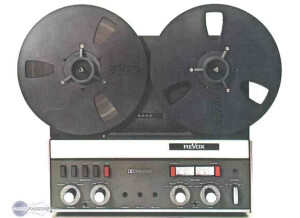
    I originally got this device for a musician’s masterclass. Then the years passed and I made myself a small studio and took this grandma out – I’d even forgotten I had it… after a quick restoration, it is now in perfect working state! So far, i have only used it to record vocals through a Studer 963. Its sound is unbelievable – very precise, detailed, round, warm, all you love from such antique analog beasts. These devices were built like tanks! It provides an incredible headroom, it’s almost impossible to have it distort. Building quality is FLAWLESS!!!! The device is very easy to understand as it’s very well conceived and clear. I’m far from being a specialist, but I’ve had no problem reparing it myself (a belt and a fuse were to be replaced – not so much as you see). It disassemble and reassemble easily, just like playing Lego. As for the electronics, tuning and calibration, I still went to a specialist but watching what he did I realized it was quite easy, provided you have access to the equipment required for it (an oscilloscope and generator). I love this device and rejoice at the idea of using it for mastering for instance. So far, I found it no cons, I’ll edit if need be in the future. When you consider all its qualities and the price at which it gets sold, don’t hesitate and buy one!! They’re quite little known (compared with Studer/Revox), hence very affordable!

  • « fostex 280 »

    Hi about the fostex 280,Ive owned one for about 21 years now, and its still in great working order,it has a very nice warm sound, and has been very reliable for me, and still to this day, i also just got lucky and bought brand new fostex 380-s,which of course has Dolby s reduction very nice sound with this noise reduction, in fact the fostex 380-s is the only 4 track recorder with Dolby s no one other than reel to reel machine's had this.I wanted to make a comment about the other review ,that talks about this machine, i'm not sure who wrote about the fostex 280, but there's many error's about what they wrote,First off there's only 4 tracks,and was never 8 tracks not sure where all there info was coming from, it seems most of what they wrote is completely wrong about this machine sorry to say.You can find a few on eBay once in a while, and the 380-s, so if your interested ,there in my opinion a great machine.

  • « classic »

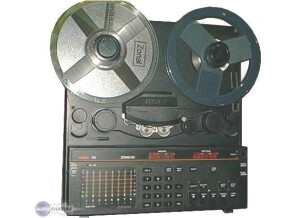
    The Fostex Model 80 is a two track reel to reel recorder than prints to 1/4" tape on 7" (or smaller) reels in one direction. This means it will have the same amount of track width as a 2" 16 track recorder. It can be run at 7.5 or 15 ips and was designed to record on 1 mm thick, +3 tape such as Quantegy 407. Since Quantegy no longer produces tape, it can use RMGI (Emtec) LPR 35, which is the equivalent of Quantegy 457, a +6 tape. Although slightly underbiased for this, using this tape will produce more high end. The 80 is a little workhorse of a machine and is intended for mixdown. It does have two mic pre-amps on each of its two channels via 1/4" inputs, so it could be used for location recording without a mixer, although there is no onboard EQ or speaker, just a stereo headphone out via a 1/4" jack and RCA outs. The recording quality is pretty good, but this machine is entirely mechanical, unlike it's big brother the 32. This means that there are no memory points, no real return to zero facilities, and no way to really do any editing of the tape. This machine features three heads (erase, record, and play) meaning that the user can monitor from the tape a split second after a recording is being made. This is especially useful during mixdown because what you're hearing is literally what you're going to get as an end result. It could also be used for slap tape delay in conjunction with another recorder. In the time I owned this machine I was very happy with it. The only issue I ever had was the capstan belt was too worn. This will be apparent by playback slowing down or even not working at all; it will not affect rewind and fast-forward.

  • « Great narrow track machine »

    The Tascam MSR-16 is a 16 track multitrack recorder that uses 1/2" tape. It is set up for 1.5 mm thick, +6 tape, and in particular Quantegy 456. Although Quantegy 456 is no longer produced, RMGI (Emtec, and previously BASF, and previous to that AGFA) SM 911 will work just fine. Also, RMGI SM 468 can be used as well. My two MSR-16's had dbx Type I noise reduction which is mandatory to producing clear, hiss free recordings. Some claim that the MSR-16s, which came with Dolby SR noise reduction is superior to the dbx, but I have not used any of those machines. The dbx can be switched on and off on tracks 1-8 and 9-16, and can be outright disabled on track 16 solely, for the purposes of SMPTE and MTC striping. There is also an Accessory 2 jack to use a device such as the Tascam MIDIizer to synchronize another MSR-16, the MSR-24, the TSR-8, or the 238 or 688. In addition, there is a remote control available for this machine that uses a standard serial cable. Although I can't remember which cable it uses exactly, a normal male to female extender cable with the same number of pins can be used to place the remote control in a separate room and will operate just fine. This standard cable can be ordered through the Amazon marketplace, which is where I acquired mine. Down to brass tacks: The MSR-16 makes excellent quality recordings. Personally, I think the recordings are as good as the ones I made on the TSR-8 I owned for a short time, but with the benefit of an additional 8 tracks. This is a powerful machine, particularly when combined with a DAW for added tracks. In the time I owned two (one at my band's studio, the other in my home studio) I was able to easily take tapes recorded on one machine and bring them for playback, overdubs, and mixdowns on the other machine with ease. The recordings are crisp and clear, but if you want even crisper recordings uses higher bias tape (for which the machine is underbiased) such as RMGI SM 900. This may put more wear on the machine, but I was satisfied with the results this achieved. This is a narrow track machine, so don't expect to be able to get a lot of tape compression out of it, especially since the dbx is pretty much mandatory to use and compensates for it anyway. If you ever need to bounce tracks it will do it seemlessly, and I'll think you'll be impressed with the results. During the one time I bounced a track, I bounced it three times, adding more and more effect each time, and the loss of quality, due in part to the excellent onboard dbx, was indiscernible, particularly within the mix. I really enjoyed this machine, but after a few years opted for the larger track width of the Tascam MS-16. I still wish I had it around, but it was time to clear some space.

  • « Useful 8 Track Recorder »

    The Tascam TSR-8 is an eight multitrack recorder that records on 1/2" tape at 15 ips. It uses 1.5 mm thick tape and is set up for tape like Quantegy 456. Although Quantegy 456 is no longer being produced, it is equivalent to RMGI (Emtec) SM 911. RMGI SM 468 will also work on it just fine. This recorder features dbx Type I noise reduction, and although not necessary for recording on a tape machine with this size track width, it is very useful. The recorder features RCA ins and outs for each track and the ability to connect a Tascam MIDIizer, a device that can synchronize recorders through the Accessory 2 jack. The tape machines that can be synchronized include the MSR-15, MSR-24, the 238, and the 688. There is a remote control available for controlling the tape transport, recording and playback of each track, and setting up punch-in recordings. This machine makes good sounding recordings, but I had already owned a Tascam MSR-16. I thought that with approximately twice the track width per track as the 1/2" 16 track MSR-16 that my recordings would sound much better. They didn't sound really any different when using the noise reduction. The TSR can record without noise reduction, whereas the MSR is too noisy to do this. I was surprised that there really was no perceivable difference in recording quality between the two machines. For me, having the additional 8 tracks is a no brainer since the recordings sound the same. In addition, the hardware (rollers, etc.) are higher quality on the MSR-16, in spite of both machines using the same type of 1/2" tape. The MSR-16 also has the ability to run at 7.5 ips, a feature that would have been nice on the TSR. It also would have been nice to have had three heads on the TSR instead of only two, but I'm sure that would have increased the retail cost at the time it was being manufactured and sold. But, all in all, it is a capable 8 track recorder, and if someone wanted to produce recordings that used 8 or fewer tracks without any bounces, this would be a great machine to use.

  • « Good entry-level cassette Portastudio »

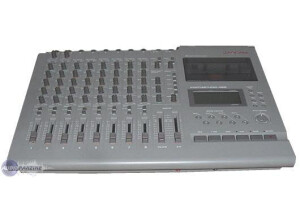
    The Tascam 488 is a Portastudio designed to record 8 tracks onto a standard cassette. It features a built in mixer with high and low EQ on each channel, XLR inputs on channels 1 and 2, and 1/4” inputs for the other inputs. It can record on up to 4 tracks simultaneously. The manual is very easy to follow, and although it is not as easy to use as a standard 4 track Portastudio, like the Tascam 424, it is very easy to master after running through the operations a few times. The 488 has a pitch wheel to change the speed/pitch, two computer controlled memory locations with auto-punch in, a return to zero locate button, two loops for effect and auxiliary, an option to record a SMPTE track on track 8, and dbx Type II noise reduction. For the best recordings, high quality Type II cassettes 60 minutes or shorter in length should be used. This was my first 8 track recorder. It is a pretty solid machine for a cassette Portastudio, and sonically is similar to the Tascam 488 mkII, but lacks some of the mkII's features. Some of the missing features that would be nice to have are additional XLR inputs, the ability to record on more than 4 tracks simultaneously, phantom power, and more EQ options. Most of these features made it into mkII and the higher-end 688. However, for a solo recordist with a small project studio the Tascam 488 (mkI) is a great machine, capable of producing some excellent demos, particularly if the user is able to bouncing tracks. I kept mine for about a year or two, eventually replacing it with a Tascam 388. On occasion I miss having the ability to to truck around such a small, easy to use 8 track recorder that is capable of producing decent analog recordings while being able to stay “hands-on” with EQ (not having to drag through the menus of a modern 8 track DAW), but I'm again to get along without it and have no plans to replace it. That being said, this is an excellent first machine, and I would personally recommend starting with an 8 track cassette Portastudio over a 4 track Portastudio as the difference in sound quality is negligible, if one is going to make the foray into cassette multitrack recording.

  • moosers's review

    The MCI JH24 is a 24 channel analog tape machine. The studio I work at has one of these in our main room, although it only gets used maybe about once a month. I recently did another session with it after only having used it a handful of times. Let me start by saying that tape really does sound awesome! While not necessary for everything, I like to use it to at least record drums and bass when feasible. Of course tracking to tape will add length to your sessions, but that's for another day. I'm not an expert at all when it comes to tape machines, as the JH24 is really the only one that I've used to do my own sessions on. However, the machine is still very stable and works great after years of use. I don't know exactly what years the JH24 was made, nor what year the one we've got is from. The JH24 we've got does have a remote control, the AutoLocater III, which is necessary to have for us so I can run both the tape machine and Pro Tools (for monitoring in Pro Tools as well). The tapes we use with the MCI JH24 are Quantegy GP9 2" tapes, which we've got a few of on hand. I really love the way this tape machine sounds, but it's also the one I'm most familiar with and have done the most work on my own with. I've got experience with other machines as well, but not where I'm doing the bulk of operations. I really don't know what it would cost or how hard it would be to get a JH24, I'm just glad we've got one for use at the studio. Tracking to tape is a really fun process and you'll definitely notice a difference in timbre when compared to stuff not done on tape. The JH24 seems to me to be as good as any 24 track tape machine that's still around...

  • moosers's review

    The Yamaha MT4X is an old school, four track cassette recording device. Of course recorders like this are quite outdated at this point, but there's still a little bit of worth in this and even though they aren't highly sought after, there's still a number of these floating around. I'm not sure the year on the MT4X, but a good friend of mine still has one, although we haven't used it together in years. I did some of my earliest recordings a number of years ago with him on this tape recorder, really just to get down ideas. It wasn't like we sought this out as his older brother had one and we ended up using it just because it was around. It's got all the things that you'd expect with a four track cassette recorder, which by modern standards honestly isn't much. Each of the four channels has built in EQ and gain control, as well as their own fader. There's also a master channel. As far as connections go, each channel has it's own 1/4" input, although there's no XLR jacks or phantom power built in. For outputs it's got RCA jacks for monitor outs, stereo outs, and four tape outs. There are also auxiliary send and returns in the form of 1/4" jacks. You've really just got the bare minimum here, but what else do you want when you're recording to a cassette? The price of these shouldn't be very much these days, as I do think you're a bit crazy if you go this route rather than setting up your own DAW, but in addition there's something to be said for it. I don't know that I'd necessarily recommend the MT4X over other 4 track cassette models, but if you're looking for one and come across this one at a cheap price, there's no reason why it won't work just as well for you as most others out there...

  • moosers's review

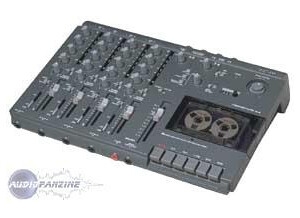
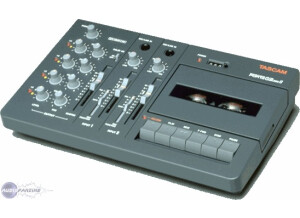
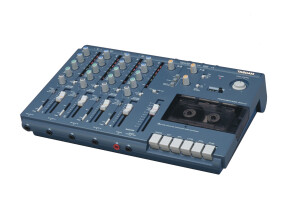
    The Tascam Portastudio 424 is a cassette based four track recorder and mixer. Of course this is an older piece of technology, so I will review the unit based on what it is capable of doing, and not fault it for being a product of its time. If you're looking to get into recording music, I would definitely recommend looking into a computer based system rather than this one, but if you're looking for four track tape recorder like this one, please continue reading. Let me start off by saying that this is a popular four track recorder as far as these go, and for a good reason. For a compact mixer, its got a lot of different features and options including equalization, dbx noise reduction, and some nice faders. The interface is very user friendly as everything is easily located. Even if you don't have any prior experience with recording or machines like this, I think you should be able to catch on pretty quickly. The quality of the recordings you will get as a whole will probably be nothing better than average since you are recording to a tape medium, but at the same time it has a cool quality to it that is hard to replicate without using an actual tape cassette recorder. The price of the Portastudios 424 has fallen significantly, so if you're looking to play around with a four track tape recorder that is put together well, this is a great time to buy this one. Tascam is one of the best at their game, especially with products made around this time period. These are readily available on eBay, so if you're interested in picking one up you'll be able to find one no problem. If you're going to go the four track tape route, either for your main set up or for playing around with on the side, the Tascam Portastudio 424 is the model I would definitely recommend.