Log in
EN
FR

AKG Condenser Microphones

88 products found

Categories
Series
Filter
Sort by
AKG
Evaluation
  • Reviewed or not
  • Editor’s award
  • Reviewed by Audiofanzine
Availability
  • Available or not
  • Sold new or used
  • Sold new
  • Sold used
Must-have products
  • All products
  • Flagship products
  • Best rated products
  • Hot products
  • Popular products
Price
  • Freeware
  • Low-cost (< $250)
  • Mid-range ($250 - $750)
  • Premium (> $750)
€
Clear
Sort by
  • Popularity
  • User ratings
  • Price - low to high
  • Price - high to low
  • Used price, increasing
  • Used price, decreasing
  • Name (from A to Z)
  • Name (from Z to A)
  • Added on
Choose a category
Selected category: Condenser Microphones
Sort results
  • Popularity
  • User ratings
  • Price - low to high
  • Price - high to low
  • Used price, increasing
  • Used price, decreasing
  • Name (from A to Z)
  • Name (from Z to A)
  • Added on
Filter results 88 results found
Brands
Evaluation
Availability
Must-have products
Price
  • Freeware
  • Low-cost (< $250)
  • Mid-range ($250 - $750)
  • Premium (> $750)
Show results

The best AKG Condenser Microphones reviews

The reviews Audiofanzine members found the most helpful.
  • « great sound »

    This mic provides a top-notch frequency response curve and great sensitivity. It really captures your original source and makes it come alive. This mic is best used for quieter ‘acoustic’ sources, e.g. acoustic guitar, voice, strings and wind instruments. It will capture all the details and nuances of these sources. The user manual contains some good guidelines for using the mic with a lot of different sources. This mic also features some sophisticated electronics. You can choose from nine different pick-up patterns, four different attenuation settings, and four different bass-cut settings. OVERALL OPINION The carrying case, pop filter, and shock-mount are all excellent quality. It’s so nice to buy a piece of equipment and get some really high quality useful accessories. If you’re doing voice recording, definitely use the pop filter. They also test every mic and provide you with the actual frequency response of YOUR individual mic! If you are doing stereo recording and you want the best results, you can even buy a ‘matched pair’. They compare the frequency responses and put two mics in the same case that have nearly identical frequency response. If you are looking to mic a guitar amp, you may want to look elsewhere. In fact, I’ve read that you could even damage this mic if it is too close to a loud amp. The sound pressure from a loud amp could make the diaphragm less sensitive. An SM-57 or other dynamic mic would be a better choice for mic’ing an amp. This mic is not cheap, but you get what you pay for. This is a top-quality mic used by professionals all over the world. It is the current evolution of a design going back decades. If you need your sound to be as accurate as possible, this mic is for you. Buy it , its worth every penny.

  • « Reasonably priced Large Diaphragm Condenser »

    This is a large diaphragm condenser microphone. It thus requires a pre-amp with phantom power to operate correctly. It's a large diaphragm condenser, so I haven't had much use for it outside of the studio. I don't know if there really is a practical application for it outside of the studio, except perhaps to mic a piano at a concert hall. It has a cardioid pickup pattern, which makes it somewhat less functional than some of the other mics of this nature that have multiple pickup patterns. However, it is much cheaper than many large diaphragm condensers. OVERALL OPINION I like using this mic for a lot of different things. I'll use it on vocals at home, and some other uses in the studio. I particularly like using it on pianos, voice (especially spoken word), acoustic guitars (especially ones that aren't too bright), as a room mic (mono, usually) for drums or even guitar cabinets, and even on string sections as a stereo pair with another mic. I find that it has a lot of uses in general. When I compare it to a U87, which I often use as the standard in judging small diaphragm condensers, I have to say it doesn't hold up that well, but that mic is way more expensive, so that's to be expected. It also has two more patterns than the AKG C 3000 B, so that's another thing it has against it. The cardioid pattern of this mic is actually not drastically worse than the cardioid pattern on that mic when I'm using it at home. It takes a really nice pre-amp to "amplify" the difference, if you will. So I'd say this is a great bet for the home studio owner, given the price and quality of it!

  • moosers's review

    The AKG Perception 200 is a discontinued model of a large diaphragm condenser microphone designed for use the recording studio rather than for live shows.<span> </span>The Perception 200 has a standard cardioid polar pick up pattern form.<span> </span>It also does have a good amount of features for a cheaper microphone, as it has both a bass roll off switch and a -10 db pad. OVERALL OPINION I’ve only used the AKG Perception 200 a small amount of times in the last year and a small home studio, but feel that I’ve gotten a pretty good gauge of what the mic is capable of and what it isn’t.<span> </span>I’ve used the mic for a few different purposes, including for recording vocals, and as a room mic for electric guitar.<span> </span>I didn’t put it too far away from the guitar amp, just about three feet to get a bit of wetter signal.<span> </span>I definitely liked it better for the latter application, as I felt that although the mic comes in pretty clearly, it lacked the depth that I would want in a solid vocal microphone.<span> </span>Having said this, the mic will get the job done in a small studio setting, it just isn’t up to par with many other microphones out there for this application, and based on the priced I really wasn’t expecting it to be, and you shouldn’t either.<span> </span>If you take the AKG Perception 200 at face value as a budget condenser microphone, it will definitely take you long way.<span> </span>AKG knows what they are doing when it comes to microphones, as they’ve done it for years and years.<span> </span>If you’re looking to assemble a small home studio or want to add to the collection in a cheap way, definitely see if you can scope out a used AKG Perception 200, as there should be plenty of them out there.

  • moosers's review

    The AKG C 452 EB is a small diaphragm condenser microphone that is very similar to the 451 model. I'm not exactly sure what the differences are, but I do know that they are near identical models. The mic has a cardioid pick up pattern and is a microphone that is best suited for the studio. OVERALL OPINION While I've only used the AKG C 452 EB a small number of times, I've used it enough to know that I enjoy using it to record certain instruments a great deal. I've also used the 451 and they pretty much have the same sound, which is one that is vibrant and great for a number of applications. I've only had the chance to use the 452 EB on acoustic guitar, which is probably the application that this is best suited for. I have used during a live session in the studio and found that it worked great not only in terms of tone, but also for isolating the signal. While I haven't used the 452 in particular for anything else, I know from the 451 that it should work in a variety of situations. AKG is one of the best when it comes to manufacturing mics that sound great and won't break the bank, and the C 452 EB definitely fits in well. While this mic is pretty rare and isn't an easy find, if you can find one I don't think that it will cost all that much. Using the 451 is overall a good gauge to learn more about the 452 EB, as I really think that the two are interchangeable. Besides the 451, I'd compare this to a few of the other AKG mics that look like this one, as they all have a similar sound and price tag. All in all, the AKG C 452 EB is definitely a quality small diaphragm condenser microphone.

  • moosers's review

    The AKG C 418 is a clip on condenser microphone designed for use with drums. It can be used both in the studio or on the stage, but I have only used it in the studio. The clip and the built in XLR wire make it easy to place and set up on drums as well as any other instrument you can clip it on to. The microphone is built well and will definitely last for a long time if you take care of it. OVERALL OPINION I've been using the AKG C 418s for about five or six years, as they were the first microphones I bought to record tom tom drums with. I like them because of how easy they are to place on drums and because I usually get great sounding results with them. While I only use them for drums, they are suitable for any situation where you would need to clip a dynamic microphone on to the instrument. If you buy these mics within the AKG drum pack that comes with the D112, you can get a killer deal in terms of per mic price. In fact, this would be the only way I would recommend buying these mics, because if you buy them on their own they are way to expensive for what you are getting. The mics definitley have a good sound quality and its small size is convenient, but there are better sounding microphones out there for a similar price or cheap, including the Shure SM57 and the Sennhesier 421, which are both better choices in my opinion for recording drums. The C418s are also a great deal if you can get one used as they good for quite cheap on ebay. I wouldn't recommend these for the professional studio environment, as there are an array of mics that sound better, but for the project studio owner that is looking for a good price (used or within the AKG drum pack) and a quick set up, these are definitely worth a try.

  • pdecirce's review

    I will mention the main features of the AKG as gleaned from their own description and will add how it applies to us as users. The main situation you may find yourself using this microphone would be: in-studio room mike, perhaps close-miking a large response instrument like a bass-drum or a cello. It has a prepolarized condenser which gives very flat and ear-like response. Molded for frequency of 30Hz to 20kHz it is very versatile even in a situation where it must record a room, say, of a small orchestra. Properly placed it will perform to a decent professional -- if entry -- level. There is also an excellent bass cut filter of 6 dB/octave below 500 Hz which allows you to essentially flick a switch on the mike and cut different low end frequencies. Say for example you're recording the room of a club and it's super-boomy, well you can use this mike to make a low-end cut, making the difference between a recording that's completely bass-filled or not. There's plenty more technical details to investigate, but essentially this is an excellent room or instrument mike, well-known as the AKG entry level model and quite excellent in sturdiness and performance. Even entry level of an AKG product is high in most home-studio standards. OVERALL OPINION http://www.guygraphics.com/GGPROD-71.html I've had this mike for 3 years and it performs fantastically. The only side of the sound I don't really like is that while many microphones have a 'tonal personality' this one is so flat you may finding yourself only using it as a 'room mike' or a back up mike or a bass drum mike. It wouldn't be first choice for some situations due to the flatness of its response. But it is an excellent 'mirror mike', meaning it would sound very similar next to a pair of ears in a certain spot of a room. Other close models, however, usually wilt at the quality of AKG. I would say it's essentially a top five flat cardioid polar pattern microphone. It being under $200.00 is fantastic, as it also comes with a lined travel case and a shock mount as well. I highly recommend this as an excellent first room mike or live room mike.

  • FP User's review

    It is basically just the mic, no pad switches or anything. It looks nice though. It has a pretty sturdy case. Doesen't feel too cheap. I have dropped it a few times, but nothing more than scrathes and a dent in the windscreen have happened. Still works as well as the day I bought it. And you don't have to worry about breaking it because its only 120 bucks. I'm still carefull with it, of course. Price paid: $120 USD OVERALL OPINION Sounds great. Really makes my mixes come alive. This is the first condensor I have actually used in my studio, and it really makes everything I record with it sound brighter and clearer. For the price, it is great. If it were stolen, I would probably buy another one. It has done so much good for my drums and vocals, I would hate to see it gone! I love it, and I love the price. Originally posted on FutureProducers.com Posted by: moogman ( 7-, 2005)

  • victormelamade's review

    The perception 150 (now called the 170) is AKG's budget small diaphragm condenser mic which definitely seems aimed at the beginning engineer in the home studio. The mic looks fantastic with a shimmery metallic blue coating and a sleek design. It needs phantom power so owners will need to make sure they have preamps that can handle one and you're not just plugging this right into a computer. The mic is a cardioid pattern, and you can't change that. It tends to be very useful to have switchable patterns on small diaphragm condenser mics. People will often use this type of mic for middle to large distance miking, and being able to switch a mic into omni for a bigger sound is very useful in this instance. You will be stuck with cardioid pickup with this mic. It does come with a 20 dB pad which is nice, since this type of mic tends to be very easy to overload, especially if you are miking up a drum set or a really loud guitar amp. AKG does build their mics to be physically solid, so the capsule of this mic is pretty safe in its housing compared to some other companies' designs. OVERALL OPINION The sound quality of this mic should be the most important mic, but I think you can tell that this is where AKG saved their money to be able to sell this mic so cheap. It definitely sounds very thin and metallic. I never recorded anything with this mic without having to boost EQ between 150Hz and 300Hz to put a little body back into the mic. It's my opinion that you shouldn't have to automatically correct fundamental flaws in microphone's frequency pickup spectrum, so I really was not impressed with the sound of this mic. You will be hard pressed to find a small diaphragm mic this cheap that will sound any better though, so I guess in the value category it still does okay. I would recommend spending some more money on a nicer mic though, if you are going to spend money on a condenser like this at all.

  • peepsaudio's review

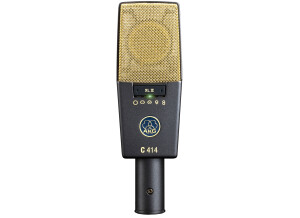
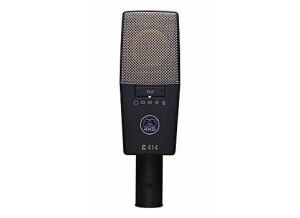
    This mic is a fantastic condenser with top of the line sound quality and clarity. You could use it live if you wanted, but since it's pricey most people tend to keep it in the studio. It has a standard XLR output. The polar pattern on this mic is switchable - from omni to cardioid to figure 8. Since it's a condenser you will need a preamp with phantom power to use it. OVERALL OPINION I have had one of these for about 5 years. These mics have been around for a long time and most legitimate studios will have at least one. They have super clean and clear high frequency response, so they are used frequently for sources that have a lot of highs and detail. I personally like to use mine for hi-hats, I have yet to find a mic that outperforms a 414 on the hat. Many people also swear by a pair of these as drum overheads, and sometimes this mic is a dream on vocals with the right voice matching. The other great thing about this mic is the versatility that is offered by the pattern switching. My second favorite use of a 414 is for a room mic when recording drums. You can set the pattern to omni to pick up the whole room, and set it back from the drums. The mic is very sensitive, so you get a nice detailed room recording that you can then mix in with your close drum mics for a nice full sound. At around $1,000, these are not cheap, but they sound really great. The switchable pattern also makes this mic like 3 for the price of one, which greatly increases its value. If you can afford one you won't regret your purchase. I would get one again.

  • RickD's review

    - What type of microphone? (live, recording, mixed...) This is mainly a home-studio mic, but i have seen it used live before, on percussion at an African music concert. It's got an 80 hz high-pass filter, and you can switch between two patterns : cardioid or hyper-cardioid, if i remember correctly. Don't think it has a pad but you might want to check the manufacturer's site to be sure. - What technology? (electret, condenser...) It's a condenser, i believe, and so requires Phantom power... It's a very sensitive mic, in any case a lot more sensitive than any dynamic mic of course, and so if you've got an SM-58 and want to move onto this then you'd better be ready for a big surprise. It's got foam and a grid to protect the large gold-plated diaphragm but you do need a pop filter with this, and you might want to tilt it a bit to attenuate further any direct wind coming from the vocalist. I sometimes use two pop filters at the same time. You can modify the mic and remove the inner foam: this supposedly transforms the mic but of course you will then need to use even more precaution when recording. OVERALL OPINION I bought this in 2000 or so and never once regretted it. It's a transparent mic, flat across the whole range you can hear...20hz to 20.000hz. It's very sensitive and detailed, sometimes can seem a bit harsh so if you have a warm preamp you might want to use it in conjunction with the C3000. You can use this on acoustic instruments, it works just as well as with vocals. I've recorded a cello, violin, wooden ladder (yes, a wooden ladder!), toy keyboard, guitars, flute, clarinet, etc. It's good. On strings you might want to prefer an Audio-Technica ATM-33 though, that works wonders on violins & cello...but the C3000 is good for pretty much everything. It's unforgiving and don't expect that flattering high-end from this mic, but if you're looking for a real good all-rounder and you have a sound-proofed room then this is definitely worth considering.