Log in
EN
FR

Electric solidbody guitars with modeling

23 products found

Filter
Sort by
Evaluation
  • Reviewed or not
  • Editor’s award
  • Reviewed by Audiofanzine
Availability
  • Available or not
  • Sold new or used
  • Sold new
  • Sold used
Must-have products
  • All products
  • Flagship products
  • Best rated products
  • Hot products
  • Popular products
Price
  • Freeware
€
Clear
Sort by
  • Popularity
  • User ratings
  • Price - low to high
  • Price - high to low
  • Used price, increasing
  • Used price, decreasing
  • Name (from A to Z)
  • Name (from Z to A)
  • Added on
Sort results
  • Popularity
  • User ratings
  • Price - low to high
  • Price - high to low
  • Used price, increasing
  • Used price, decreasing
  • Name (from A to Z)
  • Name (from Z to A)
  • Added on
Filter results 23 results found
Evaluation
Availability
Must-have products
Price
  • Freeware
Show results

The best Electric solidbody guitars with modeling reviews

The reviews Audiofanzine members found the most helpful.
  • « One of the best Rock (classic/hard) guitars I've played »

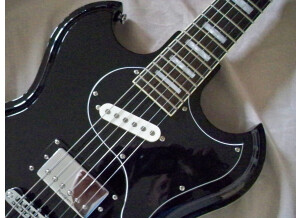
    There’s a reason why guitarist collect guitars, besides the novelty of doing so. Each has its own characteristics and each a unique tool to express one’s musical abilities. It’s not only the feel and look (which can affect a person’s mindset), but definitely the sound generated through the pickups and its relationship to the electronics and tone wood. I bring this up, since I have some very high-end guitars that are exceptional for heavy rock and metal, but they don’t sound right when it comes to other forms of music, although ‘acceptable.’ Besides more modern rock/metal, I also like to compose with a more classic rock feel, but I never cared for the guitars I have, although pricey, in how they respond with old Marshalls, a Fender or a Vox, for example. That has changed with the La Flaca by Pure Salem Guitars, a company that focuses on a more classic rock vibe and designs. The demo below does include some different amps and cabinets, all from a more classic rock era (as opposed to MESA, Diezel, etc.), and I couldn’t be happier. The sound of the La Flaca is very clear, but with a slight growl (only heard with dirt, remaining pristine with cleans). It lacks a ‘thick’ blustery sound, for those who like to ‘chug,’ thus making it more ‘medium’ in depth and fatness. https://www.youtube.com/watch?v=eA-IOp7RAT8 This stop-tailpiece guitar has three pickup selections. The humbucker (custom-wound Mendiola) has a nice bite, whereas the single-coil neck (also custom-wound) may be subdued (as neck pickups are concerned), but remains clear without any of the excessive bass or flub/mud. In fact, this is my biggest gripe with neck pickups – they have too much bass response, making it too dark for most gear in my studio. Also, when playing lead with a decent amount of gain, there is no hum with the neck pickup, which is a bonus. When playing clean, there are noticeable differences among bridge, bridge + neck or neck only; and yet, there is a complimentary and somewhat subtle progression among the three selections. In other words, shifting from bridge to neck (or bridge + neck to the other choices) are not dramatic – you don’t suddenly go from the crispness of the bridge to something that has too much midrange or bass in the neck or when combined. Rather, there is smooth transition of tones. The quality, fit and finish are all very good for the price, coming in at $930 USD, making it a midrange guitar that is decently affordable for most players. There are no flaws in the quality of the guitar, including no sharp fret edges. Moreover, for the price, I find it superior to other guitars I have purchased in the same price-range or slightly higher. (As a side note, I like the bridge very much, as the saddles are smooth and comfortable for resting the palm’s edge, which is not the case with all stop-tailpiece bridges.) The neck is very comfortable, which I’ll elaborate on below, but it’s the overall vibe and sound that captivates me (and I always wanted an SG style guitar, with that itch finally scratched). I do cover the features of this guitar in the demo, but here is a summary. The mahogany body has a German carve with cream binding, both of which give it flare, and the carve likely reduces the weight somewhat (La Flaca is neither heavy nor light… very middle-ground). The neck also is Mahogany, with dual truss rods, binding, block inlays, medium jumbo frets (nickel, I presume), a rosewood fretboard and Grover locking tuners. The guitar has a 24-¾ scale length, 42.75 mm nut width, 12-inch radius and 2-1/16 string spacing. The neck has a Modern C-shape, which means it’s not a baseball bat, but not thin like most ‘metal’ guitars – again, very middle-ground for most players. The back of the neck is fantastic, super smooth with a light satin finish. The electronics are quiet, while boasting vintage-style cloth wiring. I have no opinion on other Pure Salem guitars, not having tried them, but if you’re in the market for a rock guitar that can handle classic rock and vintage amps (and that includes a 5150), the La Flaca should be a consideration. It plays well (strings are nice and slinky for string bending), sounds great and the body’s shape makes it ideal to riff out some Black Sabbath in style.

  • « The concept is growing up... »

    This is the US build Variax. It has 2 hum buckers by Seymour Duncon, the piezo for the Variax guts, volume, tone, and the Variax selector to switch models, and select alternate tunings. As well as a les paul type toggle switch. It also has a network jack output to to go to the Variax "hockey pick adapter to go into your computer via USB to use the Line 6 work bench to edit settings or into a Pod HD for connecting in the digital domain. It has a wrap around Les Paul Jr. type bridge. It's a very nicely made, well playing guitar. Fret access is good, especially forLes Paul type single-cut body shape. The USB settings/computer connect ability depending on your PC or Mac can be a bit daunting at times. But as of know those drivers seem stable. Sounds...first off, the magnetic pick-ups sound actually pretty awesome. they're a bit hot for my taste. But no more so than say in a les Paul Classic. It has less midrange honk than a Les Paul. Now lets take a look at the Variax sounds. The stand outs for me are the Les paul, Les Paul Special and Firebird. The Gretsch' are very nice. The 335 is a bit too honky and dull. The Start with gain is glorious, the in-between settings could stand a bit more "quack". The acoustics need some careful balancing of the tone knob which then becomes a moving the mic between sound hole and finger board virtual placement. The sitar is one of my have off the wall things in it. The 12 strings at the default setting sound a bit too processed, but rolling down the tone helps. In this case it determines how much octave string you have in the signal. All and all its a great palette at your disposal. The common complaint about "dinginess" to the attack on palm mutes isn't an issue if you lighten your right hand and move it a tad back. The tunings is where th fun starts. Want open strings in a solo but the tune is in F minor? Just set the tuning to up a half step and play in E. Need drop D and Drop C# in the same set but don't want to carry extra guitars? there you go it's in there. And my have the baritone tuning and low B tuning. Sweet on a Tele. I'm glad I got this guitar.

  • « Modeling isn't evil »

    The Variax 300 is an electric guitar from Line 6 that models the sound of other electric guitars by using digital signal processing. This guitar does not have traditional magnetic pickups (single-coil or humbucker). Rather it uses a piezo pick-up in the bridge to transduce the string vibrations to an electric signal. This guitar can sound like a Telecaster, Strat, Les Paul, Firebird, Gretsch, Rickenbacker, 335, and a bunch of acoustic guitars. The first question everyone asks about digital modeling is: does it sound like the real thing? Honestly, I was very skeptical about this guitar before I tried it out. My opinion is that it sounds very good, and very similar to the guitars it is modeling. I don't think it is a fair comparison to criticize the entry level Variax because it doesn't sound perfectly like a $4000 Les Paul. I think the better comparison is does the Variax model of the top-of-the-line Strat sound better than a Squier Strat is the same price range as the Variax 300. In this comparison, the sound of the Variax is much better than a Squier in the same price range. Based on sound quality - I think the Variax 300 is miles ahead of anything else in its price range. The biggest problem with the Variax 300, is the physical guitar seems to be made very cheap. The body, neck, and hardware of the guitar are really cheap. Line 6 isn't manufacturing this guitar anymore. If you are trying to buy it, then you are going to have to buy it used. Unless you find one that is in really good condition, I wouldn't count it lasting for years and years to come. I purchased this guitar 'new' when Line 6 was ending production and trying to dump the last remaining units. I try my best to take really good care of my gear so that it will last a long time. Unfortunately, after owning the guitar for several years, it was stolen out of my church. I searched for a long time for a replacement. All the 'used' versions that I found had something wrong. Eventually, I found a used Variax 700 in great condition. This guitar has the same exact modeled sounds, and also has better hardware. Line 6 has now released the James Tyler Variax. Someday, I am sure I will buy one of these guitars to upgrade my Variax 700. If you are in the price range for a low- or mid-priced guitar, I think finding a used Variax 600/700 is a great idea. This guitar will sound better than buying a Epiphone or Squier. If you can afford the James Tyler Variax, it is probably your best bet. Well...unless you can afford 20 different $5000 guitars - then you can forget about modeling.

  • « 25 Guitars in 1 »

    The Line 6 Variax 700 is a modeling electric guitar. It does not have traditional single coil or humbucker pick-ups near the bridge or neck of the guitar, rather it has piezo pick-ups built into the bridge of the guitar. The signals from the piezo pick-up are sent to a DSP chip to transform the signal into the sound of a bunch of different modeled guitars. This computer chip needs power to work, so you have to install batteries or send power to the guitar from the instrument cable. A standard instrument cable can be used if you use batteries, and the guitar basically functions like a normal electric guitar. A special TRS instrument cable is necessary if you want to power the guitar from the included power supply over a ¼” cable. It is also possible to use a special variax cable with a POD XT, X3, and HD. Not only does this cable allow you to power the guitar without batteries, it also allows you to program the effects pedal to automatically switch between guitar models for each ‘preset.’ Finally, the variax cable allows you to send a digital signal from the guitar rather than an analog signal. To illustrate this utility, consider a recording situation where you want to directly record this guitar through a POD onto a computer. With a ¼” cable, the guitar with convert the analog signal from the piezo pick-up into a digital signal for processing. Then it would have to convert the digital signal back to analog for the ¼” cable going to the POD. The POD converts the analog signal to digital for processing, then converts the digital signal to analog to be sent to an audio interface. The audio interface converts the analog signal to digital to record on the computer. With the Variax Cable, the guitar converts the analog signal from the piezo pick-up to digital. By using the Variax Cable, there is no need to have analog and digital conversion between the guitar and POD. You could even use a SPDIF cable from the POD to the audio interface to never convert to analog throughout the entire recording chain. This would give you the purest signal path for recording. Even analog to digital conversion causes the quality of the signal to be slightly diminished. I know there will be some people that don’t like digital, and don’t like modeling. From my perspective, it is all about getting the best sound for the cheapest cost. I would agree that a $3000 Les Paul sounds much than the Les Paul model on the Variax. However, I can’t afford the expensive guitar anyway. Therefore, I have to choose between a $700 Variax and a $700 Epiphone. I own both of these guitars, and I can say that the LP model on the Variax sounds better than the Epiphone of the same price. To me, this is the value of digital modeling. Not to mention you also get 25 other guitar sounds included. I was skeptical before I tried one out. But now I would never record without it. I just need to save up for the James Tyler Series.

  • « Computer on! »

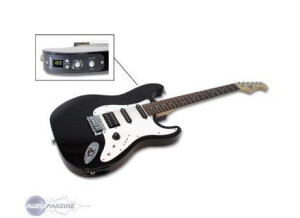
    Alesis Xguitar is basically a computer-based guitar instrument. This is a guitar that is somewhat unique and unlike anything that I or most people have ever seen. This is a guitar that is for someone who likes to play around with a load of effects or processing and doesn't want to spend too much time perfecting their instrument. This is a guitar that has basically built-in digital effects within the instrument. It's very a futuristic sounding type of technology. Overall it's the not exactly my cuppa tea. Features 80 programs, each a factory preset that can be edited by the user or restored to factory default 9 effects modules, each with multiple selectable effects, over 40 different effect types 8 different signal routing options for re-ordering effect modules 28-bit high-quality effects including reverbs, delays, chorus, flanging, amp emulation and transposition Master volume and two tone controls Simple up/down toggle switch to facilitate program changes on-the-fly Built-in auto-chromatic tuner 1 dual humbucker and 2 single stack humbucker pickups Expression pedal input for volume, wah-wah control over effect parameters 30 hours of operation (on 4 AA batteries) Stereo/headphone output on 1/4 in. TRS connector The tone of this guitar is not something that you really want to talk about . They are really emphasizing the ability for this instrument to be a working computer or effects-based instrument. Much like a keyboard or synthesizer is to a piano, this guitar is to the regular guitar. If you're someone who likes to play around with certain sounds to come from the keyboard and don't really be more proficient at playing the piano this is good to be a similar analogy. This is not really a guitar in the sense that it makes you want to play and get proficient at your instrument but it's a instrument or novelty that gives a user a cool new style of an instrument. I wouldn't necessarily this say that this is exactly a guitar because it's a new novelty type of instrument. These guitars have been discontinued for a while but you can find them the used section of many classifieds. I don't think they're very expensive. I think you can find them for right around $200 or so. It's not about price for someone who probably wants something that can be a fun time waster. But if you're trying to learn how to play the guitar I wouldn't go with this instrument. I would deal with your standard old cheap guitar that will allow you to get your basics and your chops down.

  • « Line 6 Variax 500 »

    Here in his magnificent International Garage Studio headquarters, Kevin Mattson continues to create inevitable fame and riches as a singer/songwriter/guitarist/philosopher (whose wife has a real job). I'm a guitarist in general and 12-string specialist in particular. Just turned 50. Yikes. I stumbled onto a closeout of the Variax 500 at Music123.com, for a little under $500. I've got several 12-strings left after giving my seldom-used sixes to my kids over the years. But lately I wished I had access to a few good electric and acoustic sixes. The demo at Line6.com made me curious so I took a chance. It's ramarkable what the Variax can do. Good to excellent electronic models of 28 separate instruments are available with a turn of an on-board knob and a flick of the "pickup" selector switch. (See below for technical details.) The variety of instruments is well chosen, including Strats, Telecastors, Pauls, thin- and big-body electrics, and a range of resonator and wooden acoustics--including banjo and sitar. The sounds rate mostly very good, with a couple excellents and a couple "nice try's." The acoustic 6-string guitars all sound very good or even excellent, in the sense that they sound like real Martins and Gibsons which have high quality piezo pickups installed. And of course, the Variax 500 is built like a hard-body electric. So you have to get used to the odd sensation of playing an "electric" and hearing a big body acoustic sound. I'm mainly an acoustic and jazz player, so I can't judge the rock guitars properly. To my ears, the rock axes all sounded authentic through my practice amp. But please note, the Variax's modeling is strictly the sound of the dry guitar. Amp effects (distortion, etc) have to be produced the way you would with the regular version of these guitars. The set-up was poor. Action and intonation were way off, but easily fixed with included hex-wrenches--if you know what you are doing. I could do with out the tacky white pearl pickguard. No tremolo bar. The replacement model (Variax 600) has one. The 12s are the weakest of the models. The sounds of the string pairs are purposely de-tuned to add to the jangle sound, which non-12 players think is expected. But Line6 over did the de-tuning, so the the 12s sound cartoonish. Also, the electronics can't seem to handle the 12 sounds when you strum. But arpeggios are OK. Fortunately I own plenty of real 12s. There are no coil pickups on the Variax. Rather there are piezos for each string under each adjustable saddle element. So the "pickup" selector does three things. For some guitar models it mimics a pickup selector. It also can switch between models. The volume and tone control act as they should, except for the acoustic guitars. For them, Line6 uses the tone control to model varying mic placements. It's a very useful control in those cases. The basswood body is nicely contoured with a bolt-on maple neck with medium frets. I like the feel of the neck, except the frets are a bit high--I'll have them dressed when I get a chance. The tuners seem solid. The guitar is balanced nicely. It comes with a well-made power supply/A-B foot switch. The A-B switch box allows you to choose between a standard 1/4 inch output, or an XLR out. The XLR is preferred for the acoustic guitar models. The Variax can be powered from the switch box, or six AA batteries in the guitar will give you 10 hours or so of play time directly into any amp. The Variax 500 is remarkable value. Several of its 28 built-in instrument sounds would be worth the price alone. It's great fun to play. It's a godsend for gigs where you want a variety of fretted instrument sounds. If you can find this model, and you don't need a tremolo bar, it's worth more then every penny. This review was originally published on http://www.musicgearreview.com