



Not really a game, not quite software either. Its name: Music 2000. The idea seems absurd: turning a PlayStation into a full-fledged music studio.

It’s 1999. In teenagers’ bedrooms, CRT TVs hummed away while Tony Hawk’s Pro Skater, Gran Turismo 2, and Metal Gear Solid were keeping the consoles running hot. PlayStation was already a cultural phenomenon, but no one could yet imagine the full extent of its creative potential.
But that was before the release of a rather unusual disc. With just a single PlayStation controller, players could compose tracks, manipulate samples, record sounds, and even create music videos. Here’s the story of Music 2000, the gateway to music creation for an entire generation of future producers.
Music 2000: How Jester Interactive came up with the idea for a PS1 studio
In 1999, Tim Wright was known to video game fans under his pseudonym, CoLDSToRAGE, and for the electronic soundtracks he composed for the futuristic racing game WipEout. But before becoming a video game composer, Wright was first and foremost a music-obsessed teenager facing a very simple problem: making music was expensive.
Back then, recording a demo or tinkering with your first compositions required at least some equipment. Four-track tape recorder, drum machine, sampler… all of which were out of reach for many young musicians. Of course, software like Music Maker, eJay, Fruity Loops or ACID already made it possible to create music on a PC, but you still needed a computer powerful enough to run them—which was far from the case in every household in the late 1990s.
And when you didn’t have any of that, you made do with what you had on hand. And what did you have on hand when you were a slightly geeky teenager in 1999? Bingo—a PlayStation 1. That line of thinking led Tim Wright and his brother Lee to launch Jester Interactive, their development studio based in Wales. Originally, the tech company funding them wasn’t even in the video game industry—it was simply looking to invest its profits in a more creative project.
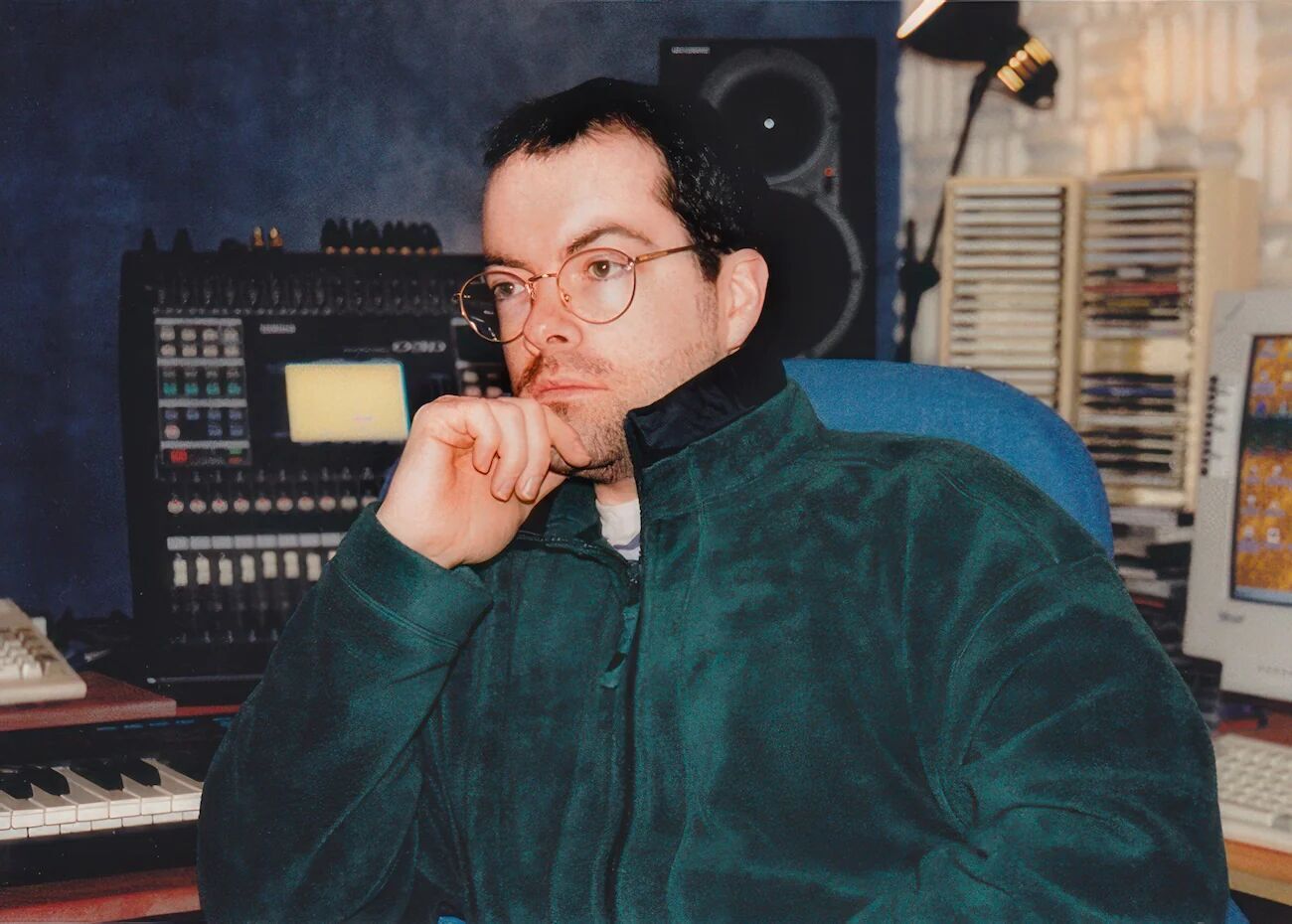
Their initial ideas, however, were far from convincing. The team envisioned a musical sandbox for children, with instruments integrated into a park or kitchen setting. Fun concepts, but ones that—like the French national soccer team in 2010—didn’t make it past the group stage. Yet Wright was quite confident: he didn’t want to create a toy, but a genuine composition tool—simple enough to be accessible and comprehensive enough to inspire users to explore further.
The venture seemed all the more risky since no one really knew how to market such a product. Music software on a game console? Yet the timing was ideal. For its part, Sony was looking to evolve the PlayStation’s image. The Japanese company no longer wanted to appeal solely to teenagers; it wanted to transform its console into a true multimedia hub that could find its place in the living room. Music creation software fit perfectly into that strategy.
All that remained was to win over the market. And here, the project benefited from an incredible stroke of luck. While the team was looking for a publisher, Codemasters discovered a demo version of the software. The British publisher was itself working on a music creation program, which it ultimately decided to abandon. Impressed by how far ahead Jester Interactive’s software, it chose to publish it rather than develop its own competitor. The result was a PS game called “Music."
Music 2000 vs. Cubase: What can this PS1 software really do?
On paper, the idea was appealing. But once you inserted the CD into the console, could you really make music with it? Or was it just a fun gadget to entertain you for a few minutes before it went back to gathering dust on a shelf?
Clearly, from the very first minutes, Music felt much more like computer music software than a video game. On the screen, there were no characters to control or levels to complete, just a sequencing grid. The tracks stacked up, the notes scrolled by, and, controller in hand, you started building a track almost exactly as you would today in a DAW.
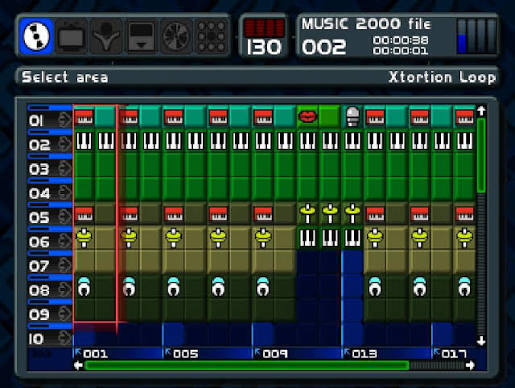
The software’s greatest strength was its sound library. Thousands of samples were included out of the box: drums, basslines, pads, vocals, guitars, effects and percussion. There was enough to create in a wide variety of styles, including house, drum & bass, hip-hop, trance, and rock. For beginners, Jester Interactive also included hundreds of “riffs”—pre-built short sequences, such as a bassline, a drum break, a melody, or a vocal phrase—that you can simply drag onto the timeline to start building a track in just a few minutes.
But the software didn’t stop there. You could break those riffs down, modify them, rearrange them, or even combine them to create new ones. You could move, shorten, transpose, or enhance each note with various parameters. Envelopes let you shape the behavior of the sounds, while reverb or phasing effects added depth. It was a far cry from the simple “press A to make music” concept that some people imagined when they saw the game’s box.
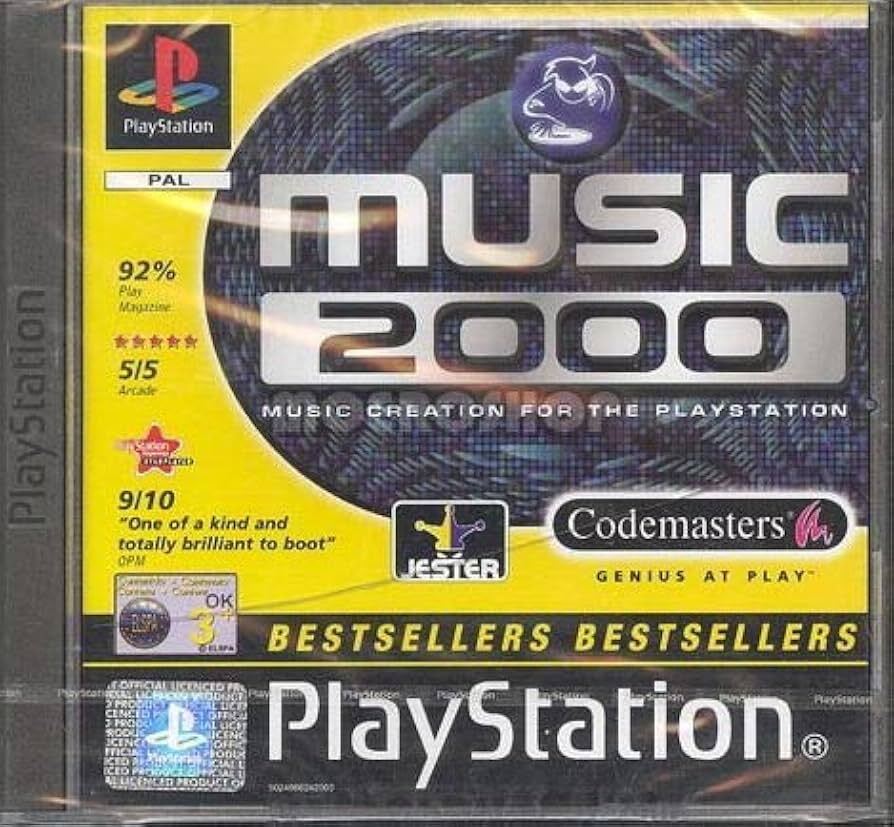
The leap forward was even more impressive with the next version, Music 2000. Whereas the original featured sixteen audio tracks, the new one took full advantage of the PlayStation’s twenty-four channels. The interface was redesigned to display more information on screen, tracks could be grouped into new riffs, and the whole experience was much smoother.
Considering it ran on a game console released in 1994, Music 2000's technical abilities were astonishing. And if the built-in sounds weren’t enough, the software also let you record your own. Anyone could build their own library of samples, either by recording them with a microphone or by capturing audio from a CD. While such a feature is commonplace today, it was quite a feat on a home console in the late 1990s.
As if that weren’t enough, Music 2000 also offered a video clip editor. Admittedly, you couldn’t expect to create the next Michel Gondry masterpiece, but it was possible to synchronize animations and visual effects with your compositions. The tool was even impressive enough for some VJs to use during club performances—a facet of the software that’s often overlooked.
How Music 2000 shaped Skepta, Dizzee Rascal, and an entire generation of producers
One might think that Music 2000’s success was simply due to its technological edge. After all, turning a PlayStation into a music workstation in the late 1990s was quite impressive. But its true legacy lay elsewhere. To understand why the software made such a lasting impression, we need to look back at the context of the time.
In 1999, music production was still an expensive hobby. Professionals worked on Cubase or Logic, sometimes supplemented by an Akai sampler, and a mixing console. This equipment was out of reach for most teenagers. On the other hand, many already owned a PlayStation, or at least had a friend with one.
This is where Music 2000 completely changed the game. For about 30 British pounds (equivalent to about $90 at the time), it became possible to compose, arrange, and experiment without a computer. This accessibility largely explained the software’s particular success in the United Kingdom.
By the late 1990s, the UK garage, jungle, and later 2-step scenes were already thriving. A few years later, they gave rise to grime. Music 2000 obviously didn’t invent this movement, but it provided an early testing ground for an entire generation of future producers.
Testimonials have multiplied over the years. British artists such as Skepta, JME, Dizzee Rascal, Terror Danjah, Kode9, and Hudson Mohawke are among those who, to varying degrees, cut their teeth on Music 2000 before moving on to more professional tools.
Looking back, this story resembles that of many software-based tools that would later democratize music creation. Like GarageBand and BandLab today, Music 2000 was initially viewed with some condescension. However, the teenagers who used it were simply looking for an affordable way to create. As is often the case in the history of music, the most significant innovations haven’t always come from the most prestigious equipment, but from what finally makes creation accessible to the masses—in this case, PlayStation owners.