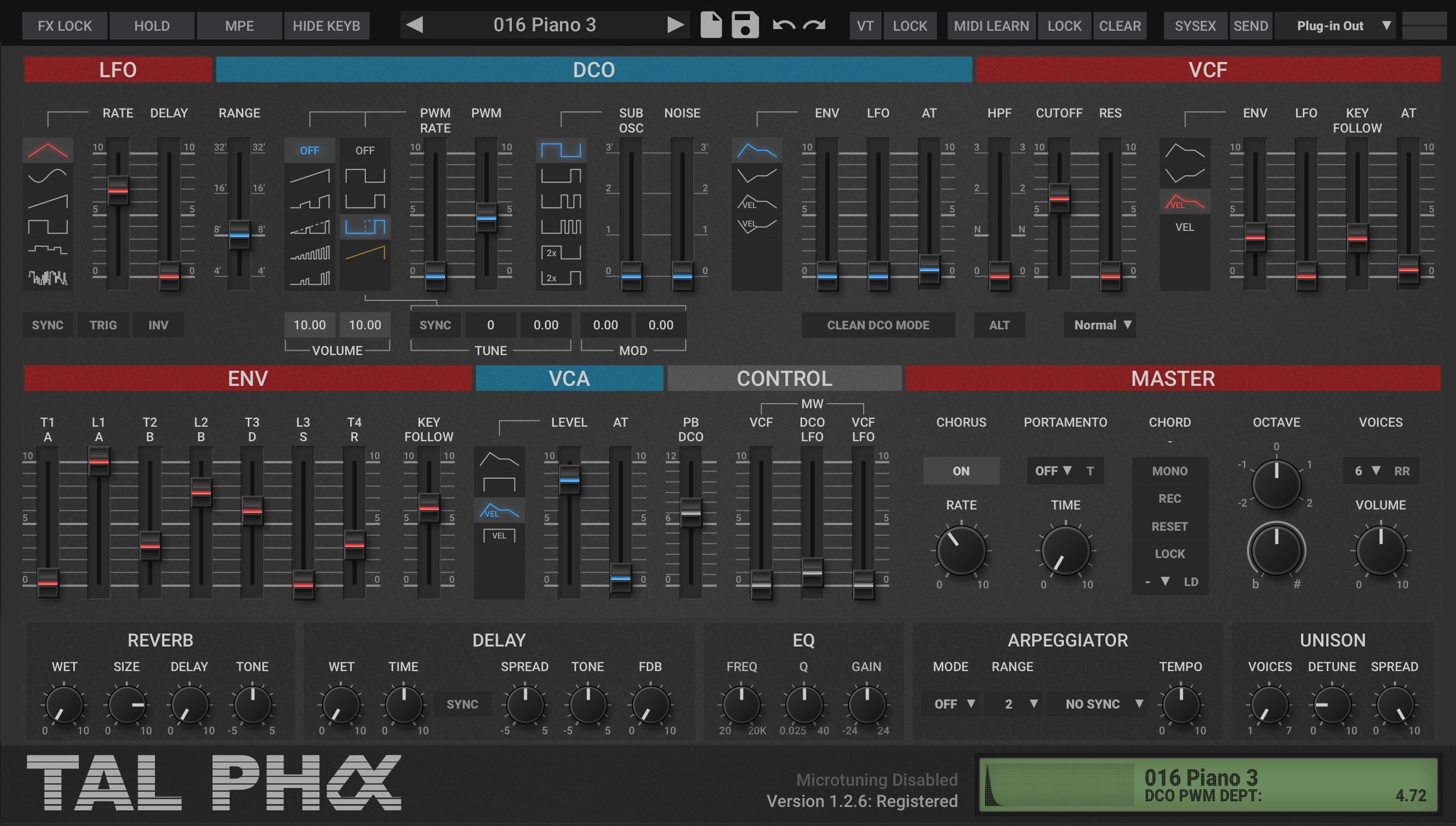
Almost 40 years after the release of the Roland Alpha Juno 2, Togu Audio Line attempts to capture its essence with the TAL-Pha, a virtual synth with retro charm. Useful synth or simple software nostalgia? We've plugged in our headphones to find out.

With the release of the TAL-Pha, some may have wondered what the point was of a new virtual version of a Juno, especially as TAL already offers the excellent TAL-U-NO-LX in its catalog. That’s forgetting that the Alpha Juno, which the TAL-Pha reproduces, is a very different beast from a Juno-6/60, or even a Juno-106, and that emulations of this synth are hard to come by.
Although sharing an architecture with many points in common with its forebears, the Alpha Juno 1 and 2 (as well as the rack version of the 2, the MKS-50) the Alpha Juno embodies different components and peculiarities, which means that, in the end, even with a common core in terms of sound, the results obtained are significantly different.
When we compare them, we quickly realize that, in the end, the Juno-6/60 and Alpha Juno complement each other rather well. And with good reason: by the mid-1980s, the DX7 wave had arrived. The fashion at the time was for clean, uncluttered sounds behind the ears. Purity and precision were words found everywhere in the advertising and documentation of the time (today, everything is touted as warm, fat and organic).
So, the Alpha Juno, like the JX-8P and JX-10 before it, offered a more polished version of analog synthesis, with direct parameter controls replaced by an interface where you enter the parameter number before editing it via the Alpha Dial (yes, that’s where the “Alpha” in the name comes from). Above all, these synths offered a much more precise sound than that of the Juno-6/60. Finally, as we’ll see, the aforementioned special features offered greater versatility and sonic possibilities than those of previous models.
For purists, let’s remember that the sound engines of the Alpha Juno 1 and 2 are identical: among the notable differences, the Juno 1 offers only 49 keys without velocity or aftertouch. Other differences are limited to storage and expression pedal management.
History of TAL: Swiss precision at the service of virtual analog
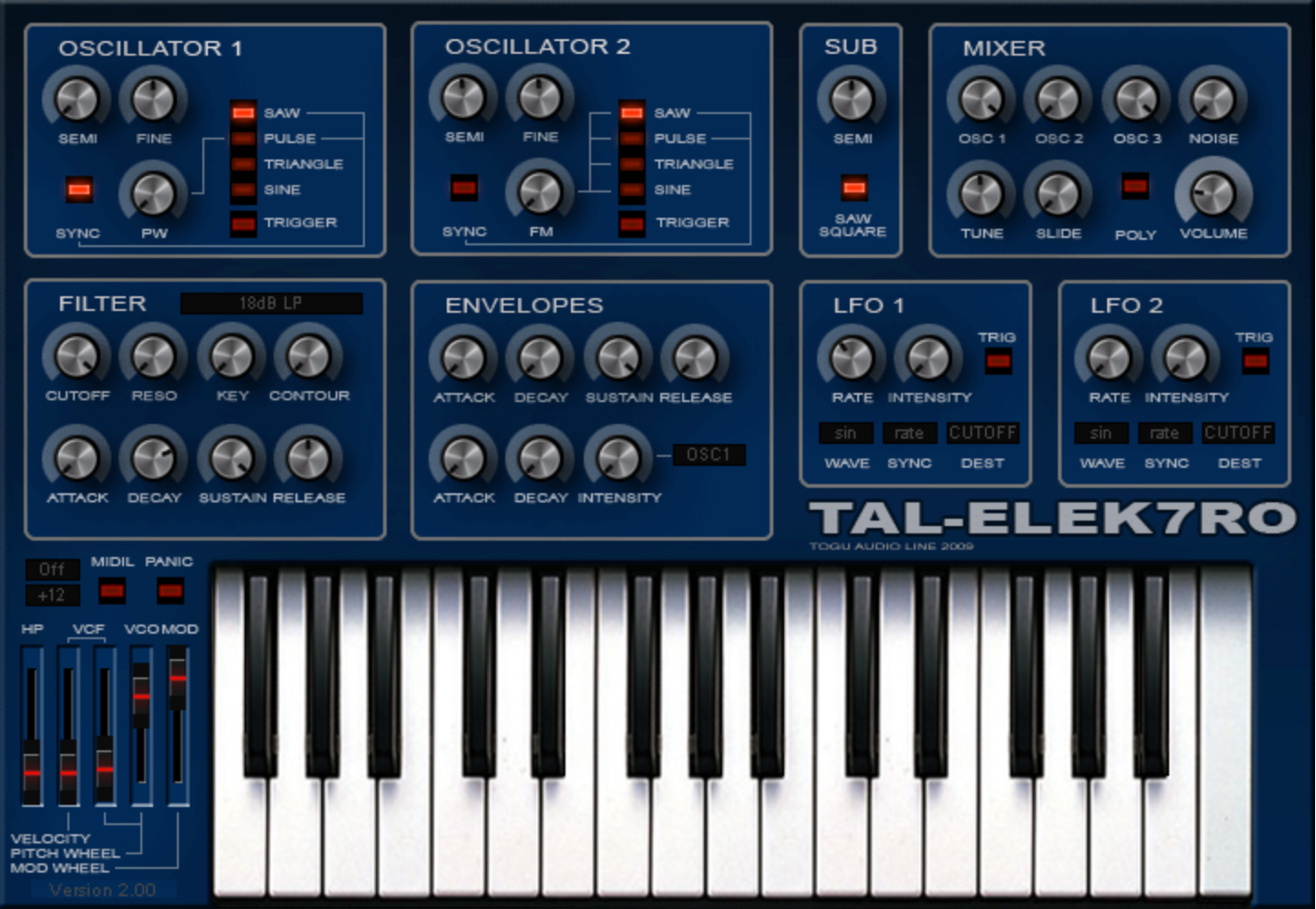
This was followed by several other effects and software synths, always free of charge, revealing a clear preference for Roland analog synthesizers, such as the TAL-U-No-62 or the TAL-BassLine, as well as more personal creations, such as the TAL-Elek7ro and the TAL-NoiseMaker.
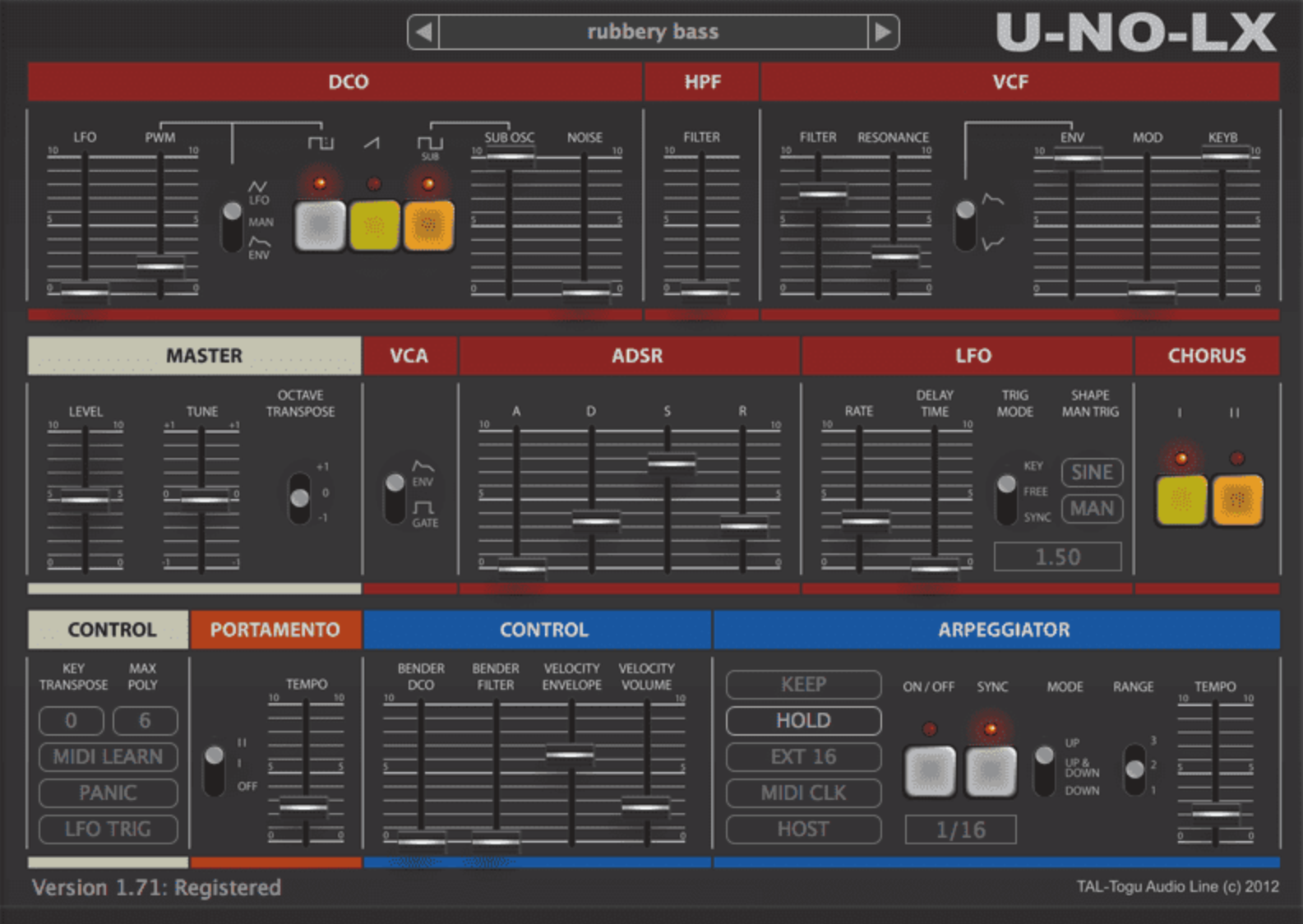
These first productions quickly made a name for themselves in the freeware world thanks to their high quality, and gave TAL a good deal of credibility, paving the way for the release of their first commercial plugin, TAL-U-No-LX, a complete rewrite of U-No-62, this time with zero feedback delay filters. This new version made a strong impression with its fidelity, unheard of at the time, to the sound of the Juno-60.
More recently, TAL surprised everyone with the TAL-EQ, a dynamic, graphic equalizer whose ergonomics are reminiscent of FabFilter products. And before it, the TAL-Pha — the subject of this test —arrived to model the Roland MKS-50, in other words, the rack version of the Alpha Juno 2.
Installation and interface of the TAL-Pha: extended compatibility and immediate ergonomics
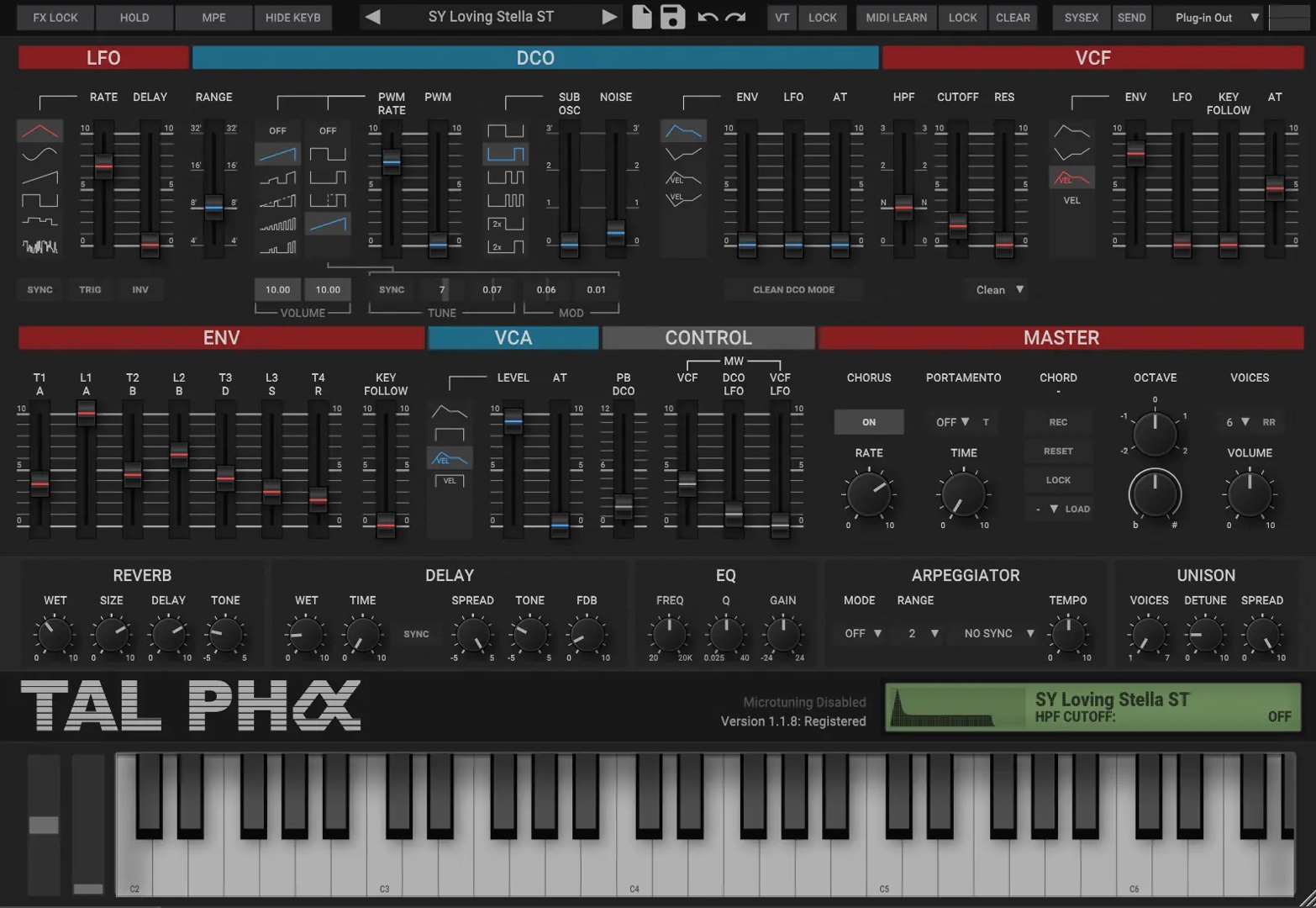
On the About page of the official website, TAL makes it clear that the company is not focused on marketing and prefers to avoid complex and costly protection systems. Installation is very simple: a classic installer, followed by entering a unique serial number. It’s all very convenient for the licensed user. Updates are provided regularly and are free of charge. The PDF user manual covers all functions, but could be expanded.
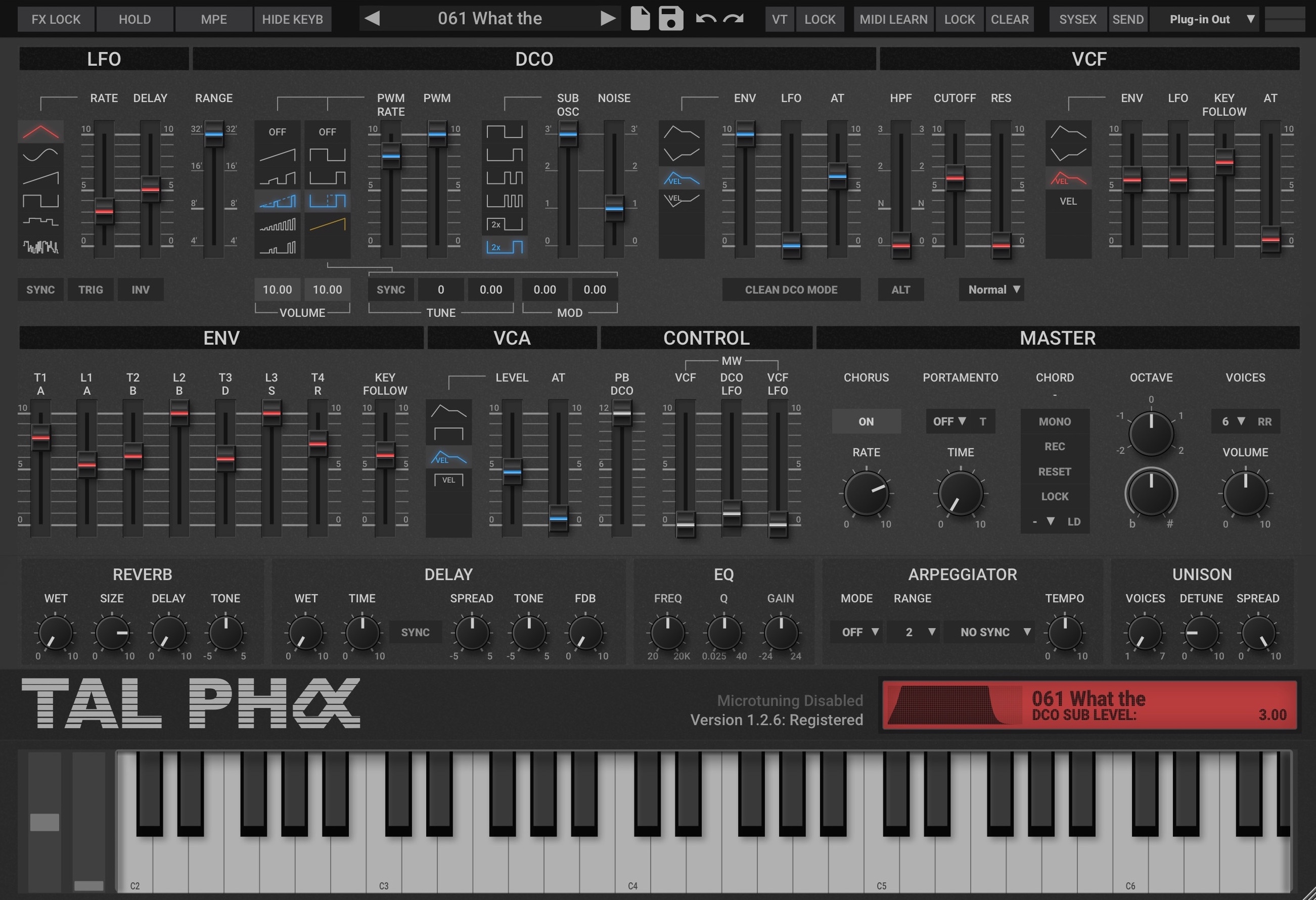
As soon as you open TAL-Pha, you’re in familiar territory: it’s pure TAL. Clear interface, no-frills design, and that slightly retro visual touch that evokes hardware synths without lapsing into forced nostalgia. The sections are well separated, allowing you to understand the sound topology at a glance. Everything is in its place, everything is legible.
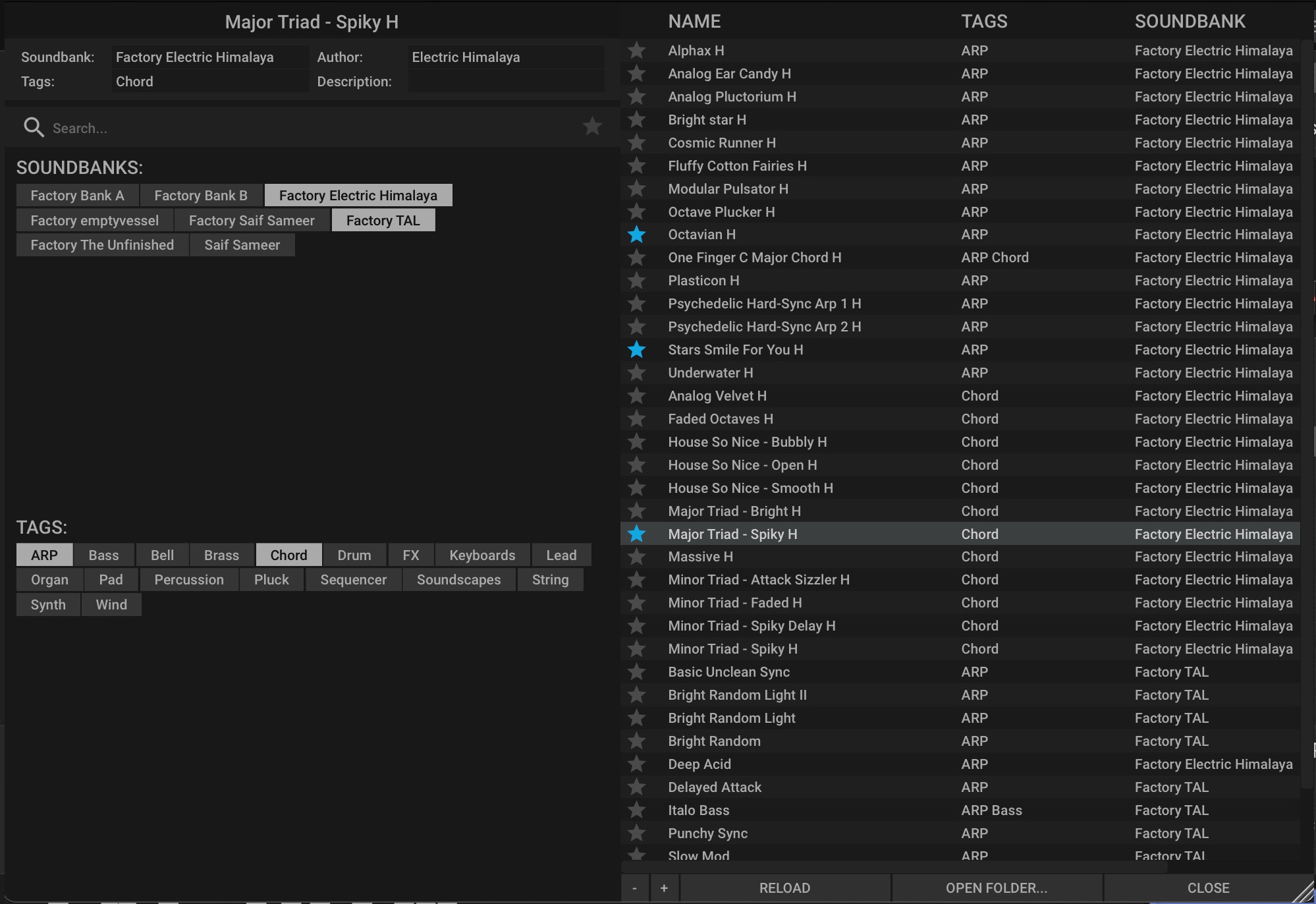
The TAL-Pha features a simple but effective preset browser, with bank management, search function and tags. The Alpha Juno factory presets are included, along with new sounds that take advantage of the plugin’s effects and new features. The Sysex import also makes it possible to load sounds from the original hardware models, which can be found in large quantities online.
The TAL-Pha sound engine: the Alpha Juno aesthetic between analog and digital precision
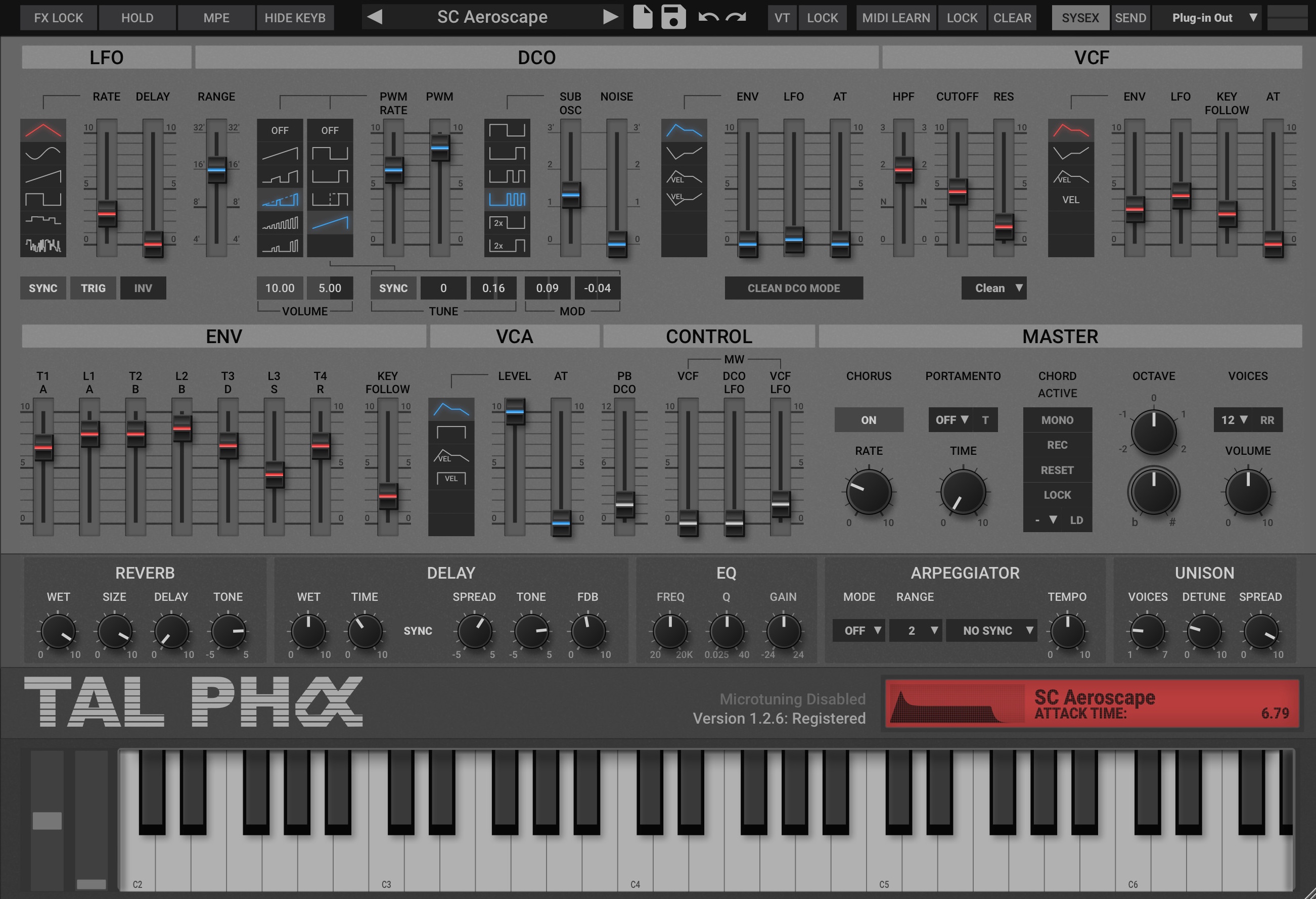
The famous “hi-fi” clarity of the Alpha Juno and JX-8P and JX-10, which made them so appealing, is back. Where a Juno-60 grunts and breathes, the TAL-Pha caresses and shines, with the characteristic precision of the post-DX7 period.
If the Juno-6/60 are machines with warm pads and vintage basses, the Alpha — and therefore the TAL-Pha — stand out for their versatility: timbres that are by turns mellow, metallic, digital or acidic. Ideal for sharp leads, bright strings, punchy basses and, of course, the famous “hoovers” of the '90s.
It’s in these hybrid timbres, neither totally analog nor completely digital, that the TAL-Pha reveals its full personality.
TAL-Pha architecture and synthesis: Alpha Juno oscillators, envelopes and specific filters
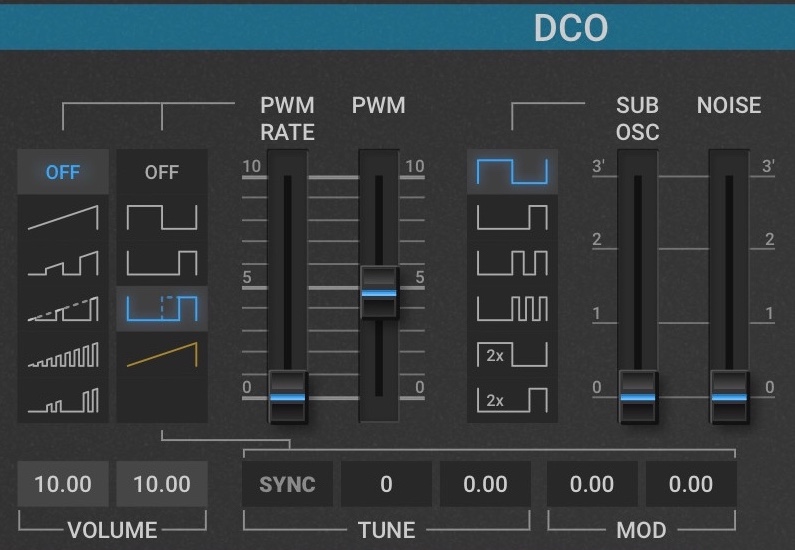
The TAL-Pha also adds a sawtooth wave in place of the square. This allows two saws to be combined, and enables the individual adjustment of the volume of each waveform, as well as adjustment of the tuning and fine tuning of the pulse, and a synchro that synchronizes the DCO and the sub. In the end, it’s almost like having two oscillators in addition to the sub.
Another special feature that’s included is a multisegment envelope (T1/L1/T2/L2/T3/L3/T4). In addition to the classic parameters, it features volume controls for the Attack and Decay stages, as well as a time parameter for Sustain (note: this type of envelope will later be found on many Roland products, such as the D50, JV-80 or JD-800), making it possible to create more complex variations than a simple ADSR, and to program bounces and moving sounds. The envelope can modulate DCO, VCF, and VCA, producing a surprisingly dense and lively sound despite the synth’s apparent simplicity.
The filter, unlike previous Junos, has the typical Roland character. The TAL-Pha offers three types: Normal, which reproduces the classic behavior of the Alpha Juno; Clean, and Boost, which allows the resonance to reach very high values — right up to aggressive self-oscillation.
The high-pass filter operates as on the Juno-106 with fixed step settings and a bass-boost circuit in the zero position. In the latter position, a low-shelf filter amplifies the signal around 500 Hz. The TAL-Pha also adds an alternative mode that uses a bell filter to boost the signal by 6 dB around 80 Hz.
As on the original, the TAL-Pha features the famous Chord function, which lets you play a complete chord on a single key. It takes on a new dimension when used in conjunction with the TAL-Pha’s arpeggiator.
Effects integrated voice calibration and advanced functions of the TAL Pha
In addition to emulating the original Chorus with its customizable speed, the TAL-Pha offers three effects to enrich the sound: a Reverb, which is not transcendent but does the job very well; a Delay; and a bell EQ.
Surprisingly, the signal path does not follow the left-to-right order displayed on the graphic interface. In fact, the order is Chorus > EQ > Delay > Reverb. To follow it visually, start with the Chorus, then work your way down to the EQ, reading from right to left. It’s not very intuitive at first, but once you know it, it’s not a problem.
No effects bypass is available, but setting the Wet parameter to zero will prevent the effects from being heard. It’s also impossible to change their order. It’s easy to see that these effects were conceived as mere complements to the synthesizer itself. It is, however, possible to lock them, so that their settings remain unchanged when changing presets.
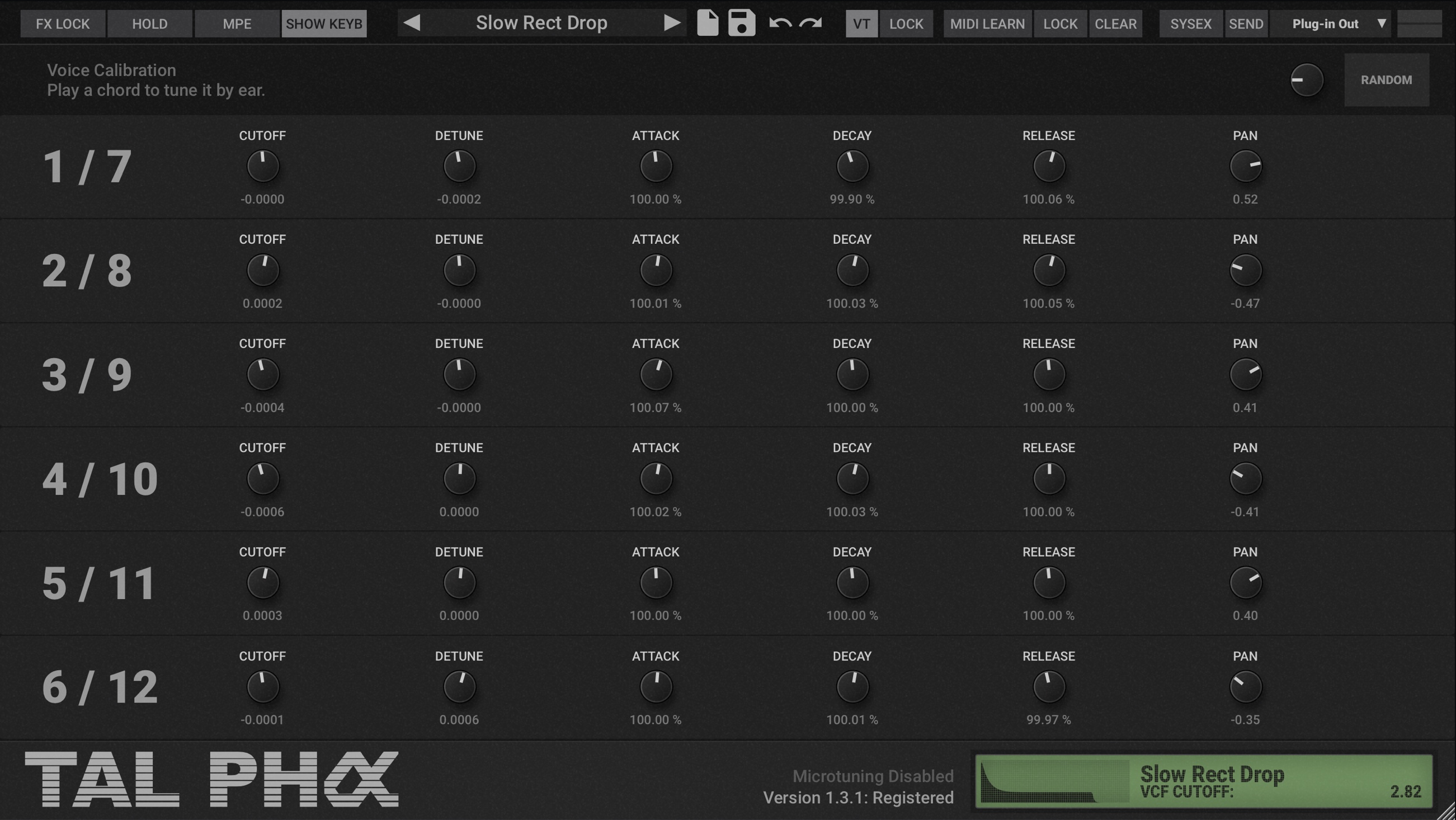
Among the TAL-Pha’s other additions, the Voice Calibration page deserves a closer look. It allows you to slightly detune and vary the behavior of the synth’s various voices. The idea is to recreate the micro-instabilities sometimes found on vintage analog circuits: small pitch, filter or envelope drifts between voices, giving the sound more instability. By adjusting the calibration levels, you can go from a perfectly clean, stable rendering, true to the spirit of Alpha Juno, to a livelier behavior, reminiscent of older analog VCO machines. At this level, voice panning is also parameterizable. Combined with round-robin voice playback, this feature also opens the door to more creative uses. As with the effects, Voice Calibration parameters can be locked when changing presets.
A small arpeggiator is also included, quite similar to the one in the TAL-U-NO-LX. It’s simple, but effective. It’s a pity, however, that the step sequencer of the TAL-BassLine-101 wasn’t adopted.
Owners of an Alpha Juno 1 or 2, or even an MKS-50, will be delighted to learn that the TAL-Pha is not limited to being a simple plugin: it can also act as a controller for these hardware models.
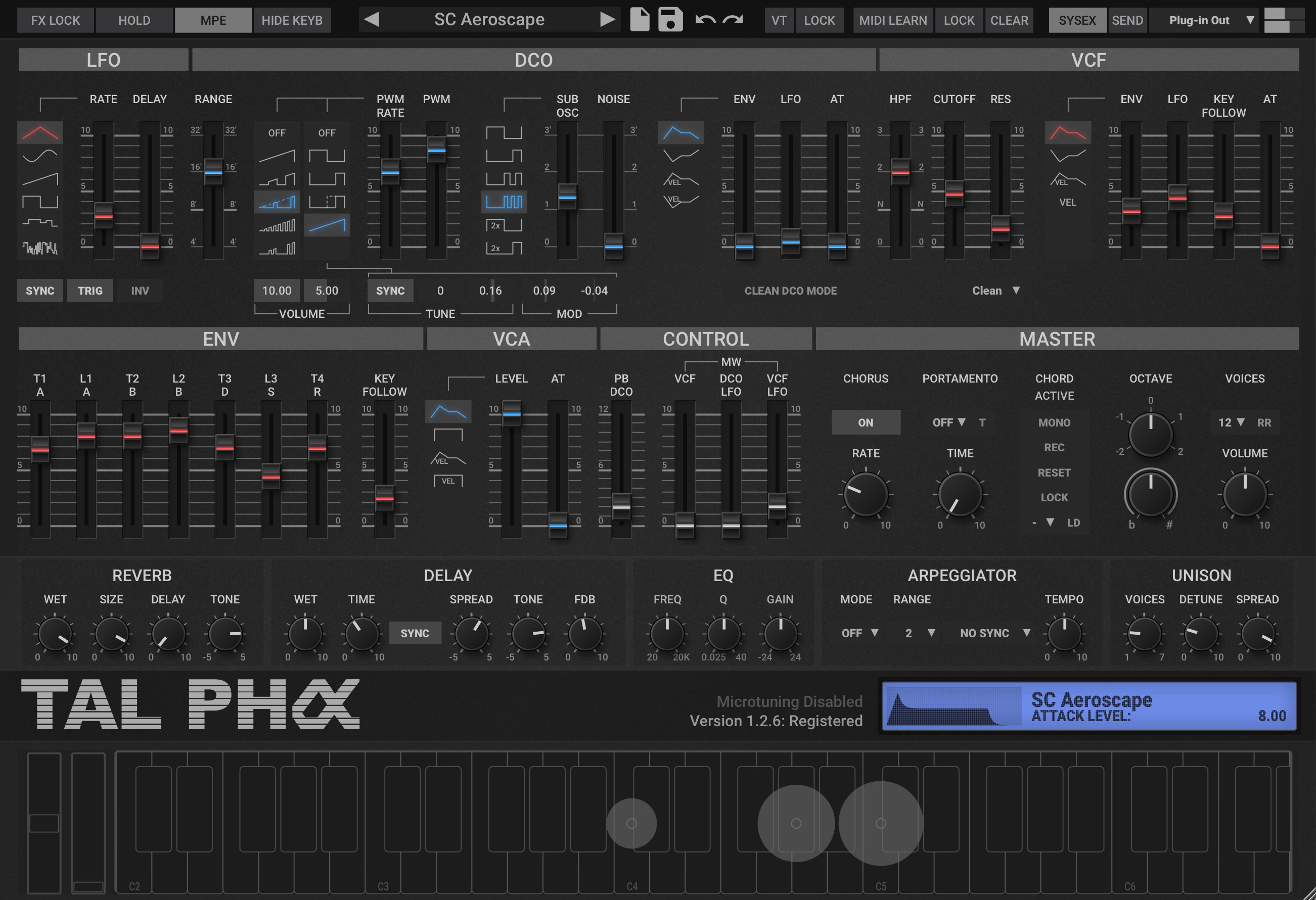
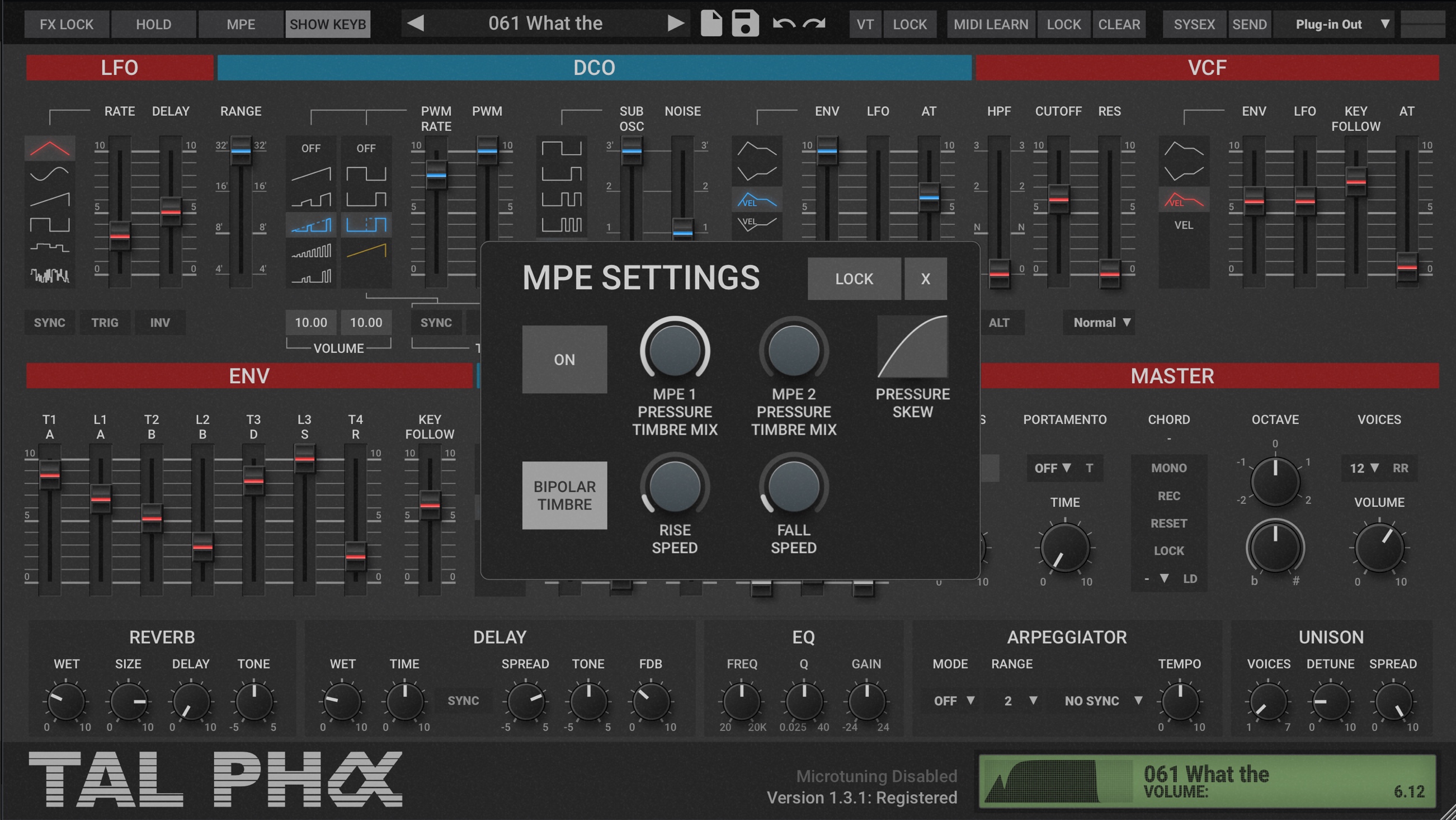
Finally, let’s mention support for MPE (MIDI Polyphonic Expression). This allows each note to be modulated individually, offering an expressive dimension unheard of in the original hardware, extended polyphony to 12 voices, unison up to seven voices, and, of course, the MIDI Learn function.
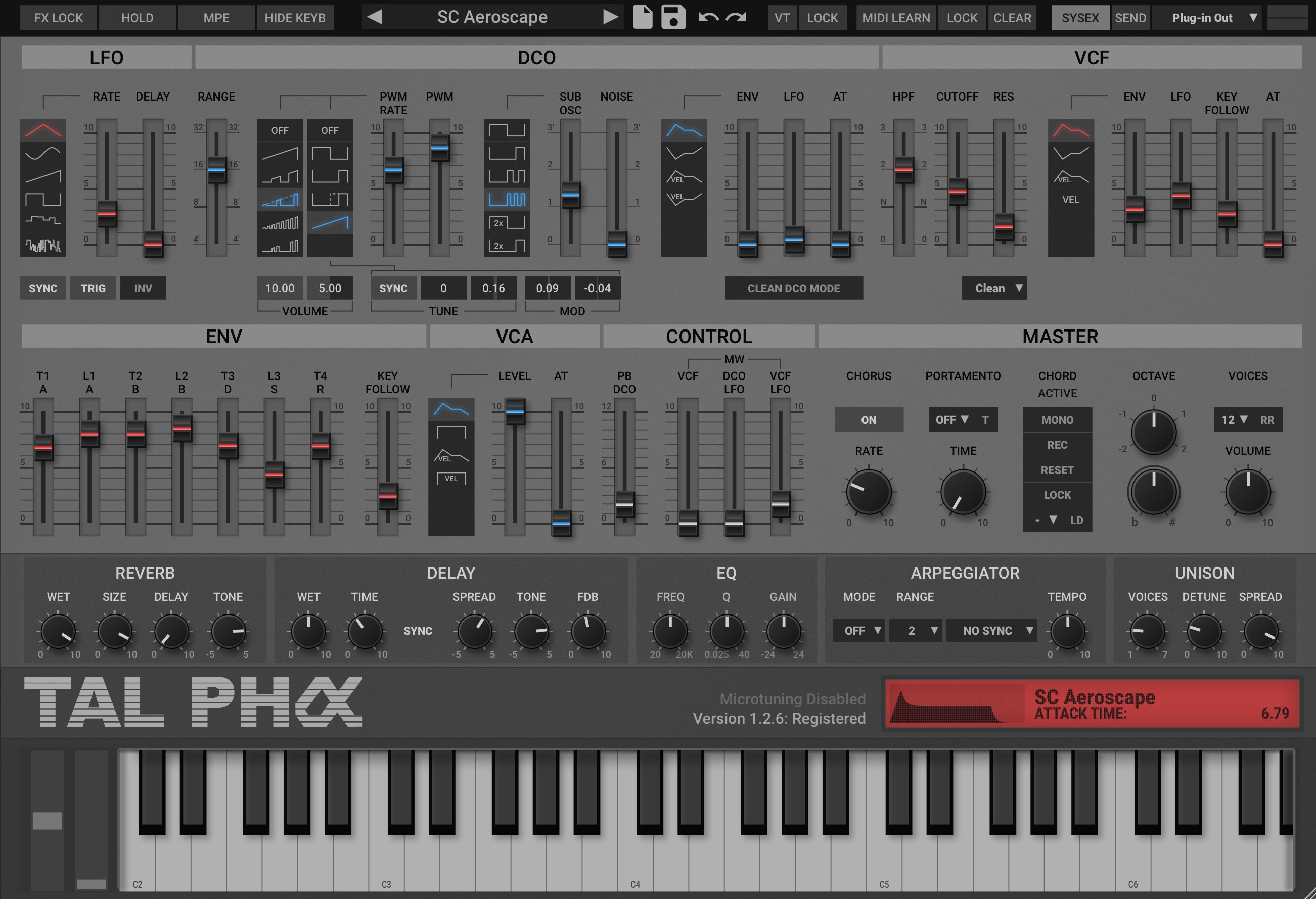
The TAL-Pha also lets you customize the colors of the graphic interface as you wish, in addition to the few predefined themes offered. Changes are made by entering alphanumeric values, a rather austere system, a shame TAL didn’t adopt the more user-friendly TAL-Sampler system, which is otherwise more practical.